“The disappearance of Adèle Bedeau” by Raymond Brunet – brilliant “translation” by Graeme Macrae Burnet

The sudden disappearance of Adèle Bedeau, the surly waitress at the real-life Restaurant de la Cloche in the “unremarkable” town of Saint-Louis on the French-Swiss border triggers the chain of events in what proves to be a psychological drama involving the two main protagonists in opposite camps, yet oddly similar in some ways.

The Disappearance of Adele Bedeau by [Burnet, Graeme Macrae]

Manfred Baumann, an outsider by reason of his Swiss father’s surname and his own awkward personality, manages a bank in the town. Bound by routine, obsessively tidy, unable to form social relationships despite living in Saint-Louis for years and doomed to rub people up the wrong way without meaning to do so, Manfred would also make a good detective in his close observation of his surroundings, his eye for detail and speculation on people’s behaviour – as often as not misconstruing their motives (perhaps not so useful for a sleuth!). What past events make him so secretive and prone to persist in a needless lie, which may in fact make him the subject of suspicion? Why are his emotions so repressed, and do they have a tendency to burst out in acts of violence?

The detective deployed to investigate Adèle’s disappearance is Gorski, a man of unusual persistence, who works on the basis of evidence, scorning the reliance on “hunches” of work colleagues, also haunted by his failure to solve the murder of a girl some twenty years earlier, for which a man he believes to be innocent was found guilty, later dying in prison. Found wanting by his snobbish middle-class wife, Gorski might have felt more at home if he had followed his father’s wishes and taken over the family pawn shop.

It would seem better known in France where it was apparently made into a film by Chabrol, Brunet’s novel has been brought to English readers in a superb translation (in that in never seems like one) by Graeme Macrae Burnet who made his name with the unusual murder story “His Bloody Project”, and could well have written this novel himself. I was fascinated by his “afterword” which reveals the intriguing similarities between the original author Raymond Brunet and his creation Manfred Baumann. An only child like him, attached to his mother but losing his father at an early age, Brunet too was “chronically shy”, never known to have a girlfriend nor to be gay, regarded as “aloof and superior” at work, and was a frequent patron of the Restaurant de la Cloche, until the discovery of his negative portrayal of the place together with its regular customers made it uncomfortable for him to go there. In fact, Brunet identified so closely with Baumann that he was devastated by Chabrol’s portrayal of him as “somewhat comic and pathetic”.

In short, an unexpectedly good read.

The Sisters Brothers – Fool’s gold

The Sisters Brothers

Based on the Man Booker shortlisted novel of the same name, this is a western with a difference, in fact more of a tragicomedy set in the US frontier lands during the 1850s Gold Rush. The central characters are a pair of inaptly named brothers, Eli and Charlie Sisters, widely feared in their role of successful hired assassins for the sinister Oregon-based “Commodore”. Events take a different turn from usual when the pair are sent not just to dispose of a chemist called Hermann Warm, but somehow to extract from him a formula for obtaining gold.

Charlie is the duo’s “lead man”, claiming to be the brains of the outfit and perhaps quicker on the draw, but he seems half crazy at times, addicted to the liquor which perhaps serves to blot out past acts of violence, one in particular. Eli is a milder and more reflective character, motivated mainly by the need to protect his brother, although repeatedly courting mortal risk seems an odd way of doing it. Like the book, the film creates a sense of unease when one begins to connect with a pair of ruthless killers because of their amusing escapades in the midst of the carnage, affection and support for each other beneath all the bickering, and the fact that their opponents are often if anything more rotten than they are. We learn that the brothers suffered as children at the hands of a viciously brutal father, but is that a sufficient excuse?

The brothers are roughnecks, astonished by the sight of a flushing toilet, while Charlie mocks Eli for his decision to start using tooth powder, but they are surprisingly articulate at times, and literate in their ability to read the flowery letters and journal of Morris, the detective employed by the Commodore to tail Warm. Clearly better educated and on the face of it more decent and honourable men, Morris and Warm provide an interesting contrast to the brothers, yet they too can be forced by circumstance into violent acts. Perhaps the film could have made more of the psychological interplay between these four men.

Well directed with good actors and some beautiful mountain scenery, the well-paced plot is let down by an implausible climax. So far, it has been more popular with critics than the public, perhaps because it “falls between two stools”, being neither simply a high octane action thriller, nor a thought-provoking “art film”.

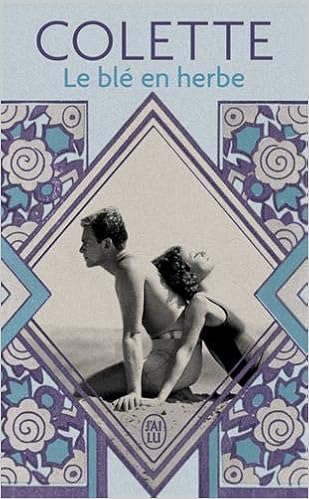
“Le Blé en Herbe” by Colette – growing pains


Almost a century after this was written, it seems like the charming, bitter-sweet tale of Phil and Vinca, two adolescents who have been close friends and playmates since infancy. On their summer holiday in the shared house rented by their parents every summer on the Normandy coast,  there is ample opportunity for the inevitable unsettling change in their relationship mixed with the general tensions and confusion of moving from childhood to becoming an adult. The appearance on the scene of the sensual, predatory thirty-something Mme Dalleray serves to bring matters to a head.

The story is perhaps unusual for a female author in adopting for the most part the viewpoint of Phil. Insofar as I  can judge, it provides a convincing portrayal of a sixteen-year-old boy – obsessed with the female body, worrying about his future studies, frustrated by the unimaginably long time he must endure before he can reach twenty-five and be considered fully a man. We know less about Vinca’s inner thoughts. Mostly still a tomboy, she can switch rapidly to wearing a pretty dress and flirting demurely with a male visitor who admires her. Capable of strong emotional outbursts, she seems generally more self-controlled, and mature in her reasoning but also more passive than Phil, playing mother to her little sister,  prepared to stay at home and help her own ailing mother until she gets married. In this attitude, she is the natural product of the 1920s when the book was written.

Apart from the fact that it is quite well-constructed, what sets this story apart is the vivid evocation  of the shoreline and changing weather along the Normandy coast. Colette’s style is quite poetical, so difficult to translate well, but the meaning is striking and clear. The same goes for the minute description of complex chains of thought and  shifts in emotions. There are also moments of humour mixed with irony, as when Phil brings Mme Dalleray  the gift of a bunch of thistles, of a blue the colour of Vinca’s eyes. I was amused by the way Phil and Vinca viewed their parents as aimiable, unreal “shadows” (les Ombres),  to be pitied for never having been in love, and in Phil’s case finding it hard even to focus on what his father was saying.

Perhaps because the scenario is dated, the examination of Vinca-and-Phil’s love sometimes becomes overblown and cloying, verging on Mills and Boon. There is an element of chauvinism as in Phil’s sense of his right to sexual adventures,  while expecting Vinca to be “pure”, together with a kind of reverse sexism in the idea that women, whilst appearing to be dominated, may in fact manipulate men, or take the lead in the case of an older woman initiating a boy.

When first published as a novel in 1923, and later distributed as a film in 1950s America, where it was temporarily banned, this  was widely considered shocking, “immoral and obscene” because it broke taboos in dealing not only with the awakening of physical attraction between adolescents,  but also with sexual acts, although in such oblique and lyrical language that it is unlikely to cause modern readers any offence.  There is the further twist that the plot was “inspired” by Colette’s own affair with her sixteen-year-old step-son, which reduces one’s respect for her as both a person and an author, although it may contribute to the book’s ring of authenticity.

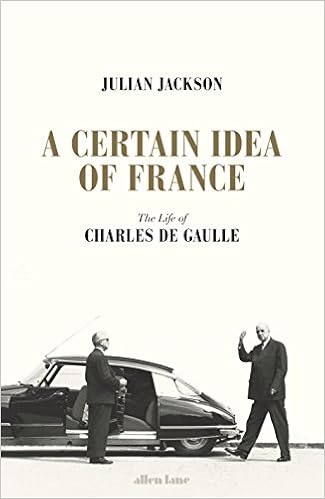
“A Certain Idea of France” – a biography of Charles de Gaulle by Julian Jackson- Using his wits to survive “like Tintin”.

This engrossing biography should delay the inevitable forgetting of what made De Gaulle so famous, with a clear socio-political summary of the past century to set the France of today in context. I enjoyed the frequent use of vivid quotations to show the reactions of De Gaulle’s contemporaries to this eccentric, complex man whose flaws both undermined and contributed to his often controversial achievements.

Deeply influenced by his conservative, nationalistic, intellectual Catholic upbringing, it is unsurprising that De Gaulle found the rapid French surrender at the outset of World War Two and subsequent collaboration intolerably dishonourable. His broadcasts to France from exile in London via the BBC, notably the famous call to arms in June 1940, had the same kind of morale-boosting impact as Churchill’s speeches. By the time De Gaulle was able to walk down the Champs-Elysées of a liberated Paris, an estimated “two million souls” gathered to greet him, yet few had any idea what he looked like in that pre-television age.

To gain recognition as the leader of the Free French and ensure that France should have some role both in the liberation and the subsequent negotiations required vast self-belief amounting to arrogance, combined with unrelenting persistence. Speaking of himself as “De Gaulle”, even “France”, a kind of latter-day male Joan of Arc, he threw chairs during tantrums with world leaders, machinated to get rid of rivals, tried Churchill’s patience to the limit, and aroused the implacable hostility of the American President Roosevelt. Forever “biting the hand that fed him”, he showed scant gratitude to the Allies or the Resistance groups on whom he was at times utterly dependent.

Perhaps he was simply applying the reading which had convinced him of a leader’s need to “cultivate mystery and keep his distance” with “a large dose of egoism, of pride, or hardness and ruse …Leadership is solitary exercise of the will”. Although he was a showman in his oratory, delivering carefully honed speeches from memory in several languages and, with his undeniable courage, loved to disappear into large adulatory crowds, private meetings with De Gaulle were often disappointing. There is a pattern in descriptions of him pontificating at length, looking through people rather than at them, sometimes unexpectedly proving later to have noted and even been influenced by remarks they had managed to make.

“Granting” Algerian independence has been cited as one of De Gaulle’s main achievements, but Julian Jackson points out that it was in fact “wrested from him” after France had come close to mainland civil war, and he showed a callous disregard for the suffering of pieds noirs and Harkis who “lost out” in the process.

It was a shock to realise that De Gaulle’s return to power as President in 1958 was undemocratic, a coup “legalised” because “France’s elites had lost confidence in the existing regime to resolve the Algerian crisis”. This gave him “full powers to govern by decree for six months with the suspension of parliament during that period”. His subsequent manipulation of the constitution under the new Fifth Republic to get himself elected directly by the public, thus cementing his personal power, was also questionable – he was recreating the role of a monarch within the republican system which had aimed to destroy it. His delight in “upsetting the applecart” was evident to the end, as in his rash speech, climaxing in the infamous slogan “Vive le Québec libre!”on a visit to Canada.

De Gaulle often seems like a throwback to a previous age, with his frugal personal lifestyle, rejection of the telephone even when holding high office. and his musing on the damaging effect on society of mass production. Yet he encouraged others to pursue the technology, including nuclear warheads, which would “make France great” and was fortunate, probably owing some of his popularity to, the fact that his “reign” coincided with the “Trente Glorieuses” – the three decades of post-war relative economic prosperity and cultural achievement in France.

Although forced to resign ultimately as an old man who had become out of touch, as indicated by the riots of 1968, De Gaulle often proved quite insightful: he foresaw the collapse of Soviet communism, the folly of the American involvement in the Vietnam War which could not be won, ironically even prophesied for the Common Market that “if England enters into the Community, it will collapse because England will divide us”.

Clearly intended to be a major academic work, this requires a significant investment of time. At more than 800 pages, including notes and bibliography, it is too thick and cumbersome to read comfortably in paper format. I found the Kindle version more convenient, with the downside of it being much harder to flick back quickly to check on a point. The sheer number of names of politicians or acronyms of organisations and parties often becomes too much to absorb. Yet it definitely extended my knowledge and understanding considerably – probably one of the best books I have made the effort to read.
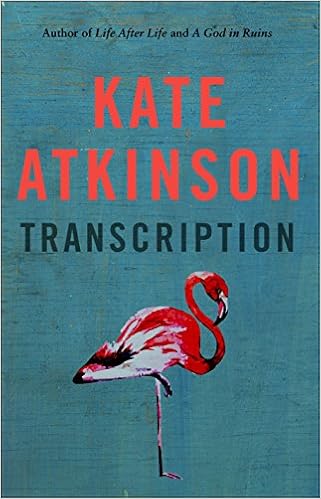
“Transcription” by Kate Atkinson – No need for a bodyguard of lies when truth has vanished.

There are plenty of stories of naïve young women caught up in World War Two who prove plucky and shrewd when parachuted into occupied France to work in espionage or join the Resistance. This novel focuses on a more mundane form of spying, and at times almost seems like a parody of the genre.

Obliged by her widowed mother’s terminal illness and death to give up her school scholarship and prospect of trying for Oxford, Juliet Armstrong finds life taking an unexpected turn when she is recruited by MI5 in 1940, initially as a typist transcribing bugged conversations between Fifth Column Nazi sympathisers and “Gordon Toby”, the work colleague masquerading as a Gestapo agent.

Pehaps intentionally, the recorded conversations are monumentally boring and trivial – little threat to national security – but when Juliet is recruited to spy on one of the female members of an ultra-right wing club, matters take an unexpected sinister turn. As the plot switches continually between 1940 and 1950, when Juliet is working on childrens’ programmes at the BBC, the tale becomes less of a spy thriller, and more a case of paying the price for past actions.

At times the story is quite funny, even a page-turner creating the sense that the plot is going somewhere interesting and unpredictable. Therefore I tried to suppress my irritation (over the excessive use of asides in brackets!), together with a sense of unease over the underlying jokey, flippant attitude to war, which seems an aspect of Juliet’s personality. She is actually quite an unappealing character: instinctive lying without blinking, often for no apparent reason; getting a “buzz” from taking the occasional fool-hardy risk; proving ruthless and calculating under pressure; perhaps the ideal spy in her lack of emotion or commitment to anyone or anything. She is kind to dogs, or people who have suffered inadvertently through her actions, but does not seem deeply moved by anything.

This impression may be the unintended consequence of shortcomings in the writing. I agree with other reviewers who have found the characters wooden and underdeveloped, the few really dramatic incidents implausibly contrived, and the long-anticipated climax so disconnected from what has gone before that it seems as if pages have been left out in a printing error. It is presumably intended to be a clever and surprising twist, but it seems like lazy writing, even insulting, to foist it on the reader in this way.

Whereas most writers apologise for any factual mistakes in a novel, Kate Atkinson defiantly admits “I got a lot of it wrong on purpose” – permissible in the case of MI5’s refusal to “spill the beans” on the transcription process. The portrayal of BBC School Broadcasting in the early 1950s seems accurate as I recall, and it does not bother me if the rest is not. What I find harder to accept is an established writer taking the soft option of a plot with gaping holes.

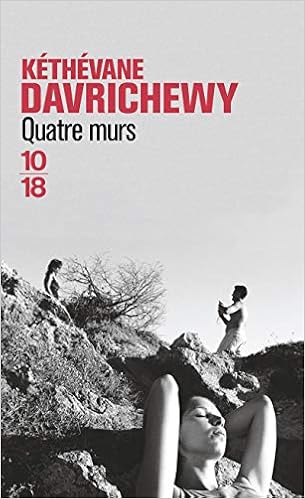
“Quatre Murs” by Kéthévane Dvarichewy – They mess you up your family….

As is often the case, although very close as children, four siblings have drifted apart into adult life. All they seem to have in common is a tendency to be troubled, even neurotic, perhaps owing to past repressed events which are gradually revealed.

In the prologue, they are brought together physically by the final visit to the childhood home which their widowed mother has decided to sell. This inevitably triggers nostalgic memories, but tension is aroused by the mother’s wish to give some of their inheritance in advance to her two younger and less successful children, the twins Elias and Rena.
The “four walls” of the title seem like a metaphor for the four adult siblings who need to decide whether they want to rebuild their relationships to prevent their family group from crumbling, once it has lost the “anchor” of the family home. To do this, they have to understand their relationships in the first place, which is hard in view of all the unspoken resentments, real or imagined guilt of the past.

A reunion with their mother two years later at the Greek holiday home purchased by elder son Saul creates a situation in which the four can reflect on the past, perhaps make a few confessions and ultimately begin to rebond. The author uses the device of taking a different view point in each chapter: that of Saul, the “intellectual”, successful but troubled former journalist; then Hélène, the internationally known creator of perfumes who has perhaps erected a false screen of not wanting either children or a man in her life; Elias, who has not achieved his potential as a pianist and is separated from his wife, and Rena who has suffered a crippling accident, leaving her dependent on a crutch, perhaps another metaphor for emotional clinging to others.

Is perception of the past changed by the passage of time, or does each individual see it in his or her own way? Memories take root differently, with hate linking us as much as love. Do only children, like their parents, make a fantasy out of having a large family, thus creating a heavy burden for their own brood of children? People worry how their children will turn out, what they can do to avoid mistakes in their upbringing, all the while finding it hard to see themselves as parents. Such are the observations produced by the characters’ continual navel-gazing.

There are some strong dialogues (sometimes hard to keep track of who is speaking), leading me to wonder if this might have worked better as a film which could also have captured visually the ambience of the childhood house, or Saul’s Greek retreat. Critics have noted the subtlety and “non-dits”, unspoken words, of this novella, so perhaps I missed some of the revelations. For me, these proved too fragmented, the details sometimes hard to follow, except when delivered in a melodramatic outburst. One could argue that the real drama lies in the reader’s freedom to speculate over what may really lie behind all the obscure hints and allusions. For instance, do incestuous feelings lie at the root of a character’s malaise? Can it be hard for the siblings in general really to love anyone outside the charmed circle of their childhood bonds, now broken without being fully satisfied by anyone else?

The French author may have been inspired by her Georgian heritage to create a family with parents who were originally Greek immigrants, one of Jewish extraction, but it was unclear to me how being immigrants influenced the essential exploration of family ties, except that feeling a little rootless may have encouraged the mother to foster excessively tight bonds between her children.

A potentially promising novella left me rather bored and disappointed with its underdeveloped characters, thin plot, and somewhat tame conclusion.

“The White Crow” – based on true story of ballet icon Rudolph Nureyev’s defection from Soviet Russia

The White Crow [DVD] [2019]

Since it is surprisingly almost six decades since Rudolph Nureyev’s highly publicised defection from the Kirov Ballet on a trip to Paris, this biopic may have the added appeal of novelty for many viewers.

Based on a biography, I know not how accurately, this focuses on the dancer’s early life up to the age of twenty-three. Beginning with his dramatic birth on a crowded train, his sisters looking on, the story switches continually between his childhood, life as a frustrated dancer in Moscow from the late fifties, and transport to the heady excitement of Paris on a five week trip for the troupe in 1961. This “flitting” technique creates a somewhat disjointed effect at times.

The poverty of his early life is filmed in a black and white world of it would seem perpetual snow, with his kindly peasant mother (with remarkably good teeth) struggling to hold the family together until the sudden appearance of a stranger, his soldier father returned from a long unexplained absence. Nureyev tells the sophisticated young Parisienne with whom he has struck up a friendship how his mother’s chance win of a lottery ticket to the ballet introduced him to a magical world he was determined to make his own. We do not learn until the final scenes how this meant separation at an early age from his family to begin his training, several years late, which put him under pressure to catch up. We are left to conclude how these experiences led to his fierce independence, thirst for knowledge, determination to succeed to the point of utter selfishness, confidence to the point of arrogance and outbursts of ill-tempered rudeness, even against friends, if he felt himself slighted, or simply wanted to demonstrate the power his talent gave him. Alongside this litany of unappealing traits, the young dancer turned actor who plays him manages also to convey Nureyev’s charm, which combined with his sheer ability caused sorely tried friends to forgive him and help him when it came to defecting.

Despite his at times obnoxious behaviour, it is hard not to sympathise with Nureyev when he is reduced to a mental wreck at the prospect of being sent back early to Moscow to dance for Krushchev, a euphemism for the punishment provoked by his refusal to obey the instruction against fraternising with foreigners. Instead, he has led his principal minder a merry dance, going out to bars, even strip clubs, with his decadent western friends, only returning around 5 a.m. The film is powerful in conveying his sense of oppression, the insidious menace of the continual monitoring of his activities. His exuberant pleasure over discovering western culture in its broadest sense, one of his first observations being the word “liberté” carved on a column, contrasts with the grey narrowness of the communist régime which we know with the wisdom of hindsight is doomed to fail. Ironically, a French dancer remarks that, although they may lack technical accuracy, Soviet dancers like Nureyev perform with a kind of raw energy which the “liberated” performers of the west lack.

Even though it necessitated sub-titles, I liked the authenticity provided by the extensive use of Russian in the dialogues, with even actor/director Ralph Fiennes mastering the language for his role of the self-effacing yet gifted ballet instructor. Also, not all Soviet life is bleak, as indicated by the scene in which Nureyev takes part in a social gathering in a well-furnished room where friends laugh, drink, discuss and sing traditional songs behind the plain door of a Russian apartment.

Lacking the spark to make it a great film, this is very watchable and thought-provoking.

“Everybody knows”: Can anybody tell?

Everybody Knows (DVD) [2019]

Laura returns from Argentina with her lively, in fact somewhat out-of-hand, teenage daughter Irene and cute little son to attend her sister’s wedding in their picturesquely run-down home town set among Spanish vineyards. The gifted Iranian film director Asghar Farhadi captures the atmosphere of a big, traditional Spanish wedding. Guests sit in mute respect with a few wry grins when the priest takes an unexpected peal of the church bells as a cue to request more money for repairs, on the lines of gifts of money received from Laura’s supposedly wealthy husband Alejandro, who has stayed behind in Argentina, apparently for his work. Later, as the bride steps out in a stylish flamenco, they all dance and carouse into the small hours, until the discovery of Irene’s abduction from her bed during a clearly planned power cut.

Despite speculation that Irene may have engineered her own disappearance, a more sinister explanation seems likely as her bed is strewn with warning cuttings about an unsolved kidnapping in the past which led to the death of a local girl, because her family ignored instructions and went to the police. Distraught with grief and fear, it is not surprising that Laura also refuses to report her daughter’s disappearance.

Tension remains high in this psychological drama, as Laura’s friend and former lover Paco, a successful local vineyard owner, plays a major part in both searching for the girl and obtaining the ransom money, if only to string the kidnappers along when Alejandro appears, trusting only to God to save his daughter since he is in fact bankrupt. As the plot develops, long-held resentments and possible motives for both kidnap and ransom are gradually revealed in this inward-looking community with its tight gossip grapevine in which “everyone knows” each other’s past secrets, or thinks that this is the case.

What some have described as a rather weak ending struck me as very effective. The viewer is left free to decide what happens next. The most interesting question left unanswered is whether information which belatedly becomes available about the crime will be widely shared and acted upon, or suppressed like other secrets, for ulterior motives.

The film is visually striking and well-acted, particularly by Javier Bardem in the role of Paco, and Barbara Lennie as his wife Bea. Apart from one or two flaws in the plot which, as ever, one does not notice at the time, this is an entertaining yarn which can be appreciated at a deeper level.

“Unsheltered” by Barbara Kingsolver

Willa, whose name may have been inspired by the celebrated American writer Willa Cather, has inherited a suburban house in New Jersey which is unfortunately falling down through lack of foundations. This is perhaps a metaphor for a middle class family fallen on hard times, so “unsheltered” from both personal problems plus those of a world threatened by climatic change and the collapse of capitalism, to name a couple of issues. Willa has to cope with a handsome, charming but unreliable husband who seems unable to keep his academic posts, even when it is not his fault, in addition to disabled father-in-law “Old Nick”, free-spirit, prickly daughter “Tig”, and son Zeke, traumatised by his wife’s post-natal suicide leaving him with an infant son he will inevitably dump on his mother.

This storyline interweaves in alternate chapters with that of a family from 1871, a century and a half previously, who occupied the same house in Vineland, one of the “Nineteenth-Century Utopias Gone to Hell”. Willa’s unlikely counterpart is Thatcher Greenwood, the earnest new science teacher whose passion for Darwin’s theories and other fresh discoveries such as the existence of molecules, are ahead of the times, even judged “heretical” in the conservative, pious small town community. With his pretty but shallow wife Rose, who cannot come to terms with the need to economise, nor give her husband the support he needs, the situation is reminiscent of Doctor Lydgate and his wife Rosamond in “Middlemarch”. Thatcher finds a kindred spirit in his neighbour, the eccentric investigator of spiders and carnivorous plants, botanist and thinker Mrs Mary Treat.

Such is the standing of the bestseller, “The Poisonwood Bible”, with its brilliant first part on the inflexible American missionary who drags his family off to the Congo to cultivate the land and convert the local people without understanding either, that it feels presumptuous to find fault with this book. I was also sufficiently fascinated by the idea of climate change causing Monarch butterflies to migrate to the Appalachians to forgive the tedious passages in “Flight Behaviour”. Yet much as I wanted to enjoy “Unsheltered”, written by a scientist with a sincere desire to explore environmental and social issues, and based on thorough research of the real-life Vineland and Mary Treat, who corresponded with Darwin, I found it intolerably heavy going, bogged down in the flaws increasingly evident in earlier novels, without enough redeeming features despite the potentially interesting themes.

The style is too convoluted, digressive and crammed with indigestible detail. The mostly undeveloped, two-dimensional characters indulge in contrived, stilted conversations which are an all too obvious device for information dumps and debates on what we should think about important issues, with “incorrect” ideas given a put-down, if only in thought, by right-thinking people like Willa. There’s also a tad too much of the saccharine tone: when Mrs Treat unexpectedly “twinkled” over Thatcher’s admiration for her tarantula house, my heart sank.

In the midst of all her domestic ties, former journalist Willa is intrigued to find out more about Mary Treat, but there is not enough to tie together the two strands which might have been more eengaging if divided into two separate novels, or as some have suggested a straightforward piece of non-fiction on the state of our society.

“The Song of Achilles” by Madeline Miller – Doomed Beauty

Despite as a rule giving supernatural and magic realism a wide berth, I find Greek and Roman myths and Homer’s Iliad and Odyssey intriguing examples of storytelling and creative writing from nearly three thousand years ago. With an academic background in the Classics, Madeline Miller has produced a vividly imagined modern take on the famous drama of the warrior Achilles and his friend and lover Patroclus. After a decade of research, she has crafted a tightly plotted tale to which we can relate, despite the different values and customs of the day, through the well-developed main characters and dialogue which is modern, without jarring.

The story is told from the viewpoint of Patroclus, a Greek prince who is exiled from his unloving father’s kingdom at the age of only nine for having accidentally killed a boy who bullied him. At the court of the kindly King Peleus, Patroclus catches the eye of his charismatic son Achilles, and the two become firm friends and eventually lovers. With the sea goddess Thetis for a mother, Achilles is fated to become immortalised in memory as the greatest warrior of his generation, the price being that he will die young. This seems likely to happen sooner than he and Patroclus might wish, since the Greek kings and princes are bound by an oath to fight for the return to Menelaus of his beautiful wife Helen, who has been abducted (perhaps willingly) by the reckless Prince Paris of Troy.

For a Me Too protagonist this book may seem beyond the pale, the treatment of women as booty along with golden goblets, slavery and rape of women being taken for granted, often at the hands of the men who have slain their male relatives in battle. Even female deities do not escape this: the virtuous Peleus was rewarded by the gods by being allotted the sea-nymph Thetis to give him a child, but was expected to use brute force to overcome her resistance.
In a confined Mediterranean natural world where so much is unknown or inexplicable, no one in this book questions long-held superstitions, the role of the capricious gods in determining the course of events or the “pecking order” of the deities, in which Thetis, though powerful by human standards may have to beg Zeus for a favour, or be unable to explain a prophecy from the Fates, “well-known” for their riddles. With her eyes “dark as sea-wet rocks and as jagged”, her clinging dress “shimmering like fish-scale”, she sustains a vicious contempt for Patroclus. “He is not worthy of you” she tells her son, although events may prove otherwise.

I liked the lighter moments of humour in the blend between fantasy and practicalities as when kindly centaur and teacher of men Chiron is disappointed to hear that the boys have been taught to ride: “Forget what you learned. I do not like to be squeezed by the legs or tugged at”. Patroclus found “the centaur’s gait was less symmetrical than a horse’s…I slipped alarmingly on the sweat-slick horsehair.” On first meeting, Patroclus is fascinated by “that impossible suture of horse and man, where smooth skin becomes gleaming brown coat”.

Although the love between Patroclus and Achilles is portrayed with sensitivity, it seemed to me like a rather feminine take on male love. Similarly, the blood and guts of battle appear somewhat sanitised in the protracted Trojan War, with the Greeks setting off from their camps on the beach across a plain to reach the city walls, rather like a road construction gang going off to work. Admittedly, the book builds up to a violent climax, perhaps all the stronger for brutality having been underplayed earlier.

As Achilles loses the innocence of youth and starts exploiting his reputation as a fighter to challenge the corrupt actions of the unpleasant war leader Agamemnon, the unthinking acceptance of the glory of prowess in battle gives way to more complex considerations of the misuse of power, even with good intentions, which may lead to stubborn pride and hubris. Apart from a rather sentimental final paragraph, if you can cope with a ghostly spirit “the faintest shiver in the air” as the deceased narrator, the novel achieves a condensed but quite neat and thought-provoking ending. The simple value of human love, like that between Achilles and Patroclus may be shown to have more worth than artificially god-fuelled fighting skills. The desire to be a mere mortal may win out over the heartless arrogance of Pyrrhus, the unfortunate son of Achilles whom Thetis tried unsuccessfully “to make.. a god”.

I was prompted to read this by reviews of Pat Barker’s “The Silence of the Girls”, which has a feminist take on the story of Achilles and Patroclus from the viewpoint of Briseis, cast as a Trojan king’s daughter rather than the Anatolian village girl of this version. Although women play a much smaller part in Madeline Miller’s story, I found her tale less viscerally violent with a more subtle and satisfying plot and the characters of Achilles and Patroclus much more fully developed, complex and arousing empathy. It’s worth reading the two novels for comparison.