Galileo Watcher of the Skies – obscured somewhat by the fog of academia

Galileo: Watcher of the Skies by [Wootton, David]My fascination with Galileo, the brilliant thinker who was eventually gagged by a bigoted Inquisition, was fed by Michael White’s absorbing biography, “Galileo Antichrist”. Although very strong on childhood influences, personality, dealings with friends and family, his inventions and the tortuous path by which he fell foul of the priests pulling the strings behind an insecure and neurotic Pope, the biography seemed a little thin on the all-important scientific theories to do with motion and astronomy, and to have gone too far into trying to make ideas accessible by “dumbing down” the details.
In seeking out David Wootton’s much denser and more academic work, I got both more and less than I bargained for. Following an essentially chronological but more thematic approach, the author devotes lengthy passages to, for instance, experiments dealing with specific gravity, the physics of the motion of falling objects, or mathematical calculations to evaluate the respective merits of the theories of Aristotle and Ptolemy versus the more “heretical” Copernicus, and “fudged” Tycho Brahe. My lack of basic scientific knowledge made it hard for me to understand some of the author’s explanations and arguments, but I also suspected that, himself a historian, he may have strayed out of his own comfort zone. He certainly seems to make things overly complicated and long-winded.

Despite many examples of Galileo conducting practical experiments, Wootton is at pains to stress that these were mainly to demonstrate the truth of his real love, abstract theories, which is what led him to mathematics. Although he sometimes seemed too arrogantly confident, or perhaps simply busy, to put a theory to the test, he seems to me to have combined the two approaches, so that to suggest otherwise is hair-splitting. How could Galileo have done otherwise at a time when the words “experiment” and “scientist” were not used, and it was common for inquisitive thinkers to be polymaths.

Wootton concedes the limitations placed on historical research by the loss and corruption of data. So, we learn that much of the writing from Galileo’s most fertile period of invention was used by a butcher to wrap meat, or sold off as scrap paper. Similarly, his former student Viviani, who did so much to foster a positive legacy for Galileo, was not above fabricating appealing myths, such as the claim that he devised “the law of the pendulum” from observing the swinging of a lamp in Pisa Cathedral. However, in the absence of hard evidence, Wootton seems to me to indulge in too much academic conjecture as to, for example, the extent to which Galileo was a Catholic or even a Christian. For a man born in 1564, I see no contradiction in the fact that he, with unconscious male chauvinism, sent his two daughters to be nuns, that he paid lip service to Catholic belief when there was an Inquisition actively engaged in torturing and executing alleged heretics, but was dedicated to the pursuit of scientific enquiry which some Jesuits themselves pursued, yet could not deny what his reason told him to be true, unless his own life was at risk.

Not until two-thirds of the way through does Wootton state that his “primary purpose is to provide an intellectual biography of one of the world’s greatest scientists-to reconstruct the development of his ideas over time”. At the same time, he observes that, ”Amongst professional historians, biography is not an intellectually respectable genre”. He then makes what seems like a self-evident case for what he calls “a characterological approach to biography” to enable us to understand the study of scientific progress and cultural change, fitting themes for a historian, it would seem. This line of argument appears unnecessarily tortuous. However it explains why Wootton glosses over Galileo’s childhood and career, and why references to his family often seem awkwardly squeezed in, sometimes so condensed as to be hard to follow. I was troubled by the subjectivity of a chapter suggesting out of the blue that a bullying and devious mother may have been to blame for his reluctance to get married, his lack of communication as regards his emotional attachments and private beliefs, and also explain his aggressive, driven personality. In his summing up, Wootton writes, “the paternal conflict between experience and reason and the maternal conflict between power and influence shaped Galileo’s internal life and constitute the cosmography of his self” but I could not find clear and convincing passages in the book to support this.

Similarly, I was surprised by the author’s sudden break from the build-up to Galileo’s trial in order to speculate on his frustration over a missed opportunity to consummate a relationship with some married woman, Alessandra Buonamici who had not clearly figured in the story before. I would have preferred more along the lines of the moving account of Galileo’s close relationship with his daughter Marie-Celeste, a nun, to provide a more fleshed out picture of the man.

Although the work is informative and gripping in places, it continually frustrated me by failing to provide the further insights and deeper analysis I was seeking. The above factors make it an unnecessarily hard and opaque slog at times.

“Elle par bonheur et toujours nue” par Guy Goffette – in painting when many small lies make a great truth

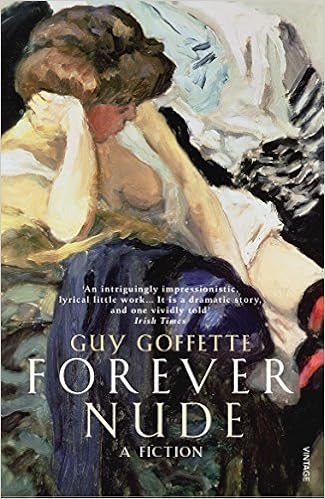
With a quirky title perhaps including a pun on “bonheur” and “Bonnard”, these linked short stories form a poetical, fragmented fictionalised biography of the post-Impressionist painter who made a lifelong companion of Marthe, the young woman who captivated him in a chance encounter on a Pairs street, and provided the model for hundreds of paintings and sketches of her, often in the bath, dressing or relaxing on the bed, but “toujours nue” (“Forever Nude” in the English translation).

We learn that Marthe was really Marie, a poor farmer’s daughter who adopted a false name including an aristocratic “de” when she escaped to Paris to make her fortune. Bonnard did not discover this until he came to marry her more than thirty years later. He had his own share of secrets, in particular his liaison with a vivacious young blonde, Renée Monchaty, a marked contrast to the apparently more passive Marthe, increasingly shrewish and sickly as she aged. Renée’s suicide, perhaps sparked by his marriage, shocked Bonnard to the core. All this could have been worked into a dramatic novel, together with Bonnard’s legal problems after Marthe’s death, which led eventually to a change in the law guaranteeing an artist’s rights of full ownership to his or her entire body of work. However, Goffette is much more interested in writing about Bonnard’s art as a form of visual poetry, using colour in place of words, and in portraying the artist as a man who shunned “la gloire imbécile”, wishing only to paint what he pleased, when and how he wanted.

At first, I found the style overblown as in the opening chapter, where Goffette describes entering a gallery hot and flustered, only to be refreshed by encountering a painting of the toujours nue Marthe spraying herself with eau de Cologne. Written from a male viewpoint, the lengthy sensual, even erotic description of Marthe made me uneasy. It seemed voyeuristic and sexist, akin to a man assuming the right to impose himself on a pretty stranger who has caught his eye in the street.
However, gradually, the writer won me over, mainly in helping me to view Bonnard’s paintings with new eyes. This was only possible since I had access to a computer and was able to find images of most of the paintings he describes. It would actually be a better book with photographs of these works included.

Goffette showed me how the use of a black blind, cutting off my view “comme une guillotine”, made it fall “brutalement” to a sleeping Marthe and cat: in fact, it drew my attention to the view outside the window, another theme Bonnard loved to explore. I was also struck by the vivid colours in his last painting, an almond tree in blossom. On his death bed, with his nephew’s help, he still felt the urge to change a patch of ground from green to bright yellow.

Although the flowery style is not to my taste, there are a number of telling insights, and I have also discovered a large number of paintings by Bonnard which I like, and am now able to appreciate why he was and is so highly regarded as a painter, if not by Picasso.


“Forever nude” by Guy Goffette

I read this in French, but presumably my comments still apply, although it is hard to imagine how the distinctive French “stream of consciousness” style could have been translated without something being lost.
With a quirky title perhaps including a pun on “bonheur” and “Bonnard”, these linked short stories form a poetical, fragmented fictionalised biography of the post-Impressionist painter who made a lifelong companion of Marthe, the young woman who captivated him in a chance encounter on a Pairs street, and provided the model for hundreds of paintings and sketches of her, often in the bath, dressing or relaxing on the bed, but “toujours nue” (“Forever Nude” in the English translation).

We learn that Marthe was really Marie, a poor farmer’s daughter who adopted a false name including an aristocratic “de” when she escaped to Paris to make her fortune. Bonnard did not discover this until he came to marry her more than thirty years later. He had his own share of secrets, in particular his liaison with a vivacious young blonde, Renée Monchaty, a marked contrast to the apparently more passive Marthe, increasingly shrewish and sickly as she aged. Renée’s suicide, perhaps sparked by his marriage, shocked Bonnard to the core. All this could have been worked into a dramatic novel, together with Bonnard’s legal problems after Marthe’s death, which led eventually to a change in the law guaranteeing an artist’s rights of full ownership to his or her entire body of work. However, Goffette is much more interested in writing about Bonnard’s art as a form of visual poetry, using colour in place of words, and in portraying the artist as a man who shunned “la gloire imbécile”, wishing only to paint what he pleased, when and how he wanted.

At first, I found the style overblown as in the opening chapter, where Goffette describes entering a gallery hot and flustered, only to be refreshed by encountering a painting of the toujours nue Marthe spraying herself with eau de Cologne. Written from a male viewpoint, the lengthy sensual, even erotic description of Marthe made me uneasy. It seemed voyeuristic and sexist, akin to a man assuming the right to impose himself on a pretty stranger who has caught his eye in the street.
However, gradually, the writer won me over, mainly in helping me to view Bonnard’s paintings with new eyes. This was only possible since I had access to a computer and was able to find images of most of the paintings he describes. It would actually be a better book with photographs of these works included.

Goffette showed me how the use of a black blind, cutting off my view “comme une guillotine”, made it fall “brutalement” to a sleeping Marthe and cat: in fact, it drew my attention to the view outside the window, another theme Bonnard loved to explore. I was also struck by the vivid colours in his last painting, an almond tree in blossom. On his death bed, with his nephew’s help, he still felt the urge to change a patch of ground from green to bright yellow.

Although the flowery style is not to my taste, there are a number of telling insights, and I have also discovered a large number of paintings by Bonnard which I like, and am now able to appreciate why he was and is so highly regarded as a painter, if not by Picasso.

“Les Sauvages” by Sabri Louatah – flawed ambition

If you have not read Tomes 1 and 2 of “Les Sauvages”, the following review contains spoilers. Also, Tomes 3 and 4 will make little sense if you have not yet read the first half of the series. This review refers to both Tomes 3 and 4, which I bought combined in one volume.
This is the second half of the ambitious saga revolving round the Nerrouches, a family of Algerian “Kabyle” origin who have settled in the declining industrial French town of St. Étienne. Their excitement over the possible election of the first French President of Algerian origin, the charismatic, westernised and liberal-minded Chaouch, is shattered when he is not only seriously injured in a gun attack, but the would-be assassin turns out to be Krim Nerrouche, a basically decent but disaffected, drug-addicted teenager who has gone off the rails since the death of his father. A further twist is that he seems to have been somehow manipulated and groomed into committing the atrocity by his sinister, mysterious cousin Nazir, possibly a fundamentalist saboteur bent on destroying the prospect of a moderate Arab leader who might actually succeed in bringing together the opposing factions in French society.

As the plot developed in Tome 2, one began to suspect that Nazir may himself have been the stooge of ultra right-wing French fanatics seeking to eliminate Chaouch for their own ends, and stir up a state of emergency in which they can claim victory through restoring order.

The very ordinary Nerrouche family are also linked to “movers and shakers” through the fact that Nazir’s brother Fouad, a handsome actor who has gained national recognition and popularity through a TV soap, is going out with Chaouch’s daughter Jasmine. The brothers are pitted against each other rather simplistically as “evil” and “good”, although Fouad’s halo slips somewhat under the stressful situation in Tomes 3 and 4.

All this forms the basis of a promising and topical drama. Sabri Louatah is at his most authentic and engaging when creating scenes of family life, showing the relationships between characters caught between Kabyle tradition and very different modern French culture. He also provides a strong sense of place, particularly for St. Étienne and in the scenes set in Algeria. Critics have noted the book’s cinematic nature and, with film rights quickly sold, perhaps it was always the author’s aim to write “a TV series in book form” like one of his favourite authors Balzac, who of course had no option but to create drama in the form of novels!

Louatah has also spoken of his passion for American soaps like “ER”, which may account for the way “Les Sauvages” is made up of short scenes, often focusing on the relationships between individuals in quite banal situations, with much of the high drama conducted off-set, explained or implied after the event. This results in a somewhat fragmented plot, hard to follow at times, ironically defusing the potential for tension which is often such a strong aspect of a good film. The approach also enables Louatah to gloss over the implausible aspects of Nazir’s and right-wing Montesquiou’s scheming . Too often, with the clear exception of Fouad and to a lesser extent Chaouch, who is given to pontificating, the characters seem two-dimensional and too ludicrous to be either convincing or to arouse much emotion – the cane-tapping Montesquiou being a case in point, and Nazir another. By and large, the “baddies” are pantomime figures.

Although covering only a few weeks, the plot loses momentum continually, so that I often found the books tedious. My flagging interest was sustained by the author’s use of a hook at the end of each Tome to keep me reading, although I feared Tome 4 would fizzle out in an inconclusive ending, leaving the way open for Tomes 5-10……. Despite seeming something of an anti-climax, with one of the villains supplying an information dump which is not entirely necessary, since one has in fact already deduced or been told the salient details, the ending ties up sufficient loose ends to reach a satisfactory stopping point.

Louatah claims to be more interested in “fiction” than in “literature”, but, bearing in mind that I think he has a serious interest in portraying the problems of modern French society, “Les Sauvages” would have been more powerful and effective if presented as a single shorter, tighter novel, with fewer characters, more fully developed. As it stands, it will need a lot of work to convert to an effective film script anyway.

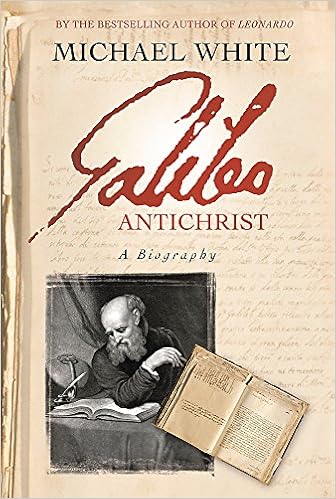
Galileo Antichrist A Biography by Michael White – pure reason versus fear of thinking

“I do not feel obliged to believe that the same God who has endowed us with sense, reason, and intellect has intended us to forgo their use.”
Galileo was a man of remarkable intelligence with the misfortune to be born at a time of intense religious bigotry. Nowadays he would no doubt be a media celebrity explaining and debating his many theories, a multi-millionaire through the sale of his inventions and a Nobel prize-winner to boot.

Instead, in the understandable desire to avoid life imprisonment in his old age and possible burning as a heretic, he was browbeaten into a humiliating refutation of his support for the theory of Copernicus that the earth rotates in orbit round a static sun. His scientific approach, based on observable evidence and mathematical calculations foundered on the Catholic Church’s arbitrary insistence on the immutable truth of Aristotle’s flawed deductive reasoning that an all-powerful God kept the sun and planets orbiting round the earth. The supreme irony is that Aristotle was a “heathen” Greek. Another is that Galileo might have avoided punishment if he had been prepared to escape to a Protestant country like the Netherlands or England, even stayed in the more tolerant city of Venice rather than throw in his lot with the Medicis of Florence, who were less prepared to stand up to the Pope.

In this fascinating account, which makes science comprehensible even to a reader with very limited prior knowledge, the author has a tendency to try to capture our imagination with a good deal of speculation. The most significant example of this is his support for a recent theory that the heresy for which Galileo was convicted was in fact a cynical distraction from the issue which really concerned the somewhat unstable Pope Urban VIII and the fanatical Jesuits at the heart of the Vatican. This was that Galileo’s nascent views on the existence and nature of atoms threatened the belief at the heart of Catholic doctrine, which sets it apart from Protestantism: namely, that in Holy Communion, the bread and wine actually become the body and blood of Christ, whilst maintaining their original physical appearance.
Although widely admired in his lifetime, Galileo was no saint. As a young man, he was known as “the Wrangler” for his argumentative approach. Never backward in asserting his intelligence and his contempt for those of lesser intellect who contradicted him, he accumulated a number of enemies who were eager to play a part in his ultimate downfall. To gain a teaching post at the University of Padua, he was prepared to give a lecture estimating the dimensions of Lucifer, a topic he must surely have regarded as somewhat ludicrous.

His curiosity ranged widely to include radical thinking on the behaviour of pendulums, the speed of falling objects, even the cause of the tides, where his thinking was in error. He showed entrepreneurial skills in commercialising his invention of the mathematical compass, a widely used tool for making calculations, driven by the need to support an extended family including his feckless brother with a growing brood of children. Despite being an excellent communicator, Galileo detested teaching: he out-manoeuvred a rival to corner the market in another invention with practical application, one of the first telescopes, and used it as a means of gaining a plum post in the Florence of the Medicis, one of the conditions being that he could give up teaching.

The telescope enabled him to view the moons orbiting Jupiter and the “crackled and wavy” surface of a moon which the Church insisted was a perfect, smooth sphere: Galileo’s critics argued that, if it was covered in mountains and craters, it must be contained in a translucent layer which would make it the “right” shape. It is not surprising that Galileo presented his arguments in debates in which foolish arguments were demolished, but when the “fall guy” voicing views held by the Pope was named Simplicio, based on the Italian word for simpleton, he was clearly sailing to close to the wind.

Galileo’s fateful trial is covered in some detail in translations of a tortuous procedure involving legalistic language and specious theological argument which despite being somewhat dry has the power to enrage the modern reader over the injustice of the situation. Yet with successors like Newton to build on his work, the genie could never be returned to the bottle.

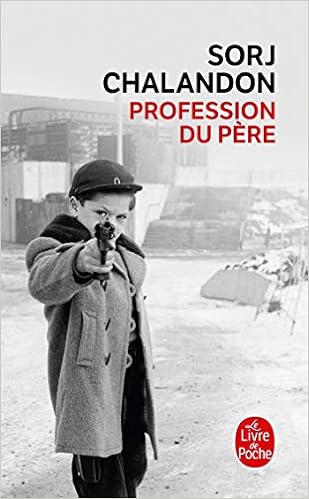
“Profession du père” by Sorj Chalandon – in this case Larkin was right.

At the funeral of André Choulans there are only two mourners: his long-suffering wife and son Émile, an artist who sketches the crematorium with an odd lack of emotion as they await the coffin. Narrator Émile then proceeds gradually to account for this tragic situation, going back to his childhood, the France of De Gaulle and the stirrings of rebellion in Algeria in 1961. As an impressionable youngster, Émile craved his father’s approval, believing his web of lies and fantasies, but fearing the violence which he might at any moment unleash on his child and wife. Émile suffers the embarrassment each year of being asked to write his father’s profession on a school form. How can he say that he is a secret agent? This is the latest in a string of professions he is too young to question: pastor, pilot, parachutist, judo expert and singer to name a few.
It soon becomes apparent that the bullying, manipulative André is paranoid but somehow manages to avoid exposure and medical treatment by keeping his little family unit in an isolated bubble. By turns amusing, heartrending, farcical, this is an intriguing psychological study. Émile’s mother is not simply a wife battered into submission, the victim of “coercive control”, but also seems to connive in the situation to avoid trouble. “You know what your father’s like” is her mantra, and years later she asks Émile: “Was your childhood really so awful?” So she occupies herself in making vegetable stews, abdicating responsibility for protecting her son if not herself.

Similarly, as he grows older, accustomed to André’s continual broken promises, to what extent does Émile really believe that his father is serious in involving him in a plot to assassinate De Gaulle, allegedly the former colleague who has ignored his advice and broken his promise to the French colonists in Algeria? Is the idea that another of his father’s friends is a high-ranking CIA agent called Ted, who is his god father too appealing an idea to debunk – even when Ted feels he should be punished for his poor grades?

Another intriguing aspect is the way Émile’s behaviour begins to mirror that of his father. Just as André wants his son to be an admiring acolyte to be subjected to rigorous military drills, a willing stooge prepared to risk daft escapades like delivering death threats, Émile seeks out a friend to share these exploits with, one who can be controlled and dominated as he is. Unfortunately, he chooses a “Pied Noir” boy who really does have a grievance against De Gaulle. To avoid crazed beatings and confinement to “the correction unit” of his parent’s wardrobe, Émile shows a convoluted ingenuity equal to his father’s when it comes to fabricating excuses.

It was hard at times to understand why Émile does not simply hate his father. Instead there seems at times to be, if not exactly love, that mysterious family bond, consisting in part of shared experience, conditioning and duty.

This novel is in fact quite autobiographical, in that Sorj Chalandon’s father was also a violent fantasist. The author has spoken of the “poison” in his system arising from the abuse he suffered, and the catharsis obtained from sharing his experiences by writing about them. He also suggests that the fantasy world was often exciting and enjoyable at the time, but for the violence.

I thought the novel lost dramatic momentum when it reached the stage of Émile’s adult life. However the tale would be incomplete without an account of how Émile eventually establishes his own life as an artist with the talent his parents failed to recognise and nourish. The contrast between his distorted childhood and the love he gives his own son is moving.

Chalandon is a brilliant novelist who deserves to be better known abroad.

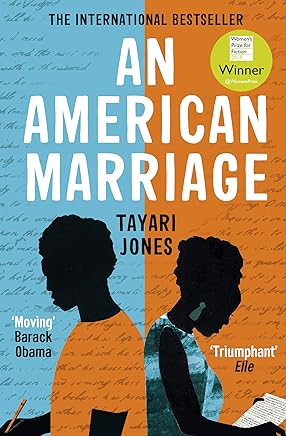
“An American Marriage” by Tayari Jones – perceptive and poignant

An American Marriage: WINNER OF THE WOMEN'S PRIZE FOR FICTION, 2019


Review of “An American Marriage by Tayari Jones.

A bright working-class boy from a small town in Louisiana, Roy has managed to escape the usual snares for black teenage youths: drugs and jail sentences. Pragmatic about accepting “leg-up programs” he is a graduate set on a promising career as a salesman and entrepreneur. Clever and beautiful, but also indulged, perhaps a bit neurotic and self-centred, Celestial comes from a more middle class background. Although the son of a sharecropper, her chemist father has managed to make himself a millionaire through the invention of a popular soft drink. Despite being unusually close since childhood to doggedly devoted “boy next door” André, Celestial is strongly attracted to his college friend Roy. Clearly in love, the two may have got married “too young”, particularly in the case of Celestial who is much less keen than him to “start a family”, being mainly driven to make her mark as an artist. A foolish tiff sets in train a series of fateful events ending in Roy receiving a long prison sentence for a crime that Celestial knows he did not commit. How will this disaster affect their marriage?

I was disappointed by and critical of the author’s glossing over the dramatic potential of the period between the arrest and the sentencing, but concluded that it was her intention to focus on the relationships between the “triangle” of Roy, Celestial and André, and the parents’ reactions in the aftermath of the tragedy.

The story is told from three different viewpoints: Roy, Celeste and to a lesser extent André, which often portray the same situation from opposing angles. Whilst agreeing with readers who found the style of the letters exchanged when Roy is in jail somewhat unrealistic and too contrived, overall the novel is very readable and compelling.

Roy aroused the most sympathy in me: a basically decent man who suffers unjust blows from various quarters. He may be an unreliable witness in playing down the philandering during his short marriage, but he has essential integrity and an endearing sense of dry humour which expresses itself even in his darkest periods. Although I was untroubled, as other reviewers have been, by not much liking Celestial and André, towards the end I found myself not caring enough about the outcome of their drama: whatever happened, Roy had the resilience to survive, André was accustomed to disappointment, and Celestial seemed emotionally immature and too self-absorbed to worry for long about hurting someone else. Although somewhat ludicrous, the dramatic climax of this book is very effective in dissecting people’s behaviour and emotions under pressure. I was satisfied that the author reached a conclusion which I had broadly predicted, suggesting that I had understood what she wanted to convey, although others may interpret it differently.

Tayari Jones clearly wishes to explore the theme of racial inequality in America, but this is also a very perceptive, moving and often wryly funny study of marital relationships, and a commentary on American society from a black perspective, which is enlightening for a white British reader. I could not understand all the American idioms and cultural references, but this did not matter unduly.

I cannot decide to what extent this winner of the “Women’s Prize for Fiction” will appeal to male readers. For me, it is occasionally overly sentimental, but this is countered by unflinching descriptions of raw, bleaker events when needed.

Highly recommended overall.

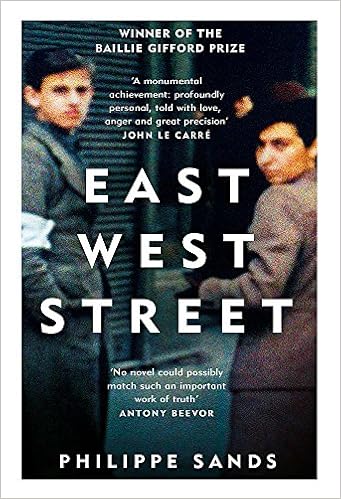
“East west street” by Philippe Sands: piecing together family history and human rights

This book made me reflect for the first time how in the early C20 when long-established stable empires were beginning to crumble, “Each country, old or new, was free to treat those who lived within its borders as it wished. International law offered few constraints on the majority’s treatment of minorities, and no rights for individuals”. The European Convention on Human Rights was not signed until 1950.

A few years before writing this book, lawyer Philippe Sands received an unexpected invitation to lecture in the Ukrainian city of Lviv on the human rights cases in which he had been involved,  his academic work on the Nuremberg trials and their consequences for the modern world. The location of Lviv proved a remarkable coincidence on several counts. Being in the “Bloodlands” of Eastern Europe, it represents a microcosm of a succession of human rights abuses, not least the Holocaust. In three decades from 1914, the city changed hands eight times, passing from the collapsed Austro-Hungarian Empire between Russians, Poles and Germans before ending up in Ukraine, by turns named Lemberg, Lviv, Lvov and Lwów. It  also happened to be the home town of the author’s Jewish grandfather Leon, who  ended up living in Paris with his wife, never speaking of events which had destroyed most of their relatives.

The initial letter “L” appears again in the names of the two Jewish lawyers, Lauterpacht and Lemkin who played a significant role in the development of international human rights legislation, and happened to study in Lviv, being taught by the same lecturers in some cases but apparently not meeting each other in person at the time.  The final coincidence lies in the fact that Hans Frank, one of the key Nazis tried at Nuremberg, committed or turned a blind eye to  his atrocities when he was appointed Governor General of Nazi-occupied Poland  which included Lemberg, as it was then called.

Lauterpacht argued that “the well-being of the individual is the ultimate object of all law”, while Lemkin coined the term “genocide” to describe the destruction of groups. At first, Lauterpacht’s argument that a focus on the protection of groups would undermine that of individuals seemed to me like academic hair-splitting. It seems undeniable that people may be persecuted both as individuals or as distinct groups, from the Jews to the Palestinians and the Rohinjas of Burma in the present day.

However, I was swayed in the end by the author’s argument that, “the need to prove the intent to destroy a group in whole or in part, as the Genocide Convention requires can have unhappy….. consequences. ….The crime of genocide has distorted the prosecution of war crimes and crimes against humanity, because it stirs up national outrage rather than the sort of ruthless examination of the record the country needs (as in the case of Armenians massacred in Turkey)….. People feel compelled to belong to groups and …… are killed because they happen to be members of a certain group…..The recognition of this fact in law tends to make more likely the possibility of conflict between groups by reinforcing the sense of group identity….  Defining the crime of genocide will end up giving rise to the very conditions it seeks to ameliorate”.

With its focus on this theme, the book is saved from unbearable bleakness by the author’s vivid evocation of life in Lviv, when Jewish communities lived with others on stable, reasonably amicable terms. Perhaps inevitably pursuing a forensic approach, Philippe Sands sometimes indulges in too much detail, as when he deploys a pair of law students to help him trawl through records from 1915-1919 to piece together Lauterpacht’s precise course of study, subjects, tutors and dates. The purpose is to understand what ideas may have influenced him, in common with Lemkin, but the inclusion of the details in the main text rather than an Appendix seems a bit excessive. On the other hand, I was fascinated by the photographs of the Nuremberg courtroom for which Sands  identifies individuals.

There is an unexpected human touch in the evident friendship formed between the author and Niklas, remorseful son of the unrepentant Hans Frank, eventually hanged at Nuremberg. The gentle Niklas keeps a photograph of his father’s body after the hanging, “To remind me, to make sure, that he is dead”.

Although overlong, also a little dry and repetitious in places, this distinctive book, hard to categorise by reason of being part detective story, part painstakingly discovered family history, but also a reflection on the impact of crimes against humanity,  is  certainly worth reading and lingers in one’s mind.

“Blood Orange” by Harriet Tyce: the consequences of actions

Harriet Tyce draws on her experience of working as a barrister in this gripping but unsavoury debut psychological crime thriller.

Remotivated by the chance to lead her first murder case, Alison intends to have only one drink with work colleagues before returning home to Carl, convenient house-husband and part-time therapist since being made redundant, and six-year old daughter Matilda. It soon becomes clear that, not for the first time, Alison will get horribly drunk and have rough sex with handsome but unpredictable and manipulative lawyer Patrick with whom she has drifted into an adulterous “secret” affair. At first, it is hard to believe how such a dysfunctional, often cringe-making and weak-willed individual in her personal life could possibly be an effective and respective barrister. How has kept his patience with her for so long?

However, as the tale progresses, one begins to develop another perspective. Apart from the fact Alison is paying the bills, Carl often seems something of a control freak, unduly quick to criticise her efforts to be a good mother, even in front of Matilda, or denigrate her efforts at cooking – can it really be as bad as he implies? He seems over-protective of his daughter, keen to monopolise her affections. Is he really trying to undermine Alison’s relationship with her child, even demoralise her to the point of doubting her sanity?

The novel also touches on deeper themes concerning the problems for women seeking to succeed “in a man’s world”, or to hold down a complex job with irregular hours without neglecting their children. Has Alison become a “high-functioning” alcoholic, apparently on the brink of total collapse, because of the training which meant spending time in the pub after work getting on good terms with the senior colleague who could put vital work her way? If she were a drunken, adulterous man, would she “get away” with it more easily?

Reminiscent of “Appletree Yard”, I imagine this being made into a television mini-series. Yet although I understand the critical acclaim and popularity gained with the public, it would have been a better book for me if it had been more subtle, rather than laying on the drama with a trowel in ludicrously exaggerated dollops. When Alison picks her daughter up from school very late, an officious teacher, “a solid barrier of dun-coloured knitwear”, blocks her exit, demanding an instant fine of £20 cash which will increase to £30 if not paid until the next day. Tell me if I am wrong, but I cannot imagine any modern-day school imposing such a penalty. Also, is it likely that Alison would interview her client suspected of murder, not in her office but at a busy restaurant, where the waiter almost pours red wine over her confidential paperwork and the medium steak ordered proves so bloody that it seems the one thing that is apt, if ghoulishly?

Creative writing classes seem to plug the use of a dramatically violent or sinister prologue as a “hook”, but apart from making modern novels seem “formulaic”, in this case it amounts to a spoiler for readers with memories of a past scandal and would have been more effective if presented as one of the twists in the somewhat contrived conclusion. To be more than a smutty romp in the wake of “Fifty Shades of Grey”, this novel needed to have less emphasis on, I quote, “booze”, “shit”, “vomit” and sex, and more character development. It amounts to a simplistic theme in which essentially well-intentioned women rise above their flaws to win out over dominant but irredeemably vile men who deserve to pay with their lives. But what made them so bad, and are there no extenuating factors, as in real life? Also, it may well be that some barristers are drunken and unethical in real life, but this book seems to condone some very ambiguous moral values, quite casually suggesting that “wrong actions” are readily acceptable if taken for the “right” reasons.

“The Accident on the A35” by Graeme Macrae Burnet: “in world that is neither true nor false, what is real?”

To get the most impact from this book, I would advise readers to leave the potentially slightly distracting “Foreword” to the end. Advertised as a sequel to “The Disappearance of Adèle Bédeau”, also featuring Inspector Georges Gorski, this can be read as a stand-alone novel. Reading the two books “in order” may help to clarify Gorski’s personal situation, but I think “The Accident on the A35” has a better pace and more interesting characters and wry humour.

When local lawyer Bertrand Barthelme, an influential figure in the provincial French backwater of St. Louis in Alsace, is killed in a road accident one Tuesday night, foul play is not suspected. Unable to resist pleasing Bertrand’s pretty and surprisingly young widow Lucette, Gorski goes beyond standard procedure in an attempt to check on Bertrand’s final movements, discovering in the process that he has been lying to his wife for years for some unknown reason. Meanwhile, Bertrand’s seventeen-year-old son Raymond embarks on his own sleuthing exercise, intrigued by the discovery in his father’s desk of a scrap of paper bearing an address for the nearby centre of Mulhouse, in what looks like a woman’s flamboyant handwriting, quite out of keeping with his father’s stern image.

The detective story proves incidental to the essence of the book, which is the in-depth psychological study of the two main characters, Georges and Raymond, together with convincing little portraits of the supporting cast, bringing them alive as authentic characters with recognisable foibles. Added to this is the strong sense of place: the claustrophobic, inward-looking conservatism of a small town where mediocrity is expected and dullness is the comfortable norm. Yet this being set in , I think, the early 1970s, there is a flicker of dangerous revolt in the reference to Sartre, whom Raymond is absorbed in reading: a novel is “neither true nor false” but is must seem “real”.

Reminiscent of Simenon, the strong sense of being in France is heightened by the author’s skill in producing what purports to be a painstakingly precise translation of a French novel, clear, concise and vivid in style but also constrained, rather like the main characters themselves. Although very different in theme from the author’s prize-winning “His Bloody Project”, both the “Gorski” books continue the common factor of a sensitive, troubled adolescent boy denied affection and empathy by a harsh or uncommunicative male figure. Raymond cuts (sometimes literally) an often amusing but poignant figure, secretive and observant, easily embarrassed, desperately worried about what people think of him, unable to prevent himself from antagonising those whom he likes or loves, with occasional bursts of short-lived euphoria when, no longer controlled by his father, he manages to kick over the traces with some “real”, however bizarre, action in a dull “unreal” world.

Gorski seems similarly emotionally stunted, the son of a deceased pawnbroker who “plays the part” of a detective, potentially very successful with his perceptive, persistent approach, but oddly passive in his personal life, and like Raymond, finding it hard to engage with others, estranged from his wife, and frequently the butt of mockery, dismissed as a plodder.

I found this book a page turner, ramping up a high degree of tension towards what seemed likely to be a fateful but unpredictable end. Both very abrupt, and leaving a great deal to my imagination, the ending disappointed me initially, despite some ingenious twists. On reflection, I decided it is actually quite subtle and effective.

I was also irritated at first by the repeat of the quirky device used in “The Disappearance of Adèle Bédeau”, namely the claim that both books are the work of the author Raymond Brunet – not a spoiler since we are told this in the Prologue. There is speculation as to the extent to which “The Accident on the A35” is autobiographical, accounting for Brunet’s own trouble personality. Since the two novels would stand quite well without this extra twist, I am not sure it is beneficial, particularly since it serves to distance the reader somewhat from the drama.

Having said this, Graeme Macrae Burnet manages to engage us with the characters by the sheer quality of his writing, saved from bleakness by moments of humour, and the promise that there may be a third book in the trilogy – another manuscript also having come to light in 2014.