 When Ainsley Channon finds that his son is not unexpectedly making a hash of running the Paris branch of his piano manufacturing and sales company, he sends his protégé, young Scottish piano-tuner Brodie Moncur to use his initiative to improve business. In the process, Brodie becomes infatuated with Lika, a beautiful Russian aspiring opera singer. Their relationship has to be conducted in secret, since she is the mistress of the once celebrated but now physically declining and alcoholic pianist John Kilbarron. From the outset it seems doomed to fail, owing not only to Kilbarron’s jealous and unstable character but also the menacing presence of his “minder” brother Malachi, who may have designs on, even some hold over Lika as well.
It was never quite clear to me why Brodie loves Lika so much, in what seems like a purely physical relationship. She seems dull and devious, dragging Brodie down the same path, changing him from a purposeful, outgoing individual into a passive, moping drifter with his life on hold – but of course, as the title states, “Love is Blind”. Admittedly, Brodie has occasional insights, such as the fact that being in love does not guarantee happiness, while we can never truly know another person, even when there is supposedly mutual love.
I was disappointed by some aspects of the early chapters. The book opens with a detailed description of how to tune a piano, which made little sense to me in the absence of a labelled diagram or two, clearly out of place in a novel. It read like a piece of research conducted to give the story authenticity, but dumped rather clunkily into the text. Then there are the potentially interesting situations which do not lead anywhere, such as Brodie’s visit to the family home, where his widowed father “Malky” dominates eight of his children into adulthood, reserving particular venom for Brodie, the only one to have escaped so far. A charismatic preacher in public, Malcolm Moncur degenerates somewhat implausibly into a gross, drunken bully behind the scenes. Like too many of the characters, he comes across as a caricature. It is never clear why he detests Brodie so much. Is there any significance in the fact that he is so dark compared to his siblings?
The pace is slow as if an essentially thin plot is being padded out, until the novel reaches a dramatic climax at the end of Part 3, two-thirds of the way through. After this, the tension is more sustained, and some past threads are pulled together more, to reach a passably satisfactory ending.
With its varied locations, from Scotland to Russia and the remote Andaman Islands, and the extensive cast of characters, this is an original if rambling take on a well-worn romantic theme but it did not really move or engage me, although many critics and general readers have clearly found it entertaining and engrossing.
 The first book in the “Ibis” trilogy, named after the sailing ship which is the setting for some of the action, “Sea of Poppies” focuses on the C19 opium trade operated by the ruthless East India Company. It begins in rural India, where Deeti struggles to make a living from the poppy harvest which has replaced the crops which at least guaranteed a level of self-suffciency. She is resigned to marriage with a man who has become addicted to opium to ease the pain of his wounds, gained in fighting for the British colonialists. The fact he is employed in an opium factory does not help.
![The Body Lies by [Baker, Jo]](https://images-eu.ssl-images-amazon.com/images/I/41149oLTzwL.jpg) In this slow-building psychological thriller, a young creative writing lecturer discovers to her cost that she has become the obsessive focus of her most talented student Nicholas Palmer’s work, with the risk that he may move from “merely” recording his close observation of her, intrusive as that is, to actively manipulating her to fit his story, in his belief that, to be authentic, writing must be based on real experience.
In this slow-building psychological thriller, a young creative writing lecturer discovers to her cost that she has become the obsessive focus of her most talented student Nicholas Palmer’s work, with the risk that he may move from “merely” recording his close observation of her, intrusive as that is, to actively manipulating her to fit his story, in his belief that, to be authentic, writing must be based on real experience.![Galileo: Watcher of the Skies by [Wootton, David]](https://images-eu.ssl-images-amazon.com/images/I/41tr5pv0zmL.jpg) My fascination with Galileo, the brilliant thinker who was eventually gagged by a bigoted Inquisition, was fed by Michael White’s absorbing biography, “Galileo Antichrist”. Although very strong on childhood influences, personality, dealings with friends and family, his inventions and the tortuous path by which he fell foul of the priests pulling the strings behind an insecure and neurotic Pope, the biography seemed a little thin on the all-important scientific theories to do with motion and astronomy, and to have gone too far into trying to make ideas accessible by “dumbing down” the details.
My fascination with Galileo, the brilliant thinker who was eventually gagged by a bigoted Inquisition, was fed by Michael White’s absorbing biography, “Galileo Antichrist”. Although very strong on childhood influences, personality, dealings with friends and family, his inventions and the tortuous path by which he fell foul of the priests pulling the strings behind an insecure and neurotic Pope, the biography seemed a little thin on the all-important scientific theories to do with motion and astronomy, and to have gone too far into trying to make ideas accessible by “dumbing down” the details.
 I read this in French, but presumably my comments still apply, although it is hard to imagine how the distinctive French “stream of consciousness” style could have been translated without something being lost.
 If you have not read Tomes 1 and 2 of “Les Sauvages”, the following review contains spoilers. Also, Tomes 3 and 4 will make little sense if you have not yet read the first half of the series. This review refers to both Tomes 3 and 4, which I bought combined in one volume.
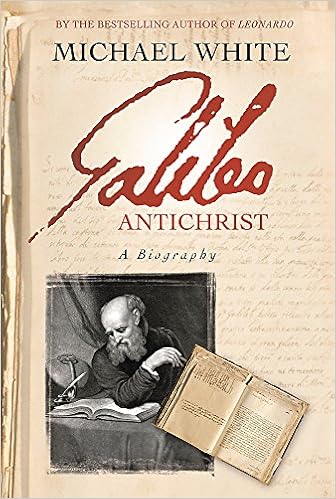 “I do not feel obliged to believe that the same God who has endowed us with sense, reason, and intellect has intended us to forgo their use.”
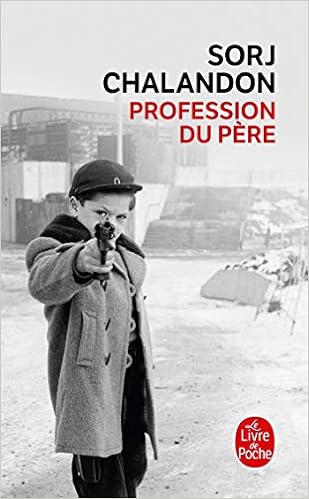 At the funeral of André Choulans there are only two mourners: his long-suffering wife and son Émile, an artist who sketches the crematorium with an odd lack of emotion as they await the coffin. Narrator Émile then proceeds gradually to account for this tragic situation, going back to his childhood, the France of De Gaulle and the stirrings of rebellion in Algeria in 1961. As an impressionable youngster, Émile craved his father’s approval, believing his web of lies and fantasies, but fearing the violence which he might at any moment unleash on his child and wife. Émile suffers the embarrassment each year of being asked to write his father’s profession on a school form. How can he say that he is a secret agent? This is the latest in a string of professions he is too young to question: pastor, pilot, parachutist, judo expert and singer to name a few.