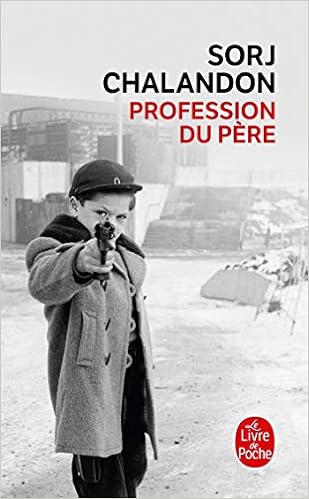
 At the funeral of André Choulans there are only two mourners: his long-suffering wife and son Émile, an artist who sketches the crematorium with an odd lack of emotion as they await the coffin. Narrator Émile then proceeds gradually to account for this tragic situation, going back to his childhood, the France of De Gaulle and the stirrings of rebellion in Algeria in 1961. As an impressionable youngster, Émile craved his father’s approval, believing his web of lies and fantasies, but fearing the violence which he might at any moment unleash on his child and wife. Émile suffers the embarrassment each year of being asked to write his father’s profession on a school form. How can he say that he is a secret agent? This is the latest in a string of professions he is too young to question: pastor, pilot, parachutist, judo expert and singer to name a few.
It soon becomes apparent that the bullying, manipulative André is paranoid but somehow manages to avoid exposure and medical treatment by keeping his little family unit in an isolated bubble. By turns amusing, heartrending, farcical, this is an intriguing psychological study. Émile’s mother is not simply a wife battered into submission, the victim of “coercive control”, but also seems to connive in the situation to avoid trouble. “You know what your father’s like” is her mantra, and years later she asks Émile: “Was your childhood really so awful?” So she occupies herself in making vegetable stews, abdicating responsibility for protecting her son if not herself.
Similarly, as he grows older, accustomed to André’s continual broken promises, to what extent does Émile really believe that his father is serious in involving him in a plot to assassinate De Gaulle, allegedly the former colleague who has ignored his advice and broken his promise to the French colonists in Algeria? Is the idea that another of his father’s friends is a high-ranking CIA agent called Ted, who is his god father too appealing an idea to debunk – even when Ted feels he should be punished for his poor grades?
Another intriguing aspect is the way Émile’s behaviour begins to mirror that of his father. Just as André wants his son to be an admiring acolyte to be subjected to rigorous military drills, a willing stooge prepared to risk daft escapades like delivering death threats, Émile seeks out a friend to share these exploits with, one who can be controlled and dominated as he is. Unfortunately, he chooses a “Pied Noir” boy who really does have a grievance against De Gaulle. To avoid crazed beatings and confinement to “the correction unit” of his parent’s wardrobe, Émile shows a convoluted ingenuity equal to his father’s when it comes to fabricating excuses.
It was hard at times to understand why Émile does not simply hate his father. Instead there seems at times to be, if not exactly love, that mysterious family bond, consisting in part of shared experience, conditioning and duty.
This novel is in fact quite autobiographical, in that Sorj Chalandon’s father was also a violent fantasist. The author has spoken of the “poison” in his system arising from the abuse he suffered, and the catharsis obtained from sharing his experiences by writing about them. He also suggests that the fantasy world was often exciting and enjoyable at the time, but for the violence.
I thought the novel lost dramatic momentum when it reached the stage of Émile’s adult life. However the tale would be incomplete without an account of how Émile eventually establishes his own life as an artist with the talent his parents failed to recognise and nourish. The contrast between his distorted childhood and the love he gives his own son is moving.
Chalandon is a brilliant novelist who deserves to be better known abroad.
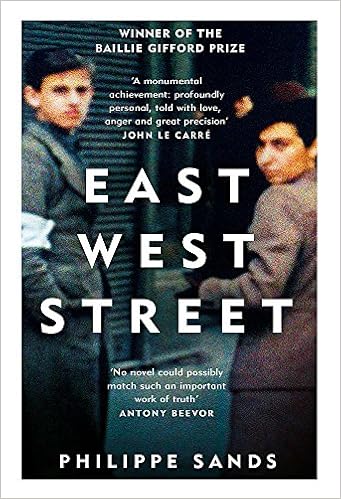 This book made me reflect for the first time how in the early C20 when long-established stable empires were beginning to crumble, “Each country, old or new, was free to treat those who lived within its borders as it wished. International law offered few constraints on the majority’s treatment of minorities, and no rights for individuals”. The European Convention on Human Rights was not signed until 1950.
 Harriet Tyce draws on her experience of working as a barrister in this gripping but unsavoury debut psychological crime thriller.
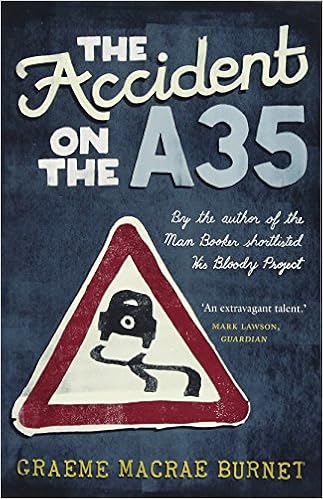 To get the most impact from this book, I would advise readers to leave the potentially slightly distracting “Foreword” to the end. Advertised as a sequel to “The Disappearance of Adèle Bédeau”, also featuring Inspector Georges Gorski, this can be read as a stand-alone novel. Reading the two books “in order” may help to clarify Gorski’s personal situation, but I think “The Accident on the A35” has a better pace and more interesting characters and wry humour.
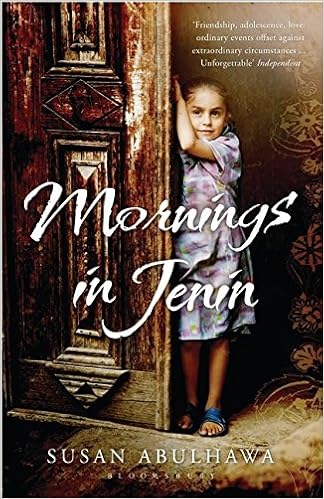 The opening chapters give a somewhat romanticised view of life in the ancient village of Ein Hod, said to be granted to Palestinian ancestors by Saladin, with flute playing in the olive groves after a day’s harvesting, yet perhaps this serves to heighten the brutal shock of “El Nakba”, the catastrophic expulsion of the Arabs from the land they had occupied for centuries, by soldiers in support of Israeli settlers.
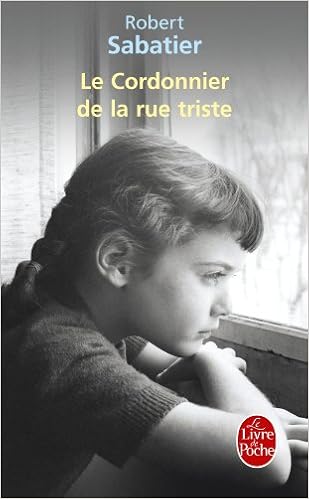 At first, I was put off by the twee sentimentality and the continual interjections of the coy narrator, who suggested that he might be one of the inhabitants of “la rue triste”. Yet although this short novel is not a page turner, it sucks the reader into the evocative atmosphere of a 1940s Parisian street where life goes on despite the Occupation. The last novel of the prolific French author Robert Sabatier, written in his eighties, this seems to draw on his own memories of growing up in Paris, orphaned young, apprenticed to the printing trade, drawn to literature and poetry, largely self-taught and ending up a writer.
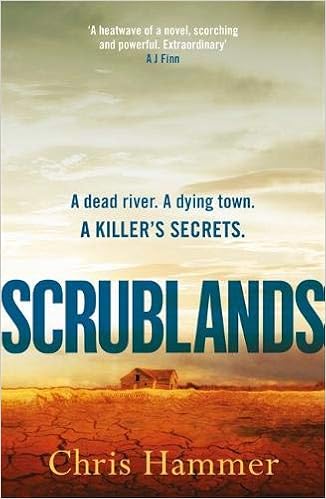 In this debut novel, Chris Hammer makes good use of both his first-hand knowledge of journalistic procedures, and his travels through the Murray-Darling Basin of Eastern Australia to research the impact of the 2008-9 drought.
 Antenna Reviews