![April Lady by [Heyer, Georgette]](https://images-eu.ssl-images-amazon.com/images/I/51BeqXRiZaL.jpg)
In Regency London, not quite nineteen-year-old Nell is desperate to obtain the sum needed to pay the bill for an expensive dress which she had forgotten when assuring her husband Cardross that she has no further outstanding debts. She is also consumed with guilt over lying to him over the use of her generous allowance to finance her brother’s losses at the gaming table, which her husband has forbidden her to do. Instead, she lets him think that she has foolishly taken up gambling herself and incurred losses of her own. All this is making Cardross regret having ignored the advice of friends who advised against his marrying the daughter of an inveterate gambler who has ruined his aristocratic family with his addiction. The situation is aggravated by Nell’s concealment of her genuine love for her husband, as she follows her mother’s advice to be compliant at all times but not to appear too needy, and certainly not show any resentment over his mistress. Cardross also has to deal with a spoilt, capricious young half-sister, who is determined to marry a respectable if dull but poor young man who is not her social equal. As matters reach a head, how will they be resolved?
Georgette Heyer was a prolific author, admired from the 1930s to her death in 1974 for her immensely detailed knowledge of Georgian culture, even down to the upper class slang in vogue (now quite hard to follow and frankly the most irritating aspect of the novel). Reading this out of curiosity and expecting to find vacuous froth, I was surprised how much it engaged me. Tightly plotted, it rattled along at a lively pace with well-developed characters.
I believe that Georgette Heyer was influenced strongly by Jane Austen, and sacrilegious as it may sound, she holds her own in comparison. There is a clear parallel in the wry wit, although Heyer is actually much funnier. She provides more detail of, for instance, customs which Jane Austen had no need to explain at the time, also tending to focus on upper class families, some even accustomed to socialising with the Prince Regent, whereas Austen’s theme was more often the lives of the country gentry.
Although I am not sure to what extent it is intentional, I like the way the author reveals the flaws in the aristocratic Regency world: despite an obsession with conforming to expected norms and not lowering “the ton”, the idle rich fritter away their time gambling and flirting, particularly at masked balls. Even a “good”, generous and loving husband thinks nothing of dominating and infantilising his young wife – also, he does not apply his high moral standards to himself. A young man wastes his time on silly pranks because he is not expected to work at some activity which would employ his energy and ability, and so on.
If all Heyer’s books are like this, reading them could pall quite quickly like too much cream meringue, but I would not regret reading her from time to time.


![Laetitia Rodd and the Case of the Wandering Scholar (A Laetitia Rodd Mystery Book 2) by [Saunders, Kate]](https://images-eu.ssl-images-amazon.com/images/I/41soCKapS9L.jpg)
 In a rundown Irish coast town, former County boxing champion, the aptly named Douglas Armstrong (played by actor Cosmo Jarvis, strongly reminiscent of a youthful Marlon Brando) has to deal with the stigma and probable guilt of having accidentally killed a man in the ring. Although he probably lacks the drive to make the effort to move away, he is kept in the locality by the presence of his ex-girlfriend Ursula and small son Jack, who is autistic. This is despite Ursula’s efforts to keep him at bay to protect Jack from the malign influence of the local drug dealers, the Devers, who employ Douglas as an enforcer to punish or keep in line anyone rash enough to cross them. Ironically, Jack is most disturbed by any hint of force or violence, so that the horses in the stable where Ursula works provide one of the few calm settings where father and son can connect with each other.
 Having exposed the injustice of the benefits system in “I, Daniel Blake”, Ken Loach has turned his forensic lens on the iniquities of the gig economy.
 Despite its dry title, this short, unusual novel is a riveting masterpiece.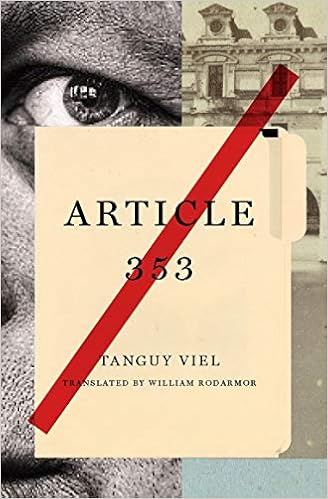
![Official Secrets (DVD) [2019]](https://images-na.ssl-images-amazon.com/images/I/81eJzA2bxDL._AC_SX342_.jpg) I remember well the 2003 one million-plus people’s London march in the vain attempt to prevent the Iraq War, likewise President Bush’s refusal to wait for the completion of UN weapons inspector Hans Blick’s investigations in Iraq before launching an attack, together with the UK Parliament’s decision to support the US militarily on the basis of what proved to be the “dodgy dossier”, falsely confirming the Iraqi capacity to launch weapons of mass destruction on Britain in 45 minutes.
I remember well the 2003 one million-plus people’s London march in the vain attempt to prevent the Iraq War, likewise President Bush’s refusal to wait for the completion of UN weapons inspector Hans Blick’s investigations in Iraq before launching an attack, together with the UK Parliament’s decision to support the US militarily on the basis of what proved to be the “dodgy dossier”, falsely confirming the Iraqi capacity to launch weapons of mass destruction on Britain in 45 minutes.
