“Much madness is divinest sense to a discerning eye”

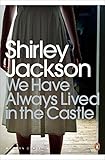
This is my review of We Have Always Lived in the Castle (Penguin Modern Classics) by Shirley Jackson.

In this quirky psychological novel, eighteen-year-old narrator Merricat Blackwood is part child-like tomboy, part manipulative sociopath, fantasising about “living on the moon” with her beautiful elder sister Constance, who may be an agoraphobic with an obsessive desire to bottle food and clean the house, or simply unwilling to face the world after being acquitted of the poisoning of four close members of her family. Why was Constance found innocent with so much circumstantial evidence against her? What could have motivated her to commit the murders, particularly as she seems so gentle and incapable of violence? Is there a more obvious suspect, in which case how can this possibility have been overlooked?

The horrific crime has turned the local villagers’ longstanding resentment of a snobbish family into vicious bullying, masking fear of possible deviancy beyond their comprehension. Wealthy neighbours tend rather to a prurient curiosity, in its way just as bad. Shirley Jackson plays on our very similar reaction, skilfully dripping out clues to arouse and sustain our sense of unease and anticipation of horror beneath the bland exterior of a well-ordered, New England house with Dresden figurines and a harp in the drawing room and spice cookies cooling in the kitchen.

“I found a nest of baby snakes near the creek and killed them all; I dislike snakes, and Constance had never asked me not to”, remarks the narrator Merricat, casually chilling. The menace contrasts with passages of innocent beauty as she plays with her acutely observed cat Jonah in “the long field which looked like an ocean, although I had never seen an ocean; the grass was moving in the breeze and the cloud shadows passed back and forth”.

How will the arrival of Cousin Charles, clearly interested in the Blackwood’s safe possibly packed with money, disrupt the contented balance in which the two young women against all rational expectations manage to conduct their lives, caring for the sole survivor of the poisoning, a half-senile, wheelchair-bound Uncle Julian?

As the story spins off the rails in its dramatic climax, it veers into black comedy so that, unless a liking for this genre is sufficient, one is left with admiration for Shirley Jackson’s writing, rather than any real empathy with the arguably insane characters. Casting around for deeper levels of meaning, I noted her portrayal of human nature – the way in which people who regard themselves as decent and normal may turn against individuals they find odd, even to the point of getting carried away into extreme behaviour, Nazi Germany being a case in point. The hostility of Jackson’s New York neighbours to her Jewish husband may have fed this theme.

Likewise, Jackson’s studies of social anthropology and interest in witchcraft may have moulded Merricat’s behaviour as she buries objects, hangs her father’s book in a tree, or invokes magic words to ward off unwelcome influences from outside, like Cousin Charles. Observation of once wealthy families, clinging to their superiority and clutter of possessions from past generations, unable to face up to the changing times, is another theme.

⭐⭐⭐⭐ 4 Stars

“The Foundling’s War by Michel Déon” – Disappointingly dull ramblings through a corrupt and artificial wartime world

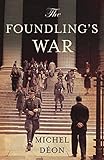
This is my review of The Foundling’s War by Michel Déon.

Enjoyment of Michel Déon’s French take on Tom Jones, a rambling account of the foundling boy Jean Arnaud’s adventures, which end mid-stream with his departure for the Front on the outbreak of WW2, in the company of conman Palfy, gave me sufficient enthusiasm to start on the sequel – but this proved a disappointment, with all the shortcomings of the first novel magnified in spades. Déon has been praised and honoured for his straightforward prose style as opposed to Sartre’s intellectual existentialism, but the novel is far too sprawling and long-drawn-out.

The thin plot is dominated by Jean’s infatuation with Claude, a beautiful young married woman with a small child and mysterious absent husband. Portrayed as pure and virtuous, she effectively strings Jean along, accepting his moral support, claiming to love him, even letting him into her bed, but for a long time denying him sexual intercourse. Perhaps fulfilling the male author’s fantasy, Jean “has his cake and eats it” by enjoying in parallel a “no strings attached” physical relationship with film actress Nelly Tristan, transformed in his company from a foul-mouthed, tippling social embarrassment into a sensitive declaimer of sentimental French poetry.

The weak storyline is padded out with lengthy recollections of events from the previous novel or with tedious scenes which often seem quite pointless. Déon’s claim that it is possible to understand this sequel without reading the first book is a little misleading: those taking him at his word are likely to become confused over details of Jean’s parentage and his first loves, like Chantal.

Whereas some interesting characters were developed in the first book, like Jean’s restless grandfather Antoine and the village curate, the sequel is dominated by too many exaggerated and generally unappealing caricatures: Palfy, with his network of louche friends and lack of compunction over fraternising with Nazis; the “ultra-respectable” brothel keeper Madame Michette with her bizarre mix of gullibility and guile, and fantasies of being a spy; Jesus, the Spanish painter with the irritating lisp who is prepared to sell his artistic soul for money and avoid commitment until his sudden falling for “enemy German” Laura, or La Garenne, the crooked dealer in art porn. The lesser characters are mainly bland ciphers. There is little sense of place, like the lure of the South of France for Antoine in his Bugatti (previous novel).

In the first book, Déon sometimes revealed himself as an intrusive narrator, over-anxious to reveal future events. In the sequel, this tendency has run out of control, as he even destroys the tension of the two most dramatic, all too rare, incidents by digressing into what lies in store. He keeps giving us potted histories, often in the form of letters, rather than taking the trouble to develop characters and weave events into the plot. This seems like lazy writing. He consistently “tells” rather than “shows”, bludgeoning us into what we should think, with often heavy-handed philosophising, rather than let us experience events directly and form our own judgements.

Just occasionally, there are flickers of insight, as when the narrator (better still if it could have been a character) observes how the isolation caused by war blunts the impact of a tragic event through the delay in receiving it. At one point, Jean actually reflects on the contrast between the simple, honest couple who are sheltering him, and the “artificial et brilliant” life he has been leading.

Handsome, charming, easy-going Jean has always tended to consort with raffish characters, but it is troubling to see him frittering away his time in the company of wheeler-dealer Nazis and collaborators on the make. Although a contrast to many WW2 novels, perhaps in some ways more realistic to see the Occupation of France from this viewpoint, I felt uneasy about the shallow, cynical gloss over the hardship of those who refused to or could not profit from the Occupation, the suffering and risk taken by members of the Resistance and the mistreatment of French Jews, as at the Vel d’Hiv.

Apart from providing a means of practising my French, the novel often bored me, and since it seems to me have to been still further weakened in translation, I have only given 2 stars for the English version.

⭐⭐ 2 Stars

When chocolate with 90% cacao was about 30% too much

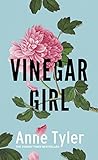
This is my review of Vinegar Girl: The Taming of the Shrew Retold by Anne Tyler.

In this modern take on Shakepeare’s “The Taming of the Shrew”, having been thrown out of university for insulting her professor, spiky, forthright Kate Battista has spent the past decade in a dead-end job as preschool assistant, whilst trying to act as a mother-substitute for her flirty, far from dumb blonde, adolescent sister Bunny, and keeping house for her impractical academic and frankly control-freak father. When his selfishness leads him to overstep the mark, by trying to manipulate Kate into marrying his brilliant East European research assistant Pyotr, so that he can stay in the States after his visa has run out, Kate understandably rebels.

This is the basis of an often very funny, shrewdly observed novel, superficially lightweight with an ending sewn up a little too neatly for my taste, yet suggesting darker currents beneath the surface. Even minor characters are given some depth, with a mixture of good points and human failings. I must have enjoyed the book since I sat up to 2 a.m to finish it in one sitting, but had a few reservations, which I suppose at least have the merit of provoking discussion.

Is it, for instance, likely, that a strong-minded, independent young woman with the intellect to study science at university would have put up for so long with the constrained world of the Little People’s School, or have avoided being sacked long ago for her lack of “tact, restraint and diplomacy”? By the same token, would she have accepted for so long her father’s rules about cooking meat mash to last a week and not emptying dishwashers in the interest of his theories on health and efficiency? Is her outspokenness not so much a sign of independence, but rather the result of a lack of socialisation into “social norms”, owing to a depressed, prematurely deceased mother (driven to despair by her incompatible husband?) and an often absent father with inadequate parenting skills?

A minor point is that Kate’s four-year-old charges seem rather advanced for their age, but since Anne Tyler has clearly observed children very closely, perhaps she has struck the right note.

When Kate suggests at one point that men are at a disadvantage compared to women because “they think they should be in charge, in control; they don’t dare show their feelings” this reminds me of the “behind every successful man there’s a strong woman” unfeminist twisting of arguments with which I was brought up in the pre-equality past. Kate’s argument that a woman should let a man into her more “empathic country” to give them both space to be themselves, sounds somewhat patronising and smacks of self-justification. Does Anne Tyler mean us to accept this at face value, or to take it with a pinch of cynicism? Still, I believe that Shakespeare’s Kate was initially simply too stroppy to make a “good wife”, and never meant to be a feminist, as we understand the term, at all.

⭐⭐⭐⭐ 4 Stars

More is less

This is my review of Anil’s Ghost by Michael Ondaatje.

Having left Sri Lanka to train in the West, forensic anthropologist Anil Tissera has been selected by an international human rights group to investigate possible atrocities committed by the Sri Lankan government in its attempt to control insurgents in the north and separatist guerrillas in the south. This involves working with Sarath Diyesena, the enigmatic archaeologist whom she is unsure how far to trust, because one of his relatives may be a government minister. For whatever reason, he discourages her from reading too much into the skeleton nicknamed “Sailor”, which she is convinced belongs to a recent victim, hidden amongst older human remains at a site not open to the public. Admittedly, there are some grounds for Sarath’s cynicism over short-term visitors from the West who, based in luxury hotel rooms, make casual assumptions about the country, distorted by “false empathy and blame”. “I’d believe your arguments more if you lived here,” he tells her. “You can’t just slip in, make a discovery and leave”.

The opening chapters led me to expect a political thriller in the mould of Graham Greene, but since the author is in fact more of a poet than a novelist, the narrative drive, which has a low priority for him, soon splinters into a disjointed, sometimes dreamlike sequence, swerving back and forth in time, between different viewpoints. These include: Sarath’s brother Gamini who has become obsessed with caring for war casualties, high on the drugs he needs to keep himself going; Ananda, sometime painter of eyes on the face of carved Buddhas; Palipani, translator of ancient scripts and rock graffiti who seems to have ruined his reputation by fabricating a text, when in practice perhaps he had found “hidden histories intentionally lost”, a parallel for the suppression of truth in the recent history of Sri Lanka.

I appreciate that a stream of consciousness may reveal more about the complex interweaving of culture and individual relations in the real-life struggles of a war-torn country than a straightforward documentary approach, but I found this book hard-going, mainly because of the written style. I assume that Ondaatje undertook impressive reseach of, for instance, forensics and medical practice, but this tends either to be presented in rather unnatural dialogue and passages of condensed information, like the notes for a novel rather than the work itself, or through grim scenes of death and treatment of hospital patients which tend to drift into inappropriate sentimentality.

Perhaps the weakest aspects of the story are the flashbacks to Anil’s unsatisfactory relationships with a married American writer called Cullis and a female former work colleague called Leaf. Their sketchiness and irrelevance to the drama of Sri Lanka may of course be intentional, suggesting the disjunction between Anil’s westernised persona and her native roots.

Although Ondaatje is clearly capable of writing realistic dialogue, too often it does not ring true. The wording of sentences often jars, as if written by someone with an imperfect grasp of English, but the author has spent most of his life in England and Canada. Many incidents verge on the implausible or ludicrous, such as the verging on necrophilic scenes involving the skeleton Sailor who is at various points laid out to communicate with the stars, danced with, or his former occupation deduced from the most tenuous evidence.

Despite its huge potential and originality, there is in general a self-indulgent, rambling, pretentious quality to the novel which grates on me. I accept that this view is a question of taste, and many readers may be entranced by, say, the flash forward images of Palipana’s niece honouring his death:

“She had already cut one of his phrases into the rock…which she had held onto like a raft in her years of fear. She had chiselled it where the horizon of water was, so that depending on tide and pull of the moon, the words in the rock would submerge or hang above their reflection or be revealed in both elements. Now she stood waist deep in the water cutting the Sinhala letters….He had once shown her such runes, finding them even in his blindness, and their marginalia of ducks, for eternity….In the tank at Kaludiya Pokuna the yard-long sentence still appears and disappears..” and so on in Kubla Khanish vein. Except that Coleridge did not mix up his romantic poetry with the exposure of political corruption and the rootless alienation of a young woman caught between different cultures, in an infusion that fails to coalesce.

⭐⭐⭐ 3 Stars

“Tales of the Jazz Age” by F. Scott Fitzgerald.Where all the best girls round here marry fellas and go off somewhere

This is my review of Tales of the Jazz Age (Alma Classics) by F. Scott Fitzgerald.

This is a collection of short stories produced by a still youthful Scott Fitzgerald before he fell prey to the alcoholism which befuddled so many of his characters. The list of contents is accompanied by the author’s own explanatory comments, written at the point when they were assembled in 1922 from different magazines where they had been originally published. He was clearly a natural story teller, capable of producing a piece at great speed, such as “The Camel’s Back” which he wrote in a day.

His style can be quite pedantically C19: “So gaily and noisily were the peace and prosperity hymned by the scribes and poets of the conquering people that more and more spenders had gathered from the provinces to drink the wine of excitement, and faster and faster did the the merchants dispose of their trinkets and slippers until they sent up a mighty cry for more trinkets and more slippers in order that they might give in barter what was demanded of them”. At times, Scott Fitzgerald reminds me of PG Wodehouse or Jerome K Jerome, but without the humour, in fact, with a darker thread beneath the flippancy. I found the stories, set mainly in the well-heeled middle class world of 1920s urban America, quite dated, and grew rapidly tired of the boozy – if skilfully lampooned – US version of Hooray Henries, and the shallow, over-protected young daughters of Aluminium Men, Iron Men or Brass Men, etcetera, destined only for the marriage market.

Although I appreciate the author’s fluency and wit, I could only take so much of these stories, choosing to focus on those with more original and creative plots, such as “The diamond as big as the Ritz” which imagines the consequences of discovering a diamond so huge that to advertise one’s find would immediately destroy the scarcity value and therefore monetary benefit of the stone. This is also a reflection on the corrupting effect of power in a secret, self-contained world financed by judicial exploitation of the diamond.

“The Curious case of Benjamin Button”, recently made into a film, is also an interesting story, inspired by Mark Twain’s remark that “it was a pity that the best part of life came at the beginning and worst part at the end”, although I’m not sure everyone would agree that babyhood is the best part. Benjamin Button duly starts off as an old man, who find most companionship with his grandfather, ending up as a small boy who enjoys going to kindergarten and playing with his grandson. The best part of his life is the brief period in which his capacity and appearance match his actual age, so that he can be a successful soldier, a useful means of avoiding the wife who has become too old for his taste. Apart from the snobbery, there are frequent little flashes of racism which, although an aspect of the times, are a bit disconcerting now, as when Benjamin Button’s father, traumatised by the birth of a son who looks like an old man, passed “the bustling stores, the slave market (it’s the 1860s) and “for a dark instant wished passionately that his son was black”.

Despite its rather chauvinist ending, I liked the farcical ” The Camel’s Back”, about a young man who goes partying in a camel suit, with his taxi driver serving as the back legs, after a row with his fiancee who is reluctant to commit to marriage – this sounds very Bertie Woosterish. I was most impressed by “May Day” which in portraying the frenetic life in the New York of 1920, “in the general hysteria of that spring which inaugurated the Age of Jazz” also manages to convey grim undercurrents beneath the hectic partying, with soldiers trying to adjust to life as peacetime nonetities and the hounding of socially conscious “communists” foreshadowing the McCarthyism to come.

⭐⭐⭐⭐ 4 Stars

Not the kind of person who is able to do things

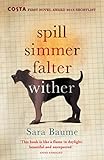
This is my review of Spill Simmer Falter Wither by Sara Baume.

The intriguing title is a sufficient magnet for this original take on Ray, prematurely aged at fifty-seven, a social outcast since childhood, who forms a relationship with a dog he names “One Eye”, mutilated by a badger attack. The dog’s reduced range of vision reflects Ray’s limited and distorted view of life. They have much in common: both are physically repulsive, the dog because of the way he has been trained to dig out and bait badgers, the man through lack of normal “socialisation” as a child, never attending school, and as an adult never having kissed a woman or made a telephone call. Living in squalor, he fills his deceased father’s house with junk in what seems like an advanced state of OCD, yet he shows frequent kindness to the dog, and his voracious reading and listening to the radio have given him a quirky general knowledge which informs his turns insightful, warped and even humorous observation of his surroundings. An unfortunate chain of events convinces Ray he must take to the road with One Eye, in a trek which one knows must end badly.

Early on, Ray’s stated, “I’m especially afraid of children” suggests that he may be feared by the local community as a paedophile. As we discover fragments of his past non-life, our sympathy may grow, yet there is also an increasing sense of darkness and unease, that despite his normal passivity, even gentleness, he may be as capable of uncontrolled or amoral violence as One Eye. At one point, Ray’s observation that the dog, with his frenetic energy, is of course mad, is an irony since it appears that his own sanity is slipping.

The decision to make Ray the first person narrator, addressing a one way monologue to One Eye, involves us more directly. There is poignancy in Ray’s speculation over the lives other people live behind closed doors, existences which he can never know, but in their way as futile as his. Like other readers, I found that Ray’s “voice” belongs too much to the star of a creative writing course rather than an isolated man self-educated on a diet of junk shop and mobile library books, his experience confined to a small Irish seaside community.

This book is set apart by the original, poetic style which needs to be read slowly to absorb its intensity. The alliteration and rich wordplay reminds me of Dylan Thomas: “I dream it’s dungeon dark…I’m belting.. Demented, directionless.” The capacity to develop descriptions of ordinary objects and situations, to sustain them, page after page, brings to mind Proust, except that his genteel madeleine is a far cry from a decrepit cane chair, or a self-harming habit of picking at one’s finger tips until the bloody wounds go septic. Striking descriptions of a shoreline are outweighed by unflinching images of nature’s violence, the ugliness of pollution, the sordid detail of bodily functions. “There’s a layer of filth sunk into the grooves of the skirting board, buttered across the lino. Bugs creep out of the wall at night to gnaw the filth and its stickiness gathers tiny tumbleweeds of passing hair.”

Eventually, this unrelenting preoccupation with dirt and decay becomes oppressive and monotonous. I grew tired of the repetition of One Eye’s “maggoty nose and the triplets of present participles: the dog “running, running, running”; “We are driving, driving, driving”; the conger eels are “nibbling, nibbling, nibbling”. Also, as an author who grew up in Ireland rather than America, why do her characters “look out the window”?

Clearly very talented, Sarah Baume mars her first novel by laying all the putrefaction, bodily fluids and general repulsiveness on too thickly. In not knowing when to stop, the book becomes too protracted to support its slender storyline. I felt so bludgeoned and desensitised that I only kept on reading to discover exactly what sad conclusion it would reach. I believe that the ending has left some readers confused. After a few moments reflection, I was convinced that I understood it and that what seemed at first like a rather trite epilogue was in fact quite effective, except that some readers will find too bleak the sense that an individual human existence does not matter in the overriding life force which just goes on.

This will provide a well-manured field of topics for a book group: it will divide readers, examples of what makes the writing so original are worth discussing, together with questions about Ray. To what extent is he responsible for his past actions, or even his inaction in allowing himself to sink into the vicious cycle of being shunned by others because he does not comply with the accepted norms of behaviour? Is it credible that he could be so dysfunctional in some ways yet resourceful in others? His life may seem a tragic waste, but has he gained something precious in his ability to observe objects and the world above him so closely?

⭐⭐⭐⭐ 4 Stars

“So long, See you Tomorrow” – Destroyed by what was not his doing

This is my review of So Long, See You Tomorrow (Vintage Classics) by William Maxwell.

This is not the only novel by William Maxwell to have been born out of an acute, lifelong sense of desolation over the loss of his mother when he was only ten. The opening page hooks the reader with the account of a pistol shot, marking the murder of Illinois tenant farmer Lloyd Wilson. However, it gradually becomes apparent that this is not a murder mystery, but rather a slow-paced, introspective exploration of how people’s lives can be irrevocably damaged by different kinds of loss: on one hand, recalling events as an old man, the narrator describes how he was affected by his mother’s death and his father’s remarriage; on the other, Maxwell provides a moving account of how the narrator’s childhood friend Cletus Smith was devastated by the effects of his mother’s infidelity. Maxwell manages to create sympathy for all the parties involved. For Cletus, the loss of a familiar routine, a sense of purpose as he helped on the farm, the company of his dog, were the most devastating aspects of the tragedy.

The novel’s strengths lie in the author’s ability to express so truthfully and with such deceptive ease how people think, to conjure up vivid visual impressions of the Illinois praires – plus the all-pervading quiet in which small sounds travel long distances – and also to convey a sense of society in rural or small town, conservative, hidebound 1920s America.

The story has an unusual structure, switching between first person recollection, and third person drama containing facts which the narrator could not have known – at some points we even enter into the mind of Cletus Smith’s faithful dog Trixie. Maxwell’s style sometimes seems best suited to short story mode, since he is easily distracted into the thumbnail sketch of a character who then fades out of the story, or into an anecdote which loses sight of any main plot or narrative drive. Perhaps I have missed something, but even the title does not seem to quite fit.

It seems that as fiction editor for the New Yorker, William Maxwell is remembered mainly for nurturing the talent of such major writers as John Updike. Regarded as denied due recognition in his lifetime, Maxwell is now receiving belated praise in a recent revival, often being compared with John Williams, the similarly acclaimed author of “Stoner”, another novel which portrays thought processes and emotions in great detail.

I found this novel absorbing, the kind of writing which needs to be read slowly and more than once to appreciate fully both its technical skill and the ideas conveyed. Yet, although I was struck by the originality of Maxwell’s approach, its focus on bleakness, hints of obsessive self-absorption, and the repetitious hammering home of certain points in a structure which often seems unduly fractured combine to leave me with an ambivalent view of this book.

⭐⭐⭐⭐ 4 Stars

“The Glorious Heresies” – Winner of the Baileys Women’s Prize for Fiction and the Desmond Elliot Prize 2016 by Lisa McInerney. Stab at a female Irish Irvine Welsh?

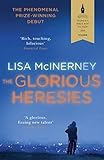
This is my review of The Glorious Heresies: Winner of the Baileys Women’s Prize for Fiction and the Desmond Elliot Prize 2016 by Lisa McInerney.

“It hit him like a midwife’s slap” is a good line in the Irish idiom, but what would a teenage boy know about midwives? I appreciate the raw energy of Lisa McInery’s style and the sincerity of her portrayal of a group of dead-end Cork-based drug-takers and dealers, prostitutes and criminals, their excuse being poverty in post-financial crash Eire, and a flaky, hypocritical Catholic tradition.

Nevertheless, what is described on the back cover as a “punchy, edgy, sexy, fizzling, feast of a debut novel”, “a gripping and often riotously funny tale”, left me cold. I found the unrelenting sordid violence unrelieved by any of the famous Irish quirky humour or lyrical prose. At one point, when a man is shot, there is no real sense of shock or emotion. It may of course have been the author’s intention to portray death like that in an arcade game, but across the board, characters are not developed in any way that makes me engage with them. Although it did not promise a “happy ever after”, the ending seemed somewhat sentimental.

This is one of those novels which divides readers. Whether or not one likes a novel is always subjective. Some of the most challenging novels the most worth reading are an acquired taste. However, after decades of reading a wide variety of fiction, I may commend this as a debut novel (but why should one make allowances for a first book anyway?) but, as others have said, it is quite long with a shambling plot, and I did not feel it was worth spending the time needed to read it.

⭐⭐⭐ 3 Stars

Be careful what you wish for

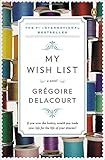
This is my review of My Wish List by Gregoire Delacourt.

“How can you do such a disgusting job – I work in advertising – and write such lovely books?” This sentence in the gushing postscript to this short novel explains the growing sense of unease I had experienced when reading it. This story is a marketable product pitched at female readers by an author with a knack for adopting the “voice” of “ordinary”, admittedly somewhat stereotyped, women, and for identifying an intriguing situation on which to build a bitter-sweet scenario.

In this case we have Jocelyne, owner of a small haberdashery in Arras, slipping into slightly overweight middle age with her dependable but dull and on occasion boorish husband, with two now adult children who have “flown the nest”. She seems to have had more than her fair share of misfortune: the loss of her mother and her father’s onset of illness when she was still a teenager put paid to her youthful ambitions, leaving her with low self esteem and a nagging sense of having made too little of her life. Into this rather unpromising situation falls the bolt from the blue of a huge lottery win, raising the dilemma we all share as to how we would spend this, if given the chance. Jocelyne’s periodic “wish lists” – progressing from “a lamp for the hall table” to “spend a fortnight in London with my daughter”, highlight the common inability to think on a grand enough scale, particularly if one is accustomed to put one needs second. Eventually, she only lists a Porsche as a “folly” that will please her husband.

There are some interesting aspects to the story: her fear that the money will destroy what is good in her life, her awareness that the most valuable things in life cannot be bought with money, that the planning of purchases over time can be more satisfying than a huge spending spree, money no object. The presumably intentional irony is that her knitting and sewing blog which costs nothing does more good in the world than the huge cheque she has won. Is it also intentional irony that the man she loves is so unworthy of her devotion, or are we meant to think that love itself is simply what counts more than money?

In the end, the novel disappoints by proving too shallow and sentimental, aptly described by the wonderful French word “guimauve” – marshmallows and mushiness. The two main male characters – husband and shadowy male love interest – are both too underdeveloped to be convincing and the plot drifts to a limp and disappointing ending.

⭐⭐⭐ 3 Stars

Exploiter exploited

This is my review of The Aspern Papers by Henry James.

Determined to succeed where his colleague failed, an unnamed editor insinuates himself into the decaying Venetian villa of the ageing Juliana Bordereau. His aim is to obtain by some means the literary treasure he believes her to possess, the papers of her former lover, the long-dead, celebrated poet Jeffrey Aspern. Inspired by scholars’ interest in the letters of Shelley to his sister-in-law Claire Claremont, this novella is a subtle and absorbing psychological study of the destructive and corrupting effects of obsession, and of the complexity of people’s motives, set against the background of a crumbling, magical nineteenth century Venice with which everyone who has visited this city will still be able to identify.

In what James apparently regarded as one of his best works, his famously convoluted prose seems surprisingly clear and accessible, the dialogue is sharp and the descriptions evocative and vivid, as in the description of Venice viewed from a gondola as a series of scenes from a play. I like the way that the narrator made predatory by his obsession is not the only main character to be flawed: the ageing Miss Bordereau is understandably concerned to safeguard her privacy and may wish to provide for her faithful niece’s uncertain future, but proves mercenary and manipulative; Miss Tita may be a longsuffering companion with a sense of honour and duty, but proves not to be above taking the opportunity to exploit her exploiter. I think it might have been even better if the narrator had not appeared so self aware at times, but overall would recommend this as an introduction to Henry James, or in my case a book I have reread with undimmed admiration.

⭐⭐⭐⭐⭐ 5 Stars