This site will share with you hundreds of book and film reviews written since 2009. Also a chance to discuss these reviews together with some of my creative writing to be added.
Determined to succeed where his colleague failed, an unnamed editor insinuates himself into the decaying Venetian villa of the ageing Juliana Bordereau. His aim is to obtain by some means the literary treasure he believes her to possess, the papers of her former lover, the long-dead, celebrated poet Jeffrey Aspern. Inspired by scholars’ interest in the letters of Shelley to his sister-in-law Claire Claremont, this novella is a subtle and absorbing psychological study of the destructive and corrupting effects of obsession, and of the complexity of people’s motives, set against the background of a crumbling, magical nineteenth century Venice with which everyone who has visited this city will still be able to identify.
In what James apparently regarded as one of his best works, his famously convoluted prose seems surprisingly clear and accessible, the dialogue is sharp and the descriptions evocative and vivid, as in the description of Venice viewed from a gondola as a series of scenes from a play. I like the way that the narrator made predatory by his obsession is not the only main character to be flawed: the ageing Miss Bordereau is understandably concerned to safeguard her privacy and may wish to provide for her faithful niece’s uncertain future, but proves mercenary and manipulative; Miss Tita may be a longsuffering companion with a sense of honour and duty, but proves not to be above taking the opportunity to exploit her exploiter. I think it might have been even better if the narrator had not appeared so self aware at times, but overall would recommend this as an introduction to Henry James, or in my case a book I have reread with undimmed admiration.
In 1920s Montana, brothers Phil and George devote their lives to running their prosperous cattle ranch. Despite living and working so closely together, even to the point of sharing a bedroom, the two could not be more different. George is stolid, dull, but decent and kind. Phil, a brilliant literary creation apparently modelled on the author’s step-uncle, is a complex, multi-talented man of intriguing contrasts: intellectually brilliant, musical, athletic, skilful with his hands, Phil has not only rejected the glowing career he might have pursued, but insists on wearing the rough clothes of a working man and resists any kind of change, scorning for example the cars which disrupt the flow of cattle to the railhead. For reasons continually implied, but never fully revealed, he has twisted his sensitivity and insight into the winkling out of any weakness in the creatures he hunts: “He knew if a timber wolf was lame, noted the fainter print of the favoured paw in dust or snow. In the sudden elbow of a stream where the baffled water turned upon itself he watched the trout ‘conceal’ itself in the shadow of a rock”. The same applies to those unfortunate enough to cross his path, subjecting them to merciless jibes if the mood takes him. So, when lonely George marries a young widow whom Phil regards as a socially inferior gold-digger, he sets out with typical obsessive patience to destroy her. The tale is bound to end in tragedy, but for whom?
By turns nostalgic, poignant or ironic, this gripping psychological study is very-well constructed so that, on reflection at the sudden unexpected ending, a trail of previous random details reveal themselves as clues and slot neatly into place. All the main characters are fully developed, with a depth and subtlety which even evokes some sympathy for Phil. Digressions on the way are as striking as the main plot, in their vivid descriptions of the terrain, and the portraits of minor characters, such as the Indian, unable to give up his pride over being the son of a chief, who leaves his poverty-stricken reservation without permission in order to show his own son the fertile lands of his youth: “the fields thick with purple lupine that waved and billowed in the breeze like water….the dark gray thunderheads that reared high over the mountains and lumbered like grizzlies across the sky, heavy with water”.
The fact that so much of the novel seems to have been based on Thomas Savage’s own experiences of belonging to a large ranching family gives the book its authenticity. It is a pity that this book was not hailed as a masterpiece when it first appeared in 1967. Perhaps even now that it has been “rediscovered”, too many readers will be put off by the instances of at best cavalier and at worst cruel treatment of animals in the book, starting with a graphic description of castrating calves in the opening paragraph: but this is all part of the reality of a life which the author knew first-hand.
Drifting through life in a state of apathy bordering on depression, single parent Stephanie becomes dominated sexually and mentally by the magnetic Nathaniel who persuades her to join what turns out to be his religious cult, housed in a rundown, isolated moorland property called The Ark. This is much to the disgust of Stephanie’s spiky and perceptive twelve-year-old daughter Judith. Stephanie’s decision contributes to a chain of events leading to a shocking climax.
Following the common device of hooking the reader with a flash forward in the first chapter, we are introduced at the outset to a dysfunctional young adult Judith, reluctantly visiting Stephanie in jail where she is serving what sounds like a life sentence for a crime which has left her daughter understandably emotionally scarred. For quite a large part of the book, I would have preferred not to know this in advance, but was eventually won over by the author’s effective interweaving of “Before” and “After”.
Rebecca Wait is skilful in gradually revealing the chain of events, and in showing us the characters’ personalities and often confused thoughts. I was particularly struck by her portrayal of children, not just Judith on the verge of adolescence, but also those born and raised in the Ark who have been taught to view as an evil “Gehenna” the outside world which they have never experienced, even to the extent of walking down a street or watching TV. The gulf between the two worlds is continually shown through the by turns humorous and poignant interactions between Judith and Moses, the boy of her age who desperately wants to be her friend whilst clinging to the comfort of the beliefs she continually questions.
This is not merely a tension-building, gripping page turner but also a psychological drama exploring such issues as responsibility for one’s actions, dealing with conflicting values and guilt, and the extent of one’s duty to other people. I found the build-up to the climax too melodramatic, but it is arguably only reasonable that at this stage all the adults have become at least a little mad. Even given that Nathaniel had a talent for picking out weak and suggestible people, I was unconvinced that "the followers" would accept so meekly the increasingly erratic and extreme Nathaniel’s religious cant and manipulative ploys, but agree that there are plenty of real-world examples of a never fully explicable willingness to be controlled. It was chilling to read how the children had been conditioned, partly through knowing no other life.
Although most of the characters are insufficiently developed, one could argue that the story has been pared down to make a greater impact, leaving readers free, unlike the "followers", to reflect and draw conclusions for themselves.
When a middle-aged woman disappears from a suburban road, gossips fear the worst, but her neighbours are embroiled in a rising tide of panic and recrimination as they fear that a guilty secret from the past is about to be exposed. Prompted by the vicar’s sententious platitude that “if God exists in a community, no one will be lost”, bossy ten-year-old Grace and her compliant but underestimated friend Tilly pose as helpful brownies to gain access to neighbours’ homes in order to check whether or not God is there. Quite how this is going to help the situation is never made quite clear.
The story is set in the long, hot summer of 1976 which a number of writers have used as a backdrop to weird goings-on. Despite some novel if overwritten images –– “the sky was ironed into an acid blue, and even the clouds had fallen from the edges, leaving a faultless page of summer above our heads”, “the avenue…bewildered by the heat” – I grew weary of descriptions of the unrelenting drought, but this may have been the author’s intention. The focus on “contemporary accuracy” with references to Harold Wilson and his pipe, “Are you being served?”, “The Good Life”, Patsy Cline singing “Crazy”, “The Drifters” and “Angel Delight” often seems contrived.
At first, the chapters written from Alice’s viewpoint seem the strongest, until the contrast begins to jar between her childishness and some implausibly insightful comments: observing a Mrs Morton she reflects “Early widowhood had forced her to weave a life from other people’s remnants, and she had baked and minded and knitted herself into a glow of indispensability.” In order to drip-feed the reader with the details of what is really afoot in “The Avenue”, Joanna Cannon has to resort to a number of different viewpoints, all in the third person and often involving flashbacks. This often makes the storyline seem fragmented, with the highly stereotyped adults soon becoming tedious caricatures. Trite comments apart, there is a good deal of humour in the book, but the hypocrisy and prejudice of the adults is laid on with many trowels.
As the story labours its way to a surprisingly abrupt and anticlimatic ending, I was probably wrong to be irritated by a number of small errors: the “six week” school summer holiday runs from early July through to September, starting on July 5th, at least a fortnight earlier than I remember to be the case. Dahlias bloom in July alongside freesias – perhaps a quirkish effect of the heat. The persecuted Walter Bishop has several cedar trees in his front garden, something I have never seen outside a stately home. My main problem was being unable to form a clear sense of place – a mental picture of the estate, somewhere a bus ride from Nottingham. At various points, we are told about terraces and a corner shop, but houses in the Avenue have garages and sound detached. Lace-curtained windows of kitchens and “living rooms” both seem to overlook the road plus the houses seem to have “sitting rooms” as well. Here, an alcoholic single mother lives close to a property manager. The neighbours mostly seem to have known each other from childhood but are they working or middle class? You need to know this about a community in the UK. And, although some appear to have jobs, how is it that they all seem able to converge on a dramatic scene at the drop of a hat?
It’s the fantasy land of a children’s story in what purports to be an adult novel. The “genres” are all mixed up but in the end it proves to be a lightweight, by turns sad, funny, sentimental, unsubtle psychological novel. A poignant situation and any sense of real suspense are both blunted by a storyline which descends into tongue-in-cheek parody – to give it the benefit of the doubt – particularly when the neighbours gather in their deckchairs to watch over the creosote image of Jesus which has appeared on a drainpipe.
When a middle-aged woman disappears from a suburban road, gossips fear the worst, but her neighbours are embroiled in a rising tide of panic and recrimination as they fear that a guilty secret from the past is about to be exposed. Prompted by the vicar’s sententious platitude that “if God exists in a community, no one will be lost”, bossy ten-year-old Grace and her compliant but underestimated friend Tilly pose as helpful brownies to gain access to neighbours’ homes in order to check whether or not God is there. Quite how this is going to help the situation is never made quite clear.
The story is set in the long, hot summer of 1976 which a number of writers have used as a backdrop to weird goings-on. Despite some novel if overwritten images –– “the sky was ironed into an acid blue, and even the clouds had fallen from the edges, leaving a faultless page of summer above our heads”, “the avenue…bewildered by the heat” – I grew weary of descriptions of the unrelenting drought, but this may have been the author’s intention. The focus on “contemporary accuracy” with references to Harold Wilson and his pipe, “Are you being served?”, “The Good Life”, Patsy Cline singing “Crazy”, “The Drifters” and “Angel Delight” often seems contrived.
At first, the chapters written from Alice’s viewpoint seem the strongest, until the contrast begins to jar between her childishness and some implausibly insightful comments: observing a Mrs Morton she reflects “Early widowhood had forced her to weave a life from other people’s remnants, and she had baked and minded and knitted herself into a glow of indispensability.” In order to drip-feed the reader with the details of what is really afoot in “The Avenue”, Joanna Cannon has to resort to a number of different viewpoints, all in the third person and often involving flashbacks. This often makes the storyline seem fragmented, with the highly stereotyped adults soon becoming tedious caricatures. Trite comments apart, there is a good deal of humour in the book, but the hypocrisy and prejudice of the adults is laid on with many trowels.
As the story labours its way to a surprisingly abrupt and anticlimatic ending, I was probably wrong to be irritated by a number of small errors: the “six week” school summer holiday runs from early July through to September, starting on July 5th, at least a fortnight earlier than I remember to be the case. Dahlias bloom in July alongside freesias – perhaps a quirkish effect of the heat. The persecuted Walter Bishop has several cedar trees in his front garden, something I have never seen outside a stately home. My main problem was being unable to form a clear sense of place – a mental picture of the estate, somewhere a bus ride from Nottingham. At various points, we are told about terraces and a corner shop, but houses in the Avenue have garages and sound detached. Lace-curtained windows of kitchens and “living rooms” both seem to overlook the road plus the houses seem to have “sitting rooms” as well. Here, an alcoholic single mother lives close to a property manager. The neighbours mostly seem to have known each other from childhood but are they working or middle class? You need to know this about a community in the UK. And, although some appear to have jobs, how is it that they all seem able to converge on a dramatic scene at the drop of a hat?
It’s the fantasy land of a children’s story in what purports to be an adult novel. The “genres” are all mixed up but in the end it proves to be a lightweight, by turns sad, funny, sentimental, unsubtle psychological novel. A poignant situation and any sense of real suspense are both blunted by a storyline which descends into tongue-in-cheek parody – to give it the benefit of the doubt – particularly when the neighbours gather in their deckchairs to watch over the creosote image of Jesus which has appeared on a drainpipe.
With her by turns staccato and poetic prose, wry wit and Pinteresque dialogues of unfinished sentences which reflect how people both fail to communicate but also do not always need to use words when they have lived together for years and shared common experiences, Ann Enright has an original angle on the well-worn theme of Irish family life.
In this case, the four Madigan children have grown up in a small west coast town close to the beautiful green road “famed in song and story” which runs across the Burren above the beach at Fanore and the Flaggy Shore – all of which can be found on Google images if the lilting names catch one’s interest enough.
The first part, “Leaving” is like a series of short stories, each from the perspective of a different sibling over a span of twenty-five years, with a final focus on Rosaleen, complex, difficult and probably too inconsistent and self-absorbed to be a “good mother”, and arousing a mixture of frustrated love and irritable resentment in her children. Ann Enright seems most authentic when writing about Ireland, which is where Rosaleen and her two daughters have allowed themselves to be “trapped”, all feeling a sense of unfulfilment to which they respond in different ways. “Impossible to please”, “Rosaleen was tired of waiting. She had been waiting, all her life, for something that never happened.”
Ann Enright’s experimental, risk-taking approach does not always work for me, but many observations and passages strike home: as Rosaleen walks along the Green Road in the dark, “a delicacy of stars above her”……….“The sea was huge for her. The light gentle and great. The fields indifferent , as she walked up the last of the hill. Bust she got a slightly sarcastic feel off the ditches, there was no other word for it – sprinkles of derision – like the countryside was laughing at her.”
Rosaleen’s two sons are more pro-active in their quest for an elusive goal, with Dan going “everywhere”, and Emmet “everywhere else” abroad. I was gripped by the strong sense of place and build-up of tension in the drama of aid-worker Emmet’s over-sensitive girlfriend Alice breaking a taboo in Mali by taking a stray dog into their home. Dan’s spell as a lapsed priest flirting with the gay art scene in New York struck me as too contrived, perhaps partly because of the arch tone of the unnamed first person narrator, a device not used elsewhere in the book, partly because it seemed overloaded with caricatures of over-sexed, drugged up young men caught up in an early ‘90s panic over Aids, all based on a woman’s second-hand research of the explicit details of being a male gay.
“Part Two”, “Coming Home” is more of a novella focused on a fraught Christmas reunion. Although, plotwise, not much happens, in terms of sudden sharp insights, comical or poignant situations and brilliant sentences one would love to have written, it is absorbing and demands to be read again.
⭐⭐⭐⭐ 4 Stars
The Green Road: Shortlisted for the Baileys Women’s Prize for Fiction 2016
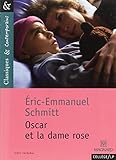
After an unsuccessful bone marrow transplant, ten-year-old Oscar puts the adults in his world to shame by the courage with which he faces the prospect of death. He is scornful of his distraught parents and sharp enough to perceive that his surgeon sees him primarily as an embarrassing and frustrating reminder of his own professional failure. The only “grown up” to offer Oscar some comfort is the eccentric hospital visitor “Mamie Rose”. Her suspect reminiscences of life as a successful wrestler, and the advice that Oscar should try writing letters to God, suggest that she may not be any more honest than the other adults, but combined with her idea of a game by which Oscar could imagine that each day represents a decade of the life (which he will not in reality experience), these ploys both entertain Oscar, and help him to grasp some vital points about living which it can take most of us years to understand, if at all.
Apart from Mamie Rose’s frankly tedious anecdotes, I found it implausible that Oscar would be so insightful about, for instance the “mid-life crisis”, and his romance with another patient, “Betty Blue”, is a bit mawkish at times. The most poignant moment for me occurs when, as a “very old man”, Oscar is struck by the beauty of nature, and realises that each day is to be appreciated as unique.
A philosopher by training, Schmitt uses quirky humour and an original approach to make just about tolerable a parable of how we could make more sense of life, and deal better with death. The focus on a young person’s death makes the situation all the more moving, but has relevance for us all.
Although I disliked this story at first, I was won over by the final pages, and was left with the sense that Schmitt has succeeded in provoking thoughts which stay in one’s mind. I believe this is studied in French schools and judging by reviews, it appeals to young people and is likely to spark discussion.
I gave this 5 stars in the original French, but found this English version useful only to check a few points, like the names of fabrics!
Since I associate Zola with grim, unrelenting tales of exploited coal miners, the theme of a Paris department store dedicated to delighting women seemed at first uncharacteristically tame and frothy. In fact, behind its plate glass and eye-catching displays, “Au Bonheur des Dames” proves to be as dominating and exploitative as any industrial factory, its shop assistants, clerks, packers and delivery men mere cogs in the machinery, as controlled as any industrial worker, on the mass production line of retailing.
Beneath his charm and apparent empathy with women and their love of fashion, inspired entrepreneur Octave Mouret is in fact a cynical manipulator: he is not only a casual seducer, but views his female customers as an inexhaustible captive market to be dazzled by his marketing ploys and all too readily induced to fritter away their husbands’ money on the material goods he displays with such alluring skill. His sponsor Baron Hartmann warns him that one day women will “get their revenge” but Mouret is knocked off course where he least expects it by the sweet, unsophisticated but stoical country girl Denise Baudu, who is quick to grasp that the department store is a part of inexorable progress, but steadfastly sticks to her personal principles.
In vivid if wordy descriptions, Zola describes how the magnificent store looms over the surrounding gloomy alleys, further cutting them out from the sun. These are the haunts of the resentful traditional shopkeepers who persist in their stubborn and ultimately fruitless struggle to survive, when they cannot realistically hope to compete with Mouret’s drastic discounts and huge variety of goods. The scale and brightness of his store, with the light pouring in through glazed roofs, and the Lowry-style bustle on the metal staircases and galleries, as far as the eye can see, creates the idea of a self-contained community, which Zola sometimes calls a “phalanstery” after the C19 ideas of Charles Fourier for a utopian community.
Yet, although the workers are housed and fed in a paternalistic way, the shop is far from utopian: staff are not allowed to have visitors in their rooms, women have to leave when they become pregnant, and in the summer months of slack demand, assistants are dismissed for the slightest imagined misdemeanour. Not surprisingly, they often resort to scams to swindle the store, and the smallest rumour or incident is exaggerated and spread on the gossip grapevine. Although the customers look down on the assistants who must be ladylike without being accepted as ladies, they often behave badly, not merely overspending on luxuries and abusing the “returns” policy, but even resorting to shop-lifting.
Just as the store seems very topical in these times of zero hours contracts, class divides and the ravages of competition, Zola’s characters are real in their flaws and complexity. There are also some moments of comedy amongst the exhausting materialism of the store contrasting with the suffering of the impoverished small shopkeepers.
The novel is best read in French, although the exhaustive lists of specialised fabrics and some of the dated procedures forced me to resort to English translations. These vary a good deal in quality, so it is advisable to check them out before purchase. Some come with interesting introductions, to be read afterwards to avoid spoilers. This kindle translation is far too literal – hence very stilted and wooden in places. Also, not easy to read in conjunction with French kindle version!!
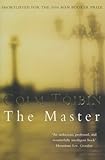
In his fictionalised biography of Henry James, Colm Tóibín slides us into the author’s thoughts with no background explanation. The five year period covered is 1895-99, when he was a celebrated author in his fifties, but with many lapses into past memories going back to childhood.
At first, I thought that a full appreciation of the novel would require a detailed knowledge of James’s style, plots and characters and that it would bewilder and bore those who know little or nothing about James. In fact, what turns out to be a subtle and perceptive book, may be enjoyed and admired simply as a portrayal of a sensitive loner who cannot help employing his acute sensitivity to observe others, conjuring stories out of small incidents, yet who goes to great pains to conceal his feelings, and who, despite a sense of loneliness, even loss, ruthlessly steers clear of commitment, even at the cost of destroying the lives of those he has used as source material. Somehow, he generally manages to avoid acknowledging this realisation, just as he represses the expression of his sexuality.
So it is that he uses his beautiful cousin Minnie Temple as a model for several stories, but is chided by his friends for failing to invite her to stay with him in Italy when she is sick and close to death. Did he simply fail to notice her appeal for such an invitation, or refuse to make it because it interfered with his work? Similarly, he enjoys a secret friendship with a female writer, breaking through the defences of her self-contained loneliness, without apparently realising until too late the depth of her need for his presence and love.
James is continually an indecisive mixture of self-delusion and self-knowledge. The book opens with his excitement over the possibility of becoming a playwright: “He foresaw an end to long, solitary days; the grim satisfaction that fiction gave him would be replaced by… voices and movement and immediacy that …up to now he had believed he would never experience”. Yet this alternates with the certainty of failure (as proves to be the case) which would force him to return “willingly and unwillingly, to this true medium”. In such complex and nuanced chains of thought, Tóibín captures a sense of James’s convoluted yet insightful, hypnotic prose, but without making the mistake of concocting wordy, interminable sentences in what would inevitably prove a parody of “the master”.
There are some lighter moments, as Henry James steers his way through a world of gossip. On a visit to Ireland, it is clear that the domineering socialite Lady Wolseley, believing him to be gay, assigns the handsome army corporal Hammond to act as his servant, “smiling strangely” over his apparent satisfaction with the arrangement. The whole issue of the author’s sexuality is treated ambiguously, as it no doubt was at the time.
One of the funniest moments is towards the end when, briefly reunited with his elder brother William, with whom there has always been a degree of sibling tension. William takes him to task for wasting his sharp eye and wide-ranging sympathy on the superficial, class-ridden English whom he can never understand. In an outrageous, misconceived yet telling outburst, he asserts, “I believe that the English can never be your true subject. And I believe that your style has suffered from the strain of constantly dramatizing social insipidity. I also think that something cold and thin-blooded and oddly priggish has come to the fore in your content…I find I have to read innumerable sentences you now write twice over to see what they could possibly mean. In this crowded and hurried reading age you will remain unread and neglected as long as you continue to indulge in this style and these subjects”.
Not always an easy read, this has many brilliant moments.
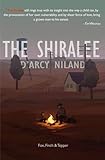
Oppressed by the “captivity” of a job in Sydney, roaring in his ears “with its terrible pandemonious laughter”, Macauley returns to his life on the country roads of New South Wales, leaving his wife alone for long periods with their child. He is a stereotype of the macho Australian male, relishing a punch up or a drink with his mates, but he is also a good worker who has no difficulty finding work on sheep-shearing stations, building sites or sawmills. When he catches his wife in bed with another man, his first impulse is to snatch up his daughter, at least partly in revenge, and take her along on his travels, where she soon becomes a hindrance, a “shiralee” or burden far heavier to bear than his swag. The trouble is that her unshakeable trust in him , dogged affection despite his continual rebuffs and impressive resilience awake his conscience and emotional response to someone other than himself.
Macauley is portrayed as a flawed hero, virtually raping his girlfriend when still in his teens, irresponsibly putting at risk his daughter’s welfare, and neglecting his understandably resentful wife. Yet his basic decency is not in doubt, together with his need to be true to himself. As the old man called the “oracle of the north” assesses: “there’s a lot of good in you, but it’s buried deep and it’s twisted..like a wild animal that has to be coaxed out into the light and tamed…does not come willingly because it is frightened for itself. Don’t lead two lives or both will be unhappy: lead one and lead it well”.
Published in the mid-1950s, this novel has the authentic ring of the author’s own experiences of life as an itinerant worker in his youth. What could be a sentimental and schmaltzy tale is avoided by an often tense and unpredictable chain of events, leavened with wry humour, and the distinctive style which conveys a strong sense of place, often daring in its play with stream of consciousness, as when Macauley recalls his brief attempt to live in the city and unwise decision to marry. The book is worth reading for the raw, fearlessly passionate prose alone, which sometimes goes over the top, untrammelled by any editor.
“The sky was overcast, all in a yeasty motion of sombrous hues ever darkening the earth. The lightning jiggled, sharp and brilliant as a blind shooting up against daylight in a black room. The ground shook with the rumble of tumbling thunder. The wind whuddered across the waste, scattering the roly-poly, not unlike a lot of sheep making a stupid run for it…The rain came with a few big drops, a hesitant rehearsal; then they heard it roaring over the plain, and saw it coming, a wall of grey between sky and earth.”
Recently revived, this novel reminds me of Steinbeck, and deserves to be better known.