Striking a chord with insiders and enlightening those who could not otherwise understand

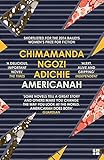
This is my review of Americanah by Chimamanda Ngozi Adichie.

Bright and from an early age too outspoken for her own good, Ifemelu is made aware of racial differences for the first time when she leaves Nigeria to study in the States, where, after a rocky start, she achieves success with a Princetown fellowship and much-read “lifestyle” blog with a focus on American race relations.

We know from the outset that, a more than a decade on, Ifemelu decides to dump her latest longterm lover and comfortable life in America , in order to return to Nigeria. It gradually becomes clear that this is just another example of her apparently capricious tendency to disrupt an enviable situation because “There was a feeling I wanted to feel that I did not feel”. One suspects this is because her life can never be complete without the love of her first boyfriend Obinze, “the only person with whom she had never felt the need to explain herself”, who after an unsuccessful attempt to emigrate to Britain returns to become a successful businessman in Nigeria.

What could be reduced in summary to a corny love story becomes engrossing in the hands of a skilful storyteller, who develops a wide range of mostly convincing characters. For me, this is the kind of novel one does not wish to finish, absorbed by the vivid sense of place, strong often funny dialogues and sharp insights into both Nigerian society and different racial groups in America. The author made me appreciate for the first time the difference in outlook between American Africans, with a strong sense of their own culture, and African Americans burdened by the injustice of past slavery and current prejudice. I now look on African hair with new eyes, having been made aware of the dangers of chemicals used to straighten it and the effort required to create a natural-looking Afro style.

I agree that the book is technically too long (although I didn’t mind since I enjoyed reading it), the frequent verbatim blogs often seem contrived as vehicles for the author to express her personal observations on American society. Perhaps because there is an element of autobiography in the tale, she appears a little too forgiving of the at times ruthless Ifemelu who casually abuses a close friendship by making Ranyinudo’s personal life the subject of a blog for public consumption, and who seems to feel no compunction over breaking up a marriage, too easily justified by the belief it is built on sand. Some of the privileged American dinner party conversations seem artificial and pretentious, but may well be realistic. Nigerian society is painted in an unflattering light, as corrupt, materialistic, superstitious and socially divided as any western class system. There is a troubling moral ambiguity in the implication that Obinze’s emotional detachment from his lifestyle somehow absolves him from the guilt of enriching himself through working for a wheeler-dealing crook.

⭐⭐⭐⭐⭐ 5 Stars

A Month in the Country by J.L. Carr: A sealed room in memory furnished by the past

This is my review of A Month in the Country (Penguin Modern Classics) by J.L. Carr.

Shell-shocked by his high-risk role as a signaller in the carnage of the First World War trenches, and depressed by the break-down of his marriage, Tom Birkin immerses himself in the delicate task of revealing an ancient mural thought to be concealed beneath centuries of lime-wash in an ancient parish church. We see Tom’s growing identification with the artist who created what turns out to be a masterpiece. There are vivid descriptions of the different colours used – “Spaynishe white, Baghdad indigo, Cornish malachite, terre verte”, the relative durability of the paints, and the fine balance needed between cleaning the grime of a painted hand, or finding that “just another touch will shift the hand itself”.

The eccentric old lady who has financed his labours in her will, has also left a bequest for the location of the grave of an excommunicated forbear, who must have been buried outside the cemetery. This work is being undertaken by Charles Moon, beneath his ebullient exterior as damaged by his wartime experiences as Tom, but for different reasons. The two men become friends, with Birkin in particular entering into village life, gaining acceptance and renewed health in the process.

Fifty years later, Tom looks back on this brief period during the long, hot summer of 1920, spent in the close-knit North Yorkshire village, in its as yet unspoilt, idyllic setting . This short novel, drips with nostalgia, Hardy without the grim tragedy of Jude and Tess, an evocation of a past way of life, perhaps a little idealised in that the summer weather is too fine, and the gossip a little too affectionate.

At the core of the novel is the unspoken mutual attraction, the meeting of minds, between Tom and Alice Keach, the improbably lovely young “Botticelli’s Primavera” wife of the pale-eyed vicar, with a “cold, cooped-up look about him”. If Tom and Alice fail to grasp the opportunity for a relationship, will they regret it for the rest of their lives? Is their love derived from the dreamlike quality of a transient period, enhanced by memory, and would it fade and become banal if they acted upon it?

Many incidents are culled from Carr’s own life, since he did not baulk at basing his characters on real people, anonymously, of course. So, the village of Oxgodby is based on Carlton Miniott where he grew up. Birkin’s embarrassment at being sent off by the double-booked station-master-cum-Methodist preacher to lead a tiny congregation, is based on an ordeal imposed on the author by his own father. Alice Keach, unaware of her beauty, may well be modelled on some past love of Carr’s whom the secretive author never revealed.

Perfect in style, structure and pace, for such a short work, this atmospheric, bittersweet tale manages to pack in more moments of comedy alternating with poignancy, and perceptive reflections than many a longer novel. In his subtlety, J.L.Carr can even make us feel a little sorry for the Reverend Keach. This is the kind of book one is sad to finish and likely to read again over the years.

⭐⭐⭐⭐⭐ 5 Stars

Intriguing tale entangled in verbiage and perhaps two hundred pages too long

This is my review of Brazil Red by Jean-Christophe Rufin.

When Just and his younger sister Colombe are left by their soldier father in the care of an unscrupulous relative, she seizes the chance to send them off on an expedition to found a new French colony in Brazil, children being in demand as future interpreters because of their ability to pick languages up quickly. It is the mid-1500s, and France is keen to curtail Portuguese imperial ambitions in the New World, to gain access to resources, such as the red dye obtainable from Brazilian trees (hence the title) and to convert the savage Indians to Christianity. However, with the Reformation in full spate, what are they to be taught: the old Catholic faith, or which version of Protestantism including the extreme, apparently abstruse, doctrine of Calvin?

The crew on board ship are a motley bunch, including criminals and Protestants escaping persecution, including a crazed band of Anabaptists, so Colombe’s disguise as a boy probably provides much-needed protection. Once the pair’s aristocratic connections become known, they are taken under the wing of the charismatic but unstable commander Villegagnon, based on a real-life character. Having reached their destination in Guanabara Bay, the site of the present-day Rio de Janeiro, Just readily accepts the life of constructing a fortress and learning how to defend it against future attacks. More reflective, Colombe who has been sent to learn the local Tupi language, identifies strongly with the Indians, living in harmony with nature and free from sterile wrangling over Christian rituals and doctrine.

With his experience as a diplomat and human rights’ worker, including a decade spent living in Rio de Janeiro, Rufin has researched the historical period in depth. This novel is a variation on a theme which absorbs him: the dramatic effects of the meeting between very different cultures, and the sense which many of those involved feel of being in a state of limbo, not clearly belonging to either.

Although Rufin creates a convincing impression of life on board ship, I found the first half of this book intolerably tedious. He no doubt intentionally adopts the formal, literary style of a nineteenth century classical novel, peppered with the authentic terms for items of clothing or parts of a ship, culled from histories of the sixteenth century. However, there are too many over-detailed or unnecessary scenes which could have been pruned down or omitted altogether. Colombe is idealised, and seems too mature and articulate for her age. Most of the other characters are caricatures, dialogues wooden and often the action does not seem far removed from a “Boys’ Own” yarn.

However, when the Calvinists whom Villegagnon has requested to assist him prove to be religious bigots, while Colombe’s experience of life with the Indians highlights the hollowness of so-called European “civilisation”, I began to find my interest engaged. It is as if, having waded through to the point where he wants to be, analysing cultural relations, Rufin comes into his own and his writing takes off, presenting points of view from all angles, with the irony becoming sharper. Yet he can never quite avoid straying into the corny or sentimental at the expense of his serious intent.

The descriptions of the landscape, the great bay with the distinctive sugarloaf mountain and forest teeming with unfamiliar vegetation and wildlife are very vivid. There is some thought-provoking philosophy, as when Pay-Lo, the wise old European conveniently gone native, enabling him to explain Indian thought to Colombe, justifies cannibalism. He likens it to the European habit of killing one’s enemies: to eat one’s enemy is merely a logical part of a life lived close to nature in which everything is recycled and returned to the earth to regrow. Rufin has sanitised and glamorised the lives of the Indians somewhat, but they are clearly underestimated by the Huguenots who decide that trying to convert them is as futile as the attempt to bring an antelope to the knowledge of Christ.

Despite the unusual and potentially interesting subject-matter, the novel is too long and laboured. I would have preferred a well-written history of the period.

⭐⭐⭐ 3 Stars

Tears at the heart of existence

This is my review of Cousins by Salley Vickers.

After the accident which befalls brilliant but troubled, aptly-named Will, his sister Hetta is driven to delve for the chain of events which may have led to it, and to understand its serious repercussions for some family members. The accident is remarkably similar to that suffered years earlier by his Uncle Nat.

Sally Vickers’ approach is ambitious – instead of providing a family saga over three generations or more, she inverts the process by switching between the viewpoints of three women who recall their memories, with distinct personalities and “voices”: Hetta, her aunt Bell, and grandmother Betsy. On reflection, it requires great skill to sustain this approach, gradually revealing facts as in a detective mystery, with the added interest of describing the same situation or character from different viewpoints, some clearly mistaken, or in possession of fewer "facts" than the reader.

The author admits to “plundering and imbibing” experiences from her parents who were lifelong communists, like Betsy’s husband Fred who casually put his political beliefs before the needs of his wife and children, but Sally Vickers’ insight as a psychiatric social worker and psychoanalyst are really what give this novel its “edge”.

Most likely to appeal to readers with an interest in psychological drama in which thought-provoking comments are more important than the plot, however superficially gripping, it is probably necessary to read this a second time to absorb and reflect on all the author’s observations and how they might apply to oneself. It is hard to do this on the first reading partly because intense concentration is needed to grasp all the details, never being quite sure which are important to remember, plus this is a page-turner as regards finding out how it will end, although at times the bleak intensity of it forced me to take a break. The conclusion proves quite philosophically up-beat, perhaps an appropriate reflection of how in reality one moves from anger and denial to positive acceptance.

I agree with readers who feel there are too many characters, some of whom could have been omitted, although others on the periphery who are given such a brief mention as to be forgotten turn out to be important, which suggests they should have been developed in more depth. There often seems to be too much “telling” of details from the past, which could make the reader glaze over mentally, but for the acute perceptions and flashes of wry humour which leap off the page without warning. Although there is less of the strong sense of place to be found in some of her previous novels, the Northumberland coast and Holy Island of St. Cuthbert fame form a recurring background.

The plot is well-structured, starting with the “hook” of Hetta’s conviction that Will is going to die, but we don’t yet know why, and gathering pace to a plausible but not too predictable or neat conclusion. Since the author is clearly so interested in how family members relate to each other, I am unsure to what extent she intends us to feel that their guilt is an unnecessary burden, responsibility for Will’s accident seeming to lie mainly with “outsiders”. I was disappointed that these are portrayed as two-dimensional, almost “pantomime” villains.

Occasionally, the novel strikes too sentimental a note for my liking as when Betsy suggests that the loss of his twin sister at birth meant that “life was never quite right” for Will because of the burden of being a survivor – evident from his newborn “strangely unchildlike”, “relentless frantic wail”.

Recommended overall, including as a book group choice to provoke discussion.

⭐⭐⭐⭐ 4 Stars

The acquired taste of a self-indulgent “rigmarole”

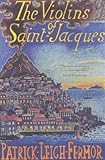
This is my review of The Violins of Saint-Jacques: A Tale of the Antilles by Patrick Leigh Fermor.

In this short novel, written in a continuous chapter-free flow, an elderly artist name Berthe recounts to the narrator the dramatic climax of her time spent fifty years previously on the Caribbean island of Saint-Jacques, ruled as a benevolent dictatorship by the aristocratic expatriate French Count, by whom she was employed as a governess but came to enjoy the status of a respected virtual member of the family, his “confidant and counsellor”. It took me a while to grasp that the island is outlined so sketchily on the map provided, because it is imaginary. This enabled me to overlook some of the worrying geographical inconsistencies (for a travel writer) of having lush forest grow so close to the active volcano forming the core of the island.

Although many devotees of the travel writer Patrick Leigh-Fermor may be delighted by the only novel he ever produced in a prolific writing career, I abandoned it mid-way and had to force myself to finish it. I concede that the second half is better, since it contains more dramatic action, when all the “hazards and sorrows ahead ” begin to crack the surface of the idyllic bubble of exotic privilege which the author has inflated with his literary flourishes at full spate in the first half, largely devoted to the preparations and conduct of a grand Shrove Tuesday ball, no expenses spared.

I understand why some readers revel in Leigh-Fermor’s Rococo prose, which I admit once aroused my curiosity to visit what proved to be the remarkable Austrian monastery of Melk. However, in this context, the verbosity is just too much to take. In the course of a lengthy description of the Count’s background, Leigh-Fermor turns to the memorial slabs of his dead ancestors, the Serindans: “The orgulous record of their gestures…..their impavid patience in adversity…..the splendour of their munificence and their pious ends was incised with a swirling seventeenth-century duplication of long S’s and a cumulative nexus of dog-Latin superlatives which hissed from the shattered slabs like a basketful of snakes”. The “Serindan cognizance” crops up again: “ a shield bearing three greyhounds passant on a bend on a field of cross-crosslets within a tressure flory-counter-flory”. I found myself irritated by the author’s continual flaunting of his erudition and addiction to flamboyant verbal excess, rather than sincerely seeking to create three-dimensional complex characters for whom one might feel real empathy.

The frequent inclusion of Latin tags, and dialogues in French, often with a Creole patois, plus an imitation of the Count’s weak “r”s which the local people have innocently copied, often seem both pretentious and irritating if one cannot understand them. I may be underestimating his intention to write tongue-in-cheek as in the passage about ancient tree trunks, each “half following the spiral convolutions of the other like dancing partners in a waltzing forest; the rising moon entangled overhead in the silver and lanceolate leaves, had frozen these gyrations into immobility.” – A “highly literary simile" which he attributes to Berthe. Perhaps I should excuse the dated character of a book written more than sixty years ago about a period now more than a century past. Yet, in his creation of a dawn of twentieth century period when privileged people still lived complacently in the conspicuous consumption of untrammelled luxury served with unquestioning loyalty by contented slaves, I have the uneasy impression that Leigh Fermor does not question the morality of all this – it reads like a lost world for which he feels a sentimental nostalgia. An extreme example of this is the jovial acceptance of the Count’s practice of “droit de jambage”, a Leigh-Fermor conceit for “droit de seigneur”.

Perhaps, I am taking it too seriously, and should simply laugh at a guest dressed as a swordfish, and a heroine in flight falling over an armadillo.

⭐⭐⭐ 3 Stars

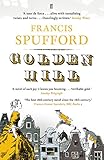
“Golden Hill” by Frances Spufford: Crackling pyrotechnics a tad let down by a concluding damp squib

This is my review of Golden Hill by Francis Spufford.

In the parochial little British colony of mid-eighteenth century New York, no one knows what to make of the handsome young new arrival from London, Mr Richard Smith. Is he a provocative conman, or a well-intentioned blunderer? Should the wily merchant Lovell accept his bill of exchange demanding the vast and ruinous sum of a thousand pounds? When the gossip grapevine spreads the word of Smith’s wealth, everyone wants to curry his favour, but a twist of misfortune can quickly set the whole community against him

Francis Spufford has used his research skills as an established writer of non-fiction to recreate in his first novel the minute and vivid detail of a past age which seems to ring true even if it is fact an artful illusion. This is a modern take on a Henry Fielding, Tom Jones kind of fiction, a succession of quirky events, with a sometimes intrusive narrator, but free from the sententious, long-winded moralising of the classics. The author has even taken the bold risk of adopting an eighteenth century turn of phrase, and appears to carry it off. Although some may find the style somewhat contrived and overblown, I was continually impressed by his skill in moulding words into distinctive, original images and thoughts. Often funny, entertaining yet farcical, the narrative keeps returning to the alternating spark and pathos of Smith’s encounters with the sharp-tongued, unpredictable Tabitha Lovell, the bird in a cage of her own making. He is drawn to her fatefully, despite knowing that “there is something very wrong with her”.

He made me realise how the lack of coins in New York obliged people to trade with a bewildering variety of coins of arbitrary value “ a Morisco piece we can’t read, but it weighs in at fourteen pennyweight, sterling, so we’ll call it two-and-six”. He can write a whole page on the simple act of walking in near darkness through a hall and up a staircase: “picture frames set faint rumours of gold around rectangles of darkness or curious glitters too shadowed to make out, as if Lovell had somehow collected, and drowned, a stairwell’s worth of distant constellations”. And so the narrative rattles on through the twists and turns of pursuits of a thief, sinister bonfire celebrations, melodramatic escapes across roof-tops, imprisonment, amateur dramatics, and duelling in the snow.

Francis Spufford could make paint drying sound interesting, as when Smith describes a boat trip up the Hudson River through a fog which shifts from “coagulated grey curtains…. to mere streamers and tatters….. while little cats’-paws of breeze come wrinkling and dabbing…..scuffing the water… from silver to pewter” or observes the winter ice forming on the East River, “into whose depths you could look and see swirls of grey brine and glassy freshwater fused together as still and rigid as the heart of a child’s marble.

Beneath the flippant, tongue-in-cheek portrayal of a varied cast of well-drawn characters with hints of their failings and secrets, run the darker currents of the serious rivalry between the Governor and smoothly menacing, power-hungry Judge De Launcey, the crude and corrupt system of justice, and the contemptuous exploitation of the slaves on whom the prosperity of the colony is based. There is the lurking knowledge that even a happy ending will be short-lived, since the colony is shortly to be blasted apart by the War of Independence with Great Britain.

On finishing this book I was left with a sense of disappointment, partly because the verbal pyrotechnics of this well-plotted page-turner made other novels seem bland. It was also due to my finding the denouement revealing Smith’s much-hinted at but long-kept secret something of an under-developed anti-climax, and the final unsettling twist too clever by half. Yet I did not mind that the ending is inconclusive. In general, for sheer originality and the quality of the writing, this book would make a deserving winner of the Man Booker Prize.

⭐⭐⭐⭐⭐ 5 Stars

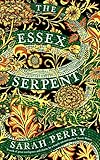
“The Essex Serpent” by Sarah Perry – Cleaving hearts

This is my review of The Essex Serpent by Sarah Perry.

This imaginative yarn set in the 1890s revolves around Cora Seaborne, the unconventional young widow who acknowledges her sense of relief over the death of a sadistic husband. Within days of his demise, she has left the bustle of London with its sharp social divisions for the stark beauty of the Essex coast, often obscured by shifting mists, accompanied by Martha, the competent nanny who never left and son Francis, who would nowadays be considered autistic. With his inability to show the normal affection of a child, and his obsession with collecting objects, Francis is a continual source of puzzled concern, but Cora obtains emotional support from Martha, who manages to combine this with her commitment to persuading wealthy men like her admirer Spencer to invest in the replacement of the London slums with decent housing for workers.

It being the 1890s, Cora is thought to have a “masculine mind”. Although a wealthy woman with the means to dress fashionably, she often tramps the country dressed like a bag lady, in a man’s tweed coat with grimy fingernails. Apart from being practical gear for a geologist, perhaps this is a sub-conscious desire to conceal her femininity, having been so abused by her husband. It is hard to believe that such an independent-minded woman would have submitted to this, but perhaps she was trapped by her initial youth and the social attitudes of the day.

Absorbed in her fashionable pursuit of fossils, Cora is intrigued by the “Essex Serpent”, a creature of local folklore who is thought to have made a recent return to prey on the the inhabitants of Aldwinter, terrifying them in the process. Cora harbours dreams of making her name as a female geologist through the discovery of some giant ichthyosaurus. Frustrated by his parishioners’ superstition, local vicar William Ransome is driven to hac away the carving of a sea serpent which adorns the arm of a church pew. Although holding diametrically opposed views on religion, William and Cora are drawn to each other by a powerful meeting of questioning minds, the joy of conversing and bouncing ideas off each other. But can such a friendship endure in 1890s England, when does friendship become love, and what is to be done since William Ransome already has a beautiful, sensitive wife whom neither William nor Cora could bear to hurt – although she is conveniently frail and consumptive, so perhaps they can have their cake and eat it if their love can survive all the interim setbacks?

At first, I found the characters somewhat unconvincing, such as the brilliant, eccentric surgeon Luke Garrett, and his wealthy friend Spencer. Too often both dialogues and descriptions seem artificial, clunky contrivances for informing the reader about the burning social issues of the day. Yet, the descriptions of the Essex countryside and shoreline, together with the unsettling suspected presence of the serpent, are well-written and evocative, and once William Ransome is established alongside Cora to provide the two most fully developed central characters, I found myself more fully engaged in the story. Sarah Perry is also good at writing about children.

Overall, it is a modern writer’s take on the late Victorian world a generation after the period of Dickens and Wilkie Collins. Written somewhat in their vein, it avoids cloying sentimentality, yet is over-long and repetitious in places, and soft-centred at its core, although these are all features of the writing of this period.

⭐⭐⭐⭐ 4 Stars

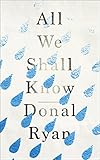
Crazed with guilt

This is my review of All We Shall Know by Donal Ryan.

With a masters in journalism, a frustrated would-be writer, her prose searing and insightful in print, but foul-mouthed in her speech, self-absorbed, quick to fly off the handle, swinging between extreme attachments and violent dislikes, unstable to the point of being a little mad, the inaptly named Melody is difficult to like. Donal Ryan contrives to hook us onto this sad, often violent tale, by the power of his quicksilver flow of words, the original, striking descriptions and wry Irish turn of phrase which makes one wonder how such articulate people can so often fail to avert trouble by sheer verbal skill alone.

We know from the first paragraph that Melody has got herself pregnant by seventeen-year-old Martin Toppy, a pupil almost half her age, the handsome, illiterate son of a famous Irish Traveller. Although not prepared to risk telling her husband Pat the truth about the baby’s parentage, it is clear that she expects the pregnancy to bring to an end what has evidently been a tempestuous marriage, with Melody’s unpredictable, unreasonable behaviour the root of the problem . As Melody reveals her past, layer by layer, it becomes ever more apparent that her ability to relate positively to others has been blighted by a profound sense of guilt over her treatment years before of her former best schoolmate, Breedie Flynn. Melody's current striking up of an almost obsessive friendship with the young Traveller Mary Crothery becomes an attempt to atone for the past actions which haunt her. Even in this, she may be accused of a degree of manipulative control-freakery.

Judging by this and Donal Ryan’s first novel, “The Spinning Heart” which I found superior perhaps because less intensely bleak as regards the unrelenting piling up of misfortunes, the author’s central theme is the interplay of dysfunctional families and neighbours in close-knit, claustrophobic small-town Irish communities, riddled with Catholic guilt, struggling to adjust to external pressures for change.

If I had not known to the contrary, I would have said this novel was the work of a woman, as the chapters chart the course of Melody’s pregnancy, week by week. Yet I am not sure a woman would be likely to take with such apparent ease the course of action she takes at the end of the novel, by way of expiating past sin.

⭐⭐⭐⭐ 4 Stars

Everyman’s devil

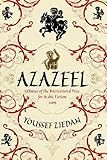
This is my review of Azazeel by Youssef Ziedan.

It is interesting to be reminded that the Middle East was once briefly Christian, and as unstable and riven by violent dissension as it is now.

In the ruins of a monastery near Aleppo, archaeologists unearth a tightly sealed wooden book, containing parchment manuscripts, the memoirs of a fifth century Egyptian-born monk and self-taught physician called Hypa, whose wanderings took him to Alexandria, Jerusalem and Antioch.

A thoughtful and observant man, his avid reading, including of “forbidden books” has stimulated his questioning mind. In a period preceding the rise of Islam, he sees Christians behaving with a savage bigotry to rival a modern-day IS fighter: their brutal murder of his father, for quietly following his pagan beliefs, or of the gifted female mathematician Hypatia (from whom he has taken his adopted name), denounced for heresy by the vicious Bishop Cyril of Alexandria. On a personal level, he wrestles with the overwhelming desire to love the beautiful Martha, which is incompatible with his chosen life as monk. On a larger scale, there is the use of abstruse differences in doctrine as a weapon in power struggles over a religion divided between Cyril who looks to Rome, and Bishop Nestorius, who has become Hypa’s friend through a shared love of books, based at Antioch.

As he writes, Hypa is continually distracted by Azazeel, one of many names for the devil, yet clearly the voice of Hypa’s own “inner voice”.

At one point, Azazeel asks Hypa, “Did God create man, or was it the other way round?” He answers his own question: “Hypa, in every age man creates a god to his liking and his god is always his visions, his impossible dreams and his wishes”. When Hypa whispers, “But Azazeel, you are the cause of evil in the world.” Azazeel responds, “Hypa, be sensible. I’m the one who justifies evil. So evil causes me.” Later he urges, “Wake up, Hypa, and come to your senses. Your desire for her (Martha) is crushing you and breaking your heart. Go to her, take her and leave this country. Delight in her and make her happy, then heap curses on me because I tempted you. Then all three of us will thrive, having fulfilled ourselves.”

The book may be an “acquired taste”, perplexing and tedious for someone with either little knowledge of or no interest in religion. Although the translation from Arabic is in general excellent, some descriptions are over-detailed, dull and hard to follow. Yet the book creates a vivid impression of what life might have been like fifteen centuries ago, with realistic characters revealing all too recognisable human flaws. The author also shows the appeal of a life of contemplation: there is a striking passage in which Hypa observes the habits of the wild doves, who mate indiscriminately with each other, care jointly for the young, living together in a seemingly peaceful community, causing him to wonder why humans cannot do the same. It occurs to him that another monk throws stones at the birds because he is afraid of the fact that at heart, he likes them.

I do not know to what extent the slow pace and precise detail are a feature of Arab writing. Some readers have criticised the Muslim author’s interpretation of rival early Christian doctrines but this does not seem to me to matter. What is important is the portrayal of a humane and conflicted individual to whom we can relate, despite the radical differences in our lives.

⭐⭐⭐⭐ 4 Stars

Brilliant passages but misses the mark overall

This is my review of The Little Red Chairs by Edna O’Brien.

It is not surprising that the enigmatic, charming Doctor Vladimir Dragan, self-styled healer and sex therapist causes a stir in the Irish backwater of Clooniola, steeped in Catholic tradition and Celtic superstition, but beginning to feel the effects of the EU, bringing funds for a motorway and a stream of east European workers to revive the tourist trade.

Is Vlad truly spiritual or a charlatan? He is clearly escaping from his previous life, but is this as a victim, or perpetrator of war crimes? Has grumpy ex-Schoolmaster Diarmuid hit the nail on head in likening him to Rasputin? To what extent is he a thoroughly human mix of strengths and failings for which there are extenuating circumstances?

The “little red chairs” of the title refer to the 643 set out along the main street in Sarajevo to commemorate the number of children who died in the long siege conducted by Bosnian Serbs, with 11,541 red chairs to mark the overall death toll. Edna O’Brien is ambitious in attempting to combine a portrayal of the psychology of a leader driven to genocide with an understanding of the ongoing suffering yet resilience of the migrants forced to leave their families and possessions in an attempt to form a more secure home in a very different and often unwelcoming culture.

Not having read Edna O’Brien for years, I was at first impressed by her distinctive style, poetical Irish whimsy with flashes of sharp wit, but would have been tempted to give up around page 89 if this had been the work of a less celebrated and experienced writer. I found it hard to forgive some very unconvincing scenes, like the farcical book group in which the locals read “the chapter called Dido from the Aeneid, Book IV”. Apart from the fact that the Irish are too often portrayed as stereotypes or caricatures, there is a surfeit of characters, not leaving enough space to develop them as individuals. I never had a sense of what really “makes Vlad tick” and agree that using a deceased friend in one of his dreams to reveal some of his guilty past to the reader is one contrivance too many. I don’t know to what extent Edna O’Brien has used real examples for her portraits of migrants, but their stories are too often provided in over-long monologues in an artificial style which jars as unrealistic. I know it is hard to create authentic “voices” for characters using English as a second language, but everyone appears to have a “voice” which is a variation of Edna O’Brien’s.

I found some of the author’s “vignettes” moving or amusing – the young bartender Dara, intrigued but puzzled by Vlad, the description of a robin “same tilt to the head, the little flirt, with her tricks, landing then darting off into the thickets”, Fidelma's persecution by the malicious cleaning supervisor Medusa, with her snake-like plait, the satnav which had “lost its navigating marbles”. However, there seem to be too many digressions, so that a potentially powerful theme based on a thinly-disguised Radovan Karadzic is dissipated, tailing off into a somewhat sentimental conclusion.

⭐⭐⭐ 3 Stars