Not the kind of person who is able to do things

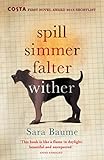
This is my review of Spill Simmer Falter Wither by Sara Baume.

The intriguing title is a sufficient magnet for this original take on Ray, prematurely aged at fifty-seven, a social outcast since childhood, who forms a relationship with a dog he names “One Eye”, mutilated by a badger attack. The dog’s reduced range of vision reflects Ray’s limited and distorted view of life. They have much in common: both are physically repulsive, the dog because of the way he has been trained to dig out and bait badgers, the man through lack of normal “socialisation” as a child, never attending school, and as an adult never having kissed a woman or made a telephone call. Living in squalor, he fills his deceased father’s house with junk in what seems like an advanced state of OCD, yet he shows frequent kindness to the dog, and his voracious reading and listening to the radio have given him a quirky general knowledge which informs his turns insightful, warped and even humorous observation of his surroundings. An unfortunate chain of events convinces Ray he must take to the road with One Eye, in a trek which one knows must end badly.

Early on, Ray’s stated, “I’m especially afraid of children” suggests that he may be feared by the local community as a paedophile. As we discover fragments of his past non-life, our sympathy may grow, yet there is also an increasing sense of darkness and unease, that despite his normal passivity, even gentleness, he may be as capable of uncontrolled or amoral violence as One Eye. At one point, Ray’s observation that the dog, with his frenetic energy, is of course mad, is an irony since it appears that his own sanity is slipping.

The decision to make Ray the first person narrator, addressing a one way monologue to One Eye, involves us more directly. There is poignancy in Ray’s speculation over the lives other people live behind closed doors, existences which he can never know, but in their way as futile as his. Like other readers, I found that Ray’s “voice” belongs too much to the star of a creative writing course rather than an isolated man self-educated on a diet of junk shop and mobile library books, his experience confined to a small Irish seaside community.

This book is set apart by the original, poetic style which needs to be read slowly to absorb its intensity. The alliteration and rich wordplay reminds me of Dylan Thomas: “I dream it’s dungeon dark…I’m belting.. Demented, directionless.” The capacity to develop descriptions of ordinary objects and situations, to sustain them, page after page, brings to mind Proust, except that his genteel madeleine is a far cry from a decrepit cane chair, or a self-harming habit of picking at one’s finger tips until the bloody wounds go septic. Striking descriptions of a shoreline are outweighed by unflinching images of nature’s violence, the ugliness of pollution, the sordid detail of bodily functions. “There’s a layer of filth sunk into the grooves of the skirting board, buttered across the lino. Bugs creep out of the wall at night to gnaw the filth and its stickiness gathers tiny tumbleweeds of passing hair.”

Eventually, this unrelenting preoccupation with dirt and decay becomes oppressive and monotonous. I grew tired of the repetition of One Eye’s “maggoty nose and the triplets of present participles: the dog “running, running, running”; “We are driving, driving, driving”; the conger eels are “nibbling, nibbling, nibbling”. Also, as an author who grew up in Ireland rather than America, why do her characters “look out the window”?

Clearly very talented, Sarah Baume mars her first novel by laying all the putrefaction, bodily fluids and general repulsiveness on too thickly. In not knowing when to stop, the book becomes too protracted to support its slender storyline. I felt so bludgeoned and desensitised that I only kept on reading to discover exactly what sad conclusion it would reach. I believe that the ending has left some readers confused. After a few moments reflection, I was convinced that I understood it and that what seemed at first like a rather trite epilogue was in fact quite effective, except that some readers will find too bleak the sense that an individual human existence does not matter in the overriding life force which just goes on.

This will provide a well-manured field of topics for a book group: it will divide readers, examples of what makes the writing so original are worth discussing, together with questions about Ray. To what extent is he responsible for his past actions, or even his inaction in allowing himself to sink into the vicious cycle of being shunned by others because he does not comply with the accepted norms of behaviour? Is it credible that he could be so dysfunctional in some ways yet resourceful in others? His life may seem a tragic waste, but has he gained something precious in his ability to observe objects and the world above him so closely?

⭐⭐⭐⭐ 4 Stars

“So long, See you Tomorrow” – Destroyed by what was not his doing

This is my review of So Long, See You Tomorrow (Vintage Classics) by William Maxwell.

This is not the only novel by William Maxwell to have been born out of an acute, lifelong sense of desolation over the loss of his mother when he was only ten. The opening page hooks the reader with the account of a pistol shot, marking the murder of Illinois tenant farmer Lloyd Wilson. However, it gradually becomes apparent that this is not a murder mystery, but rather a slow-paced, introspective exploration of how people’s lives can be irrevocably damaged by different kinds of loss: on one hand, recalling events as an old man, the narrator describes how he was affected by his mother’s death and his father’s remarriage; on the other, Maxwell provides a moving account of how the narrator’s childhood friend Cletus Smith was devastated by the effects of his mother’s infidelity. Maxwell manages to create sympathy for all the parties involved. For Cletus, the loss of a familiar routine, a sense of purpose as he helped on the farm, the company of his dog, were the most devastating aspects of the tragedy.

The novel’s strengths lie in the author’s ability to express so truthfully and with such deceptive ease how people think, to conjure up vivid visual impressions of the Illinois praires – plus the all-pervading quiet in which small sounds travel long distances – and also to convey a sense of society in rural or small town, conservative, hidebound 1920s America.

The story has an unusual structure, switching between first person recollection, and third person drama containing facts which the narrator could not have known – at some points we even enter into the mind of Cletus Smith’s faithful dog Trixie. Maxwell’s style sometimes seems best suited to short story mode, since he is easily distracted into the thumbnail sketch of a character who then fades out of the story, or into an anecdote which loses sight of any main plot or narrative drive. Perhaps I have missed something, but even the title does not seem to quite fit.

It seems that as fiction editor for the New Yorker, William Maxwell is remembered mainly for nurturing the talent of such major writers as John Updike. Regarded as denied due recognition in his lifetime, Maxwell is now receiving belated praise in a recent revival, often being compared with John Williams, the similarly acclaimed author of “Stoner”, another novel which portrays thought processes and emotions in great detail.

I found this novel absorbing, the kind of writing which needs to be read slowly and more than once to appreciate fully both its technical skill and the ideas conveyed. Yet, although I was struck by the originality of Maxwell’s approach, its focus on bleakness, hints of obsessive self-absorption, and the repetitious hammering home of certain points in a structure which often seems unduly fractured combine to leave me with an ambivalent view of this book.

⭐⭐⭐⭐ 4 Stars

“The Glorious Heresies” – Winner of the Baileys Women’s Prize for Fiction and the Desmond Elliot Prize 2016 by Lisa McInerney. Stab at a female Irish Irvine Welsh?

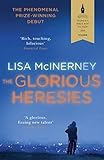
This is my review of The Glorious Heresies: Winner of the Baileys Women’s Prize for Fiction and the Desmond Elliot Prize 2016 by Lisa McInerney.

“It hit him like a midwife’s slap” is a good line in the Irish idiom, but what would a teenage boy know about midwives? I appreciate the raw energy of Lisa McInery’s style and the sincerity of her portrayal of a group of dead-end Cork-based drug-takers and dealers, prostitutes and criminals, their excuse being poverty in post-financial crash Eire, and a flaky, hypocritical Catholic tradition.

Nevertheless, what is described on the back cover as a “punchy, edgy, sexy, fizzling, feast of a debut novel”, “a gripping and often riotously funny tale”, left me cold. I found the unrelenting sordid violence unrelieved by any of the famous Irish quirky humour or lyrical prose. At one point, when a man is shot, there is no real sense of shock or emotion. It may of course have been the author’s intention to portray death like that in an arcade game, but across the board, characters are not developed in any way that makes me engage with them. Although it did not promise a “happy ever after”, the ending seemed somewhat sentimental.

This is one of those novels which divides readers. Whether or not one likes a novel is always subjective. Some of the most challenging novels the most worth reading are an acquired taste. However, after decades of reading a wide variety of fiction, I may commend this as a debut novel (but why should one make allowances for a first book anyway?) but, as others have said, it is quite long with a shambling plot, and I did not feel it was worth spending the time needed to read it.

⭐⭐⭐ 3 Stars

Be careful what you wish for

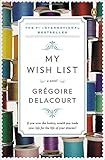
This is my review of My Wish List by Gregoire Delacourt.

“How can you do such a disgusting job – I work in advertising – and write such lovely books?” This sentence in the gushing postscript to this short novel explains the growing sense of unease I had experienced when reading it. This story is a marketable product pitched at female readers by an author with a knack for adopting the “voice” of “ordinary”, admittedly somewhat stereotyped, women, and for identifying an intriguing situation on which to build a bitter-sweet scenario.

In this case we have Jocelyne, owner of a small haberdashery in Arras, slipping into slightly overweight middle age with her dependable but dull and on occasion boorish husband, with two now adult children who have “flown the nest”. She seems to have had more than her fair share of misfortune: the loss of her mother and her father’s onset of illness when she was still a teenager put paid to her youthful ambitions, leaving her with low self esteem and a nagging sense of having made too little of her life. Into this rather unpromising situation falls the bolt from the blue of a huge lottery win, raising the dilemma we all share as to how we would spend this, if given the chance. Jocelyne’s periodic “wish lists” – progressing from “a lamp for the hall table” to “spend a fortnight in London with my daughter”, highlight the common inability to think on a grand enough scale, particularly if one is accustomed to put one needs second. Eventually, she only lists a Porsche as a “folly” that will please her husband.

There are some interesting aspects to the story: her fear that the money will destroy what is good in her life, her awareness that the most valuable things in life cannot be bought with money, that the planning of purchases over time can be more satisfying than a huge spending spree, money no object. The presumably intentional irony is that her knitting and sewing blog which costs nothing does more good in the world than the huge cheque she has won. Is it also intentional irony that the man she loves is so unworthy of her devotion, or are we meant to think that love itself is simply what counts more than money?

In the end, the novel disappoints by proving too shallow and sentimental, aptly described by the wonderful French word “guimauve” – marshmallows and mushiness. The two main male characters – husband and shadowy male love interest – are both too underdeveloped to be convincing and the plot drifts to a limp and disappointing ending.

⭐⭐⭐ 3 Stars

Exploiter exploited

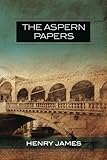
This is my review of The Aspern Papers by Henry James.

Determined to succeed where his colleague failed, an unnamed editor insinuates himself into the decaying Venetian villa of the ageing Juliana Bordereau. His aim is to obtain by some means the literary treasure he believes her to possess, the papers of her former lover, the long-dead, celebrated poet Jeffrey Aspern. Inspired by scholars’ interest in the letters of Shelley to his sister-in-law Claire Claremont, this novella is a subtle and absorbing psychological study of the destructive and corrupting effects of obsession, and of the complexity of people’s motives, set against the background of a crumbling, magical nineteenth century Venice with which everyone who has visited this city will still be able to identify.

In what James apparently regarded as one of his best works, his famously convoluted prose seems surprisingly clear and accessible, the dialogue is sharp and the descriptions evocative and vivid, as in the description of Venice viewed from a gondola as a series of scenes from a play. I like the way that the narrator made predatory by his obsession is not the only main character to be flawed: the ageing Miss Bordereau is understandably concerned to safeguard her privacy and may wish to provide for her faithful niece’s uncertain future, but proves mercenary and manipulative; Miss Tita may be a longsuffering companion with a sense of honour and duty, but proves not to be above taking the opportunity to exploit her exploiter. I think it might have been even better if the narrator had not appeared so self aware at times, but overall would recommend this as an introduction to Henry James, or in my case a book I have reread with undimmed admiration.

⭐⭐⭐⭐⭐ 5 Stars

Subtler than Steinbeck, warmer-hearted than Cormac McCarthy

This is my review of The Power of the Dog (Vintage Classics) by Thomas Savage.

In 1920s Montana, brothers Phil and George devote their lives to running their prosperous cattle ranch. Despite living and working so closely together, even to the point of sharing a bedroom, the two could not be more different. George is stolid, dull, but decent and kind. Phil, a brilliant literary creation apparently modelled on the author’s step-uncle, is a complex, multi-talented man of intriguing contrasts: intellectually brilliant, musical, athletic, skilful with his hands, Phil has not only rejected the glowing career he might have pursued, but insists on wearing the rough clothes of a working man and resists any kind of change, scorning for example the cars which disrupt the flow of cattle to the railhead. For reasons continually implied, but never fully revealed, he has twisted his sensitivity and insight into the winkling out of any weakness in the creatures he hunts: “He knew if a timber wolf was lame, noted the fainter print of the favoured paw in dust or snow. In the sudden elbow of a stream where the baffled water turned upon itself he watched the trout ‘conceal’ itself in the shadow of a rock”. The same applies to those unfortunate enough to cross his path, subjecting them to merciless jibes if the mood takes him. So, when lonely George marries a young widow whom Phil regards as a socially inferior gold-digger, he sets out with typical obsessive patience to destroy her. The tale is bound to end in tragedy, but for whom?

By turns nostalgic, poignant or ironic, this gripping psychological study is very-well constructed so that, on reflection at the sudden unexpected ending, a trail of previous random details reveal themselves as clues and slot neatly into place. All the main characters are fully developed, with a depth and subtlety which even evokes some sympathy for Phil. Digressions on the way are as striking as the main plot, in their vivid descriptions of the terrain, and the portraits of minor characters, such as the Indian, unable to give up his pride over being the son of a chief, who leaves his poverty-stricken reservation without permission in order to show his own son the fertile lands of his youth: “the fields thick with purple lupine that waved and billowed in the breeze like water….the dark gray thunderheads that reared high over the mountains and lumbered like grizzlies across the sky, heavy with water”.

The fact that so much of the novel seems to have been based on Thomas Savage’s own experiences of belonging to a large ranching family gives the book its authenticity. It is a pity that this book was not hailed as a masterpiece when it first appeared in 1967. Perhaps even now that it has been “rediscovered”, too many readers will be put off by the instances of at best cavalier and at worst cruel treatment of animals in the book, starting with a graphic description of castrating calves in the opening paragraph: but this is all part of the reality of a life which the author knew first-hand.

⭐⭐⭐⭐⭐ 5 Stars

In the wrong place at the wrong time

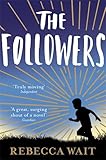
This is my review of The Followers by Rebecca Wait.

Drifting through life in a state of apathy bordering on depression, single parent Stephanie becomes dominated sexually and mentally by the magnetic Nathaniel who persuades her to join what turns out to be his religious cult, housed in a rundown, isolated moorland property called The Ark. This is much to the disgust of Stephanie’s spiky and perceptive twelve-year-old daughter Judith. Stephanie’s decision contributes to a chain of events leading to a shocking climax.

Following the common device of hooking the reader with a flash forward in the first chapter, we are introduced at the outset to a dysfunctional young adult Judith, reluctantly visiting Stephanie in jail where she is serving what sounds like a life sentence for a crime which has left her daughter understandably emotionally scarred. For quite a large part of the book, I would have preferred not to know this in advance, but was eventually won over by the author’s effective interweaving of “Before” and “After”.

Rebecca Wait is skilful in gradually revealing the chain of events, and in showing us the characters’ personalities and often confused thoughts. I was particularly struck by her portrayal of children, not just Judith on the verge of adolescence, but also those born and raised in the Ark who have been taught to view as an evil “Gehenna” the outside world which they have never experienced, even to the extent of walking down a street or watching TV. The gulf between the two worlds is continually shown through the by turns humorous and poignant interactions between Judith and Moses, the boy of her age who desperately wants to be her friend whilst clinging to the comfort of the beliefs she continually questions.

This is not merely a tension-building, gripping page turner but also a psychological drama exploring such issues as responsibility for one’s actions, dealing with conflicting values and guilt, and the extent of one’s duty to other people. I found the build-up to the climax too melodramatic, but it is arguably only reasonable that at this stage all the adults have become at least a little mad. Even given that Nathaniel had a talent for picking out weak and suggestible people, I was unconvinced that "the followers" would accept so meekly the increasingly erratic and extreme Nathaniel’s religious cant and manipulative ploys, but agree that there are plenty of real-world examples of a never fully explicable willingness to be controlled. It was chilling to read how the children had been conditioned, partly through knowing no other life.

Although most of the characters are insufficiently developed, one could argue that the story has been pared down to make a greater impact, leaving readers free, unlike the "followers", to reflect and draw conclusions for themselves.

⭐⭐⭐⭐ 4 Stars

The not famous two go sleuthing

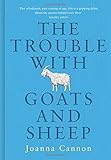
This is my review of The Trouble with Goats and Sheep by Joanna Cannon.

When a middle-aged woman disappears from a suburban road, gossips fear the worst, but her neighbours are embroiled in a rising tide of panic and recrimination as they fear that a guilty secret from the past is about to be exposed. Prompted by the vicar’s sententious platitude that “if God exists in a community, no one will be lost”, bossy ten-year-old Grace and her compliant but underestimated friend Tilly pose as helpful brownies to gain access to neighbours’ homes in order to check whether or not God is there. Quite how this is going to help the situation is never made quite clear.

The story is set in the long, hot summer of 1976 which a number of writers have used as a backdrop to weird goings-on. Despite some novel if overwritten images –– “the sky was ironed into an acid blue, and even the clouds had fallen from the edges, leaving a faultless page of summer above our heads”, “the avenue…bewildered by the heat” – I grew weary of descriptions of the unrelenting drought, but this may have been the author’s intention. The focus on “contemporary accuracy” with references to Harold Wilson and his pipe, “Are you being served?”, “The Good Life”, Patsy Cline singing “Crazy”, “The Drifters” and “Angel Delight” often seems contrived.

At first, the chapters written from Alice’s viewpoint seem the strongest, until the contrast begins to jar between her childishness and some implausibly insightful comments: observing a Mrs Morton she reflects “Early widowhood had forced her to weave a life from other people’s remnants, and she had baked and minded and knitted herself into a glow of indispensability.” In order to drip-feed the reader with the details of what is really afoot in “The Avenue”, Joanna Cannon has to resort to a number of different viewpoints, all in the third person and often involving flashbacks. This often makes the storyline seem fragmented, with the highly stereotyped adults soon becoming tedious caricatures. Trite comments apart, there is a good deal of humour in the book, but the hypocrisy and prejudice of the adults is laid on with many trowels.

As the story labours its way to a surprisingly abrupt and anticlimatic ending, I was probably wrong to be irritated by a number of small errors: the “six week” school summer holiday runs from early July through to September, starting on July 5th, at least a fortnight earlier than I remember to be the case. Dahlias bloom in July alongside freesias – perhaps a quirkish effect of the heat. The persecuted Walter Bishop has several cedar trees in his front garden, something I have never seen outside a stately home. My main problem was being unable to form a clear sense of place – a mental picture of the estate, somewhere a bus ride from Nottingham. At various points, we are told about terraces and a corner shop, but houses in the Avenue have garages and sound detached. Lace-curtained windows of kitchens and “living rooms” both seem to overlook the road plus the houses seem to have “sitting rooms” as well. Here, an alcoholic single mother lives close to a property manager. The neighbours mostly seem to have known each other from childhood but are they working or middle class? You need to know this about a community in the UK. And, although some appear to have jobs, how is it that they all seem able to converge on a dramatic scene at the drop of a hat?

It’s the fantasy land of a children’s story in what purports to be an adult novel. The “genres” are all mixed up but in the end it proves to be a lightweight, by turns sad, funny, sentimental, unsubtle psychological novel. A poignant situation and any sense of real suspense are both blunted by a storyline which descends into tongue-in-cheek parody – to give it the benefit of the doubt – particularly when the neighbours gather in their deckchairs to watch over the creosote image of Jesus which has appeared on a drainpipe.

⭐⭐⭐ 3 Stars

The not famous two go sleuthing

This is my review of The Trouble with Goats and Sheep by Joanna Cannon.

When a middle-aged woman disappears from a suburban road, gossips fear the worst, but her neighbours are embroiled in a rising tide of panic and recrimination as they fear that a guilty secret from the past is about to be exposed. Prompted by the vicar’s sententious platitude that “if God exists in a community, no one will be lost”, bossy ten-year-old Grace and her compliant but underestimated friend Tilly pose as helpful brownies to gain access to neighbours’ homes in order to check whether or not God is there. Quite how this is going to help the situation is never made quite clear.

The story is set in the long, hot summer of 1976 which a number of writers have used as a backdrop to weird goings-on. Despite some novel if overwritten images –– “the sky was ironed into an acid blue, and even the clouds had fallen from the edges, leaving a faultless page of summer above our heads”, “the avenue…bewildered by the heat” – I grew weary of descriptions of the unrelenting drought, but this may have been the author’s intention. The focus on “contemporary accuracy” with references to Harold Wilson and his pipe, “Are you being served?”, “The Good Life”, Patsy Cline singing “Crazy”, “The Drifters” and “Angel Delight” often seems contrived.

At first, the chapters written from Alice’s viewpoint seem the strongest, until the contrast begins to jar between her childishness and some implausibly insightful comments: observing a Mrs Morton she reflects “Early widowhood had forced her to weave a life from other people’s remnants, and she had baked and minded and knitted herself into a glow of indispensability.” In order to drip-feed the reader with the details of what is really afoot in “The Avenue”, Joanna Cannon has to resort to a number of different viewpoints, all in the third person and often involving flashbacks. This often makes the storyline seem fragmented, with the highly stereotyped adults soon becoming tedious caricatures. Trite comments apart, there is a good deal of humour in the book, but the hypocrisy and prejudice of the adults is laid on with many trowels.

As the story labours its way to a surprisingly abrupt and anticlimatic ending, I was probably wrong to be irritated by a number of small errors: the “six week” school summer holiday runs from early July through to September, starting on July 5th, at least a fortnight earlier than I remember to be the case. Dahlias bloom in July alongside freesias – perhaps a quirkish effect of the heat. The persecuted Walter Bishop has several cedar trees in his front garden, something I have never seen outside a stately home. My main problem was being unable to form a clear sense of place – a mental picture of the estate, somewhere a bus ride from Nottingham. At various points, we are told about terraces and a corner shop, but houses in the Avenue have garages and sound detached. Lace-curtained windows of kitchens and “living rooms” both seem to overlook the road plus the houses seem to have “sitting rooms” as well. Here, an alcoholic single mother lives close to a property manager. The neighbours mostly seem to have known each other from childhood but are they working or middle class? You need to know this about a community in the UK. And, although some appear to have jobs, how is it that they all seem able to converge on a dramatic scene at the drop of a hat?

It’s the fantasy land of a children’s story in what purports to be an adult novel. The “genres” are all mixed up but in the end it proves to be a lightweight, by turns sad, funny, sentimental, unsubtle psychological novel. A poignant situation and any sense of real suspense are both blunted by a storyline which descends into tongue-in-cheek parody – to give it the benefit of the doubt – particularly when the neighbours gather in their deckchairs to watch over the creosote image of Jesus which has appeared on a drainpipe.

⭐⭐⭐ 3 Stars

“The Green Road” – Shortlisted for the Baileys Women’s Prize for Fiction 2016 by Anne Enright. A kind of no holds barred Irish Virginia Woolf?

This is my review of The Green Road: Shortlisted for the Baileys Women’s Prize for Fiction 2016 by Anne Enright.

With her by turns staccato and poetic prose, wry wit and Pinteresque dialogues of unfinished sentences which reflect how people both fail to communicate but also do not always need to use words when they have lived together for years and shared common experiences, Ann Enright has an original angle on the well-worn theme of Irish family life.

In this case, the four Madigan children have grown up in a small west coast town close to the beautiful green road “famed in song and story” which runs across the Burren above the beach at Fanore and the Flaggy Shore – all of which can be found on Google images if the lilting names catch one’s interest enough.

The first part, “Leaving” is like a series of short stories, each from the perspective of a different sibling over a span of twenty-five years, with a final focus on Rosaleen, complex, difficult and probably too inconsistent and self-absorbed to be a “good mother”, and arousing a mixture of frustrated love and irritable resentment in her children. Ann Enright seems most authentic when writing about Ireland, which is where Rosaleen and her two daughters have allowed themselves to be “trapped”, all feeling a sense of unfulfilment to which they respond in different ways. “Impossible to please”, “Rosaleen was tired of waiting. She had been waiting, all her life, for something that never happened.”

Ann Enright’s experimental, risk-taking approach does not always work for me, but many observations and passages strike home: as Rosaleen walks along the Green Road in the dark, “a delicacy of stars above her”……….“The sea was huge for her. The light gentle and great. The fields indifferent , as she walked up the last of the hill. Bust she got a slightly sarcastic feel off the ditches, there was no other word for it – sprinkles of derision – like the countryside was laughing at her.”

Rosaleen’s two sons are more pro-active in their quest for an elusive goal, with Dan going “everywhere”, and Emmet “everywhere else” abroad. I was gripped by the strong sense of place and build-up of tension in the drama of aid-worker Emmet’s over-sensitive girlfriend Alice breaking a taboo in Mali by taking a stray dog into their home. Dan’s spell as a lapsed priest flirting with the gay art scene in New York struck me as too contrived, perhaps partly because of the arch tone of the unnamed first person narrator, a device not used elsewhere in the book, partly because it seemed overloaded with caricatures of over-sexed, drugged up young men caught up in an early ‘90s panic over Aids, all based on a woman’s second-hand research of the explicit details of being a male gay.

“Part Two”, “Coming Home” is more of a novella focused on a fraught Christmas reunion. Although, plotwise, not much happens, in terms of sudden sharp insights, comical or poignant situations and brilliant sentences one would love to have written, it is absorbing and demands to be read again.

⭐⭐⭐⭐ 4 Stars