This site will share with you hundreds of book and film reviews written since 2009. Also a chance to discuss these reviews together with some of my creative writing to be added.
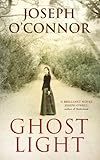
I enjoyed "Star of the Sea" and admire O'Connor's desire to experiment, in this case moving from the pace of a vigorous, oldfashioned yarn (Star of the Sea) to a very different kind of novel – much shorter, slower moving, introspective and filled with memories and flashbacks. It begins with a povertystricken, alcoholic old woman recalling the time spent years ago with the much older, long dead Irish playwright Synge.
The structure of the book is quite "original", making demands on the reader to suspend all usual expectations and "go with the flow" as O'Connor pursues Irish streams of consciousness and recreates past scenes, sometimes writing the story of Molly Allgood's relationship with Synge in the form of a scene from a play.
The quality of the prose is undeniable – beautiful, carefully constructed descriptions, and O'Connor conveys well a sense of loss and nostalgia, but for me the work lacks pace, and I cannnot engage with the characters as I should. I felt ashamed to find it so hard to read and may return to it – but I fear that the lure of another book will always draw me away.
You could easily miss "And we forget because we must", which is the author's quotation for this book. Perhaps it should have concentrated more on Ted, whose lost memories lie at the heart of the story.
"The Hand That First Held Mine" adopts the same technique as "The Vanishing Act of Esme Lennox" : two threads run in parallel, with episodes alternating between the present and the recent past of a previous generation. However, the former has a more rambling plot, with few links between the two threads until the final denouement. This latest book is also less dramatic and shocking, since some key events are described rather than "acted out" on the page, plus O'Farrell has an annoying habit of telling you what is about to happen – say when someone is due to die.
The strongest sections of the book for me are those centred on Elina, the young Finnish artist as she struggles with the post-natal trauma of her son's birth, when she almost dies, combined with the total disruption of every aspect of her life, practical, personal and creative by a demanding baby whom she both loves but also find a burden. Some may find the endless details of childcare tedious – they are somewhat exaggerated, but often relieved by humour and likely to bring back wry memories or make the present more bearable.
I suspect this book will appeal mostly to women, although Ted's feelings about fatherhood and its effects on his relationship with his partner Elina are covered sensitively. The abrupt triggering of Ted's puzzling childhood memories did not seem quite plausible for me, although it makes for a mystery to keep one reading on.
The thread based on Lexie, the free spirit at the dawn of the Swinging Sixties is less satisfying. Her dizzy life in the world of publishing is entertaining, but left me for the most part unmoved. The sinister Margot and her ghastly "twirling" mother Gloria seem particularly unconvincing, with inadequately developed roles, which matters as they are crucial to the plot. I also find aspects of Felix's behaviour very unlikely.
I often felt I was reading "exercises in creative writing" – as when O'Farrell rewinds time in order to move Lexie back to an earlier scene. Then there is the detailed description of the cafe which had once been the offices of Innis Kent's magazine. O'Farrell likes to dwell with nostalgia on how buildings have been altered, and their occupants have changed over time.
I was irritated by the narrator's occasional arch collusion with the reader in the Lexie thread – "Here is Lexie"…."This is where the story ends" etc.
The book has a fragmented quality, since it has several styles and themes which perhaps could have been woven together more effectively. It verges at times on chick lit or worse. Yet, I can see why many women will love all the feelings and memories to which they can relate and be intrigued by the plot.
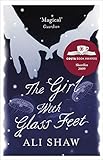
As someone who is not a fan of magic realism, I had to suspend my prejudice to read this book for a group discussion.
Although the description of Ida turning to glass at the end – I don't think this is giving too much away! – is well-written, much of the rest seems quite amateurish or immature. The plot is thin, with scenes which serve no purpose, underdeveloped characters and unconvincing dialogues. It appears that, apart from the basic idea of a girl turning to glass in a sad love affair with a unhappy adolescent boy, the author does not really know where to take the story. A short story on this theme might have been more powerful.
A few trivial details riled me, such as the unlikely combination of geographical features in the Scottish (?) island on which it is set, and the fact the author describes cooking a breakfast when he has clearly hasn't done so – starting on the eggs before the sausages!
"Les cerfs-volants" (The Kites) is a good read for those wishing to brush up their French, say from A Level. This novel by Romain Gary, who won prizes under both this pseudonym and that of "Emile Ajar", presents the reminiscences of Ludo Fleury who grows up between the Wars in a Normandy village under the care of his eccentric Uncle Ambroise, celebrated throughout France for his skill in making kites of famous historical characters, and leading men of his day.
After a slow start, I gradually became caught up in the story, as Ludo falls for Lila, the self-centred and over-indulged daughter of a Polish count who hires a house for his family in the neighbourhood during the summer. Although Lila appears to return Ludo's love, she also enjoys the adoration of two other youths, and enjoys playing one off against the other, so the relationship seems doomed. I feared a kind of over-sentimental variation on "Le Grand Meaulnes", but once World War 2 breaks out and the French, much to their mortification, are so easily overrun by the Germans, the story gathers pace and depth. Ludo uses his reputation for being a bit mad to be an active member of the resistance. I liked the very French theme of the local restaurateur's controversial attempt to "cock a snook" at the invaders, by treating them to the highest quality French cuisine, thereby showing the unbeatable superiority of the French where it really matters.
Although the plot is quite clunky in places and not all the characters seem entirely realistic – Lila's father, for instance – there are some striking visual and atmospheric descriptions e.g. Bruno playing the piano on the shore. I like the scenes where Ludo so much wants to be with Lila that he imagines her presence. The story is strengthened by the fact that Ludo is not blind to Lila's faults, and uses a good deal of irony in his conversations with her.
Perhaps the ending is a little idealised, but it is comforting to end such a dreadful period on a note of hope.
It is therefore all the more shocking to learn that Gary committed suicide soon after completion of the work.
A gripping tension builds up in the early chapters as a panicstricken doctor manages to foist onto Andrei the dubious honour of trying to heal the perhaps terminally ill son of Volkov, a high-ranking Soviet official in the dreaded Ministry of State Security.
The book is convincing in capturing what it must have felt like to live through the final months of Stalin's Reign of Terror. Ordinary, decent people learned to keep their heads down and their mouths shut, anything to avoid attracting notice, even to the extent of suffering the harassment of malicious neighbours in overcrowded apartment blocks.
Helen Dunmore is skilful at portraying the minute details of people's relationships, their shifting thoughts and emotions. There is even subtle evidence of sympathy between Andrei and Volkov. She makes us care about Anna, the nursery school teacher whose life has been so restricted through the crime of having a free-thinking writer for a father, her artistic teen-age brother Kolya who is like a son to her, and her principled, sensitive husband Andrei. The fear of the "knock on the door at night", the helpless anger over the mindless destruction of one's possessions by the police, the shock of realisation that so-called friends and colleagues are too frightened to help, all come across vividly.
What could be a grim story is lightened by Dunmore's poetical prose – the descriptions of the landscape, and the wry observations on human nature, as some people spout slogans to wangle their way to the top. I always felt optimistic for Anna and Andrei because they are survivors of the terrible siege of Leningrad – I realised too late that "The Betrayal" is a sequel to "The Siege", but it can stand on its own.
The final chapters do not build up to a strong climax, and the narrative loses momentum, becoming almost dull in places, with some potentially dramatic events reported rather than acted out. This approach may well be "true to life". It may also reflect the author's liking for short stories which do not require the development and maintenance of a plot over many pages.
I admire the quality of the writing (although sometimes the children's author voice slips through a bit patronisingly), the plot idea is excellent. It is only the handling of the denouement that could have been defter.
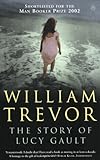
This book has a compelling opening with vivid descriptions of the landscape and rural life on the coast in 1920s Cork – we see the sharp contrasts between the Catholic poor and the local Protestant gentry, who are beginning to suffer attacks from disaffected youths. Much of this is seen through the eyes of the eight-year-old Lucy, and we can appreciate her anguish over her parents' decision to leave the house for the safety of England.
As seems to be a recurring theme for William Trevor, the story is all about the way chance events, and understandable but misguided actions, can wreak longterm damage – often of a subtle variety – in the lives of not only individuals but also those who have contact with them.
Ultimately, the novel succeeds in bringing the main characters, and the reader, into acceptance of fate, even the ability to see some positive outcomes of misfortune, including integrity in the face of adversity.
However, like some other readers, I found the pace of much of the book too slow, although I know this is intentional, since the details of daily life, exploration of minute thoughts and evocation of a former simple way of life are what really interest the author. I thought he had "made his point" by the middle, although some further "loose ends" are tied up in the final chapters.
I also agree that some key aspects of the plot are implausible – but perhaps this does not matter too much.
Although I admire Trevor's writing, the sense of some sentences escaped me, which was frustrating, since his greatness lies in the articulate flow and subtle insight of his prose.
This is a page-turner, on the cusp between literary and popular fiction: on the one hand, it is well-written with varied, complex characters and a detailed, reasonably watertight plot with plenty of twists; on the other, it is very easy to read with moments of high drama and romance. The heroine Evelyn's wry self-knowledge and "feet on the ground" attitude to life prevent the story from slipping into "Mills and Boon" territory.
Most likely to appeal to women – it would be interesting to know how men rate this novel – it finds fresh aspects to cover in the heavily harvested theme of World War 1. The focus is on its aftermath (1924) where women outnumber men, must often support themselves, yet have to battle to enter the professions such as law. The author uses the knowledge gained as a magistrate to create some convincing court scenes, as Evelyn struggles to develop a legal career, having persuaded a maverick solicitor to take her on. Her cases reflect the times: a man who may have shot his young wife out of jealousy, having been destabilised and brutalised by the effects of war; the feckless but loving mother in danger of having her three children shipped off to Canada under a "hidden" because clearly controversial method dealing with the problem of children in care. All this takes Evelyn's mind off her claustrophobic domestic life in an all female, convention-bound household, stultified in grief for the loss of her brother James at the Front.
The book commences with the arrival of Meredith, a charismatic young woman claiming to be the mother of James's son – the appealing six-year-old Edmund,who bears a striking resemblance to his father. Is Meredith genuine? What does she hope to manipulate out of the family? Meredith's unsettling effect, and the opportunity to release her bottled up affections on Edmund, make Evelyn ripe for a love affair in her emotionally suppressed state.
The structure of the story lends itself to a TV serialisation. The beginning is perhaps rather hackneyed: Evelyn imagining her brother's death through what turns out to be a dream, serving as a dramatic preparation for the sudden appearance of Meredith and Edmund in the middle of the night.
Where the pace may seem slow at times, it could be realistic in showing the frustration of trying to obtain evidence and continually drawing blanks in a legal investigation. It also gives scope to show the development of Evelyn's thinking, and her relationship with the other characters.
I did not mind the somewhat open ending, which the author seems to favour, since it seems "more like real life" and leaves the reader free to imagine a preferred future for Evelyn. The mixture of "success" and "failure" at the end also adds authenticity.
As regards reservations:
* although many scenes are genuinely moving, those in which key aspects of the plot are revealed strike me as overly melodramatic. In these, characters such as Meredith or Evelyn herself appear too articulate, effectively telling the reader in lengthy paragraphs what has happened rather than communicating convincingly with another character in a moment of high stress.
* the idea of Meredith having wanted to be a nun is implausible, and she needs to be older than 29 in the story to have been a confident and proficient nurse aged 22 at the time of her brief meeting with James.
* the book would have gained from developing more fully Nicholas's personality and motivations, and his relationships with the Hardynge family.
* people's reactions, such as those of Nicholas (over what Evelyn has to tell him) and Breen (over his client Wheeler's wishes) in the final scenes (can't be more explicit) appear to me somewhat unlikely.
* the details of the ending are needlessly rushed, after the "slow burn" of the main part of the novel.
Overall, to the extent that this is a gripping and thought-provoking read, I recommend it.
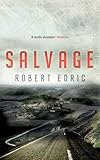
A drama set several decades into the future, with Britain suffering the effects of climate change, tempted me to try once again to read a Robert Edric novel. I was very impressed by the discovery of the quality and striking originality of his writing through "In Zodiac Light" a couple of years ago, but have struggled since then to find another of his books that repeats the experience, apart from "Gathering the Water", which was a bit of a let-down plot-wise, but beautifully written, creating powerful visual images.
In "Salvage", Edric continually promises some dramatic incident or moving relationship, but it never quite comes to pass. Also, in this case, the descriptions of the landscape and the narrator's activities and encounters with the locals are quite dull, plus I had trouble understanding why anyone should build a new town in the depths of Scotland. There was too little to compensate for the lack of a narrative drive, and eventually, with great regret, I gave up…..
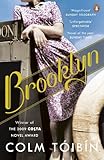
This deceptively slight novel has remained in my memory for several months. The clarity of Toibin’s writing captures the life of an inexperienced young girl in 1950s Ireland, where life is constrained by lack of opportunity, convention and the stranglehold of the Catholic church. The author shows great empathy in imagining a female perspective.
I was completely convinced by Eilis: her obvious intelligence, frustration at her inability to realise it, yet her ultimate acceptance of constraints – even to the extent of her agreement to emigrate alone to New York to obtain work, a move organised “in her own interests” by her sister Rose, who seems so independent but it equally bound by duty, and the string-pulling local priest.
I agree that the minute detail is at times tedious, say on the voyage out, although I am sure it is very realistic. The scenes in New York did not ring so true for me as those for Ireland – I have no firsthand experience of either, and I was not very convinced or moved by her love affair with Italian Tony and his in some ways too worthily good to be true family. This section of the story showed very clearly how, through force of circumstance, people can be uprooted from their familiar way of life and drift into a very different culture and existence.
What made the book for me was the well-structured ending. After lulling the reader into a false sense of complacency with its measured pace, the story changes gear. In the fast-moving final part, Eilis returns to Ireland as a relatively sophisticated young woman, and catches the eye of a man who did not give her a second glance in the past. We see a spark of real passion for once – however shallow-rooted it may be – and Eilis has to make a hard choice between two ways of life – but then, the tentacles of the old oppressive, controlling culture catch up with her in a final excellent twist – and she has no choice at all!
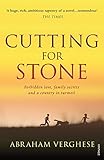
I normally enjoy books which transport the reader into another culture – in this case Ethiopia – with the authentic ring of local knowledge. However, from the outset "Cutting for Stone" – a pun on the name of a surgeon – failed to hook me.
I agree with those who found the focus on medical details and operations quite tedious. As is too often the case with family sagas, the style was plodding with a lack of real drama or tension to carry me through. I could not engage with the characters such as the twins, children of a nun – an unlikely event stated too casually on the opening page.
The novel compares unfavourably with, say "The Kite Runner", again written by a man who has moved to the west and trained in medicine, but with a real flair for creating moving characters and intriguing plots, thereby giving real insights into Afghanistan and issues of adaption to life in the US.




 Antenna Reviews