Survival in a Kafkaesque World

This is my review of The Betrayal by Helen Dunmore.

A gripping tension builds up in the early chapters as a panicstricken doctor manages to foist onto Andrei the dubious honour of trying to heal the perhaps terminally ill son of Volkov, a high-ranking Soviet official in the dreaded Ministry of State Security.

The book is convincing in capturing what it must have felt like to live through the final months of Stalin's Reign of Terror. Ordinary, decent people learned to keep their heads down and their mouths shut, anything to avoid attracting notice, even to the extent of suffering the harassment of malicious neighbours in overcrowded apartment blocks.

Helen Dunmore is skilful at portraying the minute details of people's relationships, their shifting thoughts and emotions. There is even subtle evidence of sympathy between Andrei and Volkov. She makes us care about Anna, the nursery school teacher whose life has been so restricted through the crime of having a free-thinking writer for a father, her artistic teen-age brother Kolya who is like a son to her, and her principled, sensitive husband Andrei. The fear of the "knock on the door at night", the helpless anger over the mindless destruction of one's possessions by the police, the shock of realisation that so-called friends and colleagues are too frightened to help, all come across vividly.

What could be a grim story is lightened by Dunmore's poetical prose – the descriptions of the landscape, and the wry observations on human nature, as some people spout slogans to wangle their way to the top. I always felt optimistic for Anna and Andrei because they are survivors of the terrible siege of Leningrad – I realised too late that "The Betrayal" is a sequel to "The Siege", but it can stand on its own.

The final chapters do not build up to a strong climax, and the narrative loses momentum, becoming almost dull in places, with some potentially dramatic events reported rather than acted out. This approach may well be "true to life". It may also reflect the author's liking for short stories which do not require the development and maintenance of a plot over many pages.

I admire the quality of the writing (although sometimes the children's author voice slips through a bit patronisingly), the plot idea is excellent. It is only the handling of the denouement that could have been defter.

⭐⭐⭐⭐ 4 Stars

Fate and Nostalgia in Rural Cork

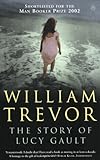
This is my review of The Story of Lucy Gault by William Trevor.

This book has a compelling opening with vivid descriptions of the landscape and rural life on the coast in 1920s Cork – we see the sharp contrasts between the Catholic poor and the local Protestant gentry, who are beginning to suffer attacks from disaffected youths. Much of this is seen through the eyes of the eight-year-old Lucy, and we can appreciate her anguish over her parents' decision to leave the house for the safety of England.

As seems to be a recurring theme for William Trevor, the story is all about the way chance events, and understandable but misguided actions, can wreak longterm damage – often of a subtle variety – in the lives of not only individuals but also those who have contact with them.

Ultimately, the novel succeeds in bringing the main characters, and the reader, into acceptance of fate, even the ability to see some positive outcomes of misfortune, including integrity in the face of adversity.

However, like some other readers, I found the pace of much of the book too slow, although I know this is intentional, since the details of daily life, exploration of minute thoughts and evocation of a former simple way of life are what really interest the author. I thought he had "made his point" by the middle, although some further "loose ends" are tied up in the final chapters.

I also agree that some key aspects of the plot are implausible – but perhaps this does not matter too much.

Although I admire Trevor's writing, the sense of some sentences escaped me, which was frustrating, since his greatness lies in the articulate flow and subtle insight of his prose.

⭐⭐⭐⭐ 4 Stars

A Cut above the Usual Page-turner

This is my review of The Crimson Rooms by Katharine McMahon.

This is a page-turner, on the cusp between literary and popular fiction: on the one hand, it is well-written with varied, complex characters and a detailed, reasonably watertight plot with plenty of twists; on the other, it is very easy to read with moments of high drama and romance. The heroine Evelyn's wry self-knowledge and "feet on the ground" attitude to life prevent the story from slipping into "Mills and Boon" territory.

Most likely to appeal to women – it would be interesting to know how men rate this novel – it finds fresh aspects to cover in the heavily harvested theme of World War 1. The focus is on its aftermath (1924) where women outnumber men, must often support themselves, yet have to battle to enter the professions such as law. The author uses the knowledge gained as a magistrate to create some convincing court scenes, as Evelyn struggles to develop a legal career, having persuaded a maverick solicitor to take her on. Her cases reflect the times: a man who may have shot his young wife out of jealousy, having been destabilised and brutalised by the effects of war; the feckless but loving mother in danger of having her three children shipped off to Canada under a "hidden" because clearly controversial method dealing with the problem of children in care. All this takes Evelyn's mind off her claustrophobic domestic life in an all female, convention-bound household, stultified in grief for the loss of her brother James at the Front.

The book commences with the arrival of Meredith, a charismatic young woman claiming to be the mother of James's son – the appealing six-year-old Edmund,who bears a striking resemblance to his father. Is Meredith genuine? What does she hope to manipulate out of the family? Meredith's unsettling effect, and the opportunity to release her bottled up affections on Edmund, make Evelyn ripe for a love affair in her emotionally suppressed state.

The structure of the story lends itself to a TV serialisation. The beginning is perhaps rather hackneyed: Evelyn imagining her brother's death through what turns out to be a dream, serving as a dramatic preparation for the sudden appearance of Meredith and Edmund in the middle of the night.

Where the pace may seem slow at times, it could be realistic in showing the frustration of trying to obtain evidence and continually drawing blanks in a legal investigation. It also gives scope to show the development of Evelyn's thinking, and her relationship with the other characters.

I did not mind the somewhat open ending, which the author seems to favour, since it seems "more like real life" and leaves the reader free to imagine a preferred future for Evelyn. The mixture of "success" and "failure" at the end also adds authenticity.

As regards reservations:

* although many scenes are genuinely moving, those in which key aspects of the plot are revealed strike me as overly melodramatic. In these, characters such as Meredith or Evelyn herself appear too articulate, effectively telling the reader in lengthy paragraphs what has happened rather than communicating convincingly with another character in a moment of high stress.

* the idea of Meredith having wanted to be a nun is implausible, and she needs to be older than 29 in the story to have been a confident and proficient nurse aged 22 at the time of her brief meeting with James.

* the book would have gained from developing more fully Nicholas's personality and motivations, and his relationships with the Hardynge family.

* people's reactions, such as those of Nicholas (over what Evelyn has to tell him) and Breen (over his client Wheeler's wishes) in the final scenes (can't be more explicit) appear to me somewhat unlikely.

* the details of the ending are needlessly rushed, after the "slow burn" of the main part of the novel.

Overall, to the extent that this is a gripping and thought-provoking read, I recommend it.

⭐⭐⭐⭐ 4 Stars

Still Waters Run too Deep

This is my review of Salvage by Robert Edric.

A drama set several decades into the future, with Britain suffering the effects of climate change, tempted me to try once again to read a Robert Edric novel. I was very impressed by the discovery of the quality and striking originality of his writing through "In Zodiac Light" a couple of years ago, but have struggled since then to find another of his books that repeats the experience, apart from "Gathering the Water", which was a bit of a let-down plot-wise, but beautifully written, creating powerful visual images.

In "Salvage", Edric continually promises some dramatic incident or moving relationship, but it never quite comes to pass. Also, in this case, the descriptions of the landscape and the narrator's activities and encounters with the locals are quite dull, plus I had trouble understanding why anyone should build a new town in the depths of Scotland. There was too little to compensate for the lack of a narrative drive, and eventually, with great regret, I gave up…..

⭐⭐ 2 Stars

Brooklyn by Colm Tóibín: “First Exit to Brooklyn”

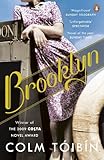
This is my review of Brooklyn by Colm Tóibín.

This deceptively slight novel has remained in my memory for several months. The clarity of Toibin’s writing captures the life of an inexperienced young girl in 1950s Ireland, where life is constrained by lack of opportunity, convention and the stranglehold of the Catholic church. The author shows great empathy in imagining a female perspective.

I was completely convinced by Eilis: her obvious intelligence, frustration at her inability to realise it, yet her ultimate acceptance of constraints – even to the extent of her agreement to emigrate alone to New York to obtain work, a move organised “in her own interests” by her sister Rose, who seems so independent but it equally bound by duty, and the string-pulling local priest.

I agree that the minute detail is at times tedious, say on the voyage out, although I am sure it is very realistic. The scenes in New York did not ring so true for me as those for Ireland – I have no firsthand experience of either, and I was not very convinced or moved by her love affair with Italian Tony and his in some ways too worthily good to be true family. This section of the story showed very clearly how, through force of circumstance, people can be uprooted from their familiar way of life and drift into a very different culture and existence.

What made the book for me was the well-structured ending. After lulling the reader into a false sense of complacency with its measured pace, the story changes gear. In the fast-moving final part, Eilis returns to Ireland as a relatively sophisticated young woman, and catches the eye of a man who did not give her a second glance in the past. We see a spark of real passion for once – however shallow-rooted it may be – and Eilis has to make a hard choice between two ways of life – but then, the tentacles of the old oppressive, controlling culture catch up with her in a final excellent twist – and she has no choice at all!

⭐⭐⭐⭐ 4 Stars

Stone Dead

This is my review of Cutting For Stone by Abraham Verghese.

I normally enjoy books which transport the reader into another culture – in this case Ethiopia – with the authentic ring of local knowledge. However, from the outset "Cutting for Stone" – a pun on the name of a surgeon – failed to hook me.

I agree with those who found the focus on medical details and operations quite tedious. As is too often the case with family sagas, the style was plodding with a lack of real drama or tension to carry me through. I could not engage with the characters such as the twins, children of a nun – an unlikely event stated too casually on the opening page.

The novel compares unfavourably with, say "The Kite Runner", again written by a man who has moved to the west and trained in medicine, but with a real flair for creating moving characters and intriguing plots, thereby giving real insights into Afghanistan and issues of adaption to life in the US.

⭐⭐ 2 Stars

Harrowing but memorable

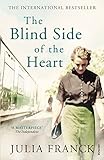
This is my review of The Blind Side of the Heart by Julia Franck.

I thought it would be interesting to read a novel about the impact of the two World Wars on the lives of German women. I assume that the "blind side of the heart" refers to people's inability to express normal love and emotion when they have been traumatised by the effects of war, both in grinding their lives down to a question of mere survival, and in taking away or maiming those they love. In this case, the main character Helene is reduced to a kind of automaton, caring for the sick in her role as a nurse, but unable to relate properly to her son. A complication is that the main factors destroying Helene have little to do with war as such – the loss of a lover and the callous and brutal behaviour of her husband, not to mention her own mother's irrational cruelty.

The focus on the minute details of daily life and on passing thoughts is often well-observed e.g. the description of Helene as a young girl studying every mole and blemish on her sister's back. However, I was disappointed by the lack of focus on the "bigger picture" to show how Germany evolved from a period of humiliation and punitive reparations after World War 1, through hyperinflation and political instability to World War 2 under Hitler.

I was repelled by the graphic descriptions of bodily functions, maladies and wounds. Helene's and at the end her son Peter's observation of the world with such a stark lack of emotion – for the "good characters" to be so hard – is shocking. I am unsure too what extent this excessive objectivity is deliberate but it reduced my capacity to empathise with the characters. I also found some of them quite unconvincing such as Helene's eccentric, often cruel mother, and her oddly passive father, and the strange relationship between these two. Helene's husband Wilhelm was painted too crudely in negative terms.

The book may have suffered seriously in translation. I had to reread several sentences which persisted in not making sense or appearing to be "non sequiturs". Generally, there is a stilted note to the phrasing which interferes with my involvement in the tale. Some of the earnest conversations on literature and philosophy are too stiff and unnatural. With a sense of frustration, I wanted to rewrite large sections of potentially moving or interesting scenes.

The pace is a little too slow, with a lack of "narrative drive" and episodes or encounters which "drift away to nothing" – rather like real life, I suppose e.g. the scenes with the beautiful Martha's admirers and her own eventual "disappearance" from the story.

The story would have made a greater impact with pruning away of some lengthy passages which added little. The lesbianism, with hints of incest, seemed to me pointless distractions from the main story – except perhaps the love between Martha and Leontine serves to show a freedom of expression allowed in "fashionable circles" in the 20s but suppressed as decadent by the Nazis.

This story is too harrowing to be enjoyable, and it is certainly not a page turner, although I think memories of certain scenes will remain with me such as Helene's mushroom-hunting expedition in the forest, made horrific by her encounter with the cattle trucks carrying Jewish prisoners, which she cannot fully comprehend at the time, although the reader can, with the benefit of hindsight. The scene also foreshadows her appalling yet understandable abandonment of the son whom she loves, yet also finds a burden.

⭐⭐⭐ 3 Stars

Rooting for Defiance Against the Odds

This is my review of The Help by Kathryn Stockett.

The underlying grimness of the story is offset by the continual bubbling wit and humour in adversity, and the sheer rage over injustice which "The Help" inspires, until you begin to wonder uneasily if you are not guilty of other indefensible prejudices yourself.

It is easy to see what has made this a bestseller. Written confidently, with a clear, sound structure and pace for a first novel, "The Help" is a page-turner with its skilful coverage of human resilience and the sowing of the seeds of rebellion as prejudice begins to crack in 1960s Mississippi, told through the viewpoint of two black maids and an idealistic but naive young white woman with ambitions to become a writer. Since Stockett was raised in this state, I have to assume that the speech patterns are authentic, and they add to the evocation of life in the South, and the vigour and humour of the tale.

Many of the characters are stereotypes – the ghastly, officious white Hilly, with the power to ostracise any "friend" who dares to question her views, and to destroy the livelihoods of black servants (not merely her own!) who displease her;the saintly, shrewd yet downtrodden black maid Aibileen; the voluptuous Miss Celia, unable to comprehend that, obeying Hilly's orders, the other wives shun her as trailer trash.

Some of the more dramatic scenes are a little clunky, but grimness and injustice are leavened with the continual comedy and irony in the language and sequence of incidents – ludicrous scenes such as Minnie's attempts to hoover clean a dusty old stuffed bear, some old family trophy. The sense of fear over the risk of a black maid being seen "in the wrong place" without her uniform, of a white person caught consorting with blacks socially, not to mention any attempts at free expression of opinion, is very palpable, and justified by the occasional examples of harsh and unjust punishment. I thought at times that this book would be soft-centred, and lapse into a corny romance for at least one character, but this is not the case.

"The Help" succeeds in reminding or informing a wide range of readers of the claustrophobic convention and bigotry of the confederate states, which trapped both blacks and whites for generations – obviously, the former suffered more serious effects – the daily humiliation, insult of being treated as invisible or unclean, and the risk of being falsely accused sacked and blacklisted, or worse for even a whiff of defiance.

If you can remember the '60s, it is chastening to realise that so much inequality and exploitation still operated unchecked, and interesting to see events which the characters have yet to realise are the dawning of a social revolution : Martin Luther King's great speech, the outbreak of the Vietnam war, Bob Dylan and the Rolling Stones hitting the airwaves, and the mass production of the miniskirt.

This is a good choice for a book group since it is likely to trigger a lively discussion. Was Miss Skeeter right to produce as she did a set of firsthand accounts of the lives of black maids in Jackson? Who really gained and lost from this subversive act, and how? How could the sharp-tongued Minnie accept for so long being beaten by her husband?

⭐⭐⭐⭐ 4 Stars

The Power of Language

This is my review of The Orchard Keeper by Cormac McCarthy.

This first novel by Cormac McCarthy hooked me with its striking, poetical prose – reminding me of Dylan Thomas but much darker and more uncompromising. Although I have never visited Tennessee, the author conjures it in vivid images of the remote, mountainous landscape, the weather, wildlife and local people living close to the breadline but capable of unexpected acts of kindness. He also captures the rhythm and wry humour of their dialect.

The mainly short scenes shift backwards and forwards in time so that it is often hard to work out who the subjects are, what is happening and why. McCarthy has a gift for creating tension: when the bootlegger Sylder is driving an unwelcome hitch-hiker back to Knoxville you know that it will end in violence. But for the most part the plot is thin, and the author seems mainly interested in describing in minute detail incidents of daily life which he must have observed – the sensation of driving along roads "ferruling through dark forests of owl trees, bat caverns, witch covens"; a boy laying his first traps; an old man's relationship with his dog. On a more dramatic note are the memorable descriptions of the balcony of the Green Fly Inn cracking under the weight of drinkers to crash into the canyon below, or later the old man under gun attack in his shack, for reasons yet to be revealed to the rearder.

The story is very male-dominated – focus on sleazy bars, hunting, seeking vengeance through violence, plus the at times corny rapport between tough men and the young boys they teach to track coons with dogs, and seek to guide with homely wisdom.

Some initial scenes of the sex-or-is-it-rape-in-a-church variety were so distasteful to me that I nearly gave up, but I am glad that I persevered. This book requires the investment of time, the rereading of some of the more original poetic passages, the suspension of any expectations. I came to understand that what happens to the petty criminal Sylder, the boy, John Wesley, who unbeknown to both of them is the son of the man he was forced to kill, and the ancient recluse Alan Ownby who happens to observe some of Sylder's activities, matters less than the power of nature around them.

In short, I would recommend this not for the plot, but as an exercise in astonishing writing.

⭐⭐⭐⭐ 4 Stars

“Sunset Park” by Paul Auster – Insightful Introspection

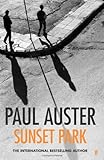
This is my review of Sunset Park by Paul Auster.

Paul Auster has a gift for describing the thoughts and motivations of introspective people, written in lucid, page-turning prose. I like the way he reveals the story from the viewpoint of different characters, so that one can see their differing perspectives and assessments of each other. Although superficially quite slight and loose, the plot is actually quite carefully structured, with occasional highly dramatic events, made all the more so for being unexpected. At the end, I suddenly saw the relevance of the (for me somewhat tedious) anecdotes of past baseball heroes, whose hopes have been dashed by chance events.

I was struck by the accuracy of Auster’s insight into the mindset of young people who, despite their education, choose to squat in abandoned properties, rejecting the mindless materialism of modern day America, and opt to live “for the present” in a country for which they fear the future, with the recent horrors of 9/11, the war in Iraq, suppression of human rights, and the recent banking crisis.

In some ways the book is like a series of short stories or “pen portraits”, loosely held together by the charismatic but troubled Miles Heller, who drifts through life, traumatised by his guilt over the death of his step-brother. Some of the characters are more convincing than others, but I suspect readers would disagree on which are better drawn. I was bored by the constant reference to baseball and Ellen’s erotic drawing, and a bit irritated by the arguably pretentious, “you need to be in the know”, analysis of Becket’s “Happy Days” and the sections on “being a writer” – on which authors tend to dwell too much. The book is clearly based on thorough research, and I felt that at times it includes too many lists – lists of famous baseball players, names of deceased celebrities in a cemetery, and so on. I was intrigued to realise that “The Best Years of Our Lives” is a real and highly regarded film from the period after WW2, and Auster convinces me of its relevance in making a contrast between attitudes then and now.

Overall, I agree with the emerging view that this is worth reading, but somehow falls short of brilliance, perhaps because Auster is so brimming over with reflections and observations on life that it is hard to marshall them into a “perfect whole” without reducing the momentum and “narrative drive” of the work, as a novel.

⭐⭐⭐⭐ 4 Stars