“Half Blood Blues” – Shortlisted for the Man Booker Prize 2011 by Esi Edugyan – Chandler meets Cormac McCarthy

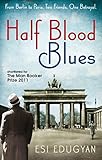
This is my review of Half Blood Blues: Shortlisted for the Man Booker Prize 2011 by Esi Edugyan.

Since I don’t care for jazz and have little in common with hard-drinking Black American male musicians, why was I so quickly hooked on “Half Blood Blues”? At first, it was the dry, wisecracking wit, and the rhythm of the Black American speech patterns which didn’t grate as I would have expected – “he stood..leaning like a brisk wind done come up” or “Man, Sid, ain’t you ever going to clean up? You live in plain disrepair” and so on.

Then, I was struck by the spate of vivid, original similes. “He got oddly thin lips, and with the drink still glistening on them they looked like oysters”.

I realised too that there is scope for a compelling drama in a situation where a group of jazz musicians, some black, realise that the world of swing in 1930s Berlin has suddenly turned dark as the Nazis brand it “degenerate art” and begin to beat up black artists.

The author knows how to create tension. From the opening sentence, “Chip told us not to go out”, the first chapter builds up a sense of impending calamity, as the narrator Sid reluctantly accompanies Hiero, a youthful prodigy on the trumpet, in his unwise quest for a drink of milk in occupied Paris, where his high visibility as a Black German combined with a lack of the right papers place him at risk of deportation to a death camp.

Esi Edugyan takes risks in introducing the real-life Louis Armstrong to the plot, but carries it off convincingly. She also succeeds in helping me to understand the appeal of jazz music. She finds apt words to describe in detail how Hiero’s playing sounds to Sid.

“Hiero thrown out note after shimmering note, like sunshine sliding over the surface of a lake, and Armstrong was the water, all depth and thought, not one wasted note. Hiero, he just reaching out, seeking the shore; Armstrong stood there calling across to him. Their horns sounded so naked, so blunt, you felt almost guilty listening to it, like you eavesdropping.”

This is not just a tale of a jazz group under pressure, surviving violent fist fights with the brutal “boots” (Nazi soldiers) but also a subtle psychological study of the interplay between the members of a group, providing a keen insight into personal and professional jealousy. Almost until the end, we are unsure whether Sid betrayed Hiero long ago, exactly how, and if he is a reliable narrator.

Some of the minor scenes drag a little and I found a few points implausible e.g. would it really take so many weeks to make a single record, without actually completing it, would/could the seductive singer Delilah make a headscarf out of a stiff, dusty theatre curtain? Despite this, overall “Half Blood Blues” is an original, well-plotted and beautifully written work. I shall certainly look out for Edugyan’s future novels.

⭐⭐⭐⭐⭐ 5 Stars

Heritage of Folktales makes sense of War-torn Former Yugoslavia

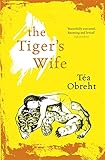
This is my review of The Tiger’s Wife by Tea Obreht.

It is easy to see why this book won the 2011 Orange Prize for Fiction. It has an unusual theme and approach, weaving together a grandfather's tall stories based on Balkan-style folktales and the experience of Natalia, a young doctor trying to cope with the aftermath of the grim war which caused the recent fracture of the former Yugoslavia, and with the death of her much-loved grandfather. Still only in her mid-twenties, the author is a gifted storyteller with an impressive command of English learned as a second language. I am not sure whether she sometimes misuses words by mistake, or is just trying to be original and poetical, but you cannot deny Tea Obreht's striking and unusual use of language.

Although I am no lover of magic realism, I was most impressed by the storytelling, in particular the tale of the "deathless man" who cannot be killed, even if shot through the head or drowned – a sceptical scientist, Natalia's grandfather is tantalised by the mounting evidence for this which flies in the face of reason. Obreht clearly loves animals, of which there are some wonderful descriptions – the tiger leaving footprints in the snow, round as dinner plates, or the elephant recaptured after its escape from the war-damaged zoo.

At first I was irritated by the lack of clarity as to exactly which country we are in – Montenegro, Croatia. Bosnia ? – which border we are close to, and so on. Then I realised that this is not the point. Obreht simply wants to create a sense of the superstition and prejudice, the deep-seated and irrational hatred between Christians and Moslems, the brutality and unthinking futility of war, and the residue of damage for the survivors. Then there is of course the simple expression of grief over the death of a close relative, regardless of whether there is peace or war.

I found the descriptions of Natalia's work the least satisfying, too many minor scenes of little interest, and in need of editing. Some of the later tales told to Natalia by her grandfather become rather tedious and rambling, getting bogged down in excessive back story about the early lives of Luka the sadistic butcher, Darisa the bear hunter and the village apothecary.

From the outset, Obreht skilfully manages to arouse the reader's interest by covering events through a series of separate scenes which move back and forth in time. Natalia's attempt to find out more about her grandfather's death and to obtain his belongings has a touch of the detective novel. Towards the end, the plot loses structure and pace. Again perhaps deliberately, it becomes even more fragmented and further parts company with reality, proving a little too fey and nebulous for my taste, although there is a persistent rather odd attempt to provide rational explanations for implausible events.

⭐⭐⭐ 3 Stars

Slight of Hand

This is my review of The Prestige by Christopher Priest.

The term "prestige" refers to the product of a magic trick – the rabbit pulled out of a hat.

"The Prestige" is the tale of a feud between two rival magicians in the late Victorian age, the working class Borden who makes good use of his skills as a cabinetmaker to conceal people during tricks, and the aristocratic Angier, forced by the poverty of being a younger son to make a living out of a hobby. Told largely through extracts from their journals, starting with Borden's viewpoint, this makes for a clunkily plotted read. Many incidents are reported, which detracts from the drama, and the tone is often stilted, although this may be an attempt to adopt a suitably Victorian style. At any rate, the characters come across as rather wooden.

Borden's prize act is "The Transported Man", for which the obsessive desire to work out an explanation drives Angier to distraction. The only possible solution seems to be that Borden has a double, but there is no evidence for this. In his desire to outdo Borden, Angier is driven to devise a transportation trick of his own, making use of the new power of electricity to move himself instantly from one place to another, although the process gives rise to a certain persistent problem… I was interested to learn that the electrical engineer Tesla really existed and had a laboratory at Colorado Springs, with a contraption called a "magnifying transmitter" which emitted arcs of electricity 7 metres in length. However, I share the disappointment of readers who prefer a story of magic where the suspense lies in working out how it is done, rather than one which relies on science fiction to create effects. This raises a real problem in reviewing the book fairly, since scifi is by its nature generally implausible. You just have to like it (which I don't) or judge it for its originality. On this count, the book scores quite highly, but it would have worked better with more skilful development of the plot.

I agree with those who think that the modern storyline of the magicians' descendants, wrapped round the basic plot, proves to be a further twist too far. This may be why it has been dropped totally in the film version of the book, which I happened to see a few years ago before reading "The Prestige" for a book group. I also think the film version works better because the visual recreation of the various tricks and acts of sabotage is obviously more entertaining than a series of descriptions. Interestingly, I enjoyed the film right up to the end when the multiple cloning of men and black cats by electrical transmission seems too ludicrous. This particular twist is not in the book.

Although I would say that the story works better as a film, you could argue that the book version of "The Prestige" has two advantages. It includes analyses of what motivates magicians and of the nature of magic, and insights on the relationships between the main characters which are lacking in the film. These combine to make it more thought-provoking, yet this quality sits uneasily with an ending which could be said to "go off the rails".

⭐⭐⭐ 3 Stars

Why is this disappointing?

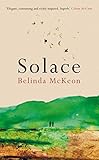
This is my review of Solace by Belinda McKeon.

The following is an attempt to analyse why a book which has been well reviewed so far disappointed me.

This slow-paced novel commences with descriptions of places – the Irish countryside – and small incidents – buying a ball of twine. The reader is left to work out who the main protagonists are, what the characters are like and what is going on, and that is fine. We meet Tom the farmer, his son Mark who has returned to assist him, with an infant daughter Aoife in tow. Where is the child's mother? Is Mark's excessive anger over his father taking the child with him to buy twine without telling him a cover for some deeper-seated resentment? There are all the ingredients for the unwinding of some moving Irish tale and my expectations are suitably kindled, but nothing much happens over and above what is given away on the flyleaf.

As the book progresses, I find it hard to engage with any of the characters. I think this is because the differences in their personalities are not very clearly drawn and sustained. The most dramatic incidents seem strangely muted. The description of someone discovering she is pregnant, another of someone dying in an accident – the events and people's reactions, none of this moves me as it should. Likewise the old grievance between the fathers of Mark and Joanne does not strike me with sufficient force, given the flyleaf's reference to "spectacular…wrongs" and "betrayal". I think part of the problem is that, once the book gets under way, there is too much "telling" rather than "showing". Also, events seem too disjointed.

Pehaps the plot is too slight to sustain a book of this length in the absence of a strong narrative drive. I feel that I am reading the words of someone with an ambition to write, who loves putting words down on paper or the keyboard but does not as yet have much to say.

Yes, the simplicity is to be admired, but needs to provide new insights or find ways of expressing truths that we cannot produce for ourselves.

For examples of "less is more" I cite the work of the late Brian Moore and also William Trevor.

⭐⭐ 2 Stars

Striking if Overblown Insight on Life in Trinidad

This is my review of The White Woman on the Green Bicycle by Monique Roffey.

My view of this book see-sawed violently as I read it. Starting with the over-used ploy of the description of a shocking event, in this case the beating of a young boy by corrupt policemen, the novel launches into a study of Englishman George Harwood and his French wife Sabine, who have lived on Trinidad for fifty years. It dissects their rum-fuelled love-hate relationship with each other and the island.

For many pages I read without feeling absorbed, noticing the stilted, banal scenes, characters who did not quite ring true. I was interested to realise that George's interviews for the " Trinidad Guardian" are with real people still living at the time of writing, and wondered if one of them , the famous calypso singer "The Mighty Sparrow" takes exception to being described as the suspected father of a poor, illegitimate Trinidadian boy.

Gradually, I found myself impressed by some of the vivid descriptions, say of the colourful island vegetation, which I found to be very apt when I googled their images. For instance, we see George's favourite month of May described in language which implies his casual promiscuity.

Sabine's habit of talking to the surrounding green hills which she sees as a voluptuous reclining woman seducing George and her appreciation of Trinidad's beauty, contrast with her hatred of the country's corruption and its failure to progress once free from white domination, and the way it makes her feel an outsider.

She hates George too at times for choosing to ignore all this, so that he can exploit the situation, indulge in the free way of life, the scope to grow rich through land purchase, enjoy "the sounds and smells….smiles and shapes", the "bewitching" local women and booze, in a way that would never have been possible in England.

The first part of the book proves to be a novella set in 2006, building up to a dramatic conclusion which I felt for a time should be the end of the whole book. Since the next section moves back in time, to the Harwood's innocent arrival on Trinidad in 1956, I had to force myself to continue because of the numerous hints already provided as to what had happened in the past.

I remain unsure as to whether a structure that moves back in time is a good idea. The reader may gain a sense of "one-upmanship" through knowing more than the characters, but on balance this does not compensate for the loss of suspense.

However, once the narration becomes first person, Sabine's viewpoint from part 2 onwards, it seems to come more alive, grow more moving, and the quality of the writing also improves.

I remain unconvinced by the idea of Sabine loving the unsuccessful leader Eric Williams, the first black leader of an independent Trinidad who promises the people progress, but fails to deliver. I also think the story is not just about the exploitation of Trinidadians first by whites, then by their own leaders. It is also about issues of feminism – the way some women are attracted by powerful men, and allow themselves to be dominated by men, as well as the sense of regret many women have over failing to achieve much in their lives.

The book "goes on too long" and the attempt to create a resounding finale in 1970, after moving back from 2006 to 1956, then forward again, makes for a final chapter with some of the overblown or ludicrous paragraphs which mar an otherwise striking novel.

⭐⭐⭐⭐ 4 Stars

An Islamic Morality Tale

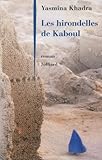
This is my review of Les hirondelles de Kaboul: Roman by Yasmina Khadra.

Although I read this in French – and it is excellent practice for improving one's French – I thought it best to post a review in my native English.

The swallows are the veiled women of Kabul, who flit through the ruined alleys like fugitives in a perpetual "half-life" of oppression.

It is ironical that all the reviews to date have been written on the English translation. The original French version of this tale – which I am sure must be "better" for those who can access it – uses vivid, striking language to capture the atmosphere of a war-torn city under the bigoted rule of the Taliban, which gives free rein to bullies and fanatics: people survive by keeping their heads down.

We see constant examples of casual brutality and sexism which shock our sanitised western sensibilities.

When a man admits to his worries over his sick wife, a friend condemns him for such a display of his own weakness. The remedy is obvious: he should cast his wife aside for a younger model!

A sensitive young man is aroused by the madness of a crowd to join in the stoning of a woman he does not even know, a momentary lapse on his part which costs him the love of his would-be emancipated wife.

As a final irony, men who feel "dishonoured" when a lunatic tears aside their wives' veils trample on the women in their haste to get at him.

This short, simple tale of cause and effect reminds me of a medieval morality play, as the lives of the various characters begin to impinge on each other and events build to a plausible but inevitably tragic climax.

I have no idea as to the authenticity of this story written by an Algerian army officer under a female pseudonym to avoid censorship at the time. Despite its bleak theme, and at times somewhat overblown prose (which somehow seems acceptable in French), the story of the chain reaction of damage wrought by fanatical repression remains in one's memory.

⭐⭐⭐⭐ 4 Stars

Powerful Story and Beautiful Prose Marred by Flawed Structure

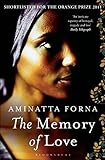
This is my review of The Memory of Love by Aminatta Forna.

This tale of the intertwined lives of three men living through the aftermath of a terrible civil war in 1990s Sierra Leone has the potential for a moving and thought- provoking drama.

It begins with Elias Cole as he suffers a slow painful death, haunted by memories of his obsessive love for Safia, the lovely wife of a charismatic colleague. Driven by the apparent desire to make some death-bed confession, but on his own terms, his calculating and manipulative personality is revealed.

Then there is Adrian, the introspective British psychiatrist with some vague urge to do good in a developing country struggling to recover from its shattered state. In fact, he is escaping from his marriage, for reasons that remain unclear. His affair with the beautiful Mamakay, who makes a sudden appearance well into the book, does not entirely convince me, and the guilt he feels for abandoning his wife and daughter is insufficiently explored.

Thirdly we have Kai, the young doctor traumatised by the horrors of the war, his nightmares alternating with nostalgic memories of his girlfriend Nenubah, whom I imagined for a long time to have perished tragically in the fighting. Kai makes the decision to emigrate to the States, lured by the encouragement of his best friend Tejani, but it is unlikely that he would do this without worrying more about the fate of Abass , the young nephew for whom he acts as a father. I also found the graphic descriptions of Kai conducting operations unnecessary – they serve only to give the author an opportunity to show off medical knowledge gained to give the book an authentic touch.

Forna creates a vivid impression of the scenery and way of life in Sierra Leone. There are many descriptive passages of haunting beauty, but also self-conscious exercises in creative writing. It may be intentional to create a slow pace in which fleeting impressions seem as meaningful as major events, but the constant focus on small details, say of Adrian watching a stranger play with her child on a Norfolk beach, distracts the reader too much from the thrust of the story and blurs the plot. For instance, the arrest of Julius, his subsequent fate, his wife Safia's reaction, and Elias Cole's acts of betrayal should be much more striking events, rather than buried in descriptions of other things. There should be more of a sense of impending unrest, say in Elias's Cole's account of past events.

It is probably quite brave, certainly challenging, for a female author to switch between the viewpoints and complicated lives of three male characters. However, this structure, together with continual moves back and forth in time with the frequent reporting of dramatic events, rather than enacting them "live", further combine to fragment the storyline and weaken the impact of any drama.

There is also the very irritating habit of changing tense from past to present and back. Perhaps the present tense is meant to give more of a sense of immediacy, which makes it odd that it is applied to descriptions, say of Kai scrubbing up for an operation, rather than his dramatic explanation of the reason for his trauma.

There are too many shadowy characters introduced only to drift away or storylines which remain underdeveloped, such as the case of Adrian's patient Agnes, his relationship with his mother, even with Ileana…I could provide many more examples. We seem to be involved in the plots of several novels, tangled together.

For me, the flawed structure became a real barrier to appreciating and admiring the work, which resembles a promising but sprawling draft in need of editing and reorganisation.

⭐⭐⭐ 3 Stars

Funny if dated

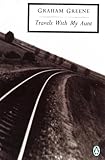
This is my review of Travels with my Aunt (Twentieth Century Classics) by Graham Greene.

Henry Pulling, a staid former bank manager, is induced to accompany his eccentric Aunt Agatha on her travels, only to find himself shaken out of his dull rut of retirement and gaining a new perspective on the moral values he has always taken for granted.

Despite references to smoking pot and Andy Warhol, this book seems a little dated even for the sixties when it first appeared. It reads more like an Evelyn Waugh type novel from the 1930s. Farcical and light-weight, it entertained me for a while, being very funny and imaginative in places, with the fluid style with which Greene made writing appear deceptively easy.

By the middle, I was growing bored with Aunt Agatha's endless recollections of past lovers, all of whom seem implausible and two dimensional. The details of her tricks to get money through the customs are somewhat tedious and confusing. She began to seem an unsympathetic character, manipulative and callous in her treatment of the loyal caricature Wordsworth, and vindictive towards the woman who has remained faithful to a former lover they have both shared. I could never quite believe in Agatha's enduring relationship with the unappealing Visconti.

The story builds up well to quite an effective climax, in which the darker side of Greene's writing reveals itself – the preoccupation with Catholicism, and a cynical view of human nature, as conveyed by the party to which Visconti invites former enemies and potential business associates but no real friends.

Some of the travel writing, such as the description of Asuncion is quite vivid and interesting.

I like the way Greene uses the story as a vehicle to expound his own insights, observations and theories about life. For instance, his views on tea bags:

"one of them was raising a little bag, like a drowned animal, from his cup at the end of a cord. At that distressing point I felt very far away from England".

Or, the following exchange:

"Surely that's only a legend."

"There speaks a protestant…Any Catholic knows that a legend which is believed has the same value and effect as the truth. Look at the cult of the saints."

I sensed that Greene himself may have grown bored with the novel before completing it but he is such a skilled writer that it's still worth reading, if not as good as it could have been.

⭐⭐⭐⭐ 4 Stars

Tales contrived from grids of tarot cards

This is my review of The Castle Of Crossed Destinies (Vintage Classics) by Italo Calvino.

As in "The Canterbury Tales", a disparate group of travellers share tales, but here the similarity ends, since they have lost the power of speech and are forced to communicate by setting out tarot cards, which Calvino also describes as "arcani".

At first, I found the stories unengaging fairy tales, of the knight errant encounters in forest fair maiden who turns out to be ugly old hag variety, although I had an uneasy sense that I might be missing all sorts of allusions through my ignorance of classical and medieval mythology.

Any interest lay partly in working out or grasping what the succession of cards mean. This is not easy as, particularly for the tales told in the castle, the cards are reproduced in such a small size that it is hard to see what they represent. The set of tarot cards used for the second set of tales from "The Tavern of Crossed Destinies" are drawn a little larger and bolder, so easier to decipher. Although it might have added too much to the cost of the book, it would have been better if each card could have been reproduced at least quarter page size, and positioned at the point in the text where it is mentioned. Although there are a few coloured plates of tarot cards in the middle of the book, they are not the "major players" in the stories.

Also, once I realised that, for the castle stories, cards are laid in two parallel rows or columns to form part of an overall grid, whereas for the tavern stories, each one occupies an overlapping block in the grid, further interest stemmed from noticing how the cards for the end of one story are the beginning of another, and how the same card may represent totally different incidents in separate stories. For instance, a card showing cups could mean the celebration of a wedding, or could signify looking down from a city on rows of tombstones. Although sometimes intriguing, the need to preserve the order of the cards often makes for tales that seem contrived and limited.

Occasionally, a story caught my interest, and I began to see "deeper philosophical layers". This first occurred in the Tale of Astolpho on the Moon: on a mission to retrieve the lost sanity of the irreplaceable warrior Roland, Astolpho is sent to the moon where an endless storeroom preserves "the stories that men do not live, the thoughts that knock once at the threshold of awareness and vanish forever, the particles of the possible discarded in the game of combinations, the solutions that could be reached but are never reached.." Much later, in "The Tale of Seeking and Losing", Parsifal concludes, "The kernel of the world is empty, the beginning of what moves in the universe is the space of nothingness, around absence is constructed what exists, at the bottom of the Grail is the Tao" and he points to the empty rectangle at the centre of the grid of tarot cards. All this may of course leave you cold!

However,the stories seem to me to go seriously off the rails at the end where Calvino tries to tell his own story, which becomes very rambling, including reference to paintings in galleries of St Jerome with his lion and St George with the dragon, of which we are not provided any visual examples to help us appreciate his points, whilst he then presents as a grand finale a story which somehow combines bits of King Lear, Hamlet and Macbeth.

Although I can understand the fascination of weaving stories out of a grid of cards, this book is for me no more than a clever gimmick. Calvino has apparently discarded some tales because he thought they did not work, but it seems to me that most of those retained would have benefited from a thorough redrafting. Often the events are quite rushed and garbled, and the characters two-dimensional (card?!) and so lack the power to arouse any sympathy. Perhaps owing to the translation, the wording is at times very stilted or jarring.

⭐⭐⭐ 3 Stars

Less would be More

This is my review of So Much for That by Lionel Shriver.

The inadequacy of the US health insurance system; the complex, shifting emotions within a relationship in which the wife is struck by possibly terminal cancer; the dynamics of a family in which one child has a degenerative disease: these themes could combine to make a moving and opinion-changing masterpiece, but call for a subtlety and lightness of touch to make so much pain bearable. For the first half of the book I felt oppressed by the opposite, that is, the tsunami of words, the detailed, by turns pettifogging or unsavoury descriptions, lengthy digressions and rambling rants, always three or more examples where one would do. There are also some very original or telling comments, although they are at risk of getting lost in all the verbiage.

The story begins with Shep Knacker packing a bag to present his wife with an ultimatum: the time has come for him to travel to the idyllic African island where he has decided to settle, and he plans to take off whether she accompanies him or not. This could serve to reveal a good deal about our "hero" but instead becomes a pretty negative description of his wife. I would much rather have discovered what Glynis is like through situations and dialogues than be told what to think. Admittedly, some descriptions are very striking:

"..in art school, Glynis had not chosen her medium by accident. She naturally identified with any material that so fiercely refused to do what you wanted it to, whose form was resistant to change and responded only to violent manhandling. Metal was obstreperous. Were it ever mistreated, its dents and scratches caught the light like grudges." It's the last sentence that stands out for me.

Then the story moves on to Shep's "best friend" Jackson, whose exaggerated diatribes I admit to finding amusing and telling. It took me a while to realise that his sparky but odd daughter is in fact disabled with an obscure physical condition that blights not only her life, but that of the entire family. I felt very discouraged at this stage. Was so much suffering really necessary?

Also, in the midst of the wealth of unpleasant detail about bodily malfunctions, the opportunity is missed to enact, rather than report second-hand , some dramatic scenes, such as the point at which Glynis tells Shep she has cancer, and his initial reactions as his chance to escape evaporates, or to explore his feelings towards a woman he is prepared to leave until he hears of her need for his health insurance. This would not only have made the story more emotionally engaging, but also shown a clearer progression of the character's thoughts. Yet Shriver is capable of being very incisive, as when she closes a chapter with Shep's admission to himself that he only has enough money to realise his dreams if Glynis "dies soon".

As it is, the links between stages in both dialogue and scenes are at times clunky and contrived, and major new developments may seem to occur too abruptly, such as the degree to which Jackson has "reached his limit", when you might have expected Shep to be in this state.

Another limitation is that none of the characters seems to be afflicted by the sense of anguish based on deep love, or the fear of loss of a companion. This may be acceptable for Shep because he is ultra practical and pragmatic, but makes for a less moving story, in which you care too little for in many ways unlikeable people.

Perhaps I became inured to all this suffering, but the book improved for me as I persevered, and the last hundred pages or so seem the best: well-paced, plot strands coming together well, an ending which was remarkably positive, and avoided sentimentality, mawkishness or the cop out of not knowing how to finish the dilemma one has created. However, even here there is a superficiality in the personal relationships, a kind of "cold heart" and skimming round the depths of real grief.

I acknowledge Lionel Shriver's undoubted talent, but wish she had made the book shorter, checked her narrative for overkill (no pun intended), and toned down some of the cynical wisecracking humour, perhaps the product of an attempt to write like an American male.

⭐⭐⭐ 3 Stars