Telling it like it is

This is my review of The Help (Film Tie-In) by Kathryn Stockett.

"The Help" on which the film is based is a page-turner with its skilful coverage of human resilience and the sowing of the seeds of rebellion as prejudice begins to crack in 1960s Mississippi, told through the viewpoint of two black maids, Aibileen and Minnie, and Skeeter, an idealistic but naive young white woman with ambitions to become a writer.

In the film, a strong cast of actors bring to life the key characters in the book. Aibileen is the narrator, compassionate and shrewd beneath her subservient air, until writing about her experiences as a general dogsbody and nanny for a succession of white children finally releases her into a sense of freedom. Then there is Minnie, a brilliant cook, but unable to hold down a job because of her feisty talk – yet she allows herself to be beaten by her drunken husband. The villain of the piece is the ghastly, control-freak Hilly, who rules her simpering white "friends" with a rod of iron, with the power to destroy the livelihoods of black servants (not merely her own!) who displease her.

The film version of "The Help" is true to the essentials of the original in that it is a chastening reminder of the casual prejudice of the American South as recently as the 1960s, and is often very moving, yet the poignancy is leavened with a good deal of humour. In view of the complexity of the book's plot, it has been necessary to leave out or compress many details – thankfully not the scene of Minnie trying to hoover the dust off a huge stuffed grizzly bear in an old colonial house. These omissions tend to be disappointing if you have read the book before seeing the film. In particular, I would have liked more of the very moving tales which the maids have to tell.

The film finds time to show not just the main theme of the humiliation and unjust treatment of black Americans but also the discrimination against young white women, who are expected to have no ambition above hooking a man. Skeeter is hired by the local newspaper, but only to write a column on cleaning!

I found some of the black maids' dialogues hard to follow, which is a pity as in the book they are often very funny and full of insight.

Perhaps the film's ending is a touch too sentimental and neatly "sown up", some of the subtle depth of the original has been lost, but overall it is worth seeing.

⭐⭐⭐⭐ 4 Stars

Forster’s Epigone?

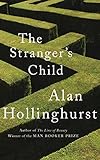
This is my review of The Stranger’s Child by Alan Hollinghurst.

Hollinghurst often reminds me of E.M.Forster with his nostalgia for the early C20 and his focus on the minute details of people's thoughts, observations of one another and interrelationships, all presented in well-crafted prose (apart from the odd clunky phrase like "she said carryingly").

Charismatic, arrogant and manipulative, the aristocratic Cecil Valance achieves a possibly undeserved popularity as a poet after his early death in the First World War. Can the truth of his life ever be told by biographers? This seems unlikely since even those who claim to know him have very different perceptions. In five separate sections separated by gaps of several years or even decades, the author aims to show the false nature of memory.

You could argue that Hollinghurst is daring in discarding many of the "conventions" of novel-writing. The development of a strong plot is given second place to what often reads like a series of short stories: portrayals of characters who make only brief appearances, or the description of quite minor incidents, evocative of past generations, but very amusing, ludicrous or in the style of a black comedy. The author tends to build up anticipation of a certain outcome, only for it not to occur, insofar as one can judge! Significant events are frequently no more than implied.

Although this book promises much, my growing suspicion that it would not deliver proved justified. It suffers from being too long, repetitive in its limited revelations and self-indulgent, not least in its campness – I grew tired of "blushing" and "giggling" men of all ages.

It does not bother me that most of the characters are very middle class , but there are certainly too many of them to relate to easily, and I was left feeling I had waded through an Oxford don's overblown soap opera fantasy.

I know that "the stranger's child" is a quotation from Tennyson's "In Memoriam" read aloud by Cecil in Part 1, and thanks to Roderick Blythe for explaining to me in the comment below its meaning in the title.

⭐⭐⭐ 3 Stars

What’s in a name?

This is my review of The Submission by Amy Waldman.

In a competition to design a suitable memorial to the victims of 9/11, the jury members choose a garden. When the envelope is opened to reveal the identity of the architect, he turns out to be a Mohammad Khan, a name likely to inflame feelings in the jittery aftermath of the disaster. As the chairman stalls for time, the situation is leaked to the press, and a media storm breaks. The real-life outcry over the plan to open a mosque near Ground Zero after this book was published shows the credibility and prescience of the theme.

In a tightly plotted tale, Amy Waldman introduces us to a large cast of characters representing a wide range of opinions, and develops their distinct personalities and motives with some skill. There is Claire, the rich and beautiful widow, not very representative of the other victims' families, who feels that the choice should stand on the basis of merit, and to ensure the fair operation of the system. Paul Rubin, the chairman, wants to persuade Khan to withdraw, so as to minimise trouble and safeguard his own reputation as a "safe pair of hands". Sean, the ne'er-do-well handyman whose brother's death has given him status and purpose to defend the memory of the firemen who perished at the Twin Towers, voices the widespread simple prejudice against any muslim involvement in the memorial. Governor Geraldine Bitman, who seems a caricature until one remembers Sarah Palin, wants to gain political advancement out of attacking Khan. In the other camp, the American muslim activist Issam Malik sees Khan's case as a source of publicity for his cause.

Issues are aired in ding-dong dialogues which often read like the script of an earnest play, presenting us with both sides of a range of arguments. Many assume the worst of Khan without knowing anything about him. In fact he is a sensitive man free from any fanaticism or subversive intent, but proves his own worst enemy in stubbornly insisting on his right to the award, whatever the cost. Then, he progresses to wanting the right not to explain himself to those who leap to thinking the worst of him.

Although I was gripped by the plot and unable to predict the end, Waldman's tendency to reveal her profession by drifting into jarring journalese proved a frequent source of irritation. Also, some of the final scenes in which people "shift sides" appeared a little rushed to me. I felt that the dramatic international scale storyline fizzles out as various characters vanish from the page, but at the very end, decided that the subtle ending is exactly right, with its focus on the failure of communication between two individuals who in many ways have much in common – both appreciate the beauty of a minimalist garden subject to Islamic influences which in turn draw on previous ideas of peace and harmony.

You realise at the end that the ambiguity of the title is also quite subtle. Life is not a simple question of winning or losing…….

⭐⭐⭐⭐ 4 Stars

Boy’s Own on Ice?

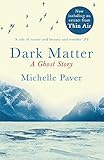
This is my review of Dark Matter: A Richard and Judy bookclub choice by Michelle Paver.

This is described on the cover as an adult ghost story by an award-winning children's author. The simple prose captures the bleak beauty of the Arctic, and conveys the sense of fear triggered by extreme isolation and exposure to long periods of darkness. The personality of Jack, revealed through his diary entries, is well-drawn, as the prickly young man with a chip on his shoulder in the presence of the public-school educated friends who decide to use him as the wireless operator for their research trip to the island of Spitsbergen.

Although credibility does not seem a very important criterion for a ghost story, I found it implausible that an Arctic expedition should consist of only five young men , yet still go ahead with only three, and should contain no experts in Arctic survival, medicine, hunting or dog-handling. The intention is obviously to create a situation, however far-fetched, in which Jack is alone.

Tension is built up well, including Jack's dismay over the prospect of four months with no sunlight and the false sense of respite when the moon is full. Despite this, the climax is a let-down, neither sufficiently terrifying, nor ingenious enough to make up for this. It includes a major coincidence and a final twist which both seem too contrived.

With large print, short chapters interspersed with drawings, words with no more than two syllables unless unavoidable e.g. for nouns like "gramophone", and the superficial skimming over issues of violence, deep emotion or sex, this reads to me like a "young teens" book, in all but the facts that the characters are in their twenties and drink whisky.

I agree with reviewers who would have preferred a purely psychological thriller without the hackneyed ghost element, or who feel this story lacks the depth and complexity to provide the challenge for a truly "adult" novel.

⭐⭐⭐ 3 Stars

The White Tiger has escaped

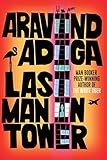
This is my review of Last Man in Tower by Aravind Adiga.

I agree that it must be hard to produce a novel after reaching the unexpected heights of a Booker win so early in one's career as a novelist.

This continues the theme of how rapid change and exposure to western materialism is corrupting traditional Indian society and values, and rightly seeks a different theme from the prize-winning "The White Tiger", which highlights the gulf between rich and poor. In this case the community of residents in a proudly "middle class" Bombay tower block are split apart by the lure of a businessman's very generous offer for them to leave, to enable him to redevelop the site for luxury apartments. The story is also a study of human nature – the way in which formerly decent people turn on the one moral – and perhaps foolishly stubborn – soul who persists in refusing to be bought, thereby sabotaging their one off chance to get their hands on the windfall which they imagine will transform their lives.

Although I want to admire and enjoy this book, it seems to me to lack the sharp wit and verbal imagery, combined with creative imagination and originality of "The White Tiger". Despite the large cast of potentially interesting and moving characters, I found the scenes too plodding and pedestrian to sustain my interest. The opening pages also read more like a journalist's article, than a piece of creative writing in which the reader gradually works out what is going on, who the characters are and what they are like.

I may return to this book and try the author again with another title, but was a little disappointed.

⭐⭐⭐ 3 Stars

Holds its own with Le Carre and Chandler, even Greene

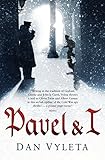
This is my review of Pavel and I by Dan Vyleta.

This recreates 1946 Berlin in the aftermath of war, with buildings and lives smashed, and law and order barely held in place by the Allied forces united in name alone. People have been brutalised by suffering yet still retain a powerful will to survive and the capacity to undertake at times unexpected acts of humanity.

Pavel is presented from the outset as an enigma, a sick American, fluent in German and Russian, hiding away with a large store of books he refuses to sell to obtain much-needed medicine and food, and giving shelter to Anders, a ragged and superficially unappealing street urchin.

This well-written, fast-moving drama in which the author still finds time to develop a large cast of characters as distinct individuals, begins with Pavel receiving an unwelcome visit from his friend Boyd, once soldier, now pimp and racketeer, who dumps on him the body of a well-dressed midget concealed in a suitcase. It soon becomes clear that the midget possessed something of strategic interest to each of the Allies jockeying for power in Berlin.

There ensues a complex Grahame Greene-cum-Chandler tale in which nothing is ever quite what it first seems, and actions tend to have unintended consequences. The tone is often brutal and cynical, but leavened with wry humour: this is illustrated by the recurring references to the pet monkey which the sinister Colonel Fosko (reminded me of Count Fosco in the Woman in White) foists on Sonia, the elegant tart with a heart. It is also evident in the descriptions of the street urchins organised by Paulchen, and the casual deciding of their fate.

An unusual aspect is the third person narration which, with growing frequency, lapses into the first person – a one-eyed Brit called Peterson – sometimes merely confiding with the reader in sly asides, at others even getting fully involved in the plot. The shifting viewpoint could be irritating, and reduce one's engagement with the characters, but I quite like this device.

There are, as Peterson himself admits, a few holes in the plot, but overall the complex chain of events links together quite well. There are moments of real tension, when a character seems to be going to his death, and you know the author is ruthless enough to eliminate any member of the cast, and to let bad win out over good.

I thought the ending a little too inconclusive and disappointing – perhaps as is often the case a bit too condensed. I also found it unclear why Pavel exerted such a charismatic power over most of the people he met, and would have liked to know a little more about "what made him tick" and exactly what he had been up to.

If this is a first novel, it suggests an impressive talent, and I shall look out for further novels by Dan Vyleta.

⭐⭐⭐⭐ 4 Stars

No Sacred Hunger

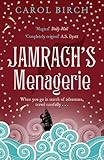
This is my review of Jamrach’s Menagerie by Carol Birch.

In what is mainly a seafaring yarn, the East End urchin Jaffy Brown pats an escaped tiger on the nose, lives to tell the tale, is taken up by the menagerie owner Jamrach, eventually sets out on a whaling trip with a detour to catch a dragon for one of Jamrach's clients, and suffers appalling privations in the company of his longstanding friend Tim. I was interested to learn that Jamrach was an animal dealer in real life, although in fact he was fined for letting a tiger carry off a young bystander. It was a bit of a let down when the menagerie faded out of the story quite early on.

For much of this book I felt I was reading an adventure story for teenage boys, admittedly with rather more sex, booze, child abuse and graphic descriptions of cannibalism than some parents would like. At times I felt bored, perhaps because the plot is rather slight to sustain a work of some 350 pages, and I found many of the characters quite sketchily drawn and unengaging. In particular, I was unconvinced by the relationship between Jaffy and Tim's twin sister Ishbel, and felt that the opportunity was missed to develop the complex triangular relationship between these three, which could have given the story a stronger emotional core.

What impressed me most and may justify nomination for a prize, are the vivid, poetical descriptions which pour out of the writer's imagination: the sounds and smells of the Victorian Thames, the lively market in Watney Street, the colourful ports visited on the voyage, the dissection of a harpooned whale after an exhilarating chase, the strange appearance of waterspouts over the ocean, in all their deadly beauty. I was distracted by the fact that Jaffy expresses himself with all the articulate lyricism of a mature female writer, and wonder whether the book would have been better written in the third person (we are told that Jaffy educates himself later in life and I suppose he could be modelled on Joseph Conrad). Also, use of the third person would make the final outcome more uncertain.

At times, the frequent references to people and animals vomiting and "voiding from both ends" become tedious. Some of the descriptions keel over into rambling excess. The style veers times between stream of consciousness and "telling rather than showing".

From Chapter 9, my boredom was replaced by a sense of unbearable oppression over some unremittingly harrowing, repetitive scenes. This may of course be intentional. Sometimes, the detail of shocking events seems almost included for effect, and the reader becomes desensitised to it as a method of coping. Again, this could be deliberate on the author's part. I don't think the moral dilemma in the climax of the book (which I can't reveal), and the key characters' reaction to it are explored enough. Also, in the final details of Jaffy's homecoming, which you know will be achieved since he is the narrator, some potentially moving scenes fall rather flat.

For an adult seafaring yarn which brings characters too close to nature for comfort, I would recommend Barry Unsworth's "Sacred Hunger".

P.S Having met Carol Birch at a book event, I would give her 5 stars for being so approachable and unassuming, and her readings aloud from "Jamrach" are very vivid and moving.

⭐⭐⭐ 3 Stars

Still waters still run deep – “The Warden” by Anthony Trollope

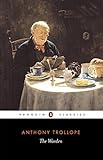
This is my review of The Warden (Penguin Classics) by Anthony Trollope.

The first story in the “Chronicles of Barchester” is a slim novel with such an apparently slight plot that it may seem all too easy to slip into the category of “classics I never got round to reading”, but that would be a mistake.

The Rev Septimus Harding enjoys a pleasant life in his role as warden at Hiram’s Hospital, with the welfare of twelve aged men in his care. His peace is shattered when John Bold, a local reformer bent on “stopping injustice” begins to question the financial arrangements that give the warden too high a salary and the old men too small a pension. Is Bold’s action foolhardy or noble, since he is jeopardising his prospects of marrying Harding’s daughter Eleanor?

In a climate of attacks on the religious establishment, the issue escalates. The machinations of Harding’s outraged control freak son-in-law, Dr Grantly are of little avail outside the cosy world of Barchester, and the matter even gets reported in “The Jupiter”, the highly influential organ of the national press. A decent and kindly man, Harding is mortified to find himself personally vilified. A further problem is his growing sense that he is not really entitled to his salary. Normally keen to avoid arguments and supine in the face of Grantly’s domination, is this to be the one occasion when Harding takes a stand and, if so, what form will it take?

In all this, the characters are so real, both in their conversations and the shifting inner thoughts that Trollope describes so acutely that, if one could meet them now, direct communication would be possible – as might not be the case for some of Dickens’ caricatures or Jane Austen’s mannered heroines (both writers whom I appreciate and respect in other ways).

The book is full of sly humour, as Trollope shows Abel Handy, the old men’s self-appointed spokesman, using all the manipulative arts of a modern union leader to induce his colleagues to “make their marks” (since they can’t write) on a petition. Likewise, we see how Mrs Grantly plays the accepted game of the dutiful wife in public, but controls her husband behind the scenes as he does others in public. Then there is the description of Harding, playing the “air violoncello” in moments of deep concentration or stress, to the bemusement of people who do not know him well. We can also identify with Trollope’s tongue-in-cheek musing on the power of the Jupiter, a kind of Victorian forerunner of Murdoch’s power to make and break people, at least until recently.

The only parts to which I cannot relate are when Trollope gives way to the fashion of his times to launch into a flowery essay on, say, the behaviour of people at social gatherings. When the language becomes arch and peppered with classic allusions I do not know, I lose patience. These passages are mercifully quite few, except towards the end when the plot moves to London.

What I like most is the way that, in his focus on the small, quiet lives of very ordinary people, Trollope has the gift of summoning a sense of grief and loss as moving as in any great tragedy, but also of maintaining a sense of proportion and showing people’s capacity to adjust and survive, as is part of the human condition.

⭐⭐⭐⭐ 4 Stars

A Chinese Meal of a Novel

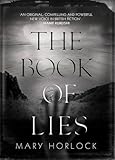
This is my review of The Book of Lies by Mary Horlock.

Set on Guernsey, this debut novel interweaves the lives of two characters: bright but unpopular and emotionally disturbed teenager Cathy, revealed through the black comedy of her diary , and her deceased Uncle Charlie, whose suffering under the German occupation is recorded in interviews with his brother Emile, also Cathy's father. Before his recent death, Emile was a local historian, obsessed with exposing the truth, but he may have been unable to cope with facts that proved unexpected, or impossible to prove beyond doubt.

In the first few pages Cathy confesses to the murder of her former best friend, but we know she is an unreliable witness. Other reviewers have been repelled by her coldness, but I see it as a kind of defence against a lack of parental affection and bewilderment over the loss of a father whom she clearly admires, but who died before she could "get to know him".

I found the genre hard to place – psychological drama, perhaps? Some scenes are very amusing. At times, it reads like a teenage cartoon strip, yet there is always an underlying sense of the grim legacy of the Nazi occupation. Guernsey is presented in a negative light – somewhat leavened by humour – as claustrophobically small, overrun by tax-dodging foreigners, with a local population concealing their guilty secrets over collaboration with the Germans. The web of lies makes it hard to know the truth, and triggers a chain of misunderstandings and long-term wrongs.

The story held my attention, despite the distracting footnotes, intended to show Cathy's precocious attempts to write like an academic historian, but many of the comments could easily have been included in the main body of the two parallel story lines.

Although I expected to be disappointed by the denouement, it is potentially better than I had feared. I like the ideas of an ambiguous ending, but some of the final revelations seem unnecessarily rushed and I was left too unclear as to exactly what role Cathy's mother has played. I also dislike the note of moral blackmail on which the book ends – it is neat, but overly cynical. I want the book to be more than just a clever construction.

Perhaps the portrayal of the malevolent Nic could have been more nuanced, although she is of course seen from Cathy's distorted viewpoint. Also, you may feel that sometimes the author steps in and inserts a little too much mature self-knowledge into Cathy's adolescent diatribes.

Overall, the novel is like a Chinese meal, giving short-term gratification but leaving you a little unsatisfied and wanting something more substantial.

⭐⭐⭐⭐ 4 Stars

Dramatic Dilemmas lit with a Damp Fuse

This is my review of The Collaborator by Mirza Waheed.

This novel exposes the plight of muslims living in the Indian-controlled sector of Kashmir, doomed to suffer whether or not they are militant. It has the ingredients for a powerful and moving tale, narrated by the anonymous son of a village headman in the wild, beautiful mountains close to the disputed border. One by one, members of his close-knit group of teenage friends disappear, leaving him haunted with questions. Why did they not include him in their plans to leave? Have they really crossed the border to join Pakistani training camps? How many have been killed in attempts to infiltrate back as terrorists? When, sickened by military reprisals, all the villagers have decamped apart from his stubborn father and long-suffering mother, the narrator is forced to become a "collaborator", searching the mutilated corpses of infiltrators to collect ID cards and weapons. Is his main motivation just to earn money for his family, or does he seek to find the bodies of his friends?

Although I wanted to be gripped and impressed, I found this book very hard to read. The plot is too slight to sustain a full-length novel, without very skilful writing. In the lengthy first part, the author rambles through the chapters like a traveller without a compass. Despite the vivid descriptions of the striking landscape and the villagers' simple lives, when it comes to the relations between characters, the style becomes stilted and wooden. I found it hard to distinguish individual characters or to care about them. The narrator's endless speculation over his friends' fates becomes repetitious and tedious.

The narrator's "voice" is inconsistent: sometimes, he is a confused teenager, at other times he sounds more like the author, describing the village as "settling down to stasis". The writer's penchant for flowery writing works quite well for passages on spiritual matters, the burning of corpses to save them from desecration, and so on. However, when describing incidents, the style often becomes quite clumsy, with prose inadequate to the task and a frequent jarring misuse of words – I had to resist the urge to seize a red pen and correct it.

To give just one example of how the clotted prose undermines the dramatic effect:

"…Ramazan Choudhury's elder son – the same man who had worked on the mosque and whose two children I had seen at Noor's shop buying éclairs and whose full name, Ishaq Jan Choudhary, I only got to know now when we were paired together in the hunt for X's body – and I were scouring the area around the dirt track that goes away from the village and tails off into the footpath to the valley, when we saw X's ..body lying near a narrow stream running down from the mountain."

What were the editors fulsomely cited at the end, not to mention the author himself who is a BBC editor, thinking of?

⭐⭐⭐ 3 Stars