World of smoke and mirrors

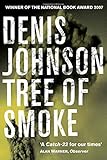
This is my review of Tree of Smoke by Denis Johnson.

Reminiscent at times of "The Quiet American", "Catch-22", or "Life and Fate", but hard to pin down, by turns brilliant and flawed, it is easy to understand both how this sprawling and vastly ambitious epic won The National Book Award, and why some critics and general readers have slated it.

"The Colonel knew how to lead but he couldn't follow…. Won over by the power of myth, he became one himself. He stood out grandly ……against the background of his own imaginings." A central figure is Colonel Francis Sands, maverick CIA officer whose panache enables him to get away for years with his unofficial activities, such as the possibly hypothetical exercise in "Psy Ops" (psychological operations), biblically entitled, "The Tree of Smoke". His fatherless nephew "Skip" hero-worships him, accepts without question his uncle's mission to eradicate communism in the Far East, and is desperate to work as a linguist for intelligence operations in 1960s Vietnam. Frustrated by the ludicrous, tedious tasks he has been allocated, shocked into hysterical laughter when faced with a casual atrocity, will Skip eventually grasp the truth about the Colonel and the war and how will he live out the rest of his days?

A parallel thread is provided by the Houston brothers, in particular James, who enlist in the military for excitement or money, and provide the poor white cannon fodder on which the US depends.

Those old enough to remember the Vietnam War, who were stunned by the spate of epic films including "The Deer Hunter", "Apocalypse Now", "Platoon" and "Good Morning Vietnam" may wonder if this rambling novel, not published until 2007, can have anything to add. Many (including me) will find the book hard to follow for Denis Johnson makes no concessions: he expects us to battle with American slang, military acronyms, a grasp of the stages of the war and general knowledge which extends to the history of the search for a yellow fever vaccine in Cuba. The novel is essentially a series of disjointed episodes requiring us to work out what is going on as well as what has happened between the scenes. All this lack of clarity seems to be part of Johnson's intention to convey a sense of the confusion bordering on lunacy that was part of the experience of being plunged into an alien eastern culture corrupted by western influence.

The author's freewheeling approach creates an uneven coverage. For instance, it is made tragically clear what has shaped the Houston brothers but James's descent into traumatised violence in Vietnam is too condensed. The surprising change in Skip Sands' life revealed towards the end is glossed over in comparison to the detailed portrayal of his character and life in much of the novel. Storm's at times surreal trek to find the man he believes to be still alive is described in great detail, but his role as the Colonel's side-kick remains sketchy to the end. Too many passages or dialogues read like notes for a novel, rather than the work itself.

On the other hand, with his capacity for striking, often poetic prose, Johnson is skilful in creating characters when he feels like it, together with a vivid sense of place. The strong play-like dialogues are suffused with the author's quirky humour which also alleviates the book's inevitable bleakness. One is held by a sense of anticipation, for at any moment a mundane scene may be transformed by farce, beauty, a danger averted or an act of brutality, as is the case in war. My main criticisms are that the book never quite delivers what it promises, it seems to lose its way in a disappointing ending, and is too long, by perhaps two hundred pages. Yet, it stays in one's mind and provokes thought and discussion.

⭐⭐⭐⭐ 4 Stars

A Siberian who prefers olives

This is my review of Dreams of My Russian Summers: A Novel by Andreï Makine.

Admiration for Makine's short novel "La Musique d'un vie" in English translation inspired me to embark on the much longer multiple prize-winning "Testament français" in French. I hope that this review of the original French novel may hold some points of interest for those reading the English translation.

It describes a sensitive Russian boy who spends summers in Siberia with the half-French grandmother Charlotte who regales him with anecdotes of Paris in the years leading up to the First World War. She backs them up with memorabilia from a battered trunk which hold the allure of an Aladdin's Cave for the boy. Unsurprisingly, he grows up with a sense of being split between two cultures, the harsh "reality" of Communist Russia holding less appeal than nostalgic memories of a past France. As a teenager, tired of his peers' mockery of his eccentricity, the boy makes a brief effort to break free from Charlotte's influence, but comes to realise how much he values it. It is a moot point to what extent Charlotte is responsible for nourishing his artistic sense as a writer, or aggravating a degree of mental imbalance.

This novel has a clearly autobiographical basis: following the disappearance of Russian parents, presumed to have been deported, Makine was brought up in Siberia by his half-French grandmother, who filled him with the language and culture of France absorbed from her childhood visits to Paris. After seeking asylum in Paris in his thirties and living on the breadline as a struggling writer, Makine resorted to the pretence that his early novels had been translated from Russian, since publishers would not believe that he could have written with such fluency and feeling in French.

A great admirer of Proust, Makine has imitated his style in "Testament français", which is short on plot, more a series of impressions, feelings and incidents. Particularly in the early chapters, I found the prose pretentious, with a cloying sentimentality. It was hard to believe that a boy of nine or so would be so enthralled by state dinners to welcome the Tsar and his wife to Paris in the 1890s, events about which Charlotte herself must have learned second-hand. And would the boy really have been so entranced by the sycophantic verse of José Maria de Heredia of which eight stanzas are included in the text? I was by turns irritated and bored by the repetition and exaggeration of ordinary images – a faded photo on the back of a newspaper cutting from the early 1900s of three demure young ladies in dark discreet dresses, over which the now teenage boy almost faints with emotion from the experience of mentally insinuating himself into their world, captured by click of the camera's shutter.

The writing seems most real to me when the narrator focuses on his own direct experience without any attempt at imitative artifice. For instance, there is a striking description of a sudden but fleeting storm bursting over the Russian steppe, to be replaced quickly by calm sunshine. He is probably very accurate in describing male obsession with female physical sexuality, although in the process the narrator appears very male chauvinist, to add to his intense self-absorption. The passages describing the sense of wanting to be both Russian and French are often quite powerful, and there are flashes of wry humour and insight. Although most characters apart from Charlotte and the narrator are thinly drawn, there are some vivid portraits, as of his tough, coarse, pragmatic aunt, a typical product and survivor of the Stalin era, unchanged even twenty years after the dictator's death.

Makine is a talented writer, and I shall probably read more of his work, but found this one too much of a chore. There is an English translation entitled "Dreams of my Russian Summers" which loses the point of the original title as revealed at the end.

⭐⭐⭐ 3 Stars

The day’s deep indifference to what is said

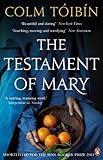
This is my review of The Testament of Mary by Colm Tóibín.

In this novella, Mary the mother of Jesus – although he is never referred to by name – recalls aspects of her son's life, the preaching, miracles and his crucifixion. Her take on events is original, and may offend some believers. It does not trouble me that Tóibín may have altered the order of events and inserted some "inaccuracies" in what is anyway a controversial reality.

According to Mary, the disciples were misfits and her son used his talents to lead them into trouble. She implies that he raised Lazarus from the dead with reluctance, as if he knew it to be a misuse of his powers. Certainly, Lazarus's sister Martha was "afraid that what she had asked for was being granted" and it is clear that Lazarus is unnerved and bewildered by his experience of death, and no one feels at ease with him afterwards, wanting but not daring to ask questions.

Mary perceives her son's talk in public as "high flown" and "riddles, using strange proud terms to describe himself and his task in the world", a kind of manic grandiosity when he describes himself as the Son of God.

Mary describes how, to her abiding shame, she ran from the scene of the crucifixion before her son was dead, to avoid the risk of being captured herself. Afterwards, she is dogged by earnest men, I assume the gospel writers, who wish to extract every word of her first hand testament for posterity. One of them is delighted by her dream of seeing her son raised from the dead, which implies that her memories will be twisted to suit the facts of a new religion, or discarded if they do not fit. Hiding in Ephesus from the authorities who killed her son, Mary is drawn to the goddess Artemis who gives her a sense of release. When her minders assure her that her son has redeemed the world through his death she responds that "It was not worth it".

The prose style is striking, eloquent, often poetical – not the first person "voice" of a simple, illiterate woman living in the middle east two thousand years ago, but rather that of the writer. This had the effect of distancing me somewhat from Mary's grief, although I found the work gripping. It seemed to lose its way a little after the crucifixion, but comes to a clear conclusion.

In my attempt to confirm what the Irish Catholic, at least by upbringing, author meant to convey, I discovered that this book was first produced as a stage monologue, in the Broadway production of which, "Mary is seen smoking what appear to be joints of marijuana and swigging from a commercially labelled liquor bottle". This concerns me as so much of the strength of the piece seems to lie in the quality of prose writing to be read and reflected upon individually, rather than declaimed with dramatic effects. I appreciate that the lyrical style lends itself to being spoken aloud, which may appeal more to some people.

⭐⭐⭐⭐⭐ 5 Stars

In pages of patchy insight

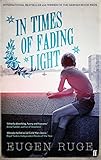
This is my review of In Times of Fading Light by Eugen Ruge.

The fact that the author, like his "anti-hero" Alexander, left Berlin just before the fall of the Wall, gives an authentic ring to this saga of four generations of a family living in East Germany under Communism and later unification. The chapters switch back and forth, adopting different viewpoints between 1952 and 2001. This allows us to see the characters' estimation of each other, and adds the intriguing spice of knowing how their lives will turn out, but not yet how or why.

Each chapter is like a short story – for me, the most perceptive and entertaining were the accounts of self-absorbed and semi-senile former Communist party activist Wilhelm's ninetieth birthday. He cold shoulders a couple whose son has defected to the West, unaware that his grandson has just done the same. In the eyes of his great-grandson Markus, whose desire to be an animal keeper is fated to remain unachieved, Wilhelm resembles a sharply observed pterodactyl, who on a generous impulse gives him his stuffed iguana.

Although I was fascinated by the theme and wanted to admire this book, it proved hard going. Perhaps owing to the translation, the style often seems leaden. Scenes are continually overloaded with mundane, wordy descriptions, which is doubly irritating since some of the major incidents are never fully explained. There is a tendency to recall events rather than enact them, although the shifting timeframe would readily permit this more dramatic approach. So, it is merely conveyed in the odd paragraph how Kurt ruined his own health and inadvertently brought about his brother Werner's death by sending him a mildly subversive letter which landed them both in a Soviet camp. Any sense of guilt that Kurt may feel, the traumatic effect on his mother Irina, are never explored in any depth.

I looked mostly in vain for the sense of menace combined with crass futility of life under the Stasi that one finds in, for example, the superb film, "The lives of others". The most sinister scene for me is when, returning to Berlin after a period of exile in Mexico, Charlotte becomes convinced that the plum job which has lured her back is a trick. The smoker in a dark leather coat who keeps directing probing glances her way is the first of several who will eventually lead her and Wilhelm into custody, signed confessions and ultimate disappearance. "Where were the people whose names are never mentioned anymore? Who not only didn't exist but had never existed?" Yet, when we next meet them, Charlotte and Wilhelm are comfortably employed in their promised posts, in a world of servants, string-pulling and relative luxury.

For me, a real sense of the grimness of East Germany rarely comes through, as in the powerful scene in which Kurt pursues his rebellious son Alexander through the rundown streets in the vain search for a restaurant that will serve a decent meal. "A subway train rattled by – but the subway trains here ran on an overhead line, while the suburban trains ran underground. The world turned upside down …….. passengers like cardboard cut-outs descending into hell."

A potentially brilliant novel which for me does not quite come off.

⭐⭐⭐ 3 Stars

Loving – living in his way

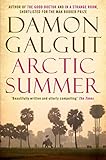
This is my review of Arctic Summer by Damon Galgut.

E.M.Forster, known as Morgan, hates the stuffy conventions and snobbish prejudices of middle-class Edwardian society, yet is unable to break away from living with his mother who reaches the ripe old age of ninety. He recognises his sexuality, but for years is only able to express it abroad, in Egypt or India, by forming risky unequal relationships with young men from the other side of the race and class divides. In similar vein to Colm Tóibín's novel, "The Master", based on Henry James, Damon Galgut has chosen to fictionalise Forster's life rather than produce a biography, no doubt because this gives free rein for his creative imagination to get inside the author's head and embroider facts to suit his interpretation. He is at liberty to pick and choose what he wishes to include and emphasise.

Although I often found Morgan's furtive fumblings quite tedious, it is undeniable that Galgut's subtle prose has the power to enable heterosexual readers to understand the complex, shifting feelings of a sensitive and introspective gay man seeking fulfilment at a time when this was against the law, or the topic of mocking gossip. In one telling scene, an English official in Egypt is prepared to help get one of Morgan's young native friends out of a scrape, but is desperate to counsel him against the liaison, without ever managing to overcome his reticence to speak plainly. "Tall and dry, composed of jointed segments like a large, untidy bird, Robin seemed always uncomfortable, but more than usually so at this moment".

The title "Arctic Summer", re-using that of a novel which Forster was unable to complete, conveys the concept of being "blocked" in two senses – as a writer, and a man. In the kind of profound insight in which Damon Galgut excels, it is only in the final pages that he uses the term "Arctic summer" to describe how Morgan catches sight of himself in a café mirror, in which the angle of the light makes him seem to "stand alone in the middle of an immense whiteness – nothing moving, nothing alive". This coincides with his pain at overhearing the gossip of two strangers who have recognised him as a famous author, "He's a timid soul. They say he hasn't really lived at all, except in his mind."

Another important thread is the often painful process of writing, in particular Morgan's struggle to complete what came to be regarded as his masterpiece, "A Passage to India". Inspired by his first visit to that land, he knows that he must write about it, but for years cannot see how to bring it to fruition. Impressed by the "spiritual hostility" of the Kailasa cave, he is convinced he has found what he has been searching for, "a terrible incident, a crime of some kind. But when he tried to focus on what it was, it became unclear, all of it retreated from him".

Galgut also conveys the strong sense of place that makes Morgan a successful travel writer: walking back from an evening with a poet who has described the history of Alexandria, Morgan realises for the first time how old the city is although there is little trace of its history beneath the "ordinary and banal" modern buildings – this highlights, of course, the tragedy of the recent loss of ancient buildings and carvings in countries like Syria.

My only criticism of the book is that some of characters, like Morgan's English male friends, seem undeveloped and two-dimensional, but this may be intentional to show how little they really impinge on Forster's introspective world – plus they all seem to let him down by getting married as a way out of their dilemma.

With his well-crafted, expressive prose, full of insight, flashes of humour (I enjoyed the one-sided row with the combative D.H. Lawrence) and poignancy, Damon Galgut is an unusual writer who deserves to be more widely read and praised.

⭐⭐⭐⭐⭐ 5 Stars

That time gone forever

This is my review of Train Dreams by Denis Johnson.

This novella which contrives to pack more into 115 pages than many a rambling, self-indulgent saga, captures the lives of Americans living on the harsh yet beautiful frontier of the north-western states in the first half of the twentieth century. The main character is Robert Grainier, a simple, semi-literate casual labourer who repairs railroad bridges and hauls forest timber. A brief period of personal happiness with an acre of land in the Moyea Valley, a wife and baby daughter, is destroyed by a ferocious forest fire. Yet, Grainger finds the dignity and resilience to rebuild a life which may seem insignificant, but forms part of the great wave of human effort to settle a continent. This is what gives an ostensibly sad book a note of optimism.

Although he spends most of his life in mourning, there are frequent touches of humour – comic scenes arise unexpectedly, as when he agrees to help a disreputable friend, who wants to assist a widow in moving house so he can lay hands on her money – , lurking superstitions about "wolf-girls" and touches of the surreal fed by the scale of the surrounding wilderness, contact with the local Kootenai Indians, and the nocturnal howling of wolves and coyotes, which Grainger begins to copy to gain a sense of release. There is a keen sense of nature, as when Grainger notices " it was full-on spring, sunny and beautiful. and the Moyea Valley showed a lot of green against the dark of the burn. The ground was healing….A mustard-tinged fog of pine pollen drifted through the valley when the wind came up".

The strength of the book lies in the quality of the clear and vivid prose, which struck me as poetical before I knew that the author has won prizes for his verse.

Here is a description of the aftermath of the fire, which you may appreciate if you have visited areas like the Yellowstone National Park:

“The world was gray, white, black and acrid, without a single live animal or plant, no longer burning yet still full of the warmth and life of the fire….he felt his heart’s sorrow blackened and purified, as if it were an actual lump of matter from which all of the hopeful, crazy thinking was burning away. He drove through a layer of ash deep enough, in some places, that he couldn’t make out the roadbed any better than if he’d driven through winter snows”.

I would place Denis Johnson on a par with Cormac McCarthy, but without the brutality.

⭐⭐⭐⭐⭐ 5 Stars

“What a true work of art looks like”

This is my review of The Emigrants by W. G. Sebald.

Like the recent French Nobel Prize winner Patrick Modiano, author W.G. Sebald was preoccupied with memory, nostalgia for the past and a haunting sense of loss. In a superb, sensitive translation from the German, "The Emigrants" comprise four freestanding sections, each recording the life of a man forced to leave Germany at some point in the last century, either to find employment in the States or to evade Nazi persecution.

Sebald has a very distinctive style, often described as dreamlike – and in the course of his meandering he sometimes resorts to recalling in detail real or imagined dreams, and tends to merge plain fact with probable invention. Slotted into the text to illustrate points, the frequent small, grainy photos of people, houses, scenery and objects are in some cases evocative and compelling, in others just quirky, such as a couple of keys for opening a cemetery gate, which in fact do not work. The first person narrator often finds out about his emigrants through the memories of others – perhaps emigrants themselves – but slots their commentary into his text without any inverted commas, creating in the process a stream of consciousness.

Opinions will differ, but I was most impressed by the final section on "Max Ferber". for which I would give five stars. In this, Sebald reveals himself to be an immigrant: a young German postgraduate student who came to Manchester in the `60s and found that he preferred not to return permanently to his homeland with its amnesia over the recent guilty past. Sebald "never ceased to be amazed by the completeness with which anthracite-coloured Manchester, the city from which industrialisation had spread across the entire world, displayed the clearly chronic process of its impoverishment and degradation". But the most moving part is his friendship with the reclusive Jewish painter Ferber, who was sent on a flight to England by his once wealthy parents before they were themselves deported. Ferber inspires some of the author's most magical prose. The artist's method was to apply paint in a thick layer, only to spend hours scratching it off, leaving "a hardened and encrusted deposit of droppings mixed with coaldust..in places resembling the flow of lava". Ferber "never felt more at home than in places where matter dissolved, little by little into nothingness." He reflects: "I gradually understood that, beyond a certain point, pain blots out the one thing that is essential to its being experienced – consciousness – and so perhaps extinguishes itself". Ferber gives to Sebald the journal kept by his mother, which the author incorporates into his account – how much of this he actually writes himself is unclear. In any event it is a fascinating description of an ordered, carefee life in the one-third German village of Steinach at the start of the C20, all the more poignant since, "It goes without saying there are no Jews in Steinach now".

This strange account of people damaged by loss has the power to alter one's perception of life and is worth rereading for the quality of the writing and the insights expressed.

⭐⭐⭐⭐ 4 Stars

Loving to hate

This is my review of The Man Whose Teeth Were All Exactly Alike by Philip K. Dick.

Energetic, pushy and prickly, realtor Leo Runcible has great ideas for property development in rural California, but he will probably never gain acceptance in 1960s Marin County, being not only an outsider but Jewish. An exaggerated grievance against his neighbour Walt Dombrosio sets off the quirky chain of events which form the theme of this novel.

As he continually switches his viewpoint between four of the main characters, so that Walt and his classy wife Sherry are as central to the tale as Leo and blurrily drunken Janet, I became engrossed in his capture of how they perceive each other and of the continuous small shifts in emotions – the observation of psychology and social life. This is a match for Philip Roth, I found myself thinking. Then, the narrative slips more into black farce and although I accept that the early 60s was a period of male chauvinism, of the sense that a man was emasculated if his wife worked, of unabashed racism and callous dismissal of the disabled, I began to have a nagging concern as to exactly how misogynist and non-PC Philip Dick may have been himself – or perhaps this is a mark of his skill as a writer.

It seems that this was one of the mainstream novels which remained unpublished in his lifetime, since his cult status was achieved only through his sci-fi, which does not interest me personally. Although I agree with a reviewer who found the end of this book somewhat rushed – he sets up an interesting final twist but fails to develop it adequately – he has clearly been underestimated as a writer with a keen eye, sharp insights into how mismatched people may tear themselves apart in relationships, “hell is other people” leavened with wry humour and a laconic style. I shall read another, but perhaps that will then be enough.

⭐⭐⭐⭐ 4 Stars

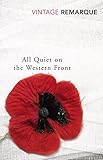
“All Quiet on the Western Front” by Erich Maria Remarque: Old at Twenty

This is my review of All Quiet on the Western Front by Erich Maria Remarque.

Having read and seen so many books and films about war, I made the mistake of expecting this to have little to add apart from the different perspective of a First World War soldier on the German front. Written in the 1920s by a young journalist who fictionalises his own experiences of the futile lunacy of war, it soon proved to me its status as a classic.

What marks it out is the combination of a whole gamut of reactions, from the MASH-like scenes of cynical survival to moving scenes portraying the psychology of survival at the front. In the opening chapter, the eighty men out of a company of a hundred and fifty who have returned alive and uninjured from the front are delighted to find that the quartermaster has not been informed in time to reduce their supplies so they have double rations for a day. A young man is dying from his wounds in a field hospital, and a friend is mainly preoccupied with laying claim to his rather fine pair of boots.

Using the present tense to give events more immediacy, the narrator Paul describes the sinister nature of the front in apparently calm periods which may be shattered with no warning by shells and gas – how to survive he must throw himself instinctively to the earth, which may protect, bury alive or claim him for ever. He must kill or be killed without emotion to stay alive, feeling his most conscious hatred for the teachers who abused their authority by urging him to enlist, or the sadistic ex-postman, now Corporal who provided his training, none of them with any realistic first-hand experience of the front. The prospect of leave seems like heaven, until Paul realises that he can no longer relate to family and acquaintances, or any aspect of his past life. He can no longer read the books he used to treasure, and his academic education now seems useless.

The narrative makes very early on the telling point which recurs at the end: the fact that young men plucked from school to the battlefield have no clear framework of work, wife or children to which to return, should they survive. They are a generation cast in limbo: “if we go back…. we shall be weary, broken-down, burnt-out, rootless and devoid of hope. No one will understand us – we are superfluous even to ourselves.”

This well-translated novel is saved from unendurable sadness by the range and frequent black humour of incidents. It is one of the most powerful pieces of anti-war writing I have ever read. The saddest aspect is that, when he wrote it, Lemarque might still hope there would be no future struggles of this sort on such a scale.

⭐⭐⭐⭐⭐ 5 Stars

Why things happen

This is my review of Lila by Marilynne Robinson.

Marilynne Robinson's writing fascinates me. For a celebrated professional creative writer she has produced relatively few novels, of which three produced over a decade examine and rework the lives of two families in the quiet Iowan town of Gilead, each book focussing on the inner thoughts of a different character. Lila, a newcomer who has married the Reverend John Ames in his old age and borne him a son, is a minor figure in "Home" and "Gilead", but comes to the fore in this latest novel. Best read in turn with Lila last, to understand all the references, they can be treated as standalone novels.

Carried on a stream of consciousness which catches Lila's distinctive voice, we learn how she was abducted as a young child from a neglectful and possibly violent household by Doll, an itinerant casual worker. On the run for years from some real or imagined pursuer, they attach themselves to a small group who find jobs where they can in what sounds like the dustbowl America of the `30s, although the author is vague as to time and place. Despite having been barely tolerated by everyone apart from the protective Doll, Lila retains a nostalgic longing for her childhood, lived mostly out in the open, with a keen sense of nature and the seasons, and what little they all had shared in common.

By comparison, in the reverend's comfortable old house, with his kind and patient attention, she often feels lonely and reluctant to confess details of her past for fear this may turn him against her. It appears he has married her out of his own loneliness and a sense of her reflective nature, drawn to the same spiritual questions which perplex him. Perhaps he feels a desire to give practical support to a woman in need who has endured hardship through no fault of her own, outside the safe shell of his own life troubled only by self-concocted theological dilemmas. We can never be any surer about his motives than Lila, for everything is seen through her eyes. The book is full of irony: the old man never grasps that she likes to read Exekiel because its fire and brimstone images capture a sense of her own past life. He is amused by her announcement that she never wants to have a credenza in the house, not realising that this was the piece of furniture in which a whorehouse madam kept locked up the few possessions of the young women she exploited.

Since every phrase appears crafted with care, the book needs to be read slowly, rereading some sentences aloud to capture the full meaning by stressing the right word. Although it has been described as one of the saddest books imaginable, the beauty, expressiveness and wry humour of the style make the bleak aspects tolerable. Lila's pregnancy also strikes a continual optimistic beat. The mistrust of John Ames' old friend the Reverend Boughton, and likely bewildered disapproval of parishioners, held in check by respect for the old clergyman, are only hinted at in this subtlest of novels.

If I have any criticism it is over the repetition of some points, although this could be intended to convey how the mind keeps revisiting old ground. In the same way, the very muted ending could reflect the reality of most people's experience. The author's Calvinist background exerts a strong influence, which could deter readers with no biblical knowledge or belief. As an atheist who accepts that Christianity is deeply embedded in mid-west American society, I would say that this book is worth reading if you appreciate skilful writing and have an interest in psychology, how people think and interrelate, often failing to communicate, and how they come to terms with intimations of mortality and the transiency of both pleasure and pain.

⭐⭐⭐⭐⭐ 5 Stars