Faire le vide

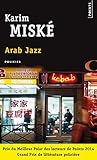
This is my review of Arab Jazz by Karim Miske.

After the Charlie Hebdo massacre, Karim Miské was praised for his prescience in portraying the dysfunctional immigrant youth of the 19th arrondissement in Paris who are prey to the kind of fundamentalist extremism of those responsible for the attack. In a January 2015 interview in The Independent, Miské comes across as a thoughtful and insightful man, “Arab Jazz” has won prizes as a “literary” detective thriller, and perhaps it is meant to be a parody of a corrupt, greedy society with distorted values, but I was very disappointed by this novel.

Ahmed, an immigrant from North Africa, is addicted to violent thrillers as what seems like a counterproductive way of escaping from his traumatic past. As he sits reading on his balcony, drops of blood falling from above alert him to the brutal murder of his neighbour Laura who has shown him friendship. An air hostess who has severed links with her extremist Jehovah’s witness parents, Laura has been the subject of what looks like a ritual killing involving pork for which Ahmed fears he will be framed. The ensuing revelation of the facts is due not to the investigative powers of the two young detectives who although described as intellectuals display absolutely no evidence of this, but rather to the author’s tendency to indulge in lengthy, indigestible information dumps instead of making the effort to “show” us any development of plot, character or motive.

With its clunky, often implausible plot, two-dimensional characters, its crude stereotypes, relying far too much on psychotics, psychopathic policemen, and power-hungry, manipulative, hypocritical religious maniacs, its hammy violence alternating with corny sentimentality, and its amoral tastelessness and simplistic thinking without a trace of subtlety, “Arab Jazz” is like a garish strip cartoon. This impression is heightened by Miské’s habit of lapsing into capital letters at dramatic moments:

“LE CRIME

LEUR CRIME”

Or “DERNIER VOYAGE” for someone about to be bumped off.

I read to the end to improve my French – if this can be said of extending my vocabulary for sex, drugs and mild pornography – and to take part in a book group discussion, which could at least consider the book in the context of the current state of French urban society.

⭐⭐ 2 Stars

The Top of the Egg

This is my review of Of Human Bondage by W. Somerset Maugham.

I believe there are quite a few parallels with Somerset Maugham’s own early life in this forensic study of a boy growing to become a man at the dawn of the last century: his hero Philip was orphaned young, brought up by a self-centred clergyman and his downtrodden sister, neither with much idea about children, bullied at school for his club foot, and grew up to be acutely observant, often using sarcasm to mask his hypersensitivity.

We see Philip moving from earnest piety to the conscious rejection of religion, with the startling sense of freedom this brings, trying out a variety of occupations, experimenting with romantic escapades but, to the reader’s frustration, continually falling under the influence of a woman who seems likely to destroy his future. Apart from providing a profound study of Philip’s thoughts and changing emotions, this is interesting for the details of daily life in late Victorian/Edwardian England: what things cost, how people trained for various qualifications, what they wore or ate and so on.

This reminds me of Michel Leon’s more recent “The Foundling Boy” (Le Jeune Homme Vert) published recently, but strikes a more serious and realistic note. Maugham should not be condemned for his narrator’s snobbish tone towards, say Cockney clerks or young women unaware of their lack of class as they fret over their respectability, since he must himself have been an inevitable product of the stuffy conventions in which he was raised. Yet, despite its often slow pace and dated attitudes, this classic stands the test of time and still deserves to be read for the wry humour, fluency and insight of the author’s warped genius.

⭐⭐⭐⭐⭐ 5 Stars

What price progress?

This is my review of Heart Of Darkness by Mr Joseph Conrad.

First published in 1899, Conrad’s celebrated novella “Heart of Darkness” uses the device of one tale book-ended within another. In this case, as sunset precedes the descent of darkness over the London Thames, Marlow begins to narrate to his colleagues on deck reminiscences of a visit to the snake-like river of central Africa, which has fascinated him since childhood. His task is to captain a steamboat on what is clearly the Congo. After repairing his damaged boat, he is sent to collect the mysterious ivory-trader Kurtz who is rumoured to be sick. The model for Coppola’s famous film “Apocalypse Now”, Kurtz proves an ambiguous figure. Is he criticised for having “lost his values” out of widespread envy for his commercial success? The natives seem to revere him as a kind of god, but there is evidence that he hates them.

At first, I took the book to be an indictment of the colonialism which exploited and degraded the Africans for imperial influence and commercial gain. Then I became uneasy at the evidence of stereotyping and a certain contempt for the natives. The story has a surreal, dreamlike quality, at one point the steamer is actually stranded in a heavy fog. Some descriptions are very striking, say of the bends in the river cut off from the rest of the world as the forests close in ahead and behind. Others passages seem disjointed and oddly phrased, reflecting the fact that English was Conrad’s third language so that, although remarkably expressive, words are not always used accurately.

I wondered at the time if the book is troubling for African readers, so was interested to find that it has been criticized in postcolonial studies, particularly by the highly regarded Nigerian novelist Chinua Achebe, who in his 1975 public lecture “An Image of Africa: Racism in Conrad’s Heart of Darkness”, described Conrad’s novella as “an offensive and deplorable book” that dehumanised Africans. Achebe argued that Conrad, “blinkered…with xenophobia”, wrongly portrayed Africa as the opposite of Western civilisation, ignoring the artistic accomplishments of the Fang tribe who lived in the Congo River basin at the time of the book’s publication. Was Achebe being oversensitive, failing to appreciate Conrad’s own sense of horror at the brutality of westerners in Africa when he was employed on a Congo steamer, himself providing the model for Marlowe? I prefer to think there is irony in what may be misconstrued as racism on Conrad’s part.

Apart from the fact that I felt myself to have failed fully to understand the book on a first reading, the ending seems rather limp and disappointing. In short, the novella is remarkable for the quality of some of the writing, and for the debate it triggers, but may have been overrated.

⭐⭐⭐⭐ 4 Stars

Too close a resemblance

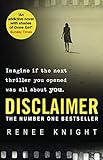
This is my review of Disclaimer by Renée Knight.

How would you react if a book appeared in your possession, clearly based on a personal secret unknown to any living person which, if exposed, could ruin your professional career as an award-winning investigative television journalist and destroy your marriage? In this twisty page turner, the author skilfully reveals the facts, with a few red herrings, alternating chapters between the horrified Catherine, written in the third person, and the embittered author of the book who may himself be an unreliable narrator.

One of the most compelling aspects is the author’s ability to arouse sympathy at some point for all the main characters, even if one neither likes any of them, nor entirely trusts them. I also like the wry touches of humour, and the way she weaves in observations on a range of relationships: within marriage, between parents and only children, with an ageing mother slipping into dementia and in a variety of work situations, with a manipulative rival or a procedure-obsessed HR department.

My only reservation is that, although well-written and cleverly constructed, the book is occasionally just a little too much the product of a high-powered creative writing course – too contrived, pressing all the right buttons as regards say, just the right level of eroticism and drama, with a few twists too many at the end when the reader is already perfectly saturated with them.

⭐⭐⭐⭐ 4 Stars

The Price of Torture

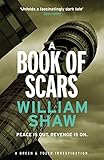
This is my review of A Book of Scars: Breen & Tozer 3 (Breen and Tozer) by William Shaw.

It is advisable to have read the previous novels “A Song from Dead Lips” and “House of Knives” before embarking on “A Book of Scars”. Described as the third part of a trilogy, this will probably not be our last encounter with Detective Sergeant Cathal Breen, since the author continues his ploy of including a loose end or two in the final chapter.

The two main hooks in this novel are the unresolved murder case of Alexandra, younger sister of Breen’s sometime work colleague Helen Tozer, plus the question of whether Breen and Tozer will ever achieve a proper relationship. Since Helen is, perhaps understandably, capricious, foul-mouthed and given to drinking too much, the decent, conscientious Breen who has led a rather sad life seems to deserve someone a little more appealing.

What first drew me to this series is the portrayal of life in late 1960s London, which evokes a sense of shocked disbelief to recall a world that seems a little unreal in its casual sexism, racism and lack of any sense of “political correctness”. I am not sure William Shaw is old enough to have experienced this first-hand, but he does quite an effective reconstruction. There is a serious thread underlying his work, since he likes to use as a background major overseas events of the day, such as the Biafran War in the first novel and the aftermath of the Mau Mau rebellion in this one.

Perhaps the novelty has worn off, but I did not enjoy this book as much as the first one. I was continually madecaware that it is not very well written, with some staccato, disjointed passages as if it has been thrown together in a hurry to meet a publisher’s deadline. Many of the characters are stereotyped and two-dimensional. I know that people aged sooner in the ‘60s, but Helen’s parents seem too old for their years – unlikely to be more than in their fifties – and I grew tired of reading about “old man Tozer”. I would have liked more psychological development, such as Helen’s resentment when her father is ironically shaken out of his grief-induced lethargy because the girl Helen has brought to help out on the farm reminds him of Alexandra. Some of the most convincing scenes are at the police station, with the counterproductive rivalry between different teams, and laughable attempts to dress up as hippies for undercover work.

“A Book of Scars” strikes me as formulaic in the steady accumulation of evidence, largely through interviews, culminating in a scene of gruesome and arguably gratuitous violence. Not for the first time, Breen takes an implausibly rash action from which he seems unlikely to emerge unscathed, which at least creates some gritty tension to offset any final cosy conclusion.

⭐⭐⭐ 3 Stars

Sturdy Endurance in Obscurity

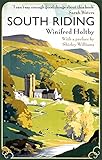
This is my review of South Riding (Virago Modern Classics) by Winifred Holtby.

Feckless blacksmith's daughter made good, Sarah Burton returns as a headmistress to the coastal Yorkshire of her youth, resolved to inspire her girls to "Take what you want" and to "Question everything". It is a time of change, with the old social order of rural life breaking down and a growing division between town and country. The depression of the 1930s is combining with the aftermath of the First World War and hints of the rise of Hitler and Mussolini to destabilise the world in the next major conflict.

Sarah's progressive ideas and desire for modern, well-equipped school buildings are at odds with the values of the traditional, stubborn yet honourable and charismatic local landowner Robert Calne. Yet this proves to be much more than a sentimental romance or soap opera, rather the moving and in-depth portrayal of a community which Winifred Holtby understood partly through growing up as a Yorkshire farmer's daughter but also through her mother's accounts of working as the first woman councillor for the East Riding, embellished by her unwise habit of leaving council meeting minutes screwed up in her waste-paper bin. The resultant storyline of corruption and speculation over land deals, the achievement of the desirable "ends" of building decent council housing by questionable means, so alarmed Winifred's mother that she obstructed publication of "South Riding" until after her daughter's untimely death.

The author's knowledge of her own imminent death gives "South Riding" an edge. She does not flinch from "killing off" characters and revealing the hardship in a world that predates the NHS, social work safety net and compulsory secondary education for girls under sixteen. Yet the book is saved from mawkish sorrow by the lively dialogues, striking descriptions, wry humour and realism of the narrative, with wonderful anecdotes from some of the characters.

At over five hundred pages, it may seem rather long, but the plus side is that the reader can become immersed in the characters' lives. This deserves to be called a "classic" with its hints of Thomas Hardy's Wessex, "Under Milkwood", George Eliot's "Middlemarch" and Arnold Bennett's "Five Towns", with the drama switched to the East Yorkshire wolds, crumbling cliffs, dramatic sunsets and constant presence of the sea. The story is all the more powerful and authentic for having been written during the period to which it relates. Winifred Holtby shows great prescience in sensing "the way things were going" and some issues, such as recession, the venality and self-interest of politicians, the uncertainty of life and the "sturdy endurance in obscurity" of ordinary people still resonate today.

⭐⭐⭐⭐⭐ 5 Stars

Cause and effect

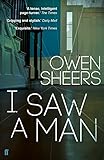
This is my review of I Saw A Man by Owen Sheers.

Having recently moved to a road overlooking Hampstead Heath, Michael calls on his neighbour Josh to reclaim a tool he has lent him. Surprised to find that the house is empty but the back door left ajar, he enters it on an impulse. This small, chance act triggers an unpredictable but initially devastating chain of events with life-changing consequences.

The cleverly titled, "I saw a man", although it takes a while to understand the significance of this, is a slow-paced psychological thriller by a serious-minded writer interested in exploring the role of cause and effect in our lives, the strength of the will to survive, and how we handle guilt. From the outset, there is a sense of tension and of the need to take note of every mundane detail because it might prove important. Suspense is heightened by the device of switching in alternate chapters between Michael, an intruder in his friends' house, and flashbacks to explain his past life: a few minutes spent in the house therefore expand to an eternity.

What could be a taut structure is slackened by the author's desire to weave in his views on a variety of issues such as the recent banking crisis, the Iraq War and creative writing, including the idea that it is a manipulative process: observing others, "blending in" to gain confidences and exploiting friendships in order use people as models for the putty to be moulded into novels.

In the first chapter I was struck by the occasional poetic phrase – the "nun's head" of a mother coot – in the otherwise plain prose, which led me to discover that the author is also a poet. The narrative is very strong on descriptive detail, as if the work of a scriptwriter, causing me to wonder if Owen Sheers had a film in mind from the outset. There are some powerful passages, but the style often jarred on me. The frequent use of reported events makes for too much "condensed telling". Some metaphors seem inapt, words misused, although this may be intentional, all these factors combining to seem surprising from a Professor of Creative Writing.

I think this book will be popular, and could be adapted as an entertaining TV series or film. It is a page-turner, but marred for me by avoidable lapses into clunky prose and some plot digressions which either detract from the narrative drive, because they lead nowhere, or which seem like missed opportunities for further plot twists, such as the aftermath of Michael's liaison with the young New York hoodlums, Nico and Raoul.

⭐⭐⭐⭐ 4 Stars

Nora Webster by Colm Tóibín: “Life goes on”

This is my review of Nora Webster by Colm Tóibín.

This is the detailed and dispassionate portrait of Nora Webster, widowed suddenly in her forties with two young sons to bring up, plus two older daughters who still need a mother’s support although they are living away from home at school or university. The story is set in close-knit, convention-bound, small-town coastal Ireland around 1970 where sexual equality was an alien concept, and the troubles brewing over the border in Belfast cast gathering background shadows. An intelligent woman who was prevented by her father’s early death from obtaining the college education of which she is capable, Norma is on the surface a dutiful wife and mother, unaccustomed to pleasing herself, but she is capable of sudden decisions which may seem out of character or even a little extreme, perhaps a result of the shock of grief.

Tóibín’s plain prose creates scenes and inner thoughts of acute realism which are saved from tedium for me – if not for many other readers – by his skill in the gradual revelation of details. What caused the death of Nora’s husband Maurice? What did he do for a living? How will Nora manage for money? How will she cope with a tyrannical office manager who bears a long-held grudge against her? Why does her son Donal begin to behave “out of character” at school? We see how, although superficially “carrying on as usual” all her four children have been affected by their father’s death in different ways. Nora herself, although for the most part continuing to fulfil her duties as a parent, and trying to build a new work and social life, often feels that the world around her is unreal, nothing has any meaning and she is adrift, only at ease when avoiding other in the refuge of her own house, or in sleep.

Throughout the book, Tóibín continually primes what seems like the trigger for some dramatic event, only for the tension to drift away, as is often the case in daily life. This may prove disappointing until one accepts that this novel is largely a study of grief, it would seem inspired by the author’s own experience of losing his father at an early age. It is also a detailed portrayal of the dynamics and relationships of family life, in which Nora seems always to have been an outsider, her natural self-containment now sharpened by the pain of her loss, although at times she displays great empathy, insight and sardonic humour. Another intriguing aspect is the power of the local gossip grapevine which sometimes reaches the level of farce. Everyone knows Nora’s business, or some distorted version of it, culminating in an interfering, it would seem at times telepathic, local nun: it occurred to Norma “that in any other century, Sister Thomas would have been burned as a witch”.

Hearing the author give a talk on this book also made me appreciate how much of his work is based on the part of Ireland (round Enniscorthy) where he grew up, a result of his belief that one can only write with authenticity about what one knows, and his fascination with places which people who have never met may experience differently but which all recognise, even long after they have changed.

This is not a depressing book, for it reinforces the essential truth that “time eases pain” although it may not really “heal” , and “life goes on”.

⭐⭐⭐⭐ 4 Stars

Burial Rites by Agnes Kent : Awaiting execution

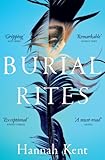
This is my review of Burial Rites by Hannah Kent.

On a visit to Iceland, Australian teenager Hannah Kent became fascinated by the story of Agnes Magnúsdóttir, the last woman to be executed there in 1829. Agnes was convicted with two accomplices of involvement in the brutal double murder of herbalist Natan Kedilsson and his visitor Pétur Jónsson, setting fire to his house in an attempt to conceal the crime. Keen to explore the ambiguity of her guilt, what had shaped Agnes as a person who might commit such a crime yet retain some humanity and evoke sympathy, Hannah Kent went on to research the case in depth for a PhD which included a creative novel on the subject, leading to the publication of this bestseller, “Burial Rites”. I liked the way in which imagined scenes are interspersed with documentary evidence.

My first attempt to read this book failed as I found many of the characters somewhat two-dimensional and written too much in the same “voice”, the dialogue stilted, the prose often overblown. Much of the book is quite slow-paced and repetitive, continually reinforcing the bleak detail. Forcing myself to finish it for a book group, my main reservation became that too many events are told statically, rather than shown dramatically, through the device of Agnes relating them to a third party. I accept that this could reflect the oral tradition of relating Icelandic sagas over interminable dark winter evenings. It also raises the intriguing question as to her reliability as a witness. However, the storyline, which is quite well-developed as regards Agnes’s relationship with the ailing wife and two contrasting sisters at the farm to which she is sent pending her final sentence and execution, becomes fragmented and confusing as regards the events leading up to the final crime. Again, this could be intentional as regards suggesting ambiguity.

My conclusion is that Hannah Kent is an enthusiastic researcher rather than a talented writer, so that the main interest lies in the detailed portrayal of the harsh life in northern Iceland and social customs of the day. Whereas we now think of Iceland as a sexually liberated country, in the early C19, women farm workers had a raw deal, forced to choose between accepting the advances of their employers or being thrown out to possibly certain death in the bitter weather, at the same time risking the consequences of bastard children or the anger of a farmer’s wife.

⭐⭐⭐ 3 Stars

“Think of a kitchen table then when you’re not there.”

This is my review of To the Lighthouse (Wordsworth Classics) by Virginia Woolf.

Rereading this novel after many years, I have grasped for the first time the brilliance of Virginia Woolf’s work. One of the pioneers of “stream of consciousness” writing in the 1920s, she conveys various characters “interior monologues” with great technical skill and poetic beauty streaked with acerbic wit, weaving together the rapid fleeting impressions of their surroundings, appreciation of objects, fragments of memories, shifting perceptions of other people, the tendency to think one thing but say something else. For this reason, a novel which might seem dated retains relevance and the power to move us almost a century later. It reveals in an original way aspects of the relations between men and women, even the meaning of life.

The plot which could be written on the back of a postcard is immaterial, except that the narrative covering two separate days set ten years apart is cut in two by the impact of the First World War, subtly conveyed by the decay of a house on the Isle of Skye, left unvisited for several summers by the Ramsays. They are a cultured Edwardian family, casually taking for granted their privileged place in the world and unaware of how much things are about to change. There are clear autobiographical elements in the story – certainly, the author’s sister Vanessa thought that Mrs Ramsay bore an uncanny resemblance to their mother. Still beautiful despite being fifty and the mother of eight, Mrs Ramsay exhausts herself in supervising the servants who do the actual hard labour, in ensuring the comfort of her guests, perhaps with a little match-making thrown in, but most of all in trying always partly in vain to meet the demands of her egotistical, insecure philosopher husband, who continually seeks attention and reassurance that, having reached “Q” he may attain “R” – “What is R?” – and that his work may be remembered. Although also at times troubled by a sense of unfulfilled potential, “But what have I done with my life?”, Mrs Ramsay seems to enjoy her lynchpin role, in which she is both admired and resented by others.

A constant factor is the lighthouse (inspired by Godrevy Lighthouse near Talland House in St. Ives, rented by the author’s father for his family) which casts its regular, impersonal beam over the bedrooms at night. James Ramsay will probably always remember the disappointment of being unable to visit the lighthouse as a six-year-old when his father’s dismissive “It will not be fine” harshly shattered the dreams which his gentle mother had encouraged. Ironically forced by his father to sail to the lighthouse a decade later, the journey has a very different significance.

The narrative flows in a twisted thread which requires total concentration. This is the kind of book to reread for the sheer quality of the prose, and to note how the author moulds language to fit moods and impressions, rather as an artist uses paint – one of the characters being Lily Briscoe who agonises over her pictures much as Virginia Woolf must have done, perhaps also over the written word.

How much more might Virginia Woolf have achieved if manic-depression had not caused her to take her own life at the age of 59? Yet, had they been available, modern medications could have dulled the capacity to achieve her unique streams of consciousness.

⭐⭐⭐⭐⭐ 5 Stars