The more we strive the murkier it becomes

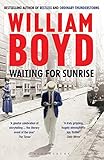
This is my review of Waiting for Sunrise by William Boyd.

Actor son of a famous, long-dead thespian, Lysander Rief travels to Freud's Vienna to seek the advice of an English psychoanalyst on a sensitive personal problem. Since it is 1913, we know that the course of his life is about to be transformed for the worse, but before that, fate strikes a very different unexpected blow. With his fertile imagination and gift for spinning words into vivid and original descriptions or moments of farce with no apparent effort, William Boyd creates an entertaining read for the first half. He employs interesting little devices, as in the opening chapter where Lysander is introduced as he might appear to a stranger, although the next scene shows how many of the assumptions based on appearances are false. At other points, the author presents the dialogue in the form of a play, reflecting not only Lysander's employment, but also the way he and those around him are often playing a part in "real" life. The downside of this somewhat flippant, facetious approach is that at times we may not care about the characters' troubles as much as we should.

It is not until halfway through that the novel becomes the spy thriller vaunted on the front cover, and for me it is not improved in the process. At this point, the plot is too close to a Buchanish derring-do of over-complicated implausible events. I began to lose interest, but read on in the hopes of a satisfying dénouement which is in fact less surprising and "clever" than some of the twists on the way. Perhaps the strongest aspect is that Lysander is left a sad and wiser man accepting life's ambiguity, "we try to see clearly but what we see is never clear and is never going to be", one "happier with the dubious comfort of the shadows".

⭐⭐⭐ 3 Stars

Setting the path straight

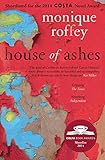
This is my review of House of Ashes by Monique Roffey.

Inspired by the abortive 1990 political coup in Trinidad, about which I am now embarrassed to have registered so little, the author creates a similar drama in the fictional Caribbean island of Sans Amen. We are introduced first to the simple yet bookish and spiritual Ashes, haunted by the violent death of his freedom fighter brother in an earlier uprising. Under the influence of “The Leader”, charismatic head of a religious cult, Ashes is sucked into a plan to force concessions from the apparently corrupt and neglectful government, by occupying the main parliament building and taking hostages, including the Prime Minister.

The point of view switches between Ashes and Mrs Aspasia Garland, Minister for the Environment, and one of the more sympathetic of the hostages. In a situation which rapidly deteriorates and clearly cannot end well, the author uses her characters to explore their contrasting attitudes, the different experiences which have shaped them including colonisation, their developing perception of events and the way they handle the psychological trauma of a siege.

This reminds me strongly of another highly praised novel about a hostage-taking in a developing country, “Bel Canto”, yet I think “The House of Ashes” is technically superior in being more realistic and focussed on the complex issues of power, inequality and motivation without getting side-tracked into somewhat sentimental romances. On the other hand, what has the makings of an outstanding novel is undermined for me by the author’s tendency to repeat and over-labour points. It would have been much more powerful to have finished at the end of Part V with at most a brief epilogue, that is, omitting the final section, entitled “V1 L’Anse Verte 23 Years Later”. It is as if Monique Roffey is so absorbed in her characters that she cannot resist continuing to supply and analyse details long after the reader should have been left to reflect and reach his or her own conclusions. A minor irritant for me is the overuse of the West Indian term “steupsing”, the tendency to make a noise by sucking in air to express annoyance and derision. Yet perhaps this, and the patois which I enjoyed, give the story greater authenticity, demonstrating Roffey's genuine deep firsthand knowledge of life in Trinidad. Certainly, she creates vivid images of the dusty rundown city, the lush vegetation and Leatherback turtles dragging themselves up onto remote beaches to lay their myriads of eggs – from which most of the hatchlings are doomed to die in the struggle to survive.

⭐⭐⭐⭐ 4 Stars

Watching paint dry on the house that Jack built

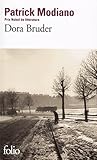
This is my review of Dora Bruder (Folio (Gallimard)) by Patrick Modiano.

In an example of "autofiction", "fictionalizing a real event in a writer's life", Modiano is obsessed for years by his chance discovery in a Paris newspaper dating from December 1941 of a "missing person's notice" for the fifteen-year-old Dora Bruder. She is the only daughter of Jewish immigrants who have sent her to a local Catholic boarding school perhaps partly in an attempt to protect her. Half-Jewish himself, the author readily identifies with the poignancy of her position in seizing a brief freedom before the largescale "round-up" of Jews, including women and children, the following year.

Modiano embarks on a forensic study of records to find out more about her, made hard by the widespread destruction of documents once it was clear that the Nazis had lost. He fills the gaps with speculation which I often found irritating since it is based on such thin data: did she travel between home and school by metro, with or without her parents, and by which stations? As he traces the streets she must have frequented, repeatedly wandering them himself in a mood of reflective nostalgia, I began to wish he had included a few maps and photographs. With his interest extending to her Jewish neighbours, he notes how large areas of the locality have been demolished as if in an attempt to erase some of the guilt of French involvement in the holocaust. At the same time, he manages to weave in experiences from his own troubled teenage, even drawing parallels with his brief arrest for causing a "breach of the peace" with his father and his running away from home. He is annoyingly vague about these events, for which ironically he has the details.

There is great potential in his approach of trying to piece together the past, exploring half-memories and lingering influences of previous lives conducted in streets which are partly remarkably unchanged, partly derelict, partly superimposed by a new wave of construction and a heedless modern existence. It could be argued that the factual description and heavy reliance on speculation highlight the pathos of the theme: that people could be deported to Auchwitz for omitting to wear a yellow star often enough for mean-spirited neighbours to notice. Yet for me, the banality and most of all the excessive repetition of details were at times intolerable. Modiano's insistence on providing several times over, for instance, precise addresses and information on whether street numbers are odd or even made me wonder if he had OCD. Detractors have criticised the fact that many of Modiano's novels have the same basic approach of gathering information to trace the past of a missing person, and this deters me from reading more of his work, apart from his autobiographical "Un Pedigree" (for another book group) although his straightforward prose is good practice for improving one's French.

Some reviewers have compared Modiano's work to Sebald's "Austerlitz", which for me was a much more striking, impressively original and moving work, more worthy, I would have said, of a Nobel Prize.

⭐⭐⭐ 3 Stars

Only the truth

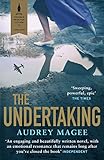
This is my review of The Undertaking by Audrey Magee.

The undertaking is Peter Faber's marriage "in absentia" to Katharina Spinell, a Berlin bank clerk whom he has yet to meet. The motives are mercenary on both sides: he wants ten days' leave from the Russian front which makes more sense in the following chapters recounting his ordeals in Kharkov and Stalingrad, whereas she is attracted by the prospect of his war pension if he dies. As loyal followers of the Reich, accepting Nazi propaganda without question, they are happy to fall in with Hitler's half-baked scheme for keeping up population growth at the height of battle. To their surprise, although perhaps partly because of the unreal situation, they develop the mutual love which motivates them to survive many vicissitudes.

Apart from this spark of hope, "The Undertaking" pulls no punches when it comes to the portrayal of war, as the pair begin to realise, in their very different situations, that German soldiers are not invincible against an inferior foe, the Russians are not the useless, cowardly peasants they have been led to expect, and the war will not be a rapidly won victory. It takes a while for the penny to drop with two main characters who are portrayed in a realistic rather than flattering and heroic light. Without any compunction, Katharina joins her callous parents in occupying a luxurious flat from which a Jewish family has been driven; on his "honeymoon", Faber takes part without question in the nocturnal eviction of Jews organised by the sinister fixer Doctor Reinart and he persists in believing a fellow soldier is a communist of doubtful loyalty because he is Russian – unable to grasp the tragedy that, as a Russian born in German territory, the poor man belongs nowhere. Yet the reader knows that Faber and Katharina will be punished more than they deserve, since Faber is on a march to Kharkov and Stalingrad, while Berlin is destined to be looted by drunken Russians who will perpetrate mass rape out of revenge.

The author is quite clever in glossing over historical details which does not matter, as she seems true to the spirit of the times: the moral confusion, the reduction of human beings to a basic animal state under duress, and the inescapable hand of chance. Gripping but bleak, well-constructed with some excellent dramatic moments and insights into the main characters' thinking, the story reaches a well-judged conclusion, which leaves the reader with a good deal to mull over.

"The Undertaking" is in my opinion superior to a number of recent novels which have received much more attention and hype.

⭐⭐⭐⭐⭐ 5 Stars

Out of mazy emotion

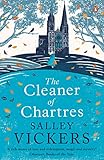
This is my review of The Cleaner of Chartres by Salley Vickers.

Although it shares with the bestselling “Miss Garnett’s Angel” the topics of church restoration and the ghostly background presence of a “Gabriel”, this novel has a sufficiently distinct storyline. A little exotic in her colourful skirts, Agnes works as a cleaner at Chartres Cathedral, whether as a means of forgetting the past or in atonement for some past deed is unclear until the end.

Switching between past and present, the novel reveals the sadness of her previous life after being found abandoned in his orchard on St. Agnes Eve by a kindly farmer who thinks she will be better off with the nuns than in a children’s home. Labelled “retarded” owing to her inability to read, she is struck by a chain of misfortunes as a teenager, with inadequate support from both the blinkered nuns and a bungling medical service. The ambiguity as to her guilt or innocence in all this and the tension as to how matters will be resolved in the present make this a page-turner, together with the wrily humorous yet also often poignant portrayal of a variety of characters, the beautiful descriptions of Chartres Cathedral which make you either want to visit it or wish you had paid more attention when you did, and the intriguing details on the history and mythology surrounding it – even if these are too often embedded in a rather clunky fashion into the monologues of the handsome hunk Alain waiting in his conservationist’s scaffolding to carry off the appealing Agnes.

There are a few too many coincidences in the plot, which occasionally teeters on the brink of Mills and Boonland. The greatest flaw for me is the tendency to digress into too much detail at every opportunity: when a character remembers finding her husband kissing the maid, you have to be told exactly which wines she had in mind on her unexpected visit to the kitchen, but some will find this adds charm to the novel. Knowing that the author has worked as a psychotherapist, I sometimes felt that she has been unable to resist the temptation to weave in too much of the welter of experience and analysis stemming from her work. Despite this, the story is in the main saved from mawkishness by her wit and insight. I think I found it more moving than the better known “Miss Garnett’s Angel” and recommend it, although I suspect it will appeal mainly to female readers.

⭐⭐⭐⭐ 4 Stars

“Three Men in a Boat” by Jerome K. Jerome – Messing about in boats

This is my review of Three Men in a Boat by Jerome K. Jerome.

When I read this as quite a young child, it seemed hilarious. I’m referring, for instance, to George and Harris rushing round in search of the butter, until realising that one of them had sat in it. Struggling dutifully through it more recently for a book group, it seemed rather silly and very dated, although I could still laugh at the succession of locals claiming to have caught the ever weightier trout encased on a pub wall, only for it to turn out to be made of plaster, when one of the clumsy three accidentally knocked it down.

I found a bit of research on the story much more interesting. Publication in 1889 was earlier than I had imagined i.e. not Edwardian. After the passing of the 1870 Education Act, and the extension of cheap rail fares giving people ready access the Thames, there was a sharp increase in the demand for amusing, easily read books and in the appreciation of boating as a pastime. This was perhaps a comic novel ahead of its time, much Victorian reading matter still being a bit sententious and worthy. So, there was a sharp contrast between the popularity of the book (which has never been out of print), and the snooty response of critics, even in Punch.

The author himself came from a once prosperous middle-class family which had fallen on hard times. So, despite his grammar school education, he had to start work as a young teenager, which obviously gave him a wide experience of life and the ability to relate to ordinary people. His unusual name was partly due to his father Jerome Clapp adding another Jerome to make it sound more distinguished. The “Klapka” came from a Hungarian who lodged with the family for a while.

I can see that what is really a series of amusing anecdotes, observations on daily life and snippets of local history on the areas bordering the Thames is appealing to us now in its innocence and nostalgic portrayal of a lost age. This probably remains a classic which you should read, the younger the better, although I doubt if a tale of three gormless middle-aged men rowing up the Thames more than a century ago would appeal much to this audience.

⭐⭐⭐ 3 Stars

Swallow whole

This is my review of A boy with potential: A choirboy’s sinister discovery (Crime shorts Book 1) by Rosalind Minett.

This well-written and expertly constructed tale sustains a sense of sinister tension to the end, but with underlying poignancy over the extent to which "oyster boy" – who ironically has misinterpreted the one piece of kind attention he receives – is a victim of other people's casual abuse. Although I agree that there is the material here for a novel, it makes a particular impact in its current concise format.

⭐⭐⭐⭐ 4 Stars

The Children Act by Ian McEwan: Living by the rules

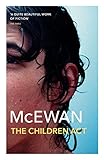
This is my review of The Children Act by Ian McEwan.

This slim novel is yet another example of “less is more” in that it makes a greater impact than many a long rambling epic. Fiona is a leading High Court judge, specialising in the application of the “Children Act” of the title with its double meaning. Her heavy and harrowing workload leaves little time to deal with the shock of an unexpected crisis in a longstanding and until now apparently happy marriage.

Always keen to be thorough and fair, she decides that the urgent case of a boy, stricken with leukaemia just short of his eighteenth birthday, who has supported his Jehovah Witness parents’ refusal to agree to the blood transfusion that will save his life, obliges her to visit him in hospital to gauge his capacity to make such a decision. Her good intentions are based on the principle that “the child’s welfare shall be the court’s paramount consideration”. In the ensuing drama, she learns more than she has bargained for about the complexity of dealing with a young person’s “welfare”.

Ian McEwan’s crystal prose with never a redundant word or a woolly sentence commands admiration, yet can make human relations seem somewhat clinical. Yet, I prefer this to a mawkish tone and in general his forensic analysis and clarity of writing serve to punch the reader with the raw emotion of a situation. Although everything is written from Fiona’s viewpoint, the reactions of the other players, both major and minor, are portrayed very vividly. I was completely convinced by the beautiful and over-sensitive boy Adam.

Although I understand why some readers have criticised McEwan for his focus on the privileged, upper middle-class world of a Gray’s Inn lawyer, for me this seems part of the point, if unintentionally: Fiona and her colleagues represent the confident, with taken-for-granted superiority, élite who make decisions on legal reforms and play Solomon in the lives of lesser mortals.

If the book has a weakness, it may be the somewhat condensed “telling” of a number of Fiona’s cases, combined with the author’s concern with current issues leading him to overload the plot with the world’s ills. You could of course argue that all this illustrates the almost frantic variety and stress of Fiona’s job. I also found the “climax” of the book is a little contrived, when Fiona receives what seems like bad news, without our being told what it is, just before going on stage for a piano performance, for which McEwan’s writing lost its usual spare precision and became rather pretentious and “knowing” about music.

This is a thought-provoking book on several levels: the right to decide on life and death, the psychology of ageing and the state of Britain. It is serious, compelling, yet lightened with touches of McEwan’s wry wit

⭐⭐⭐⭐⭐ 5 Stars

Caves of ice

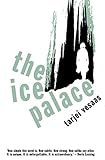
This is my review of The Ice Palace (Modern Classics) by Tarjei Vesaas.

Although this novel was first published in the 1960s, I have only recently come across it and realised that Tarjei Vesaas who died in 1970, is regarded as one of Norway’s finest writers.

Vesaas gets inside the heads of the two eleven-year-old girls who are his two main characters. Sis is intrigued by the arrival of “new girl” Unn who plays the loner, perhaps because of her mother’s recent death which has brought her to live with an aunt in a remote rural community. In her excitement over the prospect of an intense pre-teen age friendship with Sis, Unn plays truant from school and sets off across a large frozen lake to investigate the “ice palace”, which has formed at a distant waterfall. In this excellent translation by Elizabeth Rokkan, her fateful journey is one of the most striking pieces of description I have ever read. “Bent bracken stood in the ice like delicate drawings”.

Ensuing events are fairly few and simple in this short novel, but it becomes a gripping page turner by reason of the sustained tension, the portrayal of nature by turns menacing and of exquisite beauty, and the subtilty of the characters’ communication. This is a very Scandinavian novel, in which we really feel the long darkness of the winter night, threatening when one is alone; the strength of the steel-ice on the lake despite its tendency to blast “long fissures, narrow as a knife-blade, from the surface down into the depths” with a thunderous noise like gunshot; the magical Kubla Khan-like caves of the ice palace; the sequence of seasonal change from early winter ice through all-concealing snow to the eventual thaw. There is also the mysterious appeal of Unn who implies a secret she will not reveal.

If this remarkable and memorable book has a flaw, it is the structure towards the end in which a possible dramatic climax is revealed and then followed by something of an anti-climax. You could of course argue that Vessas is not interested in creating drama, but rather in portraying the events of ordinary life, in this case the natural development of a girl on the verge of growing up, learning from her experiences, and in rendering them extraordinary by the poetic quality of his prose.

I shall make a point of looking out for other works by this author.

⭐⭐⭐⭐⭐ 5 Stars

“Lamentation” by C.J. Sansom

This is my review of Lamentation (The Shardlake series) by C. J. Sansom.

Since it is advisable to have read at least some of the previous five books in this series – say the opening “Dissolution”, “Sovereign” and “Heartstone”, it is unnecessary to provide much explanation of the narrator Shardlake, a shrewd lawyer whose persistence and integrity make him ideal for the role of private investigator in the dangerous and twisted world of Tudor England. In this case, against his better judgement, a mixture of loyalty and understandable if hopeless devotion for Henry V111’s last wife, Catherine Parr, lead him to accept the task of retrieving her manuscript, “Lamentation of a Sinner”, which the King is likely to regard as heretical.

Sansom’s Shardlake novels are always a mine of thoroughly researched information about life of people in all walks of Tudor life. Even if he distorts some facts for dramatic purposes, this serves as an entertaining way of grasping the shifting politics of Henry V111’s court. What intrigues me most, well-conveyed in “Lamentation” is the sense of insecurity and fear under Henry, as strong as in any modern-day police state. The king himself is desperate to maintain his own position and dynasty, and prepared to do whatever is necessary to achieve this, but not to take personal responsibility for his actions. So, as a sick man approaching the death which it is treason to mention, doubts over the safety of his soul draw Henry back to the Catholic mass, under the influence of men like Bishop Gardiner who want to see reformers burned alive if they deny that the bread and wine of Communion turns into the actual body of Christ. Yet, Henry’s desire to keep his position as the Head of the Church in England makes it impossible to cede authority back to the Pope, pulling him back towards Protestants on whom he can rely to keep his heir Edward in full control of both Church and State in the future.

Sansom makes this the basis of an often swashbuckling yet also poignant drama. “I did not want to attend the burning” is a masterful opening hook. Yet, Sansom immediately backtracks to introduce us to a range of main characters who are all developed in some depth to show their personalities and motives.

I agree with some detractors who have found the pace a little pedestrian at times: the length has been padded out with frequent dusty rides on the ageing steed Genesis, hiring of wherries on the Thames and admission by pass to Whitehall. Analysis of what may be afoot is chewed over too often, so that some potentially very dramatic moments do not come as a surprise. The language used tends to be too modern, as is some of the behaviour at social gatherings. I appreciate that many fans will appreciate the chance to immerse themselves in the world of Shardlake as long as possible. Overall, a plot that at times seems overcomplicated in fact comes to a strong, unpredictable and intriguing denouement. I was also impressed by the way Shardlake’s own outlook evolves in this story.

I am sure this will not be the last in the series, although fear for Shardlake should he survive into the Catholic bigotry of Mary’s reign.

⭐⭐⭐⭐ 4 Stars