Gaudy Night by Dorothy L Sayers: From false statement of fact to mops and buckets

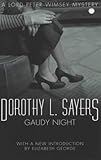
This is my review of Gaudy Night (A Lord Peter Wimsey Mysteries) by Dorothy L Sayers.

Her celebrity as a writer of detective fiction gives Harriet Vane the confidence to visit 1930s Oxford for a “Gaudy Night” celebration for the first time since graduating from Shrewsbury College where she was so happy before the trauma of being falsely accused of poisoning her lover and saved from the gallows by the intervention of amateur sleuth Lord Peter Wimsey. When the activities of a poison pen poltergeist begin to threaten the peace and the reputation of the College, Harriet is called back to investigate.

I found this novel entertaining although it proved as dated as I had feared, including in ways I had not expected. In terms of style, it often feels like a novel written a century earlier than it was.The frequent Latin quotations and Greek tags with no translations provided are particularly irritating, but perhaps an educated reader of the time would have had no trouble knowing what they meant. Alternatively, having been taught Latin since the age of six by her father, perhaps Dorothy Sayers overestimated the capacity of her readers, or with the dismissive arrogance often shown by Harriet maybe considered that if they could not understand it they could lump it. There is a similar kind of academic elitism in the often abstruse quotations from sixteenth century writers included at the start of most chapters. Yet the irony is that the female dons of Shrewsbury College frequently behave with the emotional immaturity of the pupils of Enid Blyton’s “Mallory Towers”.

As a detective mystery, the plot is rather thin. This is much more a psychological study of a group of women pursuing careers in a privileged cocoon, yet continually troubled by the sense that they are regarded as inferior to their male counterparts (in separate cocoons) and by doubts as to whether they have made the right choice. Should they have satisfied the desire for a man instead, even at the cost of having to further his career rather than their own, or of sacrificing self-fulfilment to putting their children first? Harriet naturally arouses resentment since she appears to “have it all”: a career in the big wide world, the option to become an academic, and a very wealthy suitor offering her future security for the taking.

For the most part Harriet and Lord Peter (Why does he have to be an aristocrat except to feed some fantasy of the author’s?) communicate for the most part through the exchange of literary quotations and witty ripostes. One of Harriet’s reasons for refusing his regular proposals of marriage seems to be that he makes her feel inferior. With justice, it would seem, in that she has to call him in to solve the crime, and even rewrites her novel to take account of his criticisms of her leading character Wilfred. There is also a double standard in the indulgent attitude to the idleness of Lord Peter’s student nephew, whereas Harriet rages against the “waste” of the place offered to an “ordinary” girl who has only come to Oxford to please her parents.

Many scenes make me uneasy in their elitism: Lord Peter calling a waiter continually to pick up the napkin which has slipped off Harriet’s silk skirt, or Harriet betting in a College sweepstake, not on a horse, but on the student most likely to win a prize.

Despite Dorothy Sayers apparently unconscious snobbery – a product of her times – she sometimes mocks the conventions: the male dons’ ludicrous popping formal shirt-fronts; the pleasure of “snuffing the faint, musty odour of slowly perishing leather” in the Bodleian Library; the possible futility of the complex mechanistic analysis of poetry.

⭐⭐⭐⭐ 4 Stars

“Three Men in a Boat & Three Men on a Bummel” by Jerome K. Jerome – Messing about on the river

This is my review of Three Men in a Boat & Three Men on a Bummel (Wordsworth Classics) by Jerome K. Jerome.

When I read this as quite a young child, it seemed hilarious. I’m referring, for instance, to George and Harris rushing round in search of the butter, until realising that one of them had sat in it. Struggling dutifully through it more recently for a book group, it seemed rather silly and very dated, although I could still laugh at the succession of locals claiming to have caught the ever weightier trout encased on a pub wall, only for it to turn out to be made of plaster, when one of the clumsy three accidentally knocked it down.

I found a bit of research on the story much more interesting. Publication in 1889 was earlier than I had imagined i.e. not Edwardian. After the passing of the 1870 Education Act, and the extension of cheap rail fares giving people ready access the Thames, there was a sharp increase in the demand for amusing, easily read books and in the appreciation of boating as a pastime. This was perhaps a comic novel ahead of its time, much Victorian reading matter still being a bit sententious and worthy. So, there was a sharp contrast between the popularity of the book (which has never been out of print), and the snooty response of critics, even in Punch.

The author himself came from a once prosperous middle-class family which had fallen on hard times. So, despite his grammar school education, he had to start work as a young teenager, which obviously gave him a wide experience of life and the ability to relate to ordinary people. His unusual name was partly due to his father Jerome Clapp adding another Jerome to make it sound more distinguished. The “Klapka” came from a Hungarian who lodged with the family for a while.

I can see that what is really a series of amusing anecdotes, observations on daily life and snippets of local history on the areas bordering the Thames is appealing to us now in its innocence and nostalgic portrayal of a lost age. This probably remains a classic which you should read, the younger the better, although I doubt if a tale of three gormless middle-aged men rowing up the Thames more than a century ago would appeal much to this audience.

⭐⭐⭐ 3 Stars

Does the overblown style enhance or detract from a thought-provoking modern fable?

This is my review of The Fishermen by Chigozie Obioma.

When, despite their mother’s pleas, their stern father accepts the transfer to a bank “a camel’s distance of more than a thousand kilometres away” in northern Nigeria, four brothers slide into mischief, playing as fishermen at a dangerous out-of-bounds river. The cursing of the eldest, Ikenna, by a local madman, triggers a chain reaction of family tragedy extending far beyond the expected fateful climax.

The novel is saved from total bleakness by touches of ironic humour and vivid insights into Nigerian small-town life – the superstition, tradition, squalor, corruption and lurking violence bizarrely mixed with possession of western consumer goods and evangelical Christianity – from an author who has experienced it first-hand in the very community of Akure where the tale is set.

My reaction to the original, quirky prose is ambivalent, since its raw power is (for me) continually sabotaged by the distracting effect of mangled metaphors and misused terms. Is this style intentional? Is it brilliantly creative? Does it too often become just plain irritating? I can’t decide.

To provide a few examples out of thousands:

“crumbs of information began to fall from Mother’s soliloquy like tots of feathers from a richly plumed bird”; “in the distance, a wild motoring road undulated on the swathe of dirt road”; “the din of an aircraft flying overhead mopped his voice into a desperate whimper” In a sprawling bazaar, “the procession had zipped through the thin path between boulders of humans, stalls and shops, their trucks plodding ponderously to attract the market people”; “a clear sky had bared its teeth”; at a grave, “with a bewildering air of apathy, the diggers dug on, quicker”; the udder of courage from which we’d drunk our fill had been drained, and was now shrunken like a crone’s breast. He spat and wiped it into the earth with his canvas shoe”.

The oddness of the style may chime with the viewpoint of the former nine-year old self of Benjamin, the narrator who is recalling events two decades later. It may also capture the idiom of a strong Nigerian oral tradition of storytelling, but it often reads like a children’s story with an inappropriately dark and gruesome content. The spate of extreme and over-the-top emotional outbursts tends to batter the reader into insensitivity, seeking relief by disengagement from what is in essence an unbearably moving tale of the hand of fate.

Since the book reached the Man-Booker shortlist, the bar of critical review is inevitably set fairly high. As I tend to regret the current strait-jacketed contrivances of creative writing, perhaps I should be more enthusiastic about Chigozie Obigoma’s untrammelled out-pouring from the heart. Perhaps I should compare his style to Van Gogh’s brilliantly coloured, distorted landscapes as opposed to the uptight purity of classical art. My reservations may be best understood by reference to the subtle, fluid eloquence of another Nigerian writer, the late Chine Achebe.

⭐⭐⭐⭐ 4 Stars

Flourishing like a flower of the field

This is my review of The Dig by Cynan Jones.

Daniel, a decent, gentle young man with a deep love of the Welsh countryside where he grew up, is exhausted not only by the effort of running an isolated sheep farm, but also by his unsuccessful struggle to come to terms with a personal tragedy. “The big man” strikes fear in everyone he meets, prison being the only thing he dreads. His love is reserved for his dog Messie a vital assistant for his obsession with flushing out badgers for a sinister purpose which gradually becomes clear. The contrast between the two men is shown by their reactions to the digging up of the mysterious metal shard, which Daniel invests with mythical properties, “a piece of lightning solidified there”, whereas the big man values it only as a source of scrap. This short, intense novel seems to be working towards an unpredictable confrontation between these two men, the anticipation of which makes the book a page-turner, despite its slow pace, detailed descriptions and few events.

Yet I knew that it was vital to read slowly, to absorb every phrase, for what makes this book remarkable is the style which is like a sustained prose poem. There are striking images of fleeting thoughts, the weather, wildlife as well as darker scenes – perhaps sometimes unduly brutal or bleak – involving problems over the delivery of lambs, or the baiting of badgers.

Cynan Jones makes us think about the minute aspects of daily life: the shoes with the backs worn down because Daniel has never bothered to put them on properly which “ at first… looked comfortable and loved, but actually they had the unfulfilled imbalance of things which had not been used to their fullness”. Or the importance and complexity of sounds for Daniel in a quiet landscape: “how in this prehensile night there could come the illusion of the sea nearby….the wind coming over the trees then dropping through the hedges …… with the distant noise of waves breaking and running….such… that he could not be sure this wasn’t the sound of the shifting tides carried from the coast that was dropped away out of sight a few miles off.” Or simply: “It was brewing to rain again, the sky bruising up and coming in from the sea”.

Although less sensitive, the big man also knows the country well: at night, when he was up to no good, “it was a time of mixed certainty for him, with… people awake at night, but they were also busier and distracted and with that general busyness disregarded noises more readily, accepting them as the product of another’s work.”

Some sentences seem too contrived like “I’ll give it four hours, he thought, attritionally” but you could argue this is both original and an example of poetical experimentation which cannot “work” every time for all readers.

I would give this book five stars without reservation if were not for the ending, which is disappointing in seeming sketchy, underdeveloped and, as another reviewer has commented, too “rushed”. Yet, plot is clearly not the author’s main concern.

⭐⭐⭐⭐ 4 Stars

Something lost in the telling

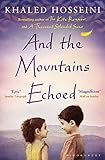
This is my review of And the Mountains Echoed by Khaled Hosseini.

On the eve of a fateful journey, impoverished villager Baba Ayub tells his children the story of the “div”, the demonic giant of Afghan folklore who requires a father to hand over one of his children: the man is understandably traumatised until he grasps that as a consequence his boy has gained a much better existence. In succeeding chapters, the “life” of the novel imitates the “art” of the folktale.

This novel is like a series of short stories spanning six decades from 1952, located in Afghanistan, France, the United States and Greece, switching between the viewpoints of a succession of sometimes tenuously related characters: Afghans driven from their land, those who have prospered from the war, expatriates who fallen in love with the country. Although it is often interesting to see different perspectives on the same events, the digressive approach, large number of characters and extraneous detail tend to weaken the power of the narrative drive. There are many poignant moments, but I often felt that the author is telling me what to think rather than letting me analyse people’s behaviour and feelings for myself. The “voices” used are often too much those of an educated, middle-aged man – the author – rather than the characters in question: the chauffeur-factotum Nabi and Gholam the dispossessed teenager brought up in a refugee camp, are cases in point. As a qualified doctor, Hosseini may be less disturbed by maladies than the average reader, but the high incidence of illness and premature death amongst the characters, not least those in more privileged positions, is unduly depressing, miseries laden upon the misfortunes of Afghanistan. The unrelenting blows which strike even the most fortunate are offset by passages of extreme sentimentality which grated on me.

After the huge success of his first novel “The Kite Runner” and the searing account of the plight of Afghan women in “A Thousand Splendid Suns”, Khaled Hosseini’s third novel “And the Mountains Echoed” cannot fail to be a bestseller, but I found it somewhat disappointing. With his role to promote humanitarian assistance for Afghanistan, the author is well-placed to record interviews with a wide range of real people with various types of involvement in this war-torn land, and I would have found an account of these more rewarding than this rambling and sometimes mawkish novel, although it is clearly to many readers taste in various cultures.

⭐⭐⭐ 3 Stars

There but for fortune…

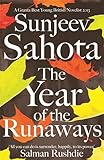
This is my review of The Year of the Runaways by Sunjeev Sahota.

Randeep, Avtar and Tochi are all economic migrants from India, crammed with others into a small terraced house in Sheffield where they work illegally on a building site, paid far below the minimum wage by an unscrupulous gang-master. It took a while for the author to establish their backstories, but eventually I became engrossed in their individual lives, and the different chains of misfortune which led them to obtain falsely or infringe the terms of their visas.

This is a fascinating insight into Indian culture: the continued level of violent prejudice against untouchables like Tochi, even amongst British Indians; the lack of a social security system in India to support Randeep’s upper caste family when his father falls ill, aggravated by his mother’s view that it is socially beneath her to work; the complex network amongst British Indians in which illegal migrants are both exploited and assisted, not least the gurdwara or places of Sikh worship where desperate followers of the faith can often get temporary bed and food. Randeep’s British “visa bride” Narinder also makes us think about the role of women in segregated communities who are repressed by fathers and brothers, denied the chance to gain any qualifications or the right to work, for whom breaking free means bringing shame on parents they may love too much to hurt.

Despite being a powerful and gripping story, strengthened by what seems to be authentic knowledge, it is weakened by a clunky structure and often incongruous style. There are almost too many characters to grasp, although you could say this gives a Dickensian touch, too much mundane or minute detail which saps the narrative drive, although this may also help one to visualise the scene, except, of course, where there are too many distracting Hindi (?)/Sikh terms making the confused and irritated reader long for a glossary.

My main problem is with the frequent odd turns of phrase: “earplugs emerged from her neckline to noodle about her chest”, “the writing desk too narrow for the three large oval doilies it was dressed in”, the urban stretch of rivers with “just the odd fishermen thickly hidden”, “she repaired to the outside toilets” (archaic in context). I cannot decide whether the approach is a daring attempt at poetical language which sometimes works as in “the sunlight squandered itself across the world”, or the errors of someone for whom English is a second language. I agree with other reviewers who have called for sharper editing, excising the indulgent wordiness and digressions, but since I have often complained about the formulaic effect of creative writing classes, perhaps this apparently spontaneous torrent of page-turning, thought-provoking flawed talent comes as a breath of fresh air.

The final Chapter 14 ends abruptly, leaving questions unanswered as to exactly how the main characters arrive at the “almost happy ending " of the i-dotting epilogue, a bland anticlimax after the unrelenting blows of the main text, although bitter ironies still lie just below the surface.

⭐⭐⭐⭐ 4 Stars

Facing the music

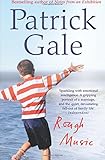
This is my review of Rough Music by Patrick Gale.

Why is forty-year-old, openly gay, successful bookshop owner Will considered by his “best friend” Harriet to need therapy sessions? We sense from the hook of the opening chapter that his glib talk of loving his parents and his “very, very happy” childhood masks some family trauma. This is gradually revealed to us in chapters which alternate between two time frames, the present and more than thirty years earlier, with most scenes set in blue house overlooking a Cornish beach which Will’s parents rented for a fateful holiday long ago when he was eight, and which his sister Poppy has hired again, inadvertently or perhaps not, as a fortieth birthday present, to which he agrees to take his now ageing parents for a break.

I enjoyed the wry humour of the innocent young Will, confusingly called Julian, being led astray, even to the extent of becoming an unwitting accomplice to serious crimes, by the misnamed “trusties”, old lags allowed to tend his prison governor father John’s gardens. Yet, despite some powerful dramatic moments – often coming with unexpected brutality out of the blue, the plot proves much less important than the characters.

In minutely-observed scenes Patrick Gale shows great insight as he takes us inside the heads of his three main characters: Julian/Will growing up as a sensitive little boy, trying to make sense of the adult world and his budding sense of being gay, seeking company in books; his musical, free-spirit of a mother Frances who has drifted into a restrictive marriage with a decent but uptight and hidebound man, and father John himself, who displays a more sympathetic personality beneath the surface, although unable to express the love he feels for his wife. His desire to “accumulate enough small, loving gestures to make something big enough for her to notice” is poignantly undermined by her development of early-onset Alzheimers – not a spoiler since this is clear from the beginning. Like mother, like son, Frances and Will share good intentions combined with a capacity to cause pain without meaning to.

The author has not extended his great skill in developing characters to the secondary roles played by, for instance, Harriet and Will’s gay lovers whom I did not find convincing. Also, the aftermath of the book’s dramatic climax seemed disjointed and underdeveloped, plus I found it hard to believe that such an observant and in some ways perceptive child as Will could apparently forget certain striking events from his childhood.

Overall, this is an absorbing, often moving tale with some astute comments on life and moments of comedy to ease the tragedy.

⭐⭐⭐⭐ 4 Stars

Hand of fate

This is my review of Signals of Distress by Jim Crace.

Original, imaginative and quirky, well-written with sharp irony and some striking descriptions – the storm of silvery pilchards making “the sea drenched in fish….as if the water had lost its liquidness and was turning to solder” – Jim Crace transports us to a remote Cornish fishing town in the winter of 1836.

The routine of life in Wherrytown is upset when “The Belle of Wilmington” with its American crew and unfortunate slave Otto shackled to the orlop deck runs aground on a sand bar, with much of its cargo washed ashore, including a herd of cattle which offer the locals the prospect of some illicit beef. This dramatic event coincides with the arrival of Aymer Smith: full of good intentions but pedantic, unworldly, socially inept with a gift only for causing trouble without meaning to and irritating everyone he meets. Aymer’s mission is to apologise in person to those dependent for their livelihoods on the collection of kelp from the beaches, who will suffer from his brother’s decision to switch from the use of kelp ash to sodium carbonate in the soap-making progress. Aymer is determined to compensate them – with bars of soap, coins, perhaps even a rash proposal of marriage.

This is a confined, prejudiced, harsh, every-man-for-himself world, typified by the ruthless local agent, wheeler-dealer Walter Howells. Yet in a varied cast of characters, some show flashes of kindness against the odds, and even Aymer eventually becomes an object of sympathy – a foolish yet essentially decent man.

The story may seem to meander along, at times too absorbed in minor detail, yet the author is forging a chain of cause and effect, working towards an end which, even if you guess it, is quite powerful and haunting. There is a vein of unremitting honesty, even visceral cruelty, a sense of fate, in Jim Crace’s writing which also gives it authenticity, and embeds an unusual tale in one’s memory.

⭐⭐⭐⭐⭐ 5 Stars

Mean Ends

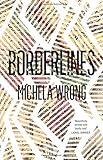
This is my review of Borderlines by Michela Wrong.

In the effort to erase her shock and regret over an intense love affair which has ended in tragedy, Paula is persuaded by the charismatic Winston Peabody III to assist him in preparing the case to be heard at the Hague for the recently war-torn state of North Darrar in its boundary dispute with its larger, more influential neighbour Darrar. Is this work as ethical as it sounds, is North Darrar a cause worth defending, and how will Paula be affected by this assignment?

Michela Wrong’s experience as an award-winning journalist explains why this deeply serious and intelligent novel often reads more like scripts for Radio 4’s “From our own correspondent” than creative writing. She combines her understanding of damaging colonial legacies, the corrupting effect of power on new regimes, however idealistic they may have been at the outset, and the cynical manipulation by self-interested Western states, to create a “North Darrar” with a very convincing sense of place, brought to life with vivid descriptions of landscapes in the Eritrea on which this novel is based. There are many insights and powerful moments, such as her sense of being trapped when prevented by a soldier from taking her customary evening run out into the plains, or the rendezvous at the “Tank Graveyard”, “a chilling indictment of superpower policy” where a local man explains the “geology” of the place, “like a quarry…our warmongering history caught in the sedimentary layers” of different weaponry from the days of the old Darrar Empire, the Italian conquest and British occupation to the latest civil war, with even some downed Soviet MiGs buried in there.

I agree that this often reads like a tense legal thriller, and even when it slackens off into scenes of office and expatriate social life it rings true. A slight problem for me is that all the characters – mostly Africans – have the same very articulate but somewhat stilted “voice” which seems to be that of the author contriving opportunities to give us information. I realise that Paula is intended to be a driven, prickly individual but her motives, for the action which got her arrested, for instance, seem insufficiently developed. The weakest part for me is her relationship with the impossibly wealthy and well-connected American Jake Wentworth. Recalled in disjointed flashbacks, the descriptions of their physical love often appear quite corny and clichéd, even hollow since it is unclear whether there really was anything more than sexual attraction. Is one meant to feel that Jake was a selfish man, a symbol of casual Western dominance, who “couldn’t” leave his wife, was attracted to clever, high-achieving women but unable to cope with their success, wanting a mistress in a cosy hideaway where he could rely on seeking comfort on his terms? The last chapter may focus too much on “tying up loose ends” in Paula’s life, although its sense of anticlimax may again be part of the book’s realism.

Overall, this is worth reading, and very timely in this period of widespread civil war outside the “developed world” and massive refugee problems. It is well-structured, but one is constantly reminded that it is a novel by an analytical, facts-driven non-fiction writer, lacking that elusive spark of creative imagination.

⭐⭐⭐⭐ 4 Stars

“Three Men in a Boat: To Say Nothing of the Dog” (Penguin Classics) by Jerome K. Jerome – Messing about on the river

This is my review of Three Men in a Boat: To Say Nothing of the Dog (Penguin Classics) by Jerome K. Jerome.

When I read this as quite a young child, it seemed hilarious. I’m referring, for instance, to George and Harris rushing round in search of the butter, until realising that one of them had sat in it. Struggling dutifully through it more recently for a book group, it seemed rather silly and very dated, although I could still laugh at the succession of locals claiming to have caught the ever weightier trout encased on a pub wall, only for it to turn out to be made of plaster, when one of the clumsy three accidentally knocked it down.

I found a bit of research on the story much more interesting. Publication in 1889 was earlier than I had imagined i.e. not Edwardian. After the passing of the 1870 Education Act, and the extension of cheap rail fares giving people ready access the Thames, there was a sharp increase in the demand for amusing, easily read books and in the appreciation of boating as a pastime. This was perhaps a comic novel ahead of its time, much Victorian reading matter still being a bit sententious and worthy. So, there was a sharp contrast between the popularity of the book (which has never been out of print), and the snooty response of critics, even in Punch.

The author himself came from a once prosperous middle-class family which had fallen on hard times. So, despite his grammar school education, he had to start work as a young teenager, which obviously gave him a wide experience of life and the ability to relate to ordinary people. His unusual name was partly due to his father Jerome Clapp adding another Jerome to make it sound more distinguished. The “Klapka” came from a Hungarian who lodged with the family for a while.

I can see that what is really a series of amusing anecdotes, observations on daily life and snippets of local history on the areas bordering the Thames is appealing to us now in its innocence and nostalgic portrayal of a lost age. This probably remains a classic which you should read, the younger the better, although I doubt if a tale of three gormless middle-aged men rowing up the Thames more than a century ago would appeal much to this audience.

⭐⭐⭐ 3 Stars