Beautiful writing, flawed plot

This is my review of The Secret Scripture by Sebastian Barry.

I would have rejected this book for its "grim" theme of an old woman dying in a mental asylum, but was obliged to read it as a "book group" choice. From the first page, I began to revise my opinion, struck by the poetic quality of the writing, with unusual and memorable imagery. The sad situation of the central character Roseanne was eased by her own wit and self awareness. The Catholic priest, Father Gaunt, was a wonderfully malign presence through the book.

The story deteriorated for me at the point when Roseanne recalled her life as a young married "normal" woman. The relationships with her husband and his family were underdeveloped and the events leading up to her incarceration were often unclear, even implausible. Without revealing too much, the manner in which she became pregnant and the details of the birth of her child were unconvincing or unrealistic.

The idea that we may have different perceptions and recollections of past events is interesting, but I was irritated that Grene felt the need to spell this out so specifically, rather than leave it to the reader to work this out.

I also agree with reviewers who have found the final denouement far too contrived – almost ludicrous in the piling on of coincidences.

Also, the wise and self aware "voices" used by both Grene and Roseanne were often too similar – and it was unlikely that an old woman asylum-bound for so long would be so lucid.

This tale is much less bleak than other recent Irish novels e.g. The Gathering or The Sea, but although I admire the quality of the writing I would not recommend it strongly. At first I thought it was an interesting take on the timeworn theme of the effects of Catholic bigotry but was left thinking that it had added little to my understanding of this.

⭐⭐⭐ 3 Stars

Found Wanting found wanting

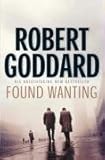
This is my review of Found Wanting by Robert Goddard.

A few years ago, the discovery of Robert Goddard's books saved me from acute boredom when laid up with a broken ankle. Since then, I have loyally read each book as it appears in paperback, but have found the last few offerings disappointing.

I agree with the tenor of many previous reviews that "Found Wanting" (winced over the corny origin of the title revealed near the end) is a pale shadow of Robert Goddard's earlier works. My main criticism is of the style of writing which seems to have been spewed out without much reflection. Rather on the lines of Sansom's "Revelation", or Peter Robinson's detective thrillers, very successful writers appear to grow complacent and churn out tales which they know will be instant bestsellers regardless of quality. This is somewhat insulting to the reader…..

Descriptions of the many cities visited were too often lists of landmarks, I imagined being written with guidebook in hand, although some of the descriptions of the flat snowy Scandinavian countryside were quite good.

Although tempted to discard the book early on, the old Goddard hook began to catch with the questions around the identity of Anastasia, and the familiar convoluted plot twists. I quite liked the cliffhanger at the end of many chapters, and the impossibly tight spots in which the improbably ingenious and courageous Eusden found himself – even if some scenes were implausible – Why on earth did he agree to make himself into a running target at the end? And the romance with Pernille was corny and undeveloped, as was the triangular relationship between his old friend and ex-wife.

I once read a Robert Goddard twice by mistake, which makes me ask whether it wouldn't be better for him to stop and let us reread his best works every few years – but no doubt it is too tempting for him to cash in on the momentum he has created.

⭐⭐⭐ 3 Stars

Byzantium The Early Centuries

This is my review of Byzantium: The Early Centuries: The Early Centuries v. 1 by John Julius Norwich.

Previous reviewers were right. This is an informative and entertaining read. It goes into more detail than I expected for a "non-academic" text, but it held my attention through the frequent little anecdotes. I was left marvelling at the scholarship which gave the writer access to such details, which he then communicated with such effortless ease. The occasional "blanks" where he had to admit that "no one knows what actually happened" make one realise how remarkable it is that we know so much. I plan to read the book again at some stage to absorb all the facts – hard to take it all in fully on a first reading, and have already obtained the second volume to read on.

Perhaps the two main achievements of the book are to help one to understand the significance of Byzantium and to bring home the huge variety and scale of activity going on in the so-called Dark Ages. Amongst other things, the barbarous Vandals and Goths were often surprisingly cultured. Yet, even the great Byzantime emperors could indulge acts of great cruelty, such as cutting off tongues and noses.

Highly recommended…..

⭐⭐⭐⭐⭐ 5 Stars

A Vengeful Longing

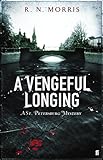
This is my review of A Vengeful Longing by R. N. Morris.

This is a cut above the average crime thriller,well-written and creating a vivid sense of life in nineteenth century St.Petersburg, apparently based on close research, even down to the post mortem practices of the day. The background of corruption, bureaucracy, pollution, poverty and vice is developed and sustained without the story becoming too depressing, perhaps because of the hooks of an intriguing plot and the varied cast of characters. Clues are slipped into the complex twisting plot to give an ending which is hard to predict, with the loose ends tied up. There seemed stronger character development than in the first novel, with humorous interplay between the eccentric detective hero Porfiry and his sidekick Virginsky.

However, as with "The Gentle Axe" I am left a little disappointed at the end by some almost ludicrous implausibilities in the plot (not quite so marked this time)- which I cannot reveal for obvious reasons, except it's safe to cite the occasion when Porfiry interrogates a murder suspect in front of a large audience. Some scenes are frankly odd e.g. where Porfiry almost bumps into a civil servant who faints when challenged seemed bizarre at the time. I also find too many of the characters seem to be caricatures, and therefore unconvincing. Perhaps I am guilty of taking the plots too seriously!

So, I am left feeling ambivalent, but recognising that Morris is an original and talented writer in this genre. I just wish that such good writing was applied to slightly more "worthwhile" plots!

⭐⭐⭐⭐ 4 Stars

Mixed feelings

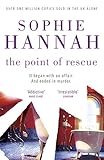
This is my review of The Point of Rescue: Culver Valley Crime Book 3 by Sophie Hannah.

After an intriguing start, the tragi-comedy of working mother's Sally's chaotic life was entertaining and an interesting use of rueful humour to convey the conflicts involved in trying to juggle children and a career. There were some ingenious plot twists – I can't say which genuinely surprised me, without giving too much away. I agree that some of them were implausible.

On the other hand, as with many such books, which will obviously gain a wider readership and massive earnings, I have to ask why the clearly talented author did not spend just a little more time on ironing out the flaws.

The diary entries rapidly became tediously repetitive and almost caricatures of the situation, although you could argue that was intentional. A more serious weakness was the unconvincing love interest between the two police officers, and their odd, inadequately explained and developed psychology. All the other policemen seemed to be caricatures.There was a tendency for key "information giving" conversations to drag on for an implausibly long time given the circumstances e.g one party had to rush off to a meeting, or was driving at high speed on a hunch to save someone's life.

I was also too often aware of the same rather cynical, sarcastic voice coming through too many of the characters. I had no objection to the voice itself, just suspected it was the author's own voice, and felt it needed to be attached to one or two characters, not most of them. I was also unsure about the frequent digressions into amusing but trivial asides at dramatic moments – this with the generally rather shallow and manipulative relationships between key players made me care too little about any of them, and led me to leave the book and move on too lightly.

⭐⭐⭐ 3 Stars

Curate’s egg

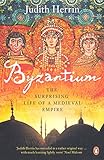
This is my review of Byzantium: The Surprising Life of a Medieval Empire by Judith Herrin.

Inspired by the recent exhibition in London, I bought this to gain some deeper knowledge of a civilisation which I know to have been very important. The book brought home to me how influential Byzantium was, and the poignancy of our general ignorance of a "lost" way of life which still influences us to a surprising degree in various ways.

Although it provided some useful insights, this book fell short in the excessive reference to tedious lists of details, and a somewhat wooden style. The frequent repetition resulting from the thematic approach was also irritating – although I could have done with more of it when it came to explaining some of the obscure points of religious belief. The text seemed driven by an academic need to "mention everything" rather than select some key points of interest and difference.

⭐⭐⭐ 3 Stars

Paradise Misplaced

This is my review of Paradise Misplaced by Eleanor Clare.

A tale with a difference, if you take the time to enter the world of the Paradise Valley, a century ago. More than just a simple "whodunnit", this tale explores a world on the brink of change.

What tale of obsession and lies can bored Inspector Stone unearth from the death of Oliver Marchant in his Heligan-type garden towards the end of WW1? The old man dies on the day news is delivered of his son's demise at the Front. Is there a connection? What lies behind the icy calm of Oliver's widow, Alice, and the candid air of his unlikely gardener, Jocelyn? Does Simon Stone ever discover what links the cast of characters? Can he learn to understand others, or to interpret and express his own complex emotions?

The story unfolds against a kaleidoscope of events from a lost past – the trial of Oscar Wilde, the rise of the Suffragettes, Art Nouveau, the "Glasgow Rose", the conchie's choice…….blackmail, inheritance, convention, duty, freedom…..

Recent reviewers have said:

"Narrative power is alluring and compelling"

"Intelligent and engaging"

"Bursting with characters, strong sense of period and absorbing plot"

A YouWriteOn reviewer has commented,

"This is an exquisitely drawn work; it's obvious that the author has paid attention to each sentence and tried to sculpt it to accomplish her aim. It may be slightly less obvious what that aim is, as this story appears to unfold slowly and with meticulous care.

The settings are marvellous and the reader can feel himself in England during WWI. Good historical research!"

⭐⭐⭐⭐ 4 Stars