This site will share with you hundreds of book and film reviews written since 2009. Also a chance to discuss these reviews together with some of my creative writing to be added.
As "arboreal architect" Pete Nelson states, "we all know that anyone in their right mind likes treehouses" but he has taken up what remains for most children the stuff of fantasy and applied his considerable vision and energy to constructing a variety of treehouses for the enjoyment of real-life adults. Clearly, most of his clients are wealthy or eccentric, and each treehouse is individually designed to reflect their tastes.
In this well-illustrated book, he photographs examples of treehouses from around the world, ranging from a Cambodian tree shrine, through attractive residences or tourist accommodation to rival a Frank Lloyd Wright design, to "Horace's Cathedral" in Tennessee.
Dedicated to the training of a new generation of treehouse builders, Nelson is keen to develop "sustainable" construction that does not damage trees. Although this book only covers building techniques in passing, many photographs show the skilful use of ropes, and discreet use of bolts and brackets. Nelson's camera has focused on designs which may be bold and original but which are careful to harmonise with the shape and colouring of the surrounding and supporting branches. Houses are often built round trunks which curve or strike up through floors, platforms and roofs.
To read this is to be reminded of the spate of "true classics" written in the mid-C20 when novelists still retained the fluency and eloquence stemming from a classical education which they were free for the first time to apply to the expression of real emotions, and the questioning of conventional values, morality and religion. There was so much to write about this that they felt no need for self-conscious experiments with structure or style.
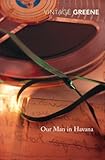
Written with great prescience only a few months before the Cuban Revolution swept Castro to power in 1959, this black comedy introduces us to the anti-hero Wormold who at first seems pathetic, unable to demonstrate effectively the vacuum cleaners he is attempting to earn a living from selling, allowing himself to be twisted round the finger of his lovely but manipulative daughter Millie. Then we begin to see his unexpected resourcefulness when, bullied into acting as a secret agent for Britain, "our man in Havana", he begins to dream up a false trail of imaginary agents, all requiring payment of course, and even submits drawings of threatening installations, bearing an uncanny resemblance to hoover parts. He astonishes himself with the fertility of his imagination, "how quickly he could reply to any questions about his characters".
Initially, all this subterfuge is simply to indulge Millie's whim for a horse, with the string of extra expenses this entails, yet he gains a simple joy from supplying her wants: he admires in her the spirit which he lacks, and treasures the few remaining years in which he will be able to share her life.
Of course, his colourful reports to London will have unforeseen, perhaps grim or violent ramifications. Yet, ultimately Wormold may be protected by the fear of those in authority of losing face.
Beneath the vivid evocation of a crumbling but picturesque Havana, there are continual hints of a darker and growing violence, such as occasional harassment by the police who back off at the reference to a certain Captain Segura, reputed to carry with him a cigarette case made from the skin of one of his torture victims.
In all the humour and entertaining plot twists there are the usual "grahamgreeneish" insights into morality, faith, the meaning of life, the nature of love and honour. He likens Wormold's growing sense of guilt to a small mouse, to which he may soon become so accustomed that he will let it feed out of his hand. In the end "Would the world be in the mess it is if we were loyal to love and not to countries?" Greene clearly thought so, although perhaps confined this belief to his novels rather than practise it in his own life.
P.S. Does anyone know the full lyrics and tune for the song quoted, which begins "Sane men surround /You, old family friendss/They say the earth is round-/My madness offends./An orange has pips, they say,/An apple has rind./I say that night is day/And I've no axe to grind."?
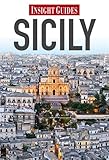
I have found this guide invaluable for planning a 10 day holiday in Sicily. It is clear, attractively presented with descriptions of the "highlights" to visit, but also an indication of intrigung places "off the beaten track", plenty of photographs to whet one's appetite, useful little maps including a separate "Touring Map", and strikes a good balance between being either too detailed or too sketchy. It also "sets the scene" with the background history and culture of Sicily, a reminder of its past diversity and prosperity, yet remains a manageable size to take along on holiday.
If there is anything missing – and this is a common lack in guidebooks – it is the absence of any detailed suggested 7,10 and 14 day itineraries, and an estimate of driving times between places, although you can of course calculate this from, say, Google maps.
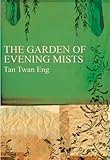
A Chinese Malayan by birth, Judge Teoh Yun Ling retires to the house at Yugiri in the Cameron Highlands and the "Garden of Evening Mists" developed by the enigmatic Nakamura Aritomo, sometime gardener to the Emperor of Japan. Since she has suffered brutal treatment and lost her sister in a Japanese camp during World War 2, one is curious to learn how she managed to form a bond with Aritomo before his death. Shifting back and forth in time, the story is an account of her recollections, revealing some kind of truth layer by layer, as she follows a friend's advice and attempts to capture her memories before the aphasia with which she has been diagnosed destroys her mind, making her a stranger even to herself.
At first, I was put off by the cumbersome opening chapter, the dwelling on small details, the slow pace and the writer's preoccupation with metaphors which, although sometimes striking, too often seem clunky and distracting, even unintentionally comical – "the waterwheel dialled ceaselessly" and so on.
Then I became hooked by Tan Twan Eng's exquisite poetical descriptions of the garden, his enlightening explanations of the principles of Japanese garden design related to a Buddhist/Taoist philosophy of the meaning of life, linked in turn to woodcuts and the art of tattooing, and by his evocation of life in 1950s Malaya with the interaction of different cultural groups, including an introduction to a neglected aspect of colonial history in the rise of communist terrorism in Malaya in the 1950s. The main characters are well-developed, complex and flawed so that you want to know why they behave as they do, what secrets they may be hiding, how a known fate came to befall them.
I began to think that perhaps this should have won "The Man Booker", or that it may be "above prizes" but in the later chapters, where Yun Ling recalls her experiences in the prison camp or recounts Professor Tatsuji's period as a kamikaze pilot, the book loses some of its originality as the pace quickens and the prose becomes more commonplace – a pale imitation of say, "Empire of the Sun".
The final revelations prove a little contrived yet would have satisfied me if the final twist had not seemed a little too implausible – there is an over-reliance on coincidence in this book. Tan Twan Eng seems to have introduced a denouement only to leave it half-knotted, although I suppose this is a point for discussion in book groups.
After a rocky start, I found this novel absorbing, often a page turner, moving blend of unflinching and sentimental, thought-provoking and very informative as regards Malayan culture understood from the inside. It was useful but disruptive to look up various terms, often employed several times before they are explained in the text, if at all, so brief footnotes would have been helpful. I am also left wondering if some of the (to me) overwritten prose may be due to Tan Twan Eng's fluency in a language other than English, in which this style is highly regarded. His style may also reflect a continued focus in Malaysian study of English literature on the work of poets like Shelley (such as "The Cloud" quoted in the novel).
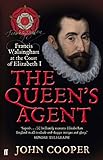
This begins like a novel with Walsingham, the English ambassador in Paris, risking his life by harbouring a Huguenot in a vain attempt to save him from the St Barthelomew's Day Massacre in 1572. This appalling event was critical in convincing Walsingham of the absolute necessity of preventing a Catholic invasion of England.
Although destined to play second fiddle to Lord Cecil, Walsingham filled a major role as Principal Secretary to Elizabeth, heavily involved in foreign policy, negotiating the thorny paths of her phony marriage plans, promoting early abortive attempts to extend English influence by founding colonies in North America, but most of all organising a network of secret agents to glean evidence of plots amongst Catholics at home and abroad.
Cooper provides a somewhat repetitive but fascinating analysis of how English Catholics who mostly just wanted to be free to worship "in the old way" were hardened into plotting against Elizabeth by the influence of priests who set up seminaries abroad and ventured into England, at great risk and personal cost, to spread the word. It was a vicious circle in which repressive laws, an inevitable result of foiled rebellions and plots, only made the English Catholics feel more persecuted and rebellious. Cooper debates whether Walsingham was guilty of "entrapment" by infiltrating Catholic families with agents who encouraged them to intrigue against the Queen.
Some events, such as the Throckmorton plot, are not easy to follow since they are presented in a rather fragmented way, and the whole structure of the book is a little disjointed, so that the abrupt switch from Walsingham's reliance on ciphers and code breakers to troubles in Ireland and attempts to found a colony at Roanoke feels like reading two fresh books in which he scarcely figures.
Yet, a sense of Walsingham the man comes through clearly: puritanical but not fanatical, loyal and industrious, stymied by the queen's periods of indecision. While giving her lavish presents, he was reduced to debt partly through being obliged to pay for some of his security work himself, not to mention the indignity of having an ungrateful queen throw a slipper in his face. His occasional bursts of written frustration to others seem almost modern in tone, and very human.
A few clear maps would have been useful, say of the ill-fated colony on Roanoke Island, the ports ravaged by Drake in the Spanish Empire, or even the route taken by the Armada. A timeline and list of main characters for easy reference would also assist the general reader. The illustrations are interesting, but need a full page each to do them justice.
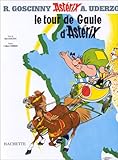
As a mature student of French, I read this in an attempt to understand the addiction to "les bandes dessinées" which seems to persist into adulthood even for French literature lovers. I hesitate to repeat what must be widely known – since I had grasped it without reading a single Asterix in the past – that the revered Goscinny has created a "village gaulois" populated by "irréductibles gaulois" who manage to make mincemeat of the entrenched Roman garrisons surrounding them, and fools of the occasional representative of Caesar who comes along with the intention of bringing the villagers to heel. The secret of the locals' success lies in the magic potion prepared by the venerable druid Panoramix, and the exceptional strength of the menhir delivery man, Obelisk, who never needs to take the potion since he tumbled into the brew at berth.
The ensuing tale of the wager for Asterix and Obelisk to tour France without being captured, collecting local specialities on the way as evidence, is pretty silly although amusing, partly in showing one again the French preoccupation with food – all the items collected are edible and listed with gusto at the end: "saucisse de tolosa", "huîtres et vin de burdigala" and so on.
In trying to find an equivalent story embedded in English culture I came up first with Winnie the Pooh, then thought perhaps Dad's Army would be nearer the mark. You may need to be able to associate Asterix with the nostalgia of childhood, and also be a native of France to understand the puns fully. I have at least learned the French for "port" and "starboard" and that, "Je tire ou je pointe?" refers to the game of pétanque.
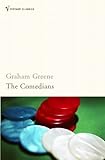
This harsh revelation of the "violence, injustice and torture" imposed on Haiti by the thuggish "Tontons Macoute" supporters of the sinister "Papa Doc" during the 1960s forms the background to a novel that is a mixture of tense thriller, sad love affair, and reflection on the meaning of life provided through the portrayal of a variety of characters. Sadly, this impoverished island escaped from Papa Doc's control only to suffer the ravages of AIDS in the 1970s.
Returning to the rundown hotel in Haiti which he cannot sell, Brown has to deal with the body of a dead government minister in his swimming pool. This must be concealed from his only two guests, an idealistic but naive American couple, the Smiths, who are resolved to transform Haiti with an ill-timed project to promote vegetarianism. Can Brown maintain his clandestine "semi-detached" affair with Martha, whom he resents having to share with her spoilt and all-too observant young son, while Brown is unsettled by the suspicion that Martha's ambassador husband knows about the relationship but appears to accept it. What has brought Captain Jones to Haiti – a congenital liar beneath his blustering charm?
Although Greene himself did not regard "The Comedians" as one of his best works, and he admitted his experience of Haiti was superficial, this book hooked me from the first few pages with his gift for storytelling, constructing a plot in which every incident and character counts, creating a strong sense of place and devising scenes which are by turns poignant, philosophical, menacing, exciting or hilarious – hence the idea that we are all to some extent playing the part of comedians.
The narrator Brown may be cold, cynical and self-centred, but his role as an outsider gives him the detachment to observe and analyse the people and situations he encounters. He may be forgiven a little bitterness since he has never known his father's identity, and his flamboyant mother abandoned him as a small boy in a Catholic boarding school where the monks could be relied upon not to throw him out when she failed to pay the fees.
For the first time, I have understood some of the Catholic angst which pervades so many of Greene's novels. Near the end, Brown refers to "the never quiet conscience injected into me without my knowledge, when I was too young to know, by the fathers of the Visitation." Brown seems to be the vehicle for Greene's introspection. "The rootless…. we are the faithless. We admire the dedicated….the Mr. Smiths for their courage and integrity……we find ourselves the only ones truly committed to the whole world of evil and good, to the wise and the foolish, to the indifferent and the mistaken. We have chosen nothing except to go on living."
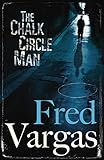
Blue chalk circles begin to appear in the Paris suburbs, each ringing some everyday object. But Commissaire Adamsberg knows it is only a matter of time before a circle contains a murder victim. Unlike his sidekick Danglard, the pragmatic, cynical, stereotypical heavy-drinking inspector deserted by his wife, Adamsberg is not your usual senior police detective. Burdened by his acute intuition, "if only I could be wrong about someone once in a while", he wanders round with his shirt half hanging out, idles around in coffee shops too depressed to go into work, and is only tolerated by colleagues at his new post in Paris because of his astonishing success record in solving cases.
Some of the characters are entertaining, such as the beautiful Mathilde, a famous marine biologist, only really happy deep-sea diving, who spends her time when on dry ground following and observing strangers. I liked her glass table with a built-in aquarium. However, the main characters are all highly eccentric and somewhat unrealistic. I enjoyed some of the quirky dialogue and was prepared to go with the flow of the off-the-wall plot until it reverted abruptly to the kind of trite, contrived thriller overfull of coincidences with a hero who keeps presenting his bemused colleagues with the next piece in the jigsaw, obtained through his latest light-bulb moment.
Some of the English translation is a little oddly worded perhaps partly because the distinctive whimsical quality is hard to capture in English.
Blue chalk circles begin to appear in the Paris suburbs, each ringing some everyday object. But Commissaire Adamsberg knows it is only a matter of time before a circle contains a murder victim. Unlike his sidekick Danglard, the pragmatic, cynical, stereotypical heavy-drinking inspector deserted by his wife, Adamsberg is not your usual senior police detective. Burdened by his acute intuition, "if only I could be wrong about someone once in a while" , he wanders round with his shirt half hanging out, idles around in coffee shops too depressed to go into work, and is only tolerated by colleagues at his new post in Paris because of his astonishing success record in solving cases.
Some of the characters are entertaining, such as the beautiful Mathilde, a famous marine biologist, only really happy deep-sea diving, who spends her time when on dry ground following and observing strangers. I liked her glass table with a built-in aquarium. However, the main characters are all highly eccentric and somewhat unrealistic. I enjoyed some of the quirky dialogue and was prepared to go with the flow of the off-the-wall plot until it reverted abruptly to the kind of trite, contrived thriller overfull of coincidences with a hero who keeps presenting his bemused colleagues with the next piece in the jigsaw, obtained through his latest light-bulb moment.
I recommend this in French for the practice, and the English version to help with some more obscure language points. Some of the English translation is a little oddly worded partly because the distinctive whimsical quality is hard to capture in English.
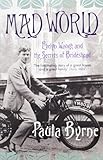
This very readable biography of Evelyn Waugh focuses on his fascination with the aristocratic Lygon family and the ambiance of their ancestral home Madresfield, which inspired his famous novel "Brideshead Revisited". Paula Bryne recaptures the poignancy of the drama to rival a Shakespearean tragedy in which the cultivated and socially conscious Earl Beauchamp, one of the last Liberal grandees, was driven into exile because of his blatant homosexuality,a victim to the hypocrisy of the day and the jealousy of his brother-in-law, the Duke of Westminster. On the other hand, Beauchamp seems to have used his powerful position to prey upon attractive young servants, rather in the style of a modern celebrity disc jockey.
Paula Byrne paints a sympathetic portrait of Waugh, highlighting his wit, companionship and loyalty to those he liked or admired, his special gift for platonic friendships with women, his courage and cheerful resourcefulness under pressure, "for he liked things to go wrong". Admitting that he was snobbish and often sharp-tongued, she makes allowances for him continually: his outrageous comments were often "meant to be jokes", when in later life he played the part of the crusty lord of the manor "in love with the past" he became a parody of himself, but the knowledge that hosts he thought he was entertaining found him a bore "broke his spirit".
It is interesting how biographies differ. Perhaps wisely for the sake of the length and coherence of the book, the author glosses over his friendships with other writers like Grahame Greene, his unconventional conversion to Catholicism, his possibly neglectful or exploitative relationships with his second wife and children, and the details of the alcoholism and drug-taking which aged him prematurely, drove him into periods of temporary insanity and eventually killed him "before his time". She makes light of the selfishness as when, it must have been through lack of thought, he accidentally started a fire in his father's precious bookroom.
Whom is one to believe? Hugh Carpenter's biography claims that Waugh was not given men to command in World War 2 because he found it hard to relate to working class soldiers. Paula Byrne makes light of Waugh's insistence when in the Royal Marines on "etiquette and proper procedures" and his attempt "to convince the young men how much better the world was before the invention of electricity".
One of the most interesting aspects of the biography is speculation on the extent to which Waugh's writing drew on his own experiences, places he had visited but most particularly the people he knew, often amalgamated to create a character.
With only minor reservations over some repetition which suggests a lack of editing, this book sets Waugh in context and is an inspiration to read more of his work for the humour and quality of the writing, even if much of the social comment now seems very dated.


 Antenna Reviews