“Je marche avec mon temps”

This is my review of Au Bon Beurre Ou Dix Ans De La Vie d’UN Cremier (Folio) by Luc Dutourd.

This cynical satire reveals the opportunism and greed which explain many people's willing cooperation with the Nazis under occupation in wartime France. Homesick for Paris, and readily convinced that the Germans are "decent" people, Charles-Hubert and Julie Poissonard return to their creamery, which also sells groceries, and set about stock-piling food to sell at exorbitant prices when rationing comes into force. Industrious but ruthless, they survive a few minor setbacks like being caught watering the milk, to end the war as millionaires laden with tasteless luxuries – a baby grand pianola, stuffed stag's head, leather-bound collections of unread books together with shelves of "faux livres" to give a flavour of this. A Rubens has only been acquired because Charles-Hubert has heard that the painter's work is popular.

On the way they have performed some mean acts without admitting any fault to themselves: Julie denouces to the Nazis a customer's son who has just escaped from POW camp in Germany. She feeds her half-starved maid before the girl is required to wait on the family at dinner simply so that she will not be tempted to steal food.

This story may be a little overlong, making its point early on, and perhaps losing it's narrative pace in the middle with the digressions into the adventures of Léon Lecuyer, the earnest young man of principle who serves as a foil to the pragmatic Poissonards. Yet the reader is carried along by Dutourd's wry wit and lively literary style, as displayed in his quirky description of the excessive hoards of food almost coming alive as they age: "les saucissons se pétrifiaient…les légumes sec….émettaient un murmure incessant: le riz répondaient aux lentilles, qui dialoguaient avec les pois cassés et les fèves et tout cela fourmait une harmonie de craquement légers….une symphonie chuchotée qui accompagnait l'évocation ralentie de ce monde immobile". Yet, beneath this lyrical whimsy, there lies an acid attack on not only the shop-keepers, but the aristocrats who played the system. As one well-connected survivor observes: "Who did a noble marry in 1700? With a farmer's daughter. And in 1900? With a Jewess. Today, it's with the daughter of a dairyman. I'm keeping up with the times? Don't you want to see me a minister?" (His path greased with the dairyman's money).

These unsavoury characters manage to judge just the right time to start vilifying Hitler and supporting De Gaulle. You may hope in vain to see them get their comeuppance.

This story may be a little overlong, making its point early on, and perhaps losing it's narrative pace in the middle with the digressions into the adventures of Léon Lecuyer, the earnest young man of principle who serves as a foil to the pragmatic Poissonards.

⭐⭐⭐⭐ 4 Stars

Finding oneself

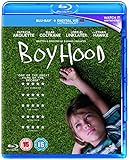
This is my review of Boyhood [Blu-ray].

The justifiably highly praised American film "Boyhood" reminds me of the BBC "Seven Up" series which featured a wide variety of characters every seven years to see how they developed. "Boyhood" was twelve years in the making, capturing aspects of a fictional boy's growing up between the ages of six and eighteen, using a cast of the same actors who are seen to be ageing over time.

Mason is a quiet, dreamy boy, upstaged by his bright, extrovert sister, played by the director Linklater's own daughter. His mother is a young single parent, desperately trying to "bring her kids up right, his father a charismatic ne'er-do-well who genuinely loves his children and makes an effort to keep in touch, forming a somewhat subversive element in their lives but maybe also encouraging Mason to "think outside the box".

Perhaps viewers who have raised children will be more engaged and moved by this film. It may fill American audiences with an element of nostalgia. For a British one, it is a fascinating portrayal of life in the States, as young schoolchildren swear their allegiance to the flag of Texas every morning, and fifteen-year-old Mason is presented with birthday gifts from a traditional old couple of an engraved bible and the family heirloom of a gun.

There are many moments of both humour and pathos, avoiding mawkish sentimentality or corniness. There are moments of the acute embarrassment, and navel-gazing of teenagers, but that is all part of the realism. Scenes in which Mason loses out in the competition with his sister to vie for his father's attention, or when young children pass a note in class to the "new boy" Mason are brilliantly acted, with the great naturalness which characterises much of the film. Dialogues are mainly convincing, if sometimes too rapid or mumbled for British ears to hear the punchlines.

I was never bored during this long film – 166 minutes – only a few scenes dragged or struck a false note for me, usually because of a weak performance from teenage actors playing minor parts. You may find it unconvincing that two of Mason's stepfathers develop a drink problem (and seem somewhat caricatured), but that could reflect Mason's somewhat conflicted mother's poor judgement in picking men.

The director enables us to feel some connection with all the main characters who are present throughout the film. It is a kind of soap, but more subtle and distinctive than any I have seen, perhaps because the scenes are selected to form a coherent thread leading to a clear conclusion. The film ends on the right note, leaving Mason on the brink of his college life, which seems likely to be fruitful, and the future open for the viewer to speculate.

⭐⭐⭐⭐⭐ 5 Stars

Funny on the outside but tragic on the inside

This is my review of Subtly Worded (Pushkin Collection) by Teffi.

The Russian writer Teffi's satirical short stories, "funny on the outside but tragic" within, remind me of Saki's, but without his cruel streak. Her opening lines often contain an intriguing hook: "The Christmas party was fun…. There was even one boy who had been flogged that day-"

To some extent tracing her own life from inquisitive child, through vivacious girl to philosophical old woman, her themes are varied, but tales from before the Russian Revolution tend to focus on people's characters and situations: the way those who have been badly treated take it out on the next person in the pecking order, ending with the child who kicks the cat which can only "pour out her grief and bewilderment to the dustbin"; the young woman who goes out in a burst of confidence, believing that her new blue hat will make her attractive. Teffi was good at portraying children: the little girl so struck by a toy ram's "quite human… meek face and eyes" that she "sticks his face into a jug of real milk", until an empathetic grown up explains, "Live milk for the living. Pretend milk for the unliving".

I am most impressed by the tales from her exile in Paris, after the Russian Revolution. "Subtly worded", source of the collection's overall title, is particularly clever, revealing how expatriates have to dissemble in letters back home to "guarantee" that their correspondents will "not be arrested and shot" for having received them. Advice is on the lines of "You should have written as a woman. Otherwise your brother will arrested" for his relationship to a man "who has evaded military conscription. Second, you shouldn't mention having received a letter, since correspondence is forbidden. And then you shouldn't let on that you understand how awful things are here."

A thread of the supernatural and folk tradition runs through some tales: Moshka the carpenter, reputed to have been dragged off by the Devil and returned from the dead as one of "the kind that walk". The fact he is Jewish adds a sting to this tale of rural prejudice.

Stories from her final years when she was poor and ailing are poignant, yet still questioning: in "And time was no more" an old woman, modelled no doubt on Teffi herself, observes, "the beauty of flowers attracts the bees that will pollinate them but what purpose does the mournful beauty of sunset serve?" If the stars give a person in pain a sense of his own insignificance, why should he be expected "to find comfort" in this "complete and utter humiliation"? There is something refreshingly honest and enduring in these thoughts.

It is good that the reprinting of these stories goes a little way to restoring her former considerable fame.

⭐⭐⭐⭐ 4 Stars

The Road Taken

This is my review of The Gift of Rain by Tan Twan Eng.

I have given this ambitious first novel four stars because, although flawed, it is thought-provoking and conveys a vivid impression of the cultural diversity of Malaya during the 1930s-40s, and what the diverse population had to endure.

As the British in Malaya sleepwalk into the outbreak of World War 2, Philip feels somewhat alienated from the Hutton family who have made money in business and trade in the Far East for over a century. He is the youngest son, and the product of a second marriage between his father and a Chinese woman who died when Philip was small. So, he is susceptible to the influence of the charismatic Endo-san, teacher of the martial art of aikido and probable spy, laying plans for the Japanese invasion of Malaya. Although Philip has been brought up as a Christian, he has flashes of awareness of having lived in a past life with Endo-san, and of achieving a state of enlightenment through meditation.

The author's status as a Chinese Malayan and martial arts practitioner give authenticity to a plot with great potential for drama, intrigue and insight into relationships between cultures. I do not mind slow-paced, reflective novels and do not feel the need to like the main character – in this case, Philip comes across as emotionally repressed. So, why did I find Part 1 such hard going? This was partly due to an often stiff and wooden dialogue, although this may have been an attempt to convey the formality of some modes of Far Eastern expression. The plot makes heavy use of reminiscence and a "telling" style, which combine to distance the reader somewhat from events. The confidante Michiko Murakami seems dispensable to me. The book is laden with characters and minor details, and would have been sharper with more ruthless editing.

With the Japanese invasion in Part 2, the novel belatedly takes off, improving in both pace, style and dialogue. We know from the outset that Philip collaborates with the Japanese during the war, and now it becomes clear why and how. Is he naïve in thinking this will save his family? Will he ever be forgiven for his apparent treachery? Is he in fact motivated by a homoerotic relationship with Endo-san? – The author never specifically describes this as such, and the link between the two is caught up what may interest Tan Twan Eng most, namely the fact that the two men may be fated to meet in successive lives until certain matters are resolved.

Although I would say this book is original and well-written in places, it seems overlong and the author seems reluctant to "call it a day" at the end. Fascinating issues at the heart of the book are somehow not explored as clearly as I hoped. I was also repelled in particular by the obsession with daggers and swords, and switches between moments of an almost psychopathic acceptance of ritual killing to enable even guilty men to die honourably and passages of shallow sentimentality. This is, I suppose, my western take on eastern cultures I do not fully understand.

The author's second book, "Garden of the Evening Mists" is similar in having a wealthy half-westernised Malayan fall under the spell of a talented and manipulative Japanese man, in this case a gardener and tattooist. I think the later book shows a development in the author's skill as a writer, although the plot of "The Gift of Rain" is potentially more powerful and moving.

⭐⭐⭐⭐ 4 Stars

“Those with no horizons”

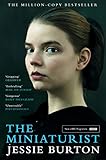
This is my review of The Miniaturist: TV Tie-In Edition by Jessie Burton.

Of good birth but penniless, eighteen-year-old Nella travels from the countryside to join her new husband, the wealthy merchant Johannes Brandt. Set in seventeenth century Amsterdam, the story has overtones of “The Girl with the Pearl Earring” and Nella’s brittle sister-in-law Marin is at first reminiscent of Rebecca’s Mrs Danvers. Yet there is originality in Johannes’ odd wedding gift, a nine-roomed cabinet house modelled on his own. To fill this with figures and objects, Nella hires the services of an elusive miniaturist, who uses an implausible and unsettling knowledge of the house’s occupants not merely to reflect their current lives but to manipulate or foretell the future.

It does not matter that the secrets of the Brandt’s household are to varying degrees guessable from the outset. The story was intriguing and a page turner for me until two aspects made me wish I had never embarked on it: the style and the portrayal of the miniaturist.

Jessie Burton writes in in a great flood of imaginative vigour which can produce striking descriptions and vivid impressions of C17 Amsterdam. However, I began to feel exhausted from the battering of the gushing, overblown and it would seem unedited prose: “Nella’s bones are falling through her body as if she’s going to slide into her husband’s rug and never stand again” What will she do when something really bad happens? Or here’s a description of a pregnant woman: “Behind the walls of ……’s anchored body a baby tumbles, possessed and possessor, its unmet mother a god to it”. In what is being hailed as a feminist novel, it could at least be a “goddess”.

The whiff of the occult associated with the miniaturist’s ability to know, often in advance, what is afoot in the Brandt household, remains confused and sketchy to the end, detracting from a plot complex enough not to need this aspect, which turns out to be a bit of an authorial cop-out.

There are also some annoying little “continuity errors” as when a boy’s head appears round a door which has just been closed very explicitly.

This book has been strongly hyped and will please many readers, but I regret the opportunity missed to produce a really powerful literary historical novel on the theme of the position of women in one of the burgeoning capitalist world’s commercial capitals, of the hypocrisy of its respectable citizens and the effect of travel in opening the minds of men like Johannes who were so misunderstood by their peers. If you find my criticisms unfair, read for comparison the historical novel “Pure” by Andrew Miller.

⭐⭐⭐ 3 Stars

More is less

This is my review of Eden in Winter by Richard North Patterson.

The third in a trilogy of novels, "Eden in Winter" is part of a psychological family saga rather than the powerful courtroom drama more typical of the prolific Richard North Patterson. Although some reviewers have managed to read this as a stand-alone story, the plot seems much more gripping if the books are read in chronological order. "Loss of Innocence" introduces us to Benjamin Blaine as a young man, indicating the factors which mould his adult persona as a bestselling author, concerned to reveal injustice, generous to good causes, charismatic but capricious and cruel in his personal life . "Fall from Grace" reveals the complex mystery behind his untimely death, investigated by the son Adam who bears not only a startling resemblance to his father, but also some of his ruthlessness. In a "sins of the father" cycle, he has been damaged in the same way, but, unlike Ben, can he recover from this?

"Eden in Winter" begins with the inquest into Ben's death, dreaded by the Blaine family since two of them are suspected of his murder, and a third for concealing the truth. Much of the book is a psychological study of Adam coming to terms with the past, and dealing with his attraction to Carla Pacelli, who is carrying Ben's child and was the main inheritor in his will, cutting out the claim of Clarice, Ben's wife and Adam's mother.

Following on after two well-plotted page-turners, this seems the least successful book of the three, partly because, to make the story understandable to newcomers or those who have forgotten previous details, the author has to slot in massive information dumps, in the form of lengthy sections lifted verbatim from "Fall from Grace". In the process, these passages lose much of their original dramatic tension, since the context, initial build up and page-turning anticipation have been lost.

Adam's previously shadowy role as a CIA Agent in Afghanistan is revealed, but seems a little like padding in a thinner than usual plot. The author uses rather contrived ploys to "tell" rather than "show" the psychological states of Adam and Carla: periodic therapy sessions between Adam and Charlie, an obliging local shrink, and Carla's emails to Adam in Afghanistan, which she herself describes as self-absorbed. Perhaps it is hard for a British reader to appreciate the culture of the wealthy residents of Martha's Vineyard who indulge so readily in analysis and frank navel-gazing. Similarly, the fact that the style often seems stilted or bordering on mauve if not purple prose may be a cultural difference.

Without being able to explain the reason for fear of spoilers, I also found aspects of the denouement a little rushed and something of an anticlimax.

⭐⭐⭐ 3 Stars

Sins of the father

This is my review of Never Mind (The Patrick Melrose Novels) by Edward St Aubyn.

In this first novel in the “Melrose” series, we are introduced to Patrick, the five-year-old son of the charismatic but brutal David Melrose. Such is the narrator’s power that I felt the urge to tear through the page to save this poor little boy from the daily torture and abuse meted out to him by a man who had probably been damaged in the same way and which Patrick himself seems at risk of inflicting on his own children in due course.

Although desirable to read the five Melrose novels in order, this is not strictly necessary, as I came to them through “At Last" and “Mother’s Milk”. Since I did not realise they are heavily autobiographical, I rejected them at first for the author’s obsession with the idle and dysfunctional rich, wishing he would apply his striking talent to more worthy topics. The very day I read in “Never Mind” the shocking scene in which David Melrose rapes his own son, I saw Edward St Aubyn being interviewed on the TV by John Mullan, and realised that these books have been a form of carthasis for him, to some extent saving his sanity: he was Patrick. This has entirely altered my view. I note that some reviewers condemn the "shock factor" of the rape scene, perhaps unaware that something like it really happened to the author, traumatising until he could find some outlet through writing about it.

The author’s capacity to put thoughts into words with such apparent ease, bending them to fit the most complex thought and make it clear is remarkable. What is at times profoundly sad is made bearable by his razor-sharp and caustic wit. I like the brevity of the book which ends unexpectedly, leaving you wanting more of the addictive prose. On reflection, it concludes with an important insight, comparing the dreams of David and his son.

It may be a while before I can face reading the remainder of the series, because of the sense of pointless cruelty and tragic self-destruction which it engenders. Perhaps the first book, in its novelty, will prove the best, but I recommend this partly for the quality of the writing and partly because to survive such ill-treatment and put it to artistic use merits some kind of recognition. Ironically, as the author turns his skill to less harrowing and personal subjects, he may lose some of his unique edge.

St Aubyn may feel sore over missing the Man Booker Prize for "Mother's Milk". I would argue that any prize should be awarded for the whole series. I also note the plan to make the series into a film, which will suffer from the loss of the searing and brilliant prose.

⭐⭐⭐⭐⭐ 5 Stars

“Jimmy’s Hall” [DVD] – Fear of free thinking

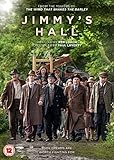
This is my review of Jimmy’s Hall [DVD].

Ken Loach’s heart is in the right place and the injustice suffered by the rural poor in Ireland is a theme which draws him back once again, although the theme seems smaller scale, the violence lower key than in “The Wind that Shakes the Barley”.

In 1932, Jimmy Gralton returns from recession-ridden New York to care for his widowed mother after his brother’s death but it soon becomes clear that he has in fact ended an exile resulting from his construction of a community hall seen as a threat by the Catholic church, since it provided education and encouraged working class people to think for themselves. A legendary local hero, he is mobbed on his return by the youngsters who wish him to revive the hall, and the lure proves too great to resist.

Apart from old political enemies, a major source of tension is the fierce opposition still presented by the local priest who seems obsessed with Jimmy, perhaps in part by the nagging sense that, although an atheist, communist and freethinker, he is in fact a man of integrity. Self-educated on the books from his mother’s former mobile library, Jimmy is also a persuasive speaker well able to counter the priest’s pulpit oratory. Soon, the hall is restored to its former glory, with the added novelty of a wind-up gramophone and the jazz records brought back by Jimmy. The free and joyous dancing to this music is of course the last straw for the priest.

Apart from Jimmy’s battle with the conservative priest,the strongest threads are his relationships with his deceptively meek and simple mother who in fact shares many of his ideals, and with his old flame Oonagh, now married, for whom his love is all the more poignant since they are so well-matched and in sympathy with each other. Despite all this, the plot is a little too thin for the length of the film (109 minutes) and the intended naturalness and apparent use of improvisation sometimes seem to fall a little flat. I agree with reviewers who have said that at times the film smacks of “political theatre” and becomes somewhat wooden or didactic. Yet, there are many engaging scenes and subtle interplay between the characters. Jimmy is convincing and charismatic, and the acting, which I sense may include a number of local extras with speaking parts, is in general very effective.

It was a problem for me that I did not possess a clear enough grasp of the internal politics of early 1930s Ireland to understand some of the political discussions which ensued. However, Loach does not miss the opportunity to draw a clear parallel between the bankers’ greed of 1920s America, which triggered the Great Depression, and the recent financial crisis.

⭐⭐⭐ 3 Stars

Outstanding mainstream drama in Bleak Valley

This is my review of Happy Valley [DVD] [2014].

Catherine Cawood, a tough but honest and decent sergeant striving to do her job in a rundown Yorkshire valley community, is consumed with anxiety over the release from jail of Tommy Lee Royce, the disturbed and violent young thug indirectly responsible for the death of her teenage daughter, by whom he fathered the grandson Catherine feels morally obliged to bring up, even at the cost of her own marriage. "What else could she do?" When Tommy becomes involved once again in serious local crime, her obsession with getting him back behind bars and out of her small grandson's life goes beyond the call of duty.

With its tongue-in-cheek title, since this must surely be one of the saddest former industrial valleys in Britain apart from the lovely scenery, the police thriller succeeds on all counts. It is compulsive viewing, filled with tense edge-of-the-seat moments, yet unlike many similar dramas is highly plausible, with no nagging holes in the plot twists. The quality of the acting is superb across the board, with a sharp script, many touches of humour to ease the frequent grimness of the theme and little need for subtitles.

It succeeds on several levels, not only as admittedly often bleak and bloody entertainment, but also in developing in depth all the characters as believable people, with their strengths and failings, and their complex relationships. The author even manages to evoke a little sympathy for most of the villains, including Royce, with some appreciation of the dysfunctional families and injustices which have moulded them. As the wealthy industrialist whose daughter is kidnapped observes at one point with unintentional irony, "all actions have consequences".

Mid-way, I began to question if some of the violence was gratuitous, but have to admit that the various murders are all "necessary for the plot" plus the skilful direction means that in fact much of the horror is in one's imagination. By the end, I was convinced that this is mainstream television drama that will be hard to better, and wish there was more produced of this standard.

⭐⭐⭐⭐⭐ 5 Stars

L’Absolue Perfection du crime by Tanguy Viel, annotated as study guide by Johan Faerber – L’absolue étouffement de la pensée individuelle?

This is my review of L’Absolue Perfection du crime by Tanguy Viel,Johan Faerber.

I purchased this by mistake, thinking it was an annotated copy of the novel itself. In fact, it is a very detailed “study guide” of the type used to help students pass exams. Perhaps the brevity and clarity of Tanguy Viel’s writing lends itself to being selected for “set texts”.

The novel, which you need to purchase separately, possibly from Amazon.fr, is an account of an attempted “perfect crime”, the robbery of a casino by a small gang in a French seaside town. You know from the outset that matters will not go according to plan. Much of the interest lies in enjoying the author’s distinctive, deliberately repetitive and often rhythmic style, and his playing with time e.g. building up to a dramatic climax which is then described as if “after the event”.

The guide focuses on the rivalry, reminiscent of Cain and Abel, between the “faux frères”, the enigmatic and brutal man of action Marin, and the more passive and introspective narrator, whose name appears to be Pierre although I missed this on my first reading. Pierre strikes me as altogether too articulate and insightful to be a member of a mafia-style gang, but this point is not explored.

The guide rams its points home with an almost hypnotic repetition, so that I would advise reading it after tackling the real thing. I did not appreciate when doing so that each chapter is based on a specific Hollywood noir thriller from the 1950s, so it is useful to discover what these are, although I think that this device gives the novel a somewhat mechanical and contrived quality. Various metaphors are highlighted, such as the frequent references to the rearview mirror of Marin’s car, as a way of indicating a tendency to be backward-looking.

In a very thorough analysis of the book from every aspect, the guide is useful in explaining Viel’s fascination bordering on obsession with the cinema – although this has in fact recently declined. His belief that it is hard to create anything new in writing has led to his continual reference to existing cinematic films in order to construct “remakes” using the written word, a reversal of the usual process, although I would argue that Viel’s more recent “Paris-Brest” is in fact quite original. Perhaps his previous approach has fed this new creativity.

My main criticism of the guide is that it tends to overdo telling us what we should think, and does not leave space for personal speculation and interpretation.

⭐⭐⭐⭐ 4 Stars