The New York Trilogy: “City of Glass”, “Ghosts” and “Locked Room” by Paul Auster – Erudite Brownian Motion

This is my review of The New York Trilogy: “City of Glass”, “Ghosts” and “Locked Room” by Paul Auster.

“City of Glass”, the first part of “The New York Trilogy”, sets up an intriguing situation. The friendless and bereaved Quinn who, writing under a pseudonym, somehow manages to earn a living as the author of detective novels, allows himself to be caught up in a real life case. The bizarre young man, Peter Stillman, mistaking him for the private eye Paul Auster (yes, the author includes himself in the tale), hires Quinn to intercept his father on his imminent release from jail. Stillman Senior has served a long sentence for incarcerating his own son in a room to observe how he develops language. The man is clearly a crazy academic – or have Stillman Junior and his beautiful wife made up the whole story?

It soon becomes clear that Auster has no serious interest in developing the plot, or realistic relationships between the characters. His main concern is to use the book as a vehicle for philosophising on the nature of language, or the meaning of identity and reality, plus to show off his own literary knowledge and theories about such famous works as “Don Quixote”.

At first I did not mind this as I was so impressed by Auster’s own mastery of language. He held me with a chain of insights – the reasons why grief-stricken people gain solace from endlessly pacing the streets of a sprawling metropolis like New York, a shocked understanding of how the obsession with understanding the development of language could blind one to the cruelty of isolating a young child, empathy with Quinn’s jealousy over the sight of Auster at home with his beautiful wife Siri and innocent young son Daniel – a situation made ironical with the knowledge of hindsight as to what happened in reality.

In Chapter 12 Auster, decides to have Quinn begin to “lose his grip” and I rapidly lost interest over the implausible and apparently directionless series of events. Skimming on through the next two parts, with the introduction of new characters and little action, I could not detect any clear thread holding the whole thing together – it all seemed like erudite Brownian motion. So I decided not to invest any more time on it.

I must admit that the bestseller I turned to instead seemed rather trite. Reading Auster has made me question my rejection of a well-written book for its lack of plot and character development, when I am unlikely to do the opposite. However, for a writer of Auster’s talent, I expect all three: style, story and relationships with the power to move me, as he has achieved more recently in “Sunset Park”.

⭐⭐⭐ 3 Stars

Survival in a Kafkaesque World

This is my review of The Betrayal by Helen Dunmore.

A gripping tension builds up in the early chapters as a panicstricken doctor manages to foist onto Andrei the dubious honour of trying to heal the perhaps terminally ill son of Volkov, a high-ranking Soviet official in the dreaded Ministry of State Security.

The book is convincing in capturing what it must have felt like to live through the final months of Stalin's Reign of Terror. Ordinary, decent people learned to keep their heads down and their mouths shut, anything to avoid attracting notice, even to the extent of suffering the harassment of malicious neighbours in overcrowded apartment blocks.

Helen Dunmore is skilful at portraying the minute details of people's relationships, their shifting thoughts and emotions. There is even subtle evidence of sympathy between Andrei and Volkov. She makes us care about Anna, the nursery school teacher whose life has been so restricted through the crime of having a free-thinking writer for a father, her artistic teen-age brother Kolya who is like a son to her, and her principled, sensitive husband Andrei. The fear of the "knock on the door at night", the helpless anger over the mindless destruction of one's possessions by the police, the shock of realisation that so-called friends and colleagues are too frightened to help, all come across vividly.

What could be a grim story is lightened by Dunmore's poetical prose – the descriptions of the landscape, and the wry observations on human nature, as some people spout slogans to wangle their way to the top. I always felt optimistic for Anna and Andrei because they are survivors of the terrible siege of Leningrad – I realised too late that "The Betrayal" is a sequel to "The Siege", but it can stand on its own.

The final chapters do not build up to a strong climax, and the narrative loses momentum, becoming almost dull in places, with some potentially dramatic events reported rather than acted out. This approach may well be "true to life". It may also reflect the author's liking for short stories which do not require the development and maintenance of a plot over many pages.

I admire the quality of the writing (although sometimes the children's author voice slips through a bit patronisingly), the plot idea is excellent. It is only the handling of the denouement that could have been defter.

⭐⭐⭐⭐ 4 Stars

Clear, attractive and informative – but a few gaps in meeting my needs

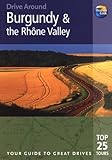
This is my review of Burgundy (Drive Around) by Andrew Sanger.

I am finding this book very useful in helping me to get my head round the detailed planning of an itinerary which includes the Dijon area (Burgundy), reached from Paris (Fontainebleau), and the Rhone Valley. It goes into more detail than the Eyewitness Guide for the whole of France ( a good starting point for an overview) without getting too bogged down in details. The presentation is very clear with a road map for each section, town plans to show key points of interest, and attractive photographs.

My main criticism is the lack of an index at the end to find places quickly e.g. like Geneuille, Chonas d'Amballan or Grignan where I have already booked overnight stops.

The guide would have been of more use to me if it had also included Franche-Comte i.e. places like Besancon, Ornans and Ronchamp, which one is very likely to want to visit when travelling in the Dijon area. So, I have had to invest in a Michelin Guide on Burgundy-Jura as well in order to cover Franche-Comte, which means duplication and adds to the cost and weight of books carried.

⭐⭐⭐⭐ 4 Stars

Bosch Hook lost in Hong Kong Thud and Blunder

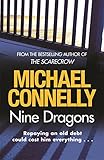
This is my review of Nine Dragons by Michael Connelly.

Why do I persist in reading Harry Bosch novels? The first part of "Nine Dragons" reminded me of the reasons, with the piecing together of evidence from tiny clues, the details of police practice, the convincing relationships between the male characters including hints of tension based on personality and race, together with the flavour of Los Angeles – the dusty wind from the mountains, the houses sprawling over the dry valleys, and great rivers of traffic crawling along the freeways, not to mention Bosch's shameless consumption of artery-clogging fast food.

Although it may be quite unrealistic, I was intrigued by the idea of capturing a still image from a video in order to use the landmarks visible through an open window, including the reflections in a pane, combined with analysis of noises on the video, in order to locate the position of a kidnap victim thousands of miles away in Hong Kong.

However, once Bosch arrives in Hong Kong, everything deteriorates. Connelly's women usually seem over-romanticised to me, and the presence of Bosch's ex-wife Eleanor Wish – the CIA agent turned super-croupier does not help. Perhaps understandably, since he is trying to find his kidnapped daughter, Bosch throws caution to the winds, but in the ensuing thud and blunder, further dragged down by crude plotting and style, I completely lost interest. It seemed a waste of time to bother reading to the end, so I feel obliged to award 3 stars for the first half…..

⭐⭐⭐ 3 Stars

Fate and Nostalgia in Rural Cork

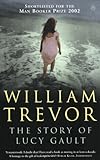
This is my review of The Story of Lucy Gault by William Trevor.

This book has a compelling opening with vivid descriptions of the landscape and rural life on the coast in 1920s Cork – we see the sharp contrasts between the Catholic poor and the local Protestant gentry, who are beginning to suffer attacks from disaffected youths. Much of this is seen through the eyes of the eight-year-old Lucy, and we can appreciate her anguish over her parents' decision to leave the house for the safety of England.

As seems to be a recurring theme for William Trevor, the story is all about the way chance events, and understandable but misguided actions, can wreak longterm damage – often of a subtle variety – in the lives of not only individuals but also those who have contact with them.

Ultimately, the novel succeeds in bringing the main characters, and the reader, into acceptance of fate, even the ability to see some positive outcomes of misfortune, including integrity in the face of adversity.

However, like some other readers, I found the pace of much of the book too slow, although I know this is intentional, since the details of daily life, exploration of minute thoughts and evocation of a former simple way of life are what really interest the author. I thought he had "made his point" by the middle, although some further "loose ends" are tied up in the final chapters.

I also agree that some key aspects of the plot are implausible – but perhaps this does not matter too much.

Although I admire Trevor's writing, the sense of some sentences escaped me, which was frustrating, since his greatness lies in the articulate flow and subtle insight of his prose.

⭐⭐⭐⭐ 4 Stars

Written for Japanese Teenagers?

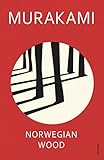
This is my review of Norwegian Wood by Haruki Murakami.

It may help to be 19 or/and Japanese to appreciate this book fully.

At first, I was struck by the power of the uncluttered prose, well-preserved in the excellent translation by Jay Rubin. I enjoyed the vivid descriptions of the Japanese landscape, which I have never seen, and of life at Tokyo University in the late '60s, which tallied in many respects with my memories of studying in the UK at the same time – the half-baked demonstrations, extreme left-wing student leavers who became bourgeois overnight on graduating, and the young people drifting in and out of relationships on the edge of a life which they were unsure how to live. I was surprised how westernised Japan seemed as regards culture, yet this was clearly a superficial layer over deeper traditions and attitudes.

By the middle of "Norwegian Wood" I became bored, as the narrator Watanabe provided a sounding board for a succession of mixed up women, with their self-absorbed and often cringe-making sexual revelations. Although I liked Watanbe, as a thoughtful and essentially level-headed person with a wry sense of humour, the book seemed a little misogynistic to me in that the women were all portrayed as in some ways weaker, and in need of his affection and support.

Once Watanbe had met Midori, I thought I knew how the book would end, but there seemed insufficient development, and a lack of structure and plot, to get there. The focus on suicide was oppressive, although it may be realistic for Japan where I believe young people are very pressurised to study at school, plus there have been recent examples of a "suicide cult" in Britain. The tragedy of a young person's life being blighted by the death of a close friend or lover is tragic, but I am not sure that Murakimi explored this as fully and subtly as he might have done. It all got diluted with appearing "hip and sexy" to paraphrase reviews on the back cover.

Despite my reservations, I shall probably try another of Marukami's books, since I admire his style of writing.

⭐⭐⭐ 3 Stars

Fascinating

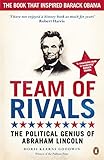
This is my review of Team of Rivals: The Political Genius of Abraham Lincoln by Doris Kearns Goodwin.

I was sorry to finish this engrossing study of the self-educated "prairie lawyer" who, despite a poverty-stricken childhood and youth spent in manual labour, which saddled him with the nickname "the rail-splitter" in later life, managed not only to win the 1860 presidency against much more experienced and illustrious rivals, but to persuade them to work in his cabinet.

The author may view Lincoln through somewhat rose-tinted spectacles – his homely anecdotes for every occasion must have been irritating at times, his tardiness in sacking the preposterous waste of space, General McClellan must have cost many lives and considerable resources, and his inducement of northern Democrats to "swing the vote" in favour of the emancipation of slaves amounted to bribery -even if for a noble cause.

Yet, this seems like nitpicking against the tide of evidence for Lincoln's greatness. He combined unusual integrity, courage, resilience, patience, and a lack of personal vanity and pettiness which made him "above" displays of malice, or the bearing of grudges. In addition to a gift for clear and simple communication, aided by a sharp wit, he applied logic and pragmatism to every situation before making a decision, and all these factors combined to give a distinctive management style which must have been unusual for his day – quite laid-back, egalitarian, consultative and delegating, avoiding a blame culture – although he saw it as his duty ultimately to make the crucial decisions himself.

His rivals are also developed as complex characters – such as the urbane, sociable Seward who was so complacent about winning the presidency that he went off on a long holiday in Europe instead of campaigning, or the pompous Salmon Chase – who disliked his fishy name, but at least wasn't called "Philander" like his sadistic uncle – who obsessively machinated to get elected in '64, unable to appreciate his lack of popularity, yet had a genuine concern to abolish slavery, and was one of the first to welcome the former slave Douglass into his home.

The book really "took off" for me in the chapters on the origin and progress of the Civil War. Although triggered by the issue of slavery – which the southern states wished to retain, and extend to the developing western regions, the ostensible reason was to maintain the unity of the young Republic, which had to prove to the world the value and viability of "true" democracy.

Although the repetition of some details helps the reader to keep track, this would be unnecessary if Goodwin had undertaken a final editing to make the text more concise and streamlined. A list of key characters, time-line of main events, and clearer maps placed at the front for easy reference would have helped. However, these defects apply to most serious history books and biographies, and overall I recommend this as very informative and more gripping than many historical novels.

⭐⭐⭐⭐⭐ 5 Stars

A Cut above the Usual Page-turner

This is my review of The Crimson Rooms by Katharine McMahon.

This is a page-turner, on the cusp between literary and popular fiction: on the one hand, it is well-written with varied, complex characters and a detailed, reasonably watertight plot with plenty of twists; on the other, it is very easy to read with moments of high drama and romance. The heroine Evelyn's wry self-knowledge and "feet on the ground" attitude to life prevent the story from slipping into "Mills and Boon" territory.

Most likely to appeal to women – it would be interesting to know how men rate this novel – it finds fresh aspects to cover in the heavily harvested theme of World War 1. The focus is on its aftermath (1924) where women outnumber men, must often support themselves, yet have to battle to enter the professions such as law. The author uses the knowledge gained as a magistrate to create some convincing court scenes, as Evelyn struggles to develop a legal career, having persuaded a maverick solicitor to take her on. Her cases reflect the times: a man who may have shot his young wife out of jealousy, having been destabilised and brutalised by the effects of war; the feckless but loving mother in danger of having her three children shipped off to Canada under a "hidden" because clearly controversial method dealing with the problem of children in care. All this takes Evelyn's mind off her claustrophobic domestic life in an all female, convention-bound household, stultified in grief for the loss of her brother James at the Front.

The book commences with the arrival of Meredith, a charismatic young woman claiming to be the mother of James's son – the appealing six-year-old Edmund,who bears a striking resemblance to his father. Is Meredith genuine? What does she hope to manipulate out of the family? Meredith's unsettling effect, and the opportunity to release her bottled up affections on Edmund, make Evelyn ripe for a love affair in her emotionally suppressed state.

The structure of the story lends itself to a TV serialisation. The beginning is perhaps rather hackneyed: Evelyn imagining her brother's death through what turns out to be a dream, serving as a dramatic preparation for the sudden appearance of Meredith and Edmund in the middle of the night.

Where the pace may seem slow at times, it could be realistic in showing the frustration of trying to obtain evidence and continually drawing blanks in a legal investigation. It also gives scope to show the development of Evelyn's thinking, and her relationship with the other characters.

I did not mind the somewhat open ending, which the author seems to favour, since it seems "more like real life" and leaves the reader free to imagine a preferred future for Evelyn. The mixture of "success" and "failure" at the end also adds authenticity.

As regards reservations:

* although many scenes are genuinely moving, those in which key aspects of the plot are revealed strike me as overly melodramatic. In these, characters such as Meredith or Evelyn herself appear too articulate, effectively telling the reader in lengthy paragraphs what has happened rather than communicating convincingly with another character in a moment of high stress.

* the idea of Meredith having wanted to be a nun is implausible, and she needs to be older than 29 in the story to have been a confident and proficient nurse aged 22 at the time of her brief meeting with James.

* the book would have gained from developing more fully Nicholas's personality and motivations, and his relationships with the Hardynge family.

* people's reactions, such as those of Nicholas (over what Evelyn has to tell him) and Breen (over his client Wheeler's wishes) in the final scenes (can't be more explicit) appear to me somewhat unlikely.

* the details of the ending are needlessly rushed, after the "slow burn" of the main part of the novel.

Overall, to the extent that this is a gripping and thought-provoking read, I recommend it.

⭐⭐⭐⭐ 4 Stars

Still Waters Run too Deep

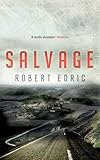
This is my review of Salvage by Robert Edric.

A drama set several decades into the future, with Britain suffering the effects of climate change, tempted me to try once again to read a Robert Edric novel. I was very impressed by the discovery of the quality and striking originality of his writing through "In Zodiac Light" a couple of years ago, but have struggled since then to find another of his books that repeats the experience, apart from "Gathering the Water", which was a bit of a let-down plot-wise, but beautifully written, creating powerful visual images.

In "Salvage", Edric continually promises some dramatic incident or moving relationship, but it never quite comes to pass. Also, in this case, the descriptions of the landscape and the narrator's activities and encounters with the locals are quite dull, plus I had trouble understanding why anyone should build a new town in the depths of Scotland. There was too little to compensate for the lack of a narrative drive, and eventually, with great regret, I gave up…..

⭐⭐ 2 Stars

Fascinating topic- shame about the purple prose

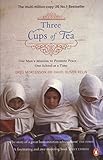
This is my review of Three Cups Of Tea by Greg Mortenson,David Oliver Relin.

I was more interested than I expected to be in this account of the American Greg Mortensen's obsession with building schools in the remote, mountainous northern areas of Pakistan and Afghanistan. This was despite the often toe-curlingly cringe-making journalese and frequent fulsome adulation of Mortensen – for some reason never just called "Greg" by David Oliver Relin who actually wrote the book.

The book succeeds on three counts: it conveys the wild beauty of the landscape, it makes us appreciate the dignity, intelligence and humour of the tribal people who live in communities, close to nature, in a manner which seems morally superior to that of the commercialised western world, and it also provides quite an effective potted history of an area which affects us all, in the light of the activities of Osama Bin Laden, the endless war in Afghanistan and instability of the nuclear state of Pakistan. Reading between the lines, "Three Cups of Tea" also provides an intriguing study of how Mortensen's background and personality have equipped him to achieve his goal.

The journalist Relin was apparently hired to create a marketing tool – along with the children's and Kindle versions of the book – to raise money for the cause. This is fair enough in view of the compelling argument that building schools to reduce ignorance is one of the most effective ways of countering the rise of terrorism amongst the disaffected youth whose lives have been ripped apart by war, for which they largely blame the US.

I suspect that some anecdotes may have gained in the telling, not least because Relin takes the liberty of describing Mortensen's past thoughts, even his dreams, in as great detail as if they are his own, and recreates verbatim conversations from years ago. I was irritated on almost every page by the style – an overloaded lorry "fishtailing" up rutted tracks between mighty "daggered" peaks that "garlanded" the town, and so on; Mortensen pacing round "powerless" rooms, meaning that they had no electricity, or sleeping until "motionlessness awoke him" ….. Yet, if this book gives some gung-ho Islamophobic Americans pause for thought it will have served a useful purpose.

⭐⭐⭐ 3 Stars