This site will share with you hundreds of book and film reviews written since 2009. Also a chance to discuss these reviews together with some of my creative writing to be added.
This is good for improving your "streetwise French" and provides an insight into the pressures on the children of Algerian immigrants growing up in French cities such as Lyons. There must be more than a touch of autobiography in Azouz Begag's portrayal of Beni, by turns cocky or insecure and self-deprecating. We see him facing prejudice at school, from the police, his would-be friend's mother and in his attempts to forge a western-style social life.
There are some moving moments: Beni persecutes his downtrodden sister, but feels sorry when he upsets her, yet cannot hug her since that kind of physical contact simply does not occur in his culture. He half-despises his father, a manual worker on construction sites, desperate for his son to succeed, trying to exert his authority by force if need be, but dependent on Beni to write letters for him. Yet despite his urges to be a normal teenager, Beni cannot break free from his father's values. When he is denied entry to a porn film (on grounds of age) he consoles himself with the knowledge that at least he can go home and look his father in the eye without lying.
Beni tries to survive by playing the comic, and fantasising about becoming a comedian or, in the meantime, realising a romance with a blonde class mate.
The story is really a set of anecdotes which you may find entertaining, along with Beni's tendency to misunderstand French words, despite his tactless habit of correcting people's grammar. It may appeal mostly as a novel for teenagers, but to be honest I found it quite tedious after a while.
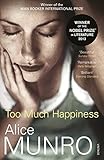
I have heard Alice Munro described so often as one of the greatest contemporary short story writers that I had high expectations for this book. The length of the stories surprised me, together with her frequent tendency to ramble from what seems to be the main thread of each tale. Then there is the tendency to skim in a few pages through decades of a character's life, often telling us what to make of people and situations, rather than implying or revealing these aspects. Yet from the outset I thought I could see the reasons for Munro's fame in her easy, confident and very readable style, the rapid building up of situations and characters, the occasional very insightful comments which chime with one's own experience of life, clarifying some point which has lain dormant in one's own mind, and one suddenly recognises to be true.
I was held by the continuous sense that a story is heading somewhere meaningful and thought provoking, and by the knowledge that, at any point, she may insert some dark and shocking event: a man murders his children in a jealous rage, a widow realises that the gas man she has admitted to her house is in fact a crazed killer. I suspect that most people will find that some stories leave them cold, but they are moved by a few to which they can particularly relate, such as a mother's sense of loss before steeling herself to accept that her son has "dropped out" to become an anarchist.
I agree with the reviewer who found the title story "Too Much Happiness" hard to engage with – it reads like a draft of a story, based on research notes – but I do not mind that it is "out of character" with the rest in being the tale of a female Russian mathematician in the late nineteenth century, rather than a series of tales of small town Canadian life – a kind of Lake Woebegone with a sting in the tale. Also, the title seems inappropriate for the collection as a whole, since most of the themes are somewhat bleak.
Although these stories are admirable and original, characters appear implausible at times and plots often seem very slight with underwhelming downbeat endings(as in Wenlock Edge) and left me ambivalent – not sure what to make of some stories and wondering whether I had missed something! I suppose that the scope for debating what each one means adds interest – good for reading groups and so on! I was made very aware of Monro's age with many of these stories harking back to a distant youth, and reflecting on a whole lifetime (as in Face). I plan to read some of her earlier work to see if the stories have a tighter structure and make more of an impact.
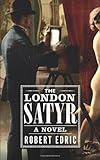
I found this the most successful of the six Edric novels I have attempted – two of which I abandoned, but I keep returning to his work for the clear, striking prose – excellent in creating atmosphere and describing scenes – and his concern with people's motivations and relationships.
The theme is an intriguing one – moral corruption beneath a layer of respectability in 1890s London. The topic has not yet been done to death, although covered by the recently televised "The Crimson Petal and the White", an overblown rose next to this much shorter, more narrowly focussed work.
Webster is a photographer employed by the Lyceum Theatre under its flamboyant actor-manager Irving and his control-freak sidekick, Stoker. Webster has drifted into a financial arrangement with Marlow, "the London satyr", the suave pornographer who needs him to "lend" theatrical costumes for use in sleazy photo sessions. Webster is an enigmatic man. Perhaps he likes the secrecy, the risk of detection, the fact of not being quite what he seems. Perhaps he feels his own guilt is minimal, since he is merely a supplier, an observer of a seedy but intriguing world, without knowing exactly what is going on. The murder of a child prostitute by a man in Marlow's circle sets up a criminal investigation which forces Webster to think about whether and how to protect himself.
The fact that Webster often seems weak and passive make him a less attractive character. Why doesn't he stand up to his greedy, manipulative daughter or over-familiar, cunning maidservant? Yet some of the most moving passages in the book provide the explanation for his apathy and for his loss of connection with his wife Alice, for both have been devastated by the premature death of their younger daughter.
Edric also harnesses the late Victorian obsession with the spirit world. Grief has led Alice to set herself up as a medium. Webster's scepticism is a further barrier between them, but he plays along, even supplying information that will help her act out convincing contacts with the spirit world. He makes no attempt to step in, even when it becomes clear that her main motivation is the morbid delusion that dead souls are speaking to her through her deceased child.
At first, I found the lengthy dialogues entertaining, but soon began to feel that they are too much of a substitute for real action. The continual game-playing, with characters not meaning what they say, or saying what they mean, begin to seem contrived. Some scenes appear wooden and clunky, perhaps because the author has laboured over the words at the expense of the narrative drive. Also, too many of the characters – be they a Jewish immigrant, a female procurer or a servant – speak in the same subtly ironic "voice" and very articulate phrases as the educated middle-class characters.
I felt for a while that the plot is too slight to sustain the book. In fact, it manages to work up to a kind of climax. The inconclusive ending – the story simply stops – disappointed me at first, but then seemed to be quite reasonable. Edric has made his point, and leaves you to draw your own conclusions about how Webster goes on to live out his life.
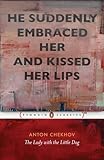
Chekhov's two hundred or more short stories can now be downloaded free of charge, so this selection of thirteen of them needs some rationale for the choices made. Although the notes at the end are interesting, say as regards the extent to which Chekhov's writing was constrained by the censors who cut out large tracts, I would have liked more background explanation of how the details of his life and his personality affected his writing.
Assisted by Ronald Wilks' excellent translations, the stories flow along and are very easy to read. I was struck by Chekhov's evident love for the countryside, his frequent flashes of humour, his rich cast of characters including many vivid little pen portraits, and his complex attitudes towards the peasants: he is repelled by their ignorance and boorishness, but realises that some of this is the fault of the wealthy people, like himself, who have deprived them of opportunities. A recurrent theme is for people to be dissatisfied with their lot, stultified by the boredom of provincial life and very indecisive about making changes, in particular embarking on a long-term relationship. I wanted to know to what extent these attitudes were Chekhov's own.
The rambling structure of many of these stories surprised me, together with their length, and inclusion of chapters! I can see why "The Lady with the Little Dog" is so famous since it analyses the narrator Gurov's inner thoughts so well. "And only now, when his hair had turned grey, had he genuinely, truly fallen in love – for the first time in his life."
My favourite story was "My Life", almost a novella at ninety pages, which seems to me to encapsulate everything to be found in all the other stories as regards human relationships and the flaws in Russian society. In what is subtitled "A Provincial's Story", the narrator actually makes some decisions – to give up his middle class heritage, and work with his hands, and to marry the young woman to whom he feels attracted. Inevitably, his actions bring some sorrow, and the story ends on a philosophical rather than positive, and poignant note.
I like the farcical wit of "Man in a Case" – the "solitary type…like hermit crabs or snails….always seeking safety in their shells… because the real world irritated and frightened him and kept him in a constant state of nerves." At times, as in "Peasants", Chekhov's sense of the ludicrous seems to go overboard. Other stories like "In the Ravine" seemed to me to be too "baggy" and lacking focus, in need of a good edit.
Perhaps I can only take these stories in small doses, but I am pleased to have discovered Chekhov as a short story writer and will definitely seek out more on the net from time to time.
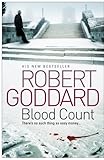
The latest of Goddard's annual novels starts with a topical and intriguing dilemma. Edward Hammond, a successful surgeon, is waylaid by the daughter of a Serbian warlord, Dragan Gazi, now standing trail at The Hague for his crimes. Years ago, Hammond performed a life-saving liver transplant on Gazi for a very generous fee. Unless he now performs a further service, Gazi will claim that he was responsible for the murder of Hammond's estranged wife, acting at Hammond's request. Can Hammond risk refusing to be blackmailed, even for something he claims not to have done?
Goddard leads us through one of his famous twisting plots, but this is one of his best, after a few lean years of formulaic pot-boilers. Not only does he demonstrate once again the page-turning ability to create tense situations from which you cannot see how Hammond can possibly escape, but he also raises some interesting issues. Should Hammond have refused to operate in the first place? Was ignorance of the full extent of Gazi's criminality a sufficient excuse? How culpable is Hammond for the death of the thousands whom Gazi went on to kill, after receiving his life-saving liver? In exploring this, there are some lively dialogues, say with Hammond's puzzled and accusing former brother-in-law.
There is real suspense, since we know Goddard is prepared to bump off even sympathetic characters for the sake of a plot twist.
Some of the male characters are quite well-developed, always with the proviso that you never know whom Hammond can trust. As is often the case, the women seem a bit more two dimensional or shadowy to me, although the adoptive mother of Gazi's son is a convincing character in a moving sub-story.
One criticism is that Hammond seems very trusting and naive at times. Of course, this is necessary for the plot twists to work! The quality of the writing jars at times – a Cambridge graduate, Goddard must be able to do better than this – I'm sure his earlier novels were more literary, but he clearly doesn't need to worry about style to hook his readers.
Overall, this is a thoroughly entertaining read that will not leave you feeling cheated or that you have wasted your time.
There seems to be some confusion over the sequence of the Harry Hole novels, perhaps because they have not been made available in English in the same order that they were first published in Norwegian.
The Redbreast", the "first" novel in the Harry Hole crime series to be translated into English has a more interesting, plausible and moving plot than the "third" story, The Devil's Star which I read before this – unwisely as it almost put me off reading any more!
"The Redbreast" is an effective pacy mass market crime fiction, with a more serious thread running beneath it. Like Henning Mankel and Stieg Larsson, the author Jo Nesbo draws on the theme of pro-Nazi supporters in the Scandinavia that we always like to think of as so progressive and liberal. Nesbo's Norway has the added interest of a country that still feels some shame over being overrun by the Nazis, while the idealistic young men who went off to fight with the Germans against the Russians in the belief they were defending themselves against Communism have grown into pensioners who harbour resentment over being punished for this after World War 11.
I know I could have used Google, but would have appreciated a brief note at the end to summarise the key historical facts and political parties mentioned in the story.
Also, like some other readers, I found the flashbacks to the 1940s trenches in Eastern Europe a bit difficult to follow. I think this is because they are so short, which also means makes it harder to establish a rapport with (in some cases even remember!) the characters. Plus the details are no doubt deliberately confusing because Nesbo wants to sow clues, including red herrings, without giving away the final plot twists.
It took me a while to get into the plot – I think this happened when the flashbacks become less fragmented or cease for a while.
I liked the fact that Harry, although clearly a maverick, has not yet turned into the dreary drunk of The Devil's Star – although he has good reason to be depressed over the murder of a colleague, which I thought was described very vividly, with a strong build up of tension, but perhaps deserved to be revisited more at the end, to flag up the loose ends and suspicions that Harry carries into The Devil's Star.
For lovers of crime fiction in an interesting setting, I recommend this series, although I suspect the quality of the writing is much better in the original Norwegian. Also, I strongly advise you to read them in the right order, as I now intend to do – I think "Nemesis" comes straight after "The Redbreast" in time. If not, I'm sure someone will put me right!
It seems that modern historians often feel the need to Brian Coxify themselves by producing very fat books which set out to make complex topics accessible to the general reader, using lots of chatty language and references to popular culture.
The rise of the east would seem a more relevant theme at present than the past dominance of the west, but perhaps because the former has been quite well-covered recently , Ian Morris has chosen to focus on "why the west rules – for now". This is potentially a very interesting subject and I wanted to read a coherent analysis of the difficulties of defining precisely "east" and "west", and of the shifting relationships between the two, but this work frustrated me so much that I had to abandon it.
It all seems very wordy, sometimes stating the obvious, often switching from one field of study to another, say from astrophysics to paleoanthropology on the same page. Yet, although Morris gives more than three pages to the (to us) little known Zhou Dynasty in China, some time in the distant past, he makes only a passing reference to say, Singapore, surely a very interesting example of recent development to rival many western states?
Judging by the large number of catchily titled subheadings – "The Elephant in the Room", "Hotlines to the Gods", "The Gods made Flesh" or "The Wild West" to take the first four in the chapter on "The East Catches Up" (referring to a past period), perhaps we are only meant to dip into the book. But that surely means losing sight of the "unifying theory" – whatever that is. I felt I was being patronised by an attempt to popularise challenging concepts e.g. Neanderthal man grunting "Me Tarzan you Jane", past figures likened to Mafia bosses, even Indiana Jones, those subheadings again such as "Mice in a Barn", or entitling a graph on the health of US army veterans, "Be all that you can be". Yes, the range of topics covered is mind-boggling.
Then there are the meaningless maps, say Figure 5.4, "The chill winds of winter: climate change in the early first millenium BCE" which includes arrows which do not show any climatic change at all. Or Figure 1.2 defining the Movius Line, an early division between west and east according to types of stone axe used – only why does the line run so precisely through the middle of what is now France, and why say that the eastern dwellers didn't need elaborate hand-axes because they had access to bamboo when this may have been the case in east Asia, but hardly seems likely in, say modern Denmark? I could go on for ever, like this book. Take Figure 5.1, "The dullest diagram in history, social development" which shows an upward trend for the west, consistently above the east for 1000-100 BCE. My question is, how can you have such a precisely calibrated vertical axis to show social development – why not just say it doubled, and the west as a whole consistently had the edge?
This book seems to be an over-ambitious, rambling mess. Select a page at random and find the author galloping through, often back and forth between, several centuries. There are some interesting facts and anecdotes on the way, but some of the simplistic theorising got my hackles up. "There are basically two ways to run a state…high end and low end strategies". This is expanded at some length (compared with the usual grasshopper approach), but left me unconvinced
Buried within its 645 pages, there may be a valid theory. However, it is lost through a lack of editing and self-restraint – all too frenetic and chaotic.
Reading a thorough well-written history of say, the United States or the Soviet Union or China or Byzantium seems to me to contribute much more to one's overall understanding of changing fortunes between the elusive concepts of east and west. And what about the Aztecs and the Incas?
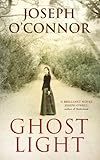
I enjoyed "Star of the Sea" and admire O'Connor's desire to experiment, in this case moving from the pace of a vigorous, oldfashioned yarn (Star of the Sea) to a very different kind of novel – much shorter, slower moving, introspective and filled with memories and flashbacks. It begins with a povertystricken, alcoholic old woman recalling the time spent years ago with the much older, long dead Irish playwright Synge.
The structure of the book is quite "original", making demands on the reader to suspend all usual expectations and "go with the flow" as O'Connor pursues Irish streams of consciousness and recreates past scenes, sometimes writing the story of Molly Allgood's relationship with Synge in the form of a scene from a play.
The quality of the prose is undeniable – beautiful, carefully constructed descriptions, and O'Connor conveys well a sense of loss and nostalgia, but for me the work lacks pace, and I cannnot engage with the characters as I should. I felt ashamed to find it so hard to read and may return to it – but I fear that the lure of another book will always draw me away.
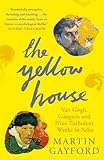
I thoroughly enjoyed this biography, which conveyed very clearly Van Gogh's tortured personality, with all the classic symptoms of manic-depression, which nevertheless seemed crucial to his genius – the striking use of colour and brushstrokes, and the disregard for the conventions of art. If modern mood-stabilising drugs had been available, he would probably have been a mediocre artist, if he had painted at all. I had not realised how prolific he was, creating a relatively large number of paintings in barely a decade. Sadly, these only began to sell after his death, so much of his life was spent worrying about money, and feeling frustrated by his inadequacy, since if others did not recognise his talent perhaps it did not exist.
His distinctive painting style is analysed in detail, again with great clarity, as is the very different style of his sometime friend Gauguin. The intriguing relationship between the two is also brought out – including the brief period in which Van Gogh mutilated himself after a rift between them, and Gauguin was initially accused of attempted murder on his return to their shared house in Provence.
As other readers have complained, my only criticism is the poor quality of the illustrations, particularly where they are black and white versions of paintings by two artists for whom colour was an essential factor.
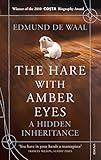
I read this out of curiosity as to why it is so popular, plus I was intrigued to know more about the fabulously wealthy Ephrussi banking dynasty, after seeing pictures of their beautiful former palace in the south of France.
At first, I enjoyed de Waal’s disjointed approach to piecing together of the details of his forbears’ lives, although his aim is never quite clear, even to him on his own admission towards the end of the book. He is specific about not wanting “to get into the sepia saga business..some elegiac Mitteleuropa narrative of loss” but I am not sure he totally succeeds in this. The characters often seem quite shadowy and thin, perhaps because, as a minimalist artist, De Waal is really more interested in objects.
His love for the netsuke, skilful Japanese carvings of everyday objects, plants and creatures, comes through strongly and I came to appreciate the way they form a constant factor, holding the shifting events together.
However, I nearly gave up on the book in the descriptions of great-great-uncle Charles’s collections of paintings and artifacts. It was not just a revulsion over all this acquisitiveness, although I admit that many beautiful objects would never be made without the rich benefactors to commission them. I also felt an idiot reading about paintings and the feel of tactile objects which I could not even see. Then I came across the anecdote about the tortoise whose shell was encrusted with jewels so that it could alter the appearance of a Persian carpet as it crawled across it. This inspired me to press on – I hit on the idea of downloading from “Google Images” copies of all the paintings referred to, to read in conjunction with the descriptions. This made all the difference so it is a pity the publishers did not see fit to include such pictures in the book – but they’ve achieved a bestseller without this, of course!
I thought that the escape of the author’s grandparents, with the patriarch Viktor, to the cosy world of Tunbridge Wells would haunt me less than the tales of the grimmer fate of many humbler Jewish families. However, it is moving to imagine Viktor investing loyally in Austria, only to have his house vandalised and to be deprived brusquely of all his possessions – then to be left in a state of limbo, in which his broken wife probably committed suicide.
Although the book rambles off in a rather protracted conclusion – it seems as if it could go on for ever, overall it is an unusual and thought-provoking take on the stories that objects tell.