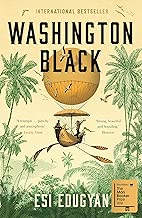
Born into captivity in 1818 on the inaptly named Faith Plantation in Barbados, George Washington Black wields a hoe to weed the fields from the age of two, progressing to cutting the sugar cane by the time he was ten years old, with only Big Kit, the tough, superstitious slave woman from Dahomey to look out for him. The arrival of a sadistic new master in the form of Erasmus Wilde brings a turn for the worse in an already bleak situation, Big Kit tells “Wash” of her plan to kill them both, as a means of escape back to freedom in their African “homeland”, but fortunately for him, holds back from committing this extreme act. Wash then catches the eye of the master’s brother Christopher, known as “Titch”, a very different man, liberal-minded and obsessed with scientific discoveries, including the perfection of his “cloud-cutter”, a kind of hot air balloon for which Wash will “provide ballast” but also prove useful as an assistant, with a natural talent for drawing.
When Wash and Titch are forced eventually to escape from the plantation, the book becomes a mixture of adventure yarn and right-of-passage novel. The scene moves from Barbados to England, even Morocco, via America and Nova Scotia. Undoubtedly original and imaginative, the prose includes some striking passages, such as the description of the octopus which Wash encounters and catches when he has somewhat unbelievably dived down to the shallow seabed with minimal training.
I chose to read it partly because I was so impressed by Esi Edugyan’s earlier work, Half Blood Blues, with the added incentive that both books were shortlisted for the Man Booker Prize. However, I have a number of reservations. The plot hinges on some highly implausible dramatic incidents, which I suppose could be accepted on a par with “magic realism”, but there is also a reliance on far too many unlikely coincidences. It is frustrating to know that the book was inspired by real events, without knowing exactly what they were.
I realise that the dialogues may be intended to reflect the speech of the period, but they often seem stilted and artificial, while apart from Wash, the characters are not developed as rounded, convincing individuals. Although Wash is a sympathetic hero, I did not believe that an illiterate and brutalised slave could narrate this tale at the age of only eighteen, using such a sophisticated vocabulary and displaying so great a level of knowledge and understanding, based on perhaps a maximum of four years in Titch’s company, spending the rest of the time in unskilled manual labour. This seems like yet another case of a first person narrator being given the “voice” of the author, a problem which could have been avoided by writing the whole thing in the third person.
In its defence, the book also includes some intriguing themes, such as the extent to which, perhaps because of suffering in early life, some of the main characters cannot sustain or even form relationships, and are driven to wander rootlessly through life, even viewing death as a means of escape to freedom. Another is how, even when he is technically free, Wash may still be exploited by white men who perceive themselves as liberal and anti-slavery.
In the case of this uneven novel with brilliant patches, duller tracts which lack narrative drive, and an ambiguous ending, I was left a little unsure as to what the author was trying to achieve.


![Laetitia Rodd and the Case of the Wandering Scholar (A Laetitia Rodd Mystery Book 2) by [Saunders, Kate]](https://images-eu.ssl-images-amazon.com/images/I/41soCKapS9L.jpg)
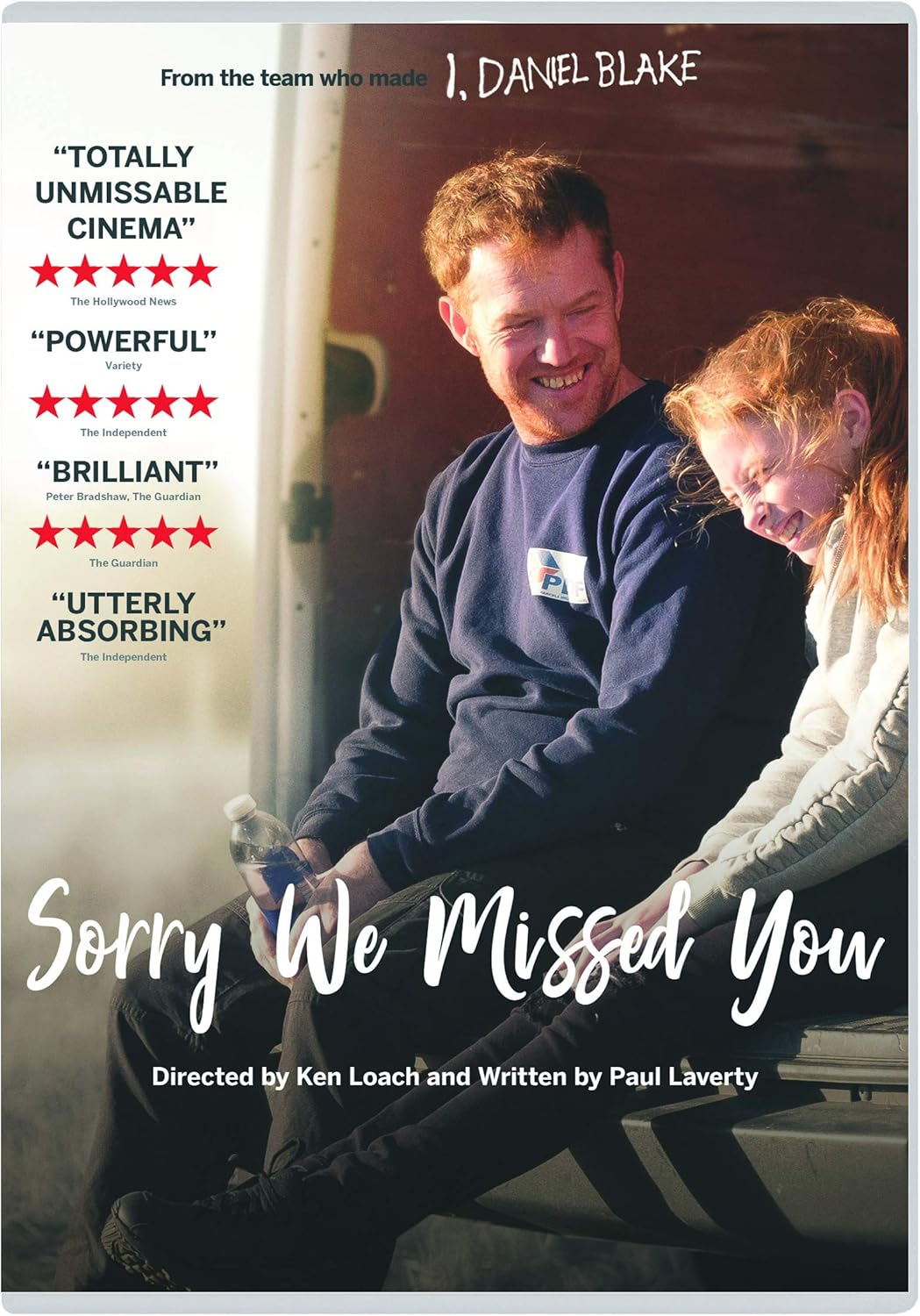 Having exposed the injustice of the benefits system in “I, Daniel Blake”, Ken Loach has turned his forensic lens on the iniquities of the gig economy.
 Despite its dry title, this short, unusual novel is a riveting masterpiece.
![Official Secrets (DVD) [2019]](https://images-na.ssl-images-amazon.com/images/I/81eJzA2bxDL._AC_SX342_.jpg) I remember well the 2003 one million-plus people’s London march in the vain attempt to prevent the Iraq War, likewise President Bush’s refusal to wait for the completion of UN weapons inspector Hans Blick’s investigations in Iraq before launching an attack, together with the UK Parliament’s decision to support the US militarily on the basis of what proved to be the “dodgy dossier”, falsely confirming the Iraqi capacity to launch weapons of mass destruction on Britain in 45 minutes.
I remember well the 2003 one million-plus people’s London march in the vain attempt to prevent the Iraq War, likewise President Bush’s refusal to wait for the completion of UN weapons inspector Hans Blick’s investigations in Iraq before launching an attack, together with the UK Parliament’s decision to support the US militarily on the basis of what proved to be the “dodgy dossier”, falsely confirming the Iraqi capacity to launch weapons of mass destruction on Britain in 45 minutes. This is an autobiography which aims to avoid “sentiment”: “The point is not to speak of the personal”. Instead, referring to herself in the third person, or writing collectively as “we”, Annie Ernaux adopts a fragmented approach which tends to distance the reader from her.
 When Ainsley Channon finds that his son is not unexpectedly making a hash of running the Paris branch of his piano manufacturing and sales company, he sends his protégé, young Scottish piano-tuner Brodie Moncur to use his initiative to improve business. In the process, Brodie becomes infatuated with Lika, a beautiful Russian aspiring opera singer. Their relationship has to be conducted in secret, since she is the mistress of the once celebrated but now physically declining and alcoholic pianist John Kilbarron. From the outset it seems doomed to fail, owing not only to Kilbarron’s jealous and unstable character but also the menacing presence of his “minder” brother Malachi, who may have designs on, even some hold over Lika as well.
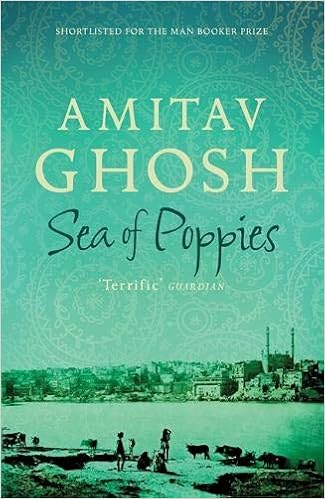 The first book in the “Ibis” trilogy, named after the sailing ship which is the setting for some of the action, “Sea of Poppies” focuses on the C19 opium trade operated by the ruthless East India Company. It begins in rural India, where Deeti struggles to make a living from the poppy harvest which has replaced the crops which at least guaranteed a level of self-suffciency. She is resigned to marriage with a man who has become addicted to opium to ease the pain of his wounds, gained in fighting for the British colonialists. The fact he is employed in an opium factory does not help.
 Antenna Reviews