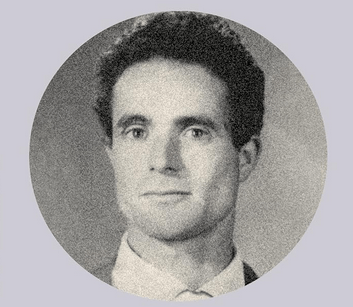
The troubled relations between France and Algeria, its former colony, have inspired a number of novels including, “Un homme sans titre” in 2022, translated as “A man with no title”. In this, Xavier Le Clerc pays homage to his father, Mohand-Saïd, an illiterate but resilient man, by tracing his course from desperate poverty in Algeria, to a dead-end job as an immigrant in a Normandy metal factory, still barely earning enough to feed his large family.
Perhaps because Mohand-Saïd was so uncommunicative, Le Clerc had to resort to quoting Albert Camus to give a fuller sense of the depth of deprivation suffered by his father in early life, living on “weeds and roots”. Camus himself had written a powerful novel on a similar theme, “Le premier homme” (The First Man), unfortunately unfinished because of his early death. This is a fictionalised autobiography of an apparently slightly less grim childhood, which provides vivid images of Algeria and observations on the social and political situation there in the first half of the C20, to which Le Clerc has little to add.
The early chapters make harrowing reading, but give pause for thought. As Mohand-Saïd’s mother waited in vain for the return of a husband who probably came to grief on the way to or from work rather than be guilty of abandoning her, the eight-year old boy had to work. This included driving a donkey laden with charcoal which would be confiscated if he were caught, because it had been produced without a permit. This was probably the only illegal act in which Mohand-Saïd ever took part, unlike some of his own children and their friends who were tempted into crime by the lack of opportunities. This is assuming that he did not collaborate with the rebel movements against France which sprang up in the 1950s. Nearly fifty years later, he confided to his son that he was tortured by French soldiers, but for reasons which remain unclear.
Independence, when it came, did not bring employment, so Mohand-Saïd responded to a recruitment campaign and boarded a boat to Marseilles, with no choice as to type of work, or where it would be located. In due course he made an arranged marriage to a much younger cousin, brought over to France only in 1978 when the French government permitted such immigrants “the right to lead a normal family life”. Occasional trips back to Algeria by his wife and children, loaded with gifts and tales to impress relatives, masked what was just a different form of poverty. Mohand-Saïd endured the situation since he lacked the capacity to change, but his frustration would burst out in occasional violence against his children.
The last forty pages or so of this short novel take a sudden change in tack, with a focus on Le Clerc himself. An early love of reading set him on an academic path to professional employment and success as a novelist and poet. At the same time, his desire to live as a gay man created a rupture with his family, whose culture made them feel “dishonoured” by this. It is only in the final chapter that the author explains what should have puzzled the reader: the very French-sounding name “Xavier Le Clerc” which he has chosen to adopt formally.
Le Clerc ends with a lengthy letter, addressed to his father. Written after his death, it brings together the strands of their lives to express a final understanding of the silence, punctuated by rage, of the man he once thought mad.

