Insights into the rural soul

This is my review of Marie DES Brebis by Christian Signol.

This is the true story written by Signol in the first person to capture the oral memories of Marie, shared with him in her old age. Found abandoned as a baby and brought up by a kindly shepherd in the remote Causse region of Quercy, Marie's life as a shepherdess, mother and husband of a quarryman spans the two World Wars and the technical advances which first disrupted and then destroyed her peaceful existence.

In a vivid account of life in a French village from the early 1900s, we see Marie taking her bread to the communal oven to be baked, her linen by cart to the washhouse twice a year, and the vital social contact she gained from all this, as from the round of traditional festivals in a community where everyone is expected to take part and support each other.

At first, I found the narrative rather sentimental and banal, as when Marie marries, when she is old enough, the farmhand sent to assist her guardians, as Signol informs us in advance as soon as Florentin makes his first appearance as a young boy, just as we are told on the birth of Marie's daughter that she will have a mind of her own and leave home at the age of eighteen.

Then, as harsher blows strike her, I began to realise that Marie's simplicity, acceptance of fate and positive attitude to adversity are not just a somewhat mawkish saintliness, but the result of her closeness to nature, of the long periods spent alone, almost meditating, observing subtle changes in the landscape and weather and the insignificance of mankind in the universe. When, in late middle age, she visits Paris, Marie is appalled by the lack of community spirit, as people pass each other in the street without any greeting, devoting themselves to acquiring material possessions. Initially, she criticises the young rioters of May '68 for protesting when they have so much, but then she realises that their "inner souls" are seeking something other than the pursuit of money, possessions and wealth.

This is a good way of practising French as the language is crystal clear (apart from the patois), with a smattering of useful idioms. It's not "great literature" but provides an insight into the mind of a good-hearted woman experiencing the undervalued pleasures and vicissitudes of rural life as it gradually crumbles away under inevitable forces of change.

⭐⭐⭐ 3 Stars

A quoi on sert?

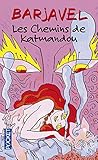
This is my review of Les chemins de Katmandou by Rene Barjavel.

Beautiful but mentally fragile, Jane is shattered to catch her father with his lover. Anchorless, she drifts on the hippy trail to Katmandu. The young Frenchman Olivier travels there as well, but for very different reasons. He is an angry young man, the bitterness over his unknown father and affectionate but neglectful mother twisted into an aggressive desire for change, leading him to fight on the barricades in the violent Paris student demonstrations of 1968, which leave him disillusioned.

Nostalgia for the '60s drew me to this novel, although Barjavel, who was almost sixty when he wrote this, has an older man's contempt for the hippies' self-delusion in seeking mystical peace and love in drugs. At first, I felt unengaged by the fragmented storyline and scenes of gratuitous violence involving characters I had not been given time to know. Then, I was hooked by the highly visual descriptions of Nepal. These aspects all seem to stem from the fact that the novel was in fact based on the 1969 film for which Barjavel wrote the script.

Often gripping and moving, sometimes ludicrous, even a little crass, this book is "a good read", but it has a thread of negativity – "What's the point of anything?" I took from this book the message that life is transient, we are all "dust to dust". Western materialist, "can do" culture may be pointless and eastern fatalism and acceptance closer to the mark, but once you have gained a sense of the rational, and the need to act, it is hard to lose it.

⭐⭐⭐⭐ 4 Stars

Resistance: Memoirs of Occupied France by Agnes Humbert – Fighting to prevent war

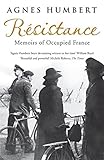
This is my review of Resistance: Memoirs of Occupied France: Translated by Barbara Mellor by Agnes Humbert.

Although I read this in French, which I would recommend for the natural, unpretentious style and vivid idioms, these comments may be useful for the English version.

An early feminist with the confidence of a senator's daughter, left-wing with a career in a Paris museum, two grown up sons, divorced from her artist husband, when the Vichy government decided to collaborate with Hitler, Agnes Humbert felt obliged to take action. Her "Journal de Résistance", for practical reasons probably written mainly after many of the events covered, is less about her work typing and distributing propaganda, and much more an account of life as a political prisoner, sent to Germany as a slave worker.

She makes us aware of the ingenuity of prisoners, their overwhelming desire to communicate, and the poignant rapid adaption to a state in which one can barely remember any other way of life. She describes in detail lying on the floor to enable one's voice to pass under the cell door, making a ball out of fruit wrappers, only for a sadistic guard to hear the sound of her playing with it and transfer her to a dirtier cell with no window as a punishment.

The grimmest section is the record of life operating the machinery in a rayon factory, which meant exposure to acid, blistering the skin, damaging eyesight and affecting breathing. This may well have contributed to Humbert's death later in her sixties. Despite her efforts to produce shoddy goods (reels of silk with hidden knots) I could not help noting the irony that her factory work probably contributed more to the Nazi cause than the activities which landed her in prison damaged it.

The final part shows her resilience, regaining a joie de vivre very quickly once freed. Her spirit uncrushed, she challenged the local German women to set up a soup kitchen and hospital for everyone in need, regardless of origin, and was pro-active in denouncing local Nazi activists. Her scathing view of the Poles is a little hard to understand, although one can sympathise with her irritation over the Americans' lack of vigour to see justice done, and their preference for "taking the easy path", not having suffered in war as she had done. At the end, she showed a degree of tolerance, able to see that some Germans were good people despite lacking the courage to resist Hitler.

⭐⭐⭐⭐ 4 Stars

Je tire ou je pointe?

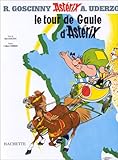
This is my review of Le Tour de Gaule d’Astérix by René Goscinny,Albert Uderzo.

As a mature student of French, I read this in an attempt to understand the addiction to "les bandes dessinées" which seems to persist into adulthood even for French literature lovers. I hesitate to repeat what must be widely known – since I had grasped it without reading a single Asterix in the past – that the revered Goscinny has created a "village gaulois" populated by "irréductibles gaulois" who manage to make mincemeat of the entrenched Roman garrisons surrounding them, and fools of the occasional representative of Caesar who comes along with the intention of bringing the villagers to heel. The secret of the locals' success lies in the magic potion prepared by the venerable druid Panoramix, and the exceptional strength of the menhir delivery man, Obelisk, who never needs to take the potion since he tumbled into the brew at berth.

The ensuing tale of the wager for Asterix and Obelisk to tour France without being captured, collecting local specialities on the way as evidence, is pretty silly although amusing, partly in showing one again the French preoccupation with food – all the items collected are edible and listed with gusto at the end: "saucisse de tolosa", "huîtres et vin de burdigala" and so on.

In trying to find an equivalent story embedded in English culture I came up first with Winnie the Pooh, then thought perhaps Dad's Army would be nearer the mark. You may need to be able to associate Asterix with the nostalgia of childhood, and also be a native of France to understand the puns fully. I have at least learned the French for "port" and "starboard" and that, "Je tire ou je pointe?" refers to the game of pétanque.

⭐⭐⭐⭐ 4 Stars

Quirky and Whimsical

This is my review of L’Homme Aux Cercles Bleus by Fred Vargas.

Blue chalk circles begin to appear in the Paris suburbs, each ringing some everyday object. But Commissaire Adamsberg knows it is only a matter of time before a circle contains a murder victim. Unlike his sidekick Danglard, the pragmatic, cynical, stereotypical heavy-drinking inspector deserted by his wife, Adamsberg is not your usual senior police detective. Burdened by his acute intuition, "if only I could be wrong about someone once in a while" , he wanders round with his shirt half hanging out, idles around in coffee shops too depressed to go into work, and is only tolerated by colleagues at his new post in Paris because of his astonishing success record in solving cases.

Some of the characters are entertaining, such as the beautiful Mathilde, a famous marine biologist, only really happy deep-sea diving, who spends her time when on dry ground following and observing strangers. I liked her glass table with a built-in aquarium. However, the main characters are all highly eccentric and somewhat unrealistic. I enjoyed some of the quirky dialogue and was prepared to go with the flow of the off-the-wall plot until it reverted abruptly to the kind of trite, contrived thriller overfull of coincidences with a hero who keeps presenting his bemused colleagues with the next piece in the jigsaw, obtained through his latest light-bulb moment.

I recommend this in French for the practice, and the English version to help with some more obscure language points. Some of the English translation is a little oddly worded partly because the distinctive whimsical quality is hard to capture in English.

Not sure I'll read any more in the series……..

⭐⭐⭐ 3 Stars

A Striking Variation on “Death in Venice”

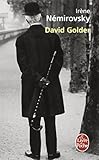
This is my review of David Golder (Le Livre de Poche) by Irene Nemirovsky.

In her spare prose, Irene Nemirovsky portrays in vivid and minute detail the thoughts and final acts of David Golder as he faces up to the death he has always feared. Having escaped as a youth from poverty in Russia, Golder has ruthlessly gained a vast fortune, but has nothing to spend it on, save the extravagances of his wife, who uses luxuries as a substitute for the love he cannot give her, their daughter Joyce who has been spoiled with material goods, and all the hangers on whom the rich attract.

On the surface, all the main characters are despicable, calculating, self-seeking and unlikeable. However, Irene contrives to evoke from us some pity for all of them, in particular Golder. Although this is to be honest a rather depressing book, there are some unexpectedly moving and beautiful scenes, evoking long-lost places and lifestyles of 1920s Europe and Russia. Nemirovsky is worth reading for the quality of her writing.

I have read reviews which attack Nemirovsky for her anti-semitic tone. Although Jewish herself, she converted to Catholicism and wrote for anti-Jewish publications, yet this could be excused as an attempt to escape persecution – one which failed since she was deported to Auschwitz where she died of typhus. I admit that at times, I find it hard to believe that she is not "a self-hating Jew" in the prejudiced and negative descriptions she often employs. Apart from the fact she may only be conveying the views of other characters, there is a subtle humanity in her writing – she seems to me to describe characters warts and all, with all their flaws and vulnerability, without a trace of sentimentality.

⭐⭐⭐⭐ 4 Stars

A Modern Rival to Maupassant

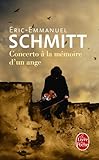
This is my review of Concerto a la memoire d’un ange by Eric-Emmanuel Schmitt.

His ingenious plots on a wide variety of original themes, each ending with an unpredictable twist combine with his uncluttered prose to make the French-Belgian Eric-Emmanuel Schmitt's short stories gripping and memorable. His success as a dramatist assist him in creating tight structures and dramatic scenes with realistic dialogues.

For me, "The Poisoner" (L'Empoisonneuse) is a near perfect short story in its structure and style. Marie Maurestier, acquitted of the murder of three husbands and a young lover, is the object of speculation and some fear in the local community. The local butcher beckons her to the front of the queue to get her out of his shop as fast as possible. She arouses neither sympathy nor affection because of her sharp tongue, but is also valued as a local tourist attraction. Then, Gabriel, a handsome and dedicated young priest comes to take charge of the church, with dramatic results. Schmitt cleverly manipulates our changing attitudes to Marie and Gabriel. Examining motives and moral issues from every angle in his fluid prose, he builds up a sense of tension and compulsion to read quickly to the end to learn the outcome.

In the shortest tale, a tough seaman receives a message to the effect that one of his daughters has died – but which one is it? In a prize-winning novella which gives the book its title, an ambitious young pianist is driven almost mad with jealousy over the superior technique of an impossibly virtuous and unworldly violinist. In some ways this story is too contrived but still absorbing. Finally, we see the effects of a woman's decision to tolerate no longer the philandering of her corrupt husband who just happens to be the President of France. This last story seems most influenced by Schmitt's embracing of Catholicism in later life. Yet, although all the stories perhaps inevitably have a strong moral basis, he never preaches, and is often unflinching in subjecting his characters to fate, yet is essentially positive.

⭐⭐⭐⭐⭐ 5 Stars

Crossing the line

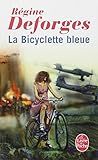
This is my review of La Bicyclette Bleue (Le Livre de Poche) by Regine Deforges.

The first in what I believe to have become a saga of ten novels, it is easy to see the initial resemblance to "Gone with the Wind". In Lea, daughter of a wealthy vineyard owner, we have a spoilt, sexually alluring young woman who is set on the one man she cannot have, Laurent, the pale and frankly not very interesting neighbour who insists on honouring his longterm commitment to marry his frail, and to Lea pathetic, cousin Camille.

Any similarities to Margaret Mitchell's famous work do not matter, since we have the different location of France on the brink of World War 2 with all its potential for drama – initial complacency followed by the horrors of bombing, the shame of occupation, temptation to collaborate and the dangers of taking part in the resistance. Yes, this story is riddled with implausible coincidences, and could be a candidate for a bad sex award, but it's excellent for testing and extending one's knowledge of French – full of idioms and useful vocabulary, with a good pace and clear development of a variety of complex, flawed characters to provide continuous interest. There are some genuinely moving and shocking moments, as well as humour. I have also learned more about, for instance, the differences between the occupied and "free" zones established by the Germans working with Pétain, and realised how families were often split over the issue of giving support to either Pétain or De Gaulle.

It may not be great literature, I might feel a bit sheepish about spending time on it if I were French, but recommend it as an enjoyable way of improving one's French from a base of A Level.

⭐⭐⭐⭐ 4 Stars

A Wry Take on Human Nature

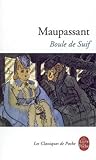
This is my review of Boule de suif (Le Livre de Poche) by Guy de Maupassant.

Considering this was written about a century and a half ago, Maupassant's collection of tales inspired by the Franco-Prussian War is remarkably fresh and vivid. It starts with his most famous "masterpiece" named after the "round as a dumpling" character of "Boule de Suif", the kindhearted prostitute who is so exploited and humiliated by the hypocritical bunch of characters who share a coach with her to escape the conquering Prussian army.

Writing with deceptive simplicity, great clarity and wit, Maupassant captures the sensations of travelling on a coach through the deep snow and winter dark, the periodic hunger and discomfort en route, the initially welcome shelter of the inn, the fear of encountering enemy soldiers. The nine ostensibly highly respectable passengers are given clearly distinct personalities and different social positions , displaying the all too common less attractive aspects of human nature: greed, prejudice, insensitivity, self-interest, and desire to justify their actions. Perhaps they are stereotypes but this makes for an absorbing read in which the author plays cleverly on one's sense of outrage, empathy with "Boule de Suif", despite her unsavoury profession, and wish to see her tormentors pay. Yet would we have behaved any better?

In addition to a detailed introduction, the stories are very thoroughly annotated. I found very useful the explanations of various classical references, the relevant details of the Franco-Prussian War plus some other snippets of information – such as "un pipe en écume" being a meerschaum pipe with a bowl carved out of a substance resembling hardened foam.

If English is your native tongue, there are translations available on Google – oddly enough with some of the mildly risqué passages omitted, I'm not sure why.

⭐⭐⭐⭐⭐ 5 Stars

More is Less

This is my review of Ensemble c’est tout (Litterature Generale) by Anna Gavalda.

A best seller in France and adapted as a film starring the gamine Audrey Tautou and titled in English "Hunting and Gathering", this is the tale of three very talented young people who, having been damaged by their dysfunctional, neglectful or thoughtlessly cruel parents, form an unlikely friendship through which they help each other to achieve fulfilment and happiness.

Camille is a gifted artist, reduced to anoxeria and working as an office cleaner at night. Franck is a boorish and promiscuous chef, whose loud mouth conceals a soft heart and a sense of guilt over abandoning his beloved grandmother Paulette to a soulless old people's home. The aristocratic, for me stereotyped, Philibert, is a walking history book, a stammering figure of fun with obsessive compulsive disorder, who wastes his skills selling postcards.

My judgement may have been jaded by the effort required to read this in the original French. It is certainly a good source of modern slang, colloquial speech, idioms and cultural references, although deciphering some of these was a hard and often fruitless labour. I needed a French speaker on hand to ease the path more than for any other French novel I have ever read.

However, I feel confident in saying that this potentially interesting plot was ruined for me by self-indulgently excessive length and lack of editing of too many banal conversations and incidents, by a mawkish tone and a very loose, clunky structure. Minor scenes are presented in great deal, major incidents glossed over or implied.

The narrative veers between passages of dense prose, such as Part 3 (rationale for these parts eluded me) Chapter 17 in which Camille explains the trauma of her childhood in a lengthy passage of "telling" rather than "showing" and some other chapters which are just a page long – a few slangy phrases in a sea of white space.

The tone is mostly mildly crude or schmaltzy with the occasional flight into pretentiousness. The characters often seem underdeveloped to me. There was missed scope for drama in, for instance, the behaviour of Camille's mother, Philibert's finding of a girlfriend or the role of the drug addict Vincent.

There are a few moving passages, such as Pauline's experience of ageing. Also, some moments of humour, as when Camille makes a coat for the concierge's dog out of Franck's shrunken designer jumper. But a good deal of tedium has to be navigated to dredge up these pearls.

⭐⭐ 2 Stars