This site will share with you hundreds of book and film reviews written since 2009. Also a chance to discuss these reviews together with some of my creative writing to be added.
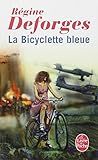
The first in what I believe to have become a saga of ten novels, it is easy to see the initial resemblance to "Gone with the Wind". In Lea, daughter of a wealthy vineyard owner, we have a spoilt, sexually alluring young woman who is set on the one man she cannot have, Laurent, the pale and frankly not very interesting neighbour who insists on honouring his longterm commitment to marry his frail, and to Lea pathetic, cousin Camille.
Any similarities to Margaret Mitchell's famous work do not matter, since we have the different location of France on the brink of World War 2 with all its potential for drama – initial complacency followed by the horrors of bombing, the shame of occupation, temptation to collaborate and the dangers of taking part in the resistance. Yes, this story is riddled with implausible coincidences, and could be a candidate for a bad sex award, but it's excellent for testing and extending one's knowledge of French – full of idioms and useful vocabulary, with a good pace and clear development of a variety of complex, flawed characters to provide continuous interest. There are some genuinely moving and shocking moments, as well as humour. I have also learned more about, for instance, the differences between the occupied and "free" zones established by the Germans working with Pétain, and realised how families were often split over the issue of giving support to either Pétain or De Gaulle.
It may not be great literature, I might feel a bit sheepish about spending time on it if I were French, but recommend it as an enjoyable way of improving one's French from a base of A Level.
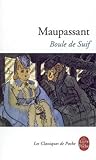
Considering this was written about a century and a half ago, Maupassant's collection of tales inspired by the Franco-Prussian War is remarkably fresh and vivid. It starts with his most famous "masterpiece" named after the "round as a dumpling" character of "Boule de Suif", the kindhearted prostitute who is so exploited and humiliated by the hypocritical bunch of characters who share a coach with her to escape the conquering Prussian army.
Writing with deceptive simplicity, great clarity and wit, Maupassant captures the sensations of travelling on a coach through the deep snow and winter dark, the periodic hunger and discomfort en route, the initially welcome shelter of the inn, the fear of encountering enemy soldiers. The nine ostensibly highly respectable passengers are given clearly distinct personalities and different social positions , displaying the all too common less attractive aspects of human nature: greed, prejudice, insensitivity, self-interest, and desire to justify their actions. Perhaps they are stereotypes but this makes for an absorbing read in which the author plays cleverly on one's sense of outrage, empathy with "Boule de Suif", despite her unsavoury profession, and wish to see her tormentors pay. Yet would we have behaved any better?
In addition to a detailed introduction, the stories are very thoroughly annotated. I found very useful the explanations of various classical references, the relevant details of the Franco-Prussian War plus some other snippets of information – such as "un pipe en écume" being a meerschaum pipe with a bowl carved out of a substance resembling hardened foam.
If English is your native tongue, there are translations available on Google – oddly enough with some of the mildly risqué passages omitted, I'm not sure why.
A best seller in France and adapted as a film starring the gamine Audrey Tautou and titled in English "Hunting and Gathering", this is the tale of three very talented young people who, having been damaged by their dysfunctional, neglectful or thoughtlessly cruel parents, form an unlikely friendship through which they help each other to achieve fulfilment and happiness.
Camille is a gifted artist, reduced to anoxeria and working as an office cleaner at night. Franck is a boorish and promiscuous chef, whose loud mouth conceals a soft heart and a sense of guilt over abandoning his beloved grandmother Paulette to a soulless old people's home. The aristocratic, for me stereotyped, Philibert, is a walking history book, a stammering figure of fun with obsessive compulsive disorder, who wastes his skills selling postcards.
My judgement may have been jaded by the effort required to read this in the original French. It is certainly a good source of modern slang, colloquial speech, idioms and cultural references, although deciphering some of these was a hard and often fruitless labour. I needed a French speaker on hand to ease the path more than for any other French novel I have ever read.
However, I feel confident in saying that this potentially interesting plot was ruined for me by self-indulgently excessive length and lack of editing of too many banal conversations and incidents, by a mawkish tone and a very loose, clunky structure. Minor scenes are presented in great deal, major incidents glossed over or implied.
The narrative veers between passages of dense prose, such as Part 3 (rationale for these parts eluded me) Chapter 17 in which Camille explains the trauma of her childhood in a lengthy passage of "telling" rather than "showing" and some other chapters which are just a page long – a few slangy phrases in a sea of white space.
The tone is mostly mildly crude or schmaltzy with the occasional flight into pretentiousness. The characters often seem underdeveloped to me. There was missed scope for drama in, for instance, the behaviour of Camille's mother, Philibert's finding of a girlfriend or the role of the drug addict Vincent.
There are a few moving passages, such as Pauline's experience of ageing. Also, some moments of humour, as when Camille makes a coat for the concierge's dog out of Franck's shrunken designer jumper. But a good deal of tedium has to be navigated to dredge up these pearls.
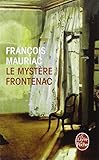
A wealthy bourgeois family with property in "les Landes", region of pines and marshes, the Frontenac s are burdened with the need for conformity and respectability. Widowed early, the pious and neurotic Blanche Frontenac dedicates herself to her five children. Her brother-in-law Xavier, makes a similar commitment: he is miserly with himself, keen that as much wealth as possible should be safeguarded for the children. We see flashes of his softer side as he makes camphor-powered toy boats for them. Yet he is flawed: he cannot resist taking a mistress, the longsuffering Josefa, too socially inferior for him to marry, and goes to excessive lengths to conceal her existence from the family, needless to say all in vain.
The brilliant, academically inclined Jean-Louis accepts his duty to run the family business. The frail and hypersensitive younger brother Yves, who shows early promise as an avant-garde poet is allowed to follow his whims: the close bond between these two is compared to that between Xavier and his deceased brother, who resembled Yves.
Described as one of Mauriac's more positive works (I must admit to preferring the bitter venom of his other novels), you probably need to share his sense of Catholic mysticism to appreciate this fully. Not much happens, the "mystère Frontenac" is so subtle you could miss it, I found it all too mawkish at times, and agree with the reviewer who found it "dated".
Despite this, it is a powerful exercise in nostalgia, evoking a lost way of life on the brink of World War. The magic of childhood with the freedom to play, without adult cares, is captured well. Descriptions of the landscape are very vivid. Dialogues are sharp and realistic, with what may have been a new trend in the 1930s to intercut them with people's private thoughts, often very different from what they say. Some observations on the mindless and futile nature of the modern commercial world of mass production about to destroy the Frontenac way of life, are also prescient – I could have done with more of that angle.
The structure seems quite weak and I would have liked a fuller development of the interplay between the four main characters: Blanche, Xavier, Jean-Louis and Yves. However, it is worth reading as an early modern classic
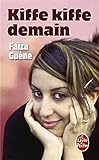
Kiffe Kiffe Demain (Same Old Tomorrow) is notable for being the work of Faïza Guène, written when still a teenager and making use of her experience as a girl of Algerian origin growing up in Paris.
The short, journal style chapters record the thoughts of Doria, a fifteen-year-old girl living in a grim tower block in a Paris suburb, understandably bitter because her father has returned to Morocco to find a new wife who will hopefully give him a son. Her illiterate mother struggles to make ends meet with a hotel cleaning job, where the racist boss calls all the Arab women "Fatima" and the Chinese workers "Ping Pong". Forced to accept charity from neighbours and buy untrendy clothing at cheap sales, Doria and her mother have to endure visits from a social worker, while the teenager is also required to visit a psychiatrist to improve her withdrawn behaviour, and low school grades.
Doria is far from a tearaway – she frantically cleans the cooker to pass muster when the social worker pays a "spot check" visit, and dresses as her mother wishes. Yet, she is quietly subversive in her private thoughts, and is drawn to unconventional people like the local drug-dealing dropout Hamoudi, who challenges the system, and quotes Rimbaud's poetry at her, encouraging her to better herself.
Doria is inevitably naive in many ways, and her dreams and reactions are generally couched in terms of the cartoons, soaps and American films she has absorbed on the TV. Her language is often crude – a weird mix of Arabic and French "verlan" – leading her to comment on how she has to make an effort to speak correctly to her "shrink" since they are "not really on the same wavelength".
There are some moving moments in the book, as when she takes her mother to see the Eiffel Tower for the first time, although it is only a short ride from home, but they meekly accept that they cannot afford the tickets to climb to the top. On another occasion Doria tells us that her eyes are like her father's so that when she looks in the mirror she sees his nostalgic look – an admission that he has been pulled back to Morocco partly through homesickness. When she can look in the mirror and see only herself, she will be cured.
The book is revealing on the status of women in Arab communities. It is interesting that three of the young women mentioned manage to escape into careers or relationships with men on equal terms – but at the price of losing contact with their roots, at least for a while.
Although the author has probably been seeking realism in plodding through a succession of mundane events, the plot is very slight and tails off at the end, with even the final note of optimism seeming rather woolly and doubtful. Most of the characters seem somewhat underdeveloped and two-dimensional, all described through Doria's eyes rather than breathing with a life of their own. What makes the story bearable is Doria's sharp-eyed observation of life, with her wry humour.
This book has been so popular that it must appeal to teenagers, but I think they deserve something a little more challenging. Guène has plenty of time to progress to this, but in the meantime I only read to the end to practise my French and learn a bit more of the "argot" which increasingly divides the generations on France.
This novella, written in crystal-clear, at times poetic prose, describes in minute detail the meeting between a man and a woman on a station platform and the development of their mutual awareness and attraction on the subsequent train journey. Who are they, and have they met before? Gradually, our questions are answered, as the story moves towards a dramatic climax, dispelling my fear that, having aroused my curiosity, it would have one of those unsatisfying, inconclusive endings.
Despite the minute exploration of people's appearances and feelings, the characters remain shadowy in some respects – we never learn their names, and the two men with whom the woman is involved are both referred to as "he" but can be distinguished by their very obvious differences. The objective, remote quality of the story at times may arise from its serving as an allegory for the nature of existence in general – the essential transience and unimportance of much of life, and the suggestion that we are often just "wandering" through our existence, or filling it up with mundane activities to avoid facing up to the fact that we are all "waiting" for it to end. This sounds rather gloomy, but the tone is quite positive in a philosophical way.
At times, it reads like a woman's magazine story about a pair of lovers, but it is deeper than that and somehow the more "sentimental" passages come across better in French! It also provides some good practice for students – lots of useful examples of applied grammar – past conditional and subjunctive tenses etc.
This first novel in the Nicholas Le Floch detective series, set in C18 France, reminds me of William Sansom's Shardlake series because of its attention to the details of social history and its intricate plotting. There is a whiff of Agatha Christie in the denouement to which Nicholas invites all the interested parties – still left alive- and summarises the situation: this was helpful in confirming that I had not "lost the plot".
Nicholas is an attractive hero, saved from the irritation that his good looks and charm might provoke by a refreshing capacity to commit blunders as well as the thoughtful and introspective side to his nature. This seems to stem from his experience as an orphan of unknown parentage, who has often met with resentment because of the generous support of his godfather, le Marquis de Ranreuil.
Armed with a letter of introduction from this benefactor, Nicholas travels to Paris and is taken on by the capricious and calculating Monsieur de Sartine, newly appointed Lieutenant General of Police and a rising star with King Louis XV himself. After his initial training, despite his youth, Nicholas is given the assignment to find what has befallen a missing colleague, and the complicated plot spins off from this point.
Apart from some rather gruesome corpses, the sex and violence in this book would not shock a maiden great-aunt – except perhaps for the hero's casual but probably true-to-life relationship with a prostitute. Some scenes are unlikely and a bit clunky, as when the brothel keeper, La Paulet, provides sensitive information too readily without checking Nicholas out, or when he eavesdrops on a revealing conversation involving de Sartine by entering a room without being noticed! His victory over an arch-villain in a swordfight is also implausible.
On the other hand, I enjoyed the "Frenchness" of it all – the obsession with eating well, the discussions about the pros and cons of haute cuisine, the details of how to cook pigs' trotters, a tasty working man's dish. Also, Parot often demonstrates his classical education "as a matter of course" , taking it for granted that the reader will understand an allusion, or be pleased to be told about it.
Although some of the cast e.g. the promiscuous Louise Lardin are a bit caricatured, Nicholas is an interesting character with quite a complex personality. I was a bit irritated by the Sherlock Holmes ploy of having him work out a solution on very slim evidence, but not reveal it to the reader for some time!
The translation may not quite do justice to Parot's literary talents, but the slightly stilted style fits with the period. I recommend this for those in search of a new detective series in an admittedly old-fashioned mode with an essentially predictable end if you want to try to work it out.
This English translation of the original Goncourt Prize winner, "Les Champs d'honneur" is useful for deciphering some of the obscurer French paragraphs, but I found the style intolerably stiff and unnatural. Is the translator a German speaker? This might account for what seemed like the over-literal translation which cries out to be edited line by line to create some semblance of natural flow.
The story itself may resonate for French people with memories of taciturn chain-smoking grandfathers driving leaky Citroen 2CVs through the interminable drizzle of the Lower Loire. With the admitted extra handicap of being an English speaker reading the original French version "Les Champs d'honneur" in translation, I found the whole chapters devoted to driving a beaten up 2CV, the rain, or the religious mania of a spinster aunt the literary equivalent of watching paint dry.
There were some striking descriptions, say of the landscape of Provence, and the book culminates in some haunting scenes on the experience of a gas attack in the First World War, or the exhumation of a brother, hastily buried by a stranger after a battle, but for me the build up to this was too slow and tortuous.
I gradually realised that the book was a study of how the First World War blighted the lives of not only the generation who suffered it directly but also their descendants. However, in "working backwards" through a series of in the main very mundane incidents with attention to minute detail of little interest, not to mention the endless digressions, I felt that I was reading fragments of a story in a fog.
I was always unclear in exactly which decade the narrator's boyhood was set and I was left quite confused by the last chapter at the cemetery (it's an unremittingly gloomy book) as to the blood relationship between the various characters, which until then I thought I just about understood.
This may resonate for French people with memories of taciturn chain-smoking grandfathers driving leaky Citroen 2CVs through the interminable drizzle of the Lower Loire. With the admitted extra handicap of being an English speaker reading this in translation, I found the whole chapters devoted to driving a beaten up 2CV, the rain, or the religious mania of a spinster aunt the literary equivalent of watching paint dry.
There were some striking descriptions, say of the landscape of Provence, and the book culminates in some haunting scenes on the experience of a gas attack in the First World War, or the exhumation of a brother, hastily buried by a stranger after a battle, but for me the build up to this was too slow and tortuous.
I gradually realised that the book was a study of how the First World War blighted the lives of not only the generation who suffered it directly but also their descendants. However, in "working backwards" through a series of in the main very mundane incidents with attention to minute detail of little interest, not to mention the endless digressions, I felt that I was reading fragments of a story in a fog.
I was always unclear in exactly which decade the narrator's boyhood was set and I was left quite confused by the last chapter at the cemetery (it's an unremittingly gloomy book) as to the blood relationship between the various characters, which until then I thought I just about understood.
The only motivation for reading this book was to improve my "literary" French, in which regard it serves a useful purpose.
I used the translation by Ralph Manheim to guide me through some of the obscurer passages. It did not help that the translation seems very stilted and I had to wonder if English was Manheim's first language!
This is good for improving your "streetwise French" and provides an insight into the pressures on the children of Algerian immigrants growing up in French cities such as Lyons. There must be more than a touch of autobiography in Azouz Begag's portrayal of Beni, by turns cocky or insecure and self-deprecating. We see him facing prejudice at school, from the police, his would-be friend's mother and in his attempts to forge a western-style social life.
There are some moving moments: Beni persecutes his downtrodden sister, but feels sorry when he upsets her, yet cannot hug her since that kind of physical contact simply does not occur in his culture. He half-despises his father, a manual worker on construction sites, desperate for his son to succeed, trying to exert his authority by force if need be, but dependent on Beni to write letters for him. Yet despite his urges to be a normal teenager, Beni cannot break free from his father's values. When he is denied entry to a porn film (on grounds of age) he consoles himself with the knowledge that at least he can go home and look his father in the eye without lying.
Beni tries to survive by playing the comic, and fantasising about becoming a comedian or, in the meantime, realising a romance with a blonde class mate.
The story is really a set of anecdotes which you may find entertaining, along with Beni's tendency to misunderstand French words, despite his tactless habit of correcting people's grammar. It may appeal mostly as a novel for teenagers, but to be honest I found it quite tedious after a while.