As I lay dying – challenging read after which “ordinary” novels seems lacking


This is my review of As I lay dying by William Faulkner.

In the fictional county of Yoknapatawpha, based on Faulkner’s deep knowledge of Mississippi in the Great Depression, wife and mother Addie Bundren lies dying for only the first fifth of this modern classic, to the hypnotic mantra of sawing as her son Cash painstakingly constructs a coffin within sight and sound of her bed . The rest of this short but dense novel is taken up with the fateful Odyssey borne of Anse Bundren’s stubborn to the point of foolish insistence on taking his wife’s body on a ramshackle cart over routes where road bridges have been swept away in the floods, to “lie with her own people” in the town of Jefferson. As it turns out, both he and his daughter Dewey Dell have an ulterior motive for getting there at all costs.

To achieve this, Anse needs the assistance of his children, in particular his three very different adult sons. It is a continual puzzle as to how this pathetic, incompetent man manages to use his wheedling guile to hold them to their thankless task, which brings each of them long-term suffering of a different kind. Only Anse comes out of the situation with any advantage – clearly, the cynical Faulkner did not believe that people get their just desserts. Yet there is a bond between the often hostile brothers, as shown by the risks taken to salvage Cash’s precious carpentry tools from the river-bed.

The unrelenting, macabre and bleak theme is rendered tolerable, even gripping by the remarkable style, the wry black humour and quirky Southern speech. The book requires intense concentration with its multiple points of view, each chapter representing by turns the thoughts of a different character, expressed in a stream of consciousness that is part literary, even poetical, part pithy, part convoluted colloquial dialogue. On occasion Faulkner even invents words for want of an existing one that suits – “uninferant”, “uncurried”.

It helps to know that Faulkner disliked the “normal” style of straightforward explanation, preferring to leave major events merely implied or hinted at, rather in the style of the film scripts which he took to writing in later life. He enraged Ernest Hemingway by observing that he “lacked courage”, by which he meant, not in a physical sense, but as regards being prepared to “get out on a limb…risk bad taste…overwriting….dullness.” Faulkner himself took all these risks in spades in this novel. Apparently written in only six weeks, it has a raw, unedited feel at times, as may have been his intention. It is debatable whether this is a strength or weakness. I found myself rereading some passages because they are so stunning, others in a vain and tantalising attempt to make sense of them. Sometimes, the brilliance seems to slip into pretentiousness or tedium.

Some of the most powerful passages describe Jewel Bundren’s sadistic passion for his “pusset-gutted bastard” of a horse. “Enclosed by a glittering maze of hooves as by an illusion of wings”, Jewel “moves with the flashing limberness of a snake….for an instant… whole body earth-free, horizontal, whipping snake-limber….Then Jewel is on the horse’s back. He flows upward in a stooping swirl like the lash of a whip, his body midair shaped to the horse” and so on. Later we see the horse “dancing and swirling like the shape of its mane and tail and the splotches of its coat had nothing whatever to do with the flesh-and-bone inside them”.

There is humour in Darl Bundren’s acutely droll assessment of his father. “He got sick once from working in the sun when he was twenty-two years old, and he tells people that if ever he sweats, he will die. I suppose he believes it.”

Irony marks the portrayal of the preacher who rushes to Addie’s bedside in an attempt to pre-empt any deathbed confession with one of his own, complacently concludes that his efforts in battling through the floodwaters are sufficient to obtain God’s mercy, “He will accept the will for the deed” and enters the “house of bereavement” with a mere sanctimonious “God’s grace upon this house”.

There is menace, not to mention an indictment of Anse’s inappropriate behaviour, in the continual references to the ever-present vultures which obsess Addie’s youngest son Vardaman: “Now there are seven of them, on little tall black circles”.

At one extreme, Vardaman and his teen-age sister Dewey Dell seem handicapped in their ability to communicate by their limited speech. At the other, the sensitive, perceptive Darl is often used as the mouthpiece for the author’s most sophisticated verbal pyrothechnics. Yet even the tortuous southern speech can be surprisingly telling as when bemused neighbour Tull observes, “The Lord aimed for…a fellow… to do and not to spend too much time thinking, because his brain is like a piece of machinery: it won’t stand a whole lot of racking”. Likewise, Cash’s final observation, “ But I ain’t so sho that ere a man has the right to say what is crazy and what aint. It’s like there was a fellow in every man that done a-past the sanity or insanity, that watches the sane and the insane doings of that man with the same horror and the same astonishment”.

There are also deeper levels of meaning to this book about, say, Addie role as a wife and mother, or the language of religion used to as a form of social control in a deferential rural community which defy inclusion in a short review without “spoilers”.

Sworn Virgin


This is my review of Sworn Virgin  by Elvira Dones.

According to the “Kanun”, “a set of traditional, orally transmitted laws which have persisted for centuries in the remote mountain valleys of northern Albania, a woman who feels the need to assume an independent male role in society must live as a “sworn virgin”, adopting the dress and behaviour of a man. When teenage Hana who has somehow managed to escape to Tirana to study literature feels obliged to return to her village to care for her dying Uncle Gjergi, rather than accept his insistence on the “security” of an arranged marriage, she impulsively resolves to become “Mark Doda”, rapidly learning to walk, swear, smoke and drink like a man. The irony is, of course, that a woman’s gaining of liberty in this way is at the price of the freedom to express her true self.

We first encounter Hana some fifteen years later when, in her mid-thirties, she has decided to take the drastic step of returning to life as a woman, making the transition in the family of her supportive cousin Lila who has emigrated to America. Proceeding in a series of lengthy flashbacks, the narrative explores with some empathy the practical and emotional difficulties of adapting back to life as a woman, particularly in a society in which this means being much more fashion-conscious and sexual, but glosses over why Hana did not simply return to Tirana after her uncle’s death, and over the process by which she began to change her mind about how she wants to live. Also, I may not have read carefully enough, but how did she manage to get access to the United States to both live and work there, it would seem indefinitely?

Although the theme caught my attention, I was initially put off by the clunky style, uncertain whether this was due to the Albanian author, writing in Italian, or the translation into English. It seems to flow better as the story progresses, perhaps as the author “gets into her stride”.

Some of the most vivid, authentic and moving sections are the descriptions of life in the enclosed, traditional mountains where songs and flowers are mixed with betrayal, wounds and brutality, “mountains made of eyes that observe and forbid”. The caustic comments on Orwellian life under communism, in which failings of the system were denied with hypocrisy and corruption rife amongst those in charge, have the bitter ring of personal experience. There is also a strong portrayal of the young Hana, hungry for learning, unable to deal with the fact that men find her attractive, and hampered by her sense of being an outsider, different from other more privileged students.

The scenes set in America seem weaker, verging at times on “chick lit” as, having acquired an impressive grasp of English at great speed, Hana experiments with makeup and women’s clothes, agonises over sex, periodically escapes into the masculine refuge of strong liquor, and banters with her Americanised niece Jonida, who I appreciate may have been included to show the life Hana might have led in different, freer circumstances.

Lila’s Albanian husband Shtjefën seems too good to be true, and a little hard to visualise: “He’s part bear, part butterfly, this man. He goes on slurping his bean soup. ‘What about you, Mark? Did you get some rest? You look a bit lost, brother.’ (Hana is still dressed as a man)…. Before asking for Lila’s hand, Shtjefën had been wiry and blond. His head was like a sunflower. The girls in the village said it was because of his height: he caught the sun as soon as it came out, long before the others, and was the last to lose it before sundown. His speech sounded rare and distant, like the glory that cloaked his family”. Perhaps this is intended to imply the incongruity of living in bland, standardised, materialistic urban America with unexpressed, dreamlike memories of life in the harsh but beautiful mountains.

The super-understanding journalist Patrick O’Connor plays a somewhat contrived role in a story which seems to end too abruptly. Overall, it’s a patchy novel, compelling at times, but some parts could have been developed better.

“Mrs Osmond” by John Banville – over-egged pastiche when would have preferred author’s own voice

This is my review of “Mrs Osmond” by John Banville

John Banville’s sequel to “The Portrait of a Lady” by Henry James develops the plot further to explore Isabel Osmond’s response to the bitter realisation that her husband has married her solely for her money and has been concealing from her a sordid and humiliating secret. I felt at a disadvantage at first in not having read “The Portrait of a Lady”, since this would have enabled me to gauge the degree of Banville’s success in attempting to mirror James’s style. Yet, knowing the details of the original would have spoiled my enjoyment of the way John Banville gradually reveals the details of what has led to Mrs Osmond’s distress.

Although it seems acceptable for a writer to produce a prequel or sequel to a deceased author’s work, I am less sure about artistic method of trying to imitate his style – a painter who tried to produce pictures in the style of Monet would after all be condemned as “derivative”. I agree with reviewers who feel that Banville has “over-egged” his efforts to emulate James – his convoluted flights of fancy often weighted down with unrelenting alliteration and jarring metaphors, to the point of seeming ludicrous and digestible only in small quantities, unrelieved by James’s subtlety and excuse in having been born in an earlier age when what we now regard as flowery speech and excessive refinement were the norm for the privileged classes: “Her thoughts moved in large, loose loops, but at least once every round they revisited, like a planet at its perihelion, the question of what precisely Miss Janeway’s portentious remark might have been meant to mean”.

Or to take a more irritating overworked passage: “Europe had been her fate, and so it was still. Yet she should not have allowed her aunt to thrust her upon that fabled continent so precipitately, as a free-trader’s posse might snatch from the doorway of a dockside tavern some poor young hearty fuddled on rum and press him into a captive life on the roiling ocean; indeed, she should not have allowed it. Her aunt was not to blame that she was lashed by unbreakable bonds to Europe’s mast”. And so on.

I would have preferred this novel written more in Banville’s is own dry, pithy style which kept sprouting through the verbiage to hint at what might have been. There are some strong dialogues, as in the scene where Isabel confronts her reptilian husband, with detailed descriptions which almost read like stage directions. The portrayal of Isabel’s mental confusion, her veering between weakness and decision, her desire for revenge but shrinking from descending to the level of Gilbert Osmond and his mistress are often well expressed. There is some humour, as in the portrayal of Isabel’s maid Staines, or the daunting lunch served by the vegetarian suffragist Miss Janeway: “boiled broccoli, boiled beans and boiled spinach” eaten “in silence save for irrepressible herbivoral crunchings”. On the other hand, too many characters, like the unscrupulous Madame Merle seem like caricatures or appear two-dimensional.

I wanted to know what would happen, uncertain whether the outcome would be tragic, or not amount to much at all, but found it hard to cope with more than a few chapters at a time. In fact, the ending was as abrupt as James’s and even less conclusive, to the extent of seeming “a bit of a cop out” on Banville’s part.

The Wound – The cost of denying the past

This is my review of The Wound by Laurent Mauvignier, a translation of “Des Hommes.

Of all the novels on the fraught topic of the struggle for Algerian independence from France, this is unusual in its focus on the trauma of young men sent out to fight a colonial war without understanding the situation into which they were thrown and unprepared for the violence they were about to witness and perpetrate. The English title of “The Wound” for this novel, to be found in the opening quotation from Genet (“As for your wound, where is it?……”) seems more apt than the original one of “Des Hommes” (“Men”) in that it suggests the long-term mental injury they suffered, but were often unable to relieve by talking about it. Perhaps they felt instinctively that those who had not shared their experiences would never understand, or they repressed memories too shameful, painful or shocking to express, or simply lacked the words to confide in others. Yet “Men” is also a meaningful title in conveying how a group of males may tend to interact, responding to an attack with aggression, also using it as a means of avoiding the expression of emotion.

Starting with “afternoon”, this novel covers a twenty-four hour period split into four sections, but also makes extensive use of flashbacks and recollections to reveal the lives of two cousins from a rural French community: Bernard, nick-named “Feu-de-Bois”, a dishevelled alcoholic who sponges off his long-suffering sister Solange, and Rabut who narrates parts of the story. Both in their sixties, the cousins were called up to fight in Algeria in the early ‘60s, but have never spoken about this part of their lives which clearly haunts them both. For Rabut, Algeria has an unreal dreamlike quality, alien and exotic in its sunshine, scenery and Arab culture, shocking in the incidents of brutality.

The fragmented, stream of consciousness style can be very powerful, but also hard to follow, particularly if one is reading it in the original French as a foreigner. The opening pages are particularly obscure as we see Feu-de-Bois antagonising his whole family by a particularly crass action, before “going off the rails” in what seems like a racist attack. Rabut seems to have some empathy with his cousin, yet it becomes apparent that there is also a deep-seated hostility between the two men. The explanation for all this is gradually revealed in an impressionistic novel with a strong sense of place – one can see the fields in the snow versus the desert barracks – , minute descriptions of physical sensations, snatches of dialogue and intense action, or sharp flashes of insight in all the bleak obliqueness.

I found it necessary to read up some background history to understand the book better, and some aspects could have been developed more fully, like the invidious position of the Harkis, native Muslims who volunteered as auxiliaries in the French Army during the Algerian War. Yet perhaps Mauvignier is more interested in the feelings aroused by a colonial war in which one does not have a stake, rather than the details of the Algerian conflict in particular. This is likely to be a novel which divides opinion over its distinctive style, unusual structure and inconclusive plot. It repays rereading, is somehow absorbing without being a conventional page-turner, but certainly gives food for thought over the psychological impact of the Algerian War, particularly on individuals, ordinary French people caught up in it.

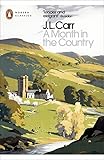
A Month in the Country by J.L. Carr: A sealed room in memory furnished by the past

This is my review of A Month in the Country (Penguin Modern Classics) by J.L. Carr.

Shell-shocked by his high-risk role as a signaller in the carnage of the First World War trenches, and depressed by the break-down of his marriage, Tom Birkin immerses himself in the delicate task of revealing an ancient mural thought to be concealed beneath centuries of lime-wash in an ancient parish church. We see Tom’s growing identification with the artist who created what turns out to be a masterpiece. There are vivid descriptions of the different colours used – “Spaynishe white, Baghdad indigo, Cornish malachite, terre verte”, the relative durability of the paints, and the fine balance needed between cleaning the grime of a painted hand, or finding that “just another touch will shift the hand itself”.

The eccentric old lady who has financed his labours in her will, has also left a bequest for the location of the grave of an excommunicated forbear, who must have been buried outside the cemetery. This work is being undertaken by Charles Moon, beneath his ebullient exterior as damaged by his wartime experiences as Tom, but for different reasons. The two men become friends, with Birkin in particular entering into village life, gaining acceptance and renewed health in the process.

Fifty years later, Tom looks back on this brief period during the long, hot summer of 1920, spent in the close-knit North Yorkshire village, in its as yet unspoilt, idyllic setting . This short novel, drips with nostalgia, Hardy without the grim tragedy of Jude and Tess, an evocation of a past way of life, perhaps a little idealised in that the summer weather is too fine, and the gossip a little too affectionate.

At the core of the novel is the unspoken mutual attraction, the meeting of minds, between Tom and Alice Keach, the improbably lovely young “Botticelli’s Primavera” wife of the pale-eyed vicar, with a “cold, cooped-up look about him”. If Tom and Alice fail to grasp the opportunity for a relationship, will they regret it for the rest of their lives? Is their love derived from the dreamlike quality of a transient period, enhanced by memory, and would it fade and become banal if they acted upon it?

Many incidents are culled from Carr’s own life, since he did not baulk at basing his characters on real people, anonymously, of course. So, the village of Oxgodby is based on Carlton Miniott where he grew up. Birkin’s embarrassment at being sent off by the double-booked station-master-cum-Methodist preacher to lead a tiny congregation, is based on an ordeal imposed on the author by his own father. Alice Keach, unaware of her beauty, may well be modelled on some past love of Carr’s whom the secretive author never revealed.

Perfect in style, structure and pace, for such a short work, this atmospheric, bittersweet tale manages to pack in more moments of comedy alternating with poignancy, and perceptive reflections than many a longer novel. In his subtlety, J.L.Carr can even make us feel a little sorry for the Reverend Keach. This is the kind of book one is sad to finish and likely to read again over the years.

⭐⭐⭐⭐⭐ 5 Stars

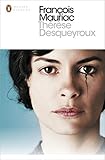
Thérèse Desqueyroux – Trapped

This is my review of Thérèse Desqueyroux (Penguin Modern Classics) [ Language:English ] by Francois Mauriac.

Inspired from his youth by the real-life case of Blanche Canaby, accused of the attempted murder of her husband, Mauriac developed the classic tale of Thérèse Desqueyroux, a character who fascinated him so much that she figures in two subsequent novels.

In the opening chapter, the charge of poisoning her husband Bernard is dropped against Thérèse Desqueyroux, after he has lied to “get her off the hook” for the sake of appearances. The rest of this short novel is an exploration of why she committed the crime, and the aftermath of her acquittal. Set in the pine forests of Les Landes near Bordeaux, this is a study of the stifling convention and hypocrisy of bourgeois landowning families in 1920s France. Intelligent and “charming”, if not exactly “jolie”. Thérèse has passively accepted her lot, which is to marry Bernard, son of the neighbouring family and step-brother of the bosom friend Anne for whom she may harbour more than a schoolgirl crush. Prior to marriage, she is quite attracted to Bernard, with the added appeal of his property to be combined with her inheritance. Too late, she realises the extent of his dullness, growing tendency to over-eating and hypochondria, but perhaps worst of all is the sexual contact for which she has not been prepared – in time, his mere physical presence repels her.

Having recently seen the film version of this novel, starring Audrey Tautou, I was reluctant to read this for a book group: although sympathetic to Thérèse’s sense of being trapped, I was alienated by the irrational and excessive nature of her attempt to murder Bernard. Having read the novel, and gained an insight into her thoughts, I continue to regard Thérèse as psychopathic in her coldness, showing a lack of maternal feeling for her daughter Marie, and jealousy towards Anne, stabbing in the heart the photograph of her unsuitable lover and, with an ulterior motive which does not bear close analysis, joining readily in the family plot to separate the pair. When she is driven to contemplate poisoning herself, she is unable to do so, but at least recognises the “monstrous” aspect of this, since she was quite prepared to poison Bernard without compunction.

On the other hand, although I do not think Mauriac adds much to the theme of female repression which has been covered so often – perhaps in part because he finds it hard to get inside a woman’s mind – it is the quality of Mauriac’s writing in the original French, less so translated into English, which impresses me. I like the way he plays with time, mixing together present situations and fleeting thoughts about the past or future in a kind of stream of consciousness which must have seemed quite radical at the time. His portrayal of the pine forests in changing weather, to which Thérèse can clearly relate better than to people, is striking. He tends to write in emotionally violent terms about overwrought dysfunctional characters tied together by social bonds – the title of his famous “Knot of Vipers” being a good example of this. His bitter, vituperative flow, full of images of walking over the still warm ashes of a landscape one has burnt, being frozen in the immense and uniform ice of an oppressive environment or drowning oneself in the crowds of Paris, holds one’s attention, even when having little liking for the characters or even perhaps the author himself.

⭐⭐⭐⭐ 4 Stars