The Wound – The cost of denying the past

This is my review of The Wound by Laurent Mauvignier, a translation of “Des Hommes.

Of all the novels on the fraught topic of the struggle for Algerian independence from France, this is unusual in its focus on the trauma of young men sent out to fight a colonial war without understanding the situation into which they were thrown and unprepared for the violence they were about to witness and perpetrate. The English title of “The Wound” for this novel, to be found in the opening quotation from Genet (“As for your wound, where is it?……”) seems more apt than the original one of “Des Hommes” (“Men”) in that it suggests the long-term mental injury they suffered, but were often unable to relieve by talking about it. Perhaps they felt instinctively that those who had not shared their experiences would never understand, or they repressed memories too shameful, painful or shocking to express, or simply lacked the words to confide in others. Yet “Men” is also a meaningful title in conveying how a group of males may tend to interact, responding to an attack with aggression, also using it as a means of avoiding the expression of emotion.

Starting with “afternoon”, this novel covers a twenty-four hour period split into four sections, but also makes extensive use of flashbacks and recollections to reveal the lives of two cousins from a rural French community: Bernard, nick-named “Feu-de-Bois”, a dishevelled alcoholic who sponges off his long-suffering sister Solange, and Rabut who narrates parts of the story. Both in their sixties, the cousins were called up to fight in Algeria in the early ‘60s, but have never spoken about this part of their lives which clearly haunts them both. For Rabut, Algeria has an unreal dreamlike quality, alien and exotic in its sunshine, scenery and Arab culture, shocking in the incidents of brutality.

The fragmented, stream of consciousness style can be very powerful, but also hard to follow, particularly if one is reading it in the original French as a foreigner. The opening pages are particularly obscure as we see Feu-de-Bois antagonising his whole family by a particularly crass action, before “going off the rails” in what seems like a racist attack. Rabut seems to have some empathy with his cousin, yet it becomes apparent that there is also a deep-seated hostility between the two men. The explanation for all this is gradually revealed in an impressionistic novel with a strong sense of place – one can see the fields in the snow versus the desert barracks – , minute descriptions of physical sensations, snatches of dialogue and intense action, or sharp flashes of insight in all the bleak obliqueness.

I found it necessary to read up some background history to understand the book better, and some aspects could have been developed more fully, like the invidious position of the Harkis, native Muslims who volunteered as auxiliaries in the French Army during the Algerian War. Yet perhaps Mauvignier is more interested in the feelings aroused by a colonial war in which one does not have a stake, rather than the details of the Algerian conflict in particular. This is likely to be a novel which divides opinion over its distinctive style, unusual structure and inconclusive plot. It repays rereading, is somehow absorbing without being a conventional page-turner, but certainly gives food for thought over the psychological impact of the Algerian War, particularly on individuals, ordinary French people caught up in it.

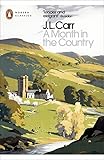
A Month in the Country by J.L. Carr: A sealed room in memory furnished by the past

This is my review of A Month in the Country (Penguin Modern Classics) by J.L. Carr.

Shell-shocked by his high-risk role as a signaller in the carnage of the First World War trenches, and depressed by the break-down of his marriage, Tom Birkin immerses himself in the delicate task of revealing an ancient mural thought to be concealed beneath centuries of lime-wash in an ancient parish church. We see Tom’s growing identification with the artist who created what turns out to be a masterpiece. There are vivid descriptions of the different colours used – “Spaynishe white, Baghdad indigo, Cornish malachite, terre verte”, the relative durability of the paints, and the fine balance needed between cleaning the grime of a painted hand, or finding that “just another touch will shift the hand itself”.

The eccentric old lady who has financed his labours in her will, has also left a bequest for the location of the grave of an excommunicated forbear, who must have been buried outside the cemetery. This work is being undertaken by Charles Moon, beneath his ebullient exterior as damaged by his wartime experiences as Tom, but for different reasons. The two men become friends, with Birkin in particular entering into village life, gaining acceptance and renewed health in the process.

Fifty years later, Tom looks back on this brief period during the long, hot summer of 1920, spent in the close-knit North Yorkshire village, in its as yet unspoilt, idyllic setting . This short novel, drips with nostalgia, Hardy without the grim tragedy of Jude and Tess, an evocation of a past way of life, perhaps a little idealised in that the summer weather is too fine, and the gossip a little too affectionate.

At the core of the novel is the unspoken mutual attraction, the meeting of minds, between Tom and Alice Keach, the improbably lovely young “Botticelli’s Primavera” wife of the pale-eyed vicar, with a “cold, cooped-up look about him”. If Tom and Alice fail to grasp the opportunity for a relationship, will they regret it for the rest of their lives? Is their love derived from the dreamlike quality of a transient period, enhanced by memory, and would it fade and become banal if they acted upon it?

Many incidents are culled from Carr’s own life, since he did not baulk at basing his characters on real people, anonymously, of course. So, the village of Oxgodby is based on Carlton Miniott where he grew up. Birkin’s embarrassment at being sent off by the double-booked station-master-cum-Methodist preacher to lead a tiny congregation, is based on an ordeal imposed on the author by his own father. Alice Keach, unaware of her beauty, may well be modelled on some past love of Carr’s whom the secretive author never revealed.

Perfect in style, structure and pace, for such a short work, this atmospheric, bittersweet tale manages to pack in more moments of comedy alternating with poignancy, and perceptive reflections than many a longer novel. In his subtlety, J.L.Carr can even make us feel a little sorry for the Reverend Keach. This is the kind of book one is sad to finish and likely to read again over the years.

⭐⭐⭐⭐⭐ 5 Stars

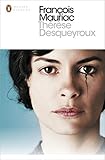
Thérèse Desqueyroux – Trapped

This is my review of Thérèse Desqueyroux (Penguin Modern Classics) [ Language:English ] by Francois Mauriac.

Inspired from his youth by the real-life case of Blanche Canaby, accused of the attempted murder of her husband, Mauriac developed the classic tale of Thérèse Desqueyroux, a character who fascinated him so much that she figures in two subsequent novels.

In the opening chapter, the charge of poisoning her husband Bernard is dropped against Thérèse Desqueyroux, after he has lied to “get her off the hook” for the sake of appearances. The rest of this short novel is an exploration of why she committed the crime, and the aftermath of her acquittal. Set in the pine forests of Les Landes near Bordeaux, this is a study of the stifling convention and hypocrisy of bourgeois landowning families in 1920s France. Intelligent and “charming”, if not exactly “jolie”. Thérèse has passively accepted her lot, which is to marry Bernard, son of the neighbouring family and step-brother of the bosom friend Anne for whom she may harbour more than a schoolgirl crush. Prior to marriage, she is quite attracted to Bernard, with the added appeal of his property to be combined with her inheritance. Too late, she realises the extent of his dullness, growing tendency to over-eating and hypochondria, but perhaps worst of all is the sexual contact for which she has not been prepared – in time, his mere physical presence repels her.

Having recently seen the film version of this novel, starring Audrey Tautou, I was reluctant to read this for a book group: although sympathetic to Thérèse’s sense of being trapped, I was alienated by the irrational and excessive nature of her attempt to murder Bernard. Having read the novel, and gained an insight into her thoughts, I continue to regard Thérèse as psychopathic in her coldness, showing a lack of maternal feeling for her daughter Marie, and jealousy towards Anne, stabbing in the heart the photograph of her unsuitable lover and, with an ulterior motive which does not bear close analysis, joining readily in the family plot to separate the pair. When she is driven to contemplate poisoning herself, she is unable to do so, but at least recognises the “monstrous” aspect of this, since she was quite prepared to poison Bernard without compunction.

On the other hand, although I do not think Mauriac adds much to the theme of female repression which has been covered so often – perhaps in part because he finds it hard to get inside a woman’s mind – it is the quality of Mauriac’s writing in the original French, less so translated into English, which impresses me. I like the way he plays with time, mixing together present situations and fleeting thoughts about the past or future in a kind of stream of consciousness which must have seemed quite radical at the time. His portrayal of the pine forests in changing weather, to which Thérèse can clearly relate better than to people, is striking. He tends to write in emotionally violent terms about overwrought dysfunctional characters tied together by social bonds – the title of his famous “Knot of Vipers” being a good example of this. His bitter, vituperative flow, full of images of walking over the still warm ashes of a landscape one has burnt, being frozen in the immense and uniform ice of an oppressive environment or drowning oneself in the crowds of Paris, holds one’s attention, even when having little liking for the characters or even perhaps the author himself.

⭐⭐⭐⭐ 4 Stars