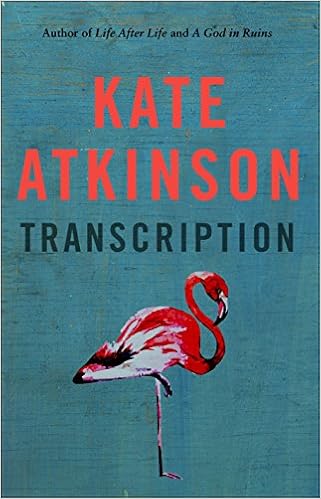
“Transcription” by Kate Atkinson – No need for a bodyguard of lies when truth has vanished.

There are plenty of stories of naïve young women caught up in World War Two who prove plucky and shrewd when parachuted into occupied France to work in espionage or join the Resistance. This novel focuses on a more mundane form of spying, and at times almost seems like a parody of the genre.

Obliged by her widowed mother’s terminal illness and death to give up her school scholarship and prospect of trying for Oxford, Juliet Armstrong finds life taking an unexpected turn when she is recruited by MI5 in 1940, initially as a typist transcribing bugged conversations between Fifth Column Nazi sympathisers and “Gordon Toby”, the work colleague masquerading as a Gestapo agent.

Pehaps intentionally, the recorded conversations are monumentally boring and trivial – little threat to national security – but when Juliet is recruited to spy on one of the female members of an ultra-right wing club, matters take an unexpected sinister turn. As the plot switches continually between 1940 and 1950, when Juliet is working on childrens’ programmes at the BBC, the tale becomes less of a spy thriller, and more a case of paying the price for past actions.

At times the story is quite funny, even a page-turner creating the sense that the plot is going somewhere interesting and unpredictable. Therefore I tried to suppress my irritation (over the excessive use of asides in brackets!), together with a sense of unease over the underlying jokey, flippant attitude to war, which seems an aspect of Juliet’s personality. She is actually quite an unappealing character: instinctive lying without blinking, often for no apparent reason; getting a “buzz” from taking the occasional fool-hardy risk; proving ruthless and calculating under pressure; perhaps the ideal spy in her lack of emotion or commitment to anyone or anything. She is kind to dogs, or people who have suffered inadvertently through her actions, but does not seem deeply moved by anything.

This impression may be the unintended consequence of shortcomings in the writing. I agree with other reviewers who have found the characters wooden and underdeveloped, the few really dramatic incidents implausibly contrived, and the long-anticipated climax so disconnected from what has gone before that it seems as if pages have been left out in a printing error. It is presumably intended to be a clever and surprising twist, but it seems like lazy writing, even insulting, to foist it on the reader in this way.

Whereas most writers apologise for any factual mistakes in a novel, Kate Atkinson defiantly admits “I got a lot of it wrong on purpose” – permissible in the case of MI5’s refusal to “spill the beans” on the transcription process. The portrayal of BBC School Broadcasting in the early 1950s seems accurate as I recall, and it does not bother me if the rest is not. What I find harder to accept is an established writer taking the soft option of a plot with gaping holes.
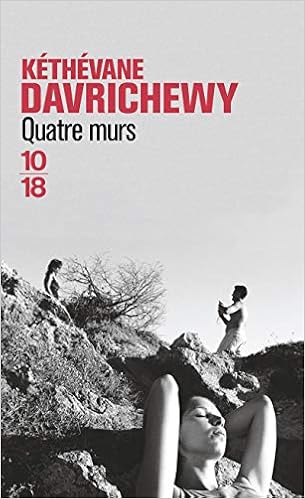
“Quatre Murs” by Kéthévane Dvarichewy – They mess you up your family….

As is often the case, although very close as children, four siblings have drifted apart into adult life. All they seem to have in common is a tendency to be troubled, even neurotic, perhaps owing to past repressed events which are gradually revealed.

In the prologue, they are brought together physically by the final visit to the childhood home which their widowed mother has decided to sell. This inevitably triggers nostalgic memories, but tension is aroused by the mother’s wish to give some of their inheritance in advance to her two younger and less successful children, the twins Elias and Rena.
The “four walls” of the title seem like a metaphor for the four adult siblings who need to decide whether they want to rebuild their relationships to prevent their family group from crumbling, once it has lost the “anchor” of the family home. To do this, they have to understand their relationships in the first place, which is hard in view of all the unspoken resentments, real or imagined guilt of the past.

A reunion with their mother two years later at the Greek holiday home purchased by elder son Saul creates a situation in which the four can reflect on the past, perhaps make a few confessions and ultimately begin to rebond. The author uses the device of taking a different view point in each chapter: that of Saul, the “intellectual”, successful but troubled former journalist; then Hélène, the internationally known creator of perfumes who has perhaps erected a false screen of not wanting either children or a man in her life; Elias, who has not achieved his potential as a pianist and is separated from his wife, and Rena who has suffered a crippling accident, leaving her dependent on a crutch, perhaps another metaphor for emotional clinging to others.

Is perception of the past changed by the passage of time, or does each individual see it in his or her own way? Memories take root differently, with hate linking us as much as love. Do only children, like their parents, make a fantasy out of having a large family, thus creating a heavy burden for their own brood of children? People worry how their children will turn out, what they can do to avoid mistakes in their upbringing, all the while finding it hard to see themselves as parents. Such are the observations produced by the characters’ continual navel-gazing.

There are some strong dialogues (sometimes hard to keep track of who is speaking), leading me to wonder if this might have worked better as a film which could also have captured visually the ambience of the childhood house, or Saul’s Greek retreat. Critics have noted the subtlety and “non-dits”, unspoken words, of this novella, so perhaps I missed some of the revelations. For me, these proved too fragmented, the details sometimes hard to follow, except when delivered in a melodramatic outburst. One could argue that the real drama lies in the reader’s freedom to speculate over what may really lie behind all the obscure hints and allusions. For instance, do incestuous feelings lie at the root of a character’s malaise? Can it be hard for the siblings in general really to love anyone outside the charmed circle of their childhood bonds, now broken without being fully satisfied by anyone else?

The French author may have been inspired by her Georgian heritage to create a family with parents who were originally Greek immigrants, one of Jewish extraction, but it was unclear to me how being immigrants influenced the essential exploration of family ties, except that feeling a little rootless may have encouraged the mother to foster excessively tight bonds between her children.

A potentially promising novella left me rather bored and disappointed with its underdeveloped characters, thin plot, and somewhat tame conclusion.

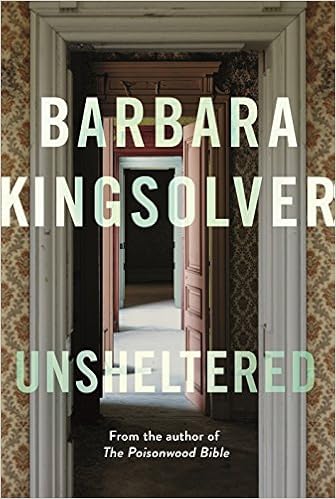
“Unsheltered” by Barbara Kingsolver

Willa, whose name may have been inspired by the celebrated American writer Willa Cather, has inherited a suburban house in New Jersey which is unfortunately falling down through lack of foundations. This is perhaps a metaphor for a middle class family fallen on hard times, so “unsheltered” from both personal problems plus those of a world threatened by climatic change and the collapse of capitalism, to name a couple of issues. Willa has to cope with a handsome, charming but unreliable husband who seems unable to keep his academic posts, even when it is not his fault, in addition to disabled father-in-law “Old Nick”, free-spirit, prickly daughter “Tig”, and son Zeke, traumatised by his wife’s post-natal suicide leaving him with an infant son he will inevitably dump on his mother.

This storyline interweaves in alternate chapters with that of a family from 1871, a century and a half previously, who occupied the same house in Vineland, one of the “Nineteenth-Century Utopias Gone to Hell”. Willa’s unlikely counterpart is Thatcher Greenwood, the earnest new science teacher whose passion for Darwin’s theories and other fresh discoveries such as the existence of molecules, are ahead of the times, even judged “heretical” in the conservative, pious small town community. With his pretty but shallow wife Rose, who cannot come to terms with the need to economise, nor give her husband the support he needs, the situation is reminiscent of Doctor Lydgate and his wife Rosamond in “Middlemarch”. Thatcher finds a kindred spirit in his neighbour, the eccentric investigator of spiders and carnivorous plants, botanist and thinker Mrs Mary Treat.

Such is the standing of the bestseller, “The Poisonwood Bible”, with its brilliant first part on the inflexible American missionary who drags his family off to the Congo to cultivate the land and convert the local people without understanding either, that it feels presumptuous to find fault with this book. I was also sufficiently fascinated by the idea of climate change causing Monarch butterflies to migrate to the Appalachians to forgive the tedious passages in “Flight Behaviour”. Yet much as I wanted to enjoy “Unsheltered”, written by a scientist with a sincere desire to explore environmental and social issues, and based on thorough research of the real-life Vineland and Mary Treat, who corresponded with Darwin, I found it intolerably heavy going, bogged down in the flaws increasingly evident in earlier novels, without enough redeeming features despite the potentially interesting themes.

The style is too convoluted, digressive and crammed with indigestible detail. The mostly undeveloped, two-dimensional characters indulge in contrived, stilted conversations which are an all too obvious device for information dumps and debates on what we should think about important issues, with “incorrect” ideas given a put-down, if only in thought, by right-thinking people like Willa. There’s also a tad too much of the saccharine tone: when Mrs Treat unexpectedly “twinkled” over Thatcher’s admiration for her tarantula house, my heart sank.

In the midst of all her domestic ties, former journalist Willa is intrigued to find out more about Mary Treat, but there is not enough to tie together the two strands which might have been more eengaging if divided into two separate novels, or as some have suggested a straightforward piece of non-fiction on the state of our society.

“The Song of Achilles” by Madeline Miller – Doomed Beauty

Despite as a rule giving supernatural and magic realism a wide berth, I find Greek and Roman myths and Homer’s Iliad and Odyssey intriguing examples of storytelling and creative writing from nearly three thousand years ago. With an academic background in the Classics, Madeline Miller has produced a vividly imagined modern take on the famous drama of the warrior Achilles and his friend and lover Patroclus. After a decade of research, she has crafted a tightly plotted tale to which we can relate, despite the different values and customs of the day, through the well-developed main characters and dialogue which is modern, without jarring.

The story is told from the viewpoint of Patroclus, a Greek prince who is exiled from his unloving father’s kingdom at the age of only nine for having accidentally killed a boy who bullied him. At the court of the kindly King Peleus, Patroclus catches the eye of his charismatic son Achilles, and the two become firm friends and eventually lovers. With the sea goddess Thetis for a mother, Achilles is fated to become immortalised in memory as the greatest warrior of his generation, the price being that he will die young. This seems likely to happen sooner than he and Patroclus might wish, since the Greek kings and princes are bound by an oath to fight for the return to Menelaus of his beautiful wife Helen, who has been abducted (perhaps willingly) by the reckless Prince Paris of Troy.

For a Me Too protagonist this book may seem beyond the pale, the treatment of women as booty along with golden goblets, slavery and rape of women being taken for granted, often at the hands of the men who have slain their male relatives in battle. Even female deities do not escape this: the virtuous Peleus was rewarded by the gods by being allotted the sea-nymph Thetis to give him a child, but was expected to use brute force to overcome her resistance.
In a confined Mediterranean natural world where so much is unknown or inexplicable, no one in this book questions long-held superstitions, the role of the capricious gods in determining the course of events or the “pecking order” of the deities, in which Thetis, though powerful by human standards may have to beg Zeus for a favour, or be unable to explain a prophecy from the Fates, “well-known” for their riddles. With her eyes “dark as sea-wet rocks and as jagged”, her clinging dress “shimmering like fish-scale”, she sustains a vicious contempt for Patroclus. “He is not worthy of you” she tells her son, although events may prove otherwise.

I liked the lighter moments of humour in the blend between fantasy and practicalities as when kindly centaur and teacher of men Chiron is disappointed to hear that the boys have been taught to ride: “Forget what you learned. I do not like to be squeezed by the legs or tugged at”. Patroclus found “the centaur’s gait was less symmetrical than a horse’s…I slipped alarmingly on the sweat-slick horsehair.” On first meeting, Patroclus is fascinated by “that impossible suture of horse and man, where smooth skin becomes gleaming brown coat”.

Although the love between Patroclus and Achilles is portrayed with sensitivity, it seemed to me like a rather feminine take on male love. Similarly, the blood and guts of battle appear somewhat sanitised in the protracted Trojan War, with the Greeks setting off from their camps on the beach across a plain to reach the city walls, rather like a road construction gang going off to work. Admittedly, the book builds up to a violent climax, perhaps all the stronger for brutality having been underplayed earlier.

As Achilles loses the innocence of youth and starts exploiting his reputation as a fighter to challenge the corrupt actions of the unpleasant war leader Agamemnon, the unthinking acceptance of the glory of prowess in battle gives way to more complex considerations of the misuse of power, even with good intentions, which may lead to stubborn pride and hubris. Apart from a rather sentimental final paragraph, if you can cope with a ghostly spirit “the faintest shiver in the air” as the deceased narrator, the novel achieves a condensed but quite neat and thought-provoking ending. The simple value of human love, like that between Achilles and Patroclus may be shown to have more worth than artificially god-fuelled fighting skills. The desire to be a mere mortal may win out over the heartless arrogance of Pyrrhus, the unfortunate son of Achilles whom Thetis tried unsuccessfully “to make.. a god”.

I was prompted to read this by reviews of Pat Barker’s “The Silence of the Girls”, which has a feminist take on the story of Achilles and Patroclus from the viewpoint of Briseis, cast as a Trojan king’s daughter rather than the Anatolian village girl of this version. Although women play a much smaller part in Madeline Miller’s story, I found her tale less viscerally violent with a more subtle and satisfying plot and the characters of Achilles and Patroclus much more fully developed, complex and arousing empathy. It’s worth reading the two novels for comparison.

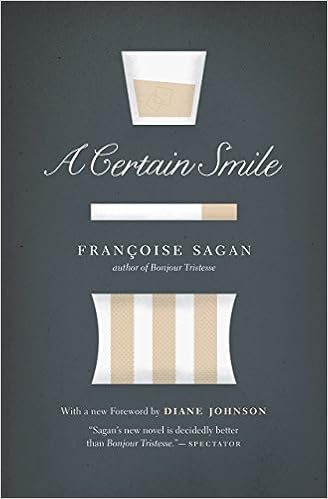
A Certain Smile by Françoise Sagan

Bored with her law degree course in Paris, drifting through a comfortable but passionless relationship with somewhat possessive fellow-student Bertrand, Dominque is intelligent and introspective, with a sharp wit, yet at around twenty still quite inexperienced and immature. So she is ripe for seduction by Bertrand’s attractive, worldly-wise uncle Luc, who claims to see in her a kindred detached, cynical spirit and suggests they embark on a short affair. She cannot resist the temptation, despite not wishing to hurt either Bertrand or Luc’s kindly wife Françoise who wants to buy her smart clothes and generally mother her.

All too predictably, Dominique gets more than she bargained for. Will the affair end in tragedy, or leave her wiser, shaken out of her pose of treating life as absurd, living as she does in the 1950s existentialist Paris of Sartre and his friends? With her spare, skilfully honed prose, Sagan captures a sense of place and the spirit of the times, also managing to evoke empathy with Dominique, despite her rather unappealing passivity at times and perpetual self-absorption. She sustains an underlying sense of nihilism buoyed up with moments of wry humour and false gaiety, ending on an upbeat philosophical note, which may prove short-lived.

Already a bestselling author at the age of eighteen with “Bonjour Tristesse”, Sagan is impressive in her precocious ability not only to construct a sharply observed, tight novella, but also to portray the psychology of a young woman without a clear sense of direction, who finds herself wanting what she cannot have, yet dissatisfied by what is available. The fact Sagan was so close in age to her subject gives the novel authenticity, although she was adamant at the time that her books were not autobiographical, rather captured moments of life.

Reading more about her life I learned how Sagan became addicted to alcohol and drugs, had a string of unhappy relationships, apart from with the fashion designer Peggy Roche, had to give up recorded interviews in later life after turning up once too often haggard, emaciated and in a confused state and died with heavy debts at the age of only 69. Perhaps she had more in common with her characters than she cared to admit, as regards an aching void beneath the brittle hedonism.

This novel is best read in French to appreciate the style, which adds depth to an otherwise slight tale.

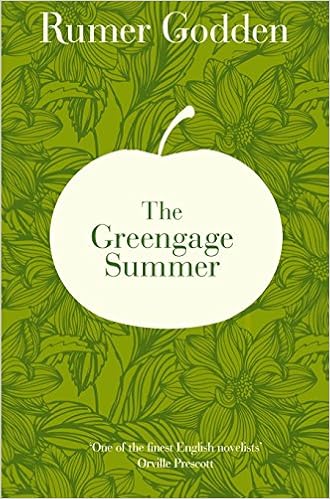
The Greengage Summer by Rumer Godden

Published in 1958, this modern classic, a subtle psychological drama which manages to be both poignant and amusing about the loss of childhood innocence in a confusing adult world, was inspired by the author’s own experiences on a family visit to France in the early 1930s. Whereas the well-known film of 1961 has dated, the book retains the power to hook both teenagers and older readers.

With a botanist father who spends most of his time travelling abroad, and a mother who struggles to cope, narrator Cecil Grey and her four siblings chafe against the tedium of life in the pebble-dash suburbia of “Southstone”. Their mother’s impulsive plan to shock them out of their self-centred moaning by showing them the French battlefields, goes awry when she develops septicaemia from a horse-fly bite, and has to be hospitalised. This coincides with the eldest sibling Joss being perhaps somewhat implausibly struck down with acute PMT for several days. It is a plot device to free the other children to run wild in the French hotel where they are reluctantly accepted as second-class guests. Superficially charming and characterful it is in fact the scene of some shady goings on, as gullible foreign visitors to the nearby battlefields of the Marne are conned with a regularly maintained bloodstain on a carpet, and a human skull buried daily in the garden to be dug up by the hotel’s dogs.

Gorging themselves on the windfall greengages in the orchard so that they are too full to eat them when served up at dinner, only Cecil who knows some French (from having to write out French poetry as a punishment at school) realises that they are being used as “camouflage” for the scandalous relationship between the proprietor Madame Zizi and her charismatic English lover Eliot. A kind of unofficial guardian for the children, who adore him, he is a complex character, showing empathy for them, as when he gives Willmouse, the only boy in the family, an art book to feed his precocious interest in fashion design, but the suspicion grows that Eliot is mainly motivated by his infatuation with Joss, a beautiful sixteen-year-old who is beginning to grasp and exploit the power of her sexual attraction.

Deeply evocative and nostalgic in its descriptions of life in a historic French town on the banks of the Marne, and lightened with many humorous moments, this slow-burn study of human interaction morphs into a faster paced, tense crime story with one of those abrupt endings which leaves one reflecting on events and deciding for oneself what happens next.

Very successful in her day, Rumer Godden is one of those now forgotten authors who repays revisiting.

“The Greengage Summer” by Rumer Godden – growing pains

Published in 1958, this modern classic, a subtle psychological drama  which manages to be both poignant and amusing about the loss of childhood innocence in a confusing adult world, was inspired by the author’s own experiences on a family visit to France in the early 1930s.  Whereas the well-known film of 1961 has dated, the book retains the power to hook both teenagers and older readers.

With a botanist  father who spends most of his time travelling abroad, and a mother who struggles to cope, narrator Cecil Grey and her four siblings chafe against the tedium of life  in the pebble-dash suburbia of “Southstone”. Their mother’s impulsive plan to shock them out of their self-centred moaning by showing them the French battlefields, goes awry when she develops septicaemia from a horse-fly bite, and has to be hospitalised. This coincides with the eldest sibling Joss being perhaps somewhat implausibly struck down with acute PMT for several days. It is a plot device to free the other children to run wild in the French hotel where they are reluctantly accepted as second-class guests. Superficially charming and characterful it is in fact the scene of some shady goings on, as gullible foreign visitors to the nearby battlefields of the Marne are conned with a regularly maintained bloodstain on a carpet, and a human skull buried daily in the garden to be dug up by the hotel’s dogs.

Gorging themselves on the windfall greengages in the orchard so that they are too full to eat them when served up at dinner, only Cecil who knows some French (from having to write out French poetry as a punishment at school) realises that they are being used as “camouflage” for the scandalous relationship between the proprietor Madame Zizi and her charismatic English lover Eliot. A kind of unofficial guardian for the children, who adore him, he is a complex character, showing empathy for them, as when he gives Willmouse, the only boy in the family, an art book to feed his precocious interest in fashion design, but the suspicion grows that Eliot is mainly motivated by his infatuation with Joss, a beautiful sixteen-year-old who is beginning to grasp and exploit the power of her sexual attraction.

Deeply evocative and nostalgic in its descriptions of life in a historic French town on the banks of the Marne, and lightened with many humorous moments, this slow-burn study of human interaction morphs into a faster paced, tense crime story with one of those abrupt endings which leaves one reflecting on events and deciding for oneself what happens next.

Very successful in her day, Rumer Godden is one of those now forgotten authors who repays revisiting.


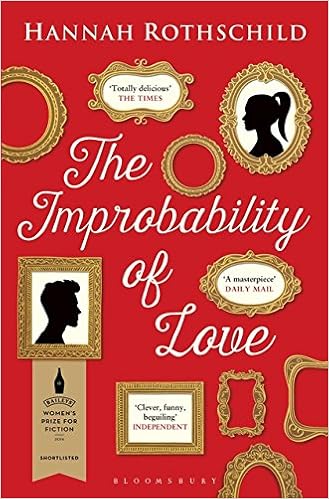
“The improbability of love” by Hannah Rothschild – pas pour “Moi”

Whereas the prologue to a novel is usually a short, sharp dramatic incident to “hook” the reader,  this starts with an indigestible litany of the caricatured stereotypes of super-rich clients converging on the Monachorum auction house, and the staff baited to lure them into bidding up the price of “The Improbability of Love”,  a painting hyped as likely to sell for a record sum. The storyline then switches back six months to the lovelorn Annie buying the painting for only £75 on an impulse, thus rescuing the masterpiece in its neglected and unrecognised state from half a century spent in a rundown antique shop.

The author is undeniably articulate with a vivid imagination,  her professional knowledge of how paintings may be cleaned, dated, attributed and interpreted is quite interesting, and the book seems to have delighted many reviewers, but I found it almost unreadable, a frothy confection with a hollow centre.

Part farce, part Mills and Boon romance, past crime thriller, it falls short for me by reason of its ramshackle plot, with implausible twists and many niggling inconsistencies in the basic telling. It is too long, by reason of the continual wordy digressions. Even the painting, which adopts the irritating habit of addressing us, has to remind us in a gimmicky seven line Chapter 11: “Hello. I am still here…….Moi”. Arch and snobbish after spending centuries in gilded salons, it cannot identify modern cars by name but has somehow acquired some knowledge of modern life despite being stuck in a shop for fifty years.  I would rather have had a thread about the painter’s creator Antoine Watteau running through the book.

Was this written as a ludicrous parody of the art world to amuse friends “in the know”?  I was struck by the chapter which, instead of creating an exaggerated stereotype, dissects a real-life artist in the form of Damien Hirst.  When boorish exiled Russian oligarch Vlad visits the Tate Modern retrospective, he encounters sharks in formaldehyde in glass tanks, rooms full of medical equipment and a piece made of dead flies and diamonds. “Suddenly he got Hirst: the man was a brilliant comedian making a joke out of life and the art world and all those who took it seriously……you can encase anything, add jewels and precious metals, but it’s still the same old s***.”  (This is a quotation from th book). Presumably, Hirst is happy about this representation, as a form of free  publicity.

In contrast to the turgid detail of earlier chapters, the ending feels quite condensed and rushed, as if the author has bored herself and grown anxious to finish it.

Truth seems stranger and more entertaining than fiction, also provoking a real debate over the value we put on works of art.

A recent example is the purchase at the record price of $450.3 million dollars of  the long lost “Salvator Mundi” which may well be, though possibly only in part, the work of Leonardo da Vinci but claimed to have been so heavily restored that the Louvre Abu Dhabi postponed its initial plan to display it.

I am also  reminded of the excellent and highly recommended “The Vanishing Man: In Pursuit of Velazquez” by Laura Cumming,  who  demonstrates some of the problems of attributing paintings correctly to their creators. It is also disturbing to read about the dealer who, having cleaned up a “Velasquez” to make it more attractive to a buyer, had it darkened and aged to fetch a better price.

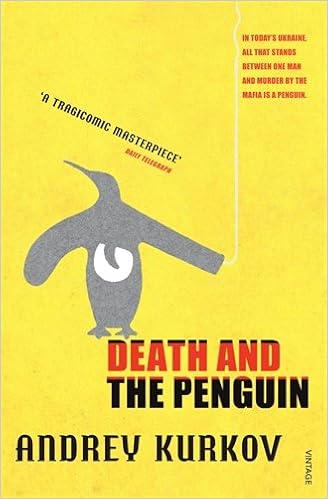
“Death and the Penguin” by Andrey Kurkov – modern Kafka’s comic black art imitated by life

What is on the surface the whimsical tale of a lonely failed writer who forms a bond with the penguin he saves from Kiev Zoo when it can no longer afford to feed its exhibits, is underlain by the bleakness and black humour of the searing indictment of a state recently emerged from communism but still bedevilled by acute shortages and corruption.

Viktor is initially delighted to be given what seems like a well-played sinecure writing “obelisks” or obituaries of influential people for a newspaper, until the realisation dawns that he is somehow implicated in the premature demise of the subjects involved. In a modern take on Kafka, he is not quite clear about the nature of the crime to which he is turning a blind eye, but grasps that if ever it is explained to him, it will mean that he too has become dispensable and his own life will be on the line.  The fact that, as a reader, one feels frustrated and a bit wanting in not fully understanding what is going on only adds to the surreal nature of the story.

It is not surprising that everyone seems to consume so much alcohol to deaden their feelings in this grim society. This provides one of the many examples of dark comedy, in which Sergey, the kindly district militiaman who becomes Viktor’s only true human friend, assures a drunken angler that he is “seeing things” when Misha the penguin pops up out of the ice hole in which he is fishing: “Perhaps he’ll ease off the drink a bit” he quips, unable to give  up  policing people’s habits even when off duty, and somewhat hypocritically since he too knocks back large amounts of cognac.

The Ukraine is portrayed as a country in which ambulance drivers have to be bribed to take a sick man to hospital where there is a lack of medicine to treat him anyway, and potatoes seem to be the staple diet, while wealthy criminals will pay $1000 to hire a penguin as a gimmick at the fashionable funeral of a contract killing victim featured in one of Viktor’s obituaries – the irony is endless.

The author does not judge Ukrainians who have been driven to a pragmatic acceptance of corruption,  but describes the lonely penguin, by nature a creature evolved to work in a supportive community, as a metaphor for people living in a post-communist society who suddenly find themselves cut adrift from a mutually supportive community, and alone in a world with new, unfamiliar rules of life.

Having written the novel in 1996, Kurkov has been only temporarily gratified and ultimately depressed to find his art imitated by life in the recent moral and political chaos of the Ukraine. With first-hand experience of  artistic friends liquidated by contract killers, one hopes that this perceptive writer will be safe.

The dramatic climax of this book seems unduly rushed and the ending abrupt, but also quite neat, leaving at least one striking loose end but paving the way for a sequel, or two.

“The Silence of the Girls” by Pat Barker – unimaginably distant times

The Silence of the Girls by [Barker, Pat]

In this retelling of the aftermath of the fateful argument between Achilles and Agamemnon during the Trojan Wars, Pat Barker takes the viewpoint of Briseis, the high-born woman taken captive as part of the booty from the city of Lyrnessus. Having witnessed Achilles actively involved in the brutal killing of her husband and brothers, she suffers the further trauma of being accepted as his “sex slave”. She is scornful of the women who fawn on the men who possess them to wheedle favours, but knows there is a fine line between this and annoying Achilles so that he hands her over to the common soldiers to share, in what she describes as “a rape camp”. When Patroclus, the friend of Achilles with whom Briseis forms an unlikely friendship offers to persuade Achilles to marry her, she observes how it must appear shocking that she can contemplate such a course of action, yet when reduced to slavery one is prepared to consider almost any way of improving one’s lot.

No doubt hardened by her string of First and Second World War novels, Pat Barker does not flinch from describing scenes of great brutality in battle, alternating with the somewhat contradictory and ludicrous rituals to both desecrate and honour and the person one has killed. Yet her main interest is clearly the role of women in the Trojan wars, the stoical acceptance of their lot as they prepare food, wash clothes and care for the sick to keep the camp going.

The tone is often deliberately modern, colloquial, foul-mouthed, I assume in an attempt to draw parallels between people past and present, enabling us to identify better with the former as “real”. I agree with readers who find the attempt to punctuate an ancient legend with modern anachronisms jarring and who are irritated by the sudden switch part-way to the point of view of Achilles, which tends to undermine a distinct focus on the lives of the forgotten and undervalued women. This is not a feminist novel in the sense that women do not rise up in rebellion against their treatment, nor seriously question the constraints under which they have to live. Descriptions of roles in the camp are often quite dull, for that is what they were.

I found myself curiously unengaged by the book, perhaps because too many incidents rely on magic. So we see the capricious gods punishing the camp with a plague of rats since Agamemnon refuses to release his “bed woman” to her priestly father. Achilles is able to shout so loudly from the camp that his war-cry can be heard in Troy, causing strong men quake. Since he is in need of a suit of protective armour, his mother the goddess Thetis rises from the waves to supply him with a perfectly fitting and flexible one. Having slain Hector, he drags the body behind a chariot daily to dishonour it, only to find that the gods have “defied” him by restoring the corpse to its original state.

Although it is very readable and quite imaginative in reworking the “facts” of the Iliad, I am more impressed by Pat Barker’s books on C20 wars, which seem to provide greater scope for creative writing with character development and plot twists. As it is, Achilles seems merely moody and brutish, fated to die shortly as the price of becoming a legendary super killing machine; Patroclus is portrayed as implausibly empathetic and kind, since he massacres the enemy alongside Achilles without any evident qualms, and the nature of the relationship between the two remains blurred. Briseis is parcelled up like a commodity for a decent enough new husband who will protect her, so her feminism is limited to a C21 awareness of brutality and exploitation which she is unlikely to possess. The final chapter is disappointing: a rushed information dump of bloodthirsty violence to round off the tale.