Miss Buncle’s Book by DE Stevenson

When her dividends dry up in the 1930a depression, Barbara Buncle sets about writing a book for publication to make ends meet, using the male pen-name of “John Smith” to cut more ice with the publisher. Since, to use her own words, she has “no imagination” this is inevitably about the doings of the inhabitants of her village of Silverstream, whom she has known for years. Mr. Abbott of Abbot and Spicer agrees to publish the book because the characters seem so real, and is also intrigued by the puzzle as to whether the author is writing subtly “tongue in cheek” or “a very simple person writing in all good faith” based on acute observation. The bestselling “Disturber of the Peace” provokes outrage among those who discover that they have been blatantly parodied in the clearly recognisable village which has been renamed “Copperfield”. They are determined to track down and punish “John Smith”, but even when some suggest that the author may be female, it does not occur to them that she might be the dowdy and insignificant Barbara Buncle. Under pressure from Mr. Abbot to write a second book, what will she reveal next, will she be exposed and, if so, with what outcome?

I was initially reluctant to read this for a book group, expecting it to be dated, trivial and at best provide a bit of escapism from the modern world. On one level, it is all these things, but is also an insight into a past way of life, and written with the same kind of clarity and humour as apparently employed by Miss Buncle, it carries the reader along.

Dorothy (D E) Stevenson wrote stories compulsively from her childhood onwards and became a prolific and successful novelist of mainly romantic fiction, since then fallen out of print for decades. It is interesting to speculate how she would have used her talent in different circumstances: if born a man like her father’s cousin Robert Louis Stevenson, she might have written adventure stories; if born now, she might have applied her fertile imagination to TV drama series. As it was, she followed the conventions of her time in which a widow living beyond her means could not think of finding a job but had to scheme to trap a wealthy husband; a vicar’s wife who found it extravagant to hire a taxi still had three servants and a nanny; men dominated their wives who had to resort to subtly manipulating them without appearing to; the two women who lived together were never explicitly referred to as lesbians, but the intelligent one who had never been allowed to get educated and develop her brain is shown playing the “male” role to support her weak and indecisive partner, and so on.

So, in writing about a world in which “the good ended happily and the bad unhappily – that is what fiction means”, Dorothy Stevenson is worth reading mainly for her humorous observation of human nature.
Washington Black by Esi Edugyan: relentless quest

Washington Black: Shortlisted for the Man Booker Prize 2018

Born into captivity in 1818 on the inaptly named Faith Plantation in Barbados, George Washington Black wields a hoe to weed the fields from the age of two, progressing to cutting the sugar cane by the time he was ten years old, with only Big Kit, the tough, superstitious slave woman from Dahomey to look out for him. The arrival of a sadistic new master in the form of Erasmus Wilde brings a turn for the worse in an already bleak situation, Big Kit tells “Wash” of her plan to kill them both, as a means of escape back to freedom in their African “homeland”, but fortunately for him, holds back from committing this extreme act. Wash then catches the eye of the master’s brother Christopher, known as “Titch”, a very different man, liberal-minded and obsessed with scientific discoveries, including the perfection of his “cloud-cutter”, a kind of hot air balloon for which Wash will “provide ballast” but also prove useful as an assistant, with a natural talent for drawing.

When Wash and Titch are forced eventually to escape from the plantation, the book becomes a mixture of adventure yarn and right-of-passage novel. The scene moves from Barbados to England, even Morocco, via America and Nova Scotia. Undoubtedly original and imaginative, the prose includes some striking passages, such as the description of the octopus which Wash encounters and catches when he has somewhat unbelievably dived down to the shallow seabed with minimal training.

I chose to read it partly because I was so impressed by Esi Edugyan’s earlier work, Half Blood Blues, with the added incentive that both books were shortlisted for the Man Booker Prize. However, I have a number of reservations. The plot hinges on some highly implausible dramatic incidents, which I suppose could be accepted on a par with “magic realism”, but there is also a reliance on far too many unlikely coincidences. It is frustrating to know that the book was inspired by real events, without knowing exactly what they were.

I realise that the dialogues may be intended to reflect the speech of the period, but they often seem stilted and artificial, while apart from Wash, the characters are not developed as rounded, convincing individuals. Although Wash is a sympathetic hero, I did not believe that an illiterate and brutalised slave could narrate this tale at the age of only eighteen, using such a sophisticated vocabulary and displaying so great a level of knowledge and understanding, based on perhaps a maximum of four years in Titch’s company, spending the rest of the time in unskilled manual labour. This seems like yet another case of a first person narrator being given the “voice” of the author, a problem which could have been avoided by writing the whole thing in the third person.

In its defence, the book also includes some intriguing themes, such as the extent to which, perhaps because of suffering in early life, some of the main characters cannot sustain or even form relationships, and are driven to wander rootlessly through life, even viewing death as a means of escape to freedom. Another is how, even when he is technically free, Wash may still be exploited by white men who perceive themselves as liberal and anti-slavery.

In the case of this uneven novel with brilliant patches, duller tracts which lack narrative drive, and an ambiguous ending, I was left a little unsure as to what the author was trying to achieve.

“Laetitia Rodd and the Case of the Wandering Scholar” by Kate Saunders

Laetitia Rodd and the Case of the Wandering Scholar (A Laetitia Rodd Mystery Book 2) by [Saunders, Kate]

Widow of an archdeacon, Laetitia Rodd may have lost her social standing and comfortable lifestyle, but is not one to wallow in regrets. Instead, she relishes the opportunity to undertake investigations for her wealthy barrister brother, not only for the chance to earn a little but also for the intriguing situations in which they involve her, such as the chance to reunite the wealthy but terminally ill Jacob Welland with his brother Joshua, the “wandering scholar” of the title with whom he fell out too long ago “over a woman”. Before she manages to solve the mystery surrounding Joshua, she is distracted by the need to prove the innocence of two acquaintances accused of a murder of which she cannot believe them to be guilty, although the evidence against them is troubling.

This modern take on a Victorian detective story reminds me of Wilkie Collins’ “The Woman in White”. With its meandering plot loaded with often larger than life characters, it is an entertaining if lightweight read, made worthwhile by a strong sense of place and time, and a well-developed, sympathetic narrator in the form of Laetitia Rodd. She has a wry sense of humour, not taking herself too seriously. Although bound by the conventions and religious piety of the 1850s, she is fundamentally open-minded, admittedly as imagined by a C21 rather than C19 writer. When Inspector Blackbeard apologises for bringing her a cup of tea bought from a “not very genteel” stall, she has the sense to drink it because she is thirsty. If a servant suddenly inherits money which raises him into a different social class, she tries to help him to integrate rather than treat him with disdain. Similarly, if friends commits adultery or even murder, she tries to understand what led them to do so. While remaining essentially conventional and devout, she is open to other points of view, and to questioning her own.

The plot is tied up quite neatly at the end, leaving me with only a couple of minor queries. I like the way the author has brought together events both real and fictional from the period to weave into her plot: the story of the “poor Oxford scholar” in Mathew Arnold’s poem, who “tired of knocking at preferment’s door” went off to live with the gipsies where he imagines, like Joshua, that he can live according to the “ancient rhythms of passing seasons, outside the pressures of the modern world”; the ingrained social inequality of Victorian society for which a Tennyson poem, “Locksley Hall” provides a recurring metaphor, “every door is barred with gold, and opens but to golden keys”; the notorious murderer Eugene Aram, portrayed in Bulwer-Lytton’s 1832 novel as a romantic hero who killed to obtain the money he needed to get on in the world, justifying his crime because it enabled him to do good. So, this engaging detective yarn has an authentic, serious core, in raising complex moral dilemmas.

Article 353 du Code Pénal” by Tanguy Viel: Utter conviction (Article 353 in English Translation)

Despite its dry title, this short, unusual novel is a riveting masterpiece.
Under French law, a suspect in initially examined by a “juge d’instruction”, who gathers and evaluates the evidence to decide if it is sufficient to go to a trial. In this case, how can the suspect’s guilt be in doubt? We know from the outset that the narrator Martial Kermeur has pushed his unsuspecting companion Antoine Lazenec overboard during a fishing trip on the latter’s boat, left him to drown and calmly submitted to police arrest, thinking how he would have committed the action anyway, even if the police had been watching him at the time.

Closeted together for several hours, Kermeur recounts slowly to the judge , in great detail how he came to meet the flamboyant property developer Lazenec, and be ruined by him, alongside others in the remote, economically depressed community on the Brittany coast. Kermeur seems to have suffered a tidal wave of misfortune (there being many references to the sea): he has been made redundant, his wife has left him and, manipulated by the wily and ruthless Lazenec, in a foolish moment of pride Kermeur invests his redundancy money in Lazenec’s ambitious scheme to demolish the local chateau and convert the grounds into a holiday resort. When the scheme fails to materialise, Kermeur is left destitute and ashamed in the presence of his young son Erwan, who has always looked up to him.

This is not only a detailed psychological study of the interplay between the main characters, in which the details are skilfully revealed and the tension ratchetted up but also a vivid and moving portrait of a tight-knit community under pressure. Tanguy Viel presents Kermeur’s thoughts in a kind of stream of consciousness, often going off at a tangent, but very expressive. Kermeur often seems simple and garrulous, but he is also sensitive and perceptive, with a wry humour. He does stupid or unwise things, including a serious crime, and yet he arouses one’s sympathy. Justice must be applied to him, but in what form? Is the judge’s final decision justifiable?

Highly recommended for a good read and an interesting discussion. This is definitely best read in the original French, but I understand that the English translation by is good.

“Love is Blind” by William Boyd – a little off-key

When Ainsley Channon finds that his son is not unexpectedly making a hash of running the Paris branch of his piano manufacturing and sales company, he sends his protégé, young Scottish piano-tuner Brodie Moncur to use his initiative to improve business. In the process, Brodie becomes infatuated with Lika, a beautiful Russian aspiring opera singer. Their relationship has to be conducted in secret, since she is the mistress of the once celebrated but now physically declining and alcoholic pianist John Kilbarron. From the outset it seems doomed to fail, owing not only to Kilbarron’s jealous and unstable character but also the menacing presence of his “minder” brother Malachi, who may have designs on, even some hold over Lika as well.

It was never quite clear to me why Brodie loves Lika so much, in what seems like a purely physical relationship. She seems dull and devious, dragging Brodie down the same path, changing him from a purposeful, outgoing individual into a passive, moping drifter with his life on hold – but of course, as the title states, “Love is Blind”. Admittedly, Brodie has occasional insights, such as the fact that being in love does not guarantee happiness, while we can never truly know another person, even when there is supposedly mutual love.

I was disappointed by some aspects of the early chapters. The book opens with a detailed description of how to tune a piano, which made little sense to me in the absence of a labelled diagram or two, clearly out of place in a novel. It read like a piece of research conducted to give the story authenticity, but dumped rather clunkily into the text. Then there are the potentially interesting situations which do not lead anywhere, such as Brodie’s visit to the family home, where his widowed father “Malky” dominates eight of his children into adulthood, reserving particular venom for Brodie, the only one to have escaped so far. A charismatic preacher in public, Malcolm Moncur degenerates somewhat implausibly into a gross, drunken bully behind the scenes. Like too many of the characters, he comes across as a caricature. It is never clear why he detests Brodie so much. Is there any significance in the fact that he is so dark compared to his siblings?

The pace is slow as if an essentially thin plot is being padded out, until the novel reaches a dramatic climax at the end of Part 3, two-thirds of the way through. After this, the tension is more sustained, and some past threads are pulled together more, to reach a passably satisfactory ending.

With its varied locations, from Scotland to Russia and the remote Andaman Islands, and the extensive cast of characters, this is an original if rambling take on a well-worn romantic theme but it did not really move or engage me, although many critics and general readers have clearly found it entertaining and engrossing.

The Body Lies by Jo Baker – “When the trick is to make the whole thing up and still to tell the truth”

The Body Lies by [Baker, Jo]In this slow-building psychological thriller, a young creative writing lecturer discovers to her cost that she has become the obsessive focus of her most talented student Nicholas Palmer’s work, with the risk that he may move from “merely” recording his close observation of her, intrusive as that is, to actively manipulating her to fit his story, in his belief that, to be authentic, writing must be based on real experience.
It is also a study of how, even in these days of increased equality, men continue to dominate and exploit women in a number of ways, often without being aware of it. It was not until after I finished the book that I realised the writer who narrates this novel is never named, perhaps with the aim of making her a kind of microcosm of women’s lives in general.

At the outset, pregnant and walking home from work in London one dark evening, this young woman is mugged by a stranger, and makes her injuries worse by trying to resist. Three years later, she is still sufficiently traumatised to seize the opportunity to escape in the form of a lecturing post in a northern university, offered on the strength of her success in publishing a novel.

It is perhaps implausible that she should choose to rent an isolated country cottage a bus ride from the campus, or that she should so readily leave her husband behind to continue with his school post until the end of the year, expecting him to make regular week-end commutes to visit her. Of course, these factors are necessary to the plot.

With what some readers have described as irritating passivity, she takes on a mountainous workload, not appearing to have learnt the knack of “saying no”. The boss responsible for this is supposed to be her mentor, doubly ironical in view of the fact he seems perpetually on the brink of sexually harassing her.

I am not sure to what extent Jo Baker is trying to be facetious, but she neatly debunks some recent attempts to ensure equality and respect in academic life. The disruptive student Nicholas objects to the failure to issue a “trigger warning” before a fellow-student’s description of a crime scene. Yet his own writing is far darker and more sinister, bearing in mind that he claims only to write “what happened…the truth”. Also, isn’t it a contradiction in terms to apply censorship to a creative writing course?

Since finishing this I made a start on “A Country Road, a Tree” and realised that Jo Baker is a writer who seeks to avoid any kind of “typecasting”, but rather to create a different style and theme in each work. Comparisons between her books are therefore hard, but “The Body Lies” suggests she has developed in marshalling her material and honing her style. There may be the odd inconsistency in the sequence of events, the skilfully constructed sense of menace may peter out into the damp squib of a somewhat trite ending, and there may not be any very profound fresh insights into the female condition, but she has produced a well-written and neatly plotted page-turner, via a wry parody of the current state of academic life.

“Elle par bonheur et toujours nue” par Guy Goffette – in painting when many small lies make a great truth

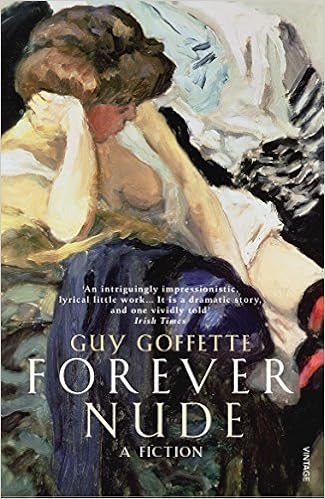
With a quirky title perhaps including a pun on “bonheur” and “Bonnard”, these linked short stories form a poetical, fragmented fictionalised biography of the post-Impressionist painter who made a lifelong companion of Marthe, the young woman who captivated him in a chance encounter on a Pairs street, and provided the model for hundreds of paintings and sketches of her, often in the bath, dressing or relaxing on the bed, but “toujours nue” (“Forever Nude” in the English translation).

We learn that Marthe was really Marie, a poor farmer’s daughter who adopted a false name including an aristocratic “de” when she escaped to Paris to make her fortune. Bonnard did not discover this until he came to marry her more than thirty years later. He had his own share of secrets, in particular his liaison with a vivacious young blonde, Renée Monchaty, a marked contrast to the apparently more passive Marthe, increasingly shrewish and sickly as she aged. Renée’s suicide, perhaps sparked by his marriage, shocked Bonnard to the core. All this could have been worked into a dramatic novel, together with Bonnard’s legal problems after Marthe’s death, which led eventually to a change in the law guaranteeing an artist’s rights of full ownership to his or her entire body of work. However, Goffette is much more interested in writing about Bonnard’s art as a form of visual poetry, using colour in place of words, and in portraying the artist as a man who shunned “la gloire imbécile”, wishing only to paint what he pleased, when and how he wanted.

At first, I found the style overblown as in the opening chapter, where Goffette describes entering a gallery hot and flustered, only to be refreshed by encountering a painting of the toujours nue Marthe spraying herself with eau de Cologne. Written from a male viewpoint, the lengthy sensual, even erotic description of Marthe made me uneasy. It seemed voyeuristic and sexist, akin to a man assuming the right to impose himself on a pretty stranger who has caught his eye in the street.
However, gradually, the writer won me over, mainly in helping me to view Bonnard’s paintings with new eyes. This was only possible since I had access to a computer and was able to find images of most of the paintings he describes. It would actually be a better book with photographs of these works included.

Goffette showed me how the use of a black blind, cutting off my view “comme une guillotine”, made it fall “brutalement” to a sleeping Marthe and cat: in fact, it drew my attention to the view outside the window, another theme Bonnard loved to explore. I was also struck by the vivid colours in his last painting, an almond tree in blossom. On his death bed, with his nephew’s help, he still felt the urge to change a patch of ground from green to bright yellow.

Although the flowery style is not to my taste, there are a number of telling insights, and I have also discovered a large number of paintings by Bonnard which I like, and am now able to appreciate why he was and is so highly regarded as a painter, if not by Picasso.


“Forever nude” by Guy Goffette

I read this in French, but presumably my comments still apply, although it is hard to imagine how the distinctive French “stream of consciousness” style could have been translated without something being lost.
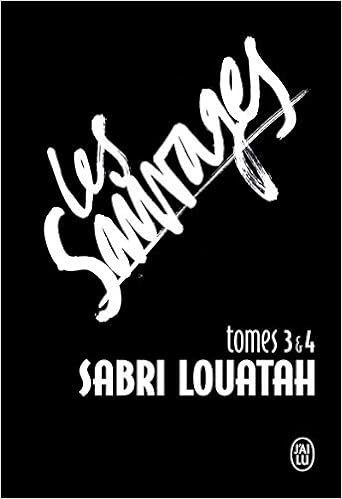
With a quirky title perhaps including a pun on “bonheur” and “Bonnard”, these linked short stories form a poetical, fragmented fictionalised biography of the post-Impressionist painter who made a lifelong companion of Marthe, the young woman who captivated him in a chance encounter on a Pairs street, and provided the model for hundreds of paintings and sketches of her, often in the bath, dressing or relaxing on the bed, but “toujours nue” (“Forever Nude” in the English translation).

We learn that Marthe was really Marie, a poor farmer’s daughter who adopted a false name including an aristocratic “de” when she escaped to Paris to make her fortune. Bonnard did not discover this until he came to marry her more than thirty years later. He had his own share of secrets, in particular his liaison with a vivacious young blonde, Renée Monchaty, a marked contrast to the apparently more passive Marthe, increasingly shrewish and sickly as she aged. Renée’s suicide, perhaps sparked by his marriage, shocked Bonnard to the core. All this could have been worked into a dramatic novel, together with Bonnard’s legal problems after Marthe’s death, which led eventually to a change in the law guaranteeing an artist’s rights of full ownership to his or her entire body of work. However, Goffette is much more interested in writing about Bonnard’s art as a form of visual poetry, using colour in place of words, and in portraying the artist as a man who shunned “la gloire imbécile”, wishing only to paint what he pleased, when and how he wanted.

At first, I found the style overblown as in the opening chapter, where Goffette describes entering a gallery hot and flustered, only to be refreshed by encountering a painting of the toujours nue Marthe spraying herself with eau de Cologne. Written from a male viewpoint, the lengthy sensual, even erotic description of Marthe made me uneasy. It seemed voyeuristic and sexist, akin to a man assuming the right to impose himself on a pretty stranger who has caught his eye in the street.
However, gradually, the writer won me over, mainly in helping me to view Bonnard’s paintings with new eyes. This was only possible since I had access to a computer and was able to find images of most of the paintings he describes. It would actually be a better book with photographs of these works included.

Goffette showed me how the use of a black blind, cutting off my view “comme une guillotine”, made it fall “brutalement” to a sleeping Marthe and cat: in fact, it drew my attention to the view outside the window, another theme Bonnard loved to explore. I was also struck by the vivid colours in his last painting, an almond tree in blossom. On his death bed, with his nephew’s help, he still felt the urge to change a patch of ground from green to bright yellow.

Although the flowery style is not to my taste, there are a number of telling insights, and I have also discovered a large number of paintings by Bonnard which I like, and am now able to appreciate why he was and is so highly regarded as a painter, if not by Picasso.

“Les Sauvages” by Sabri Louatah – flawed ambition

If you have not read Tomes 1 and 2 of “Les Sauvages”, the following review contains spoilers. Also, Tomes 3 and 4 will make little sense if you have not yet read the first half of the series. This review refers to both Tomes 3 and 4, which I bought combined in one volume.
This is the second half of the ambitious saga revolving round the Nerrouches, a family of Algerian “Kabyle” origin who have settled in the declining industrial French town of St. Étienne. Their excitement over the possible election of the first French President of Algerian origin, the charismatic, westernised and liberal-minded Chaouch, is shattered when he is not only seriously injured in a gun attack, but the would-be assassin turns out to be Krim Nerrouche, a basically decent but disaffected, drug-addicted teenager who has gone off the rails since the death of his father. A further twist is that he seems to have been somehow manipulated and groomed into committing the atrocity by his sinister, mysterious cousin Nazir, possibly a fundamentalist saboteur bent on destroying the prospect of a moderate Arab leader who might actually succeed in bringing together the opposing factions in French society.

As the plot developed in Tome 2, one began to suspect that Nazir may himself have been the stooge of ultra right-wing French fanatics seeking to eliminate Chaouch for their own ends, and stir up a state of emergency in which they can claim victory through restoring order.

The very ordinary Nerrouche family are also linked to “movers and shakers” through the fact that Nazir’s brother Fouad, a handsome actor who has gained national recognition and popularity through a TV soap, is going out with Chaouch’s daughter Jasmine. The brothers are pitted against each other rather simplistically as “evil” and “good”, although Fouad’s halo slips somewhat under the stressful situation in Tomes 3 and 4.

All this forms the basis of a promising and topical drama. Sabri Louatah is at his most authentic and engaging when creating scenes of family life, showing the relationships between characters caught between Kabyle tradition and very different modern French culture. He also provides a strong sense of place, particularly for St. Étienne and in the scenes set in Algeria. Critics have noted the book’s cinematic nature and, with film rights quickly sold, perhaps it was always the author’s aim to write “a TV series in book form” like one of his favourite authors Balzac, who of course had no option but to create drama in the form of novels!

Louatah has also spoken of his passion for American soaps like “ER”, which may account for the way “Les Sauvages” is made up of short scenes, often focusing on the relationships between individuals in quite banal situations, with much of the high drama conducted off-set, explained or implied after the event. This results in a somewhat fragmented plot, hard to follow at times, ironically defusing the potential for tension which is often such a strong aspect of a good film. The approach also enables Louatah to gloss over the implausible aspects of Nazir’s and right-wing Montesquiou’s scheming . Too often, with the clear exception of Fouad and to a lesser extent Chaouch, who is given to pontificating, the characters seem two-dimensional and too ludicrous to be either convincing or to arouse much emotion – the cane-tapping Montesquiou being a case in point, and Nazir another. By and large, the “baddies” are pantomime figures.

Although covering only a few weeks, the plot loses momentum continually, so that I often found the books tedious. My flagging interest was sustained by the author’s use of a hook at the end of each Tome to keep me reading, although I feared Tome 4 would fizzle out in an inconclusive ending, leaving the way open for Tomes 5-10……. Despite seeming something of an anti-climax, with one of the villains supplying an information dump which is not entirely necessary, since one has in fact already deduced or been told the salient details, the ending ties up sufficient loose ends to reach a satisfactory stopping point.

Louatah claims to be more interested in “fiction” than in “literature”, but, bearing in mind that I think he has a serious interest in portraying the problems of modern French society, “Les Sauvages” would have been more powerful and effective if presented as a single shorter, tighter novel, with fewer characters, more fully developed. As it stands, it will need a lot of work to convert to an effective film script anyway.

“Profession du père” by Sorj Chalandon – in this case Larkin was right.

At the funeral of André Choulans there are only two mourners: his long-suffering wife and son Émile, an artist who sketches the crematorium with an odd lack of emotion as they await the coffin. Narrator Émile then proceeds gradually to account for this tragic situation, going back to his childhood, the France of De Gaulle and the stirrings of rebellion in Algeria in 1961. As an impressionable youngster, Émile craved his father’s approval, believing his web of lies and fantasies, but fearing the violence which he might at any moment unleash on his child and wife. Émile suffers the embarrassment each year of being asked to write his father’s profession on a school form. How can he say that he is a secret agent? This is the latest in a string of professions he is too young to question: pastor, pilot, parachutist, judo expert and singer to name a few.

It soon becomes apparent that the bullying, manipulative André is paranoid but somehow manages to avoid exposure and medical treatment by keeping his little family unit in an isolated bubble. By turns amusing, heartrending, farcical, this is an intriguing psychological study. Émile’s mother is not simply a wife battered into submission, the victim of “coercive control”, but also seems to connive in the situation to avoid trouble. “You know what your father’s like” is her mantra, and years later she asks Émile: “Was your childhood really so awful?” So she occupies herself in making vegetable stews, abdicating responsibility for protecting her son if not herself.

Similarly, as he grows older, accustomed to André’s continual broken promises, to what extent does Émile really believe that his father is serious in involving him in a plot to assassinate De Gaulle, allegedly the former colleague who has ignored his advice and broken his promise to the French colonists in Algeria? Is the idea that another of his father’s friends is a high-ranking CIA agent called Ted, who is his god father too appealing an idea to debunk – even when Ted feels he should be punished for his poor grades?

Another intriguing aspect is the way Émile’s behaviour begins to mirror that of his father. Just as André wants his son to be an admiring acolyte to be subjected to rigorous military drills, a willing stooge prepared to risk daft escapades like delivering death threats, Émile seeks out a friend to share these exploits with, one who can be controlled and dominated as he is. Unfortunately, he chooses a “Pied Noir” boy who really does have a grievance against De Gaulle. To avoid crazed beatings and confinement to “the correction unit” of his parent’s wardrobe, Émile shows a convoluted ingenuity equal to his father’s when it comes to fabricating excuses.

It was hard at times to understand why Émile does not simply hate his father. Instead there seems at times to be, if not exactly love, that mysterious family bond, consisting in part of shared experience, conditioning and duty.

This novel is in fact quite autobiographical, in that Sorj Chalandon’s father was also a violent fantasist. The author has spoken of the “poison” in his system arising from the abuse he suffered, and the catharsis obtained from sharing his experiences by writing about them. He also suggests that the fantasy world was often exciting and enjoyable at the time, but for the violence.

I thought the novel lost dramatic momentum when it reached the stage of Émile’s adult life. However the tale would be incomplete without an account of how Émile eventually establishes his own life as an artist with the talent his parents failed to recognise and nourish. The contrast between his distorted childhood and the love he gives his own son is moving.

Chalandon is a brilliant novelist who deserves to be better known abroad.