“Le Bateau” by Nam Le – Daring to fail

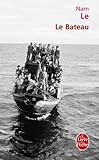
This is my review of Le Bateau (Litterature & Documents) by N Le.

Originality is the common theme in this collection of seven stories, varied in length, which range widely over different countries, cultures and themes, boldly shifting viewpoints by gender and age as if to “try them all out”.

The the last and most powerful story is “Le Bateau” which gives its name to the entire book Although the author Nam Le was only a baby when he made the perilous journey to Australia as one of the Vietnamese “boat people”, tales of this harrowing experience must have fed his vivid account of a young woman’s attempt to survive life on board as the ship is lashed by a storm and the stores of food and fresh water run out. She is befriended by a capricious woman, whose son, although disturbed by the effects of war, and possibly autistic, fascinates her and arouses in her a maternal love which the mother seems at times to lack.

This and the first story struck me as the most authentic and well-structured, perhaps because they are connected to the family culture and history with which Nam Le identifies, despite his absorption into life in Australia and the US. With its indigestibly long title “Love, honour, pity, pride, compassion, sacrifice, the opening story has aspects of autobiography in describing a young writer struggling to meet deadlines, ambivalent as to whether he should focus on “ethnic literature” to earn money. His dilemma is increased by the ethical question of whether he should use as a theme his father’s experience of a massacre at the hands of brutalised American GIs. Even if the older man is prepared to recall it in detail to iron out the “errors” in his son’s story, does that mean he is prepared to see it sold and read by westerners who will soon forget it? Although the ambiguous ending feels like a let-down at first, on reflection it is interesting to debate the various interpretations one can make.

Nam Le’s upbringing in Australia may have given a particular genuine and moving quality to the almost novella-length “Halfhead Bay”, in which teenage Jamie steels himself to face up to the school bully Dory after daring to make a play for his girlfriend. Should he be protected from Dory’s fists so that he can once again strike a winning goal for the school team, or for the sake of his dying mother? The subtle and complex “coming of age” drama takes place in the context of a family’s inability to face up to the reality of a crisis.

Despite the varied themes, the essential style remains the same. Each story develops gradually, so that the reader has to work out what it going on, and it is impossible to predict the outcome. Heavy use is made of flashbacks, which sometimes disrupt the narrative flow, although they could also be said to reflect the way the mind works, drifting back to past events triggered by experiences of the present, or perhaps as an escape from it. Nam Le creates some fascinating dilemmas, as when a young gangster is ordered to kill a friend to save his own life. He knows how to create page-turning tension, but the endings are often disappointing, an abrupt anti-climax. “Tehran calling” was so nebulous as to leave me completely unengaged.

Overall, Nam Le is a gifted writer, with a plain, clear style which draws one in. It is an effective vehicle for conveying subtle nuances in people’s relationships with each other, and descriptions filled with vividly striking images.

I agree with reviewers who feel that he is better at writing prose than structuring a short story. Each one is mined from a rich enough seam to fuel a full-length novel. He reminds me somewhat of Alice Munro’s short stories with their deceptively simple prose and sometimes meandering, unpredictable storyline.

I read these short stories in the French translation, which I would not recommend since the original English seems more suited to Nam Le’s style.

⭐⭐⭐⭐ 4 Stars

“Commonwealth” by Ann Patchett -Family fate

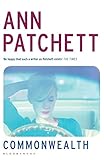
This is my review of Commonwealth by Ann Patchett.

When LA cop Fig admits uninvited guest Bert Cousins to his daughter Franny’s christening party, little does he realise that this will trigger the break-up of his marriage to the beautiful blonde Beverley. One cannot know to what extent this is autobiographical, but Ann Patchett’s personal experience of parental divorce and remarriage leading to the sudden acquisition of step-siblings and enforced living with strangers must provide plenty of material to develop this aspect of domestic drama. A further twist is Franny’s eventual marriage to a famous writer who sees the potential of her family story to create a bestselling novel, leading to further reactions of hostility, resentment or guilt over the exploitation of family members.

I was hooked by the kaleidoscopic impressions of the first chapter, as the party begins to spin out of control under the influence of Bert’s inappropriate gift of a large bottle of gin, inevitably prompting the opening of others. I could appreciate the author’s much-praised gift for using small often banal incidents to reveal much about situations and characters, seen from different points of view.

The nine chapters, some quite lengthy, may seem like linked short stories, relying heavily on flashbacks to reveal the chain of events, including a tragedy with the power to destroy the family. I regret that in the second chapter, I felt an abrupt loss of engagement. This is partly due to the grim setting of a cancer ward where Fig is to be found receiving chemotherapy, accompanied by an adult Franny. I was continuously distracted trying to work out how many decades have passed since the christening in 1964. The flitting sequence of reminiscences and thoughts felt quite contrived, a device for filling the reader in, but it is hard to keep track of all the characters mentioned – which of these have we already heard about or met in Chapter 1? It is disconcerting, for instance, to find that Albie, not yet born in Chapter 1, has become a delinquent arsonist, while Bert and Beverley have divorced before one knew for sure they had ever married. It is hard to relate to comments and anecdotes about characters before they have been clearly established in a story.

What seems like a promising theme therefore comes across as a bit of a mess in its execution. I wanted to like the novel, but too often found it boring and “spread too thinly” across an excessive number of largely underdeveloped characters. To be fair, perhaps the fact I had just read the exceptional “The Invention of Nature” made me set the bar too high, meaning I was not in the mood to make the effort to connect with this novel. I certainly admire the author’s desire to broach diverse, complex topics from different angles, having read “Bel Canto” , inspired by the hostage-taking of the President of Peru, where she explores the views of both terrorists and captives, revolving round the charismatic persona of the opera singer who is one of the prisoners. Very different again was “State of Wonder” in which a pharmaceutical researcher braves the remote Amazonian rainforest to discover what happened to her lover who had gone to work there.

In short, this is a book which divides opinion and promotes discussion.

⭐⭐⭐ 3 Stars

Becoming the people we should always have been

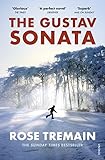
This is my review of The Gustav Sonata by Rose Tremain.

In the aftermath of World War 2, young Gustav Perle grows up in a quiet Swiss town, stoically trying to make sense of adult behaviour, win the love of his widowed mother Emilie, and live up to her exhortation to “master himself….be courageous, stay separate and strong…. like Switzerland”. Emilie is understandably depressed as she struggles to make ends meeting, making cheese and cleaning the Church, but is clearly ambivalent as regards her husband Erich, whose untimely death remains a mystery to Gustav. Although acknowledging Erich’s moral stance in saving Jews from the Nazis, she clearly resents the financial hardship and loss of status which this inflicted on his family, and she cannot warm to Anton, the Jewish boy who becomes Gustav’s best friend, despite the marked differences in their lifestyles and personalities. Anton is sensitive, a gifted pianist with wealthy, indulgent parents, but he proves unable to overcome his nerves sufficiently to achieve his ambition to become an internationally acclaimed soloist.

This moving and well-constructed books has three sections, like musical movements. For me the most powerful is the first part, the skilful and touching portrayal of childhood, and how we are influenced by our relationships. The second section takes us back in time to learn the truth about Emilie's and Erich's marriage, and the last leaps on half a century to the late’90s when Gustav and Anton are having to face up to the paths they have followed in life, and decide whether and how to change before it is too late.

Rose Tremain is an accomplished storyteller, capable of weaving an evocative, thought-provoking drama with a cast of complex characters out of a few strands of plot. Only occasionally in the middle chapters did the tone teeter on the brink of sentimentality, or the dialogue appear a little stilted as if translated from the German. A few plot details grated on me as unconvincing, such as the manner and timing of Erich’s death, or the two young boys’ game in the ruined sanatorium.

This is literary fiction with an eye to commercial success i.e. well-written, nuanced and thought-provoking combined with tragedy tempered by a feel-good soft centre and a few passages of raunchy sex – a page turner which is also worth reading.

⭐⭐⭐⭐ 4 Stars

No longer knowing where the real points are

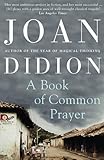
This is my review of A Book of Common Prayer by Joan Didion.

Cynical and hard-boiled Grace Strasser-Mendana is the widow of the former President of the coconut palm Central American Republic of Boca Grande. Having married into one of the island’s “three or four solvent families”, she stays on to manage affairs for her seemingly weak and incompetent relatives, instead of returning to her native North America. Perhaps because she is an anthropologist by training, she becomes fascinated by the Charlotte Douglas, a “norteamericana” like herself who has come to Boca Grande as a tourist, as part of the abortive search for her daughter Marin, who has unaccountably rejected her privileged background to become an anti-capitalist terrorist. Charlotte seems neurotic, at times even crazy, by turns either aimlessly drifting through life via casual affairs or throwing herself with bursts of frenetic energy into do-gooding missions.

At first, I expected this to be a Graham Greene style political-cum-psychological drama. I may have missed something, but for me it turned out to be an endless portrayal of Charlotte’s intense and troubled relationship with two dominating husbands: needy, abusive even violent when drunk, Warren, who perhaps uses alcohol to blank out mental pain and sickness, and the suave, wise-cracking, control-freak lawyer Leonard.

I was initially entertained by the spiky dialogues at cross-purposes, which read like a bizarre mixture of Coward and Pinter, mini playscripts in the series of short chapters. However, once I “had the measure” of the mainly quite unappealing characters, their flaws exaggerated to the point of caricature, there seemed to be no further development and I began to find the novel tedious. In the sketchy plot, many questions remain unanswered, but perhaps "what happens" isn't the point.

I have read that Joan Didion took great pains to hone her work, but although distinctive and original with some passages of remarkably expressive clarity, the overall effect is so contrived, with a mantra-like (prayer book-book like?) repetition of staccato phrases, often included more for rhythmic sound than sense, that it forms a barrier preventing real engagement with the characters. “Charlotte’s breakfasts at the Caribe. Charlotte went to the Caribe for breakfast every morning for a while. She went to the Caribe for breakfast because….” Or another paragraph hypnotically repeating the words “Porter” and “Pontchartrain”.

There is the additional niggling problem with the point of view, since writing in the first person, it is quite implausible that the narrator Grace can reproduce so precisely Charlotte's thoughts, experiences and intimate conversations with others – or perhaps we are meant to think that much of the story is in Grace's imagination.

I agree with those who have found the characters too superficial and cut off from normal “real life” for one to care about them, the only emotion being irritation over their self-absorption. It seems that Joan Didion herself led a somewhat artificial life staying and partying in the houses of Hollywood celebrities, drinking heavily, all of which may have led her to create scenes to which most readers find it hard to relate. We are sucked into anticipating the gradual revelation of plot fragments for us to piece together, but the tendency to tell us what is going to befall Charlotte is the death knell to dramatic tension.

I am left uncertain as to what the author was trying to say about the world through the medium of this unprepossessing cast with their entertaining if stylised, sterile conversations. Although she may have chosen to write novels because of the scope they gave her to be inventive, her sardonic, detached style seems to lend itself more to biting journalism.

While continually sensing her talent, I became impatient with the brittle, shallow use to which it is put.

⭐⭐⭐ 3 Stars

Visually inventive, freewheeling imagination, but I could not really connect with her wavelength

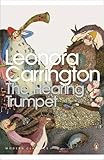
This is my review of The Hearing Trumpet (Penguin Modern Classics) by Leonora Carrington.

Leonora Carrington defied her wealthy, conventional parents to become an artist, running away to Paris to join a group of Surrealist painters. Her short-lived, intense affair with German Max Ernst was destroyed when he was imprisoned on the outbreak of World War 2, escaping to the security of the States. Her nervous breakdown and appalling treatment in a Madrid asylum, from which she was rescued by the nanny who arrived in a submarine sheds light on the bizarre fantasies of her “modern classic”, “The Hearing Trumpet”. She went on to live for decades in Mexico, married to a Hungarian photographer, and far more famous in her adopted country than the Britain of her birth.

This short novel begins as a quirky satire on old age, showing the frequent lack of sympathy between generations, even the revulsion that youth may feel for old age, and the extent to which the elderly no longer care about conventions and often are far more “with it” than they appear. The ninety-two-year-old narrator Marian Leatherby discovers with the aid of a friend’s gift of a hearing trumpet that her selfish and mean-spirited family plan to put her in a home for senile old ladies. Despite its deceptive appearance, designed, “to trick the old people’s families that we led a childish and peaceful life” and the bogus religious background, Marian is mesmerised by the portrait of the “nun with a leer” which hangs over the dinner table, and entertained by the eccentric little band of residents.

Marian recalls a former admirer from her youth in England: “I remember your white flannels better than I remember you”. As for food: “I never eat meat as I think it wrong to deprive animals of life when they are so difficult to chew anyway”. “People under seventy and over seven are very unreliable if they are not cats”. All this kept me entertained until the verbal surrealism went haywire, as Marian’s world spins into a kind of post-atomic nuclear winter. The author seems to be attacking organised religion and authoritarian fascist governments, whilst harbouring a fascination for romantic legends of the Holy Grail: “the Great Mother cannot return to this planet until the Cup is restored to her filled with the Pneuma, and under the guard of her consort the Horned God”. All this is reminiscent of her paintings with their common theme of angular figures in flowing dresses, with the heads of animals, standing stiffly in artificial landscapes or slightly out of kilter rooms.

Although I admire her originality, I cannot engage with the author’s surrealism. Her sketches for the book strike me as crude and childish, although her paintings are better:in a subjective choice, I like the paintings “Green tea” or “La Dame Ovale”, “The Crow Catcher", and her large sculptures.

I am more interested by Leonora Carrington as an unusual character than in her work. I was intrigued, for instance, by an interview on YouTube between her and a young relative who had tracked her down in Mexico, still lucid and chain-smoking in extreme old age. “You are trying to intellectualise my work too much” was her recurring response, suggesting we try to analyse her more than she intended.

⭐⭐⭐ 3 Stars

Striking a chord with insiders and enlightening those who could not otherwise understand

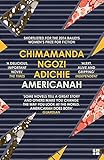
This is my review of Americanah by Chimamanda Ngozi Adichie.

Bright and from an early age too outspoken for her own good, Ifemelu is made aware of racial differences for the first time when she leaves Nigeria to study in the States, where, after a rocky start, she achieves success with a Princetown fellowship and much-read “lifestyle” blog with a focus on American race relations.

We know from the outset that, a more than a decade on, Ifemelu decides to dump her latest longterm lover and comfortable life in America , in order to return to Nigeria. It gradually becomes clear that this is just another example of her apparently capricious tendency to disrupt an enviable situation because “There was a feeling I wanted to feel that I did not feel”. One suspects this is because her life can never be complete without the love of her first boyfriend Obinze, “the only person with whom she had never felt the need to explain herself”, who after an unsuccessful attempt to emigrate to Britain returns to become a successful businessman in Nigeria.

What could be reduced in summary to a corny love story becomes engrossing in the hands of a skilful storyteller, who develops a wide range of mostly convincing characters. For me, this is the kind of novel one does not wish to finish, absorbed by the vivid sense of place, strong often funny dialogues and sharp insights into both Nigerian society and different racial groups in America. The author made me appreciate for the first time the difference in outlook between American Africans, with a strong sense of their own culture, and African Americans burdened by the injustice of past slavery and current prejudice. I now look on African hair with new eyes, having been made aware of the dangers of chemicals used to straighten it and the effort required to create a natural-looking Afro style.

I agree that the book is technically too long (although I didn’t mind since I enjoyed reading it), the frequent verbatim blogs often seem contrived as vehicles for the author to express her personal observations on American society. Perhaps because there is an element of autobiography in the tale, she appears a little too forgiving of the at times ruthless Ifemelu who casually abuses a close friendship by making Ranyinudo’s personal life the subject of a blog for public consumption, and who seems to feel no compunction over breaking up a marriage, too easily justified by the belief it is built on sand. Some of the privileged American dinner party conversations seem artificial and pretentious, but may well be realistic. Nigerian society is painted in an unflattering light, as corrupt, materialistic, superstitious and socially divided as any western class system. There is a troubling moral ambiguity in the implication that Obinze’s emotional detachment from his lifestyle somehow absolves him from the guilt of enriching himself through working for a wheeler-dealing crook.

⭐⭐⭐⭐⭐ 5 Stars

A Month in the Country by J.L. Carr: A sealed room in memory furnished by the past

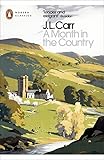
This is my review of A Month in the Country (Penguin Modern Classics) by J.L. Carr.

Shell-shocked by his high-risk role as a signaller in the carnage of the First World War trenches, and depressed by the break-down of his marriage, Tom Birkin immerses himself in the delicate task of revealing an ancient mural thought to be concealed beneath centuries of lime-wash in an ancient parish church. We see Tom’s growing identification with the artist who created what turns out to be a masterpiece. There are vivid descriptions of the different colours used – “Spaynishe white, Baghdad indigo, Cornish malachite, terre verte”, the relative durability of the paints, and the fine balance needed between cleaning the grime of a painted hand, or finding that “just another touch will shift the hand itself”.

The eccentric old lady who has financed his labours in her will, has also left a bequest for the location of the grave of an excommunicated forbear, who must have been buried outside the cemetery. This work is being undertaken by Charles Moon, beneath his ebullient exterior as damaged by his wartime experiences as Tom, but for different reasons. The two men become friends, with Birkin in particular entering into village life, gaining acceptance and renewed health in the process.

Fifty years later, Tom looks back on this brief period during the long, hot summer of 1920, spent in the close-knit North Yorkshire village, in its as yet unspoilt, idyllic setting . This short novel, drips with nostalgia, Hardy without the grim tragedy of Jude and Tess, an evocation of a past way of life, perhaps a little idealised in that the summer weather is too fine, and the gossip a little too affectionate.

At the core of the novel is the unspoken mutual attraction, the meeting of minds, between Tom and Alice Keach, the improbably lovely young “Botticelli’s Primavera” wife of the pale-eyed vicar, with a “cold, cooped-up look about him”. If Tom and Alice fail to grasp the opportunity for a relationship, will they regret it for the rest of their lives? Is their love derived from the dreamlike quality of a transient period, enhanced by memory, and would it fade and become banal if they acted upon it?

Many incidents are culled from Carr’s own life, since he did not baulk at basing his characters on real people, anonymously, of course. So, the village of Oxgodby is based on Carlton Miniott where he grew up. Birkin’s embarrassment at being sent off by the double-booked station-master-cum-Methodist preacher to lead a tiny congregation, is based on an ordeal imposed on the author by his own father. Alice Keach, unaware of her beauty, may well be modelled on some past love of Carr’s whom the secretive author never revealed.

Perfect in style, structure and pace, for such a short work, this atmospheric, bittersweet tale manages to pack in more moments of comedy alternating with poignancy, and perceptive reflections than many a longer novel. In his subtlety, J.L.Carr can even make us feel a little sorry for the Reverend Keach. This is the kind of book one is sad to finish and likely to read again over the years.

⭐⭐⭐⭐⭐ 5 Stars

Intriguing tale entangled in verbiage and perhaps two hundred pages too long

This is my review of Brazil Red by Jean-Christophe Rufin.

When Just and his younger sister Colombe are left by their soldier father in the care of an unscrupulous relative, she seizes the chance to send them off on an expedition to found a new French colony in Brazil, children being in demand as future interpreters because of their ability to pick languages up quickly. It is the mid-1500s, and France is keen to curtail Portuguese imperial ambitions in the New World, to gain access to resources, such as the red dye obtainable from Brazilian trees (hence the title) and to convert the savage Indians to Christianity. However, with the Reformation in full spate, what are they to be taught: the old Catholic faith, or which version of Protestantism including the extreme, apparently abstruse, doctrine of Calvin?

The crew on board ship are a motley bunch, including criminals and Protestants escaping persecution, including a crazed band of Anabaptists, so Colombe’s disguise as a boy probably provides much-needed protection. Once the pair’s aristocratic connections become known, they are taken under the wing of the charismatic but unstable commander Villegagnon, based on a real-life character. Having reached their destination in Guanabara Bay, the site of the present-day Rio de Janeiro, Just readily accepts the life of constructing a fortress and learning how to defend it against future attacks. More reflective, Colombe who has been sent to learn the local Tupi language, identifies strongly with the Indians, living in harmony with nature and free from sterile wrangling over Christian rituals and doctrine.

With his experience as a diplomat and human rights’ worker, including a decade spent living in Rio de Janeiro, Rufin has researched the historical period in depth. This novel is a variation on a theme which absorbs him: the dramatic effects of the meeting between very different cultures, and the sense which many of those involved feel of being in a state of limbo, not clearly belonging to either.

Although Rufin creates a convincing impression of life on board ship, I found the first half of this book intolerably tedious. He no doubt intentionally adopts the formal, literary style of a nineteenth century classical novel, peppered with the authentic terms for items of clothing or parts of a ship, culled from histories of the sixteenth century. However, there are too many over-detailed or unnecessary scenes which could have been pruned down or omitted altogether. Colombe is idealised, and seems too mature and articulate for her age. Most of the other characters are caricatures, dialogues wooden and often the action does not seem far removed from a “Boys’ Own” yarn.

However, when the Calvinists whom Villegagnon has requested to assist him prove to be religious bigots, while Colombe’s experience of life with the Indians highlights the hollowness of so-called European “civilisation”, I began to find my interest engaged. It is as if, having waded through to the point where he wants to be, analysing cultural relations, Rufin comes into his own and his writing takes off, presenting points of view from all angles, with the irony becoming sharper. Yet he can never quite avoid straying into the corny or sentimental at the expense of his serious intent.

The descriptions of the landscape, the great bay with the distinctive sugarloaf mountain and forest teeming with unfamiliar vegetation and wildlife are very vivid. There is some thought-provoking philosophy, as when Pay-Lo, the wise old European conveniently gone native, enabling him to explain Indian thought to Colombe, justifies cannibalism. He likens it to the European habit of killing one’s enemies: to eat one’s enemy is merely a logical part of a life lived close to nature in which everything is recycled and returned to the earth to regrow. Rufin has sanitised and glamorised the lives of the Indians somewhat, but they are clearly underestimated by the Huguenots who decide that trying to convert them is as futile as the attempt to bring an antelope to the knowledge of Christ.

Despite the unusual and potentially interesting subject-matter, the novel is too long and laboured. I would have preferred a well-written history of the period.

⭐⭐⭐ 3 Stars

Tears at the heart of existence

This is my review of Cousins by Salley Vickers.

After the accident which befalls brilliant but troubled, aptly-named Will, his sister Hetta is driven to delve for the chain of events which may have led to it, and to understand its serious repercussions for some family members. The accident is remarkably similar to that suffered years earlier by his Uncle Nat.

Sally Vickers’ approach is ambitious – instead of providing a family saga over three generations or more, she inverts the process by switching between the viewpoints of three women who recall their memories, with distinct personalities and “voices”: Hetta, her aunt Bell, and grandmother Betsy. On reflection, it requires great skill to sustain this approach, gradually revealing facts as in a detective mystery, with the added interest of describing the same situation or character from different viewpoints, some clearly mistaken, or in possession of fewer "facts" than the reader.

The author admits to “plundering and imbibing” experiences from her parents who were lifelong communists, like Betsy’s husband Fred who casually put his political beliefs before the needs of his wife and children, but Sally Vickers’ insight as a psychiatric social worker and psychoanalyst are really what give this novel its “edge”.

Most likely to appeal to readers with an interest in psychological drama in which thought-provoking comments are more important than the plot, however superficially gripping, it is probably necessary to read this a second time to absorb and reflect on all the author’s observations and how they might apply to oneself. It is hard to do this on the first reading partly because intense concentration is needed to grasp all the details, never being quite sure which are important to remember, plus this is a page-turner as regards finding out how it will end, although at times the bleak intensity of it forced me to take a break. The conclusion proves quite philosophically up-beat, perhaps an appropriate reflection of how in reality one moves from anger and denial to positive acceptance.

I agree with readers who feel there are too many characters, some of whom could have been omitted, although others on the periphery who are given such a brief mention as to be forgotten turn out to be important, which suggests they should have been developed in more depth. There often seems to be too much “telling” of details from the past, which could make the reader glaze over mentally, but for the acute perceptions and flashes of wry humour which leap off the page without warning. Although there is less of the strong sense of place to be found in some of her previous novels, the Northumberland coast and Holy Island of St. Cuthbert fame form a recurring background.

The plot is well-structured, starting with the “hook” of Hetta’s conviction that Will is going to die, but we don’t yet know why, and gathering pace to a plausible but not too predictable or neat conclusion. Since the author is clearly so interested in how family members relate to each other, I am unsure to what extent she intends us to feel that their guilt is an unnecessary burden, responsibility for Will’s accident seeming to lie mainly with “outsiders”. I was disappointed that these are portrayed as two-dimensional, almost “pantomime” villains.

Occasionally, the novel strikes too sentimental a note for my liking as when Betsy suggests that the loss of his twin sister at birth meant that “life was never quite right” for Will because of the burden of being a survivor – evident from his newborn “strangely unchildlike”, “relentless frantic wail”.

Recommended overall, including as a book group choice to provoke discussion.

⭐⭐⭐⭐ 4 Stars

The acquired taste of a self-indulgent “rigmarole”

This is my review of The Violins of Saint-Jacques: A Tale of the Antilles by Patrick Leigh Fermor.

In this short novel, written in a continuous chapter-free flow, an elderly artist name Berthe recounts to the narrator the dramatic climax of her time spent fifty years previously on the Caribbean island of Saint-Jacques, ruled as a benevolent dictatorship by the aristocratic expatriate French Count, by whom she was employed as a governess but came to enjoy the status of a respected virtual member of the family, his “confidant and counsellor”. It took me a while to grasp that the island is outlined so sketchily on the map provided, because it is imaginary. This enabled me to overlook some of the worrying geographical inconsistencies (for a travel writer) of having lush forest grow so close to the active volcano forming the core of the island.

Although many devotees of the travel writer Patrick Leigh-Fermor may be delighted by the only novel he ever produced in a prolific writing career, I abandoned it mid-way and had to force myself to finish it. I concede that the second half is better, since it contains more dramatic action, when all the “hazards and sorrows ahead ” begin to crack the surface of the idyllic bubble of exotic privilege which the author has inflated with his literary flourishes at full spate in the first half, largely devoted to the preparations and conduct of a grand Shrove Tuesday ball, no expenses spared.

I understand why some readers revel in Leigh-Fermor’s Rococo prose, which I admit once aroused my curiosity to visit what proved to be the remarkable Austrian monastery of Melk. However, in this context, the verbosity is just too much to take. In the course of a lengthy description of the Count’s background, Leigh-Fermor turns to the memorial slabs of his dead ancestors, the Serindans: “The orgulous record of their gestures…..their impavid patience in adversity…..the splendour of their munificence and their pious ends was incised with a swirling seventeenth-century duplication of long S’s and a cumulative nexus of dog-Latin superlatives which hissed from the shattered slabs like a basketful of snakes”. The “Serindan cognizance” crops up again: “ a shield bearing three greyhounds passant on a bend on a field of cross-crosslets within a tressure flory-counter-flory”. I found myself irritated by the author’s continual flaunting of his erudition and addiction to flamboyant verbal excess, rather than sincerely seeking to create three-dimensional complex characters for whom one might feel real empathy.

The frequent inclusion of Latin tags, and dialogues in French, often with a Creole patois, plus an imitation of the Count’s weak “r”s which the local people have innocently copied, often seem both pretentious and irritating if one cannot understand them. I may be underestimating his intention to write tongue-in-cheek as in the passage about ancient tree trunks, each “half following the spiral convolutions of the other like dancing partners in a waltzing forest; the rising moon entangled overhead in the silver and lanceolate leaves, had frozen these gyrations into immobility.” – A “highly literary simile" which he attributes to Berthe. Perhaps I should excuse the dated character of a book written more than sixty years ago about a period now more than a century past. Yet, in his creation of a dawn of twentieth century period when privileged people still lived complacently in the conspicuous consumption of untrammelled luxury served with unquestioning loyalty by contented slaves, I have the uneasy impression that Leigh Fermor does not question the morality of all this – it reads like a lost world for which he feels a sentimental nostalgia. An extreme example of this is the jovial acceptance of the Count’s practice of “droit de jambage”, a Leigh-Fermor conceit for “droit de seigneur”.

Perhaps, I am taking it too seriously, and should simply laugh at a guest dressed as a swordfish, and a heroine in flight falling over an armadillo.

⭐⭐⭐ 3 Stars