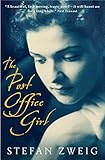
“The Post Office” Girl by Stefan Zweig – An unexpected gem

This is my review of The Post Office Girl by Stefan Zweig.

“The Post Office Girl” deserves to be more widely read. It has clearly not suffered in translation. The crystal-clear prose captures the changing moods of Christine, the young Austrian woman whose childhood and youth have been blighted by the effects of WW1. Running a village post office single-handed for a stifling bureaucracy, caring for a sick mother prematurely aged by war work, Christine’a life is transformed overnight when a rich aunt visiting from America casually invites her to stay at a luxury Swiss hotel. Christine is utterly entranced by the sudden immersion in wealth and apparent freedom. Her delight and eruption of enthusiasm and confidence attract fair-weather friends who imagine she is wealthy. When the aunt abruptly withdraws her hospitality, Christine returns to a dull routine made all the less tolerable because she has seen that the grass is greener! Then she meets a kindred spirit, Ferdinand, a young man who has been similarly embittered by ill fortune – the loss of his family fortune in hyperinflation, his years spent as a prisoner in Siberia which have left him disabled. The two then conceive a plan of action which will enable them to assert their freedom from the trap of their current lives.

Parts of this book make for gloomy “Jude the Obscure”- type reading, and Ferdinand’s self-absorbed rants did get on my nerves BUT my respect for the book was increased greatly through considering its context. Zweig was a wealthy Austrian Jew who was appalled by the destruction of European culture by the Great War and the rise of Hitler. Influenced by Freud (whom he knew personally) he was interested in the way that a chance event may trigger self awareness and a sense of being really alive. Zweig and this wife died in a suicide pact in 1942, so that it is haunting to reflect that he had his characters contemplate an extreme solution which he was prepared to carry out himself.

Although the relentless bleakness of some passages is at first repellent, Zweig has the power to enable you to view life from different perspectives, even to the extent of seeing a logic in apparent madness, and fulfilment in tragedy.

⭐⭐⭐⭐ 4 Stars

Creative Device Works – This Time

This is my review of Ghostwritten by David Mitchell.

Ghostwritten defies an accurate description of what it is really about, but seems best summarised as nine – or ten -short stories, each with a strong sense of place and well-developed main characters. Mitchell is very versatile and ultra-imaginative, so he can transport us from Japan to Hong Kong, then Mongolia, Russia, London and so on, with some ingenious plots, good sense of comedy, very humorous dialogues, yet also situations of great tension and menace, heightened because we know the author is ruthlessly prepared to destroy any character to serve the drama – although he seems to have a soft spot for his "nicer" creations.

The stories are loosely connected – in some cases these links could be missed, so that part of the fun is looking out for a familiar character or an event from a previous tale. Often, disproportionately serious outcomes arise from minor or random events.

Then there are the ghosts. I may have failed to notice them all but they take various forms: the mischievous poltergeist pestering the corrupt financial lawyer in Hong Kong, or the wise spirit in the Chinese Tea House Tree which turns out to be the transmigrating force which hops from body to body in Mongolia. Then, there is the charming London drifter perhaps on the brink of "facing up to responsibility" who is quite simply a ghostwriter for minor celebrities.

I was not always certain what purpose these ghosts served, and if you do not care for Sci-fi or magic realism, the paranormal aspect may be unappealing. The parts where I for one lose patience are where, say, the state of the migrating "non corpa" is analysed and "explained" with a kind of "ludicrous logic". Likewise, the AI taking control of the world's computerised defence systems is "over the top". Yet, I agree with those impressed by Mitchell's prescience. I had to check that the publication date preceded 9/11, the weapons of mass destruction and invasion of Iraq. I suppose that Reagan's "Star Wars" may have triggered the writer's imagination.

As a set of short stories, "Ghostwritten" is brilliant – well-written, creative and diverse in style and coverage.

As a novel, the whole seems less than the sum of the parts. I think this is because some of the links between stories are so tenuous. Also, although the stories are page turners (different styles will appeal to different readers), they oblige you to work hard mentally, getting to grips with a set of people and situations, only to end inconclusively (not necessarily a criticism) and force you to start afresh. This is not conducive to the kind of coherence, progression or "structure" a novel requires.

Also, although technically very clever and clearly sincere in, say, questioning our current values and misuse of resources, and the evil of one regime imposing ideas on others, I do not feel that Mitchell has the kind of clear, insightful message that a "great" novel might convey. Individual characters are often too busy wisecracking and being too clever by half to be genuinely moving.

This book is definitely worth reading, and may merit greater prizes than it has won, for its originality and skilful writing.

⭐⭐⭐⭐ 4 Stars

C

This is my review of C by Tom McCarthy.

Since the reviews so far have been small in number but very glowing, I feel the need to offer a different viewpoint. I have not included a plot outline, as others have done this already.

I found the lengthy descriptions of small scale events very tedious. Early examples of this are:

– where the doctor walks round the house to his host's workshop, finds it locked, so has to go back all the way round the building. Why did the author not just include a plan?

– the account of the pageant performed by the deaf children to their parents, together with the frequent focus on their repetitive language practice and the dreary poems they have to learn.

– references to long-superseded electrical and optical equipment without any brief notes of explanation: this means either reading stuff one does not understand, or having the flow of reading disrupted by the urge to go and research.

A few errors made me doubt the accuracy of the rest e.g. the description of chrysanthemums, tulips and irises growing together in an open bed. Then there was a paragraph about stamens, stigma and pistils that didn't seem quite right. This matters because reading detail that is inaccurate and serves no other purpose is a waste of time.

The emotional coldness of the book repelled me utterly. I think some of it is meant to be humorous, as when Carrefax senior considers attaching a tapping device to a coffin in case the deceased ( a very close relative) should come back to life. However, the upshot of the fact that the main characters observe the world so clinically, without a drop of empathy, is that one cannot engage with them or care about their fate.

I did not mind the lack of plot, or the disjointed structure. Some images are striking, as when the infant Carrefax observes the beauty of the wing he has plucked from an unfortunate fly, and peers at the Hatching Room through it. The reviewer who feels the book needs to be read slowly, and improves on a reread, may have a point – but life is short, and there are many books which make a positive impact from the outset!

I sense that other readers would like to make this into a kind of "cult book" – if so, I don't want to join.

⭐⭐ 2 Stars

So much motion in it the whole country seemed to be running

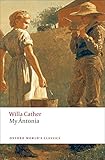
This is my review of My Antonia (Oxford World’s Classics) by Willa Cather.

My Antonia – pronounced "Anton-ee-a" is a "Little House on the Prairie for adults" classic that I would not have thought to read unless required to do so for a book group. Published in 1918, this "early modern" novel forms a bridge between the old and the new. It has all the flowing style and precision of a C19 work – reminded me of Thomas Hardy – yet is pared of any unnecessary verbiage to give a vivid impression of the striking landscape of Nebraska in the late C19 when it was developed largely by immigrants from Germany and Scandinavia.

We see the vast expanses of red prairie grass, "running" in the wind and the sunflowers following the bends of the country roads, perhaps where the Mormons scattered seeds as they travelled west to Salt Lake City. Based on her own childhood memories, Willa Cather has the successful lawyer Jim Burden recall his childhood, dominated by his friendship with the vivacious Antonia, daughter of a family of penniless Czech immigrants, forced by hardship and duty to give up any thought of education which would enable her to escape from a life of toil on the land. I feared the tale would be admirable but dull. In fact, it is brought to life by the varied cast of believable characters and the string of surprisingly entertaining anecdotes – the killing of a rattlesnake, dubious escapes from wild wolves, and so on.

The storyline is fragmented in structure and lacks a strong plot – yet it seems the author was deliberately experimenting with the structure. The long first "book" focused on prairie life is probably the best. The middle sections ramble through Jim's adolescence and college education. For a while we lose sight of Antonia altogether, but in the final part, the middle-aged Jim meets up with her – now a mature "matriarch" with a brood of children, still living on the land to which she has become too attached ever to think of leaving. The book questions the nature of success: despite his fine career, Jim is childless, and the people he met in his rural childhood have more "reality" for him than what he learns in his academic studies. A major point of the book seems to be that "the best days" of his life prove to be the earliest ones that he cannot recapture.

When describing his eleven-year-old self, Jim appears to be an unusually perceptive child, often slipping more into the voice of an educated mature woman – the author herself?! Although based on a real person, you may feel that Antonia is somewhat idealised as in part a creation of Jim's nostalgia. I sensed a touch of unconscious racism in the description of the blind negro pianist. You could say the ending is a little romanticised, although there is the subtle indication that Antonia's husband is a malleable man who fathers her children and allows her to live out her rural dream.

Although it is slow-paced, and the plot is fairly slight, I would definitely recommend this novel. If your version has an introduction, save it until afterwards, so as not to prejudice your reading of this evocative tale.

⭐⭐⭐⭐ 4 Stars

Union Atlantic

This is my review of Union Atlantic by Adam Haslett.

An American damaged by childhood and Gulf War traumas becomes a corrupt investment banker on the brink of what we know to be a major financial collapse. He comes into conflict with a well-connected but eccentric, slightly demented neighbour who sees the building of his grandiose mansion on a once rural riverbank as a symbol of all that is rotten in the state of America. This sounds like the recipe for a good read.

Drawn to this novel by a glowing newspaper review and interesting dust jacket blurb, I was soon disappointed. The warning signs come as early as the prologue, in which the author uses flashbacks and digressions to skirt round a US naval incident in the Gulf, rather than transporting readers into the heart of the drama. I did not mind the slow pace of the plot, but there are too many overlong minor scenes, such as Nate's druggy dealings with his mates, and the issue of his "being gay".

The dialogues tended to grate on me because they are unnatural. Although I realise that Charlotte Graves is meant to be an eccentric elderly lady, the monologues inflicted on her student Nate, and the diatribes of her two talking dogs (especially the bigoted preacher Wilkie – yes, I know it sounds odd) are tedious and very hard to follow, adding nothing I could see to an appreciation of what is rotten with current US society, which I took to be the point of the book.

The book is only occasionally moving – much less than it should be, as when we learn that Nate is haunted by the fact that he might have averted his father's suicide if he had looked for him further. And why not use the space to give us more insight into the main character, the financier Doug Fanning?

Haslett slips frequently into passages of reflective, philsophical creative writing which left me cold because they seem too "studied". He mentions Joyce at one point, so I wonder if he was attempting "stream of consciousness" at the points when the sentences become very long, rambling wildly from one point another. After one example too many of this on page 120 of the hardback, I decided the book was not worth reading.

BUT then it improves – for a while. From Part 2, the plot speeds up and there are some humorous and well-written scenes, in particular the court hearing of Charlotte's dispute over Doug's mansion, with a neat twist at the end, and also the observation of Henry's relationship with his sister Charlotte, his irritation yet affection, as she feeds him baked beans and gives the dogs prime steak because one of them "demands" it.

However, the dramatic potential of Doug's inevitable fall as a cheating financial dealer is missed. The book sputters on like a damp squib at the end with a few blandly descriptive chapters which shed little further light. Just the odd passage, like the evocation of "that nowhere place" the Arabian desert, on page 285 reveals a talent for writing which is in general absent.

I am left feeling that this story has the ingredients to be good, but needed much more attention to "narrative drive" and to clarity of important ideas and insights for it to be successful.

⭐⭐ 2 Stars

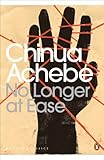
No longer at ease by Chinua Achebe

This is my review of No Longer at Ease (Penguin Modern Classics) by Chinua Achebe.

Having just discovered Achebe and been bowled over by “Things Fall Apart”, I thought at first that this sequel lacked the former’s authentic magic of the evocation of tribal life amongst the Nigerian Igbo on the brink of being torn apart by the arrival of “the white man”.

However, the subtlety, insight and humour of this well-written tale soon began to engross me as I began to understand the dilemmas of Obi Okonkwu, grandson of the key figure of “Things Fall Apart” who returns from a scholarship in 1950s England where he has developed a love of English literature and adopted what he imagines to be an English way of life, only to find himself still a second class citizen in his own country, despite holding what is regarded as a privileged civil service post in colonial Lagos. We know from the outset that Obi has been caught and punished for corruption. The interest lies in how such a clearly perceptive and essentially honourable person can have allowed himself to fall into this trap.

Although a sad fable, like “Things Fall Apart”, reading this is a positive experience, because of the portrayal of a variety of characters with contrasting and opinions, together with the irony and humour that runs through Achebe’s work.

This thought-provoking book clarifies the dilemma in which many Nigerians must have found themselves, caught between old customs and beliefs and the desire to succeed on the terms that westerners have encouraged them to pursue. The reasons for the scale of corruption in West Africa is also explained – such as that it is simply regarded as helping members of one’s family or commmunity – and the fact that so many fall prey to it is made understandable.

My only reservation is that some developments occur too abruptly, but perhaps the resulting focus on what is most important to the author increases the dramatic impact of this short novel.

⭐⭐⭐⭐ 4 Stars

Self-important talent?

This is my review of The Finkler Question by Howard Jacobson.

You probably need to be a middle-aged, middle-class, urban-dwelling, arty, erudite Jewish male to appreciate this book fully.

The opening paragraphs irritated me enormously with Treslove's ludicrous fantasies about the women he met dying in his arms like opera heroines. Gradually, however, the narrative hooked me with the crazy roller-coaster of farcical scenes peppered with the dry Jewish wit that made me laugh out loud. Although the wordplay was at times too much to take, I particularly liked the Stoppard-cum-Pinter talking at cross purposes dialogues. The unlikely trio of friends, Libor, Treslove and Finkler were developed as distinct and interesting characters, arousing in turn dislike and irritation yet sympathy as regards the two younger men. The scenes between Treslove and Libor were very poignant. I also noted some telling little comments – such as the fact that part of Schubert's brilliance lies in the way he sounds as if he is improvising effortlessly music of great originality and beauty.

Although "not much happens" and there were quite a few points where my interest flagged, as in Treslove's obsessive speculation over the identity of his strange female mugger, and the meaning of her words "You Jew", or whatever it was, only for this particular incident to "fizzle out" anyway, the story gained pace, depth and some menace towards the end.

The final chapter disappointed me at first, and seemed a little tame and flat in its wording, yet was on reflection the only possible ending.

My feelings are mixed. I appreciate the quality of the writing, but it was a little self-indulgent or "too clever by half" at times. Likewise, the capacity to examine questions from all angles was sometimes tedious but also enlightening. I admire the fact that the author pulls no punches – but, as a Jew, he can of course "say the unsayable" in a way that perhaps a "Gentile" cannot. The anecdote about the Jew who had an affair with a holocaust denier went beyond the bounds of taste for me, but I could see on reflection that the point of the book was to cover every conceivable prejudice and twist associated with Jewishness. The author may in the process provide many readers with an increased understanding of "being Jewish" issues. Yet at the same time I did at times get heartily bored with the self-absorption, and endless agonising over being Jewish. Treslove's desire to become Jewish as a way of belonging was interesting (after my initial scepticism), but overdone to the point of becoming a "reader turn off". A slightly less neurotic character might have been more convincing and moving – but at the expense of some of the farcical humour.

I was touched by the relationships between "the trio" and the main women in their lives: Malkie, Tyler and Hephzibah. The descriptions of the latter's cooking – a mammoth effort and fifty pans to produce an omelette with chives- were hilarious, as was the image of her searching the bed for the small portion that was Treslove's. Portrayal of the mothers of Treslove's sons was less satisfactory. The male obsession with ogling women in wet bikini bottoms made me groan. Continual digs at the BBC as a ghastly workplace seemed like an overused "in joke" for friends reading the book. Some of the violence seemed gratuitous, such as Finkler's murderous lust for Tamara Krausz, and the overuse of the F-word by almost everybody.

So, I would recommend this novel but am not sure that it deserves to win the Booker, even though it reminded me at times of Saul Bellow, John Updike and Paul Auster…..Yet I have made a note to read "Kalooki Nights"….. (n.b. proved as unreadable as many reviewers have found this!)

⭐⭐⭐⭐ 4 Stars

Creative and Moving Historical Fiction with a Difference

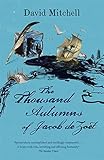
This is my review of The Thousand Autumns of Jacob de Zoet by David Mitchell.

The gruesome opening chapter ends on a positive note, which indicates the tone of the novel as a whole. After only a few pages, I felt in the hands of a skilled storyteller. The plot is unusual for western readers: the intrigue and plotting between often corrupt members of the Dutch East India Company, and the world of Imperial Japan at the dawn of the C19 – a land so enclosed that the traders have to operate from an artificial island in the harbour of Nagasaki – a touch of bitter irony here when you consider the fate of that city as the recipient of an American atomic bomb.

I enjoyed the deft plotting, varied cast of characters and originality of the first section. When the plot moves on to focus on the claustrophobic world of an enclosed Japanese shrine, it becomes more of a traditional escape thriller, and a bit "over the top" at times. However, the frequent twists are often the reverse of what one would expect, and eventually the threads all tie together to give a satisfying ending, with deeper food for thought about the different values of the two main cultures involved – European versus Japanese – the importance of "honour" or integrity and nature of personal happiness.

Mitchell seems to have an impressive knowledge of Japanese history and language. I like his style, in particular the interweaving of dialogue, the inner thoughts of the speakers, and descriptions. There are some poetic passages, as good as Dylan Thomas's "Under Milkwood", but it never becomes heavy or pretentious.

At various points I was also reminded of Wilkie Collins, Mark Twain (Huckleberry Finn), Somerset Maugham's tales of the far east, Umberto Eco (Name of the Rose) or Patrick White's sea stories (but this is more digestible than the last-named).

Apart from being well-written, I found this an exciting page turner which I wanted to finish – better to my mind (although less original) than "Cloud Atlas" because of the sustained and complex plotting, the humour, and the fact that one comes to care about the characters – tension is increased by the fact Mitchell is clearly prepared to kill them off ruthlessly it it serves the plot.

My only tiny criticisms are that I am not sure the twee sketches add much and some sentences in foreign languages e.g. Latin tags are not translated, which is frustrating.

Overall, I now understand the hype surrounding David Mitchell, and this would have made a deserving winner of the Booker…..

⭐⭐⭐⭐⭐ 5 Stars

Off the Rails

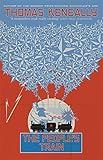
This is my review of The People’s Train by Thomas Keneally.

Years ago I gave up reading Schindler's Ark since the dry detail and plodding plot made it too tedious – it took Spielberg's vision to make it into the poignant and dramatic film which did justice to the true story.

A few chapters into "The People's Train", which I had to read for a book group, my old reservations about Keneally's writing began to surface. This book reads like an exercise into how not to write a novel. It is not that the plot lacks inherent interest: a charismatic working class political activist in the dying days of the tsarist regime takes refuge in Brisbane where he tries to galvanise the tramworkers and sheep shearers into strike action and discovers that democracies can be as oppressive as dictatorships. Then he returns to Russia to take part in the 1917 Revolution. The book appears to be based on thorough research, and it contains a few striking dramatic situations (which I cannot spoil by revealing). It raises some interesting moral issues about direct action, such as why people may be more shocked about a communist revolutionary marrying a rich woman to use her money for the cause than by an idealistic young woman blowing up an aristocrat with a bomb.

No, what troubled me was the "tin ear" quality of much of the writing and the rambling structure. The book was like a first draft which needs to be reshaped and honed. The style is firmly placed at the "telling not showing" end of the spectrum. Thus, dialogues are often unnatural, used to give the reader information rather than reveal the personalities and interrelationships of the characters. The latter are two-dimensional and underdeveloped. The two different voices used for the first person narration, initially the Russian Artem and then the Aussie Paddy Dykes in the second part, sound too much the same. Paddy's record in particular suffers from the problem of covering events at which he was not present and could not have understood much of anyway because conducted in Russian!

The small number of dramatic scenes tend to be handled so clumsily that most of the potential tension, suspense and emotional power is stripped from them. The reader is subjected to a myriad of unimportant details. I suppose that the tedium of political activism – endless meetings and reports – could be realistic but does not make for a gripping read. Yet I would save my greatest criticism for the lamentable sex scenes, for which strong men lapse into cringe-making bathos. To quote:

XX " and I took to the single bed the place offered and partly sated and partly enlarged our hunger for each other. The bed was enlarged too, so that it seemed a valid arena for us. She proved all that could be imagined: a superb, white, richly curved creation, generous enough to let me see that much. Still, there was a discretion and modesty in the way she went about it – is it crass to say that in large part her outer garments remained undisturbed?"

Not surprisingly, this relationship does not last!

The conclusion of the book, I think meant to be a moment of climax with hints of future disappointments, is in fact too weak.

With editing, I could respect this approach to writing as biography or popular history, but as fiction it fails.

⭐⭐ 2 Stars

Moore is not Less is More

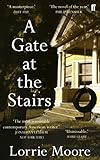
This is my review of A Gate at the Stairs by Lorrie Moore.

Some major critics describe this book as "life-changing". That seems to be excessive praise. Amateur reviewers tend to observe that this novel is less successful than the wry, poetical short stories which are Moore's forte.

With this my only experience of her writing, I found the plot potentially sufficient for a novel and ripe with possiblities. A couple "purchase" the adoption of a mixed race child: their utter unsuitability for this, and the rotten state of their marriage, gradually become apparent. This is observed by Tassie, their exploited childminder, a naive and inexperienced yet perceptive college student, who is brought out of her dreamy state of delayed adolesence by a chain of harsh doses of reality which form the climax of the novel.

Examples of the positive aspects of the book include vivid descriptions of the weather and wildlife, the witty comedy of the egocentric non-communication of the Wednesday night mixed raced adoption parents' support group (don't recall the precise title) and some agonising desciptions of the pain of bereavement. For the funeral scene near the end, I would give five stars.

However, flashes of brilliance are too often obscured by some very self-indulgent writing. The author cannot resist going off at a tangent, piling digression on digression, in overlong and often confusing sentences. Having made a point, she just goes on and on, sometimes losing the reader completely – especially if not au fait with the American cultural allusions. She does not know when to stop! Some scenes appear unnecessary e.g. a whole chapter given to Tassie eating a meal in her employer's empty restaurant, taking up space which could have been used to develop the plot itself more. Then there is the obsession with word play and puns. This may work well in a Carol Ann Duffy-style poem, but is often inappropriate here, especially when not very funny in the first place.

This "experimental" writing inevitably means that some bits will work with one reader and not another. However, it runs the risk that too much does not work with most people. This matters because the rambling approach destroys the potential drama of some scenes, and makes most characters seem unengaging. I found the majority of them very unconvincing, particularly the adoptive mother Sarah Brink who played a major part. Small point: the adopted toddler appeared to grow up too fast in a period of a few months, and often seemed too advanced for the two year old she was meant to be.

Although I appreciate why many people admire Moore's unusual and striking use of language, I shall think carefully before embarking on another of her novels.

⭐⭐⭐ 3 Stars