Harrowing but memorable

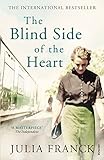
This is my review of The Blind Side of the Heart by Julia Franck.

I thought it would be interesting to read a novel about the impact of the two World Wars on the lives of German women. I assume that the "blind side of the heart" refers to people's inability to express normal love and emotion when they have been traumatised by the effects of war, both in grinding their lives down to a question of mere survival, and in taking away or maiming those they love. In this case, the main character Helene is reduced to a kind of automaton, caring for the sick in her role as a nurse, but unable to relate properly to her son. A complication is that the main factors destroying Helene have little to do with war as such – the loss of a lover and the callous and brutal behaviour of her husband, not to mention her own mother's irrational cruelty.

The focus on the minute details of daily life and on passing thoughts is often well-observed e.g. the description of Helene as a young girl studying every mole and blemish on her sister's back. However, I was disappointed by the lack of focus on the "bigger picture" to show how Germany evolved from a period of humiliation and punitive reparations after World War 1, through hyperinflation and political instability to World War 2 under Hitler.

I was repelled by the graphic descriptions of bodily functions, maladies and wounds. Helene's and at the end her son Peter's observation of the world with such a stark lack of emotion – for the "good characters" to be so hard – is shocking. I am unsure too what extent this excessive objectivity is deliberate but it reduced my capacity to empathise with the characters. I also found some of them quite unconvincing such as Helene's eccentric, often cruel mother, and her oddly passive father, and the strange relationship between these two. Helene's husband Wilhelm was painted too crudely in negative terms.

The book may have suffered seriously in translation. I had to reread several sentences which persisted in not making sense or appearing to be "non sequiturs". Generally, there is a stilted note to the phrasing which interferes with my involvement in the tale. Some of the earnest conversations on literature and philosophy are too stiff and unnatural. With a sense of frustration, I wanted to rewrite large sections of potentially moving or interesting scenes.

The pace is a little too slow, with a lack of "narrative drive" and episodes or encounters which "drift away to nothing" – rather like real life, I suppose e.g. the scenes with the beautiful Martha's admirers and her own eventual "disappearance" from the story.

The story would have made a greater impact with pruning away of some lengthy passages which added little. The lesbianism, with hints of incest, seemed to me pointless distractions from the main story – except perhaps the love between Martha and Leontine serves to show a freedom of expression allowed in "fashionable circles" in the 20s but suppressed as decadent by the Nazis.

This story is too harrowing to be enjoyable, and it is certainly not a page turner, although I think memories of certain scenes will remain with me such as Helene's mushroom-hunting expedition in the forest, made horrific by her encounter with the cattle trucks carrying Jewish prisoners, which she cannot fully comprehend at the time, although the reader can, with the benefit of hindsight. The scene also foreshadows her appalling yet understandable abandonment of the son whom she loves, yet also finds a burden.

⭐⭐⭐ 3 Stars

Rooting for Defiance Against the Odds

This is my review of The Help by Kathryn Stockett.

The underlying grimness of the story is offset by the continual bubbling wit and humour in adversity, and the sheer rage over injustice which "The Help" inspires, until you begin to wonder uneasily if you are not guilty of other indefensible prejudices yourself.

It is easy to see what has made this a bestseller. Written confidently, with a clear, sound structure and pace for a first novel, "The Help" is a page-turner with its skilful coverage of human resilience and the sowing of the seeds of rebellion as prejudice begins to crack in 1960s Mississippi, told through the viewpoint of two black maids and an idealistic but naive young white woman with ambitions to become a writer. Since Stockett was raised in this state, I have to assume that the speech patterns are authentic, and they add to the evocation of life in the South, and the vigour and humour of the tale.

Many of the characters are stereotypes – the ghastly, officious white Hilly, with the power to ostracise any "friend" who dares to question her views, and to destroy the livelihoods of black servants (not merely her own!) who displease her;the saintly, shrewd yet downtrodden black maid Aibileen; the voluptuous Miss Celia, unable to comprehend that, obeying Hilly's orders, the other wives shun her as trailer trash.

Some of the more dramatic scenes are a little clunky, but grimness and injustice are leavened with the continual comedy and irony in the language and sequence of incidents – ludicrous scenes such as Minnie's attempts to hoover clean a dusty old stuffed bear, some old family trophy. The sense of fear over the risk of a black maid being seen "in the wrong place" without her uniform, of a white person caught consorting with blacks socially, not to mention any attempts at free expression of opinion, is very palpable, and justified by the occasional examples of harsh and unjust punishment. I thought at times that this book would be soft-centred, and lapse into a corny romance for at least one character, but this is not the case.

"The Help" succeeds in reminding or informing a wide range of readers of the claustrophobic convention and bigotry of the confederate states, which trapped both blacks and whites for generations – obviously, the former suffered more serious effects – the daily humiliation, insult of being treated as invisible or unclean, and the risk of being falsely accused sacked and blacklisted, or worse for even a whiff of defiance.

If you can remember the '60s, it is chastening to realise that so much inequality and exploitation still operated unchecked, and interesting to see events which the characters have yet to realise are the dawning of a social revolution : Martin Luther King's great speech, the outbreak of the Vietnam war, Bob Dylan and the Rolling Stones hitting the airwaves, and the mass production of the miniskirt.

This is a good choice for a book group since it is likely to trigger a lively discussion. Was Miss Skeeter right to produce as she did a set of firsthand accounts of the lives of black maids in Jackson? Who really gained and lost from this subversive act, and how? How could the sharp-tongued Minnie accept for so long being beaten by her husband?

⭐⭐⭐⭐ 4 Stars

The Power of Language

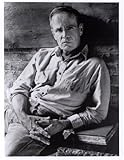
This is my review of The Orchard Keeper by Cormac McCarthy.

This first novel by Cormac McCarthy hooked me with its striking, poetical prose – reminding me of Dylan Thomas but much darker and more uncompromising. Although I have never visited Tennessee, the author conjures it in vivid images of the remote, mountainous landscape, the weather, wildlife and local people living close to the breadline but capable of unexpected acts of kindness. He also captures the rhythm and wry humour of their dialect.

The mainly short scenes shift backwards and forwards in time so that it is often hard to work out who the subjects are, what is happening and why. McCarthy has a gift for creating tension: when the bootlegger Sylder is driving an unwelcome hitch-hiker back to Knoxville you know that it will end in violence. But for the most part the plot is thin, and the author seems mainly interested in describing in minute detail incidents of daily life which he must have observed – the sensation of driving along roads "ferruling through dark forests of owl trees, bat caverns, witch covens"; a boy laying his first traps; an old man's relationship with his dog. On a more dramatic note are the memorable descriptions of the balcony of the Green Fly Inn cracking under the weight of drinkers to crash into the canyon below, or later the old man under gun attack in his shack, for reasons yet to be revealed to the rearder.

The story is very male-dominated – focus on sleazy bars, hunting, seeking vengeance through violence, plus the at times corny rapport between tough men and the young boys they teach to track coons with dogs, and seek to guide with homely wisdom.

Some initial scenes of the sex-or-is-it-rape-in-a-church variety were so distasteful to me that I nearly gave up, but I am glad that I persevered. This book requires the investment of time, the rereading of some of the more original poetic passages, the suspension of any expectations. I came to understand that what happens to the petty criminal Sylder, the boy, John Wesley, who unbeknown to both of them is the son of the man he was forced to kill, and the ancient recluse Alan Ownby who happens to observe some of Sylder's activities, matters less than the power of nature around them.

In short, I would recommend this not for the plot, but as an exercise in astonishing writing.

⭐⭐⭐⭐ 4 Stars

“Sunset Park” by Paul Auster – Insightful Introspection

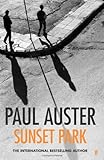
This is my review of Sunset Park by Paul Auster.

Paul Auster has a gift for describing the thoughts and motivations of introspective people, written in lucid, page-turning prose. I like the way he reveals the story from the viewpoint of different characters, so that one can see their differing perspectives and assessments of each other. Although superficially quite slight and loose, the plot is actually quite carefully structured, with occasional highly dramatic events, made all the more so for being unexpected. At the end, I suddenly saw the relevance of the (for me somewhat tedious) anecdotes of past baseball heroes, whose hopes have been dashed by chance events.

I was struck by the accuracy of Auster’s insight into the mindset of young people who, despite their education, choose to squat in abandoned properties, rejecting the mindless materialism of modern day America, and opt to live “for the present” in a country for which they fear the future, with the recent horrors of 9/11, the war in Iraq, suppression of human rights, and the recent banking crisis.

In some ways the book is like a series of short stories or “pen portraits”, loosely held together by the charismatic but troubled Miles Heller, who drifts through life, traumatised by his guilt over the death of his step-brother. Some of the characters are more convincing than others, but I suspect readers would disagree on which are better drawn. I was bored by the constant reference to baseball and Ellen’s erotic drawing, and a bit irritated by the arguably pretentious, “you need to be in the know”, analysis of Becket’s “Happy Days” and the sections on “being a writer” – on which authors tend to dwell too much. The book is clearly based on thorough research, and I felt that at times it includes too many lists – lists of famous baseball players, names of deceased celebrities in a cemetery, and so on. I was intrigued to realise that “The Best Years of Our Lives” is a real and highly regarded film from the period after WW2, and Auster convinces me of its relevance in making a contrast between attitudes then and now.

Overall, I agree with the emerging view that this is worth reading, but somehow falls short of brilliance, perhaps because Auster is so brimming over with reflections and observations on life that it is hard to marshall them into a “perfect whole” without reducing the momentum and “narrative drive” of the work, as a novel.

⭐⭐⭐⭐ 4 Stars

“Sarah’s Key” by Tatiana De Rosnay – Compulsively shocking

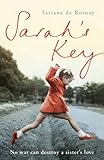
This is my review of Sarah’s Key by Tatiana De Rosnay.

The atrocity of the “Vél d’Hiv”, or rounding up by the French police of Jewish women and children in Paris for transportation to Auschwitz was unknown to me before this book was recommended. The horror is compounded in this story by the “twist” that the young heroine, Sarah, too young to understand the situation, manages to lock her little brother in a cupboard “for his own safety” so that he is not part of the transportation. Much of the ensuing tension of the first part of the book rests on the question of whether she will be able to escape and if she will succeed in being reunited with her brother. The drama is intercut with a modern day thread: Julia Jarmond, an American journalist, married into a well-heeled and highly respectable Parisian family, is tasked to produce an article on the Vél d’Hiv. In the process, she discovers that her father-in-law grew up in the very apartment from which Sarah’s family was transported, and which her architect husband is “doing up” prior to moving there with her and their (somewhat irritatingly) precocious daughter Zoe. Julia’s growing sense of disquiet and preoccupation with the tragic events she is uncovering begin to affect her relationship with her husband, and her attitude to life. This is a story about issues of responsibility and guilt, and how these continue to blight – or transform positively – people’s lives into future generations. It also raises the question which polarises people: is it better to draw a line on the past and move on or can one only be whole when one has confronted traumatic events, even if the price is that one is permanently changed as a result?

I found this book a compulsive page-turner, and think it vital reading for young people or anyone who has never thought seriously about the holocaust. Whilst accepting that some may feel that too much has been written on the subject, this book covers a different aspect from usual – the guilt of those other than Germans under direct Nazi influence.

I understand the views of those who think that “making the story even more ghastly than it need have been” is distasteful, and that the romantic aspects of the modern story are a bit trite and sentimentalised. I do not find Julia’s husband Bertrand a totally convincing character, and Julia herself seems at times a bit over-emotional, self-absorbed and even selfishly thoughtless in the way she acts impulsively, keeping and breaking confidences on a whim -although all this is of course necessary to the story.

Although I cannot reveal the end, I thought on reflection that it was ironically the only logical one, rounding it off quite effectively. I read this in French, so cannot say how it would strike me in English. However, to the extent that I had such a strong urge to complete it, was moved by the plot, and will certainly remember it indefinitely, I cannot give it less than 4 stars

⭐⭐⭐⭐ 4 Stars

“Nemesis” by Philip Roth – Unflinching

This is my review of Nemesis by Philip Roth.

In my first experience of a Roth novel, I was hooked from the first page by the flow of crystal-clear prose, so unlike the muddy rivers I have been wading through recently. Despite the unappealing theme of a polio epidemic in US Newark during World War 2, and the certainty that the tale would end in tragedy, I was compelled to read to the end.

The plot is perhaps too slight for the length of the book (280 pages) and you may feel that points are rammed home long after the reader has “got the point”. There is also the somewhat awkward device of introducing one of the young polio victims in passing as “I”, only for him to reappear in the last chapter, and listen to Bucky Cantor’s story in enough detail to be able to relate the whole tale of the promising young athlete from “the wrong side of town” who becomes a PE teacher with an overdeveloped sense of duty and “honour”. This has been stimulated by the strict upbringing received from his grandfather, and the need to expiate the failings of his father, an embezzler who abandoned his family. Bucky is haunted by the fact that his friends are dying in active service from which poor eyesight has debarred him and feels unduly responsible when the young boys in his charge begin to die with alarming speed from polio.

The strength of the story lies partly in the analysis of the factors which may form an individual personality, and the minute exploration of human emotions – the grief over the loss of a young life with great potential, the overwhelming desire to escape from a dreadful situation, with the accompanying guilt one may feel over so doing – also the corrosive effects of an inability to compromise when things go wrong. Then there are the interesting historical and cultural facets. Now that we take polio vaccine for granted, it is salutary to be reminded of what it must have been like, having to endure the fear of catching the disease every summer, not knowing where or how it would strike, or how it could be avoided. We are reminded of the gulf between the experiences of the comfortably off and the underprivileged, together with the rampant anti-Jewish prejudice in 1940s America. Also, there is the whole issue of religion: if you accept without question the existence of God, how can such a deity permit the random suffering of a polio epidemic, or the pointless slaughter of a world war?

This is a bleak novel, but in writing so unflinchingly about how chance affects our lives, for good or ill, and in reaching a conclusion which can be seen in some unexpected way as positive, I think it helps us to accept our own realities.

⭐⭐⭐⭐⭐ 5 Stars

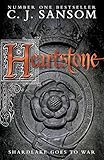
“Heartstone” (The Shardlake series) by C. J. Sansom – A lengthy meaty intrigue

This is my review of Heartstone (The Shardlake series) by C. J. Sansom.

Bearing in mind that this fifth Shardlake novel is a guaranteed bestseller whatever the quality, Sansom has taken the trouble to produce an intriguing and well-researched mystery which is an improvement, I think, on the last adventure, “Revelation”. What always impresses me most about his writing is the portrayal of the Tudor period – which tends to be romanticised in our minds – as a brutal, police state, in which many people lived in fear. Yet, in the midst of all the corruption and greed, a thread of justice prevails, enabling Shardlake to right some wrongs in the end. I also like the way in which the “goodies” are not perfect: even Shardlake offers small bribes to get information, and agrees to help cover up a murderer’s identity on compassionate grounds. Also, everything does not end completely happily at the end, and some details are left open to the reader’s imagination.

I did not mind the fairly slow pace of much of the book, although I was reminded of schools’ history programmes on the radio fifty years ago, in which an observer travelled back in time to describe past societies at work. However, Sansom’s descriptions are vivid – I was interested in the detailed account of how Henry VIII’s fleet against the French is provisioned down at Portsmouth, how ordinary people mistrust the silver coinage because it has been debased with copper, how stands of fine oaks are beginning to be ripped out to make ships’ masts and charcoal for iron foundries, how a deer hunt is organised. The details of the “Mary Rose” are fascinating, particularly since the reader knows its fate – I was struck by the accounts of the nets over the decks to hinder the enemy from boarding, but also making escape impossible if the top-heavy ship were to keel over.

The stereotyping does not bother me either – it’s quite amusing to draw parallels between Shardlake and sidekick Barak, and, say, Morse with Lewis. I can also accept Shardlake’s perpetual folly in getting himself into impossibly tight spots, but always surviving by dint of physical strength and endurance which an ageing, disabled man is unlikely to possess. The rather modern way of thinking and talking used by Shardlake and Barak does not grate too much. My only major criticism is that the denouement never lives up to expectations, when, with a man of Sansom’s writing abilities (as shown in “Winter in Madrid”), it could. Once again, I am left feeling that the critical dramatic scenes in which the details of mysteries are revealed tend to be a bit “hammy” and are not written as subtly and convincingly as they could be.

⭐⭐⭐⭐ 4 Stars

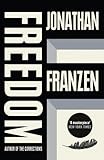
“Freedom” by Jonathan Franzen – The Bitternness of Bitterns

This is my review of Freedom by Jonathan Franzen.

At first I was engrossed by the wry humour and bordering on ludicrous but telling anecdotes which capture the lives of families in a “gentrified” US suburb, centred round one Patty and Walter Berglund. Although I did not understand all the Americanisms, the first chapter rang true for me. I thought afterwards that it would make a good satirical short story in its own right.

With the switch in the second section to Patty’s “autobiography suggested by a therapist”, my interest waned rapidly. Patty’s stilted use of the third person, often calling herself “the autobiographer”, jarred on me, together with her unlikely ability to reproduce verbatim conversations at which she was not present. I also agree with the criticism that Patty’s voice is too close to the narrator’s . In fact, all the characters tend to speak in the same witty, wizecracking way, which makes them less convincing.

The twice-used device of presenting sections of the narrative in a third person autobiography in the style of a novel which is then used as a way of communicating with other characters, does not work for me. Also, Patty’s and Walter’s extreme shifts in emotion seem exaggerated to the point of caricature, so that one does feel for them as one should.

It puzzles me that Franzen is more concerned about a few minor typing errors (I read the offending version and hardly noticed them – and wasn’t the pulping of thousands of copies a contribution to the waste of resources which he lambasts in the story?), than he is about the possible inclusion of too many self-indulgent ramblings and rants.

His theme of the paradox of freedom in the early C21 is interesting. This is set in the context of the disruptive effects of the Iraqi war, and issues of global pollution, overpopulation and global economic instability. It does not matter to me that some of the facts – names of US politicians etc – are already dated. Frantzen has a fertile imagination, giving rise to some entertaining incidents, and his dialogues are often sharp and pithy.

All this is undermined for me by the fact that he does not know when to prune, and when to stop. Conversations are often too long, and drift into cues for the author to express his views. The whole thing is bogged down in excessive detail and inclusion of “unnecessary” scenes which destroy the momentum of the tale. It is sometimes hard to distinguish major from minor characters. For instance, it took me a while to realise that Richard Katz is more central to the theme than either Eliza or Carter, and for pages he is a 2D character to whom I cannot relate.

Worst of all for me is Franzen’s tendency to pontificate, often in quite a clunky or turgid, over-earnest style, to tell me what is going to happen, what to think about someone’s behaviour or personality, or just to hold forth on some aspect of American life.

The author may have been aiming for a modern day “War and Peace” in the style of Updike-cum-Bellow but I am left thinking that if this book had been shorter, more ruthlessly pruned and edited, with a tighter structure, particularly in the first half, it would have had more of an impact – even made a brilliant novel.

Having said this, I have certainly thought a good deal about the plot, characters and evocation of American landscapes since finishing “Freedom”…..

⭐⭐⭐ 3 Stars

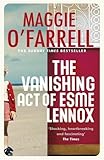
“The Vanishing Act of Esme Lennox” by Maggie O’Farrell. Unquenchable spirit against the odds

This is my review of The Vanishing Act of Esme Lennox by Maggie O’Farrell.

This intriguing, well-observed, at times intolerably sad and shocking tale is a cross-over between popular and literary fiction. The author reveals the drama with great skill, weaving back and forth in time from the different viewpoints of the three main female characters: Esme, her sister Kitty and great-niece, Iris. We piece together the chain of events, stemming from Esme’s lively curiosity and inability to conform to the stifling middle-class values of the early C20, which lead to her incarceration in a mental hospital for over sixty years. It is salutary to learn, or be reminded, that a number of women really did suffer this fate. This contrasts with the freedom taken for granted by Iris, two generations on, as she runs her own quirky business, lives independently with a dog but no partner, and has temporary affairs, always drawn back to what feels like an incestuous relationship with her married step-brother.

At first I thought that Esme had been implausibly unaffected psychologically by her ordeal, and that the mental institution was not nearly as grim as it would have been in reality. Gradually, the full horror of the regime Esme has suffered becomes apparent, all the more so because it is revealed subtly, with much implied and left to the imagination. It also becomes clear how Esme manages to hold on to her sanity by “vanishing” or retreating in her mind back to the happier moments of her life in India as a young child, or with the sister for whom she had a great affection. Part of the suspense lies in wondering what violence may be unleashed in the outwardly calm and rationale, if eccentric, Esme, when she allows herself to release some of the emotion that has been suppressed.

The plot relies on a few details which seem quite unlikely, but it is fairly easy to overlook this. Although other reviewers have criticised the ending, it seems on reflection to be perhaps the best the author could have come up with, leading as it does to debate on how and why it occurs, and what is likely to happen next.

The strength of this book lies in the fact that, although the theme is depressing in theory, and the sheer waste of Esme’s life is appalling, these aspects are offset by numerous humorous incidents together with her sheer vitality, thought-provoking comments on life and powers of endurance.

This story is likely to stay with you longer than other more pretentious and self-regarding works.

⭐⭐⭐⭐⭐ 5 Stars

“The Grass Is Singing” by Doris Lessing – Lingers in the mind and retains the power to shock

This is my review of The Grass Is Singing by Doris Lessing.

It is easy to understand why “The Grass is Singing” made such an impact in 1950, because the “no holds barred” presentation of naked racism, from which I suspect many current writers would now shy, must have served the purpose of shaming people into confronting their own prejudice, or galvanising them into trying to change the culture. The book may now seem a bit dated, with the end of apartheid in South Africa and of white colonialism in Southern Rhodesia – now Zimbabwe – where the book is set. Also, the recent revolution in feminism and sexual equality may make it less likely that a woman like Mary Turner would endure her grim life on a remote farm until it drove her mad.

However, the racism remains shocking, with the added point that it helps one to understand, although not condone, the recent “turning of tables”, with Mugabe’s extremism and the violence perpetrated on white farmers by embittered and impoverished black Zimbabweans.

From the first page, we are catapulted into the drama of the murder of Mary Turner, wife of a unsuccessful farmer, and witness the cynical closing of ranks of the local white community – Mary has somewhow broken the code of “keeping on top of the situation” by failing to control her native staff in the right way – not least the “house boy”, actually physically impressive man, Moses, who has accepted responsibility for her death. The rest of the book is a description of Mary’s life, showing the train of events leading inexorably to her murder. It provides a minutely observed analysis of her ongoing state of mind, shifts in her thinking and motivation, and her ultimate mental deterioration. The same applies to her husband Dick. The two are clearly incompatible, and destroy each other, but show redeeming features and finer qualities, so that one empathises with them both, despite Dick’s weakness and Mary’s excessive cruelty towards the workers.

Then there is the aspect which I admire most of all – Doris Lessing’s vivid evocation of the African landscape, the sights, scents, wildlife, shifting weather and seasons. This is what also struck me most in her very different and perhaps even more famous work, “The Golden Notebook”. She has the gift for bringing alive a continent one may never have seen, in all its wild beauty and oppressive heat – the bush is poised to reclaim in a few months the homestead and farm which Dick has slaved for years to cultivate.

At times, the bleak sadness of Mary’s life felt unendurable, and I was forced to put the book aside for a few hours. Towards the end, the sexual tension, perverted mutual hatred and fascination betwen Mary and Moses, is built up with great skill. I agree with reviewers who have said that the final chapter, although very powerful and imaginative, loses some of the striking clarity of the earlier prose as regards the behaviour of the two protagonists, Mary and Moses. Perhaps Doris Lessing intends to portray the confusion of Mary’s madness, but I am left a little uncertain as to what Moses’ precise motives for the murder are (plus I was half-expecting a final plot twist!). On a second reading,I saw how Moses might have been driven by misplaced jealousy rather than just the desire to dominate Mary.

On technical grounds, you could perhaps criticise Lessing for using too much of a “telling” style of narrative. Nevertheless, this Nobel-prize winning classic is worth reading, to remind one of what “good writing” – written from the heart, without any artifice but with startling insight – really is in a world where one’s mind can be blunted with the over-hyped pap of too many current bestsellers.

⭐⭐⭐⭐⭐ 5 Stars