This site will share with you hundreds of book and film reviews written since 2009. Also a chance to discuss these reviews together with some of my creative writing to be added.
Although I read this in French – and it is excellent practice for improving one's French – I thought it best to post a review in my native English.
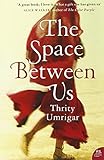
The swallows are the veiled women of Kabul, who flit through the ruined alleys like fugitives in a perpetual "half-life" of oppression.
It is ironical that all the reviews to date have been written on the English translation. The original French version of this tale – which I am sure must be "better" for those who can access it – uses vivid, striking language to capture the atmosphere of a war-torn city under the bigoted rule of the Taliban, which gives free rein to bullies and fanatics: people survive by keeping their heads down.
We see constant examples of casual brutality and sexism which shock our sanitised western sensibilities.
When a man admits to his worries over his sick wife, a friend condemns him for such a display of his own weakness. The remedy is obvious: he should cast his wife aside for a younger model!
A sensitive young man is aroused by the madness of a crowd to join in the stoning of a woman he does not even know, a momentary lapse on his part which costs him the love of his would-be emancipated wife.
As a final irony, men who feel "dishonoured" when a lunatic tears aside their wives' veils trample on the women in their haste to get at him.
This short, simple tale of cause and effect reminds me of a medieval morality play, as the lives of the various characters begin to impinge on each other and events build to a plausible but inevitably tragic climax.
I have no idea as to the authenticity of this story written by an Algerian army officer under a female pseudonym to avoid censorship at the time. Despite its bleak theme, and at times somewhat overblown prose (which somehow seems acceptable in French), the story of the chain reaction of damage wrought by fanatical repression remains in one's memory.
This tale of the intertwined lives of three men living through the aftermath of a terrible civil war in 1990s Sierra Leone has the potential for a moving and thought- provoking drama.
It begins with Elias Cole as he suffers a slow painful death, haunted by memories of his obsessive love for Safia, the lovely wife of a charismatic colleague. Driven by the apparent desire to make some death-bed confession, but on his own terms, his calculating and manipulative personality is revealed.
Then there is Adrian, the introspective British psychiatrist with some vague urge to do good in a developing country struggling to recover from its shattered state. In fact, he is escaping from his marriage, for reasons that remain unclear. His affair with the beautiful Mamakay, who makes a sudden appearance well into the book, does not entirely convince me, and the guilt he feels for abandoning his wife and daughter is insufficiently explored.
Thirdly we have Kai, the young doctor traumatised by the horrors of the war, his nightmares alternating with nostalgic memories of his girlfriend Nenubah, whom I imagined for a long time to have perished tragically in the fighting. Kai makes the decision to emigrate to the States, lured by the encouragement of his best friend Tejani, but it is unlikely that he would do this without worrying more about the fate of Abass , the young nephew for whom he acts as a father. I also found the graphic descriptions of Kai conducting operations unnecessary – they serve only to give the author an opportunity to show off medical knowledge gained to give the book an authentic touch.
Forna creates a vivid impression of the scenery and way of life in Sierra Leone. There are many descriptive passages of haunting beauty, but also self-conscious exercises in creative writing. It may be intentional to create a slow pace in which fleeting impressions seem as meaningful as major events, but the constant focus on small details, say of Adrian watching a stranger play with her child on a Norfolk beach, distracts the reader too much from the thrust of the story and blurs the plot. For instance, the arrest of Julius, his subsequent fate, his wife Safia's reaction, and Elias Cole's acts of betrayal should be much more striking events, rather than buried in descriptions of other things. There should be more of a sense of impending unrest, say in Elias's Cole's account of past events.
It is probably quite brave, certainly challenging, for a female author to switch between the viewpoints and complicated lives of three male characters. However, this structure, together with continual moves back and forth in time with the frequent reporting of dramatic events, rather than enacting them "live", further combine to fragment the storyline and weaken the impact of any drama.
There is also the very irritating habit of changing tense from past to present and back. Perhaps the present tense is meant to give more of a sense of immediacy, which makes it odd that it is applied to descriptions, say of Kai scrubbing up for an operation, rather than his dramatic explanation of the reason for his trauma.
There are too many shadowy characters introduced only to drift away or storylines which remain underdeveloped, such as the case of Adrian's patient Agnes, his relationship with his mother, even with Ileana…I could provide many more examples. We seem to be involved in the plots of several novels, tangled together.
For me, the flawed structure became a real barrier to appreciating and admiring the work, which resembles a promising but sprawling draft in need of editing and reorganisation.
Henry Pulling, a staid former bank manager, is induced to accompany his eccentric Aunt Agatha on her travels, only to find himself shaken out of his dull rut of retirement and gaining a new perspective on the moral values he has always taken for granted.
Despite references to smoking pot and Andy Warhol, this book seems a little dated even for the sixties when it first appeared. It reads more like an Evelyn Waugh type novel from the 1930s. Farcical and light-weight, it entertained me for a while, being very funny and imaginative in places, with the fluid style with which Greene made writing appear deceptively easy.
By the middle, I was growing bored with Aunt Agatha's endless recollections of past lovers, all of whom seem implausible and two dimensional. The details of her tricks to get money through the customs are somewhat tedious and confusing. She began to seem an unsympathetic character, manipulative and callous in her treatment of the loyal caricature Wordsworth, and vindictive towards the woman who has remained faithful to a former lover they have both shared. I could never quite believe in Agatha's enduring relationship with the unappealing Visconti.
The story builds up well to quite an effective climax, in which the darker side of Greene's writing reveals itself – the preoccupation with Catholicism, and a cynical view of human nature, as conveyed by the party to which Visconti invites former enemies and potential business associates but no real friends.
Some of the travel writing, such as the description of Asuncion is quite vivid and interesting.
I like the way Greene uses the story as a vehicle to expound his own insights, observations and theories about life. For instance, his views on tea bags:
"one of them was raising a little bag, like a drowned animal, from his cup at the end of a cord. At that distressing point I felt very far away from England".
Or, the following exchange:
"Surely that's only a legend."
"There speaks a protestant…Any Catholic knows that a legend which is believed has the same value and effect as the truth. Look at the cult of the saints."
I sensed that Greene himself may have grown bored with the novel before completing it but he is such a skilled writer that it's still worth reading, if not as good as it could have been.
As in "The Canterbury Tales", a disparate group of travellers share tales, but here the similarity ends, since they have lost the power of speech and are forced to communicate by setting out tarot cards, which Calvino also describes as "arcani".
At first, I found the stories unengaging fairy tales, of the knight errant encounters in forest fair maiden who turns out to be ugly old hag variety, although I had an uneasy sense that I might be missing all sorts of allusions through my ignorance of classical and medieval mythology.
Any interest lay partly in working out or grasping what the succession of cards mean. This is not easy as, particularly for the tales told in the castle, the cards are reproduced in such a small size that it is hard to see what they represent. The set of tarot cards used for the second set of tales from "The Tavern of Crossed Destinies" are drawn a little larger and bolder, so easier to decipher. Although it might have added too much to the cost of the book, it would have been better if each card could have been reproduced at least quarter page size, and positioned at the point in the text where it is mentioned. Although there are a few coloured plates of tarot cards in the middle of the book, they are not the "major players" in the stories.
Also, once I realised that, for the castle stories, cards are laid in two parallel rows or columns to form part of an overall grid, whereas for the tavern stories, each one occupies an overlapping block in the grid, further interest stemmed from noticing how the cards for the end of one story are the beginning of another, and how the same card may represent totally different incidents in separate stories. For instance, a card showing cups could mean the celebration of a wedding, or could signify looking down from a city on rows of tombstones. Although sometimes intriguing, the need to preserve the order of the cards often makes for tales that seem contrived and limited.
Occasionally, a story caught my interest, and I began to see "deeper philosophical layers". This first occurred in the Tale of Astolpho on the Moon: on a mission to retrieve the lost sanity of the irreplaceable warrior Roland, Astolpho is sent to the moon where an endless storeroom preserves "the stories that men do not live, the thoughts that knock once at the threshold of awareness and vanish forever, the particles of the possible discarded in the game of combinations, the solutions that could be reached but are never reached.." Much later, in "The Tale of Seeking and Losing", Parsifal concludes, "The kernel of the world is empty, the beginning of what moves in the universe is the space of nothingness, around absence is constructed what exists, at the bottom of the Grail is the Tao" and he points to the empty rectangle at the centre of the grid of tarot cards. All this may of course leave you cold!
However,the stories seem to me to go seriously off the rails at the end where Calvino tries to tell his own story, which becomes very rambling, including reference to paintings in galleries of St Jerome with his lion and St George with the dragon, of which we are not provided any visual examples to help us appreciate his points, whilst he then presents as a grand finale a story which somehow combines bits of King Lear, Hamlet and Macbeth.
Although I can understand the fascination of weaving stories out of a grid of cards, this book is for me no more than a clever gimmick. Calvino has apparently discarded some tales because he thought they did not work, but it seems to me that most of those retained would have benefited from a thorough redrafting. Often the events are quite rushed and garbled, and the characters two-dimensional (card?!) and so lack the power to arouse any sympathy. Perhaps owing to the translation, the wording is at times very stilted or jarring.
The inadequacy of the US health insurance system; the complex, shifting emotions within a relationship in which the wife is struck by possibly terminal cancer; the dynamics of a family in which one child has a degenerative disease: these themes could combine to make a moving and opinion-changing masterpiece, but call for a subtlety and lightness of touch to make so much pain bearable. For the first half of the book I felt oppressed by the opposite, that is, the tsunami of words, the detailed, by turns pettifogging or unsavoury descriptions, lengthy digressions and rambling rants, always three or more examples where one would do. There are also some very original or telling comments, although they are at risk of getting lost in all the verbiage.
The story begins with Shep Knacker packing a bag to present his wife with an ultimatum: the time has come for him to travel to the idyllic African island where he has decided to settle, and he plans to take off whether she accompanies him or not. This could serve to reveal a good deal about our "hero" but instead becomes a pretty negative description of his wife. I would much rather have discovered what Glynis is like through situations and dialogues than be told what to think. Admittedly, some descriptions are very striking:
"..in art school, Glynis had not chosen her medium by accident. She naturally identified with any material that so fiercely refused to do what you wanted it to, whose form was resistant to change and responded only to violent manhandling. Metal was obstreperous. Were it ever mistreated, its dents and scratches caught the light like grudges." It's the last sentence that stands out for me.
Then the story moves on to Shep's "best friend" Jackson, whose exaggerated diatribes I admit to finding amusing and telling. It took me a while to realise that his sparky but odd daughter is in fact disabled with an obscure physical condition that blights not only her life, but that of the entire family. I felt very discouraged at this stage. Was so much suffering really necessary?
Also, in the midst of the wealth of unpleasant detail about bodily malfunctions, the opportunity is missed to enact, rather than report second-hand , some dramatic scenes, such as the point at which Glynis tells Shep she has cancer, and his initial reactions as his chance to escape evaporates, or to explore his feelings towards a woman he is prepared to leave until he hears of her need for his health insurance. This would not only have made the story more emotionally engaging, but also shown a clearer progression of the character's thoughts. Yet Shriver is capable of being very incisive, as when she closes a chapter with Shep's admission to himself that he only has enough money to realise his dreams if Glynis "dies soon".
As it is, the links between stages in both dialogue and scenes are at times clunky and contrived, and major new developments may seem to occur too abruptly, such as the degree to which Jackson has "reached his limit", when you might have expected Shep to be in this state.
Another limitation is that none of the characters seems to be afflicted by the sense of anguish based on deep love, or the fear of loss of a companion. This may be acceptable for Shep because he is ultra practical and pragmatic, but makes for a less moving story, in which you care too little for in many ways unlikeable people.
Perhaps I became inured to all this suffering, but the book improved for me as I persevered, and the last hundred pages or so seem the best: well-paced, plot strands coming together well, an ending which was remarkably positive, and avoided sentimentality, mawkishness or the cop out of not knowing how to finish the dilemma one has created. However, even here there is a superficiality in the personal relationships, a kind of "cold heart" and skimming round the depths of real grief.
I acknowledge Lionel Shriver's undoubted talent, but wish she had made the book shorter, checked her narrative for overkill (no pun intended), and toned down some of the cynical wisecracking humour, perhaps the product of an attempt to write like an American male.
I was hooked from the outset by this well-plotted, moving tale of the relationship between a middle-class Bombay widow Sera and her faithful servant Bhima. The common factor in these two women's lives is their unhappy marriages leading to disappointed hopes. Despite her education, Sera has endured the tyranny of a spiteful mother-in-law and abuse at the hands of a controlling, often violent husband, but now finds happiness in the company of her pregnant daughter and charming son-in-law. Bhima's life was destroyed when her once adoring husband left her, yet she too finds a reason for living in her grand-daughter Maya whose college education Sera has generously supported. The problem is that Maya's bright future is now in ruins since she has somehow fallen pregnant.
This story is certainly very bleak at times, but made endurable by the author's close observation of Bombay society – embracing both the wealthy and slum dwellers – her keen sense of humour and what sounded to me like authentic dialogue: the quirky turns of phrase, often flowery speech and peppering of Indian terms add colour to the writing.
The story is developed through lengthy flashbacks, so that dramatic incidents are implied to arouse your curiosity, with the details gradually revealed. The climax is predictable but the ending is not. At first, I was disappointed by it, but decided on reflection that the author chooses a subtle, clever note on which to close, leaving it to the reader to consider what happens next.
I was interested by the parallels between the way middle-class Indians treat their servants, and the behaviour of white Americans towards their black servants in the South until recently, as portrayed in the bestselller, "The Help" – for instance, requiring maids to drink out of their own separate cups, and not letting them sit at the same table, whilst expecting them to bring up one's children as their own, and also helping them out in a paternalistic way in moments of deep personal trouble.
All the main characters are well-developed as complex people with strengths and flaws. The character of Bhima is particularly interesting. Her illiteracy exposes her to exploitation – apart from limiting her employment prospects – and saps her confidence. Yet her natural intelligence gives her a perceptiveness and ability to analyse others, in a very pragmatic way, which eludes some of her so-called superiors. Despite endless hardship, she maintains a dignity and pride which at times cost her dear, but you have to admire her unbreakable spirit. In contrast, Sera lets her own spirit be broken in order to hang on to material things and respectability, so ultimately perhaps loses more of what really matters than her outwardly povertystricken and downtrodden maid.
I agree that this book is most likely to appeal to women, and may in fact repel some men initially prepared to give it a chance, since the male sex is portrayed in a pretty negative light, as either weak or selfish and vindictive.
This novel covers the same territory as Arvind's "The White Tiger" but in a less wisecracking and cynical, more subtle and introspective fashion, both worth reading in their different ways.
I could not avoid comparing Mankell's "A Troubled Man" with the bestsellers of the Nordic writers Larsson and Nesbo. Like Larsson, Mankell is deeply concerned about the state of Swedish society, corruption in politics and the security services, and the country's awkward position, supposedly neutral between the "bad guys" in Russia and "good guys" in America, although this crude division oversimplifies the truth. Although Mankell "writes better" than the other two as regards developing characters – I particularly like the complex relationship and dialogues between Wallander and his daughter Linda – this last in the Wallander series is definitely not a page turner. It lacks the tight plotting and moments of tension and high drama you find in Nesbo's Harry Hole novels.
The investigation begins with the disappearance of Håkan von Enke, the retired submarine commander who just happens to be the father of Linda's partner Hans – whose involvement in banking just when Iceland is going bust seems a missed opportunity for development as a subplot. The simple storyline proceeds so slowly, with much of the past drama being revealed to Wallander in long rambling conversations, that I found it hard to continue. The frequent digressions into gloomy even bleak introspection and more bitter than sweet nostalgia began to wear me down. I grew impatient with Wallander's preoccupation with ageing and death – he's only 59, for Heaven's sake! I admit that losing one's mind, which Wallander clearly fears, can strike people far younger than this.
I wondered whether Mankell was investing Wallander with his own sense of mortality, but he's only in his sixties, and seems very active. Perhaps Mankell has grown attached to Wallander and wanted a last novel that would "take stock" of his life, and pursue a realistic approach in denying a happy old age to a man who has sacrificed too much of himself (as regards personal relationships and hobbies) to catching criminals, and has inevitably been damaged by the horrific sights he has been forced to witness.
Fortunately, the plot picks up at the end with quite a rapid denouement, but I was unconvinced by the way that Wallander's constantly reiterated sense that he is "missing something" suddenly resolves into a neat set of accurate deductions.
Filled with admiration for Mankell's support of just causes (including his stance on Palestine), his practical financial aid to those in need and evident wisdom in judging the state of the world, I would like to give him 5 stars. Although I might just give 4 for the quality of the writing, the plot seems a little too thin and lame and would have gained from a little more of the author's time. So, if I give this 4 stars it is as a psychological study rather than a successful detective thriller. Of course, this makes it "out of kilter" with the rest of the series…..
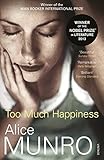
I have heard Alice Munro described so often as one of the greatest contemporary short story writers that I had high expectations for this book. The length of the stories surprised me, together with her frequent tendency to ramble from what seems to be the main thread of each tale. Then there is the tendency to skim in a few pages through decades of a character's life, often telling us what to make of people and situations, rather than implying or revealing these aspects. Yet from the outset I thought I could see the reasons for Munro's fame in her easy, confident and very readable style, the rapid building up of situations and characters, the occasional very insightful comments which chime with one's own experience of life, clarifying some point which has lain dormant in one's own mind, and one suddenly recognises to be true.
I was held by the continuous sense that a story is heading somewhere meaningful and thought provoking, and by the knowledge that, at any point, she may insert some dark and shocking event: a man murders his children in a jealous rage, a widow realises that the gas man she has admitted to her house is in fact a crazed killer. I suspect that most people will find that some stories leave them cold, but they are moved by a few to which they can particularly relate, such as a mother's sense of loss before steeling herself to accept that her son has "dropped out" to become an anarchist.
I agree with the reviewer who found the title story "Too Much Happiness" hard to engage with – it reads like a draft of a story, based on research notes – but I do not mind that it is "out of character" with the rest in being the tale of a female Russian mathematician in the late nineteenth century, rather than a series of tales of small town Canadian life – a kind of Lake Woebegone with a sting in the tale. Also, the title seems inappropriate for the collection as a whole, since most of the themes are somewhat bleak.
Although these stories are admirable and original, characters appear implausible at times and plots often seem very slight with underwhelming downbeat endings(as in Wenlock Edge) and left me ambivalent – not sure what to make of some stories and wondering whether I had missed something! I suppose that the scope for debating what each one means adds interest – good for reading groups and so on! I was made very aware of Monro's age with many of these stories harking back to a distant youth, and reflecting on a whole lifetime (as in Face). I plan to read some of her earlier work to see if the stories have a tighter structure and make more of an impact.
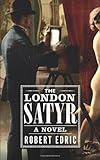
I found this the most successful of the six Edric novels I have attempted – two of which I abandoned, but I keep returning to his work for the clear, striking prose – excellent in creating atmosphere and describing scenes – and his concern with people's motivations and relationships.
The theme is an intriguing one – moral corruption beneath a layer of respectability in 1890s London. The topic has not yet been done to death, although covered by the recently televised "The Crimson Petal and the White", an overblown rose next to this much shorter, more narrowly focussed work.
Webster is a photographer employed by the Lyceum Theatre under its flamboyant actor-manager Irving and his control-freak sidekick, Stoker. Webster has drifted into a financial arrangement with Marlow, "the London satyr", the suave pornographer who needs him to "lend" theatrical costumes for use in sleazy photo sessions. Webster is an enigmatic man. Perhaps he likes the secrecy, the risk of detection, the fact of not being quite what he seems. Perhaps he feels his own guilt is minimal, since he is merely a supplier, an observer of a seedy but intriguing world, without knowing exactly what is going on. The murder of a child prostitute by a man in Marlow's circle sets up a criminal investigation which forces Webster to think about whether and how to protect himself.
The fact that Webster often seems weak and passive make him a less attractive character. Why doesn't he stand up to his greedy, manipulative daughter or over-familiar, cunning maidservant? Yet some of the most moving passages in the book provide the explanation for his apathy and for his loss of connection with his wife Alice, for both have been devastated by the premature death of their younger daughter.
Edric also harnesses the late Victorian obsession with the spirit world. Grief has led Alice to set herself up as a medium. Webster's scepticism is a further barrier between them, but he plays along, even supplying information that will help her act out convincing contacts with the spirit world. He makes no attempt to step in, even when it becomes clear that her main motivation is the morbid delusion that dead souls are speaking to her through her deceased child.
At first, I found the lengthy dialogues entertaining, but soon began to feel that they are too much of a substitute for real action. The continual game-playing, with characters not meaning what they say, or saying what they mean, begin to seem contrived. Some scenes appear wooden and clunky, perhaps because the author has laboured over the words at the expense of the narrative drive. Also, too many of the characters – be they a Jewish immigrant, a female procurer or a servant – speak in the same subtly ironic "voice" and very articulate phrases as the educated middle-class characters.
I felt for a while that the plot is too slight to sustain the book. In fact, it manages to work up to a kind of climax. The inconclusive ending – the story simply stops – disappointed me at first, but then seemed to be quite reasonable. Edric has made his point, and leaves you to draw your own conclusions about how Webster goes on to live out his life.
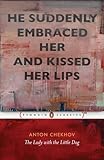
Chekhov's two hundred or more short stories can now be downloaded free of charge, so this selection of thirteen of them needs some rationale for the choices made. Although the notes at the end are interesting, say as regards the extent to which Chekhov's writing was constrained by the censors who cut out large tracts, I would have liked more background explanation of how the details of his life and his personality affected his writing.
Assisted by Ronald Wilks' excellent translations, the stories flow along and are very easy to read. I was struck by Chekhov's evident love for the countryside, his frequent flashes of humour, his rich cast of characters including many vivid little pen portraits, and his complex attitudes towards the peasants: he is repelled by their ignorance and boorishness, but realises that some of this is the fault of the wealthy people, like himself, who have deprived them of opportunities. A recurrent theme is for people to be dissatisfied with their lot, stultified by the boredom of provincial life and very indecisive about making changes, in particular embarking on a long-term relationship. I wanted to know to what extent these attitudes were Chekhov's own.
The rambling structure of many of these stories surprised me, together with their length, and inclusion of chapters! I can see why "The Lady with the Little Dog" is so famous since it analyses the narrator Gurov's inner thoughts so well. "And only now, when his hair had turned grey, had he genuinely, truly fallen in love – for the first time in his life."
My favourite story was "My Life", almost a novella at ninety pages, which seems to me to encapsulate everything to be found in all the other stories as regards human relationships and the flaws in Russian society. In what is subtitled "A Provincial's Story", the narrator actually makes some decisions – to give up his middle class heritage, and work with his hands, and to marry the young woman to whom he feels attracted. Inevitably, his actions bring some sorrow, and the story ends on a philosophical rather than positive, and poignant note.
I like the farcical wit of "Man in a Case" – the "solitary type…like hermit crabs or snails….always seeking safety in their shells… because the real world irritated and frightened him and kept him in a constant state of nerves." At times, as in "Peasants", Chekhov's sense of the ludicrous seems to go overboard. Other stories like "In the Ravine" seemed to me to be too "baggy" and lacking focus, in need of a good edit.
Perhaps I can only take these stories in small doses, but I am pleased to have discovered Chekhov as a short story writer and will definitely seek out more on the net from time to time.


 Antenna Reviews