And then they came for me and there was no one left to speak out

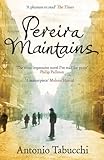
This is my review of Pereira Maintains by Antonio Tabucchi.

This novel demonstrates why my previous policy of avoiding novels translated into English is a mistake. In the same way, to assume that such a short, very readable novel must be lightweight is another error.

Impeccably translated from Italian, this subtly humorous story with a growing underlying sense of menace captures Lisbon in the summer heat of 1938, as Portugal slides into fascist dictatorship on the coattails of its aggressive neighbour, Spain, under the influence of Franco.

Punctuated with the refrain, "Pereira maintains", this is the testimony of a journalist employed in a sinecure to produce the new weekly cultural page for a small newspaper, "The Lisboa". Sunk into a dull routine, overweight and unhealthy, Pereira's life revolves around eating "omelettes aux fines herbes", drinking sugary lemonade at the Cafe Orchidea, and communing with a photograph of his dead wife.

Since he is a humane man with principles, he is gradually forced out of his ostrichlike state by the examples of repression which become increasingly hard to ignore. A carter is murdered by the police for being a socialist, but staff on "The Lisboa" are too scared to report the story in the boss's absence: information on the real state of affairs has to be gleaned from listening to the BBC or obtaining a foreign newspaper. An attractive woman whom Pereira meets on a train confides that she is planning emigration to the US, because she is Jewish. The office telephone system is altered without warning so that all calls come through the nosy female caretaker, clearly a police spy. Yet the main trigger for what a sympathetic doctor calls the "rise of a new ruling ego" in Pereira is the youthful political idealism of a young couple he meets by chance and drifts into helping, with fateful consequences.

Tightly plotted, despite its misleadingly gentle rhythm, the book builds up to a dramatic and effective climax. Perhaps the "last straw" that drives Pereira to take a stand is the extension of censorship and bigotry even to his little page, where he finds himself no longer free to publish his translations of foreign authors, after a piece by Alphonse Daudet is seen by the philistines in power as anti the Germans who are propping up the corrupt Portuguese regime.

This is one of the few novels I would like to retain and reread again, to enjoy all the allusions and observations which you may miss on a first reading in the pressing need to know what happens.

⭐⭐⭐⭐⭐ 5 Stars

A Soft-centred Heart of Darkness

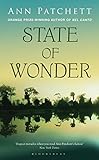
This is my review of State of Wonder by Ann Patchett.

The reputation of the award-winning "Bel Canto" inspired me to read this novel.

The theme is promising. Marina, a doctor turned researcher for Vogel, a US pharmaceuticals manufacturer, is sent to Brazil to persuade the eccentric Dr. Svenson to submit details of her progress on what could be an important new fertility drug, based on studies with the remote Lakashi tribe where women seem capable of childbirth well into old age. Marina has also promised to find out more about the death of Anders, the colleague who was sent on the same mission but died of a fever in the jungle.

It is soon clear that this is by design a slow-paced book focused on detailed descriptions of people's feeling and interactions, such as the painful business of telling Karen Anders that her husband has died and been buried somewhere in the depths of the Brazilian rainforest, leaving her with three young children. There is also a strong evocation of place, such as the unbearable heat of Manaus, and the vast, anonymous scale of the rainforest, teeming with unfamiliar and often hostile life, so that Marina realises she has crossed the line away from civilisation not on leaving Manaus, but when penetrating the solid line of undifferentiated trees close-packed along the banks of a remote tributary.

There are a few good scenes, as when Marina, mistaken for a native because of her half-Indian parentage, consents to dance with the locals because it is "somehow less humiliating, less disrespectful" to do this than simply to stand with the other tourists watching them.

However, by Chapter 6 I began to consider giving up, and only motivated myself to read on by analysing the deficiencies in the style: the plywood cast of minor characters, the often stilted dialogue, the wordy descriptions which at times seem either banal or do not quite ring true.

Two-thirds in, the plot picks up with a startling revelation which I failed to anticipate, and then builds up to a satisfying climax which redeems the book, despite a few flaws. In the process, it raises, although does not explore in any depth, some interesting social and ethical issues. Are the researchers exploiting the natives, or rediscovering from them a better way of living, close to nature, accepting fate in the form of the attendant risks from poisonous snakes or lack of access to medicines?

Overall verdict: interesting plot, limited, soft-centred style, inadequate to the task.

⭐⭐⭐ 3 Stars

And Sometimes They Were Very Sad

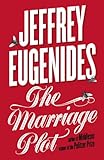
This is my review of The Marriage Plot by Jeffrey Eugenides.

Not having reading anything by Eugenides before, I was curious to discover what has made him a Pullitzer prize-winner.

This is the story of the triangular relationship between three young Americans who meet at university in the early 1980s: Madeleine, a diligent student of English literature, but lacking in a sense of direction, falls for the brilliant, charismatic but manic depressive biologist, Leonard. Meanwhile, after a brief friendship which comes to nothing, Mitchell loves her from afar, and seeks escapism in religious theory, and a circuitous journey to India to work as a volunteer for Mother Theresa.

The novel is a modern take on the "marriage plot", seen by one of Madeleine's English professors as the dominant theme of novels up to 1900, based on the idea that women could only achieve success through marrying men, ideally with money, after which they "lived happily ever after" or endured their fate, since there was no easy escape route via divorce.

The author's technical talent is displayed through some vivid and imaginative descriptions, and his sharp ear for dialogue. The recreation of the events and attitudes of the 1980s rings true, and brings back memories for those who lived through them. Many scenes are funny or poignant. In particular, the analysis of Leonard's manic depression in its various phases strikes close to the bone and often makes for unbearably painful reading.

Ironically, it is the at times almost manic nature of the writing which weakens the structure of the novel, so that the whole may seem less than the sum of the parts. Eugenides spirals off at a tangent where his imagination leads him. For instance, in the early chapters he launches into structuralism and specific works like Barthes' "A Lover's Discourse" without considering or caring how many readers will be able or willing to follow him. In fact, I only needed to "google" for a few minutes to fill the essential gaps in my knowledge, or to check later that the custom-printed wallpaper on Madeleine's bedroom wall was based on a real set of stories about "Madeline" by Ludwig Bemelman. When it came to the genetics of yeast I just let Leonard's explanations wash over me. However, although I have learned more about literature from this book, and extended my vocabulary ("chancre", "pentiment", etc), I feel that the lengthy digressions have been at the expense of the narrative drive.

There is also the author's tendency to meander back and forth in time, which means that many important events are reported, rather than enacted, which would have made them more dramatic.

I was left feeling that I had read a series of on occasion brilliant short stories or thumbnail sketches, held together by a loose plot which at times seems to be about the pain, loss and waste caused by manic depression, although I am sure that is not meant to be the main point. If Eugenides had focused more tightly on the three main characters and developed their interactions more fully, I think I would have cared more about their dilemmas, particularly Madeleine's and Mitchell's.

⭐⭐⭐⭐ 4 Stars

A Snowstorm in a Paperweight

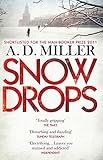
This is my review of Snowdrops by A. D. Miller.

I can understand why "Snowdrops" reached the Booker Shortlist, but also why some people think is should not have done so.

On the plus side, Miller puts his firsthand knowledge of Russia to good use by recreating the tasteless materialism and perpetual undercurrent of violence and sleaze in the raw capitalism following the collapse of Communism. He describes well how individuals are inexorably contaminated by exposure to corruption, even if they think themselves to be morally superior, or immune.

In what turns out to be a psychological drama rather than a crime thiller, the narrator Nicholas, a thirty something commercial lawyer posted from London to Moscow, builds up tension as he is gets ever more entangled with the beautiful Masha and her younger "sister" Katya. Even though he suspects they are not what they seem, he suppresses any doubts and passively goes along with them in providing legal support for what is on the surface a simple property exchange without questioning their actions.

I like the introduction to a new vocabulary: "minigarch" for a rich Russian who isn't quite in the oligarch league, "krysha" for the shady character who provides protection and "fixes" things, or "elitny" to describe a smart restaurant or club. Miller is also good on all the different kinds of snow – from the light, damp October snow called "mokri sneg", through the deep heavy snow falling overnight "like a practical joke", the mounds of snow which make walking an obstacle, and finally the end-of-May snow… by which God lets the Russians know he hasn't finished with them yet". He brings home how the weather dominates Russians' lives through the course of the almost unbearably long and cold winters and the all too short hot summers.

There are some striking descriptions of places e.g. of the Moscow river, "the ice on the river was buckling and cracking, great plates of it rubbing and jostling each other, as the water shrugged it off, a vast snake sloughing of its skin."

Likewise, the sharp descriptions of people e.g. of a man who has allowed himself to become corrupted, " He was a short, pale man with thick hair, thick Soviet glasses and worried eyes. I suppose if you wanted to you could say he looked like a sort of compressed and stunted version of me."

On the down side, I wondered whether it was advisable to tell the reader quite so often that certain characters are liars or cheats, or to imply what is about to happen. It might have been more powerful to have left the reader to deduce all this, and only have Nicholas acknowledge his own culpability at the end. As it is, the climax of the book proves underwhelming, like a balloon that fails to burst with a startling bang because so much air has leaked out of it already.

Overall, this is an impressive "first novel". Much of the writing is good, as is the basic plot idea. However it is a quick, absorbing, mildly thought-provoking and moving read rather than the shattering emotional experience it could have been.

⭐⭐⭐⭐ 4 Stars

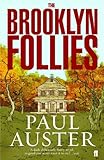
“The Brooklyn Follies” by Paul Auster – “Never underestimate the power of books”

This is my review of The Brooklyn Follies by Paul Auster.

“The Brooklyn Follies” reminds me what a skilful wordsmith Paul Auster is: he can capture startling insights, create intriguing characters and describe a beautiful spring day with memorable originality.

Page after page is a pleasure to read until some unconvincing note trips the reader up.

This is the gently rambling tale of the sixty-year old Nathan, at a loose end after surviving a cancer scare, who decides to pass the time compiling “The Book of Human Folly”, a collection of every “blunder, ……. embarrassment , every idiocy, every foible and inane act” of his own and others’ lives. This is an opportunity for Auster both to exercise his fertile imagination, and to regale us with the lists of facts that he likes to record.

I enjoyed the first part of the book in which Nathan, revelling in his rediscovery of the diverse street life of Brooklyn, renews contact with Tom, the brilliant young nephew who has lost his way in life, and gets to know his flamboyant bookshop employer Harry who is not all that he seems, and who in due course reveals a risky plot to make himself rich. I liked their “deep”, but humorous philosophical discussions, in one chapter written like a play.

With the arrival of Nathan’s great-niece Lucy, pretending to be mute, I felt the plot begin to get ragged. Some opportunities for drama are missed, plotlines are resolved too quickly, or become frankly implausible, and I agree with reviewers who think Auster goes in for far too much “telling” rather than “showing”. It’s also just occurred to me that he may not be very good at portraying convincing female characters. I have come to the conclusion that he is not very interested in structuring a plot, creating suspense or working towards a grand denouement – he just loves playing with words and using them to create interesting situations or explore ideas as the fancy takes him, so that the parts are greater than the whole.

I appreciated his swipes at Bush Junior and manipulative American preachers. I was not so keen on the frequent lapses into a corny, wisecracking tone, perhaps meant to convey Nathan’s New York background.

This seems an intentionally lighthearted book, a kind of homage to Brooklyn, in which the follies of the characters rival the contents of Nathan’s unfinished book, but Auster can never totally dispense with the dark undercurrents of reflection on the meaning of life.

⭐⭐⭐ 3 Stars

Telling it like it is

This is my review of The Help (Film Tie-In) by Kathryn Stockett.

"The Help" on which the film is based is a page-turner with its skilful coverage of human resilience and the sowing of the seeds of rebellion as prejudice begins to crack in 1960s Mississippi, told through the viewpoint of two black maids, Aibileen and Minnie, and Skeeter, an idealistic but naive young white woman with ambitions to become a writer.

In the film, a strong cast of actors bring to life the key characters in the book. Aibileen is the narrator, compassionate and shrewd beneath her subservient air, until writing about her experiences as a general dogsbody and nanny for a succession of white children finally releases her into a sense of freedom. Then there is Minnie, a brilliant cook, but unable to hold down a job because of her feisty talk – yet she allows herself to be beaten by her drunken husband. The villain of the piece is the ghastly, control-freak Hilly, who rules her simpering white "friends" with a rod of iron, with the power to destroy the livelihoods of black servants (not merely her own!) who displease her.

The film version of "The Help" is true to the essentials of the original in that it is a chastening reminder of the casual prejudice of the American South as recently as the 1960s, and is often very moving, yet the poignancy is leavened with a good deal of humour. In view of the complexity of the book's plot, it has been necessary to leave out or compress many details – thankfully not the scene of Minnie trying to hoover the dust off a huge stuffed grizzly bear in an old colonial house. These omissions tend to be disappointing if you have read the book before seeing the film. In particular, I would have liked more of the very moving tales which the maids have to tell.

The film finds time to show not just the main theme of the humiliation and unjust treatment of black Americans but also the discrimination against young white women, who are expected to have no ambition above hooking a man. Skeeter is hired by the local newspaper, but only to write a column on cleaning!

I found some of the black maids' dialogues hard to follow, which is a pity as in the book they are often very funny and full of insight.

Perhaps the film's ending is a touch too sentimental and neatly "sown up", some of the subtle depth of the original has been lost, but overall it is worth seeing.

⭐⭐⭐⭐ 4 Stars

Forster’s Epigone?

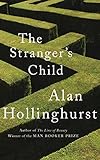
This is my review of The Stranger’s Child by Alan Hollinghurst.

Hollinghurst often reminds me of E.M.Forster with his nostalgia for the early C20 and his focus on the minute details of people's thoughts, observations of one another and interrelationships, all presented in well-crafted prose (apart from the odd clunky phrase like "she said carryingly").

Charismatic, arrogant and manipulative, the aristocratic Cecil Valance achieves a possibly undeserved popularity as a poet after his early death in the First World War. Can the truth of his life ever be told by biographers? This seems unlikely since even those who claim to know him have very different perceptions. In five separate sections separated by gaps of several years or even decades, the author aims to show the false nature of memory.

You could argue that Hollinghurst is daring in discarding many of the "conventions" of novel-writing. The development of a strong plot is given second place to what often reads like a series of short stories: portrayals of characters who make only brief appearances, or the description of quite minor incidents, evocative of past generations, but very amusing, ludicrous or in the style of a black comedy. The author tends to build up anticipation of a certain outcome, only for it not to occur, insofar as one can judge! Significant events are frequently no more than implied.

Although this book promises much, my growing suspicion that it would not deliver proved justified. It suffers from being too long, repetitive in its limited revelations and self-indulgent, not least in its campness – I grew tired of "blushing" and "giggling" men of all ages.

It does not bother me that most of the characters are very middle class , but there are certainly too many of them to relate to easily, and I was left feeling I had waded through an Oxford don's overblown soap opera fantasy.

I know that "the stranger's child" is a quotation from Tennyson's "In Memoriam" read aloud by Cecil in Part 1, and thanks to Roderick Blythe for explaining to me in the comment below its meaning in the title.

⭐⭐⭐ 3 Stars

What’s in a name?

This is my review of The Submission by Amy Waldman.

In a competition to design a suitable memorial to the victims of 9/11, the jury members choose a garden. When the envelope is opened to reveal the identity of the architect, he turns out to be a Mohammad Khan, a name likely to inflame feelings in the jittery aftermath of the disaster. As the chairman stalls for time, the situation is leaked to the press, and a media storm breaks. The real-life outcry over the plan to open a mosque near Ground Zero after this book was published shows the credibility and prescience of the theme.

In a tightly plotted tale, Amy Waldman introduces us to a large cast of characters representing a wide range of opinions, and develops their distinct personalities and motives with some skill. There is Claire, the rich and beautiful widow, not very representative of the other victims' families, who feels that the choice should stand on the basis of merit, and to ensure the fair operation of the system. Paul Rubin, the chairman, wants to persuade Khan to withdraw, so as to minimise trouble and safeguard his own reputation as a "safe pair of hands". Sean, the ne'er-do-well handyman whose brother's death has given him status and purpose to defend the memory of the firemen who perished at the Twin Towers, voices the widespread simple prejudice against any muslim involvement in the memorial. Governor Geraldine Bitman, who seems a caricature until one remembers Sarah Palin, wants to gain political advancement out of attacking Khan. In the other camp, the American muslim activist Issam Malik sees Khan's case as a source of publicity for his cause.

Issues are aired in ding-dong dialogues which often read like the script of an earnest play, presenting us with both sides of a range of arguments. Many assume the worst of Khan without knowing anything about him. In fact he is a sensitive man free from any fanaticism or subversive intent, but proves his own worst enemy in stubbornly insisting on his right to the award, whatever the cost. Then, he progresses to wanting the right not to explain himself to those who leap to thinking the worst of him.

Although I was gripped by the plot and unable to predict the end, Waldman's tendency to reveal her profession by drifting into jarring journalese proved a frequent source of irritation. Also, some of the final scenes in which people "shift sides" appeared a little rushed to me. I felt that the dramatic international scale storyline fizzles out as various characters vanish from the page, but at the very end, decided that the subtle ending is exactly right, with its focus on the failure of communication between two individuals who in many ways have much in common – both appreciate the beauty of a minimalist garden subject to Islamic influences which in turn draw on previous ideas of peace and harmony.

You realise at the end that the ambiguity of the title is also quite subtle. Life is not a simple question of winning or losing…….

⭐⭐⭐⭐ 4 Stars

Boy’s Own on Ice?

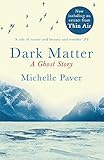
This is my review of Dark Matter: A Richard and Judy bookclub choice by Michelle Paver.

This is described on the cover as an adult ghost story by an award-winning children's author. The simple prose captures the bleak beauty of the Arctic, and conveys the sense of fear triggered by extreme isolation and exposure to long periods of darkness. The personality of Jack, revealed through his diary entries, is well-drawn, as the prickly young man with a chip on his shoulder in the presence of the public-school educated friends who decide to use him as the wireless operator for their research trip to the island of Spitsbergen.

Although credibility does not seem a very important criterion for a ghost story, I found it implausible that an Arctic expedition should consist of only five young men , yet still go ahead with only three, and should contain no experts in Arctic survival, medicine, hunting or dog-handling. The intention is obviously to create a situation, however far-fetched, in which Jack is alone.

Tension is built up well, including Jack's dismay over the prospect of four months with no sunlight and the false sense of respite when the moon is full. Despite this, the climax is a let-down, neither sufficiently terrifying, nor ingenious enough to make up for this. It includes a major coincidence and a final twist which both seem too contrived.

With large print, short chapters interspersed with drawings, words with no more than two syllables unless unavoidable e.g. for nouns like "gramophone", and the superficial skimming over issues of violence, deep emotion or sex, this reads to me like a "young teens" book, in all but the facts that the characters are in their twenties and drink whisky.

I agree with reviewers who would have preferred a purely psychological thriller without the hackneyed ghost element, or who feel this story lacks the depth and complexity to provide the challenge for a truly "adult" novel.

⭐⭐⭐ 3 Stars

The White Tiger has escaped

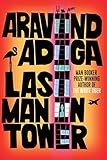
This is my review of Last Man in Tower by Aravind Adiga.

I agree that it must be hard to produce a novel after reaching the unexpected heights of a Booker win so early in one's career as a novelist.

This continues the theme of how rapid change and exposure to western materialism is corrupting traditional Indian society and values, and rightly seeks a different theme from the prize-winning "The White Tiger", which highlights the gulf between rich and poor. In this case the community of residents in a proudly "middle class" Bombay tower block are split apart by the lure of a businessman's very generous offer for them to leave, to enable him to redevelop the site for luxury apartments. The story is also a study of human nature – the way in which formerly decent people turn on the one moral – and perhaps foolishly stubborn – soul who persists in refusing to be bought, thereby sabotaging their one off chance to get their hands on the windfall which they imagine will transform their lives.

Although I want to admire and enjoy this book, it seems to me to lack the sharp wit and verbal imagery, combined with creative imagination and originality of "The White Tiger". Despite the large cast of potentially interesting and moving characters, I found the scenes too plodding and pedestrian to sustain my interest. The opening pages also read more like a journalist's article, than a piece of creative writing in which the reader gradually works out what is going on, who the characters are and what they are like.

I may return to this book and try the author again with another title, but was a little disappointed.

⭐⭐⭐ 3 Stars