Thicker than Water

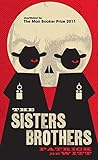
This is my review of The Sisters Brothers by Patrick deWitt.

For months I avoided reading this tale of two contract-killer brothers since I imagined it would be gratuitously violent and suspected its Man Booker shortlisting was a gimmicky attempt to popularise the award. I was wrong to the extent that this is a well-written novel, an entertaining page-turner with an original and intriguing approach, a black comedy in its mix of wry humour and grim brutality.

Charlie and Eli, inappropriately surnamed "Sisters", a name which strikes fear in all those familiar with their reputation, are hired by the vicious "Commodore" to murder a gold prospector called Hermann Warm. Their journey from Oregon to San Francisco proves to be an 1850s Wild West Odyssey, in that they encounter a succession of strange characters and situations. In the course of this, the brothers' personalities and some explanations for their violent behaviour are gradually revealed.

Whereas Charlie is a psychopath, although his habit of losing himself in brandy suggests an uneasy conscience, the narrator Eli comes across as a more sympathetic character, often thoughtful and kind to others, except when a black mist of anger descends upon him, a condition often cynically manipulated by his more dominant brother. Despite their continual bickering, a strong bond binds these two.

The moral ambiguity in the novel made me uneasy, in that you may find yourself wanting the brothers to escape justice, despite the terrible crimes they have committed for money, and even liking Eli, although he is arguably guiltier than his brother because he has a clearer sense of right and wrong.

I was never quite clear how the brothers came to be so educated. Charlie comments on "the fortuitous energy" of California, to which Eli adds, "It was the thought that something as scenic as running water might offer you not only aesthetic solace but also golden riches". And this, from an otherwise boorish thug?

After the striking early chapters my interest waned in the second half, I think because the "climax" of the meeting with Warm proved a damp squib. I found some of the final scenes in California too implausible, and Warm's life history unengaging. I wondered at the end if the author had been uncertain how to finish the tale.

Overall, I understand why this book has been so successful, and it has more than a touch of the Coen brothers' work. It is not a "stunning" novel, say in the Cormac McCarthy league, but probably was never intended be so.

⭐⭐⭐⭐ 4 Stars

Pure Marble

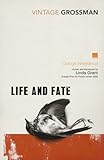
This is my review of Life And Fate (Orange Inheritance) by Vasily Grossman.

This is one of the few "mind shifting" books I have read in that it may alter your perception of the meaning and value of life, and the nature of freedom – the right to live with one's own individual quirks. Inspired by Tolstoy's "War and Peace" and informed by Grossman's firsthand experiences on the Soviet front attempting to drive the Nazis back from Stalingrad, this modern masterpiece by the Jewish Ukrainian journalist deserves to be more widely known.

Initially banned despite the political "thaw" under Khrushchev, I believe because Grossman's parallels between the totalitarian nature of Nazism and Stalinism were too hard to take, we must be thankful that copies were smuggled out to be published in the west.

My praise stands despite my difficulty in "getting into" the work. This is partly due to the cast of more than 150 characters with either difficult to grasp or overly similar names (Krymov v. Krylov, etc.), which require frequent reference to the glossary at the back. Then, there is the continual shift from a German labour camp, to Stalingrad, to a family evacuated from Moscow to Kazan and so on, to encounter yet another group of people, but never being quite sure whether this is a "one-off experience" or whether they are minor or major players who will reappear a couple of hundred pages later. All that connects the various scenes is that the characters are in some way related or acquainted.

There is no single strong plot, just many descriptions in the "social realist" style. This is sometimes wooden, and the structure ramshackle, but all this is offset by some brilliant writing.

I suspect that each reader will be hooked eventually by a different event. In my case it was the account of the Russian officer casually risking German sniper fire to visit his men holed up in various bunkers. For others, it may be the Russian mother's grief to learn that her soldier son has died from his wounds, and her inability, despite remaining sane in every other respect, to accept that he is really dead.

The gifted but prickly physicist Viktor Shtrum, modelled on Grossman himself, comes nearest to being the central character. His agonised thoughts are subtly captured as he oscillates between criticism of the Stalinist regime, fear over being condemned for this, an irresistible desire for praise and recognition of his work, a sense of release when he dares to stand up to the political stooges or minders who run the show at his institute in exchange for material benefits, despite their own mediocrity as scientists, or his need to justify to himself his occasional human weakness under the pressure to conform.

There are powerful scenes of battle, although mostly it is a question of waiting to advance or surveying the aftermath. Grossman does not shrink from the most shocking and moving scenes, such as a woman and boy entering a death camp even to the point of perishing in the gas chamber. Yet this is written with such sensitivity that it reads like a memorial to those who suffered.

Despite all the grimness, there is a good deal of wry humour, with some witty dialogues and moments or high tension. Landscapes are often vividly described, such as the wild tulips on the steppes of the Kalmyck, near the Caspian Sea, which I found on "Google" with some other scenes which exactly illustrate Grossman's descriptions.

I plan to keep a copy of this book to read again later and cannot recommend "Life and Fate" too highly.

⭐⭐⭐⭐⭐ 5 Stars

Creating a song by singing it

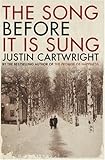
This is my review of The Song Before it is Sung by Justin Cartwright.

This unusual novel was inspired by the friendship, strained by the outbreak of World War 2, between the Oxford-based Jewish philosopher Isaiah Berlin and the German aristocrat Adam Von Trott who took part in Von Stauffenberg's abortive assassination attempt against Hitler in 1944.

Cartwright has changed the names of the main characters, which gives him more freedom to fictionalise events, omitting some and altering others.

In the prologue, we learn that Mendel, based on Berlin, is haunted by guilt over the hanging of Von Gottberg (Von Trott), suspecting that, if he hadn't portrayed the German as a Nazi with delusions of restoring Germany's dignity and greatness, admittedly without Hitler, the Allies might have given more support to the July plotters. There is also a question of Mendel's motivation in undermining Von Gottberg – possible sexual jealousy over his ability to charm women. Mendel bequeaths his papers concerning Von Gottberg to a former student, Conrad Senior, described as "not my most brilliant student… but the most human". Conrad comes across as highly sensitive, possibly mentally unstable, his marriage on the rocks.

The story does not follow a conventional linear narrative, but flips back and forth in time, providing fragments of incidents from the various characters' lives, extracts from old letters and conversations to piece together "what really happened". The result is quite disjointed, with some aspects foreshadowed and repeated too often, but others left a little confusing and underdeveloped. For instance, Conrad seems deeply affected over some act of betrayal by his father against Mandela and the ANC in South Africa. Perhaps understanding the Mendel-Von Gottberg drama will help Conrad to come to terms with this, but this plot strand is never made clear. Similarly, Von Gottberg's love affairs (in particular with Rosamund) are not as strongly drawn and moving as perhaps intended. Most lacking is a sufficiently deep exploration of Von Gottberg's and Mendel's motivations.

This novel often seems primarily an opportunity for Cartwright to use philosophical insights or descriptions he has noted down for use, as writers often do – the Oxford college chairs "so battered over the years that they can be sat in from any direction" – Von Gottberg's lake, "shimmering like the wings of a dragonfly" – "Why did evolution find that it was more effective to have an individual mind?" – "life is created by those who live it step by step" and so on. These show why Cartwright is so highly regarded, but are not always enough to compensate for the inchoate plot which left me feeling that some promising ingredients have been stirred up into a rather disappointing recipe.

In the Afterword, Cartwright expresses the aim of shedding light on the riddle of how Nazism could have taken hold so quickly and deeply in such a civilised country as Germany, but the novel does achieve this.

Overall, the book seems to me to lack the power and humour of some of his other works, like "To Heaven by Water".

⭐⭐⭐ 3 Stars

“At Last” by Edward St Aubyn – A Finale of Flashbacks

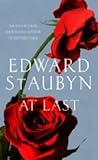
This is my review of At Last by Edward St Aubyn.

If you have not read the previous novels in the Patrick Melrose series, in particular “Mother’s Milk”, embarking on this novel may feel like walking into a room full of mainly pretentious or snobbish strangers who talk across you about people and incidents you know nothing about.

The author tells you quite a bit about past events, but not enough to plug all the gaps.

Driven to drugs and drink in previous episodes, his marriage destroyed, the anti-hero Patrick’s neurosis is focused on the failings of his mother, Eleanor, like him to some extent the victim of a wealthy upper class but dysfunctional family background. Perhaps her greatest folly has been to insist on giving away her beautiful house in France and fortune to members of a spiritual, do-gooding cult who appear to be hypocritical rogues on the make. “At Last” begins with her cremation, a cue to bringing together previous characters in the series, and an opportunity to draw Patrick towards a sense of closure, perhaps a chance to draw a line and move on. Thus, “At Last” forms a suitable finale to the series.

In “At Last” you have to wade through too many highly condensed explanatory flashbacks to find any of the striking descriptions, sharp dialogues and amusing situations which carried me through “Mother’s Milk”. As with the latter, many characters are caricatures or rather two-dimensional, and the idea of a plot seems incidental. The opening monologue from the ghastly and unexplained upper-class bore Nicholas Pratt seems implausible during a cremation, a contrivance to recap on Patrick’s troubled family, and makes for an off-putting beginning. Then, the succession of digressive flashbacks about Patrick’s past addictions and relations with other characters, sit oddly in the middle of the ongoing scene of the funeral.

Overall, the structure seems too rambling. The many references to past events are likely to seem repetitive to those already familiar with them, but confusing and indigestible for newcomers. As a result of all this, the book is not as moving as it should be. It is as if St Aubyn has become addicted to the Melrose theme, and keeps dribbling it out, with a few details added, in successive books over several years, whereas perhaps from a literary viewpoint it would have been better digested and restructured into a different format.

So, I think you need to be a well-informed “Melrose addict” really to enjoy this book. Although St. Aubyn can prove a talented writer, “At Last” does not seem to be one of his best works.

⭐⭐⭐ 3 Stars

No use crying

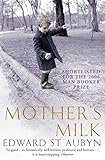
This is my review of Mother’s Milk by Edward St Aubyn.

How could I have left this book to languish on my shelf for years before reading it? At first, I was bowled over by the sharp, witty prose, striking descriptions and amusing dialogue. This short novel follows the trilogy "Never Mind, Bad News and Some Hope" about tensions within a dysfunctional upper middle class family, the Melroses. "Mother's Milk" can stand alone, but the books are probably best read in sequence, ending with the recently published "At Last".

Mother's Milk has an unusual opening, with a small boy (Robert) "remembering" the trauma of being born, the sense of insecurity in the "new world" outside the safety of his mother's womb. Or has the birth of his younger brother (Thomas) caused him to imagine all this? At any rate, it is interesting to be prompted to question just what a small child remembers from the beginning of life, before it is swamped by other impressions. Robert is, of course, ludicrously precocious and implausibly articulate. His cynical, upper middle class barrister father (Patrick) may have had a hand in this.

When the story moves on to the viewpoints of Robert's parents, my enjoyment wavered. All the characters begin to appear to be caricatures, so that you laugh often, but are rarely moved. The apparent reasons for Patrick's drunken mid-life crisis do not evoke huge sympathy. Although it must be frustrating that his do-gooding mother has disinherited him in favour of a half-baked "Transpersonal Foundation", Patrick still seems to be quite well off. His wife Mary's preoccupation with her new baby, possibly a reaction to her own mother's neglect, may get a bit wearing at times but does not really justify his infidelity with an old girlfriend. If you have read the earlier novels, the details of the story may make more sense. As it is, there is a little too much condensed "telling" of past events, rather than gradual "showing".

You may argue we are not meant to take it all too seriously but rather to enjoy the comical situations, laugh aloud at the humour and be stopped short by the occasional telling insight. Yet, there is an underlying sense of bleakness, so it came as no surprise to read in a review that Patrick is modelled, if loosely, on the author, who freely admits that he was raped by his father, rather as Patrick, it seems, was abused in the first novel, "Never Mind".

Yes, the attitude to old age in this book often seems cruel and lacking in empathy. Yes, the writing is rather crudely anti-American. You could also say it is truthful, if one-sided. My main criticism is that the plot is thin and developed rather carelessly, with missed opportunities to create to develop scenes.

Despite this, St Aubyn is clearly a very talented writer.

⭐⭐⭐⭐ 4 Stars

“Ending as often in disappointment as in success”

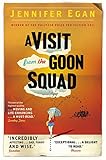
This is my review of A Visit From the Goon Squad by Jennifer Egan.

This is likely to divide opinion sharply since it rejects the convention of a clear plot, and flits back and forth in time with a variety of viewpoints and sheer number of characters which may prove confusing.

It is a series of short stories rather than a novel, focusing in turn on different members of an amorphous group who have in common only some kind of link to the music industry – they know, or know someone who knows, either Bennie the driven music manager, or Sasha, his light-fingered assistant whose kleptomania may have some deeper emotional cause.

I enjoyed the quirky incidents and offbeat humour of the first seven chapters, and the game of anticipating which character mentioned in passing would turn up as a key player in the next episode. I liked the way the author always managed to overcome my irritation at being dragged away from one group of characters, by skilfully hooking me in to the next one, only to be disappointed again at having to leave the new story with strands left unresolved, perhaps forever.

Some of the relationships are genuinely moving, such as the hard-bitten, selfish, corrupt Lou's love for his sweet, gentle son, whom he cannot help inadvertently damaging, just through being the bastard that he is. I was impressed by the study of Scotty, mentally ill but managing after a fashion, who convinces himself half the time that being a failure is as good as being a success.

My good opinion suffered a blow in Chapter 8, an over-farcical account of a disgraced PR manager trying to make ends meet by advising a genocidal dictator of some unnamed country, which was an annoyingly unconvincing mixture of Arab desert too close to lush African jungle. The there are two sections I grew too bored to read properly: an intentionally bad , I think, parody of a journalist's interview with a movie star, followed by an attempt to relate to an autistic boy, and to show his thought processes, through a PowerPoint presentation – a novel idea, but it goes on for 74 pages – has the author not heard of death by OHP? After that, the return of the final chapters to some of the original characters lacks the power to engage me, in a work which seems to have lost its way – perhaps because the subjects are essentially rather uninteresting and underdeveloped players in an artificial and shallow world.

On one hand, this book is unusual, often creative and original, with what you might call brave experiments (but shouldn't the author be clear-eyed enough to see where they may have fallen short?), yet there is too much that is contrived, gimmicky or glib for me to rate this as an indisputably worthy Pulitzer winner.

⭐⭐⭐ 3 Stars

“Some events take a lifetime to reveal their damage and influence”

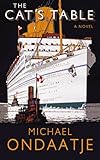
This is my review of The Cat’s Table by Michael Ondaatje.

The cat's table is "the least privileged place" in the dining room aboard an ocean liner bound for Tilbury from Ceylon in 1954. The narrator, Michael , recalls how, as an eleven-year-old, this is where he meets not just two other unaccompanied boys, but a group of eccentric adults. In the accurate belief that they are invisible, at least until their mischief brings them to the captain's notice, these three racket around, experiencing the complex life of a ship, straying below deck and into first class, eavesdropping as they lie hidden in the lifeboats where they gorge the emergency chocolate rations, getting involved in bizarre events, hearing quirky, often unsuitable anecdotes, all of this related in short chapters which add to the fragmented, dreamlike quality of the voyage.

The "main plot" of the story, which revolves round a mysterious shackled prisoner who is brought out for exercise at night, proves rather thin and implausible with an unsatisfying ending, yet does not appear to be the author's main concern.

The novel seems to be mostly about the nature of memory and the way people relate to one another, so that fleeting impressions, brief incidents and passing friendships from early life may prove unexpectedly enduring and significant in adulthood.

I found the description of the voyage and numerous rambling into vignettes very evocative and absorbing. Less satisfactory are the frequent "flash forwards" to Michael's later life. His adult relationships with his cousin Emily and with his friend's sister Massi do not prove as convincing and moving as I think they are intended to be.

It is interesting to speculate to what extent the events of the voyage make Michael permanently mistrustful , someone who breaks too "easily away from intimacy", although having rather distant parents and uncaring relatives who think it in order to send him unaccompanied on a long voyage is probably the main reason.

Overall, this is an unusual novel which lingers in one's mind. It is brilliant in ways that will differ according to the reader's own cast of thought. An example of this for me is the description of the night-time sailing through the Suez canal, which years later Michael's friend Cassius captures in paintings which only Michael can appreciate have been drawn "from the exact angle of vision Cassius and I had that night". I like the humour in Michael's list of the irascible captain's "crimes committed (so far)" most of which are actually the children's fault. However, the tale is also flawed when some allusion or plot development misses the mark or falls flat.

⭐⭐⭐⭐ 4 Stars

Dated Wit

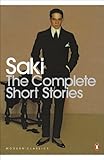
This is my review of Saki, The Complete Short Stories (Penguin Modern Classics) by Saki.

It is easy to understand why H.H.Munro, pen name Saki, is still regarded as one of the greatest writers of short stories. His elegant, ironic prose reminds me of P.G. Wodehouse with a sharp sting in the tale.

Although Saki mocked the snobbery and hypocrisy of upper class Edwardian England, he himself seems to have been limited by unexamined prejudice against the lower classes, women in general, and new social movements of his day like female suffrage and socialism.

Organised by date of collection, the tales show a clear progression. The early "Reginald" stories are remarkably short, often barely a page, very dated and a bit too precious in style for my taste. As the years pass, the stories gain in length and depth, culminating in works like "The Square Egg". This captures the muddiness of trench life in World War 1 – the streaming mud walls, the inches of soup-like mud at the entrance to the dug-out, the muddy biscuits eaten with mud-caked fingers. This story also shows Saki's talent for going off at an imaginative tangent, in this case based on a wily Frenchman's novel idea for using the idea of "square eggs" from specially bred hens to try to get some money out of the narrator.

I particularly enjoyed the stories which focus on real emotions and psychology which could be relevant to any age and society: "Peace Toys" in which an uncle tries to give his nephews toys which will discourage them from violent play; "Tobermory" which speculates on the practical disadvantages of having a cat which has learned to speak about all the compromising goings-on it has witnessed as it creeps around unnoticed; "The Lumber Room" in which a small boy takes advantage of a rare chance to have his revenge on a pious, bullying aunt – the many stories about children getting their own back on control-freak adults may stem from painful experiences in Saki's own motherless childhood. Then there is "The Story-teller" where a bachelor distracted by noisy children on a train ride subverts the normal rules about telling children only improving stories.

I have mixed feelings about Clovis, a favourite recurring character of Saki's, who acts as a mocking observer of the class to which he has been born, while sponging off it, and snobbishly maintaining many of its prejudices. Yet "Clovis on Parental Responsibilities" is amusing where, in a Pinterish talking at cross purposes with a Mrs Eggelby, bored by her endless prattle about her children's accomplishments, Clovis undermines all the accepted views on bringing up children.

I would have liked a brief introduction on Saki's life. It seems important to know that, enrolling as an ordinary private soldier when in his forties, he was killed by a sniper's bullet after vainly asking a colleague to put out the cigarette which was emitting a tell-tale trail of smoke.

⭐⭐⭐⭐ 4 Stars

Dark Wit for Dipping Into

This is my review of The Complete Short Stories of Saki (H. H. Munro) by Saki,H. H. Munro.

It is easy to understand why H.H.Munro, pen name Saki, is still regarded as one of the greatest writers of short stories. His elegant, ironic prose reminds me of P.G. Wodehouse with a sharp sting in the tale.

Although Saki mocked the snobbery and hypocrisy of upper class Edwardian England, he himself seems to have been limited by unexamined prejudice against the lower classes, women in general, and new social movements of his day like female suffrage and socialism.

Organised by date of collection, the tales show a clear progression. The early "Reginald" stories are remarkably short, often barely a page, very dated and a bit too precious in style for my taste. As the years pass, the stories gain in length and depth, culminating in works like "The Square Egg". This captures the muddiness of trench life in World War 1 – the streaming mud walls, the inches of soup-like mud at the entrance to the dug-out, the muddy biscuits eaten with mud-caked fingers. This story also shows Saki's talent for going off at an imaginative tangent, in this case based on a wily Frenchman's novel idea for using the idea of "square eggs" from specially bred hens to try to get some money out of the narrator.

I particularly enjoyed the stories which focus on real emotions and psychology which could be relevant to any age and society: "Peace Toys" in which an uncle tries to give his nephews toys which will discourage them from violent play; "Tobermory" which speculates on the practical disadvantages of having a cat which has learned to speak about all the compromising goings-on it has witnessed as it creeps around unnoticed; "The Lumber Room" in which a small boy takes advantage of a rare chance to have his revenge on a pious, bullying aunt – the many stories about children getting their own back on control-freak adults may stem from painful experiences in Saki's own motherless childhood. Then there is "The Story-teller" where a bachelor distracted by noisy children on a train ride subverts the normal rules about telling children only improving stories.

I have mixed feelings about Clovis, a favourite recurring character of Saki's, who acts as a mocking observer of the class to which he has been born, while sponging off it, and snobbishly maintaining many of its prejudices. Yet "Clovis on Parental Responsibilities" is amusing where, in a Pinterish talking at cross purposes with a Mrs Eggelby, bored by her endless prattle about her children's accomplishments, Clovis undermines all the accepted views on bringing up children.

I would have liked a brief introduction on Saki's life. It seems important to know that, enrolling as an ordinary private soldier when in his forties, he was killed by a sniper's bullet after vainly asking a colleague to put out the cigarette which was emitting a tell-tale trail of smoke.

⭐⭐⭐⭐ 4 Stars

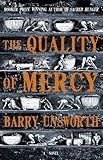
“The Quality of Mercy” by Barry Unsworth – Quality not strained

This is my review of The Quality of Mercy by Barry Unsworth.

Although it can stand alone, this excellent historical novel is a sequel to the Booker Prize Winner, “Sacred Hunger” which it is advisable to read first.

Set mainly in the London of 1767 and a Durham coastal mining village, there are four main plot strands which gradually interweave. The intense and somewhat humourless banker Erasmus Kemp is bent on bringing to trial in London the mutineers who made off with his father’s ship, thus reducing him to financial ruin and suicide. Frederick Ashton, a wealthy man who finds the cause of anti-slavery gives meaning to his life, is equally determined to get the sailors acquitted on the grounds that they were driven to violence by revulsion over the practice of throwing sick slaves overboard to maximise insurance claims. Sullivan, an Irish fiddler press-ganged onto the ill-fated ship has managed to escape from gaol before the trial, and resolves to travel north to Durham to fulfil a pledge to explain to the family of a dead friend how he came to die after the mutiny. This family are the Bordens, headed by James who can barely repress his frustration over being forced to work underground, scarcely seeing the sunlight, and who dreams of buying a sheltered plot in the dene, a beautiful wooded ravine near the village. These main characters together with Frederick’s spirited sister Jane, and James’s son Michael are all developed very fully: Unsworth’s striking observations on human nature are what make the book exceptional.

This well-paced and skilfully plotted novel with close attention to period detail provides a vivid insight into life during the early stages of the Industrial Revolution, when coalmines tended to have long galleries rather than deep shafts. Men swung down the shaft on ropes, with children on the their knees. Boys as young as seven worked for hours opening trapdoors to ventilate the mines, progressing to pulling heavy wooden containers loaded with coal. Partly through some lively discussions and absorbing court scenes, the importance of another form of exploitation, black slavery linked to the sugar trade, in the growth of prosperity of England at the time is also made very clear. Then there is the acceptance of the class structure in which rich and poor were breeds apart, although there were signs of change as the merchant class began to narrow the gap with the aristocrats, who took their wealth too much for granted, and a few workers could advance through ability and good fortune. It is hard to avoid uncomfortable parallels between the casual acceptance of injustice then and now, when we assume that we are more democratic and enlightened.

The story is also realistic in being a blend of good and harsh fortune. This is demonstrated most clearly in the alternating luck of Sullivan, who comes by money one minute (perhaps dishonestly) only to be robbed the next, or is locked up in the workhouse but then transported free to the next county which is his final destination. Overall, often through chance or fate, some characters come to a sad end while others flourish. Unsworth does not deal in sentimental happy endings for all those for whom he has aroused your sympathy, but neither is he ever bleak or depressing, just moving and thought-provoking.

As a writer in his eighties, Unsworth’s wisdom shines through – the results of a lifetime of reflection. The no doubt deliberately slightly oldfashioned, flowing and literary style, fits well with the period covered, although the dialect of the Durham miners also rings true, perhaps because Unsworth was born there.

To leave the last word to the illiterate Sullivan,

“It is the power of imaginin’ that makes a man stand out, an’ it is rarer than you might think, it is similar to the power of music.”

⭐⭐⭐⭐⭐ 5 Stars