Truth and Freedom Lost in Translation

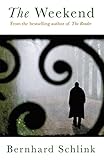
This is my review of The Weekend by Prof Bernhard Schlink.

Christiane collects her brother Jorg from gaol where he has served more than twenty years for Baader-Meinhof-style terrorism in Germany. She takes him straight to a week-end in a rundown country mansion with an assortment of old friends. This seems such a bad idea as to be highly implausible, but it is of course a device to enable the author, a lawyer by profession, to explore all the moral arguments associated with terrorism designed to overthrow a corrupt capitalist system and related questions of guilt, how our views and the situations themselves change over time.

In what I found the most interesting chapters (35 and 36), group members discuss to what extent "the truth makes you free" or rather that "freedom makes things true" which means "there are as many truths as people freely living their lives" – but also the "life lies" which people need to be able to keep on living. I wondered if the theme would have worked better as a play, but this would have made it harder to show the characters' thoughts.

Schlink introduces quite a large cast of characters, so that I understand why another reviewer felt the need to note them down: Ulrich, who abandoned his youthful radical leanings to become a respectable and law-abiding dentist, Henner who came from a similar privileged background and flirted with revolutionary ideas before taking up journalism, Karin the female bishop who conceals from her husband the fact that she had an abortion in her "wild" youth and rather enjoys playing the part of a respected member of the community, and so on.

Although I found the ideas and plot potentially very interesting, I nearly gave up on the book at several points because of the clumsy style of writing which may have been due to the translation. Many conversations seem very artificial, a crude vehicle for presenting ideas. Likewise many of the recollections are a heavy-handed way of filling the reader in on past events. Some potentially dramatic scenes go off kilter, such as Ulrich's unbelievably crass interrogation of Jorg at dinner on the lines of, "What about your first murder?" A young girl's attempt to seduce Jorg (Chapter 8) is another example of a confusing and poorly written scene. Some of the descriptions are very clunky e.g. "The residents of the village who have work don't have it here".

Schlink seems to be producing novels fairly frequently, but I wonder if he should take a little more time to hone his work in order to do justice to his deep concern with issues of guilt and morality in modern Germany, now extended to broader post 9/11 global conflicts.

⭐⭐⭐ 3 Stars

Unreconstructed Emma

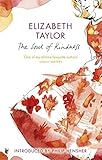
This is my review of The Soul Of Kindness (Virago Modern Classics) by Elizabeth Taylor.

Beautiful, indulged, emotionally immature with a childlike reluctance to face up to the grimmer realities of life, Flora does not prove for me to be the manipulative monster implied in the publisher's blurb, but her good intentions certainly cause other people grief, if not exactly leading to hell.

Each chapter in this well-crafted novel reads like a short story in its own right, providing sharply observed descriptions of the characters, their thoughts and relationships and the socially conventional, class-conscious, uptight world of Britain around 1960. Everyone except Flora knows a man is gay, but cannot discuss it. If a man has a drink with a lonely female neighbour it should be concealed as evidence of an affair.

The book is perhaps more interesting now than when it was written because it captures a lost world of dense London fogs, middle class women who do not work once married, and have live-in housekeepers in the basement, a safe, dull society on the brink of being shaken by the Swinging Sixties, fast food, pop culture, media manipulation and rampant commercialisation. Yet, some things have not changed, like the tatty sights and smells round an underground station, or a typical English seafront.

Perhaps Elizabeth Taylor is no longer widely read and known since her largely middle class characters seem rather snobbish and dated, there is no overt sex and violence and the drama is subtle and understated with a focus on the ordinary events of daily life. However, the power of her deceptively simple prose is very striking – a satirical Barbara Pym meets Dorothy Parker, by turns funny and moving.

She is also brilliant at creating in a few words a sense of place and nature and how they affect people's moods: starlings tearing up crocuses, gardens in the rain, the sadness of caged animals at the zoo.

It is intriguing to know that the intensely private Taylor may have been a person of hidden passions – respectably married to a businessman, her life said to be too uneventful to induce a friend to write her biography, she had communist sympathies, was a labour supporter and possibly intimate letters to a male friend were destroyed after her death.

I hope to read more of her work, but savour each novel as a model of how to write.

⭐⭐⭐⭐⭐ 5 Stars

Her gemstone eyes

This is my review of New Selected Stories by Alice Munro.

Why is Alice Munro regarded widely described as one of the greatest female short story writers, yet also perhaps read less than this accolade would suggest?

This selection from five collections covering the decade 1998-2009 displays the key aspects of her writing. On one hand, stories which are often as long as 30-40 pages, loosely plotted to allow digressions into the lives of various characters, generally lacking in suspense or dramatic endings, or pithy punchlines. On the other, very acute observation of human behaviour and empathy with their thoughts and emotions, a strong sense and apparent love of the Canadian landscape and seasons, and a deceptive rambling in stories which maintain a clear underlying purpose and momentum.

I particularly enjoyed "The Bear came over the Mountain", about a sensitive and creative woman whose Alzheimer's has become sufficiently serious for her husband to place her in a home. When she forms an attachment to another resident, is this a kind of revenge for her husband's serial infidelity? What makes this story interesting is that it is written from the husband's perspective. Although sad in places, this is too insightful and at times sharply witty to be depressing.

On a lighter note, I appreciated "Chance" about an academically inclined but uncertain young woman on the brink of her adult life and possible career, who responds to a letter from a married man she has met by chance on a train. To what extent is she choosing her fate?

The three stories selected from "Too much Happiness" were the ones I enjoyed most in that collection: the woman who has suffered terribly from a controlling man, the woman estranged from a son whom she loves who drifts into a lifestyle she finds alien, and, most gripping of all, the widow who has to deal with a sinister guest.

I found it hard to get into the first story "The Love of a Good Woman" which seemed quite disjointed with too diffuse an opening section for me. "My Mother's Dream" written apparently from the viewpoint of a baby is also highly original and imaginative, but not to everyone's taste.

Perhaps one is most drawn to the stories which reflect one's own experience, so that the range of Munro's topics make it likely that there will be something for everyone. Also, each story gives a great deal to discuss, as we are likely to come away with some different perceptions of each tale.

⭐⭐⭐⭐ 4 Stars

A Tennessee Hardy

This is my review of The Cove by Ron Rash.

This short novel, which has more real content and lasting power to move the reader than many much longer works, has introduced me to Ron Rash whose writing I shall make a point of seeking out in the future.

The prologue – a device which I normally find superfluous – holds many of the keys to his power as a writer: the clear, economical, unassuming prose; the ability to create a sense of place and people; a suggestion of mystery or menace to hook your interest. There is the rural wilderness of some Tennessee backwater, the isolation and superstition of the local people, who have hung protective charms at the entrance to the dark cove into which the sun never shines, where bad luck strikes the inhabitants, the one spot where locals are happy to see a Government official survey prior to flooding it for a future TVA reservoir.

Ron Rash has already begun to hook me with the yarn of this outsider unravelling some tragedy from the past, when he shifts back in the main body of the story to the life of Laurie Stanton, doomed to grow up in the cove after her father's unwise purchase of cheap land where the chestnut woods prove diseased. Shunned by the nearby townsfolk because of an unsightly birth mark, even regarded by some as a witch, this sensitive, bookish girl gives up any thought of education and escape to run the domestic side of the small farm. Her brother Hank, returned wounded with a lost hand from the First World War in distance Europe, is bent on doing up the farm prior to his marriage. He is only too glad to use the services of Walter, the young camper whom Laurie finds lying sick in the woods, after being drawn by his skilful flute-playing. Walter's inability either to speak or to read and write do not prevent his becoming a companion to this lonely young woman.

And so the framework is set up for a tightly plotted, often moving yarn with some moments of high tension. All the threads are brought together for the dramatic climax, which leaves you guessing over some major points to the last page, and even after that with a good deal to reflect on about say, the nature of loss and of life, in which intense personal relationships may be of great value, whilst they are also in the scale of things – the dark, massive cliff of the cove – of no significance at all.

The story is an interesting take on how the lives of ordinary people can be affected by a war on the other side of the world. Rash is good on what sounds like the authentic period detail, including life on a fairly primitive farm. He is very convincing in getting inside the head of a young woman, and his main characters are mostly well-developed with strong, realistic and varying emotions. Perhaps Walter's thoughts remain unclear and some of the minor players tend towards stereotypes, but overall this is a gripping story which succeeds both as popular and literary fiction.

⭐⭐⭐⭐⭐ 5 Stars

Missing the Beat

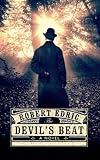
This is my review of The Devil’s Beat by Robert Edric.

Since "In Zodiac Light" caught my imagination, I have persevered in attempting Robert Edric's novels, which have also appeared on the shortlists (or longlists) of several literary prizes.

Set in 1910, this story describes a public investigation into claims that a group of teenage girls have been possessed by the devil. Clearly, this echoes the Salem Witch Trials, but compared to the fireworks and high drama of Miller's "The Crucible", it is a damp squib.

A few scenes are quite dynamic, as when the investigator Merrit and Doctor Nash (perhaps the liveliest character) are pursued by journalists on their way to view some graffiti related to the case, but most of the chapters make turgid reading, with very stylised, unnatural exchanges.

Chapter 6 begins, "The opening of the inquiry proved to be the disappointment Merrit always knew it would be." And so this proves to be the case for us as well. But why tell us this and then prove it with a laboured description? There was no hint beforehand that Merrit expected to be disappointed. Wouldn't it have been more dramatic if this had come as a surprise?

Although earlier books like "In Zodiac Light" or "Gathering the Waters" contain passages of striking, finely observed prose, I could not find many further examples here. The characters are developed as distinct personalities but one is told too often what to think about them, as opposed to deducing this for oneself. Individuals are portrayed as weak, domineering, clever, stupid, devious as the case may be, without much opportunity for the reader to sense any nuances in behaviour, or to note any changes over time.

They also all talk in the same highly articulate fashion. Since the setting is an imaginary Nottinghamshire town, I would expect the local characters to have more of a regional turn of phrase.

As in previous books, Edric creates a sense of anticipation, but the plot fails to deliver much action or insight. Unlike other reviewers, I found the ending quite subtle and effective, but the business of getting there required too great an effort. There is too much plodding detail to engage one's interest.

I had to suspend disbelief over the clumsy operation of the inquiry, with Merrit asking leading questions and getting wrong-footed like a novice. The way the other panel members were allowed to interrupt and pontificate made the whole process into an elaborate word game rather than a realistic inquiry.

Other reviewers have spoken of the background of interesting social change, but this did not seem to me to have been developed much.

Edric comes across as a deeply committed writer but for me, this novel lacks the vital spark, deep purpose, quicksilver wit , power to move or original idea, any one of which would set it apart as a good novel. Yet, on reflection, there is the framework for a gripping story, calling for a lighter touch, more ambiguity on the way rather than at the end, and scope for the reader to speculate, to be misled, and then be drawn, along with some of the main characters, to reassess the situation, rather than have prejudices confirmed.

I would recommend instead his previous "A London Satryr" as being more original and better plotted.

⭐⭐⭐ 3 Stars

A Jolly Hunter with a Mixed Bag of Grouse

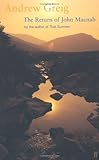
This is my review of The Return of John Macnab by Andrew Greig.

This modern update of John Buchan's 1920s classic recounts the attempt of three men who have become jaded with life to spice it up with a wager to poach game "by fair means" and return it to three large Scottish estates, including Balmoral: the loser in each case will pay a donation to charity and cast a vote for "the political party of the winner's choice". You need to suppress the question of why on earth any estate owner should honour a one-sided wager imposed on him. Also, apart from a desire to expose the shortcomings of the laws on access to the Highlands, aren't there a host of more worthwhile challenges to achieve?

The plot is quite intriguing, with an unpredictable yet satisfying ending, and the author conveys his deep knowledge and love of the Scottish Highlands, where the blue hills resemble hump-backed whales.

Greig becomes at times the all-knowing narrator, observing that a scene may not have occurred quite as described, or that a certain character who is mentioned in passing will never appear, and that the young daughter of one of the men will remember in seventy years' time the nostalgic pleasure of listening to the adults plotting how to escape from the gillies with the poached game. This writing ploy only served to distance me from the drama.

The word "nostalgia" is key, along with "sentimentality" and "escapism", which may be the book's appeal for many readers, but I felt with growing unease that I was reading a mixture of "The Famous Five Never Grow Up and Go to Scotland" and a male take on a "Mills and Boon" romance, in which the female love interest is a jolly tomboy who holds her drink but can act the femme fatale when required, with something deeper and finer underlying all this. This plucky heroine Kirsty, whom I sensed I was meant to love, irritated me continually, such as when she kept calling herself "a silly old tart" and, when she should have been totally incapacitated by drink, leaping up to perform old pop songs uninvited to an apparently enraptured pub audience and guess what, her maybe love interest, the reserved and moody Neil can spring into a vaudeville act at the drop of a hat too!

The conversations between the female characters struck me as particularly unnatural and cringe-making plus many small points grated, such as the unlikely fact that dishy, middle-class dark horse Neil is godfather to dyed-in-the-wool left-wing agitator Murray's daugher Eve. This seemed to me to reveal the author's unconscious assumption of conventional, "establishment" values which the book purports to flout – I'm taking this too seriously, I know.

The suspense depends a good deal on revealing only slowly, or not until the last minute, what is afoot, but the resultant short, fragmented scenes cutting between various characters make the narrative tedious when it is unclear what is going on for pages on end.

Eventually, in the middle of a bitty account of an attempt to capture some grouse, I lost patience and skimmed to the end to be able to discuss the novel at a book group.

⭐⭐ 2 Stars

The Revenge of the Loo Brush

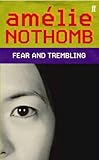
This is my review of Fear and Trembling by Amélie Nothomb.

"Fear and trembling" describe the behaviour expected of the Japanese on entering the presence of their Emperor, when he was still regarded as a living god. These extreme emotions were still found to apply when Amélie Nothomb took up a year's contract in 1990 as a translator in the authoritarian, anti-individualistic, inward-looking Japanese corporation of "Yumimoto". The shattering of her illusions was all the more painful since this young Belgian had lived happily in Japan as a child.

In the semi-autobiographical book based heavily on her experiences, Amelie describes her humiliating descent through a series of tasks, ending up spending months as the lavatory attendant on the forty-fourth floor. The decision to endure this fate rather than resign is her only form of retaliation, since her ludicrous demotion reflects badly on her boss. The only way the other staff can show sympathy, if not solidarity, is by boycotting the loos in her charge.

I was torn between frustration through not knowing how much of this parody is true or just very exaggerated and unsubtle, irritation over Amélie who is clearly a pain in the neck at times and brings some of her troubles upon herself, and a sense of unease over the very negative, one-sided portrayal of the Japanese. Amélie chooses not to mention her life outside work at all, which gave the story a very narrow, claustrophobic quality, which in artistic terms could be thought quite effective.

Nothomb, who is on her own admission quite eccentric and clearly enjoys attention, has become something of a cult novelist with some, but is considered by others to be overrated. I tend to agree with the latter view. In her crude and unhelpful treatment of cultural differences, revenge and self-promotion seem to be the main objectives.

⭐⭐⭐ 3 Stars

Gold dust beneath the mounds

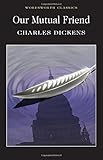
This is my review of Our Mutual Friend (Wordsworth Classics) by Charles Dickens.

What would I make of the first novel by Dickens that I have read for years? I was struck by how much it is Victorian soap-opera-cum-sitcom.

At times, I found almost unbearably irritating the hammy theatrical caricatures, the convoluted prose with catchphrases, the mawkish sentimentality over children particularly when sick, deformed or about to die, the patronising treatment of a plump, dimpled young heroine over-attached to her father, and the probably unintentional anti-semitism in that the Jew in this case is portrayed in a sympathetic light. These are all modern-day criticisms of an accepted Victorian style, yet I am sure that George Eliot, Anthony Trollope, the Bronte sisters, Thomas Hardy and even Wilkie Collins, were not quite so "over the top".

Beneath all this, there lies an intriguing main plot. John Harmon returns from years spent abroad to claim the inheritance left by his harsh and uncaring father. Reluctant to comply with the odd condition of the will that he must marry Bella Wilfer whom he has never met, he decides to "go missing for a while" to gauge what sort of person she is. Then, a body dragged from the river by Gaffer Hexam is identified as John Harmon's.

The main plot is enmeshed in a series of interconnecting sub-plots with different degrees of parody, likely to appeal to a variety of readers. I was most taken with the effete Eugene Wrayburn's attraction to a beautiful working class girl, much to his own surprise and that of his close friend Mortimer Lightwood. Eugene's rival in love, the similarly wonderfully named Bradley Headstone is an overintense schoolmaster, driven to madness by jealousy and frustration over Eugene's superior, mocking wit and contempt.

I found other threads laboured and tedious, such as the socially aspiring Veneerings with their "bran new" possessions and their endless dinners for suitable members of society, including Twemlow, invited so often because of his social connections that he is likened to one of the spare leaves in the dining table. I realise that this is part of Dickens' attacks on the snobbery and false values of the middle and upper classes. His ranting over the rigid workhouse system, which frightens away "the deserving poor" who prefer to die instead in proud destitution, hits home.

Dickens gives us vivid descriptions of how ordinary people lived in Victorian times, and may in fact have known more about this firsthand than some of the other famous contemporaries noted above.

He also produces striking evocations of the choking London fog and the unspoilt beauty of the countryside surrounding the city. The opening chapter conveys a strong sense of the sinister, Hexam finds a body in the Thames without this being spelt out specifically, "the ripples passing over…what he had in tow……were dreadfully like changes in expression on a sightless face". Dickens writes some profound studies of the shifting emotions of most of his main characters although some, like Mrs Wilfer, her daughter Lavvy and sidekick suitor George Sampson remain increasingly tedious pantomime parodies.

The changes in popular language are also fascinating: "shepherds both" meant inexperienced, "hipped" was depressed, "galvanic starts" were electric shocks, and so on.

Trollope parodied Dickens as "Mr. Popular Sentiment" and an anonymous critic found "Our Mutual Friend" to be "wild and fantastic, wanting in reality, and leading to a degree of confusion which is not compensated by any additional interest in the story…..the final explanation is a disappointment". Yet there is no denying Dickens' ability to appeal to a mass audience and become over time the best-known English novelist.

⭐⭐⭐⭐ 4 Stars

Riding the V Train to Zengeance

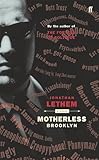
This is my review of Motherless Brooklyn by Jonathan Lethem.

In this Chandler-inspired tale, small-time crook Frank Minna selects a group of teenage orphans, "Motherless Brooklyn" to be his "men". When he is murdered some years later, one of these, Lionel Essrog, takes it upon himself to find the killer of the man who has become a father figure, and who empathised with his little understood Tourette's Syndrome which he nicknamed "Terminal Tugboating" – not knowing when some "verbal gambit was right at its limit" – even giving Lionel a book on Tourette's to help him to manage his condition.

What sets this book apart is the author's ability to enter into the mind of a person with Tourette's, and sustain this through more than three hundred pages of narration. I have no idea how accurate this is, but we come to accept Lionel's need to shout and play aloud with words continually to relieve his inner tension, his obsessive need to count things, to have everything in fives if that is his number of the moment, to touch people even if strangers, all of which makes him appear crazy, odd, an object of disgust, often insulted and underestimated even by those who should know him well, although we can see the tragedy of the intelligence and sensitivity trapped beneath all this.

This book is likely to divide opinion sharply. After I had adapted to Lionel's conversations peppered with gibberish wordplay – often with a rational thread to it – I found the writing original and often very funny with its wry New York humour, at times moving, insightful and poetical, creating a vivid picture of the character of Brooklyn and its residents – Italian makers of mouth-watering sandwiches; sinister old mobsters called Matricardi and Rockaforte, which Lionel transforms into wordplay as "Bricco and Stuckface"; beat cops who "dislodge clumps of teenagers" with a terse "Tell your story walking!" Yet at times, the prose seems too contrived, and Lionel unbearably irritating with his endless references to "ticcing" (having a nervous tic), although it is no doubt part of the author's intention to create understanding and sympathy for an apparently unappealing character.

About two-thirds in, I began to have concerns about the plot. Tension gives way to farce in scenes such as when Lionel is bundled into a car, only to note that his kidnappers all wear dark glasses with the price tags still attached, giving, him, of course, a desperate desire to touch them. I do not find Frank's brother Gerard a believable character. The arrival at the final denouement seems to me rather clunky and underwhelming, as if all the author's efforts have gone into writing brilliant and unusual prose, rather than plotting a satisfying detective thriller. After having worked so hard to keep up with Lionel's flights of verbal fancy, it is disappointing to have the plot explained with such pedestrian clarity at the end.

⭐⭐⭐⭐ 4 Stars

Telling not Showing Satire

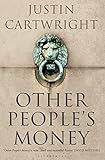
This is my review of Other People’s Money by Justin Cartwright.

This is a recent addition to the current crop of novels on life after the banking crisis. When Sir Harry Trevelyan-Tubal is felled by a stroke, chairmanship of the traditional, upmarket, family-run private bank, Tubal & Co, passes to a new broom, his son Julian. Seduced by hedge fund managers and the lure of gambling on derivatives, Julian finds himself saddled with "chunks of mortgages on an alligator farm in a swamp, two thousand worthless homes in Mississippi … a shopping mall in a town flattened by a hurricane…" to give you a flavour of Cartwright's barbed wit. The only solution is to poach money from his family trust fund, to tide the bank over whilst a sensitive sale goes through to a stinking rich, status-conscious Coney-Islander-made-good American banker. Clearly, this is the basis for a sufficient disaster to whet your interest, although things may not turn out quite as expected. Certainly, it was enough to hook me after an initially slow start with a good deal of "telling" rather than "showing" the reader what to think.

Having read several of Cartwright's books, I would say that he is on form as regards some sharp, lively dialogues (with the drawback that sometimes you cannot work out who is speaking – see page 200 of the first hardback edition – where was the editor?), striking descriptions and thought-provoking observations. Although stereotypes without exception, his characters are well-developed. I liked little touches like the visionary producer Artair Macleod being reduced to putting on "The Wind in the Willows".

My main reservation about the book is its focus on the super-rich who will be comfortably off even in the worst case scenario. There is no hint of the real hardship that millions of innocent people have suffered as a result of the banks' irresponsibility.

So, the book cannot be more than the enjoyable, fairly lightweight satire, into which it settles after the climax of a potential crisis has been defused. Yes, Cartwright is making the sardonic point that "the rich are always with us" and the establishment will always look after its own, but liitle more than that – apart from the observation on our general lack of idealism: "Now, nobody thinks about reaping the benefits of freedom; instead they hope to win the lottery or become celebrities".

Cartwright likes to weave in references to another writer, in this case Flann O'Brien's "At Swim-Two-Birds" which plays on the idea of a story having many beginnings and ends, and many ways of telling it, or that "events take place one way, and we recount them the opposite way". Apart from the fact that these insights are fairly self-evident, I do not think "Other People's Money" illustrates these points in a particularly striking way.

⭐⭐⭐⭐ 4 Stars