“Lawyers, I suppose, were children once”

This is my review of Old Filth by Jane Gardam.

The misleading title "Old Filth" refers to the nickname derived from international lawyer Edward Feathers' joke on himself: "Failed In London Try Hong Kong". The book begins with him in old age knocked off course by the sudden death of his wife Betty. The chapters, each of which is often a short story in its own right, then shift back and forth in time from the death of Filth's mother giving birth to him in Malaya, leaving his father, still traumatised from the First World War, unable to give him any love. Imaginative, original, often very funny, the underlying sad theme of this story is how the "Raj orphans", shipped back to England "for their health" were often neglected, even abused, and left unable to form sound emotional relationships.

From the first page, you feel in the hands of a very skilful writer, confident in her ability to write on a theme which may at first seem unappealing. However, I was actively hooked from the point at which Filth discovers that his worst enemy in the legal world has come to live next door to him. Some of the humour arises from whole scenes, such as Filth's hair-raising drive across England to meet a cousin – more of an expedition for him than finding his "way round the back streets of Hong Kong and the New Territories". At other times it is more subtle, arising in dialogues and little asides. Gardam is adept at letting the true, often colourful or moving aspects of Filth's supposedly dull life slip out gradually, but you have to concentrate hard not to miss something. A dark undisclosed secret haunts the book with the anticipation of some final climactic revelation, from which the fact you can guess it long beforehand does not detract unduly.

To nitpick over mild criticisms, there is a slight inconsistency in the style in that some chapters are pure farce, and therefore entertaining rather than moving, whereas others are a seamless blend of comedy and poignancy. I found the "Albert Ross" character very unconvincing, and the details in the last part of the book seem rather rushed compared to the beginning.

Yet, overall, it is well-constructed, a bold attempt by a sensitive female writer to enter into the mindset of an emotionally repressed, highly logical but unimaginative man, resulting in an unusual and original read. I shall look out for more of Jane Gardam's work, starting with "The Man in the Wooden Hat" which tells the story of Betty's life. This sequel may also explain some of the gaps in "Old Filth".

⭐⭐⭐⭐ 4 Stars

“Pure”: No master but reason?

This is my review of Pure by Andrew Miller.

This unusual and imaginative take on the France of 1785, with unrest brewing in the streets of Paris and mines of the north, introduces us to Jean-Baptiste Baratte, the insecure young engineer from the provinces who is given the unwanted task he cannot refuse – the removal of the ancient cemetery of les Innocents, which is polluting the air and soil, threatening the cellars of the surrounding houses. It is not just a question of making the air “pure” but also on another level of relieving France of the corruption of the monarchy and the dead hand of the church, as indicated by one of Miller’s well-chosen quotations: “The time will come when the sun will shine only on free men who have no master but their reason”. We know, of course, that the imminent French Revolution will be flawed by the atrocities of men like Robespierre, just as we can appreciate our foreknowledge of the fate of the kindly Doctor Guillotin who assists Baratte.

The detailed account of the macabre operation of clearing bones rotting metres deep is saved from becoming too oppressive by Miller’s ability to create vivid pictures of the life of the Paris streets, combined with a cast of colourful characters, not to mention the slightly sinister cat Ragout, equally at home in a charnel house as on a lady’s lap.

Although some readers may be troubled by odd events which may be hard to explain, at least they provide scope for discussion. This is quite a dark read at times, with unsettling whiffs of necrophilia, yet also soft-centred, as in the portrayal of the perhaps too good to be true, refined tart Heloise. I found a good deal of wry humour in the book, such as the earnest and upright Jean-Baptiste allowing himself to get caught up in a drunken escapade to paint political slogans on city walls, calling himself “Beche”, but keeping shtum and feeling vaguely proud when the name “Beche” continues to appear for months afterwards.

Sometimes I felt Miller is playing to the gallery to boost book sales, but overall this is skilfully plotted, very well-written with many striking images, and some interesting points raised for you to mull over as regards say, how we may be corrupted by unpleasant tasks, how we may sell our souls, humiliate ourselves or others in the pursuit of ambition, and so on.

⭐⭐⭐⭐⭐ 5 Stars

Paved with Good Intentions

This is my review of Amongst Women by John McGahern.

Aloof and uncompromising, Moran is disappointed with the independent Ireland for which he has fought, and vents his frustration in an ongoing battle to dominate his children, compliant second wife Rose and even his old friend McQuaid who shares his memories of the past. Perhaps Moran only felt alive in his days as a guerrilla leader, perhaps he was traumatised by some of the brutality in which he was caught up.

Although this is one of those tales in which not much happens, I was soon hooked by McGahern's spare prose and subtle ability to convey a sense of place and of human relationships as he describes in minute detail the nuances of family relationships in the rural Ireland of around 1960. On the one hand, I was repelled by the narrow restrictions, the over-concern with convention and religious rituals. On the other, McGahern makes us aware of the value of family ties, working together on the land, taking pleasure in the small simple things of life, enjoying the familiarity and beauty of the farmland. All this is made more poignant by our knowledge of the transience of this way of life, as inevitably the children leave to make a better living in Dublin or London – or to escape the tyranny of a man whom most of them regards as "always…. the very living centre of all parts of their lives".

Moran's bullying, sarcasm and desire to stand on his dignity and have the last word do not endear him to me. Much of the quiet tragedy of this book is the high price he pays for his behaviour in terms of the loss of his old friend McQuaid, even his eldest son. It is quite hard at times to understand how his stoical wife Rose manages to turn the other cheek.

Highly recommended, this is a thought-provoking and moving read which enhances our understanding of ordinary life, with a wry humour to counter what may sound like the downbeat misery of the theme.

⭐⭐⭐⭐⭐ 5 Stars

An Arctic Turn

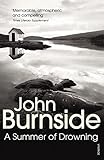
This is my review of A Summer of Drowning by John Burnside.

At first I thought this would be a tale of suicides by drowning and disappearances with a possibly supernatural cause, fed by the folktales of northern Norway and the setting on Kvaløya, a real vaguely clover leaf shaped island west of Tromsø, north of the Arctic Circle where in summer the midnight sun drives people to insomnia, hallucinations, even madness.

Then I decided it is an intense psychological study of Liv, a highly intelligent, observant , introspective girl brought up in unusual isolation by her mother, a talented but selfish and coldly objective artist.

In the end, I could not ignore Liv's conviction that an evil spirit or "huldra" is at work in the body of a local girl. Yet, some events remain unexplained or ambiguous, so that you can, if you choose, attribute them to Liv's possible descent into madness.

What impressed me most is the description of Kvaløya, with its sense of the suspension of time as we know it – there is a good deal in this book about reality being an illusion and vice versa, made credible in this location. Burnside is also very skilled at encouraging us to reflect on the nature of our existence – at first it seems odd, even shocking, that a bright girl like Liv has no friends, wanders about for hours on end doing nothing in particular, but her reflections help us to see that in many ways our frantically busy, occupied, materialistic lives may lack real meaning.

Burnside's poetry gives his prose great intensity. There are many striking images: the arctic terns which follow the sun, dipping into the water for silver fish, the blurring of the land, sea and sky into the same colour, a spirit conjured by a folktale evident through "the tremor in a glass", and so on.

When it comes to the analysis of thoughts, with every look and phrase examined from many angles, yet much left cryptic or open to question, his writing can be a little too much to take. Yet, the intensity, combined with some repetition, contribute to the hypnotic quality of the writing.

Minor criticisms are the tendency to tell us what is going to happen, the prologue which seems to me like the statutory hook required by a publisher – and in this case quite misleading as to the nature of the novel – and the shortcomings of the "dramatic climax".

Burnside is a talented writer and much of this is a gripping read, although I felt that the mixture of the pragmatic with the supernatural ultimately does not quite work. If nothing else, he has introduced me to the wonderful paintings of Harald Sohlberg.

⭐⭐⭐⭐ 4 Stars

Falling Flat

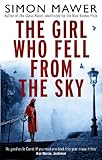
This is my review of The Girl Who Fell From The Sky by Simon Mawer.

My expectations raised by the originality of "The Glass House", this novel proved a disappointment. The adventures of a British woman parachuted into occupied France to work for the Resistance offer the scope for a gripping drama, but it is as if the author has been forced to write for a deadline when he did not feel in the mood.

Why was I so soon and often bored by what should have been by turns exciting and moving? I think it was the lack of a clear evocation of time and place – I never really felt I was in Scotland, or rural France, or Paris during the war of the 1940s. Similarly the characters rarely came alive in my imagination as convincing people. The creation of tension and expression of real feeling are obscured rather than enhanced by a veil of would-be literary writing which stumbles quite often over clunky phrasing. Much of the dialogue is quite dull.

I found myself niggling over minor points, such as the repetition on page 57 (hardback) of "She shrugged the question away". Why did no editor pick this up? Plus the language used in conversation often sounded too modern.

Even when Marian at last gets to France, the narrative drive is too weak to maintain the necessary sense of tension. The potential drama is continually defused by her introspection. This is evident as early as the opening chapter, clearly intended to hook the reader, yet we find her mulling over things like her father's classical allusions which she likes to call illusions when she is about to make her first parachute jump into France! Her lack of motivation to work in Special Operations makes you wonder why on earth she was selected for the role. When a reason is supplied, it seems implausible, and is not sufficiently developed in the plot. Marian does not seem quite real, so I do not care as I should when she is in danger.

⭐⭐⭐ 3 Stars

A man like other men?

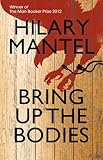
This is my review of Bring Up the Bodies by Hilary Mantel.

Since every reader must surely know that Anne Boleyn fails to give Henry V111 a son, and loses her head, while Thomas Cromwell falls from grace, although not in the second part of a planned trilogy, everything hinges on Mantel's ability to breathe life into the characters and embroider the details.

She has entered so fully into the imagined minds of both Cromwell and Henry that she provides exceptionally vivid in-depth portrayals of these two main characters. She has to be able to see Cromwell's better side, and I sometimes feel she has grown to like him too much, this juvenile thug "made good", industrious, clever, manipulative, surprisingly good company, with a soft spot for orphan boys and vulnerable young women. Yet she never lets us forget his underlying ruthlessness, as when he has an almost fond memory of Bishop Fisher, only to recall how, when the man's head would not rot on its pole, Cromwell had it put in a sack and thrown in the Thames.

On page 208 (first hard cover edition) there is a wonderful psychological analysis of Henry who "grew up believing the whole world was his friend and everyone wanted him to be happy. So any pain, any delay, frustration or stroke of ill luck seems to him an anomaly, an outrage." His self-justification, pathetic desire to be "in the right" and to leave all the dirty work to others as regards replacing Anne with Jane Seymour are all too apparent.

Mantel has a good ear for comedy, so some of the dialogues, as when Jane Seymour is being trained by her relatives to enter rooms in a more queenly way, are very amusing.

"Bring up the Bodies" seems more successful than "Wolf Hall" since it is more tightly plotted. In both cases, the book improves as the narrative drive builds up to the dramatic climax, in this case Anne's execution.

Once I had tuned into Mantel's daringly distinctive style, I began to feel the writing is often brilliant, but there were times in the first half when I found her self-indulgently wordy. Significant characters and events tend to be introduced in such an oblique way that you may miss them. The confusing tendency to call Cromwell "he" is still evident, but was it some misguided editor who suggested substituting at times "he; he, Cromwell,"?

An interesting aspect is Cromwell's desire to make radical social reforms, as gaining in confidence he increasingly "runs the country" behind the scenes. The final part in which Henry turns on his faithful servant, only to regret it, will perhaps make a more moving read than anything that has preceded it.

⭐⭐⭐⭐ 4 Stars

Quackers

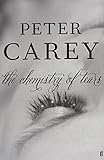
This is my review of The Chemistry of Tears by Peter Carey.

Employed as a conservator at a London museum with a world-famous collection of clocks and wind-up machines, blue-stocking Catherine is grief-stricken over the death of her work colleague and not-so-secret lover Matthew. Her manipulative line manager Eric tries to distract her with the task of reassembling what seems to be a mechanical duck, commissioned in the 1850s by the wealthy (when he is allowed access to the family money) Henry Brandling, who is convinced the "automaton" will aid the recovery of his sickly son. Catherine becomes totally absorbed in the handwritten journals kept by the eccentric Henry on his lengthy trip to Germany to obtain the duck.

The "Catherine chapters" held my attention from the outset. I liked the acerbic take on Barbara Pym "voice", and the very convincing and often moving portrayal of how Catherine is devastated by loss which Carey manages to convey alongside some very entertaining scenes.

The Henry chapters were a different matter. I accept that he may be bordering on insane, and encounters some even nuttier people, in particular the automaton-maker Sumper with his for me tedious accounts of the perhaps even more eccentric designer of such machines, Cruickshank. These chapters have a dreamlike quality, verging at times on nightmare, and Henry's account is often fragmented and lacking in context.

I would have been totally at sea without Google to explain the Victorian obsession with automata, and the various references to smoking monkeys and Vaucanson's "Digesting Duck" plus the Silver Swan on view at Bowes Museum, all of which clearly inspired this novel.

I think Carey is exploring the incongruity, for atheists and rationalists, of how grief is expressed through the chemical reactions of, say, shedding tears, while a cleverly made robotic machine may arouse fear and confusion with "its uncanny lifelike movements". An added twist is how machines, especially the combustion engine, have transformed our lives but may lead to our destruction by pollution – including this aspect as well may be over-ambitious.

Only the relative shortness of this book, Carey's status as a twice Man Booker Prize Winner, and my admiration for his recent "Parrot and Olivier in America" gave me the incentive to persevere. I agree that the ending proves rather abrupt, plus for me it includes a couple of implausible twists which I found hard to take.

I can see why some reviewers have found the novel pretentious. I'm inclined to think that Carey simply lets his imagination roam free, his fame relieving him of any need to kowtow to agents or editors. He makes no concessions to readers, leaving us to extract the brilliant writing and sharp insights from the at times confusing morass.

It was only on reflection after finishing the book that I decided the choice of ending is quite effective, and that overall it is worth reading.

⭐⭐⭐⭐ 4 Stars

A Gentler Type of Cormac McCarthy

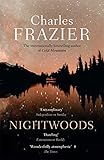
This is my review of Nightwoods by Charles Frazier.

After the phenomenal success of "Cold Mountain", the odyssey of a soldier's return from the American Civil War, it must be hard for Charles Frazier to achieve comparable success.

Although on a much smaller scale, "Nightwoods" is similar in showing Frazier's gift for spinning a yarn and displaying his deep knowledge of and love for the Appalachian wilderness combined with a sense of small town life in a rural backwater, portrayed with some sharp, witty dialogue and an ability to make unsavoury or even evil characters appear at times in some ways objects of sympathy.

It is sometime round 1960 when Gene Pitney was a rising popstar on the juke box. Luce is a tough young woman who is for some reason living in isolation from the town visible across the lake from the old lodge which she looks after for an old landowner called Stubblefield. Her hard but peaceful routine is disrupted by the appearance of "the stranger children", in fact the badly damaged young twins of her brutally murdered sister Lily. Luce's psychopathic brother -in-law Bud has a particular reason for tracking down these children. Meanwhile, following Stubblefield's death, his ne'er- do- well heir comes back to claim the inheritance. This is clearly the basis for a potentially tense thriller.

I was rapidly sucked in by not only the plot, but also the vivid, poetical descriptions of the mountainous wilderness of North Carolina, the sense of past history back even before the time of the Indians, the survival of a self-sufficient rural way of life, the neglected lodge – a vestige of the wealthy tourists from bygone days – and the inward-looking life of the small town enveloped in the backwoods with only tenuous road connections to the outside world.

Always a page turner, although some reviewers have found it slow at times, the story is never quite predictable since you know that Frazier is capable of including sudden acts of unexpected brutality and horror cheek by jowl with quite soft-centred or even sentimental passages.

Although I was a little disappointed by Frazier's handling of the plot from the point where Luce meets Bud face-to-face, since I thought that the potential drama often fell rather flat, this was offset by some unexpected twists, and I suspect that Frazier is really more interested in reflecting on the effects of "modern progress" and exploring the human psyche than he is in structuring a story. The final pages in practice prove quite tense.

Another slight reservation is that both Luce and Stubblefield Jnr. seem to undergo some rather rapid changes of attitude, but in a relatively short and spare novel perhaps we have to "take this as given" to leave space for Frazier's other ideas.

Highly recommended.

⭐⭐⭐⭐ 4 Stars

Powerful dreamlike sense of place and time

This is my review of Pascali’s Island by Barry Unsworth.

I found this a remarkably well-written and compelling page turner, although I felt let down by the ending.

It is 1908, with the Ottoman Empire in decline and Europe on the brink of the First World War. After twenty years as a poorly paid informer on a Greek island beginning to revolt against Turkish control, Basil Pascali is perhaps losing touch with reality, partly through a life of isolation and deception, partly because his reports have never been acknowledged. So, he imagines that at every turn the Greek islanders wish him ill, and his reports are full of details of daily life which can be of little interest, of irrelevant although beautiful descriptions of the island he knows so well plus some very subversive observations on Turkish rule – corrupt and ossified.

The arrival of Mr. Bowles, the Englishman who claims to be an archaeologist and writer on antiquities, immediately arouses Pascali's suspicions, although he sees conspiracy and deviousness everywhere, even in the behaviour of the artist Lydia whom he loves without any hope of a return of feeling, or the activities of the American Smith, out fishing for sponges in his caïque (lots of wonderfully evocative words in this book). Then, Bowles asks Pascali to act as interpreter for his negotiations to lease some land……..

With a continual sense of suspense, this tightly plotted tale builds up to a predictably tragic climax which left me less moved or satisfied with the denouement than I should have been. I think this is partly because Pascali is so self-controlled and analytical, rarely displaying normal emotion but often admitting to his faults in a rather clinical way. Also, Unsworth's habit of telling the reader what is going to happen tends to diffuse some of the potential drama. Certainly, I found his plotting in his last novel, "Quality of Mercy" much more satisfactory, and his dialogues sharper and more realistic.

I believe Unsworth spent years living on Greek islands, so that this book is a distillation of his own observation of nature and the local people. He is at his best in his remarkably articulate and well-observed descriptions of the quality of light around the island, its changes during the day, and interplay with the air and the sea. The writing is a little mannered, but that fits the period and Pascali's temperament. The repetitious references to, say, the fishermen casting their nets are not only strong metaphors but help to create a hypnotic effect, serving to explain how Pascali is held on the island by a kind of spell.

Some of the philosophical arguments are a bit heavy-going, but Unsworth is good on historical detail. The artist Lydia's realistic style of painting, and rejection of the "colourists" and "Expressionists" who were gaining popularity at the time is probably very authentic. The nationalistic prejudices of the various characters and the stereotyping, say of Bowles as an idealistic and naively honest Englishman (although Pascali sees through him) also reflect attitudes of the time.

⭐⭐⭐⭐ 4 Stars

Paying Attention to the Living

This is my review of The Beginner’s Goodbye by Anne Tyler.

Only my deep admiration for Anne Tyler could have got me past the opening pages in which Aaron describes people's reactions to his wife Dorothy's return from the dead: some give the couple a wide berth, others try to pretend she isn't there, but a few act normally since they have forgotten that she has died. If you like rational explanations, you could argue this is a satirical twist on how people behave when they meet someone who has just been bereaved.

Unlike some reviewers, I was very glad that this is not mainly a ghost story. I leave it to you to discover whether Dorothy is a phantom, a "Truly Madly Deeply" type figment of Aaron's grief-stricken imagination, or a mixture of the two.

This story soon becomes a very Tylerish examination of dealing with the untimely death of a spouse, Aaron's feelings over time and the reactions of others. It is made all the more effective by her use of wry humour, sharp observation, and understated poignant moments. The characters seem down-to-earth if a bit oddball, but there are frequent hints of deeper, unspoken or suppressed emotions.

Reading it straight after "The Sense of an Ending", this is further evidence of how short books often provide more food for thought than much longer ones. I would have disagreed with those who dismiss this as "not one of her better books", if it had not been for the ending which is a little too pat.

Perhaps it was written mainly as a small piece of catharsis for Tyler's loss of her own husband. Capturing a source of intense pain in a short, easily read, essentially feel good book may be the only way of making it tolerable enough to examine and accept to some extent.

Highly recommended.

⭐⭐⭐⭐ 4 Stars