Brilliant evocation of a past Sicily to understand the present

This is my review of The Leopard: Revised and with new material (Vintage Classics) by Giuseppe Tomasi Di Lampedusa.

Intrigued by what has been described as "perhaps the greatest novel of the (C20) century" and assisted by Colquoun's excellent translation, I was soon absorbed in the decaying feudal world of "The Leopard", Don Fabrizio in 1860s Sicily on the brink of yet another political change, with Garibaldi's uprising and the move to Italian unification.

At first, Don Fabrizio seems no more than a selfish despot, neglecting and terrorising his children, humiliating his wife by not bothering to conceal an after-dinner visit to a mistress, compromising the long-suffering Jesuit priest Father Pirrone by giving him a lift into town on the way. Then we begin to appreciate his complexity. He will talk to his organist Don Ciccio on equal terms when they are out hunting together, then insist the man agrees to be locked up in the gun-room for hours so he cannot prematurely reveal a piece of information confided to him by the Leopard.

Sympathy grows as we grasp the deep interest in mathematics and astronomy which makes him most happy when gazing through a telescope at the stars. He understands all too well the plight of Sicily, "for twenty-five centuries … bearing the weight of superb and heterogeneous civilizations, all made from outside…none that we could call our own". This is why the Sicilians have turned in on themselves, become backward-looking, locked in tradition and unresponsive to any opportunities the new "free State" might bring. "Our sensuality is a hankering for oblivion, our shooting and knifing a hankering for death". The violence of the landscape and cruelty of climate, so well-described throughout this book, have added to the Sicilians' "terrifying insularity of mind".

So it is that Don Fabrizio leaves it to his wily, appealing nephew Tancredi to play an active part in the new world, and ensures he has the financial means to do so by letting him marry Angelica, the beautiful daughter of the local peasant upstart Don Calogero who has enriched himself at the expense of landowners, not least Don Fabrizio, too indolent through a sense of entitlement to bother to manage their affairs shrewdly.

Despite the underlying theme of stagnation and decline, this book is in fact entertaining and wrily humorous. The remarkably vivid prose makes any other novel you may be reading seem lightweight. It needs to be read slowly and more than once to appreciate its quality, perhaps because the author infused so much into the only novel he ever wrote.

I agree with reviewers who feel that the book tails off towards the end. The climax is Chapter IV, "Love at Donafugata" in which Don Fabrizio elaborates on the state of Sicily, clarifying impressions sown gradually in previous pages. Perhaps it should end at Chapter VI, "The Ball", with the Leopard looking up at Venus. The following chapters on his death (given in the heading so not a spoiler) and the sadness of his spinster daughters' lives in old age make good short stories, but undermine the arc of the main plot set in the pivotal years of change in 1860s Italy.

⭐⭐⭐⭐⭐ 5 Stars

Greene without the Catholic angst

This is my review of Journey into Fear (Penguin Modern Classics) by Eric Ambler.

It is easy to see why this recently reissued thriller set in 1940 was a bestseller and suspenseful film. Ambler captures the fear mixed with defiance and the frequent sense of unreality experienced by an arms engineer who finds himself the prey of a hired assassin. There is also the anticipation of the unexpected twists the author casually throws in at the end of an uneventful chapter, and the suspicion that no one may be quite what they seem. Some characters are mere caricatures, but others are more interesting, such as the henpecked Frenchman who expressed communist sympathies to annoy his wife, only to find himself converted to them "for real".

Described as "Graham Greene without the Catholic angst" this is a quick and absorbing read, neatly plotted, which offers more than you may expect in terms of moments of drama and "tight corners" from which escape seems possible.

⭐⭐⭐⭐ 4 Stars

Media-man’s fee-good potboiler

This is my review of The Hundred-Year-Old Man Who Climbed Out of the Window and Disappeared by Jonas Jonasson.

If you can suspend your disbelief that a hundred-year-old man could climb out of a window, drag a heavy suitcase and knock a young healthy person unconscious with a blow from a plank, you may enjoy this tale of his adventures on the run, evading arrest as he accumulates a motley group of new friends. The plot is quite slight, with so little description and character development that it has to be padded out to full novel length by alternating chapters on major incidents in Allan's past life, mainly encounters with the great and the bad – not only a string of American presidents, but Franco, Mao Tse-tung and Stalin, mostly seduced by Allan's apparent knowledge of how to make an atomic bomb.

Allan's affable amorality left me uneasy. Although his stoicism in times of adversity is impressive, and you have to admire his ability to "think on his feet", his periods of wealth and good fortune are based on the proceeds of other people's corruption and criminal activity, including murder or manslaughter, about which he is very casual. I believe this is meant to be a "feel-good novel", but it has an underlying darkness, such as the fact that Allan was one of the mental patients castrated under the infamous former policy of the Swedish government which is generally regarded as so liberal and progressive.

There are some humorous moments, but the plotting is cartoonish. What really grated on me was the quality of the writing. It may have suffered in translation from the Swedish into English but the pedestrian style and wording reminded me of a tired dad at the end of the day making up a bedtime story in the knowledge that it doesn't matter what rubbish he comes up with – all his child really wants is a bit of his attention. The work struck me as slapdash, with a few "continuity errors" and a trite ending as if the author just ran out of steam.

I had to read this for a book group and am relieved that it only cost me 20 pence to download on Kindle.

⭐⭐ 2 Stars

Surveying all the monarchs

This is my review of Flight Behaviour by Barbara Kingsolver.

"Flight behaviour" is wordplay to cover both the orange monarch butterflies deflected from their usual migration patterns by the effects of climate change, and a Tennessee farmer's wife, symbolically also flame-haired, seeking to escape from the trap of her marriage to a kind but dull husband still ruled by his domineering parents.

Although her small daughter Cordelia has been nicknamed "Cordie", Dellarobia does not shorten her own distinctive name. An ill-judged attempt at adultery is averted when she is amazed by the sight of a lake of fire which proves to be great clusters of butterflies clinging to tree trunks on the wooded slopes above her home. My interest was hooked when I realised that the incredible details of these insects and their life cycles are based on fact, the author being a trained biologist with a mission to inform us through fiction.

The arc of the overall story is strong, and Barbara Kingsolver explores some interesting themes, such as the varying attitudes to the butterflies when a team of scientists come to study them. The locals, for instance, tend to reject climate change because the popular media play it down, but the strongly religious community feels that the butterflies may have some special significance, even to the extent of questioning the right of Dellarobia's father-in-law's to earn much-needed cash from felling the trees in which the butterflies have chosen to winter.

"The Poisonwood Bible" is a hard act for the author to follow, but I found "Flight Behaviour" hard-going, partly because it often gets bogged down in detail and long-windedness, crying out for a good edit. Although she is capable of sharp, funny dialogue and powerful descriptions, too often the prose grated on me – clunky and folksy in a way I had not expected, although I wondered whether it was intentional to convey a sense of a traditional "hillbilly" community, resistant to change. So, my four stars are for an original and thought-provoking storyline rather than the quality of the writing which often disappointed me.

⭐⭐⭐⭐ 4 Stars

Just Observe

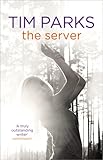
This is my review of The Server by Tim Parks.

Drawing on his own experience of transcendental meditation, Tim Parks transports us into the mind of Beth, impulsive, provocative, sensuous twenty-something former singer in a pop band who has spent the past nine months in the incongruous role of server cooking, cleaning and setting a good example for a group of meditators on a ten day Buddhist retreat.

It is a strict regime: segregation of the sexes, no talking or touching, hours of exerting the "strong determination" to sit motionless in painful poses, focusing on breathing with the daily brainwashing from recordings made by the guru Dasgupta, "who preaches against self-regard in a self-regarding way". There is a consistent tone of scepticism, a flippancy, which may upset strong advocates of meditation. Despite this, Parks conveys a clear and strong sense of the process of meditation.

Although she used to have no trouble losing herself in music, and wishes ardently to change herself through meditation, Beth's thoughts keep slipping back to speculating about the other inmates, whom she cannot resist winding up and leading astray on occasion, or brooding on her clearly troubled past life. Some recent trauma has driven her to the retreat, and Parks skilfully drips out the facts to hold our attention.

Sometimes I found this book too contrived, too much of a master class in creative writing by an expert published author, rather than a sincere examination of human dilemmas. The detailed descriptions of the routines at the retreat are sometimes tedious, although this may have been the author's intention. Since he builds up a strong sense of tension, moving towards an anticipated dramatic, perhaps shocking and unpredictable ending, I was a little disappointed by the final chapters which have a kind of banality, making the experience in the retreat seem lightweight.

However, it is an original, well-constructed story and in the midst of the wry, jokey humour, there are some convincing characters and many telling observations on life and relationships.

⭐⭐⭐⭐ 4 Stars

Greek Tragedy in Mississippi

This is my review of Absalom, Absalom! (Vintage Classics) by William Faulkner.

The self-made Thomas Sutpen achieves his ambition of carving out a plantation for himself in the Mississippi wilderness and acquiring a wife and heir, only to lose it all, partly owing to the calamity of the American Civil War of the 1860s, but also through past events coming back to haunt him. His life is a metaphor for the inward-looking, class divided, prejudiced, proud, stubborn, slave-owning South driven to its knees by defeat in the Civil War, the aftermath still evident when a young neighbour Quentin Compson tries to piece the story together, abetted by his friend Shreve, a Canadian "outsider" who is both fascinated by the South and able to assess it with an objective eye.

Faulkner's stream of consciousness style which must have been groundbreaking in the 1930s carries the reader into the characters' minds, using vivid visual impressions and memories to trigger a chain of fleeting thoughts. I like the way he tells the same story from different at times contradictory viewpoints, often repeating details with a hypnotic persistence, only to advance the tale without warning as another important fact is almost casually thrown in. It is also intriguing to grasp that key characters like Rosa Coldfield may only ever hold some of the pieces of the jigsaw – Faulkner is fascinated with the way people's perceptions vary, memory is distorted and complex motives may remain ambiguous, with actors themselves remaining unsure what they are going to do and why.

Despite some poetic passages of extraordinary brilliance and beauty, some sharp dialogue in the compelling southern idiom and a potentially powerful plot, I feel the work is flawed by a tendency to let experiment tip over into self-indulgent ranting and a descent into melodrama. The unrelenting focus on human degradation, the doom and gloom of the work prove unbearable at times, "the turgid background of a horrible and bloody mischancing of human affairs". Also, the reliance on characters recounting past events tends to defuse the drama of what should be striking events, although I admit that some moments of high tension remain, even when I "knew" what was going to happen.

I can accept the perhaps at times unintentional racism of the piece as being a feature of the period. Faulkner's misogynic tone is hard to excuse.

This book needs to read twice, even several times to be fully appreciated. I wanted to read it the first time without benefit of notes, to get the raw impact, although it probably helps to consult a "study guide" for a second opinion on some of the obscurer passages. I like best the descriptions of the South stripped bare of overblown emotion, "he looked up the slope…where the wet yellow sedge died upward into the rain like melting gold and saw the grove, the clump of cedars on the crest of the hill dissolving into the rain as if the trees had been drawn in ink on a wet blotter." Yet even here is evidence of his verbosity.

⭐⭐⭐⭐ 4 Stars

Never quite mad enough

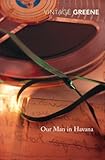
This is my review of Our Man in Havana (Vintage Classics) by Graham Greene.

To read this is to be reminded of the spate of "true classics" written in the mid-C20 when novelists still retained the fluency and eloquence stemming from a classical education which they were free for the first time to apply to the expression of real emotions, and the questioning of conventional values, morality and religion. There was so much to write about this that they felt no need for self-conscious experiments with structure or style.

Written with great prescience only a few months before the Cuban Revolution swept Castro to power in 1959, this black comedy introduces us to the anti-hero Wormold who at first seems pathetic, unable to demonstrate effectively the vacuum cleaners he is attempting to earn a living from selling, allowing himself to be twisted round the finger of his lovely but manipulative daughter Millie. Then we begin to see his unexpected resourcefulness when, bullied into acting as a secret agent for Britain, "our man in Havana", he begins to dream up a false trail of imaginary agents, all requiring payment of course, and even submits drawings of threatening installations, bearing an uncanny resemblance to hoover parts. He astonishes himself with the fertility of his imagination, "how quickly he could reply to any questions about his characters".

Initially, all this subterfuge is simply to indulge Millie's whim for a horse, with the string of extra expenses this entails, yet he gains a simple joy from supplying her wants: he admires in her the spirit which he lacks, and treasures the few remaining years in which he will be able to share her life.

Of course, his colourful reports to London will have unforeseen, perhaps grim or violent ramifications. Yet, ultimately Wormold may be protected by the fear of those in authority of losing face.

Beneath the vivid evocation of a crumbling but picturesque Havana, there are continual hints of a darker and growing violence, such as occasional harassment by the police who back off at the reference to a certain Captain Segura, reputed to carry with him a cigarette case made from the skin of one of his torture victims.

In all the humour and entertaining plot twists there are the usual "grahamgreeneish" insights into morality, faith, the meaning of life, the nature of love and honour. He likens Wormold's growing sense of guilt to a small mouse, to which he may soon become so accustomed that he will let it feed out of his hand. In the end "Would the world be in the mess it is if we were loyal to love and not to countries?" Greene clearly thought so, although perhaps confined this belief to his novels rather than practise it in his own life.

P.S. Does anyone know the full lyrics and tune for the song quoted, which begins "Sane men surround /You, old family friendss/They say the earth is round-/My madness offends./An orange has pips, they say,/An apple has rind./I say that night is day/And I've no axe to grind."?

⭐⭐⭐⭐⭐ 5 Stars

Above Prizes?

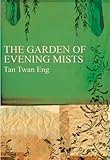
This is my review of The Garden of Evening Mists by Tan Twan Eng.

A Chinese Malayan by birth, Judge Teoh Yun Ling retires to the house at Yugiri in the Cameron Highlands and the "Garden of Evening Mists" developed by the enigmatic Nakamura Aritomo, sometime gardener to the Emperor of Japan. Since she has suffered brutal treatment and lost her sister in a Japanese camp during World War 2, one is curious to learn how she managed to form a bond with Aritomo before his death. Shifting back and forth in time, the story is an account of her recollections, revealing some kind of truth layer by layer, as she follows a friend's advice and attempts to capture her memories before the aphasia with which she has been diagnosed destroys her mind, making her a stranger even to herself.

At first, I was put off by the cumbersome opening chapter, the dwelling on small details, the slow pace and the writer's preoccupation with metaphors which, although sometimes striking, too often seem clunky and distracting, even unintentionally comical – "the waterwheel dialled ceaselessly" and so on.

Then I became hooked by Tan Twan Eng's exquisite poetical descriptions of the garden, his enlightening explanations of the principles of Japanese garden design related to a Buddhist/Taoist philosophy of the meaning of life, linked in turn to woodcuts and the art of tattooing, and by his evocation of life in 1950s Malaya with the interaction of different cultural groups, including an introduction to a neglected aspect of colonial history in the rise of communist terrorism in Malaya in the 1950s. The main characters are well-developed, complex and flawed so that you want to know why they behave as they do, what secrets they may be hiding, how a known fate came to befall them.

I began to think that perhaps this should have won "The Man Booker", or that it may be "above prizes" but in the later chapters, where Yun Ling recalls her experiences in the prison camp or recounts Professor Tatsuji's period as a kamikaze pilot, the book loses some of its originality as the pace quickens and the prose becomes more commonplace – a pale imitation of say, "Empire of the Sun".

The final revelations prove a little contrived yet would have satisfied me if the final twist had not seemed a little too implausible – there is an over-reliance on coincidence in this book. Tan Twan Eng seems to have introduced a denouement only to leave it half-knotted, although I suppose this is a point for discussion in book groups.

After a rocky start, I found this novel absorbing, often a page turner, moving blend of unflinching and sentimental, thought-provoking and very informative as regards Malayan culture understood from the inside. It was useful but disruptive to look up various terms, often employed several times before they are explained in the text, if at all, so brief footnotes would have been helpful. I am also left wondering if some of the (to me) overwritten prose may be due to Tan Twan Eng's fluency in a language other than English, in which this style is highly regarded. His style may also reflect a continued focus in Malaysian study of English literature on the work of poets like Shelley (such as "The Cloud" quoted in the novel).

⭐⭐⭐⭐ 4 Stars

Knowing a true classic when you read it

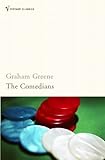
This is my review of The Comedians by Graham Greene.

This harsh revelation of the "violence, injustice and torture" imposed on Haiti by the thuggish "Tontons Macoute" supporters of the sinister "Papa Doc" during the 1960s forms the background to a novel that is a mixture of tense thriller, sad love affair, and reflection on the meaning of life provided through the portrayal of a variety of characters. Sadly, this impoverished island escaped from Papa Doc's control only to suffer the ravages of AIDS in the 1970s.

Returning to the rundown hotel in Haiti which he cannot sell, Brown has to deal with the body of a dead government minister in his swimming pool. This must be concealed from his only two guests, an idealistic but naive American couple, the Smiths, who are resolved to transform Haiti with an ill-timed project to promote vegetarianism. Can Brown maintain his clandestine "semi-detached" affair with Martha, whom he resents having to share with her spoilt and all-too observant young son, while Brown is unsettled by the suspicion that Martha's ambassador husband knows about the relationship but appears to accept it. What has brought Captain Jones to Haiti – a congenital liar beneath his blustering charm?

Although Greene himself did not regard "The Comedians" as one of his best works, and he admitted his experience of Haiti was superficial, this book hooked me from the first few pages with his gift for storytelling, constructing a plot in which every incident and character counts, creating a strong sense of place and devising scenes which are by turns poignant, philosophical, menacing, exciting or hilarious – hence the idea that we are all to some extent playing the part of comedians.

The narrator Brown may be cold, cynical and self-centred, but his role as an outsider gives him the detachment to observe and analyse the people and situations he encounters. He may be forgiven a little bitterness since he has never known his father's identity, and his flamboyant mother abandoned him as a small boy in a Catholic boarding school where the monks could be relied upon not to throw him out when she failed to pay the fees.

For the first time, I have understood some of the Catholic angst which pervades so many of Greene's novels. Near the end, Brown refers to "the never quiet conscience injected into me without my knowledge, when I was too young to know, by the fathers of the Visitation." Brown seems to be the vehicle for Greene's introspection. "The rootless…. we are the faithless. We admire the dedicated….the Mr. Smiths for their courage and integrity……we find ourselves the only ones truly committed to the whole world of evil and good, to the wise and the foolish, to the indifferent and the mistaken. We have chosen nothing except to go on living."

⭐⭐⭐⭐⭐ 5 Stars

Flawed Genius

This is my review of The Yiddish Policemen’s Union by Michael Chabon.

What would have happened if a long-forgotten proposal in 1940 to give the Jews a temporary homeland in Alaska had come to pass? How will the Americans deal with the prospect of having to absorb millions of Jews who have failed to emigrate in time when the "Reversion of Sitka" occurs after the agreed sixty years are up?

In what first appears to be a Chandler-type cynical detective thriller, but which twists at times into a Bashevis Singer evocation of the culture of the Jewish shtetl, or a soft-centred rom-com-soap of family life, Chabron sets free his vivid imagination to create in some detail the world of "the Frozen Chosen" in an incongruous ambiance of halibut factories, cherry pie and vast pine forests.

The stereotypical antihero Detective Landsman, driven to drink through grief over his lost child and estranged wife, is still sufficiently professional to care about the death of a drug addict in what looks like a "cold-blooded execution". His often unauthorised investigations lead him into the archaic world of a "black hat rebbe" or rabbi who bears close resemblance to a mafia boss. The rather thin plot meanders to the denouement with the reader in my case mostly hooked by the sparkling pyrotechnics of Chabron's original prose, although at times his bold verbal experiments fall flat, or fizzle out, so that I can understand why this book has divided opinion quite sharply.

Many readers have complained about the frequent Yiddish words peppering the text. Although I found that they add a flavour and music to the prose, and you can usually guess what they mean, it was informative but too distracting to keep looking them up, so I agree that there is a case for brief footnotes. Similarly, the many references to Jewish culture could have been explained in an appendix e.g. the Tzadik ha-Dor or Messiah expected once in every generation, or the fascinating "boundary maven" whose job it is to define with lines of string the "eruvs" or areas which enable orthodox Jews "to get round the Sabbath ban on carrying in a public place, and walk to shul with a couple of Alka-Seltzers in your pocket, and it isn't a sin".

This book is riddled with wry humour of questionable taste, and is often very funny and clever, but also poignant. It is perhaps too long, and self-indulgent in its lack of editing. The author sidetracks too much into minor scenes and descriptions, loses the plot in the sinister wilderness of the Pearl Strait but glosses so quickly over some of the main facts that I had to reread bits to check I hadn't missed something.

⭐⭐⭐⭐ 4 Stars