Greek Tragedy in Mississippi

This is my review of Absalom, Absalom! (Vintage Classics) by William Faulkner.

The self-made Thomas Sutpen achieves his ambition of carving out a plantation for himself in the Mississippi wilderness and acquiring a wife and heir, only to lose it all, partly owing to the calamity of the American Civil War of the 1860s, but also through past events coming back to haunt him. His life is a metaphor for the inward-looking, class divided, prejudiced, proud, stubborn, slave-owning South driven to its knees by defeat in the Civil War, the aftermath still evident when a young neighbour Quentin Compson tries to piece the story together, abetted by his friend Shreve, a Canadian "outsider" who is both fascinated by the South and able to assess it with an objective eye.

Faulkner's stream of consciousness style which must have been groundbreaking in the 1930s carries the reader into the characters' minds, using vivid visual impressions and memories to trigger a chain of fleeting thoughts. I like the way he tells the same story from different at times contradictory viewpoints, often repeating details with a hypnotic persistence, only to advance the tale without warning as another important fact is almost casually thrown in. It is also intriguing to grasp that key characters like Rosa Coldfield may only ever hold some of the pieces of the jigsaw – Faulkner is fascinated with the way people's perceptions vary, memory is distorted and complex motives may remain ambiguous, with actors themselves remaining unsure what they are going to do and why.

Despite some poetic passages of extraordinary brilliance and beauty, some sharp dialogue in the compelling southern idiom and a potentially powerful plot, I feel the work is flawed by a tendency to let experiment tip over into self-indulgent ranting and a descent into melodrama. The unrelenting focus on human degradation, the doom and gloom of the work prove unbearable at times, "the turgid background of a horrible and bloody mischancing of human affairs". Also, the reliance on characters recounting past events tends to defuse the drama of what should be striking events, although I admit that some moments of high tension remain, even when I "knew" what was going to happen.

I can accept the perhaps at times unintentional racism of the piece as being a feature of the period. Faulkner's misogynic tone is hard to excuse.

This book needs to read twice, even several times to be fully appreciated. I wanted to read it the first time without benefit of notes, to get the raw impact, although it probably helps to consult a "study guide" for a second opinion on some of the obscurer passages. I like best the descriptions of the South stripped bare of overblown emotion, "he looked up the slope…where the wet yellow sedge died upward into the rain like melting gold and saw the grove, the clump of cedars on the crest of the hill dissolving into the rain as if the trees had been drawn in ink on a wet blotter." Yet even here is evidence of his verbosity.

⭐⭐⭐⭐ 4 Stars

Never quite mad enough

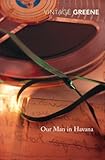
This is my review of Our Man in Havana (Vintage Classics) by Graham Greene.

To read this is to be reminded of the spate of "true classics" written in the mid-C20 when novelists still retained the fluency and eloquence stemming from a classical education which they were free for the first time to apply to the expression of real emotions, and the questioning of conventional values, morality and religion. There was so much to write about this that they felt no need for self-conscious experiments with structure or style.

Written with great prescience only a few months before the Cuban Revolution swept Castro to power in 1959, this black comedy introduces us to the anti-hero Wormold who at first seems pathetic, unable to demonstrate effectively the vacuum cleaners he is attempting to earn a living from selling, allowing himself to be twisted round the finger of his lovely but manipulative daughter Millie. Then we begin to see his unexpected resourcefulness when, bullied into acting as a secret agent for Britain, "our man in Havana", he begins to dream up a false trail of imaginary agents, all requiring payment of course, and even submits drawings of threatening installations, bearing an uncanny resemblance to hoover parts. He astonishes himself with the fertility of his imagination, "how quickly he could reply to any questions about his characters".

Initially, all this subterfuge is simply to indulge Millie's whim for a horse, with the string of extra expenses this entails, yet he gains a simple joy from supplying her wants: he admires in her the spirit which he lacks, and treasures the few remaining years in which he will be able to share her life.

Of course, his colourful reports to London will have unforeseen, perhaps grim or violent ramifications. Yet, ultimately Wormold may be protected by the fear of those in authority of losing face.

Beneath the vivid evocation of a crumbling but picturesque Havana, there are continual hints of a darker and growing violence, such as occasional harassment by the police who back off at the reference to a certain Captain Segura, reputed to carry with him a cigarette case made from the skin of one of his torture victims.

In all the humour and entertaining plot twists there are the usual "grahamgreeneish" insights into morality, faith, the meaning of life, the nature of love and honour. He likens Wormold's growing sense of guilt to a small mouse, to which he may soon become so accustomed that he will let it feed out of his hand. In the end "Would the world be in the mess it is if we were loyal to love and not to countries?" Greene clearly thought so, although perhaps confined this belief to his novels rather than practise it in his own life.

P.S. Does anyone know the full lyrics and tune for the song quoted, which begins "Sane men surround /You, old family friendss/They say the earth is round-/My madness offends./An orange has pips, they say,/An apple has rind./I say that night is day/And I've no axe to grind."?

⭐⭐⭐⭐⭐ 5 Stars

Above Prizes?

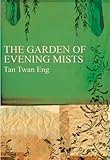
This is my review of The Garden of Evening Mists by Tan Twan Eng.

A Chinese Malayan by birth, Judge Teoh Yun Ling retires to the house at Yugiri in the Cameron Highlands and the "Garden of Evening Mists" developed by the enigmatic Nakamura Aritomo, sometime gardener to the Emperor of Japan. Since she has suffered brutal treatment and lost her sister in a Japanese camp during World War 2, one is curious to learn how she managed to form a bond with Aritomo before his death. Shifting back and forth in time, the story is an account of her recollections, revealing some kind of truth layer by layer, as she follows a friend's advice and attempts to capture her memories before the aphasia with which she has been diagnosed destroys her mind, making her a stranger even to herself.

At first, I was put off by the cumbersome opening chapter, the dwelling on small details, the slow pace and the writer's preoccupation with metaphors which, although sometimes striking, too often seem clunky and distracting, even unintentionally comical – "the waterwheel dialled ceaselessly" and so on.

Then I became hooked by Tan Twan Eng's exquisite poetical descriptions of the garden, his enlightening explanations of the principles of Japanese garden design related to a Buddhist/Taoist philosophy of the meaning of life, linked in turn to woodcuts and the art of tattooing, and by his evocation of life in 1950s Malaya with the interaction of different cultural groups, including an introduction to a neglected aspect of colonial history in the rise of communist terrorism in Malaya in the 1950s. The main characters are well-developed, complex and flawed so that you want to know why they behave as they do, what secrets they may be hiding, how a known fate came to befall them.

I began to think that perhaps this should have won "The Man Booker", or that it may be "above prizes" but in the later chapters, where Yun Ling recalls her experiences in the prison camp or recounts Professor Tatsuji's period as a kamikaze pilot, the book loses some of its originality as the pace quickens and the prose becomes more commonplace – a pale imitation of say, "Empire of the Sun".

The final revelations prove a little contrived yet would have satisfied me if the final twist had not seemed a little too implausible – there is an over-reliance on coincidence in this book. Tan Twan Eng seems to have introduced a denouement only to leave it half-knotted, although I suppose this is a point for discussion in book groups.

After a rocky start, I found this novel absorbing, often a page turner, moving blend of unflinching and sentimental, thought-provoking and very informative as regards Malayan culture understood from the inside. It was useful but disruptive to look up various terms, often employed several times before they are explained in the text, if at all, so brief footnotes would have been helpful. I am also left wondering if some of the (to me) overwritten prose may be due to Tan Twan Eng's fluency in a language other than English, in which this style is highly regarded. His style may also reflect a continued focus in Malaysian study of English literature on the work of poets like Shelley (such as "The Cloud" quoted in the novel).

⭐⭐⭐⭐ 4 Stars

Knowing a true classic when you read it

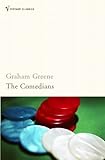
This is my review of The Comedians by Graham Greene.

This harsh revelation of the "violence, injustice and torture" imposed on Haiti by the thuggish "Tontons Macoute" supporters of the sinister "Papa Doc" during the 1960s forms the background to a novel that is a mixture of tense thriller, sad love affair, and reflection on the meaning of life provided through the portrayal of a variety of characters. Sadly, this impoverished island escaped from Papa Doc's control only to suffer the ravages of AIDS in the 1970s.

Returning to the rundown hotel in Haiti which he cannot sell, Brown has to deal with the body of a dead government minister in his swimming pool. This must be concealed from his only two guests, an idealistic but naive American couple, the Smiths, who are resolved to transform Haiti with an ill-timed project to promote vegetarianism. Can Brown maintain his clandestine "semi-detached" affair with Martha, whom he resents having to share with her spoilt and all-too observant young son, while Brown is unsettled by the suspicion that Martha's ambassador husband knows about the relationship but appears to accept it. What has brought Captain Jones to Haiti – a congenital liar beneath his blustering charm?

Although Greene himself did not regard "The Comedians" as one of his best works, and he admitted his experience of Haiti was superficial, this book hooked me from the first few pages with his gift for storytelling, constructing a plot in which every incident and character counts, creating a strong sense of place and devising scenes which are by turns poignant, philosophical, menacing, exciting or hilarious – hence the idea that we are all to some extent playing the part of comedians.

The narrator Brown may be cold, cynical and self-centred, but his role as an outsider gives him the detachment to observe and analyse the people and situations he encounters. He may be forgiven a little bitterness since he has never known his father's identity, and his flamboyant mother abandoned him as a small boy in a Catholic boarding school where the monks could be relied upon not to throw him out when she failed to pay the fees.

For the first time, I have understood some of the Catholic angst which pervades so many of Greene's novels. Near the end, Brown refers to "the never quiet conscience injected into me without my knowledge, when I was too young to know, by the fathers of the Visitation." Brown seems to be the vehicle for Greene's introspection. "The rootless…. we are the faithless. We admire the dedicated….the Mr. Smiths for their courage and integrity……we find ourselves the only ones truly committed to the whole world of evil and good, to the wise and the foolish, to the indifferent and the mistaken. We have chosen nothing except to go on living."

⭐⭐⭐⭐⭐ 5 Stars

Flawed Genius

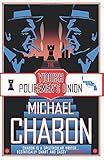
This is my review of The Yiddish Policemen’s Union by Michael Chabon.

What would have happened if a long-forgotten proposal in 1940 to give the Jews a temporary homeland in Alaska had come to pass? How will the Americans deal with the prospect of having to absorb millions of Jews who have failed to emigrate in time when the "Reversion of Sitka" occurs after the agreed sixty years are up?

In what first appears to be a Chandler-type cynical detective thriller, but which twists at times into a Bashevis Singer evocation of the culture of the Jewish shtetl, or a soft-centred rom-com-soap of family life, Chabron sets free his vivid imagination to create in some detail the world of "the Frozen Chosen" in an incongruous ambiance of halibut factories, cherry pie and vast pine forests.

The stereotypical antihero Detective Landsman, driven to drink through grief over his lost child and estranged wife, is still sufficiently professional to care about the death of a drug addict in what looks like a "cold-blooded execution". His often unauthorised investigations lead him into the archaic world of a "black hat rebbe" or rabbi who bears close resemblance to a mafia boss. The rather thin plot meanders to the denouement with the reader in my case mostly hooked by the sparkling pyrotechnics of Chabron's original prose, although at times his bold verbal experiments fall flat, or fizzle out, so that I can understand why this book has divided opinion quite sharply.

Many readers have complained about the frequent Yiddish words peppering the text. Although I found that they add a flavour and music to the prose, and you can usually guess what they mean, it was informative but too distracting to keep looking them up, so I agree that there is a case for brief footnotes. Similarly, the many references to Jewish culture could have been explained in an appendix e.g. the Tzadik ha-Dor or Messiah expected once in every generation, or the fascinating "boundary maven" whose job it is to define with lines of string the "eruvs" or areas which enable orthodox Jews "to get round the Sabbath ban on carrying in a public place, and walk to shul with a couple of Alka-Seltzers in your pocket, and it isn't a sin".

This book is riddled with wry humour of questionable taste, and is often very funny and clever, but also poignant. It is perhaps too long, and self-indulgent in its lack of editing. The author sidetracks too much into minor scenes and descriptions, loses the plot in the sinister wilderness of the Pearl Strait but glosses so quickly over some of the main facts that I had to reread bits to check I hadn't missed something.

⭐⭐⭐⭐ 4 Stars

Too bogus

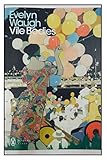
This is my review of Vile Bodies (Penguin Modern Classics) by Evelyn Waugh.

Does the classic which brought him fame and fortune show why Evelyn Waugh was described in his lifetime as the most important British writer of his day? Certainly, his style is very articulate and witty, although at times a little too silly and dated for modern tastes. This is a darker version of P.G. Wodehouse, with a failure driven to sudden suicide, and a young woman who implies sex by talking about the pain it gives her.

Readers will differ as to which passages they find the funniest. For me, apart from those I cannot give away, it was the exaggerated but telling description of the motor race to which the "hero" Adam and his friends are invited. "The real cars that become masters of men, those creations of metal who exist only for their own propulsion through space, for which the drivers clinging precariously at the steering wheel are as important as his stenographer to a stock-broker."

In the loosely structured plot which seems to be a staccato succession of incidents not necessarily "going anywhere" we are introduced to the "bright young things" of the 1920s. They are hedonistic, selfish, lacking in direction, engaged in a haze of party-going – "Masked parties, Savage parties, Victorian parties, Greek parties…parties where one had to dress as somebody else…..tea parties at school where one ate muffins and meringues and smoked crab, parties at Oxford where one drank brown sherry and smoked Turkish cigarettes, dull dances in London, and comic dances in Scotland and disgusting dances in Paris – all that succession and repetition of massed humanity.. Those vile bodies."

But beneath all the frivolity there is the sad undercurrent that these young people reject the values of the older generation who sent their children to die in the First World War, but have nothing in which to believe instead. Since this book was published in 1929, Waugh is quite prescient in foreseeing the next world war which is the "Bright young things'" fate. As the Jesuit Father Rothschild observes – the author never having met a Jesuit at the time – "…there is a radical instability in our world order, and soon we shall all be walking into the jaws of destruction again, protesting our pacific intentions."

Waugh was quite critical of the book, one cannot know how sincerely. The more sombre nature of the second half and Adam's brittle relationship with Nina may reflect the fact that Waugh's first wife, "She-Evelyn", left him for a so-called friend whilst he was writing "Vile Bodies", a blow from which he found it hard to recover. It is interesting to speculate just how autobiographical some of his books were, with many of the characters modelled on people he knew.

What troubles me a little about "Vile Bodies" is not being sure just how ironical Waugh intended to be. He was himself a heavy drinker, a socialite and a snob who looked down on "the masses". Perhaps he was a creature of his times, but one cannot help feeling that he was a clever man who, as in this case, frittered his talent on fairly lightweight themes.

⭐⭐⭐⭐ 4 Stars

Caught in the current

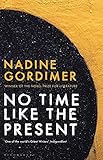
This is my review of No Time Like the Present by Nadine Gordimer.

Having admired years ago Nadine Gordimer's anti-apartheid novels which won her the 1991 Nobel Prize for Literature, I was impressed to find that, approaching ninety, she is still writing, dissecting the state of "free" South Africa.

This is the tale of a mixed-race couple adjusting to a world in which they no longer need to conceal their relationship, but also find that the freedom to make choices and lead a "normal" life often highlights cultural differences they did not notice when plotting undercover dissidence, plus there is the growing realisation that their new black leaders succeeding Mandela are often deeply flawed and corrupt, to such an extent that it might even be preferable to emigrate, the supreme irony in view of what Steve and Jabu have sacrificed for their country.

Although I wanted to like this book, to learn from Gordimer's deep knowledge and insights into South Africa, the stream of consciousness style proved a barrier that soon became insuperable. When I managed to tune into the fragmented phrases alternating with garrulous paragraphs, I could see that I was being enabled to sense the characters' diverse, fleeting thoughts as directly as if they were my own. However, the reading process becomes an exhausting labour rather than a stimulating pleasure, with the too frequent distraction of phrases that are oddly convoluted to no purpose, and dizzy-making switches from one heavy subject allusion to another.

Gordimer's style seems to have evolved over the decades, so one has to assume the current phase is deliberate. The prose reads as if written or typed "as it comes" without any attempt at honing or editing. In the end, I decided with great reluctance to abandon the effort for the time being – a great pity since there is a need for thought-provoking novels on the new South Africa based on first hand observation and understanding.

⭐⭐⭐ 3 Stars

“The Lifeboat” by Charlotte Rogan – The Will to Survive

This is my review of The Lifeboat by Charlotte Rogan.

This opens with Grace Winter on trial for some unspecified crime on board a lifeboat after the sinking of a luxury liner en route from England to the States in 1914. We expect murder at least and possibly cannibalism. Since a plea of insanity may be the best option, Grace is asked by her lawyers to write a detailed account of events on Lifeboat 14. This is a good literary device, although it requires the reader to suspend disbelief that a recent survivor of a prolonged trauma would be capable of producing such a coherent and analytical record – Grace may of course be an unreliable narrator.

Charlotte Rogan is very ambitious in her decision to interweave Grace’s recollections of events on Lifeboat 14 with those of her earlier life, aboard the ship before it sank, and details of the trial afterwards. This courts the risk of defusing moments of high drama and the effects of the oppressive hardship on the lifeboat, day after day, as well as that of confusing the reader. In the event, I found the gradual revelation of events intriguing, even if it was disappointing to find some threads unresolved rather than somehow woven into the denouement.

I agree with reviewers who feel that the full horror of the experience is at times underplayed, but the author succeeds in showing the changing relationships between the passengers, the shifting power play, the way gossip morphs into facts which can be used to depose a failing leader. Although these issues could have been developed more fully, Rogan prompts us to reflect on what makes a survivor, the extent to which the normal codes by which we live are a veneer, the situations in which killing some people to save a large number overall could ever be justified.

I found this book a page turner, despite reservations that at the most dramatic points, or when discussing complex philosophical points, the prose, although clear and accessible, does not seem quite equal to the task, if you set the bar at a high level. I did not mind Grace’s rather pragmatic, analytical approach nor the lack of the kind of crazy, poetical fantasy one finds in the lifeboat of “Jamrach’s Menagerie” since Grace’s thinking represents that of a “born survivor”. This is intimated by her honest admission that, after the financial ruin of her husband, she planned the seduction of the wealthy Henry Winter away from his long-term fiancée to marry her instead.

I felt that the quality of the writing tails off a little in the final chapters which seem a little too disjointed. The book might have benefited from being longer to give more scope to develop its complex themes, or perhaps it would have been enough to work more on the prose in some key chapters.

As a first novel, this is very impressive. For plot and insight, this book scores highly and the prose is just adequate to sustain these.

⭐⭐⭐⭐ 4 Stars

Who caries?

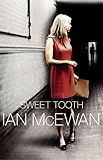
This is my review of Sweet Tooth by Ian McEwan.

"My name is Serena Frome….and almost forty years ago I was sent on a secret mission for the British security service. I didn't return safely. Within eighteen months…I was sacked having disgraced myself and ruined my lover."

These opening sentences hooked me, although I might have preferred not to know all this information in advance. Then, I found myself trying to engage with Serena as I waded through page after page of dense description of the "telling" variety, in the voice of a sixty-something, upper middle-class woman looking back to her early life with a somewhat cold objectivity as if writing about someone else – a voice which I did not find quite convincing (an interesting point to debate when you have finished the book). Small things bothered me, such as the way Serena always referred to her father as "the Bishop", or did not bother to go to one of his services during a visit home at Christmas. Surely even an atheist daughter would make it to a carol service for old times' sake? Or her parents would have had something to say?

I kept reading only because the writer is the celebrated Ian McEwan, and being about the same age as him and Serena it was interesting to be reminded of the political and social ferment of the `70s which I did not fully appreciate at the time, so I wonder how much Serena's lists of events and comments on them mean to younger readers.

This novel seems to fall between three stools. Presented as some kind of spy thriller, it proves somewhat low key and unexciting. This could be realistic in that a young woman in the MI5 of the 70s was likely to be given only mundane tasks, but does not make for a great read. As a sometimes polemical take on the life and times of the 1970s, this novel might have made more impact as a series of Jonathan Raban type essays. It may succeed best as being in fact another sort of novel altogether about the art of writing. In this respect, Serena's analysis of her lover's ingenious short stories provides one of the most interesting aspects of the novel, although I felt no doubt unintentionally patronised by the suggestion that someone like Serena who loves reading but has never studied English may be impeded by not knowing how to "read" a challenging text.

The final twist may redeem the book a little, but I did not find "Sweet Tooth" as original as say "Enduring Love" nor as well-constructed as " The Innocent".

⭐⭐⭐ 3 Stars

A British Alice Munro?

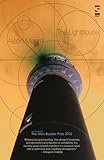
This is my review of The Lighthouse (SALT MODERN FICTION) by Alison Moore.

In an attempt to take his mind off his failed marriage, the oddly named Futh (this appears to be both a German surname and urban slang) leaves England for a short walking holiday along the Rhine, but this only gives him too much time to brood on his sad childhood, dominated by his mother leaving home when he was about twelve. On his first evening at the ominous-sounding Hellhaus – literally "light house" – Hotel, Futh meets Ester with a parallel tale of an unhappy marriage and the price of passive acceptance of life.

In deceptively simple, plain and painstaking, unpretentious prose, Alison Moore dissects Futh's appearance, his thoughts, motivations, the events which have shaped him. All this is conveyed through his memories, behaviour, conversations with others, so we may come to different conclusions since the author never tells us what to think. Even the dramatic climax is ambiguous.

I believe the author has had success writing short stories, and this is very evident in the way that most incidents are like small, self-contained stories in their own right. In what is still a relatively short first novel, Moore has managed to produce what proves to be a tightly-structured overarching narrative, even if Futh seems to be bumbling around, often lost, much of the time.

Some readers have found Futh intolerably dull and the novel too mundane, but you could argue that the whole point is to make a very ordinary and in some ways unappealing man the subject of a story which may have all the pathos and ironical chain of cause and effect of a more flamboyant tragedy. Moore displays the power of an understated story, on a par with a first-rate minimalist painting or musical score.

There is perhaps a little too much symbolism e.g. the heavy use made of Muriel Spark's description of "the tall lighthouse sending out kindly beams which some took for welcome instead of warnings against the rocks" or the Venus flytraps. I admit this is not a page-turner, except towards the end when I knew that the "something bad" indicated at the beginning was about to occur. If you like action-packed thrillers or romance, this is not the book for you. It is also deeply sad, definitely not "feel-good", although Futh's continual failures – even the ducks don't want to eat his bread- is just about saved from becoming unendurable through the narrator's frequent flashes of wry humour. At times, I was reminded of Mr. Bean.

I agree that it is hard to believe that Angela would marry a man like Futh, but since she is seen through his eyes, we know he is too damaged himself to be capable of empathising with her or grasping the complexity of the emotions which drove her to marry him. In the same way, his perception of his relationship with Kenny is clouded by his own emotional stunting. All this may demonstrate the subtlety of Moore's writing, when you pause to think about it.

I admire this novel without much liking it, and suggest it as a good choice for a book group if you are interested in discussing the craft of writing, debating what makes a good ending, and understanding polarised viewpoints.

⭐⭐⭐⭐⭐ 5 Stars