Capturing the leopard

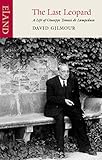
This is my review of The Last Leopard: A life of Giuseppe Tomasi di Lampedusa by David Gilmour.

If Lampedusa, who in due course became the Duke of Palma, comes across as rather dull, it was partly due to his intense introversion with strangers and also because his life seemed to revolve round consuming literature, history and cakes in prodigious quantities. The author succeeds in showing how Lampedusa's only published novel,"The Leopard", sadly rejected until just after his early death from cancer, was the fruit of decades of musing about his aristocratic family, the state of Sicily and the reading which must have developed his sense of style.

The most interestig part of the book are the final chapters on "The Leopard", which you need to have read beforehand, with an exploration of the extent to which the leading character Don Fabrizio was modelled on Lampedusa's great-grandfather Prince Giulio during the Risorgimento in the 1860s, which brought about the unification of Italy and the break up of the old feudal estates, or on the author himself. Like Don Fabrizio, Giulio was a keen astronomer, but he was probably less of an autocrat. As regards his "sceptical intelligence ….. long periods of abstract thought… and pessimistic view of Sicily and Italian unity….. Don Fabrizio is more autobiography than invention", but he is also "transformed into the person the writer would like to have been".

On the author's own admission, the charming Tancredi is based partly on his adopted son Gio, although "as for his morals….Gio is fortunately much better than him". Yet Tancredi also seems to be an amalgam of some of the young Sicilan aristocrats who joined Garibaldi, for excitement rather than out of conviction.

The huge, violent and mixed reaction to "The Leopard" also makes fascinating reading. Many who thought they knew Lampedusa were astonished that this polite, self-effacing man could hold such cynical and negative opinions. One of the strangest criticisms was that, in being readable with clear characters and conventional syntax, the book failed to achieve the kind of "avant-garde experimentalism" which was in vogue in 1950s Italy.

Another critic even attacked Lampedusa for writing about animals in a "silly" way when in fact the portrayal of the faithful hound Bendico is one of the most humorously touching aspects of the novel, revealing the love of dogs, above people, which Lampedusa displayed in real life.

His marriage is intriguing: he braved his possessive mother's wrath by marrying a formidable pyschoanalyst, who also happened to be a wealthy Latvian aristocrat, but soon settled into what seems to have been a largely intellectual relationship with her, choosing to live with his mother until her death rather than with his wife, since the two women could not get on. Gilmour comments that "flames for a year, ashes for thirty" seems to have been both Don Fabrizio's and Lampedusa's view of love for their wives.

I would have liked the final chapters to have been longer, and more on the socio-political events which formed a background to both Lampedusa's life and his famous novel. The photographs which I discovered at the end of my kindle version are well-chosen.

⭐⭐⭐⭐ 4 Stars

Tone curl

This is my review of Gone Girl by Gillian Flynn.

"Everyone knows it's always the husband": Nick is the obvious main suspect when his wife Amy disappears on their fifth wedding anniversary. Yet what kind of a mixed-up mess is she, after a lifetime of providing the model for her parents' money-spinning set of stories about "Amazing Amy", a modern Pollyanna designed to entrance both children and parents?

Gifted with a rampant imagination, Gillian Flynn has devised an intriguing situation with a labrynthine plot which hooked me because I sensed both that what I was being led to believe was false and that what I thought I was being clever in anticipating would prove a red herring as well. I like the gradual revelation of events in which truth and lies are hard to disentangle, the shifting relationships between the main characters, some sharp script-writerly dialogue, moments of real comedy in what seems to be mainly a black farce, and the continual parodying of the media-driven, hokey, faddish side of American culture. I liked it less when I started to suspect that the author herself might be too much part of this so that some of these parodies were imagined on my part.

Too often, the style lapses into a cheap magaziny tone, abetted by the author's love of creating adjectives ending in "y". I became irritated when the spate of quirky wit and imagination sank into slapdash banality. Are the false notes of trashiness unintentional or part of a plan to lure readers along with just enough but not too much violence and soft porn?

Although the commonly used device of alternating chapters between first person Nick and Amy works well, they both indulge in too much "telling" of their self-knowledge. Then, there is the continual underlying voice of the same caustic-tongued yet also often tweely sentimental female – incongruous for Nick in the midst of all his macho lingo and activities culled by the author from an obliging husband. I learned the latter in the acknowledgements at the end, which I mistook at first for Amy's play-acting of what an author's falsely modest, saccharine sign-off should be.

The nature of the final twist seems quite apt to me, but I was disappointed by its execution. I agree with reviewers who have found the final chapters too rushed and weakly developed – including some major flaws on the plausibility front.

Overall, I can see why this is a best-seller, probably one in a run of many. It is a page turner, good distraction for an economy airline flight, and a trigger for lively discussion at a book group if this does not cause an irrevocable rupture between the pulp fiction addicts and blue stocking readers, but with a little more care over style it could have been brilliant.

⭐⭐⭐ 3 Stars

Releasing truth

This is my review of Cassandra at the Wedding (New York Review Books Classics) by Dorothy Baker.

How do you react when your identical twin sister announces her intention to get married? Particularly if you have spent your entire childhood in the self-contained bubble of a rural backwater, with an academic philosopher for a father, encouraging you to dissect every thought, and a novelist mother to feed your preoccupation with words? What if your parents have laboured to make you different in superficial matters, overlooking the fact that you differ in the deep sense that one twin wishes to share the same life forever whilst the other wishes to break free into adulthood?

This recipe for high drama is a gripping page turner. I could not wait to get to the end, knowing that I would need to go back later to milk Baker's keen prose for the full sense of all her sharp and original observations. It often reads like the plays for which the author was well-known, with the advantage that a novel gives scope for the deeper introspection and exploration of the characters' inner thoughts.

The book is written from the alternating viewpoints of the two sisters: Cassandra and Judith, which gives you in time their very different takes on the same situations. Cassandra is neurotic, manipulative, a keen observer of others, with a biting wit, but an utterly unreliable narrator who lacks a sense of proportion, a source of huge irritation but also great sympathy to the reader. This is a tragi-comedy with many moments of great humour, and a light touch which adds to the pathos of the sadder events without making them too heavily dreary or depressing. Unlike some reviewers (including Lowri Turner in the introduction to my copy, which was a total spoiler so I am glad I did not read it beforehand), I did not find the ending disappointing – rather neat yet also satisfyingly ambiguous in some ways.

It is surprising that such a modern-seeming novel should have been written fifty years ago by someone born in 1907. It does not seek to shock, because it does not need to do so to stand out, with its subtle and distinctive approach. I am sure that, if written today, it would be on all the major prize shortlists.

⭐⭐⭐⭐⭐ 5 Stars

Warped insight

This is my review of Brideshead Revisited: The Sacred and Profane Memories of Captain Charles Ryder by Evelyn Waugh.

Vivid and original descriptions, sparkling streams of consciousness with perfect grammar and impeccable punctuation, telling observation of character, sharp dialogue, and high comedy mixed with bitter irony – all the evidence for Waugh's reputation as one of England's greatest novelists is here. I can appreciate his nostalgia for a no doubt rose-tinted view of a past way of feudal life and the novel also provides some intriguing social history of the lives of a privileged few between two World Wars, as when an Oxford undergraduate casually expects a friend's drunken vomit from the night before to be cleaned up by a servant.

On the other hand, the snobbishness, treatment of "the lower classes" as a lesser breed, and frequent racist and chauvinist comments which seem to be a product of his own prejudice prevent Waugh from seeming a great novelist in terms of vision.

The most interesting aspect of the novel for me is the parallels to be found with Waugh's own life, despite his attempts to deny them. The bored Captain Charles Ryder doing his war service is Waugh stuck in England on petty exercises rather than seeing real action. Ryder's infatuation with Brideshead and the Marchmain family is Waugh's with Madresfield and the Lygons. Sebastian Flyte is partly the captivating, alcoholic drifter Hugh, and Julia is modelled on his beautiful sister Maimie, denied the opportunity to marry royalty because of a family scandal. Julia's fiancé Mottram's comical attempts to convert to Catholicism at any price are reminiscent of Waugh's own rather bizarre exchanges with the priest he had to satisfy to achieve his own conversion. The flamboyantly gay, precociously effete Anthony Blanche is, on Waugh's own admission, two-thirds Brian Howard and one-third Harold Acton, reciting poetry through a megaphone.

A weakness in the plot seems to me to be the scandal of the Earl's flight to Venice with his mistress Carla – his offence does not seem "bad" enough to justify the blight on the Marchmains. In this, truth was more dramatic than fiction: Earl Beauchamp (William Lygon), a major Whig politician, was forced into exile to avoid an Oscar Wilde-type humiliating trial when his officious brother-in-law threatened to make public his rampant homosexuality.

The part I find hardest to understand is Waugh's treatment of Catholicism which he saw as crucial to the work. He suggests to me that Hugh and Julia are "screwed up" by a religion that tortures them with a sense of guilt over the "sins" they are too self-indulgent to deny themselves. Using Ryder as mouthpiece, Waugh does a pretty good job in sending up Catholicism, exposing the confusion and illogicality of its practice. Yet, he clearly implies that, like him, Ryder converts to this faith, but Waugh does not supply a clear explanation as to why and how this occurred.

Whilst being a compelling read, this is one of those novels which need to be revisited to appreciate it fully. It is also ideal for a book group, since there is so much to discuss about style, structure, plot, characters and aim, plus it is likely to divide opinion quite sharply.

⭐⭐⭐⭐ 4 Stars

Good yarn a little frayed

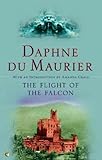
This is my review of The Flight Of The Falcon (Virago Modern Classics) by Daphne Du Maurier.

Armino Fabbio, a competent but jaded tour guide, feels responsible for the death of someone perhaps recognised from his childhood. This takes him back to Ruffano, the quaint Italian hill town of his birth, which revives memories not only of the destructive effects of World War 2 on his family but also of his domination by Aldo, the charismatic elder brother shot down as a pilot.

Despite a promising beginning and my huge admiration for gripping psychological dramas like "Rebecca" or "My Cousin Rachel", I was sufficiently unengaged by this novel to notice with disappointment the flaws: two-dimensional characters, stilted dialogues, unlikely coincidences, some rather tedious surfeit of detail. Yet many passages are brilliant, apparently effortless in their clarity and striking impact. I was also tantalised by my inability to grasp the geography of the place, and would have liked a streetmap.

Published in 1965, twenty-seven years after Rebecca, this novel may be a bit dated, the work of a popular novelist still spinning yarns in the style of earlier decades, without any further development as a writer. In spite of my reluctant reservations, although I guessed the key twists in advance, and some of the plot is a bit ludicrous, I was gripped eventually – I think by the idea of Fabbio being able to pass himself off as a stranger in familiar territory, even with people he once knew. This intriguing aspect of "false identity" is often employed by Du Maurier.

I found Fabbio an emotionally cold character, which could be attributed to his dysfunctional childhood, but was interested to read that Du Maurier herself often seemed rather chilly and remote.

⭐⭐⭐⭐ 4 Stars

Brilliant evocation of a past Sicily to understand the present

This is my review of The Leopard: Revised and with new material (Vintage Classics) by Giuseppe Tomasi Di Lampedusa.

Intrigued by what has been described as "perhaps the greatest novel of the (C20) century" and assisted by Colquoun's excellent translation, I was soon absorbed in the decaying feudal world of "The Leopard", Don Fabrizio in 1860s Sicily on the brink of yet another political change, with Garibaldi's uprising and the move to Italian unification.

At first, Don Fabrizio seems no more than a selfish despot, neglecting and terrorising his children, humiliating his wife by not bothering to conceal an after-dinner visit to a mistress, compromising the long-suffering Jesuit priest Father Pirrone by giving him a lift into town on the way. Then we begin to appreciate his complexity. He will talk to his organist Don Ciccio on equal terms when they are out hunting together, then insist the man agrees to be locked up in the gun-room for hours so he cannot prematurely reveal a piece of information confided to him by the Leopard.

Sympathy grows as we grasp the deep interest in mathematics and astronomy which makes him most happy when gazing through a telescope at the stars. He understands all too well the plight of Sicily, "for twenty-five centuries … bearing the weight of superb and heterogeneous civilizations, all made from outside…none that we could call our own". This is why the Sicilians have turned in on themselves, become backward-looking, locked in tradition and unresponsive to any opportunities the new "free State" might bring. "Our sensuality is a hankering for oblivion, our shooting and knifing a hankering for death". The violence of the landscape and cruelty of climate, so well-described throughout this book, have added to the Sicilians' "terrifying insularity of mind".

So it is that Don Fabrizio leaves it to his wily, appealing nephew Tancredi to play an active part in the new world, and ensures he has the financial means to do so by letting him marry Angelica, the beautiful daughter of the local peasant upstart Don Calogero who has enriched himself at the expense of landowners, not least Don Fabrizio, too indolent through a sense of entitlement to bother to manage their affairs shrewdly.

Despite the underlying theme of stagnation and decline, this book is in fact entertaining and wrily humorous. The remarkably vivid prose makes any other novel you may be reading seem lightweight. It needs to be read slowly and more than once to appreciate its quality, perhaps because the author infused so much into the only novel he ever wrote.

I agree with reviewers who feel that the book tails off towards the end. The climax is Chapter IV, "Love at Donafugata" in which Don Fabrizio elaborates on the state of Sicily, clarifying impressions sown gradually in previous pages. Perhaps it should end at Chapter VI, "The Ball", with the Leopard looking up at Venus. The following chapters on his death (given in the heading so not a spoiler) and the sadness of his spinster daughters' lives in old age make good short stories, but undermine the arc of the main plot set in the pivotal years of change in 1860s Italy.

⭐⭐⭐⭐⭐ 5 Stars

Greene without the Catholic angst

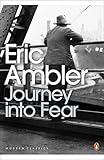
This is my review of Journey into Fear (Penguin Modern Classics) by Eric Ambler.

It is easy to see why this recently reissued thriller set in 1940 was a bestseller and suspenseful film. Ambler captures the fear mixed with defiance and the frequent sense of unreality experienced by an arms engineer who finds himself the prey of a hired assassin. There is also the anticipation of the unexpected twists the author casually throws in at the end of an uneventful chapter, and the suspicion that no one may be quite what they seem. Some characters are mere caricatures, but others are more interesting, such as the henpecked Frenchman who expressed communist sympathies to annoy his wife, only to find himself converted to them "for real".

Described as "Graham Greene without the Catholic angst" this is a quick and absorbing read, neatly plotted, which offers more than you may expect in terms of moments of drama and "tight corners" from which escape seems possible.

⭐⭐⭐⭐ 4 Stars

Media-man’s fee-good potboiler

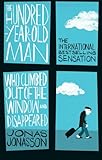
This is my review of The Hundred-Year-Old Man Who Climbed Out of the Window and Disappeared by Jonas Jonasson.

If you can suspend your disbelief that a hundred-year-old man could climb out of a window, drag a heavy suitcase and knock a young healthy person unconscious with a blow from a plank, you may enjoy this tale of his adventures on the run, evading arrest as he accumulates a motley group of new friends. The plot is quite slight, with so little description and character development that it has to be padded out to full novel length by alternating chapters on major incidents in Allan's past life, mainly encounters with the great and the bad – not only a string of American presidents, but Franco, Mao Tse-tung and Stalin, mostly seduced by Allan's apparent knowledge of how to make an atomic bomb.

Allan's affable amorality left me uneasy. Although his stoicism in times of adversity is impressive, and you have to admire his ability to "think on his feet", his periods of wealth and good fortune are based on the proceeds of other people's corruption and criminal activity, including murder or manslaughter, about which he is very casual. I believe this is meant to be a "feel-good novel", but it has an underlying darkness, such as the fact that Allan was one of the mental patients castrated under the infamous former policy of the Swedish government which is generally regarded as so liberal and progressive.

There are some humorous moments, but the plotting is cartoonish. What really grated on me was the quality of the writing. It may have suffered in translation from the Swedish into English but the pedestrian style and wording reminded me of a tired dad at the end of the day making up a bedtime story in the knowledge that it doesn't matter what rubbish he comes up with – all his child really wants is a bit of his attention. The work struck me as slapdash, with a few "continuity errors" and a trite ending as if the author just ran out of steam.

I had to read this for a book group and am relieved that it only cost me 20 pence to download on Kindle.

⭐⭐ 2 Stars

Surveying all the monarchs

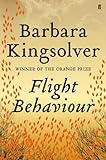
This is my review of Flight Behaviour by Barbara Kingsolver.

"Flight behaviour" is wordplay to cover both the orange monarch butterflies deflected from their usual migration patterns by the effects of climate change, and a Tennessee farmer's wife, symbolically also flame-haired, seeking to escape from the trap of her marriage to a kind but dull husband still ruled by his domineering parents.

Although her small daughter Cordelia has been nicknamed "Cordie", Dellarobia does not shorten her own distinctive name. An ill-judged attempt at adultery is averted when she is amazed by the sight of a lake of fire which proves to be great clusters of butterflies clinging to tree trunks on the wooded slopes above her home. My interest was hooked when I realised that the incredible details of these insects and their life cycles are based on fact, the author being a trained biologist with a mission to inform us through fiction.

The arc of the overall story is strong, and Barbara Kingsolver explores some interesting themes, such as the varying attitudes to the butterflies when a team of scientists come to study them. The locals, for instance, tend to reject climate change because the popular media play it down, but the strongly religious community feels that the butterflies may have some special significance, even to the extent of questioning the right of Dellarobia's father-in-law's to earn much-needed cash from felling the trees in which the butterflies have chosen to winter.

"The Poisonwood Bible" is a hard act for the author to follow, but I found "Flight Behaviour" hard-going, partly because it often gets bogged down in detail and long-windedness, crying out for a good edit. Although she is capable of sharp, funny dialogue and powerful descriptions, too often the prose grated on me – clunky and folksy in a way I had not expected, although I wondered whether it was intentional to convey a sense of a traditional "hillbilly" community, resistant to change. So, my four stars are for an original and thought-provoking storyline rather than the quality of the writing which often disappointed me.

⭐⭐⭐⭐ 4 Stars

Just Observe

This is my review of The Server by Tim Parks.

Drawing on his own experience of transcendental meditation, Tim Parks transports us into the mind of Beth, impulsive, provocative, sensuous twenty-something former singer in a pop band who has spent the past nine months in the incongruous role of server cooking, cleaning and setting a good example for a group of meditators on a ten day Buddhist retreat.

It is a strict regime: segregation of the sexes, no talking or touching, hours of exerting the "strong determination" to sit motionless in painful poses, focusing on breathing with the daily brainwashing from recordings made by the guru Dasgupta, "who preaches against self-regard in a self-regarding way". There is a consistent tone of scepticism, a flippancy, which may upset strong advocates of meditation. Despite this, Parks conveys a clear and strong sense of the process of meditation.

Although she used to have no trouble losing herself in music, and wishes ardently to change herself through meditation, Beth's thoughts keep slipping back to speculating about the other inmates, whom she cannot resist winding up and leading astray on occasion, or brooding on her clearly troubled past life. Some recent trauma has driven her to the retreat, and Parks skilfully drips out the facts to hold our attention.

Sometimes I found this book too contrived, too much of a master class in creative writing by an expert published author, rather than a sincere examination of human dilemmas. The detailed descriptions of the routines at the retreat are sometimes tedious, although this may have been the author's intention. Since he builds up a strong sense of tension, moving towards an anticipated dramatic, perhaps shocking and unpredictable ending, I was a little disappointed by the final chapters which have a kind of banality, making the experience in the retreat seem lightweight.

However, it is an original, well-constructed story and in the midst of the wry, jokey humour, there are some convincing characters and many telling observations on life and relationships.

⭐⭐⭐⭐ 4 Stars