How things might have been different

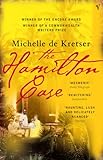
This is my review of The Hamilton Case by Michelle de Kretser.

Although unlikeable in many respects and clearly an unreliable narrator, as in the portrayal of his charismatic rival Jaya, Stanley Alban Marriott Obeysekere, nicknamed "Sam", gripped me from the first page with his account of growing up in the early C20 as the grandson of a "mudaliyar" who had gained wealth and influence by assisting the British colonial administration of Ceylon. A successful lawyer with hopes of being the first "native" to be appointed as a judge by the British, Sam's decision to involve himself in "The Hamilton Case" has unforeseen consequences. In all this he remains wedded to his perception of the British way of life: "his veins have run with Bovril".

From the outset, an unexpected wry or brutal observation hits home, as when we are told how Sam's grandfather met his death after gallantly leaping into a lake to save a young English girl who had fallen overboard. In "extreme distress at seeing her … a sweet girl on the threshold of womanhood, being manhandled by a native," a friend "in understandable terror, confusion and distress…brought her oar crashing down" on his skull. For this she was of course absolved of all blame.

On reaching Part 3, I seemed to have strayed into a different book which had lost the plot. The short chapters cease to be so alluring as they flit between characters: Sam's eccentric mother, his wife, son, several servants, etcetera. Substance gives way to form, in a style that begins to pall – too wordy and contrived, over-poetical. Sometimes the prose is beautiful and striking, but too often it appears self-indulgent padding.

The book would have been strengthened by more frequent, ongoing release of information, "true" or otherwise, about "The Hamilton Case", the personality of Sam's enigmatic sister Claudia and the nature of their relationship, to establish these aspects as key underlying threads.

De Kretser has been original and ambitious in seeking to work on several levels to produce: a "good yarn" reminiscent of Somerset Maugham; a whodunnit; an exploration of a complex family; an examination of the cultural effects of colonialism. This even extends to capturing Sam's "perfect mimicry" of the British in such a phrase as, "in cahoots with some ne'er-do-wells". As a colleague bitterly observes, "at some point quotation had become our native mode. There was no original." The author is also bold in experimenting with the structure and style of the novel. In all this, I am not sure she succeeds, but I admire her for the attempt.

⭐⭐⭐⭐ 4 Stars

Fear, hope and uncertainty

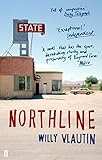
This is my review of Northline by Willy Vlautin.

Allison has missed out on her education, has low self-esteem and uses alcohol as an escape. When she is drunk, bad things happen to her, although her tragedy is limited by her ability to get paid work easily and to display a surprising competence when sober. In her imaginary conversations with the actor Paul Newman which never fail to draw her out of the darkest despair, he is always the voice of her revived reason and commonsense.

At first, I was predisposed to dislike a book which I expected to be a lightweight reworking of the well-worn theme of losers and drifters with "their hearts in the right place". In fact, the simple prose conveys a vivid sense of the life of ordinary people trying to make a living in cities like Las Vegas or Reno. In their resilience and acts of unexpected kindness to each other, they arouse sympathy and respect. Even Allison's abusive lover Jimmy has redeeming features – his thirst for knowledge, even if it leads to bigoted opinions, or his desire to make a fresh start in a state like Montana beyond a "northline".

Vlautin's measured development of a succession of personalities and gradual release of details is quite skilful. A short work, you could call it an example of "less is more". I also like the way that, at the end of a carefully constructed book, Vlautin avoids sentimentality by leaving certain points unresolved, rather like life.

Although the inclusion of a CD of the author's music designed to reflect the feel of the book seems at first a little self-indulgent and gimmicky, it proves slow, rhythmic, rather melancholy. Quite pleasant to listen to, it lacks the darker, more violent moments of the story, and seems to cover less varied emotions than the book itself.

⭐⭐⭐⭐ 4 Stars

Incarcerated in the wrong life

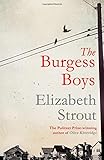
This is my review of The Burgess Boys by Elizabeth Strout.

Brothers Jim and Bob Burgess escape the provincial world of Shirley Falls, Maine for employment as New York lawyers. In contrast to the ambitious high-flyer Jim, Bob is "a nice guy" but portrayed as a bit of a failure (despite being a qualified lawyer), whose borderline alcoholism may have its roots in his early childhood, when he played a part in the tragic event that blighted his family. When the brothers' dysfunctional nephew commits a criminal act against the Somali immigrants who have begun to arouse the suspicious resentment of the conservative white community of Shirley Falls, Jim and Bob are forced to revisit the town, and old memories.

The strongest aspect for me is the core of the book, the portrayal of the complex relationship between the two brothers, and there are some wry, realistic dialogues. On the other hand, my enthusiasm was eroded from the outset by the to my mind unnecessary device of using a prologue to provide a narrator's advance summary of some of the key facts of the book (more than I have above), with the implication that the following chapters are her "story of the Burgess kids", possibly including a degree of speculation since, "Nobody ever knows anyone".

The story tends to lack dramatic tension, since opportunities to develop or explore situations are frequently missed. Yet plots are probably less important to Elizabeth Strout than people's thoughts and behaviour. Although it is probably meant to be a kind of "stream of consciousness", the many long, rambling sentences with banal word repetition grated on me. This may be a cultural thing – a British reader's criticism of a style that is accepted as the norm in modern American writing. Also, the continual switching between at least six points of view make the story often seem unfocused.

So, I swung between thinking this either "in the mould of Anne Tyler" or "soft-centred women's magazine material". My doubts were allayed in Book 4 which, with an increase in pace and improvement in the quality of the writing, brings the threads together for the unpredictable ending which proves satisfying for those who like to be left with a little room to imagine what they wish.

⭐⭐⭐⭐ 4 Stars

A human act of becoming

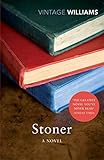
This is my review of Stoner: A Novel (Vintage Classics) by John Williams.

Given the chance to escape from toiling on his father's barren farm to an agricultural course, the aptly named Stoner makes a guilty switch to English literature, for which he has conceived an abrupt and unlikely passion. Pursuing this with his customary determined labour, Stoner achieves a measure of success, but a mixture of misjudgements and fate blight his path.

The book opens with his death, describing him as "held in no particular esteem when … alive", so that our motive for reading is to learn what secrets or underestimated qualities he may ironically have taken to the grave, or which may be revealed to bring him recognition too late. It then becomes apparent that this is a detailed study of the life of an ordinary man who evokes sympathy in his resilience, his integrity, his capacity to appreciate nature, his occasional moments or periods of great joy which show that he does not lack feeling or the ability to love. When he is wronged, I felt anger on his behalf.

Yet, he is a flawed man as well. His preoccupation with his work often seems escapist and selfish, which matters if an innocent person suffers as a result. His passivity and usual habit of avoiding conflict also seem weak, although perhaps a man from humble origins, without connections and too straightforward to make them, cannot be expected to win out in the political jungle of a university campus.

This book reminds me of Bernard Malamud's brilliant "A New Life" and C.P. Snow's tales of academic rivalry, like "The Master". You may wonder at the revived interest in a "lost classic" of 1965 that now seems a little old-fashioned. In a strictly linear plot, Williams develops and disposes of each episode in turn almost too neatly. There often seems to be too much "telling" – as each character is introduced, Williams informs us what to think about them. The "villains" of the piece seem rather exaggerated, and I am not sure Williams' portrayal of women – with the exception of Karen Driscoll – is very convincing. If Stoner has been won over to literature by Shakespeare, I am unclear why he is so bound up in what seems a rather dry obsession with grammar and the classics.

Despite this, the clear simple prose carries you along and I like the efficiency with which all the characters are given a clear function in the plot. The author's ability to express fine shades of meaning is astonishing. Some striking insights make a sharp impact. These may vary according to the reader, but I have made a note to study the Shakespearean sonnet number 73 which was instrumental in converting Stoner to literature. I was also struck by his ability to see the essential unimportance of some of his problems – although perhaps that makes him too quick to accept the unhappiness of others. His thoughts on the nature of love are thought-provoking.

⭐⭐⭐⭐ 4 Stars

Brief Encounters

This is my review of The Man In The Wooden Hat (Old Filth Book 2) by Jane Gardam.

This second part of a trilogy revisits the quirky and poignant world of "Old Filth", misleading acronym of a nickname, "Failed in London Try Hong Kong" for Edward Feathers, the brilliant QC emotionally damaged by a motherless childhood and grief-stricken colonial administrator father. Not a sequel but a filler in of gaps, the focus here is on Edward's wife Betty whose suspected passion for his arch rival Veneering is now revealed.

It is Catch-22 in that you will miss a good deal by not reading "Old Filth" first – the clunky attempt to explain the main details of his early life in the opening pages is no substitute – but if you have read it, some of the "surprise factor" is inevitably lost since you will often know what to expect and recognise incidents repeated from the first novel.

Some of the chronology is a little odd if not slapdash. How could Betty manage to be in a Japanese POW camp, at Oxford and breaking codes at Bletchley Park in such a short space of time? Yet, perhaps this does not really matter. Gardam is less interested in plot, and more in creating a sense of a place or emotional feeling, together with an eye for the ridiculous and the odd hint of ghostly presences.

I felt as if I were reading extracts from a genteel soap opera, with the lure of escapism for the majority of readers who will not have experienced firsthand the main characters' privileged, bittersweet lives. Apart from Old Filth, most of them are too sketchily drawn to be truly moving. Least convincing for me is Loss, the Chinese dwarf, who in his resemblance to a carving of a man in a wooden hat gives his name to the second novel for no obvious reason to me, except his tendency to appear as a threatening presence at critical moments in Betty's life.

Although it is forgivable that Gardam seems to have fallen in love with this set of characters, and enjoys replaying their story from different angles as writers do, the extension of the process into a trilogy so far seems a little self-indulgent. From an artistic viewpoint, I wish she had stopped with "Old Filth" and left us guessing.

⭐⭐⭐ 3 Stars

In the land of the free

This is my review of Billy Lynn’s Long Halftime Walk by Ben Fountain.

After a heroic attack on the enemy which just happened to be filmed by an embedded TV crew, "Bravo squad" is touted round the States for a disorienting fortnight in an insensitive PR bid to revive flagging support for the Iraq War.

Billy Flynn is one of the soldiers, a decent and perceptive young man beneath a fairly thick layer of nineteen-year-old laddishness. As he tries to make sense of his unreal situation, we see the Bravos pawed like public property, fawned over by celebrities, glamorous couples and business tycoons who would not normally give them the time of day.

Inevitably, conversations tend to descend to the prurient question of what it is like to kill a man. Billy always manages to fob people off with the gung-ho answers they want to hear, but is left feeling that he has betrayed his comrade Shroom who died in the "heroic" attack. Beneath it all lurks the knowledge that Billy must return to the front, where there is a high probability he will meet his own death.

Although this may sound grim, the novel is often very funny – a blistering attack on the worst aspects of American culture: the tasteless mixture of God and mammon, rednecked patriotism, unquestioning sense of superiority fed by crass ignorance of the rest of the world. Since it will probably only appeal to the anti-war converted I cannot imagine what those parodied in the book would make of it.

I had to concentrate hard to grasp Ben Fountain's quicksilver train of ideas and cope with the American slang. I understand the criticism that Billy's inner thoughts are too often tangled up with the knowing, cynical voice of the articulate third person narrator, but you could argue this is the influence of Billy's deceased intellectual friend Shroom.

The unshackled style veers between moments of original beauty and moving insight, hyperbole, occasional corniness and cartoon-speak. I like the way Fountain uses the sounds of words rather than their correct spelling to convey how Billy often feels overwhelmed by his unfamiliar surroundings and lets everything "wash" over him: Eye-rack, Eaaaar-rock, nina leven, soooh-preeeeme sacrifice, etcetera. This also highlights the emptiness, lack of meaning of the sentiments poured over the Bravos.

I am not sure at what point Fountain's original and creative prose tips over into gimmickry,

but

the

whiiiiirrrrrrr

BAM

of it all is sometimes a bit too much to take.

The scene where Billy returns home for Thanksgiving lost some of the momentum of what perhaps should have been a shorter novella for maximum effect, and reduced the tale to soap opera for a while.

Overall, it's an imaginative, somewhat shaming take on modern America.

⭐⭐⭐⭐ 4 Stars

The wrongdoing of others

This is my review of The Aftermath by Rhidian Brook.

Promoted to Colonel's rank for an act of courage, Lewis Morgan is posted to the British Zone in Hamburg, devastated by the force of Allied bombing, to supervise the "denazification" and restoration of civilian life in the aftermath of World War 2. It seems clear that his dislike of bureaucracy and evident sympathy for ordinary Germans will land him in hot water. Sadly, his empathy does not extend to his wife Rachael: prolonged separation and a family tragedy have driven a wedge between the two. Tensions are compounded by Lewis's unconventional, perhaps naïve decision (inspired by a similar real event in the author's family history) to share the impressive dwelling in which his family has been billeted with its defeated German owners, the cultured, spontaneous architect Lubert and his stroppy teenage daughter Frieda.

From the outset, I felt in the hands of a writer confident in his skilful plot and complex, well-drawn characters. He makes it all look deceptively easy, and slips in evidence of detailed period research quite subtly. Although you can guess some of the main plot developments, the denouement is always in doubt so that the tension builds strongly to an unpredictable ending.

Some reviewers have found the character development weak, and I admit to never quite believing in the unpleasant Major Burnham whose eyes both men and women seemed to find "pretty", whilst the half-crazed dissident Berti did not quite work for me either. Some of the minor characters, like the officers' wives, seem like caricatures, although may sadly be an accurate portrayal of the prejudice and snobbery rife at the time in their society. Despite this, the main players come across quite strongly. I particularly liked the character of Lewis's son Edmund, an appealing mixture of innocence and guile, as he earnestly attempts to read the codes of the adult world, frequently "getting it wrong". Rachael's shifting emotions in the course of the tale also appear both convincing and moving.

Others have spotted the odd anachronism, or grating, even misued word, and I was a little disappointed to learn that the book was written with a film in mind, so that some descriptions are guidelines for props departments rather than how a character might have perceived a situation. Yet all these are minor quibbles over a page turner which brings alive a neglected aspect of World War 2.

⭐⭐⭐⭐⭐ 5 Stars

Shaped by other forces

This is my review of The Siege Of Krishnapur by J. G. Farrell.

At first, this 1973 Booker winner seems too much of a conventionally structured "good yarn", a kind of Somerset Maugham with humour, to gain the prize today, but as the plot darkens and becomes more bizarre, I revised this initial view.

Inspired by the 1857 Indian Mutiny, the novel covers the siege of the "Residency" of "the Collector", a senior representative of the East India Company at the fictional although authentic-sounding Krishnapur. The Collector is the only person to foresee the rebellion, but his insistence on constructing security walls is dismissed as evidence of eccentricity, even madness. Meanwhile, we are introduced to a range of distinctive characters, members of the British expatriate community, in the main complacent, ignorant and contemptuous of Indian religion and culture, casually exploiting the locals as a source of cheap labour to support a luxurious lifestyle. There are moments of droll comedy, as when Lieutenant Cutter gallops on horseback onto a friend's verandah, spearing feather cushions to alarm and delight the ladies. Similarly, the culture clash is shown with amusing irony when the self-absorbed Fleury, obsessed with poetry, fails to grasp the bitter sarcasm of the local Maharajah's son, who finds himself frustrated in the attempt to discuss technical inventions with a westerner. Throughout this scene-setting, the reader anticipates that the peace is about to be brutally shattered.

With the siege in progress, I felt the book started to lose its way. A major flaw is that it seems utterly implausible that such an inexperienced and inadequate bunch of defenders could possibly hold out against a band of determined sepoys for more than a day. Also, the callous, facetious tone used to describe brutality begins to grate after a while, and certainly inures one to shocking and poignant events. I was unconvinced by the contrived nature of some of the philosophical debates which Fleury, or the doctors, or the padre are prone to launch into despite the pressing ongoing need to fight off the enemy.

The story begins to rally, ironically, as we see the characters reduced to starving skeletons, stripped of many of their former prejudices and worldly preoccupations. This is one of those books peppered with arresting insights as applicable to us today as to the Victorians, and with striking descriptions, such as the Collector's admiration for vultures for which he had grown fond: "by their diligent eating of carcases they had probably spared the garrison an epidemic" whilst, in flight "they ascended into limitless blue until they became lost to sight…. They more resembled fish than birds, sliding in gentle circles in a clear pool of infinite depth".

Tension is aroused in the final pages, since the eventual outcome is unclear. One senses Farrell is all too capable of wiping out at the end every character who has survived against the odds. He was a daring risktaker of a writer. Some passages are brilliantly original and quirky, others miss the mark with an element of Boys' Own fantasy. And underlying all the thud and blunder, there are perceptive comments on the meaning of life.

⭐⭐⭐⭐ 4 Stars

Damb Squib

This is my review of After the Fire, A Still Small Voice by Evie Wyld.

There is endless potential in the theme of how men may be damaged when drafted to fight in distant lands for causes which do not arouse their allegiance, like the Korean or Vietnam Wars. Unable to express their emotions, they may drift into abusive relationships and neglect their children, damaging them in turn without meaning to do so.

If this sounds bleak, it could be made gripping and moving by the quality of the prose. Many reviewers have found this to be the case here, but after struggling with this book I had to admit defeat. I liked the evocation of an unfamiliar Australian landscape and culture. It did not bother me that the key points of the story are revealed only gradually and in some cases remain unclear. I did not mind its initial slow pace, but, in terms of structure it is too meandering. Also finding the opening pages so preoccupied with mundane aspects of daily life and the inner thoughts of Leon who seemed to me to be mentally ill, I felt the need for a touch of underlying humour, even of the wry or black variety.

Although the images used are at times striking and original, I agree with reviewers who have found the writing often banal – it really irks me when an author keeps using "like" instead of "as if".

Again like some other reviewers, I found the introduction of large numbers of minor characters together with frequent switches of time and place not so much confusing as irritating. Certainly, this contributed to my not feeling as much for the main players, Leon and Frank, as I think was intended.

I was left feeling frustrated: "here's the skeleton of a good novel, but this isn't it". Having read a number of classics recently, perhaps I have set the bar too high. In view of the quite polarised reaction to this book, I wonder whether it tends to appeal more say, to young men, than to older women like me.

⭐⭐⭐ 3 Stars

Talented writing, plot wanting

This is my review of The Impostor by Damon Galgut.

In the interests of positive discrimination, Adam loses his job to the young black intern he has trained. I was looking forward to a South African writer's take on the reality of the curdled idealism of life in the post-apartheid system. Certainly, there are telling observations of a corrupt policeman, a beautiful young black woman now able to make her fortune as a white man's wife, older black servants whose lives situations remain remarkably unchanged, and a thug in fear of reprisals from former colleagues he has sold out in his confession to a truth and reconciliation committee. Yet, the book turns out to be more of a psychological drama involving Adam's dealings with a former pupil at his school who seems to have become an unlikely successful entrepreneur.

I admire the clear, uncluttered prose which provides vivid impressions of the South African landscape, some convincing dialogues which reveal, say, Adam's uneasy relationship with his brother, and an insight into Adam's complex state of mind as he goes through a mid-life crisis. I also like the way in which most of the main characters are to some degree "impostors".

However, I agree with the reviewer who finds Galgut's writing somehow "bloodless", promising more than it delivers. In this case, I just did not believe in Adam's ill-judged friendship with Canning, his acceptance of the old nickname "Nappy", nor in Canning's enigmatic wife, nor his magical estate of Gondwana. There were some tense and moving moments, but the ending left me underwhelmed. There are all the ingredients here for a good novel, but the whole ends up less than the sum of the parts.

⭐⭐⭐ 3 Stars