Tapping crude rhythms on a cracked kettle or melting the stars?

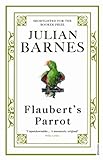
This is my review of Flaubert’s Parrot by Julian Barnes.

This quirky biography of Flaubert wrapped up in an eccentric almost plot-free novel from the viewpoint of Geoffrey Braithwaite, an uptight retired English doctor obsessed with the French author is unusual, often amusing and, as some reviewers have commented, at times too clever by half.

If I had not read in French "Madame Bovary" and "Un Coeur Simple", I would have found it much harder to appreciate this book, which further restricts an appeal already limited by its status as a "literary novel".

I have learned a good deal about Flaubert, which I wish I had known when studying him for A Level decades ago, only no doubt his penchant for whores, young foreign boys and smutty jokes would have been considered unsuitable by my teacher. I can see that he was an original and truly independent thinker, probably still don't quite grasp the contribution he made to the modern novel, but do not find him very likeable as a person. He comes across as immature and opinionated at times, perhaps because his epilepsy isolated him, although he seemed to think he needed to be set apart, an observer looking on, to be able to write.

With his quicksilver intellect, Julian Barnes lets slip in passing a host of fascinating details and anecdotes. Flaubert wished he could afford to burn every copy of the very successful but deemed scandalous Madame Bovary. Did he mean it? Flaubert was bothered by his tendency to use metaphors. Was the famous parrot one of these and, if so, was it meant to be a symbol of the writer's voice, his obsession with "the Word"? Sartre, in what I find a surprisingly intense desire to attack Flaubert, rebuked him for, as Barnes cleverly puts it, being the "parrot/writer" who "feebly accepts language as something received, imitative and inert".

Barnes's mouthpiece Braithwaite lambasts the critic who claimed that Flaubert was so careless about the outward appearance of his characters that he gave Emmma Bovary three different eye colours: deep black, brown and blue. Instead, he shows how Flaubert subtly described her eyes in different lights and situations. Barnes uses some entertaining devices, such as three different versions of the chronology of Flaubert's life, the first very positive, the second negative, the third a series of striking quotations from different years of his life – or I think it is, but it's hard to know when Barnes is quoting and when he is making things up, which the novel format permits him to do.

I particularly liked the chapter written from the viewpoint of Flaubert's longsuffering mistress Louise Colet, who seemed to want to be his wife rather than his Muse and confidante, although she must have had "better offers". In the excellent chapter, "Pure Story", the narrator Geoffrey Braithwaite explores with great poignancy his relationship with his wife, managing in the process to draw comparisons with Madame Bovary.

Although I found some of the middle chapters tedious and rambling to little purpose, the book contains so many sharp insights it deserves to be kept and read more than once.

⭐⭐⭐⭐⭐ 5 Stars

Hardy with a Hint of Draughtsman’s Contract

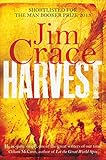
This is my review of Harvest by Jim Crace.

In a remote unnamed English hamlet at an unspecified location and time, somewhere around the 1600s, perhaps, the "accidental" burning of the master's dovecotes is blamed on a family of squatters. The ensuing chain of disastrous events plays out against the long-term tragedy of the inexorable forces of change, by which common land, felled woodland and cornfields are to be enclosed for sheep-farming, destroying in the process a stable community in which everyone has a place.

The sustained sense of tension makes this a page turner, even though I suspected the ending would be a will-o-the-wisp. Suspense combined with Crace's striking, original, often poetical language carries you along almost too quickly. You need to read more slowly, or more than once, to grasp the full force of his prose.

Narrator Walter Thirsk's insight and articulate flow of words is explained by a connection since childhood with kindly but weak Master Kent. In what proves a type of fable or morality tale, Thirsk symbolises the human flaw of good intentions rarely put into practice. He may also be an unreliable narrator, lying even to himself at times over the degree of his devious self-interest.

Crace captures the spirit of a lost way of life without glamorising it. Some wry snatches of humour and sharp character studies add spice to the tale. "Harvest" highlights the danger and skin-deep nature of civilisation in rural England, where "might was right", and a landowner could punish and mistreat tenants with impunity. Crace conveys a poignant sense of loss over the destruction of the harmony of people working together, as in the remarkable description of the harvest in the opening pages, and of their deep knowledge and appreciation of nature. At the same time, we are not spared the harsh reality of "Turd and Turf", the filth and hardship of daily life.

Although I would have liked a stronger dramatic conclusion to this tightly plotted tale, Crace is not concerned to impress us with a final twist. The terms "hallucinatory" and "hypnotic" used by professional reviewers are very apt. Claimed to be the last book in a highly regarded body of work, this deserves its place on the Man Booker shortlist.

⭐⭐⭐⭐⭐ 5 Stars

What a shame

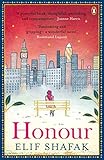
This is my review of Honour by Elif Shafak.

Elif Shafak is a born storyteller, who knows how to hook the reader in a first chapter which ends, "He is my brother. He, a murderer". Although appearing to give so much away early on must detract from some of the dramatic power of later events – you could also argue this gives you the thrill of anticipation – a few red herrings and twists are left to the end.

I do not mind that the story of Turkish Adem Toprak, damaged sins-of-the-father style, and his beautiful Kurdish wife, Pemba Kader, or "Pink Destiny", flits between multiple viewpoints over five decades, but accept that this may confuse some readers. The author often seems to digress, caught up in her own fertile imagination, but most characters and incidents have some bearing on the complex plot which proves to have been carefully thought through. For instance, the forbidden lover Elias, a man of great tolerance, moderation and adaptability, symbolises the ability to survive in any culture since he does not belong to a particular one.

The scenes in Kurdish villages near the Euphrates are too unfamiliar for me to assess their authenticity, but I was convinced by the portrayal of a community held together by superstition and tradition which also have the power to destroy those who do not conform. The folktale aspect which Shafak likes to employ, a world of ghosts, spells, binding customs, unbending beliefs and unlikely coincidences is easier to accept in rural Turkey.

The culture shock of the Toprak family's move to London is well drawn, although too many of the sub-plots struck me as unrealistic with weakly developed or stereotyped characters: Roxana in the Chinese gambling den, Iskender's English girlfriend Katie, Yunus's escapades with the squatters – it seems implausible he is only seven, but I suppose at a more realistic ten plus he might be too old to share a room with his sister Esma.

With fewer characters and incidents to distract the reader, there might have been the space to develop the core of the book: the nature of honour in different societies and its implications, particularly for women in intensely male-dominated communities.

The author does not shrink from scenes of great cruelty, nor from the tragedy of misunderstandings and lack of communication, yet the story is saved from harrowing bleakness by her humour and warmth – which occasionally becomes a little too cloying for my taste. The soft centre irked me, as this potentially powerful book winds to a somewhat subdued anticlimax. Some passages are so insightful – for instance, the casual way British people say, "It's a shame" – that I wished the author had spent a little time editing weaker patches – continuity errors, cringe-making dialogue, etcetera – to make this a great piece of literature (like "Life and Fate" or "A Fine Balance") as well as a "good read".

⭐⭐⭐⭐ 4 Stars

What matters only love

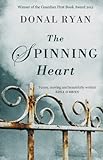
This is my review of The Spinning Heart by Donal Ryan.

This is oddly reminiscent of "Under Milkwood", perhaps because it uses the poetical yet often also earthy voices of a variety of characters to capture the spirit of a rural community. A short intense and condensed novel, with all the flesh of scene-setting and background information stripped away, it comprises twenty-one internal monologues which combine to show how the collapse of the building boom in Ireland wreaked havoc on the already sad and dysfunctional lives of many ordinary people.

Pain is piled on by the shovel-load, and it would all be unbearably bleak but for the author's ear for the poetry and droll wit of the Irish way with words. There is continuous entertainment in not only the language but the links between the various characters, their different readings of situations, and the poignant plot which gradually emerges around the ever-present figure of the charismatic but troubled Bobby Mahon. Donal Ryan is prepared to take risks: one "voice" is a ghost in limbo, and I was unsure for a while if another was not a "split personality".

If there are flaws in this original book, one is that some of the "losers" portrayed are a little too similar and so seem superfluous, another that many characters share the same streak of repressed violence plus a fundamentally introspective, articulate, self-aware voice that is probably too much that of the author. At times, I felt I was being told too explicitly what to think about a particular person, as in the case of Bobby's embittered father Frank, rather than left to deduce it for myself. The style is less convincing when Ryan abandons his Irish patter, as for patriarch Josie Burke's educated liberal lesbian daughter Mags.

Although my interest flagged a little in the middle of a book which seemed to have "made its point" about the state of Ireland quite quickly, what proves to be a carefully constructed tale twists to an effective ending.

Overall, it is an impressive first novel, which repays a second reading.

⭐⭐⭐⭐⭐ 5 Stars

Errant Knight of the Crime Squad

This is my review of Laidlaw (Laidlaw Trilogy Book 1) by William McIlvanney.

Curiosity over the recent revival of interest in a crime writer said to have inspired Ian Rankin, led me to read the first in his trilogy on DI Laidlaw. Prickly, sardonic, subversive, a maverick with a rocky marriage and a boss who only tolerates him because he gets results – all this sounds like a stereotype of fictional detectives we have come to know, but Laidlaw was one of the first, appearing in print back in 1977.

This investigation of the brutal murder of a young woman is less of a whodunnit- we are catapulted into the murderer's confused psyche in Chapter 1, and more of a whydunnit, exploring the personalities of the main characters against the background of gritty gangland Glasgow. The images are often striking and original: "A Glasgow sun was out, dully luminous, an eye with a cataract", Laidlaw is described as "looking terrible with a right eye like a roadmap", or a man watches "a blackbird balance its beak like a nugget of gold". The language is often quite poetical and repays reading slowly, but the pressure is on to find out what happens next.

Some scenes read almost like a play, as when Laidlaw's young sidekick Harkness asks how they can begin to relate to the murderer. Laidlaw's unusual view is that, "This murder is a very human message. But it's in code. We have to try and crack the code. But what you are looking for is a part of us. You don't know that, you can't begin."

When we first meet Laidlaw, he is "feeling a bleakness that wasn't unfamiliar to him….doing a penance for being him." Since this negativity, combined with great intensity, often oppress both Harkness (driven to ask "who wants to be batman to a mobile disaster area") and Laidlaw's long-suffering wife Ena ( she's looking after the three kids he claims to love whilst he is out philandering), you may wonder how the author expects his readers to put up with his creation. Yet, the gloom is offset by wry humour and tight plotting. Although I sometimes found the style of writing contrived (and could not get some sentences even after several readings), this novel stays in one's mind longer than the usual monosodium glutamate thriller, and leaves you with the sense that it is both gripping and worth reading.

⭐⭐⭐⭐⭐ 5 Stars

Four stars for imagination and humour but –

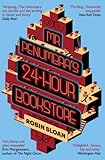
This is my review of Mr Penumbra’s 24-hour Bookstore by Robin Sloan.

When unemployed computer geek Clay Jannon takes on the night shift at Mr. Penumbra's 24-hour bookstore, he soon suspects it is a cover for some other activity, and so the mystery begins. This is a quirky blend of imaginative tecky inventions, such as a Google project to develop a form of renewable energy that runs on hubris (it is not always so easy for a non-tecky reader to know where to draw the line as to what is feasible), and nostalgic harking back to a Lord of the Rings fantasy world. The bookshop is archaic, with shelves ascending into what reminds Clay of the shade cast by dense trees in some magical forest.

Apart from a highly creative imagination, Robin Sloan writes with continual quick-fire touches of humour. Still unsure as to whether I could cope with what I suspected was intended for a 20-something male computer geek readership, I was won over early on by the image of the aged Penumbra tottering to the solid shop-front desk, "you could probably defend it for days in the event of a siege from the shelves".

Despite my admiration for all this, I fear that it could not sustain my interest. The main characters are two-dimensional, the explanations often tedious, the writing-style too often banal, the basic mystery ludicrous, the denouement which I cannot reveal a bit of a corny cop-out. I only read to the end for the sake of a book group meeting which included a skype chat with the author- a charming and humorous man with a very positive attitude to life.

I could have done with more of the occasional original insights such as that, "we imagine things based on what we already know and we run out of analogies in the thirty-first century."

So, I am torn over my assessment of a work that is original and funny in parts, yet also has a juvenile quality, an implausible non-mystery at its heart (try explaining it to someone!) and some dull passages to wade through.

⭐⭐⭐ 3 Stars

More is less

This is my review of The Son by Philipp Meyer.

This saga covering five generations of the McCullough family portrays the creation of the state of Texas as an example of a central theme of history – survival of the fittest as a succession of invaders seize and exploit the land for themselves, often destroying the landscape in the process. In this case, "the dry rocky place it is today" was once a green land of deep black soil, trees, tall grass, "even the steepest hillsides overrun with wildflowers".

The viewpoint switches on a three chapter cycle: Colonel Eli McCullough, tough and vengeful, even psychopathic, made acquisitive by harsh experience, who survives capture by the Comanche Indians as a teenager to become head of a major cattle and oil dynasty; his granddaughter Jeanne Anne, a "chip off the old block" who carries on his work; his son Peter, sensitive and introspective, so dismissed as weak, his whole life blighted by the guilt of the family's casual massacre of an old Mexican family, rivals for land. Ironically Ulises Garcia, a descendant of both families, may prove a worthier inheritor of the Colonel's wealth than his pampered great-great-grandchildren who have lost their fighting spirit. Running three main threads in parallel may confuse the reader, and for me it detracted from the dramatic tension of some key events, but it helps to remind one continually of the connections between the characters, the causes and effects of their actions.

Although at times it may seem little more than a swashbuckling western or prequel to a Dallas-type soap, this is raised above the average by the depth of Meyer's research. Too often, chunks of this are planted in the middle of the drama, but some passages are fascinating, such as the detailed description of how Indians made ingenious use of every part of a buffalo, leaving only the heart within the rib-cage to show the gods they were not greedy, or the chilling account of exactly how a teenage white boy turned native would set about preserving his first scalp.

The well-knotted ending enhanced my opinion of the story after some lengthy periods of frustration in which I wished Meyer had worked a little harder on his dialogue and character development – inevitably thin at times with so many players, and that he had been more ruthless in leaving out some minor scenes to leave more space for "showing" rather than the "telling" which is often too dominant. These shortcomings, such as the corny Hollywood-style of communication adopted by Eli's Comanche companions around 1850, place this book closer to airport blockbuster than literary fiction. I'm sure it will sell very well, it is impressive but not in the same league as Cormac McCarthy with his mindblowing prose.

This will inspire many to revisit the history of the development of the west, but in the meantime a glossary of e.g. Mexican terms used and of some historical characters mentioned would have been useful.

⭐⭐⭐⭐ 4 Stars

Going berserker

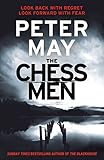
This is my review of The Chessmen (The Lewis Trilogy Book 3) by Peter May.

The chessmen of the title are a reference to the medieval pieces carved by Norsemen mainly from walrus ivory and discovered on Lewis in the C19.

Peter May continues the winning formula of his vivid portrayal of the Outer Hebrides, battered by the elements, suffused with continually changing light, the source of strange legends and a rich but little-known social history. How is it that we have heard of the Tay Bridge disaster in which about 60 people died, but not of the wreck of the Iolaire which caused the death of more than 200 men who survived World War 1 only to perish on the rocks of their native island of Lewis? And I was prepared to suspend my disbelief over the disappearance of a loch in the opening chapter, since I knew that May must have researched examples of this occurrence.

The final part of a trilogy which leaves enough scope for at least another in the series, sees ex-policeman Fin returned to Lewis to live with his long-suffering childhood sweetheart Marsaili. His job to oversee security for a local estate brings him into troubled contact with poacher Whistler, the best friend from his youth whom we never knew he had. Further drama is supplied by the discovery of the murdered corpse of the former local pop star who also dominated another part of Fin's early life of which we have not heard before. Herein lies the problem of a series which, rather than move forward with fresh adventures, is rooted in flashbacks to recall the past. Some unfamiliar characters and new plot lines seemed to override and confuse my perception of Fin's early life, presumably in order to support the latest book.

Despite this, and the implausibility of some key aspects of the denouement, which is a feature of most thrillers, May produces an imaginative story which becomes ever more gripping as he builds up to the dramatic and unpredictable twists of the final chapters. He is better than most popular thriller writers at creating flawed characters for which one can feel some empathy, although I wish his "romantic" passages were a bit less corny.

⭐⭐⭐⭐⭐ 5 Stars

Still dicing with death

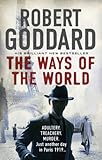
This is my review of The Ways of the World: (The Wide World – James Maxted 1) by Robert Goddard.

This old-style escapist page-turner contains Goddard's trademarks of a serpentine plot and cast of mainly stereotyped characters with apparent "goodies" who can never quite be trusted and "baddies" who sometimes come unexpectedly to the rescue.

Perhaps because he is at heart a historian, his books seem to work best when set in the past, as here in the Paris of the 1919 Peace Conference where aristocratic pilot Max pursues the mystery of his diplomat father's sudden violent death. After surviving World War 1 against the odds, Max discovers a kind of addiction to risk-taking, which will carry him on to further adventures in the planned trilogy.

Having recently visited Paris, I appreciated Goddard's attention to detail in the geographical setting of every scene – as when Max and a colleague drive down to the Seine by the Trocadero to look across at the Eiffel Tower. He even checked the weather to know that the Paris spring for 1919 was exceptionally cold and snowy.

I was unconvinced by Max's relationship with the Moriaty-type arch villain in the background, but it is best not to expect every twist to be plausible. Also, his driven courting of death eventually makes Max a less appealing hero, but perhaps this gives the plot a little more depth.

Goddard has clearly taken a risk himself with his loyal readers by ending the book "to be continued" with so many loose strands for two future novels. After the rollercoaster of his plots one is always left feeling a little let down at the last page. In this case, he contrives to resolve enough mystery to satisfy the reader "for the time being" but dangle sufficient intrigue to encourage them to return for more. It's a moot point whether it would have been better to make the novel appear more "self-contained".

⭐⭐⭐⭐ 4 Stars

No holds barred

This is my review of May We Be Forgiven by A. M. Homes.

When Harry breaks a taboo by having sex with his sick brother's wife, he has to deal with the chain of consequences. The author pulls no punches in presenting them all, be they macabre or mundane, with the same deadpan delivery, which may account for the emotional coldness of the book which some reviewers have noted.

After the ghoulish hook of the almost casually shocking opening chapters, the book settles down into a meandering farce, a kind of black sitcom in which Harry drifts through the often callous and smutty world of a series of quirky incidents, some of his own making but others the result of fate, which could be spawned indefinitely. Depending on your sense of humour, these may be sufficient to entertain you, but I was troubled by the hollowness of it all. This novel may be intended as a biting satire on contemporary American society, plus the back-cover blurb speaks of the two brothers' search for absolution, but I looked in vain for the thought-provoking insights, pyrotechnic displays of brilliant writing, or clever plot twists which would have made this clearly worth reading.

Holmes has a vivid imagination coupled with a remarkable lack of inhibition and a sharp sense of comedy, but even with the small font size, the book reaches its surprisingly soft-centred ending perhaps 150 pages too late.

⭐⭐⭐ 3 Stars