Automatic assumptions

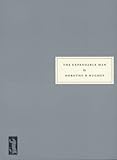
This is my review of The Expendable Man by Dorothy B. Hughes.

Hugh Densmore, a young American doctor on his way to his niece's wedding in Phoenix feels obliged, against his better judgement, to pick up a teenage hitchhiker. Who knows what will befall her if he does not? She proves both an unpleasant liar and a pathetic object of pity. When local newspapers report the discovery of a young girl's body in a canal, Hugh is convinced it belongs to the hitchhiker, and that the police will soon be knocking on his door. He is fatalistic, yet also determined not to spoil the wedding and to prove his innocence.

It is not until more than fifty pages in that the author delivers a master stroke by revealing a piece of information that stopped me in my tracks. Not only does it explain Hugh's previous almost paranoid fears, but completely alters the reader's perception of the situation. I was forced to look back to see if I had misread some details, but it was clear that I had made certain assumptions and was potentially as guilty of misjudgements as some of the characters in the book.

This book is partly a psychological crime thriller in which every step is developed in forensic detail. It is also a study of life in the western states of America in the early 1960s – the baking afternoon heat and traffic jams of Phoenix, the "startling growth" of the suburbs, the abrupt change from surfaced roads to rough tracks through the semi-desert landscape of "troglodyte rocks and spire cacti". Although Dorothy Hughes can be a little shaky on the flowering of romance, she is excellent on landscapes, cold starry nights and the burgeoning fast food culture as well as deeper issues in a world of racial prejudice and criminalisation of abortion.

The sustained sense of menace and very evident risk of Densmore being unjustly ruined, combined with occasional suspicions that he may go free at the end yet turn out to be a villain after all, make this a page turner. With so much suspense, it is perhaps inevitable that the final climax is a somewhat underwhelming, but overall this gripping tale deserves its recent revival. It stands the test of time as one of the best crime novels which everyone who enjoys this genre should read.

⭐⭐⭐⭐ 4 Stars

Automatic assumptions

This is my review of The Expendable Man (New York Review Books Classics) by Dorothy B Hughes.

Hugh Densmore, a young American doctor on his way to his niece's wedding in Phoenix feels obliged, against his better judgement, to pick up a teenage hitchhiker. Who knows what will befall her if he does not? She proves to be both an unpleasant liar and a pathetic object of pity. When local newspapers report the discovery of a young girl's body in a canal, Hugh is convinced it belongs to the hitchhiker, and that the police will soon be knocking on his door. He is fatalistic, yet also determined not to spoil the wedding and to prove his innocence.

It is not until more than fifty pages in that the author delivers a master stroke by revealing a piece of information that stopped me in my tracks. Not only does it explain Hugh's previous almost paranoid fears, but completely alters the reader's perception of the situation. I was forced to look back to see if I had misread some details, but it was clear that I had made certain assumptions and was potentially as guilty of misjudgements as some of the characters in the book.

This book is partly a psychological crime thriller in which every step is developed in forensic detail. It is also a study of life in the western states of America in the early 1960s – the baking afternoon heat and traffic jams of Phoenix, the "startling growth" of the suburbs, the abrupt change from surfaced roads to rough tracks through the semi-desert landscape of "troglodyte rocks and spire cacti". Although Dorothy Hughes can be a little shaky on the flowering of romance, she is excellent on landscapes, cold starry nights and the burgeoning fast food culture as well as deeper issues in a world of racial prejudice and criminalisation of abortion.

The sustained sense of menace and very evident risk of Densmore being unjustly ruined, combined with occasional suspicions that he may go free at the end yet turn out to be a villain after all, make this a page turner. With so much suspense, it is perhaps inevitable that the final climax is a somewhat underwhelming, but overall this gripping tale deserves its recent revival. It stands the test of time as one of the best crime novels which everyone who enjoys this genre should read.

⭐⭐⭐⭐ 4 Stars

Light shed

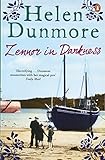
This is my review of Zennor in Darkness by Helen Dunmore.

Having read Helen Dunmore's spare and brilliant novel "Lies" focused on a shell-shocked young Cornishman in the aftermath of World War 1, I was interested in comparing it with her début novel published twenty years earlier, "Zennor in Darkness". Set in 1917, this describes how the tentacles of war have reached into rural Cornwall, with teenage boys conscripted from remote farmhouses, and cottage windows darkened with blackout curtains to deflect the German U-boats venturing near the coast to prey on British supply ships.

Since the author is also a poet, it is perhaps not surprising that "Zennor in Darkness" has a touch of Under Milk Wood with its array of local characters. The two who emerge most sharply in the foreground are at least to some extent outsiders: young would-be artist Clare Coyne, whose genteel Catholic father stayed on in Zennor after his wife's premature death, and the author D.H.Lawrence, who hoped in vain to find a refuge in Cornwall from the public outrage over his attacks on the war, and his marriage to Frieda, a German who had abandoned her husband and children to be with him.

The present tense which seems to have annoyed some reviewers did not trouble me at all. I hardly noticed it, and think that in fact it creates an increased sense of immediacy, and awareness of what each character is observing and feeling. However, the novel is clearly less taut and polished than "Lies". Several scenes, such as the opening chapter with three girls sunbathing on the beach is too rambling, with a confusion at times as to who is talking or who the identity of the main character – I thought at first it was Clare's cousin Hannah. There also seemed to be a bewildering excess of names to cope with at first. The writing sometimes seems over-intense.

This is a slow burning novel, a stream of impressions and thoughts. It conveys as far as I can tell a powerful and evocative sense of the Cornish landscape and the ambiance of a tightknit, closed community. Dunmore is also good at portraying relationships between people, their shifting emotions, misunderstandings and mutual criticism despite strong empathy, even love. Although in the main uneventful, requiring the reader to take time and savour the originality and beauty of Dunmore's prose, the novel shifts into a higher gear for the final third to reach a convincing conclusion.

⭐⭐⭐⭐ 4 Stars

No point if we’re not nice to each other

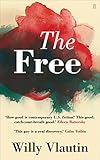
This is my review of The Free by Willy Vlautin.

Leroy, a damaged survivor of the Iraq war, uses a rare moment of lucidity to make a failed suicide attempt. As he lies in hospital, his surreal dreams of a dystopian world are intercut with the stories of those involved in caring for him: the moonlighting night warden Freddie, or nurse Pauline who always has time to talk to her patients with empathy.

Willy Vlautin writes about the daily lives of ordinary people with more than their fair share of bad luck, to which they may have added a few mistakes. Despite this, they manage to retain the will to persevere combined with decency and kindness. Some reviewers have commented that the frequent repetition of drinking Rainier beers or buying certain kinds of junk food in the supermarket serves as a kind of mantra, but for me, the banality often becomes oppressive and the book is just saved from tedium by a few dramatic or moving events, and the author’s ability to arouse sympathy, liking and even respect for people one might overlook or undervalue in real life. For a while, I feared the story might end in mawkish sentimentality, but it is in fact darker than Northline, the only other novel by Vlautin that I have read.

Vlautin’s style is simple and direct, focused on often minute description. For instance, not the first description of nurse Pauline’s feet: “She bent over and took off her shoes. She set her feet on top of them and leaned back in her chair”. Or, the description of Freddie packing up his beloved train set to sell for much needed cash, rather than of his grief over having to do this: “Freddie McCall found an empty cardboard box and began wrapping toy trains in newspaper. There were eight in total and he set those on the bottom of the box, and put all twenty boxcars on top of them. In another box he put his remaining track and switches, transformers and various wagons and buildings”…..and so on.

In some ways it is refreshing to encounter an author who clearly writes from the heart with a great natural enjoyment of the process, but does not appear to have set foot in a creative writing class, or to have paid any attention to it if he did. On the other hand, the narrative suitable for a reading age of eight, in vocabulary if not subject matter, often left me gasping for a metaphor or an introspective thought. Yet, the next novel I read will probably seem pretentious, and Vlautin’s portrayal of what lies beneath the surface of the fool's gold glitter of the world’s leading economy (for the time being) will stay in my mind for some time.

⭐⭐⭐⭐ 4 Stars

Born free, captivity borne

This is my review of Twelve Years a Slave – [ Stolen into Slavery: The True Story of Solomon Northup ] [Annotated & illustrated] [Free Audio Links] by Solomon Northup.

Although it is unclear to what extent this story was "ghosted" at the time, it is a vivid first-hand account of the experiences of Solomon Northup, born to a freed man in the New York area but tricked and kidnapped into slavery in the Louisiana of the early 1840s.

Having seen the film already, I knew what to expect plot-wise, and assumed that, since McQueen's drama is so powerful, I would gain little from reading the book, the reverse of what is normally the case i.e. books usually out-class the films on which they are based. In fact, I was impressed by the immediacy with which Northup's thoughts come through the language which, apart from occasional wording that seem quaint to us now, is for the most part a very articulate and engaging flow. I was also surprised and pleased how closely the director had kept to the book. There is a particularly powerful scene in the film where Northup is forced to beat Patsy, a young slave woman who is guilty only of going to obtain from a kindly neighbour soap denied her by a jealous mistress. I thought that McQueen must have exaggerated this incident for dramatic effect but found that it tallies with Northup's description. The latter's account of how Patsy is caught between a sexually abusive master and vengeful mistress makes almost unbearably moving reading even when one has seen the film.

I respected Northup's honesty, for instance, in regarding himself as superior to those born to slavery and reduced to a bestial state by their treatment, although at the same time he clearly respected and felt sympathy for those left in bondage after his release. He also conveys well the “catch-22” situation in which to reveal his past experience of freedom, and his ability to read and write, put him at greater risk of violence, since the slave-owners felt threatened by workers who did not conform to the stereotypes which seemed to justify their inhuman treatment.

The academic Sarah Churchwell wrote recently of the theory that Northup may have been a bit of a rogue in real life, colluding in his kidnapping in a money-making scam which backfired on him, but there is no evidence of this in the autobiography. Some of the interesting notes at the end of the book suggest that Northup may have fallen into drunkenness after his release, and been recaptured, but this cannot be proven. It could be that Northup became embittered, in view of the irony that, as a black man, he was not entitled, once free, to give evidence in court against those who had wrongfully sold him into slavery.

⭐⭐⭐⭐ 4 Stars

When least is most

This is my review of Offshore by Penelope Fitzgerald.

At first, “Offshore” seems like a farcical soap opera involving an eccentric little community of barge-dwellers on the Thames near Blackheath Bridge in the early 1960s. Penelope Fitzgerald’s own experience of living on a houseboat which sank gives her vivid descriptions of changing tides, varying qualities of mud, and parts of boats an authentic air. When “amiable young” Maurice realises that self-appointed leader Richard calls all residents by the names of their boats, he quickly gives “Dondeschiepolschuygen IV” his own name. This quirky bit of humour along with some much more subtle, wry examples soon had me hooked along with the author’s gift for conveying implicitly a great deal about her characters’ situations and personalities. I also enjoyed her launches into unexpected little scenes, as when the child Tilly leaps between abandoned objects precariously stranded in the river mud at low tide to prise out examples of beautiful antique tiles which she and her sister can sell to buy Cliff Richards records at the local Woolworths.

From the outset, the author distances herself a little from the barge-dwellers to observe them as “creatures neither of firm land nor water” who “would have liked to be more respectable than they were… but a certain failure to be like other people caused them to sink back with so much else that drifted or was washed up into the mud moorings”. This approach reduces our own sense of involvement with the characters, so we tend to regard them as mere sources of entertainment. By the middle, I started to get a little bored with them and to think, wrongly, that having established her cast, the author was drifting on the ebb tide with little plot in mind. Some details feel a bit false, like the reference to two “family planning shops” close together in the same high street (doesn’t sound right for 1961-2). At six, Tilly, seems far too articulate and knowing, but I later concluded that, with her own highly educated and perhaps somewhat unorthodox and rarified background, Penelope Fitzgerald may indeed have known or even produced children as precocious as this.

As the book worked up to an ending which shocks you with its abruptness, but on reflection seems the most appropriate one possible, I began to see how the threads of the story all prove to have a purpose, link and mesh tightly together. In the process, my sympathy for the characters grew. Like other readers, and unaware from my kindle of the brevity of the book, I made the mistake of reading too fast, rather than savour the striking prose and non sequiturs which hit home if you spend a little time on them.

This book is an acquired taste, but, although it might now seem too dated to do so, I can well understand why it won the Booker Prize in 1979.

⭐⭐⭐⭐⭐ 5 Stars

No kinder people and no crueler

This is my review of For Whom The Bell Tolls by Ernest Hemingway.

Idealistic American Robert Jordan has joined an International Brigade fighting the fascists in 1930s Spain, although this means accepting orders from Russian Communists. He is ordered to destroy a bridge in the mountains, despite the lack of resources and an effective communication system. Can he trust Pablo, the brutal, now disillusioned leader of the republican guerrilla group on whom he must rely?

Although Hemingway was clearly excited by the risk-taking and violence of battle and bullfighting, and there are many tense moments in this novel, you may be disappointed if a pure action thriller is what you have in mind. The density of the prose, with the constant switches of thought, new ideas and unusual modes of expression slow the reader down, even at the moments when the suspense drives you to keep turning the pages.

Drawing on his first-hand experience as a journalist covering the Spanish Civil War, Hemingway was keen to explore it from many angles, such as the incompetence of officers at all levels, or the fact that committing atrocities was not confined to the fascists. The female guerrilla Pilar (who, despite being tough, takes on the cooking), describes in vivid detail how all the men of property in a captured town were assumed to be fascist and forced across the square over a precipice: it is a shock to learn that this was based on real events in the now picturesque tourist centre of Ronda. Hemingway attributes Spanish violence to the fact `this was the only country the reformation never reached…Forgiveness is a Christian idea and Spain has never been a Christian country'.

Hemingway also takes Robert into repetitious stream-of-consciousness reveries over the meaning of life, and how best to spend what may be one's last three days. My idea of Hemingway as the master of the minimalist, pared-down style was shattered by the wearisome detail of many descriptions, from eating a sandwich with onions to constructing a makeshift bed or loading a gun. I grew tired of Robert running his hand through the `wheatfield' of his lover Maria's cropped hair. The frequent references to drinking wine, whisky and absinthe are also a bit repetitive, perhaps reflecting Hemingway's own reputation as a heavy drinker. Sometimes, the great outpouring of words, in particular hyphenated adjectives like `empty-calm' reminds me of Dylan Thomas and is perhaps the product of a creativity loosened by alcohol.

In a dialogue that is often amusing, the speech of the guerrillas is very odd, a stilted style of remarkable sophistication, peppered with `thees' and `thous'. Can you imagine a gypsy saying, `Thou art a veritable phenomenon'? Then there is the exaggerated blasphemy, `I obscenity in the milk of my shame', oaths at times shortened to `Thy mother!'

This is a masterpiece, if a little dated, as in the submissive character of Maria, and despite passages of violence which are hard to stomach. Most poignant of all is the knowledge that all this courage and sacrifice were in vain since the republicans lost.

⭐⭐⭐⭐⭐ 5 Stars

Not safe in one’s mind

This is my review of The Lie by Helen Dunmore.

For the centenary marking the outbreak of the Great War, Helen Dunmore has developed one of the few remaining neglected themes: the aftermath of the return from the trenches. Bright working class Cornishman Daniel is already an outsider in that he has spent his childhood playing with the children of a local landowner. Too poor to attend grammar school, he is self taught from secretly borrowing books from the wealthy man's library. Outwardly uninjured but destitute, he is allowed to squat on the neglected land of the elderly Mary Paxton. In his rural solitude, Daniel is continually haunted by the presence of his childhood friend Frederick, killed at the Front, and he is prey to the panic attacks and irrational urges to commit acts of violence that inevitably arouse fear and rejection in those ignorant of either traumatic stress disorder or the sheer hell of trench warfare, that is, virtually everyone. What could be an unbearably sad story is transformed by the writer's skill in enabling the reader to feel a strong empathy with Daniel and to understand his attitude to life and the behaviour that deviates from the norms of his society, because of what he has experienced.

For me, this is a near perfect novel in style, structure, pace and meaning. My only slight reservation is that I think Dunmore goes on a bit about the central heating system – I suppose meant to be analogous to underground military tunnels.

Deceptively simple with a strong narrative drive and tight structure, the tale is interwoven skilfully with frequent flashbacks to Daniel's childhood and life as a soldier. I was also very taken by the tragically ludicrous bits of advice for soldiers culled from old army training manuals (I believe) for insertion at the start of each chapter. For instance, measures to prevent the disease of "trench foot" caused by standing in cold water and mud include: "taking every opportunity to have.. the feet dried, well rubbed and dry socks (of which each man should carry a pair) put on".

Despite knowing that I should be taking my time over the author's telling insights and striking descriptions, sparely poetic, of the Cornish landscape, I felt an exorable drive on to the ending, knowing that "the lie" Daniel has told to satisfy the narrow conventions of his society must be exposed: "The man has penance done, and penance more will do". There is of course another lie in the false or confused basis on which so many young men went to die in the first place.

⭐⭐⭐⭐⭐ 5 Stars

Exposing a dodgy dossier

This is my review of An Officer and a Spy by Robert Harris.

Robert Harris is a past master at historical fiction based on dramatic political situations: in this case the notorious Dreyfus case in which an uptight Jewish Major in the French army was framed for a minor act of espionage, for which relatively minor offence, blown up out of all proportion, he was transported to the remote former leper colony of Devil's island. Just when you might expect the passage of time to erode interest, it has been revived in a recent crop of books including this novel which follows historical evidence closely. Harris focuses on Colonel Picquart, the mildly anti-semitic officer whose realisation that the evidence has been trumped up in a "dodgy dossier" leads him to sacrifice his reputation, even his freedom to obtain justice for Dreyfus, since his sense of honour and conscience will not allow him to do otherwise.

This is a gripping version with well-developed characters and some tense or moving scenes. Harris digests a mountain of detail to present the tortuous process of court martials and trials in clear and easily digestible terms. If it all gets a bit exhausting towards the end, that only conveys the feelings of déjà vue which the protagonists must have suffered. Harris succeeds in conveying Picquart's growing frustration, his sense of foreboding changing to moments of fear, anger and resignation, as he realises the extent to which his enemies are prepared to restrict his activities and twist events, rather than see the public lose confidence in the army's integrity.

I could not help thinking that, good though this novel may be, truth is stranger than fiction, so that the non-fiction "The Dreyfus Affair" by Piers Paul Read, for instance, which I read first, actually proved more shocking, moving and informative as regards: the personality of Dreyfus; his brother's impressive events to prove his innocence; the background forces such as the divisions between traditional Catholic society and the Republican movement accused of working with influential Jewish financiers who attracted so much suspicion and hatred; last but not least, the inflated degree to which the French split into opposing camps over the case, with the "Dreyfusards" eventually gaining enough support from abroad to turn the tide.

⭐⭐⭐⭐ 4 Stars

“Rogue Male” by Geoffrey Household: Knowing one’s place in the white male playground

This is my review of Rogue Male by Geoffrey Household.

⭐⭐⭐ 3 Stars

In this celebrated classic yarn, considered groundbreaking by some, an unnamed big game hunter gets arrested on the point of taking a pot shot at a character who is probably Hitler, it being 1939, miraculously escapes death after horrible torture and spends the rest of the novel evading recapture.

So much anonymity combining with the stiff upper lip of the “anarchical aristocrat” narrator, the story often has a clinical and detached quality. Although there are some nail-biting moments, the potential drama of the tensest scenes is often reduced by the use of reported speech. The minute details in which the narrator’s somewhat implausible projects are described also become tedious. I realise that this view may enrage those identifying with Robert Macfarlane who wrote the introduction for this edition, and clearly retains a nostalgic love for a tale which he lapped up when an imaginative schoolboy hungry for adventurous fantasy.

For pages, all that kept my interest was spotting how the world has changed socially since 1939. Our forerunner of James Bond felt that man was not intended to travel at above 40 miles per hour, and was troubled by the litter from paper bags. What would he have made of plastic rubbish? His casual snobbery is jarring, as revealed in his complacent membership of “Class X” which he cannot quite define, because presumably it’s beneath a gentleman to do that. The helpful young man who belongs to “this new generation of craftsmen… definitely belongs in Class X ….but must learn to speak the part before being recognised by so conservative a nation”.

I had just decided to give up and skip the next book group meeting when, on page 126, our hero hits rock bottom with a striking description of the state to which he has been reduced: “Living as a beast, I had become as a beast”. The subsequent verbal sparring between the narrator and his pursuer not only proves that Household could do dialogue (so perhaps it’s a pity there isn’t more of it) but also clarifies the characters’ motivations.

Yes, it’s well-written with an eye for scenery, an evocation of a lost, unspoilt English countryside, conveys vividly the sense of being hunted, but is too dated and ludicrous for my taste.

Comment Comment | Permalink