Stranger things have happened

This is my review of Thunderstruck & Other Stories by Elizabeth McCracken.

My four stars are for the best stories in what struck me as a "mixed bag" much as I wanted to admire the quality of the writing and risk-taking originality.

McCracken reminds me of Alice Munro: the unusual take on situations, the continual drift to unpredictable outcomes, the concern with observation rather than plot, the sharp, self-possessed prose stripped of emotion even in the most moving situations, the flashes of humour to alleviate the pain or even horror. However, I find her writing a little more contrived and less empathetic than Munro's.

The stories seem very variable in their effectiveness. I was hooked by the opening "Something Amazing" in which teenage Gerry comes home to find that his grief-deranged mother, unable to get over the death of her small daughter, has kidnapped a neighbour's child. "He wonders how to sneak him back home. He wonders how to keep him forever".

The plight of a couple trying to deal with an accident which has befallen their wayward adolescent daughter in the title story "Thunderstruck" comes closer to moving than most of the rest. Sustained by false optimism, the father "looked at his wife, whom he loved, and whom he looked forward to convincing, and felt as though he were diving headfirst into happiness. It was a circus act, a perilous one. Happiness was a narrow tank. You had to make sure you cleared the lip".

"Peter Elroy; A Documentary by Ian Casey" is very original, showing how a longstanding friendship has been destroyed by film-maker Ian's early masterpiece in which he interviewed Peter, but only recorded his responses, thereby both deceiving him and showing him in a dreadful light.

McCracken is good at portraying earnest young children, and some of her quirky descriptions have a childlike quality: "A lawnmower skulks up to its alligatorish eyebrows in the yard". A family anxious to comfort a daughter "bundled" her up "in their eight bare arms, the devoted family octopus". I also enjoyed her revealing but oblique Pinteresque dialogues.

Although some stories improved on a second reading, perhaps I was getting used to her style, about half like "Property","The Lost and Found Department of Greater Boston", "Juliet" or "Some Terpsichore" failed to engage me. Although the technical quality is high, and she is often original and very imaginative in both her descriptions and ideas, many of her characters seem unconvincing. At times, situations slip into unrelieved black farce which tends to distance the reader: you may be intrigued and fascinated by the writing, but you do not care enough about the characters and need to take a break at the end of each piece to escape the bleakness.

⭐⭐⭐⭐ 4 Stars

Breathless insights

This is my review of Carthage by Joyce Carol Oates.

This ambitious American novel is more than a crime thriller about a missing girl, gifted but plain, naïve and unstable Cressida, and Brett Kincaid who is suspected of harming her. Once an admired local sporting hero, he has returned, a physical and traumatised wreck from the Iraq war, the pressures of which have just brought to an end his longstanding engagement to Cressida’s beautiful elder sister Juliet. The author is also exploring the impact of the war on a small town community in New York State, and exposing the counterproductive effects of neglectful and cruel US high security penal institutions. On yet another level, this is a kind of modern fable, comparing the US with the declining state of Carthage, re-enacting in C21 terms the classical tale of “false Cressida”, the betrayer and bringer of misfortune to herself and others.

Joyce Carol Oates is a prolific and celebrated writer, with a clear compulsion to tell stories based on complex moral issues. She is often strong on creating diverse, if somewhat stereotyped characters who prove to have complex depths, convincing dialogues, and a vivid sense of place. The continual use of stream of consciousness in this novel carries the reader along, if you can “tune in” to it, and is effective in creating a sense of people’s changing, often fragmented, confused and changing thought processes.

What could have been an outstanding novel gives the impression of having been written in a rush. There is a breathless quality to the great flooded river of prose: the overuse of exclamation marks and brackets often grated on me. There is a good deal of repetition, which has a hypnotic effect but may be the result of a lack of editing. I also had to get used to the frequent “back-to-front” sentence structure which may need to be read twice to grasp the meaning. "Not contempt for the political propaganda fanned on all sides like deliberately set fires but fear – of what the new military invasion would lead to, beyond estimation".

Although the long chapter on a prison tour is a powerful polemic against the brutalising effects of incarceration without rehabilitation and more particularly of capital punishment, I found the delivery quite stagy, and such characters as “the Investigator” and his assistant “the Intern” unconvincing. This may have been a deliberate “unreal” yet hard-hitting interlude in the main story of the Mayfield family, which is gripping and moving, until it reaches an ambiguous ending, open to interpretation as either trite or chilling.

Flawed and irritating, yet full of insights into the human condition and memorable, this story is hard to “rate”.

⭐⭐⭐⭐ 4 Stars

“We Are All Completely Beside Ourselves” – Shortlisted for the Man Booker Prize 2014 by Karen Joy Fowler. Under the influence.

This is my review of We Are All Completely Beside Ourselves: Shortlisted for the Man Booker Prize 2014 by Karen Joy Fowler.

In this quirky and original tale, the narrator Rosemary Cooke introduces us to her dysfunctional family: father a college psychology professor, “a chain-smoking, hard-drinking, fly-fishing atheist from Indianapolis”, mother regularly on the verge of a nervous breakdown, and intriguing elephants in the room: the two older siblings, Lowell and Fern who have left home abruptly and are no longer in contact.

This is the kind of novel that depends on the order in which details are revealed and about thirty per cent of the way in, the author casually drops a bombshell which obliged me to go back and reread from the beginning to check for missed clues. Beneath an entertaining veneer, the story explores the effects of an academic psychologist’s decision to conduct an experiment on his family, and also the reliability of childhood memory.

At first, the wisecracking American style and habit of addressing the reader is by turns amusing and irritating, but not moving:

“My father made a crude joke….If the joke were witty, I’d include it, but it wasn’t. You’d think less of him and thinking less of him is my job, not yours.” Yet gradually, as the implications of a disconcerting, even shocking, situation become clear, the humour – often very funny – helps to make the poignancy and sadness more bearable.

At times, this seems an odd mixture of story, polemic against animal testing and popular psychology textbook, with some of the author’s background research slotted into chapters in a slightly disjointed and didactic fashion. The desire to follow the plot and understand the various theories tend to pull the reader in different directions. It’s easy to miss interesting points on the first reading, like the quotations from Kafka at the beginning of each section, particularly well-judged when you realise why they are there. There’s also food for thought in the idea that Thomas More’s Utopia relied on a warlike tribe to fight its battles, and slaves to kill animals to provide its meat.

I would give five stars for the zany yet telling flights of creative thought, although I found the subplot with Rosemary’s friend Harlow weaker than the main story of the Cooke family, and the narration is often repetitious and perhaps a little trite at the very end.

⭐⭐⭐⭐ 4 Stars

Patrick White meets Nevil Shute

This is my review of The Narrow Road to the Deep North by Richard Flanagan.

Exhausted, sick, and starving Aussie servicemen forced to watch the brutal beating of a colleague in a Japanese wartime prison camp distanced themselves from the horror by focusing on their next inadequate meal, or the feast they might one day enjoy again back home. In the same way, the reader often has to switch off from Flanagan's unrelenting portrayal of the cruelty and squalor of life for those slaving on the Burma railway. Since the author's own father was one of the slave labourers, the book must be based on first person anecdotes, although the violence sometimes seems overdone, as when a man already at death's door is flogged for what seems like hours but somehow survives.

The story revolves around Dorrigo Evans, the only member of his family to win a scholarship and become an eminent if controversial surgeon, most revered for his leadership of men held prisoner by the Japanese. Crises seem to bring out the hero in Dorrigo. Otherwise, beneath his veneer of confidence and charm, he is a shell of a man, promiscuous and nihilistic, haunted by the horrors of the war and the loss of the only woman he believes himself to have loved.

With continual switches back and forth in time and between points of view, the book often seems rambling and disjointed, although this may serve Flanagan's intention to show the nature of memory, and the influence of the past on the future. He moulds words to convey complex thoughts:

"…the world organises its affairs so that civilisation every day commits crimes for which any individual would be imprisoned for life….. people accept this either by ignoring it and calling it current affairs or politics or wars, or by making a space that has nothing to do with civilisation and calling that space their private world…. And the more that private life becomes a secret life, the freer they feel. But it is not so. You are never free of the world; to share life is to share guilt."

Flanagan creates vivid images of "writhing peppermint gums and silver wattle that waved and danced" in the Tasmanian heat, or "monsoonal rain flogging the long A-framed shelter – bamboo and open-walled" in the Burmese jungle. He often focuses on a single incident, leaving major events to the imagination. There are subtly moving scenes as when Dorrigo travels through the snow to a remote farmhouse to comfort the widow of one of his colleagues. Another, is when three camp survivors of the camps embark on a well-intentioned drunken escapade to fulfil the dream of a dead colleague, with an unexpected positive outcome.

The author extends the perhaps overworked theme of the wartime camps by exploring "life afterwards" for both the Australians and the Japanese, although the latter sometimes seem stereotyped and two-dimensional, despite the inclusion of some beautiful if ironic haiku. Scenes of intense brutality are shot through with threads of sentimentality. There are a few too many contrived coincidences towards the end when Flanagan is tying up loose strands in a belated stab at plot. Perhaps he tells us too much what to think of characters like Dorrigo and his love "Amy-ami-amour". These are flaws in the often brilliant flow of an author celebrated in Australia, now gaining recognition in the UK, but it gives plenty of meat for discussion if you have the stomach for it.

⭐⭐⭐⭐ 4 Stars

The Road Taken

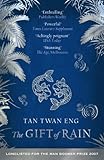
This is my review of The Gift of Rain by Tan Twan Eng.

I have given this ambitious first novel four stars because, although flawed, it is thought-provoking and conveys a vivid impression of the cultural diversity of Malaya during the 1930s-40s, and what the diverse population had to endure.

As the British in Malaya sleepwalk into the outbreak of World War 2, Philip feels somewhat alienated from the Hutton family who have made money in business and trade in the Far East for over a century. He is the youngest son, and the product of a second marriage between his father and a Chinese woman who died when Philip was small. So, he is susceptible to the influence of the charismatic Endo-san, teacher of the martial art of aikido and probable spy, laying plans for the Japanese invasion of Malaya. Although Philip has been brought up as a Christian, he has flashes of awareness of having lived in a past life with Endo-san, and of achieving a state of enlightenment through meditation.

The author's status as a Chinese Malayan and martial arts practitioner give authenticity to a plot with great potential for drama, intrigue and insight into relationships between cultures. I do not mind slow-paced, reflective novels and do not feel the need to like the main character – in this case, Philip comes across as emotionally repressed. So, why did I find Part 1 such hard going? This was partly due to an often stiff and wooden dialogue, although this may have been an attempt to convey the formality of some modes of Far Eastern expression. The plot makes heavy use of reminiscence and a "telling" style, which combine to distance the reader somewhat from events. The confidante Michiko Murakami seems dispensable to me. The book is laden with characters and minor details, and would have been sharper with more ruthless editing.

With the Japanese invasion in Part 2, the novel belatedly takes off, improving in both pace, style and dialogue. We know from the outset that Philip collaborates with the Japanese during the war, and now it becomes clear why and how. Is he naïve in thinking this will save his family? Will he ever be forgiven for his apparent treachery? Is he in fact motivated by a homoerotic relationship with Endo-san? – The author never specifically describes this as such, and the link between the two is caught up what may interest Tan Twan Eng most, namely the fact that the two men may be fated to meet in successive lives until certain matters are resolved.

Although I would say this book is original and well-written in places, it seems overlong and the author seems reluctant to "call it a day" at the end. Fascinating issues at the heart of the book are somehow not explored as clearly as I hoped. I was also repelled in particular by the obsession with daggers and swords, and switches between moments of an almost psychopathic acceptance of ritual killing to enable even guilty men to die honourably and passages of shallow sentimentality. This is, I suppose, my western take on eastern cultures I do not fully understand.

The author's second book, "Garden of the Evening Mists" is similar in having a wealthy half-westernised Malayan fall under the spell of a talented and manipulative Japanese man, in this case a gardener and tattooist. I think the later book shows a development in the author's skill as a writer, although the plot of "The Gift of Rain" is potentially more powerful and moving.

⭐⭐⭐⭐ 4 Stars

“Those with no horizons”

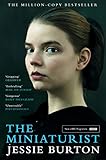
This is my review of The Miniaturist: TV Tie-In Edition by Jessie Burton.

Of good birth but penniless, eighteen-year-old Nella travels from the countryside to join her new husband, the wealthy merchant Johannes Brandt. Set in seventeenth century Amsterdam, the story has overtones of “The Girl with the Pearl Earring” and Nella’s brittle sister-in-law Marin is at first reminiscent of Rebecca’s Mrs Danvers. Yet there is originality in Johannes’ odd wedding gift, a nine-roomed cabinet house modelled on his own. To fill this with figures and objects, Nella hires the services of an elusive miniaturist, who uses an implausible and unsettling knowledge of the house’s occupants not merely to reflect their current lives but to manipulate or foretell the future.

It does not matter that the secrets of the Brandt’s household are to varying degrees guessable from the outset. The story was intriguing and a page turner for me until two aspects made me wish I had never embarked on it: the style and the portrayal of the miniaturist.

Jessie Burton writes in in a great flood of imaginative vigour which can produce striking descriptions and vivid impressions of C17 Amsterdam. However, I began to feel exhausted from the battering of the gushing, overblown and it would seem unedited prose: “Nella’s bones are falling through her body as if she’s going to slide into her husband’s rug and never stand again” What will she do when something really bad happens? Or here’s a description of a pregnant woman: “Behind the walls of ……’s anchored body a baby tumbles, possessed and possessor, its unmet mother a god to it”. In what is being hailed as a feminist novel, it could at least be a “goddess”.

The whiff of the occult associated with the miniaturist’s ability to know, often in advance, what is afoot in the Brandt household, remains confused and sketchy to the end, detracting from a plot complex enough not to need this aspect, which turns out to be a bit of an authorial cop-out.

There are also some annoying little “continuity errors” as when a boy’s head appears round a door which has just been closed very explicitly.

This book has been strongly hyped and will please many readers, but I regret the opportunity missed to produce a really powerful literary historical novel on the theme of the position of women in one of the burgeoning capitalist world’s commercial capitals, of the hypocrisy of its respectable citizens and the effect of travel in opening the minds of men like Johannes who were so misunderstood by their peers. If you find my criticisms unfair, read for comparison the historical novel “Pure” by Andrew Miller.

⭐⭐⭐ 3 Stars

More is less

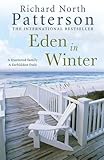
This is my review of Eden in Winter by Richard North Patterson.

The third in a trilogy of novels, "Eden in Winter" is part of a psychological family saga rather than the powerful courtroom drama more typical of the prolific Richard North Patterson. Although some reviewers have managed to read this as a stand-alone story, the plot seems much more gripping if the books are read in chronological order. "Loss of Innocence" introduces us to Benjamin Blaine as a young man, indicating the factors which mould his adult persona as a bestselling author, concerned to reveal injustice, generous to good causes, charismatic but capricious and cruel in his personal life . "Fall from Grace" reveals the complex mystery behind his untimely death, investigated by the son Adam who bears not only a startling resemblance to his father, but also some of his ruthlessness. In a "sins of the father" cycle, he has been damaged in the same way, but, unlike Ben, can he recover from this?

"Eden in Winter" begins with the inquest into Ben's death, dreaded by the Blaine family since two of them are suspected of his murder, and a third for concealing the truth. Much of the book is a psychological study of Adam coming to terms with the past, and dealing with his attraction to Carla Pacelli, who is carrying Ben's child and was the main inheritor in his will, cutting out the claim of Clarice, Ben's wife and Adam's mother.

Following on after two well-plotted page-turners, this seems the least successful book of the three, partly because, to make the story understandable to newcomers or those who have forgotten previous details, the author has to slot in massive information dumps, in the form of lengthy sections lifted verbatim from "Fall from Grace". In the process, these passages lose much of their original dramatic tension, since the context, initial build up and page-turning anticipation have been lost.

Adam's previously shadowy role as a CIA Agent in Afghanistan is revealed, but seems a little like padding in a thinner than usual plot. The author uses rather contrived ploys to "tell" rather than "show" the psychological states of Adam and Carla: periodic therapy sessions between Adam and Charlie, an obliging local shrink, and Carla's emails to Adam in Afghanistan, which she herself describes as self-absorbed. Perhaps it is hard for a British reader to appreciate the culture of the wealthy residents of Martha's Vineyard who indulge so readily in analysis and frank navel-gazing. Similarly, the fact that the style often seems stilted or bordering on mauve if not purple prose may be a cultural difference.

Without being able to explain the reason for fear of spoilers, I also found aspects of the denouement a little rushed and something of an anticlimax.

⭐⭐⭐ 3 Stars

Sins of the father

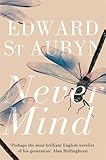
This is my review of Never Mind (The Patrick Melrose Novels) by Edward St Aubyn.

In this first novel in the “Melrose” series, we are introduced to Patrick, the five-year-old son of the charismatic but brutal David Melrose. Such is the narrator’s power that I felt the urge to tear through the page to save this poor little boy from the daily torture and abuse meted out to him by a man who had probably been damaged in the same way and which Patrick himself seems at risk of inflicting on his own children in due course.

Although desirable to read the five Melrose novels in order, this is not strictly necessary, as I came to them through “At Last" and “Mother’s Milk”. Since I did not realise they are heavily autobiographical, I rejected them at first for the author’s obsession with the idle and dysfunctional rich, wishing he would apply his striking talent to more worthy topics. The very day I read in “Never Mind” the shocking scene in which David Melrose rapes his own son, I saw Edward St Aubyn being interviewed on the TV by John Mullan, and realised that these books have been a form of carthasis for him, to some extent saving his sanity: he was Patrick. This has entirely altered my view. I note that some reviewers condemn the "shock factor" of the rape scene, perhaps unaware that something like it really happened to the author, traumatising until he could find some outlet through writing about it.

The author’s capacity to put thoughts into words with such apparent ease, bending them to fit the most complex thought and make it clear is remarkable. What is at times profoundly sad is made bearable by his razor-sharp and caustic wit. I like the brevity of the book which ends unexpectedly, leaving you wanting more of the addictive prose. On reflection, it concludes with an important insight, comparing the dreams of David and his son.

It may be a while before I can face reading the remainder of the series, because of the sense of pointless cruelty and tragic self-destruction which it engenders. Perhaps the first book, in its novelty, will prove the best, but I recommend this partly for the quality of the writing and partly because to survive such ill-treatment and put it to artistic use merits some kind of recognition. Ironically, as the author turns his skill to less harrowing and personal subjects, he may lose some of his unique edge.

St Aubyn may feel sore over missing the Man Booker Prize for "Mother's Milk". I would argue that any prize should be awarded for the whole series. I also note the plan to make the series into a film, which will suffer from the loss of the searing and brilliant prose.

⭐⭐⭐⭐⭐ 5 Stars

“The Missing” by Tim Gautreaux – For the love of children and steamboats

This is my review of The Missing by Tim Gautreaux.

Not to be confused with other stories bearing this title, “The Missing” refers not only to the abduction of a small girl called Lily, but also the psychological effects of family loss both on her and on Sam Simoneaux, the young French-speaking American who dedicates himself to finding her. Nicknamed “Lucky” for having landed in France off a US troopship just after the armistice which brought World War 1 to an end, Sam’s good fortune runs out when he loses his cushy job as a Louisiana department store “floor-walker” because of his failure to prevent the kidnappers from escaping with their prize. His attempts to find Lily, and to come to terms with his own past, form the core of this novel.

“The Missing” is a good “old-fashioned” yarn, in that it has a strong, straightforward plot with plenty of twists and tense or moving moments. It stands out for the quality of the writing: “…the train was pulled off the lurching ferry…., handed over to a greasy road locomotive, and proceeded west through poor, water-soaked farms into a reptile-laced swamp where virgin cypresses held up a cloud-dimmed sky……from one of the new aeroplanes the railroad would look like a flaw in a vast green carpet”.

Apart from creating this vivid sense of place, Tim Gautreaux is good on the development of Sam’s character, as he gains insights into dealing with both grief and revenge. The author must also have undertaken a phenomenal amount of research to produce the detailed descriptions of life in the 1920s on Mississippi paddlesteamer leisure cruises, where skilled black jazz musicians won over their local audiences, often cracking deep southern prejudice in the process.

If forced to criticise this impressive and absorbing novel, I would say that it is probably too long, insufficiently ruthless in rooting out superfluous, more mundane details, whilst omitting some areas of interest to the reader such as how Sam came to marry his long-suffering wife, Linda, or what befell some of the villains of the piece. I was in fact unconvinced that a strong, capable man like Sam would have found it so hard to gain employment other than working on the paddlesteamer, or that Linda would have accepted with so little complaint Sam’s long absences, in particular when he could no longer claim that they were necessary to find Lily. Some events are “told” rather than “shown” as in the case of the personalities and motivations of Lily’s captors. Also, despite some grim events, the story lapses at times into American-style corniness and slapstick punch-ups, but manages to take an unusually sophisticated approach to the issue of “revenge”. I now plan to read “The Clearing”…….

⭐⭐⭐⭐ 4 Stars

Too far out and not drowning

This is my review of Loss of Innocence by Davi Patterson,Richard North Patterson.

In a break from his tense courtroom scenes and alpha male political dramas, the author makes an effective stab at writing from the female viewpoint, even if his women in the America of 1968 are still under the influence of a benign but controlling WASP patriarch.

A bright young graduate, Whitney Dane chooses too lightly the conventional path of devoting herself to husband and children. Only muted warning bells suggest to her that fiancé Peter is a little too compliant, accepting from her father Charles a job in high finance that does not really suit him, acquiescing to string-pulling, again by Charles, to avoid the Vietnam draft. Charles even gives the couple an upmarket flat in New York as their future home, stifling any desire to find their own place. In sharp contrast to all this, the assassination of Bobbie Kennedy, following so soon on that of JFK and Martin Luther King, shocks Whitney into a more questioning line of thought. She is therefore ripe to fall under the influence of Ben Blaine, an unconventional young man from a different class who encourages her to think for herself.

This book will resonate with those old enough to remember 1968, but non-Americans and those under sixty-five would probably appreciate an appendix or two to explain the background politics, in particular of the Democrats divided over Vietnam.

It grated on me a little that all the main characters seem to be born wealthy and privileged or achieve these attributes in due course. Perhaps this is because the successful and well-connected author simply does not know about ordinary people.

Another slight weakness for me is the device of book-ending the main story between scenes of "I want to tell you a story" and "So this is how it worked out afterwards". In this case, we see Whitney in her sixties, encountering a younger woman who was Ben's last lover. I found the opening section rather trite, and the conclusion dotted i's and crossed t's too explicitly, leaving little to the imagination. This approach may have been used because the novel is a prequel (to a book I have not read) and is intended as part of a trilogy which effectively makes the whole into a kind of soap opera.

North Patterson is a seasoned producer of bestsellers. He knows how to write a page-turner with a strong, pacy plot, a well-judged ending (of the main story), engaging dialogues and sharp insights. The descriptions of sailing and of Martha's Vineyard are very vivid, although I know nothing about either. Yet, some passages cry out for rigorous editing to give a leaner and more edgy style rather than one that too often seems stilted or overblown.

⭐⭐⭐⭐ 4 Stars