“Those with no horizons”

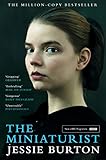
This is my review of The Miniaturist: TV Tie-In Edition by Jessie Burton.

Of good birth but penniless, eighteen-year-old Nella travels from the countryside to join her new husband, the wealthy merchant Johannes Brandt. Set in seventeenth century Amsterdam, the story has overtones of “The Girl with the Pearl Earring” and Nella’s brittle sister-in-law Marin is at first reminiscent of Rebecca’s Mrs Danvers. Yet there is originality in Johannes’ odd wedding gift, a nine-roomed cabinet house modelled on his own. To fill this with figures and objects, Nella hires the services of an elusive miniaturist, who uses an implausible and unsettling knowledge of the house’s occupants not merely to reflect their current lives but to manipulate or foretell the future.

It does not matter that the secrets of the Brandt’s household are to varying degrees guessable from the outset. The story was intriguing and a page turner for me until two aspects made me wish I had never embarked on it: the style and the portrayal of the miniaturist.

Jessie Burton writes in in a great flood of imaginative vigour which can produce striking descriptions and vivid impressions of C17 Amsterdam. However, I began to feel exhausted from the battering of the gushing, overblown and it would seem unedited prose: “Nella’s bones are falling through her body as if she’s going to slide into her husband’s rug and never stand again” What will she do when something really bad happens? Or here’s a description of a pregnant woman: “Behind the walls of ……’s anchored body a baby tumbles, possessed and possessor, its unmet mother a god to it”. In what is being hailed as a feminist novel, it could at least be a “goddess”.

The whiff of the occult associated with the miniaturist’s ability to know, often in advance, what is afoot in the Brandt household, remains confused and sketchy to the end, detracting from a plot complex enough not to need this aspect, which turns out to be a bit of an authorial cop-out.

There are also some annoying little “continuity errors” as when a boy’s head appears round a door which has just been closed very explicitly.

This book has been strongly hyped and will please many readers, but I regret the opportunity missed to produce a really powerful literary historical novel on the theme of the position of women in one of the burgeoning capitalist world’s commercial capitals, of the hypocrisy of its respectable citizens and the effect of travel in opening the minds of men like Johannes who were so misunderstood by their peers. If you find my criticisms unfair, read for comparison the historical novel “Pure” by Andrew Miller.

⭐⭐⭐ 3 Stars

More is less

This is my review of Eden in Winter by Richard North Patterson.

The third in a trilogy of novels, "Eden in Winter" is part of a psychological family saga rather than the powerful courtroom drama more typical of the prolific Richard North Patterson. Although some reviewers have managed to read this as a stand-alone story, the plot seems much more gripping if the books are read in chronological order. "Loss of Innocence" introduces us to Benjamin Blaine as a young man, indicating the factors which mould his adult persona as a bestselling author, concerned to reveal injustice, generous to good causes, charismatic but capricious and cruel in his personal life . "Fall from Grace" reveals the complex mystery behind his untimely death, investigated by the son Adam who bears not only a startling resemblance to his father, but also some of his ruthlessness. In a "sins of the father" cycle, he has been damaged in the same way, but, unlike Ben, can he recover from this?

"Eden in Winter" begins with the inquest into Ben's death, dreaded by the Blaine family since two of them are suspected of his murder, and a third for concealing the truth. Much of the book is a psychological study of Adam coming to terms with the past, and dealing with his attraction to Carla Pacelli, who is carrying Ben's child and was the main inheritor in his will, cutting out the claim of Clarice, Ben's wife and Adam's mother.

Following on after two well-plotted page-turners, this seems the least successful book of the three, partly because, to make the story understandable to newcomers or those who have forgotten previous details, the author has to slot in massive information dumps, in the form of lengthy sections lifted verbatim from "Fall from Grace". In the process, these passages lose much of their original dramatic tension, since the context, initial build up and page-turning anticipation have been lost.

Adam's previously shadowy role as a CIA Agent in Afghanistan is revealed, but seems a little like padding in a thinner than usual plot. The author uses rather contrived ploys to "tell" rather than "show" the psychological states of Adam and Carla: periodic therapy sessions between Adam and Charlie, an obliging local shrink, and Carla's emails to Adam in Afghanistan, which she herself describes as self-absorbed. Perhaps it is hard for a British reader to appreciate the culture of the wealthy residents of Martha's Vineyard who indulge so readily in analysis and frank navel-gazing. Similarly, the fact that the style often seems stilted or bordering on mauve if not purple prose may be a cultural difference.

Without being able to explain the reason for fear of spoilers, I also found aspects of the denouement a little rushed and something of an anticlimax.

⭐⭐⭐ 3 Stars

Sins of the father

This is my review of Never Mind (The Patrick Melrose Novels) by Edward St Aubyn.

In this first novel in the “Melrose” series, we are introduced to Patrick, the five-year-old son of the charismatic but brutal David Melrose. Such is the narrator’s power that I felt the urge to tear through the page to save this poor little boy from the daily torture and abuse meted out to him by a man who had probably been damaged in the same way and which Patrick himself seems at risk of inflicting on his own children in due course.

Although desirable to read the five Melrose novels in order, this is not strictly necessary, as I came to them through “At Last" and “Mother’s Milk”. Since I did not realise they are heavily autobiographical, I rejected them at first for the author’s obsession with the idle and dysfunctional rich, wishing he would apply his striking talent to more worthy topics. The very day I read in “Never Mind” the shocking scene in which David Melrose rapes his own son, I saw Edward St Aubyn being interviewed on the TV by John Mullan, and realised that these books have been a form of carthasis for him, to some extent saving his sanity: he was Patrick. This has entirely altered my view. I note that some reviewers condemn the "shock factor" of the rape scene, perhaps unaware that something like it really happened to the author, traumatising until he could find some outlet through writing about it.

The author’s capacity to put thoughts into words with such apparent ease, bending them to fit the most complex thought and make it clear is remarkable. What is at times profoundly sad is made bearable by his razor-sharp and caustic wit. I like the brevity of the book which ends unexpectedly, leaving you wanting more of the addictive prose. On reflection, it concludes with an important insight, comparing the dreams of David and his son.

It may be a while before I can face reading the remainder of the series, because of the sense of pointless cruelty and tragic self-destruction which it engenders. Perhaps the first book, in its novelty, will prove the best, but I recommend this partly for the quality of the writing and partly because to survive such ill-treatment and put it to artistic use merits some kind of recognition. Ironically, as the author turns his skill to less harrowing and personal subjects, he may lose some of his unique edge.

St Aubyn may feel sore over missing the Man Booker Prize for "Mother's Milk". I would argue that any prize should be awarded for the whole series. I also note the plan to make the series into a film, which will suffer from the loss of the searing and brilliant prose.

⭐⭐⭐⭐⭐ 5 Stars

“The Missing” by Tim Gautreaux – For the love of children and steamboats

This is my review of The Missing by Tim Gautreaux.

Not to be confused with other stories bearing this title, “The Missing” refers not only to the abduction of a small girl called Lily, but also the psychological effects of family loss both on her and on Sam Simoneaux, the young French-speaking American who dedicates himself to finding her. Nicknamed “Lucky” for having landed in France off a US troopship just after the armistice which brought World War 1 to an end, Sam’s good fortune runs out when he loses his cushy job as a Louisiana department store “floor-walker” because of his failure to prevent the kidnappers from escaping with their prize. His attempts to find Lily, and to come to terms with his own past, form the core of this novel.

“The Missing” is a good “old-fashioned” yarn, in that it has a strong, straightforward plot with plenty of twists and tense or moving moments. It stands out for the quality of the writing: “…the train was pulled off the lurching ferry…., handed over to a greasy road locomotive, and proceeded west through poor, water-soaked farms into a reptile-laced swamp where virgin cypresses held up a cloud-dimmed sky……from one of the new aeroplanes the railroad would look like a flaw in a vast green carpet”.

Apart from creating this vivid sense of place, Tim Gautreaux is good on the development of Sam’s character, as he gains insights into dealing with both grief and revenge. The author must also have undertaken a phenomenal amount of research to produce the detailed descriptions of life in the 1920s on Mississippi paddlesteamer leisure cruises, where skilled black jazz musicians won over their local audiences, often cracking deep southern prejudice in the process.

If forced to criticise this impressive and absorbing novel, I would say that it is probably too long, insufficiently ruthless in rooting out superfluous, more mundane details, whilst omitting some areas of interest to the reader such as how Sam came to marry his long-suffering wife, Linda, or what befell some of the villains of the piece. I was in fact unconvinced that a strong, capable man like Sam would have found it so hard to gain employment other than working on the paddlesteamer, or that Linda would have accepted with so little complaint Sam’s long absences, in particular when he could no longer claim that they were necessary to find Lily. Some events are “told” rather than “shown” as in the case of the personalities and motivations of Lily’s captors. Also, despite some grim events, the story lapses at times into American-style corniness and slapstick punch-ups, but manages to take an unusually sophisticated approach to the issue of “revenge”. I now plan to read “The Clearing”…….

⭐⭐⭐⭐ 4 Stars

Automatic assumptions

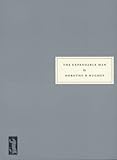
This is my review of The Expendable Man by Dorothy B. Hughes.

Hugh Densmore, a young American doctor on his way to his niece's wedding in Phoenix feels obliged, against his better judgement, to pick up a teenage hitchhiker. Who knows what will befall her if he does not? She proves both an unpleasant liar and a pathetic object of pity. When local newspapers report the discovery of a young girl's body in a canal, Hugh is convinced it belongs to the hitchhiker, and that the police will soon be knocking on his door. He is fatalistic, yet also determined not to spoil the wedding and to prove his innocence.

It is not until more than fifty pages in that the author delivers a master stroke by revealing a piece of information that stopped me in my tracks. Not only does it explain Hugh's previous almost paranoid fears, but completely alters the reader's perception of the situation. I was forced to look back to see if I had misread some details, but it was clear that I had made certain assumptions and was potentially as guilty of misjudgements as some of the characters in the book.

This book is partly a psychological crime thriller in which every step is developed in forensic detail. It is also a study of life in the western states of America in the early 1960s – the baking afternoon heat and traffic jams of Phoenix, the "startling growth" of the suburbs, the abrupt change from surfaced roads to rough tracks through the semi-desert landscape of "troglodyte rocks and spire cacti". Although Dorothy Hughes can be a little shaky on the flowering of romance, she is excellent on landscapes, cold starry nights and the burgeoning fast food culture as well as deeper issues in a world of racial prejudice and criminalisation of abortion.

The sustained sense of menace and very evident risk of Densmore being unjustly ruined, combined with occasional suspicions that he may go free at the end yet turn out to be a villain after all, make this a page turner. With so much suspense, it is perhaps inevitable that the final climax is a somewhat underwhelming, but overall this gripping tale deserves its recent revival. It stands the test of time as one of the best crime novels which everyone who enjoys this genre should read.

⭐⭐⭐⭐ 4 Stars

Too far out and not drowning

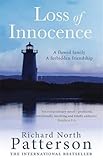
This is my review of Loss of Innocence by Davi Patterson,Richard North Patterson.

In a break from his tense courtroom scenes and alpha male political dramas, the author makes an effective stab at writing from the female viewpoint, even if his women in the America of 1968 are still under the influence of a benign but controlling WASP patriarch.

A bright young graduate, Whitney Dane chooses too lightly the conventional path of devoting herself to husband and children. Only muted warning bells suggest to her that fiancé Peter is a little too compliant, accepting from her father Charles a job in high finance that does not really suit him, acquiescing to string-pulling, again by Charles, to avoid the Vietnam draft. Charles even gives the couple an upmarket flat in New York as their future home, stifling any desire to find their own place. In sharp contrast to all this, the assassination of Bobbie Kennedy, following so soon on that of JFK and Martin Luther King, shocks Whitney into a more questioning line of thought. She is therefore ripe to fall under the influence of Ben Blaine, an unconventional young man from a different class who encourages her to think for herself.

This book will resonate with those old enough to remember 1968, but non-Americans and those under sixty-five would probably appreciate an appendix or two to explain the background politics, in particular of the Democrats divided over Vietnam.

It grated on me a little that all the main characters seem to be born wealthy and privileged or achieve these attributes in due course. Perhaps this is because the successful and well-connected author simply does not know about ordinary people.

Another slight weakness for me is the device of book-ending the main story between scenes of "I want to tell you a story" and "So this is how it worked out afterwards". In this case, we see Whitney in her sixties, encountering a younger woman who was Ben's last lover. I found the opening section rather trite, and the conclusion dotted i's and crossed t's too explicitly, leaving little to the imagination. This approach may have been used because the novel is a prequel (to a book I have not read) and is intended as part of a trilogy which effectively makes the whole into a kind of soap opera.

North Patterson is a seasoned producer of bestsellers. He knows how to write a page-turner with a strong, pacy plot, a well-judged ending (of the main story), engaging dialogues and sharp insights. The descriptions of sailing and of Martha's Vineyard are very vivid, although I know nothing about either. Yet, some passages cry out for rigorous editing to give a leaner and more edgy style rather than one that too often seems stilted or overblown.

⭐⭐⭐⭐ 4 Stars

Automatic assumptions

This is my review of The Expendable Man (New York Review Books Classics) by Dorothy B Hughes.

Hugh Densmore, a young American doctor on his way to his niece's wedding in Phoenix feels obliged, against his better judgement, to pick up a teenage hitchhiker. Who knows what will befall her if he does not? She proves to be both an unpleasant liar and a pathetic object of pity. When local newspapers report the discovery of a young girl's body in a canal, Hugh is convinced it belongs to the hitchhiker, and that the police will soon be knocking on his door. He is fatalistic, yet also determined not to spoil the wedding and to prove his innocence.

It is not until more than fifty pages in that the author delivers a master stroke by revealing a piece of information that stopped me in my tracks. Not only does it explain Hugh's previous almost paranoid fears, but completely alters the reader's perception of the situation. I was forced to look back to see if I had misread some details, but it was clear that I had made certain assumptions and was potentially as guilty of misjudgements as some of the characters in the book.

This book is partly a psychological crime thriller in which every step is developed in forensic detail. It is also a study of life in the western states of America in the early 1960s – the baking afternoon heat and traffic jams of Phoenix, the "startling growth" of the suburbs, the abrupt change from surfaced roads to rough tracks through the semi-desert landscape of "troglodyte rocks and spire cacti". Although Dorothy Hughes can be a little shaky on the flowering of romance, she is excellent on landscapes, cold starry nights and the burgeoning fast food culture as well as deeper issues in a world of racial prejudice and criminalisation of abortion.

The sustained sense of menace and very evident risk of Densmore being unjustly ruined, combined with occasional suspicions that he may go free at the end yet turn out to be a villain after all, make this a page turner. With so much suspense, it is perhaps inevitable that the final climax is a somewhat underwhelming, but overall this gripping tale deserves its recent revival. It stands the test of time as one of the best crime novels which everyone who enjoys this genre should read.

⭐⭐⭐⭐ 4 Stars

Light shed

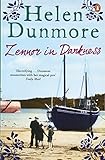
This is my review of Zennor in Darkness by Helen Dunmore.

Having read Helen Dunmore's spare and brilliant novel "Lies" focused on a shell-shocked young Cornishman in the aftermath of World War 1, I was interested in comparing it with her début novel published twenty years earlier, "Zennor in Darkness". Set in 1917, this describes how the tentacles of war have reached into rural Cornwall, with teenage boys conscripted from remote farmhouses, and cottage windows darkened with blackout curtains to deflect the German U-boats venturing near the coast to prey on British supply ships.

Since the author is also a poet, it is perhaps not surprising that "Zennor in Darkness" has a touch of Under Milk Wood with its array of local characters. The two who emerge most sharply in the foreground are at least to some extent outsiders: young would-be artist Clare Coyne, whose genteel Catholic father stayed on in Zennor after his wife's premature death, and the author D.H.Lawrence, who hoped in vain to find a refuge in Cornwall from the public outrage over his attacks on the war, and his marriage to Frieda, a German who had abandoned her husband and children to be with him.

The present tense which seems to have annoyed some reviewers did not trouble me at all. I hardly noticed it, and think that in fact it creates an increased sense of immediacy, and awareness of what each character is observing and feeling. However, the novel is clearly less taut and polished than "Lies". Several scenes, such as the opening chapter with three girls sunbathing on the beach is too rambling, with a confusion at times as to who is talking or who the identity of the main character – I thought at first it was Clare's cousin Hannah. There also seemed to be a bewildering excess of names to cope with at first. The writing sometimes seems over-intense.

This is a slow burning novel, a stream of impressions and thoughts. It conveys as far as I can tell a powerful and evocative sense of the Cornish landscape and the ambiance of a tightknit, closed community. Dunmore is also good at portraying relationships between people, their shifting emotions, misunderstandings and mutual criticism despite strong empathy, even love. Although in the main uneventful, requiring the reader to take time and savour the originality and beauty of Dunmore's prose, the novel shifts into a higher gear for the final third to reach a convincing conclusion.

⭐⭐⭐⭐ 4 Stars

No point if we’re not nice to each other

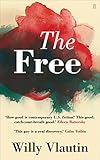
This is my review of The Free by Willy Vlautin.

Leroy, a damaged survivor of the Iraq war, uses a rare moment of lucidity to make a failed suicide attempt. As he lies in hospital, his surreal dreams of a dystopian world are intercut with the stories of those involved in caring for him: the moonlighting night warden Freddie, or nurse Pauline who always has time to talk to her patients with empathy.

Willy Vlautin writes about the daily lives of ordinary people with more than their fair share of bad luck, to which they may have added a few mistakes. Despite this, they manage to retain the will to persevere combined with decency and kindness. Some reviewers have commented that the frequent repetition of drinking Rainier beers or buying certain kinds of junk food in the supermarket serves as a kind of mantra, but for me, the banality often becomes oppressive and the book is just saved from tedium by a few dramatic or moving events, and the author’s ability to arouse sympathy, liking and even respect for people one might overlook or undervalue in real life. For a while, I feared the story might end in mawkish sentimentality, but it is in fact darker than Northline, the only other novel by Vlautin that I have read.

Vlautin’s style is simple and direct, focused on often minute description. For instance, not the first description of nurse Pauline’s feet: “She bent over and took off her shoes. She set her feet on top of them and leaned back in her chair”. Or, the description of Freddie packing up his beloved train set to sell for much needed cash, rather than of his grief over having to do this: “Freddie McCall found an empty cardboard box and began wrapping toy trains in newspaper. There were eight in total and he set those on the bottom of the box, and put all twenty boxcars on top of them. In another box he put his remaining track and switches, transformers and various wagons and buildings”…..and so on.

In some ways it is refreshing to encounter an author who clearly writes from the heart with a great natural enjoyment of the process, but does not appear to have set foot in a creative writing class, or to have paid any attention to it if he did. On the other hand, the narrative suitable for a reading age of eight, in vocabulary if not subject matter, often left me gasping for a metaphor or an introspective thought. Yet, the next novel I read will probably seem pretentious, and Vlautin’s portrayal of what lies beneath the surface of the fool's gold glitter of the world’s leading economy (for the time being) will stay in my mind for some time.

⭐⭐⭐⭐ 4 Stars

Born free, captivity borne

This is my review of Twelve Years a Slave – [ Stolen into Slavery: The True Story of Solomon Northup ] [Annotated & illustrated] [Free Audio Links] by Solomon Northup.

Although it is unclear to what extent this story was "ghosted" at the time, it is a vivid first-hand account of the experiences of Solomon Northup, born to a freed man in the New York area but tricked and kidnapped into slavery in the Louisiana of the early 1840s.

Having seen the film already, I knew what to expect plot-wise, and assumed that, since McQueen's drama is so powerful, I would gain little from reading the book, the reverse of what is normally the case i.e. books usually out-class the films on which they are based. In fact, I was impressed by the immediacy with which Northup's thoughts come through the language which, apart from occasional wording that seem quaint to us now, is for the most part a very articulate and engaging flow. I was also surprised and pleased how closely the director had kept to the book. There is a particularly powerful scene in the film where Northup is forced to beat Patsy, a young slave woman who is guilty only of going to obtain from a kindly neighbour soap denied her by a jealous mistress. I thought that McQueen must have exaggerated this incident for dramatic effect but found that it tallies with Northup's description. The latter's account of how Patsy is caught between a sexually abusive master and vengeful mistress makes almost unbearably moving reading even when one has seen the film.

I respected Northup's honesty, for instance, in regarding himself as superior to those born to slavery and reduced to a bestial state by their treatment, although at the same time he clearly respected and felt sympathy for those left in bondage after his release. He also conveys well the “catch-22” situation in which to reveal his past experience of freedom, and his ability to read and write, put him at greater risk of violence, since the slave-owners felt threatened by workers who did not conform to the stereotypes which seemed to justify their inhuman treatment.

The academic Sarah Churchwell wrote recently of the theory that Northup may have been a bit of a rogue in real life, colluding in his kidnapping in a money-making scam which backfired on him, but there is no evidence of this in the autobiography. Some of the interesting notes at the end of the book suggest that Northup may have fallen into drunkenness after his release, and been recaptured, but this cannot be proven. It could be that Northup became embittered, in view of the irony that, as a black man, he was not entitled, once free, to give evidence in court against those who had wrongfully sold him into slavery.

⭐⭐⭐⭐ 4 Stars