“Three Men in a Boat” by Jerome K. Jerome – Messing about in boats

This is my review of Three Men in a Boat by Jerome K. Jerome.

When I read this as quite a young child, it seemed hilarious. I’m referring, for instance, to George and Harris rushing round in search of the butter, until realising that one of them had sat in it. Struggling dutifully through it more recently for a book group, it seemed rather silly and very dated, although I could still laugh at the succession of locals claiming to have caught the ever weightier trout encased on a pub wall, only for it to turn out to be made of plaster, when one of the clumsy three accidentally knocked it down.

I found a bit of research on the story much more interesting. Publication in 1889 was earlier than I had imagined i.e. not Edwardian. After the passing of the 1870 Education Act, and the extension of cheap rail fares giving people ready access the Thames, there was a sharp increase in the demand for amusing, easily read books and in the appreciation of boating as a pastime. This was perhaps a comic novel ahead of its time, much Victorian reading matter still being a bit sententious and worthy. So, there was a sharp contrast between the popularity of the book (which has never been out of print), and the snooty response of critics, even in Punch.

The author himself came from a once prosperous middle-class family which had fallen on hard times. So, despite his grammar school education, he had to start work as a young teenager, which obviously gave him a wide experience of life and the ability to relate to ordinary people. His unusual name was partly due to his father Jerome Clapp adding another Jerome to make it sound more distinguished. The “Klapka” came from a Hungarian who lodged with the family for a while.

I can see that what is really a series of amusing anecdotes, observations on daily life and snippets of local history on the areas bordering the Thames is appealing to us now in its innocence and nostalgic portrayal of a lost age. This probably remains a classic which you should read, the younger the better, although I doubt if a tale of three gormless middle-aged men rowing up the Thames more than a century ago would appeal much to this audience.

⭐⭐⭐ 3 Stars

Swallow whole

This is my review of A boy with potential: A choirboy’s sinister discovery (Crime shorts Book 1) by Rosalind Minett.

This well-written and expertly constructed tale sustains a sense of sinister tension to the end, but with underlying poignancy over the extent to which "oyster boy" – who ironically has misinterpreted the one piece of kind attention he receives – is a victim of other people's casual abuse. Although I agree that there is the material here for a novel, it makes a particular impact in its current concise format.

⭐⭐⭐⭐ 4 Stars

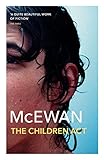
The Children Act by Ian McEwan: Living by the rules

This is my review of The Children Act by Ian McEwan.

This slim novel is yet another example of “less is more” in that it makes a greater impact than many a long rambling epic. Fiona is a leading High Court judge, specialising in the application of the “Children Act” of the title with its double meaning. Her heavy and harrowing workload leaves little time to deal with the shock of an unexpected crisis in a longstanding and until now apparently happy marriage.

Always keen to be thorough and fair, she decides that the urgent case of a boy, stricken with leukaemia just short of his eighteenth birthday, who has supported his Jehovah Witness parents’ refusal to agree to the blood transfusion that will save his life, obliges her to visit him in hospital to gauge his capacity to make such a decision. Her good intentions are based on the principle that “the child’s welfare shall be the court’s paramount consideration”. In the ensuing drama, she learns more than she has bargained for about the complexity of dealing with a young person’s “welfare”.

Ian McEwan’s crystal prose with never a redundant word or a woolly sentence commands admiration, yet can make human relations seem somewhat clinical. Yet, I prefer this to a mawkish tone and in general his forensic analysis and clarity of writing serve to punch the reader with the raw emotion of a situation. Although everything is written from Fiona’s viewpoint, the reactions of the other players, both major and minor, are portrayed very vividly. I was completely convinced by the beautiful and over-sensitive boy Adam.

Although I understand why some readers have criticised McEwan for his focus on the privileged, upper middle-class world of a Gray’s Inn lawyer, for me this seems part of the point, if unintentionally: Fiona and her colleagues represent the confident, with taken-for-granted superiority, élite who make decisions on legal reforms and play Solomon in the lives of lesser mortals.

If the book has a weakness, it may be the somewhat condensed “telling” of a number of Fiona’s cases, combined with the author’s concern with current issues leading him to overload the plot with the world’s ills. You could of course argue that all this illustrates the almost frantic variety and stress of Fiona’s job. I also found the “climax” of the book is a little contrived, when Fiona receives what seems like bad news, without our being told what it is, just before going on stage for a piano performance, for which McEwan’s writing lost its usual spare precision and became rather pretentious and “knowing” about music.

This is a thought-provoking book on several levels: the right to decide on life and death, the psychology of ageing and the state of Britain. It is serious, compelling, yet lightened with touches of McEwan’s wry wit

⭐⭐⭐⭐⭐ 5 Stars

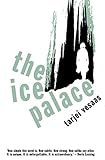
Caves of ice

This is my review of The Ice Palace (Modern Classics) by Tarjei Vesaas.

Although this novel was first published in the 1960s, I have only recently come across it and realised that Tarjei Vesaas who died in 1970, is regarded as one of Norway’s finest writers.

Vesaas gets inside the heads of the two eleven-year-old girls who are his two main characters. Sis is intrigued by the arrival of “new girl” Unn who plays the loner, perhaps because of her mother’s recent death which has brought her to live with an aunt in a remote rural community. In her excitement over the prospect of an intense pre-teen age friendship with Sis, Unn plays truant from school and sets off across a large frozen lake to investigate the “ice palace”, which has formed at a distant waterfall. In this excellent translation by Elizabeth Rokkan, her fateful journey is one of the most striking pieces of description I have ever read. “Bent bracken stood in the ice like delicate drawings”.

Ensuing events are fairly few and simple in this short novel, but it becomes a gripping page turner by reason of the sustained tension, the portrayal of nature by turns menacing and of exquisite beauty, and the subtilty of the characters’ communication. This is a very Scandinavian novel, in which we really feel the long darkness of the winter night, threatening when one is alone; the strength of the steel-ice on the lake despite its tendency to blast “long fissures, narrow as a knife-blade, from the surface down into the depths” with a thunderous noise like gunshot; the magical Kubla Khan-like caves of the ice palace; the sequence of seasonal change from early winter ice through all-concealing snow to the eventual thaw. There is also the mysterious appeal of Unn who implies a secret she will not reveal.

If this remarkable and memorable book has a flaw, it is the structure towards the end in which a possible dramatic climax is revealed and then followed by something of an anti-climax. You could of course argue that Vessas is not interested in creating drama, but rather in portraying the events of ordinary life, in this case the natural development of a girl on the verge of growing up, learning from her experiences, and in rendering them extraordinary by the poetic quality of his prose.

I shall make a point of looking out for other works by this author.

⭐⭐⭐⭐⭐ 5 Stars

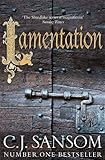
“Lamentation” by C.J. Sansom

This is my review of Lamentation (The Shardlake series) by C. J. Sansom.

Since it is advisable to have read at least some of the previous five books in this series – say the opening “Dissolution”, “Sovereign” and “Heartstone”, it is unnecessary to provide much explanation of the narrator Shardlake, a shrewd lawyer whose persistence and integrity make him ideal for the role of private investigator in the dangerous and twisted world of Tudor England. In this case, against his better judgement, a mixture of loyalty and understandable if hopeless devotion for Henry V111’s last wife, Catherine Parr, lead him to accept the task of retrieving her manuscript, “Lamentation of a Sinner”, which the King is likely to regard as heretical.

Sansom’s Shardlake novels are always a mine of thoroughly researched information about life of people in all walks of Tudor life. Even if he distorts some facts for dramatic purposes, this serves as an entertaining way of grasping the shifting politics of Henry V111’s court. What intrigues me most, well-conveyed in “Lamentation” is the sense of insecurity and fear under Henry, as strong as in any modern-day police state. The king himself is desperate to maintain his own position and dynasty, and prepared to do whatever is necessary to achieve this, but not to take personal responsibility for his actions. So, as a sick man approaching the death which it is treason to mention, doubts over the safety of his soul draw Henry back to the Catholic mass, under the influence of men like Bishop Gardiner who want to see reformers burned alive if they deny that the bread and wine of Communion turns into the actual body of Christ. Yet, Henry’s desire to keep his position as the Head of the Church in England makes it impossible to cede authority back to the Pope, pulling him back towards Protestants on whom he can rely to keep his heir Edward in full control of both Church and State in the future.

Sansom makes this the basis of an often swashbuckling yet also poignant drama. “I did not want to attend the burning” is a masterful opening hook. Yet, Sansom immediately backtracks to introduce us to a range of main characters who are all developed in some depth to show their personalities and motives.

I agree with some detractors who have found the pace a little pedestrian at times: the length has been padded out with frequent dusty rides on the ageing steed Genesis, hiring of wherries on the Thames and admission by pass to Whitehall. Analysis of what may be afoot is chewed over too often, so that some potentially very dramatic moments do not come as a surprise. The language used tends to be too modern, as is some of the behaviour at social gatherings. I appreciate that many fans will appreciate the chance to immerse themselves in the world of Shardlake as long as possible. Overall, a plot that at times seems overcomplicated in fact comes to a strong, unpredictable and intriguing denouement. I was also impressed by the way Shardlake’s own outlook evolves in this story.

I am sure this will not be the last in the series, although fear for Shardlake should he survive into the Catholic bigotry of Mary’s reign.

⭐⭐⭐⭐ 4 Stars

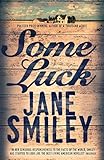
Ambitious, great potential but some lack

This is my review of Some Luck (Last Hundred Years Trilogy Book 1) by Jane Smiley.

Admiration for "A Thousand Acres", a Mid-west take on the tragedy of King Lear, encouraged me to read "Some Luck", the first part of Jane Smiley's trilogy which covers a century in the lives of the Langdon family, starting in 1920 with young Walter returned from the Great War to establish himself as an Iowan farmer, with his beautiful young wife Rosanna and lively son Frank.

In what amounts to "an everyday story of country folk" American-style, if there is a main character, it is Frank. Jane Smiley is clearly intrigued by the challenge of capturing his first thoughts as a baby just a few months old – with what degree of accuracy none of us can quite remember enough to tell.

By contrast, after a promising beginning, we are continually frustrated by not being able to learn enough about what is going on in the minds of the adults. Walter and Rosanna are so absorbed in the daily grind of work, so patient, stoical and self-contained. It is never explained how Rosanna made what must have been the major step of giving up her family's Catholic faith. Even when Rosanna suffers personal crises, she manages to continue in her role of farmer's wife and mother. Yet, we know that she is repressing emotions, as indicated by her lack of care for her appearance and premature ageing, just as Walter conceals his troubles. Although this may sound gloomy, there is a good deal of low-key humour in the incidents of farm life. It could also be argued that the couple's faithfulness to each other and adherence to traditional values, combined with a self-imposed restriction on their personal gratification and ambition, are typical of many American farming communities a century ago. They are dull but worthy, leaving it to their children to fly higher, and perhaps get burned in the process.

Jane Smiley is at her best writing about the rhythms of the seasons, the intolerable heat and drought alternating with the deep snowdrifts of winter, the bitter irony of the economic depression which makes high yields pointless, the cautious acceptance of a labour-saving tractor instead of a pair of horses, the making of traditional cakes to keep the old customs going, the canning and pickling of produce. The trouble is that, without a strong plot, this can seem a little banal and repetitious to the point of tedium.

Also, when the author takes her younger characters off to experience city life, or to fight in Europe, the writing seems less authentic. The decision to devote each chapter to a consecutive year from 1920-53 becomes something of a straitjacket. I sometimes felt that incidents have been generated as padding. Perhaps because of the continual introduction of new players, either through births or romances, I began to find it hard to care about individuals who are insufficiently fleshed out, and often appear quite unconvincing – Lillian's husband Arthur being a prime example of this. Important national issues, like anti-communism or fear over a nuclear attack appear bolted on in a rather clunky fashion. The prose style often seemed almost childlike, perhaps because the author was trying to represent how some characters might have thought or expressed themselves.

Although I am sure many readers will love this book, for me it needed a stronger plot and narrower focus, such as in "The Cove" by Ron Rash which also has a rural farming theme. Yet, there is plenty of scope for more drama, as in, for instance, the uneasy relationship between charismatic, outgoing Frank and his very different, fearful, whiny, younger brother Joe who proves to be more sensitive (as in his concern for pet animals) and perhaps more fulfilled as an adult.

I wanted to admire this book but it seems a pale shadow of "A Thousand Acres".

⭐⭐⭐ 3 Stars

Human shuttlecocks

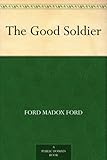
This is my review of The Good Soldier by Ford Madox Ford.

"This is the saddest story I have ever heard" is a somewhat off-putting opening sentence. It is hard to feel very sorry for snobbish, convention-bound people who feel hard up even when holding large estates, employing servants and swanning round foreign hotels, with the lack of any occupation to give them a sense of proportion.

At first, I was even more deterred by the style, the mannered, at times almost querulous tone which I would have expected from a Victorian spinster aunt, rather than from a character I could never quite believe was an American male. Just when I was wishing I did not need to read this for a book group, I was struck by the description of the "good soldier" Ashburnham's luggage: "the profusion of his cases, all of pigskin and stamped with his initials…It must have needed a whole herd of Gaderene swine to make up his outfit". Even if this novel is not intended to be a farce (which would have saved it for me), it surely includes some sharp notes of mocking parody.

First published in 1915, this tale of two "perfect" couples whose friendship over more than a decade masks a web of deception, hypocrisy and guilt, since they are unable to keep to the moral and religious conventions to which they feel bound, has been described as "the finest French novel in the English language" and is highly regarded by some as "stylistically perfect". I accept that it is an early example of "stream of consciousness" – of the well-punctuated variety – and what has been called "literary impressionism", as the author plays games with us through his distinctly unreliable first person narrator. In the midst of his self-confessed ramblings, the American provides us with some original, often vicious insights, belying his claimed lack of observation bordering on stupidity over what is really going on under his nose – although is he really as passive in the affair as he makes out? He shifts back and forth in time, revisiting scenes to peel off yet more layers to reveal that each incident was not quite as he implied or stated earlier, or to show how it might appear differently to the various characters concerned. Although he does this quite skilfully, providing a few unexpected shocks on the way, there is a good deal of repetition of details. A fairly thin story seems overlong, and the heavy emphasis on telling the reader at great length what to think – even if this gets contradicted at times – is less satisfying than the style we have come to prefer – showing events for us to draw differing conclusions.

Perhaps this is worth reading as an early twentieth century classic, but I cannot say I really enjoyed it. Arnold Bennet, who lived at the same time as Ford Madox Ford, creates for me a much more real past peopled with more convincing complex characters over whom it is easier to feel moved.

⭐⭐⭐ 3 Stars

Meaning at your fingertips

This is my review of Collins English to French (One Way) Dictionary & Grammar (Collins Dictionary and Grammar) by HarperCollins Publishers.

Although I accept the need for a two way version, I found this extremely inexpensive English to French dictionary very useful in kindle format during a recent trip to France. It proved a convenient and very compact way of checking out words I wished to use or to cope with unfamiliar terms in newspaper and magazine articles. I liked the way it goes beyond individual words to include idioms. This is useful for occasions when you do not have online access or the opportunity to use a mammoth bound dictionary.

⭐⭐⭐⭐ 4 Stars

Santa Claus with odd socks

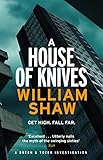
This is my review of A House of Knives: Breen & Tozer 2 (Breen and Tozer) by William Shaw.

This picks up the plot straight from end of "A Song from Dead Lips" (also titled "She's leaving home") with a limited recap to help those who have not previously read the first book in the trilogy featuring DS Breen, which I would recommend to get the most out of this story.

The discovery of a corpse following a domestic gas explosion reminds Breen of an unresolved case which haunted him in the previous novel. As before, this is tightly plotted, alternating fast-paced action with a sense of the frustration, even tedium, of criminal investigations. Breen is developing as a character, moving beyond being stereotypically dysfunctional to proving himself a methodical and tenacious operator, a decent, thoughtful even sensitive man – so that it is hard to understand how he tolerates the corruption and crassness of his work colleagues.

What marks this series out is the portrayal of the late sixties. It is fascinating to be reminded of or perhaps discover for the first time what this period was like – the now jaw-dropping lack of any awareness of equality, the smoke-ridden offices, the gulf between the old and young, as free love, hippiedom and drugs took hold, the embrace of modern art by a wealthy few, perhaps only to prove themselves followers of fashion, the brew of idealism, brutalism and corruption in the form of concrete flyovers and tower blocks, heralded as solutions for congestion and slum clearance without anyone fully considering the adverse effects. William Shaw makes some interesting points, such as that the legal change preventing drug addicts from obtaining drugs like heroin from their GPs merely pushed them into the hands of dealers, often selling far less pure and so more deadly substances.

Shaw's style is deceptively simple and direct. I like his often funny Pinterish dialogues in which several conversations are being carried on at once. He is good at poignancy, wry humour and unexpected twists, but some of the potentially most dramatic moments lack a certain tension and are not quite convincing, like the final denouement which serves mainly as an opportunity to provide the reader with details which should mostly have been grasped already. This comment sets the bar high for an otherwise very talented writer. I accept that some very dangerous situations may feel oddly banal at times, which may be what he wishes to convey. Very occasionally there seems to be a small glitch suggesting a lack of thorough editing, and the title is clearly aimed at ghoulish attraction of readers rather than relevance to the story. Although these books lend themselves to film adaptations, one of the strongest aspects will be lost in the process, namely Breen's chains of thought, his reactions and sensitive introspection.

Overall, I recommend this series and will make a point of reading the last of the trilogy – which may not be the end of Breen and his unconventional sidekick Tozer.

⭐⭐⭐⭐ 4 Stars

Where fancy is bred

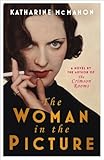
This is my review of The Woman in the Picture by Katharine McMahon.

In this sequel to "The Crimson Rooms", we encounter again Evelyn, the determined young woman who flouted convention after the First World War to train as a solicitor in London. Set against the background of the 1926 General Strike, a damp squib of an event which may account for its somewhat wooden treatment here, the book's compelling quality comes from the author's ability to create a sense of period and place and develop the main characters as Evelyn is caught up in a couple of cases which illustrate the abuse of two women at very different levels in society. In particular, we understand Evelyn's changing moods, the poignancy of the continual reminders of the brother killed in the war, to whom she was deeply attached, and her dilemma as to whether, learning from her grandmother's experience, she should be ruled by her passionate heart or her pragmatic head, by physical attraction or a sense of trust and respect when it comes to choosing a partner. It seems too much of a coincidence that Evelyn's former lover Nicholas appears on the scene only to become involved in the two main cases on which Evelyn is working, but this is of course necessary for the plot.

This story treads a fine line between romantic and literary fiction, which may leave dissatisfied both categories of mostly likely female reader. It is well-written with a sound structure, but I have a few reservations. Although the exchanges in court are gripping, I was surprised by the conversational way prosecution and defence are allowed to interrupt each other. Even more so, whether in a paternity case held in camera or during interviews with Evelyn, the main parties seem remarkably willing to speak frankly about intimate matters without the kind of embarrassed prevarication one would expect. Regardless of social position, gender or personality, the characters tend to speak with the same voice. The way so many strangers seem to know about Evelyn's aborted love affair with Nicholas and feel free to comment on it also seems unlikely. Evelyn's nervous and demanding mother undergoes a rather rapid personality change.

I may have missed something but realise that I do not understand the choice of title. The current front cover of a 1920s vamp with come-hither blue eyes, whose cigarette should surely be in a holder, also gives a false and trivialising impression of the book.

Despite these points, I recommend this as a "good read" with an ending sufficiently open to pave the way for yet another novel on Evelyn, part blue-stocking, part unconscious femme fatale.

⭐⭐⭐⭐ 4 Stars