The unremarkable Whitshanks

This is my review of A Spool of Blue Thread by Anne Tyler.

Retired social worker Abby with her eccentric streak and strong sense of justice and her husband Red, owner of a small construction company in Baltimore, have raised four children and now welcome their grandchildren to the fine family house built by Red’s father Junior Whitshank, poor boy made good from the Appalachians, or thereabouts, who coveted it so much that he persuaded his wealthy clients to sell it to him, perhaps using some dubious means to achieve this end.

The opening seems promising, as Abby and Red conduct a Pinterish conversation over how to deal with wayward son Denny’s latest unsettling action: a nocturnal phone call to announce that he is gay. My enthusiasm cooled when nothing comes of this, and each chapter seems like a separate short story, or sequence of anecdotes, laden down with often tedious domestic detail, about what appear, apart from the prickly, often absent drifter Denny, to be an unremarkable middle—class American family with, frankly, no real problems. The twee, folksy style also grated on me, with the overuse of brackets and “house that Jack built” repetition. This may of course be intentional, to chime with the Whitshanks ordinary Americanness. Despite the humour which sets Anne Tyler apart from other celebrated modern writers like Marilynne Robinson and Alice Munro, there was just not enough to hold my interest.

But then, mid-way through Chapter 3 in which the children feel obliged to rally round as Abby develops worrying memory lapses and Red, recovering from a heart attack, is deemed unable to cope with her, Anne Tyler hooks my interest by beginning to let slip a chain of unexpected twists to indicate that all is not as it seems. I even stopped being annoyed by the style, although I swear it sharpens up as the story belatedly takes off. We begin to see how, for all her good intentions, inviting needy and sadly often ghastly people to share family meals without consulting her long-suffering family, she has unwittingly damaged both the child that she loves the most, and the one she has insisted with apparent great generosity on helping. At last, I was able to appreciate the subtle observation of the characters who begin to become more distinct, the irony and moments of sadness beneath the comedy and the telling dialogues.

Anne Tyler takes a risk, which pays off, in giving us the essential story in Part 1, ending Chapter 8, as is often the case, on a note of pathos, only to go back in time to show how Abby met Red, when she was going out with his friend Dane, and how Junior came to marry Linnie Mae, who proves to be much more than the homely, downtrodden figure portrayed at the outset. The author even manages to make us feel a flash or two of sympathy for Junior. In beginning and ending with Denny, the story has a satisfying arc.

⭐⭐⭐⭐ 4 Stars

Timshel – man’s freedom to choose

This is my review of East of Eden (Penguin Modern Classics) by John Steinbeck.

This epic masterpiece reminds me of aspects of Dickens and Hardy applied to God-fearing yet sinful turn of the century California. The opening chapter captures the beauty of the "Eden" of the Salinas Valley where Steinbeck was born. This forms much of the backdrop to the saga of two contrasting families whom Steinbeck uses to develop his ideas on the nature of good and evil, love and hate, beauty and ugliness.

The Hamiltons are close-knit and loving under the influence of their charismatic father Samuel, based on the author's own grandfather, who despite his silver tongue and inventiveness is doomed to poverty because he has only been able to afford a plot of poor land. The Trasks are introspective and repressed, generally unhappy despite their wealth because of their inability to find love. Steinbeck uses them to explore the theme which fascinated him: the story of Cain and Abel which he reinterprets over two generations, dedicating the book to his own two young sons.

The book seems dated in its use of an intrusive and omniscient narrator who tells the reader what to think about the characters, digresses into expounding his views on American society, and at times even lapses into the first person and enters the story as John, the grandson of Samuel Hamilton. These Escher-like shifts in point of view can be justified as part of Steinbeck’s emperimentation as a writer. From a critical angle, one can also find many of the author’s key characters quite implausible, in particular Cathy, introduced from the outset as a monster. She seems to represent the Devil in the novel, and the idea that evil is often an inexplicable force. In describing her manipulative nature, Steinbeck was sadly seeking some catharsis from the break with his second wife. Perhaps because he is intended to be a symbol of goodness, Lee, the impossibly competent and virtuous Chinese servant who saves the Trask family from total collapse and somehow learns to speak like a professor while talking pidgin English since that is what ignorant Americans expect, is also not entirely convincing. Yet he provides not only a good deal of wry humour but also serves, like Samuel, as a mouthpiece for Steinbeck’s philosophising, some of which is fine-sounding hokum.

Despite these reservations, it is easy to understand why East of Eden was an instant and longstanding bestseller. Beneath the gripping plot with all its twists of violence and emotion, made tolerable by comedy and the descriptions of American life a century ago, there are moving passages and some profound insights. A story which in the hands of a lesser writer might have sunk into sentimental soap becomes brilliant because of Steinbeck’s gift for words. Apart from the enjoyment of his dialogues and anecdotes, powerful passages come without warning to stop you in your tracks and demand to be reread: the descriptions of the different types of men who become hobos; even Samuel’s droll eulogy of his ancient horse Doxology “with his feet like flapjacks”; Dessie Hamilton’s musing over Samuel’s insistence on flouting the superstition that white doves bring “sadness and death” – she realises that they do, it is only a matter of time.

⭐⭐⭐⭐⭐ 5 Stars

Turkish Delight

This is my review of The Janissary Tree (Yashim the Ottoman Detective) by Jason Goodwin.

Like many detectives, Yashim is a loner, but it is for the unusual reason that he is a eunuch and therefore somewhat set apart from others and so better-placed to observe events. This makes him invaluable to his employer, the Sultan in 1830s Istanbul, even if the ruler ironically does not fully appreciate his skills.

In the first of what has turned out to be a successful series, Yashim is called upon to solve the murder of a concubine in the closed, sinister world of the harem, but is under greater pressure to investigate the disappearance and bizarre sequential murders of four young army officers.

At first, I was drawn in by the vivid images of Istanbul, by the appealing personality of Yashim, understandably bitter over his state, yet maintaining a wry sense of humour combined with a penchant for cooking mouth-watering dishes. The snippets of history concerning past sultans, the fall of Istanbul to the Turks and the bloody demise of the once influential yet corrupt military Janissaries are quite interesting.

Yet I soon became irritated by the short sound-bite chapters (132 in 329 pages) which seemed to be a device to pad out with digressions a thin plot, often making it quite tortuous and hard to follow in the process. On page 164, I became so disengaged by a chain of implausible dramatic events that I gave up on the book for a while. No serious spoilers intended, but apart from the fact that the author’s descriptions are often quite complicated and unclear, I couldn’t accept the idea of Yashim stopping the advance of a fire by demolishing a house it would seem virtually single-handed – surely the flames would leap across the gap, or simply blast down the other side of the street? Neither could I accept his ability to chase an assassin through crowded alleys on the basis of “magic……..an unreasoned and unexamined knowledge”. While I’m at it, some of the dialogue grated on me in sounding far too modern – more suited to metrosexuals meeting in a London wine bar – not to mention describing a tanning yard as the size of a football field.

When I returned to the novel for the sake of a book group, I enjoyed the second half more, perhaps because the end was in sight. The denouement is quite neat, but some key points seem unduly rushed, and I feel the novel as a whole could have been developed better. I do not plan to spend more time reading other books in the series, yet it is clearly quite popular.

⭐⭐⭐ 3 Stars

St. Agnes’ Stand by Thomas Eidson: Desert yarn

This is my review of St. Agnes’ Stand by Thomas Eidson.

This is not a typical western, even if at first handsome, tough and wily loner, Nat Swanson seems like standard material for the hero of one. As he rides through the desert wastes of New Mexico en route for a new life in California, on the run from a trio bent on avenging the death of a man he has just killed for reasons not fully explained, Swanson comes across two wagons ambushed by Apaches. Haunted by the face of a woman he has glimpsed at a window, he is drawn into offering help, only to find himself trapped in the apparently impossible task of saving a nun convinced he has been sent by God and the companions he has not bargained for, including several vulnerable children.

""The intense heat and wind were playing with the air, making it warp and shimmer over the land." What sets this novel apart from most westerns is the author’s skill not only in capturing a sense of the striking landscape but also in entering into the characters’ minds on both sides, so that we are half-able to identify even with the dilemma of the cunning, brutal Apache leader. Both Swanson and the nun are brought at times to question their actions and beliefs. Most of all, Eidson has a gift for creating a sense of tension, which is evident from the first pages as Swanson looks out for the slightest sign that he is being followed.

In his desire to hold the reader, Eidson does not shy away from images of gratuitous brutality which linger too long in one’s memory, nor from indulging in far-fetched plot twists. Suffering from multiple wounds and exhaustion, how on earth does Swanson manage to scale cliffs and hit targets with his crossbow, let alone carry packs containing blankets and even the luxury of coffee? Yet despite feeling disturbed or irritated by all this, combined with unease over the negative portrayal of the Indians and the dollops of sentimentality which are combined too casually with all the violence, this book is a page turner.

The author describes himself as inspired by a strong oral tradition of spinning yarns, and this tale reminds me of Norse legends, in which there is a thread of morality and spirituality beneath the thud, blunder and exaggeration.

⭐⭐⭐⭐ 4 Stars

Recalling Bellow’s Gift

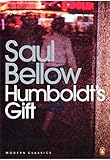
This is my review of Humboldt’s Gift (Penguin Modern Classics) by Saul Bellow.

A prize-winning author whose creative life is stagnant while his personal life is in a mess, Charlie Citrine is haunted by memories of his former friend and mentor, the brilliant but manic poet Humboldt Fleischer. Humboldt is based on the real-life poet Delmore Schwartz, a one-time colleague of Saul Bellow, to whom Charlie himself bears quite a strong resemblance.

The rambling plot which switches back and forth in Charlie’s mind is mainly a framework for Saul Bellow’s astonishing prose, a mind-blowing stream of consciousness, with punctuation (minus commas between adjectives, an interesting technique). This is leavened by many very funny descriptions and dialogues, which may atone for any irritation over yet another novel by a writer about writers, and for Bellow’s casual cultural references which require everyone who is not an American with an encyclopaedic general knowledge to either break the rhythm of reading to look them up, or remain in ignorance.

The humour also serves as an antidote to Citrine’s philosophical musings about the state of the soul, the existence of an after-life and the decline of American society by the 1970s into consumerism and banality. Citrine’s monologues, which tend to be made more digestible for the reader by frequent mocking or teasing interruptions, generally from female lovers past and present, suggest that his ideas are underdeveloped, even confused. Yet this may be intentional, since Bellow himself seems to have changed his opinions substantially over his long life spent reflecting on the meaning of life.

You may regret that Bellow dissipated his extraordinary verbal talent on such a self-absorbed, self-indulgent, weak, lecherous man as Citrine, although he is redeemed by a self-deprecating sense of humour and a rather appealing ability to understand the viewpoint of those fleecing and manipulating him, and to find a sense of proportion when things get tough. Bellow might of course argue that Citrine is merely a parody of himself, a man whose flaws did not prevent him from producing brilliant prose. So, despite its verbosity, repetition, sometimes woolly thinking, and damp squib conclusion, this original, remarkable work with its stunning descriptions of places, notably Chicago, and people, its wit, interesting ideas, insights and ultimately entertaining plot is worth reading – although you have to take the novel slowly to get the most out of it.

⭐⭐⭐⭐⭐ 5 Stars

Faire le vide

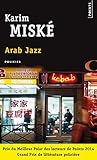
This is my review of Arab Jazz by Karim Miske.

After the Charlie Hebdo massacre, Karim Miské was praised for his prescience in portraying the dysfunctional immigrant youth of the 19th arrondissement in Paris who are prey to the kind of fundamentalist extremism of those responsible for the attack. In a January 2015 interview in The Independent, Miské comes across as a thoughtful and insightful man, “Arab Jazz” has won prizes as a “literary” detective thriller, and perhaps it is meant to be a parody of a corrupt, greedy society with distorted values, but I was very disappointed by this novel.

Ahmed, an immigrant from North Africa, is addicted to violent thrillers as what seems like a counterproductive way of escaping from his traumatic past. As he sits reading on his balcony, drops of blood falling from above alert him to the brutal murder of his neighbour Laura who has shown him friendship. An air hostess who has severed links with her extremist Jehovah’s witness parents, Laura has been the subject of what looks like a ritual killing involving pork for which Ahmed fears he will be framed. The ensuing revelation of the facts is due not to the investigative powers of the two young detectives who although described as intellectuals display absolutely no evidence of this, but rather to the author’s tendency to indulge in lengthy, indigestible information dumps instead of making the effort to “show” us any development of plot, character or motive.

With its clunky, often implausible plot, two-dimensional characters, its crude stereotypes, relying far too much on psychotics, psychopathic policemen, and power-hungry, manipulative, hypocritical religious maniacs, its hammy violence alternating with corny sentimentality, and its amoral tastelessness and simplistic thinking without a trace of subtlety, “Arab Jazz” is like a garish strip cartoon. This impression is heightened by Miské’s habit of lapsing into capital letters at dramatic moments:

“LE CRIME

LEUR CRIME”

Or “DERNIER VOYAGE” for someone about to be bumped off.

I read to the end to improve my French – if this can be said of extending my vocabulary for sex, drugs and mild pornography – and to take part in a book group discussion, which could at least consider the book in the context of the current state of French urban society.

⭐⭐ 2 Stars

The Top of the Egg

This is my review of Of Human Bondage by W. Somerset Maugham.

I believe there are quite a few parallels with Somerset Maugham’s own early life in this forensic study of a boy growing to become a man at the dawn of the last century: his hero Philip was orphaned young, brought up by a self-centred clergyman and his downtrodden sister, neither with much idea about children, bullied at school for his club foot, and grew up to be acutely observant, often using sarcasm to mask his hypersensitivity.

We see Philip moving from earnest piety to the conscious rejection of religion, with the startling sense of freedom this brings, trying out a variety of occupations, experimenting with romantic escapades but, to the reader’s frustration, continually falling under the influence of a woman who seems likely to destroy his future. Apart from providing a profound study of Philip’s thoughts and changing emotions, this is interesting for the details of daily life in late Victorian/Edwardian England: what things cost, how people trained for various qualifications, what they wore or ate and so on.

This reminds me of Michel Leon’s more recent “The Foundling Boy” (Le Jeune Homme Vert) published recently, but strikes a more serious and realistic note. Maugham should not be condemned for his narrator’s snobbish tone towards, say Cockney clerks or young women unaware of their lack of class as they fret over their respectability, since he must himself have been an inevitable product of the stuffy conventions in which he was raised. Yet, despite its often slow pace and dated attitudes, this classic stands the test of time and still deserves to be read for the wry humour, fluency and insight of the author’s warped genius.

⭐⭐⭐⭐⭐ 5 Stars

What price progress?

This is my review of Heart Of Darkness by Mr Joseph Conrad.

First published in 1899, Conrad’s celebrated novella “Heart of Darkness” uses the device of one tale book-ended within another. In this case, as sunset precedes the descent of darkness over the London Thames, Marlow begins to narrate to his colleagues on deck reminiscences of a visit to the snake-like river of central Africa, which has fascinated him since childhood. His task is to captain a steamboat on what is clearly the Congo. After repairing his damaged boat, he is sent to collect the mysterious ivory-trader Kurtz who is rumoured to be sick. The model for Coppola’s famous film “Apocalypse Now”, Kurtz proves an ambiguous figure. Is he criticised for having “lost his values” out of widespread envy for his commercial success? The natives seem to revere him as a kind of god, but there is evidence that he hates them.

At first, I took the book to be an indictment of the colonialism which exploited and degraded the Africans for imperial influence and commercial gain. Then I became uneasy at the evidence of stereotyping and a certain contempt for the natives. The story has a surreal, dreamlike quality, at one point the steamer is actually stranded in a heavy fog. Some descriptions are very striking, say of the bends in the river cut off from the rest of the world as the forests close in ahead and behind. Others passages seem disjointed and oddly phrased, reflecting the fact that English was Conrad’s third language so that, although remarkably expressive, words are not always used accurately.

I wondered at the time if the book is troubling for African readers, so was interested to find that it has been criticized in postcolonial studies, particularly by the highly regarded Nigerian novelist Chinua Achebe, who in his 1975 public lecture “An Image of Africa: Racism in Conrad’s Heart of Darkness”, described Conrad’s novella as “an offensive and deplorable book” that dehumanised Africans. Achebe argued that Conrad, “blinkered…with xenophobia”, wrongly portrayed Africa as the opposite of Western civilisation, ignoring the artistic accomplishments of the Fang tribe who lived in the Congo River basin at the time of the book’s publication. Was Achebe being oversensitive, failing to appreciate Conrad’s own sense of horror at the brutality of westerners in Africa when he was employed on a Congo steamer, himself providing the model for Marlowe? I prefer to think there is irony in what may be misconstrued as racism on Conrad’s part.

Apart from the fact that I felt myself to have failed fully to understand the book on a first reading, the ending seems rather limp and disappointing. In short, the novella is remarkable for the quality of some of the writing, and for the debate it triggers, but may have been overrated.

⭐⭐⭐⭐ 4 Stars

Too close a resemblance

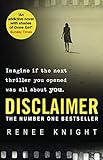
This is my review of Disclaimer by Renée Knight.

How would you react if a book appeared in your possession, clearly based on a personal secret unknown to any living person which, if exposed, could ruin your professional career as an award-winning investigative television journalist and destroy your marriage? In this twisty page turner, the author skilfully reveals the facts, with a few red herrings, alternating chapters between the horrified Catherine, written in the third person, and the embittered author of the book who may himself be an unreliable narrator.

One of the most compelling aspects is the author’s ability to arouse sympathy at some point for all the main characters, even if one neither likes any of them, nor entirely trusts them. I also like the wry touches of humour, and the way she weaves in observations on a range of relationships: within marriage, between parents and only children, with an ageing mother slipping into dementia and in a variety of work situations, with a manipulative rival or a procedure-obsessed HR department.

My only reservation is that, although well-written and cleverly constructed, the book is occasionally just a little too much the product of a high-powered creative writing course – too contrived, pressing all the right buttons as regards say, just the right level of eroticism and drama, with a few twists too many at the end when the reader is already perfectly saturated with them.

⭐⭐⭐⭐ 4 Stars

The Price of Torture

This is my review of A Book of Scars: Breen & Tozer 3 (Breen and Tozer) by William Shaw.

It is advisable to have read the previous novels “A Song from Dead Lips” and “House of Knives” before embarking on “A Book of Scars”. Described as the third part of a trilogy, this will probably not be our last encounter with Detective Sergeant Cathal Breen, since the author continues his ploy of including a loose end or two in the final chapter.

The two main hooks in this novel are the unresolved murder case of Alexandra, younger sister of Breen’s sometime work colleague Helen Tozer, plus the question of whether Breen and Tozer will ever achieve a proper relationship. Since Helen is, perhaps understandably, capricious, foul-mouthed and given to drinking too much, the decent, conscientious Breen who has led a rather sad life seems to deserve someone a little more appealing.

What first drew me to this series is the portrayal of life in late 1960s London, which evokes a sense of shocked disbelief to recall a world that seems a little unreal in its casual sexism, racism and lack of any sense of “political correctness”. I am not sure William Shaw is old enough to have experienced this first-hand, but he does quite an effective reconstruction. There is a serious thread underlying his work, since he likes to use as a background major overseas events of the day, such as the Biafran War in the first novel and the aftermath of the Mau Mau rebellion in this one.

Perhaps the novelty has worn off, but I did not enjoy this book as much as the first one. I was continually madecaware that it is not very well written, with some staccato, disjointed passages as if it has been thrown together in a hurry to meet a publisher’s deadline. Many of the characters are stereotyped and two-dimensional. I know that people aged sooner in the ‘60s, but Helen’s parents seem too old for their years – unlikely to be more than in their fifties – and I grew tired of reading about “old man Tozer”. I would have liked more psychological development, such as Helen’s resentment when her father is ironically shaken out of his grief-induced lethargy because the girl Helen has brought to help out on the farm reminds him of Alexandra. Some of the most convincing scenes are at the police station, with the counterproductive rivalry between different teams, and laughable attempts to dress up as hippies for undercover work.

“A Book of Scars” strikes me as formulaic in the steady accumulation of evidence, largely through interviews, culminating in a scene of gruesome and arguably gratuitous violence. Not for the first time, Breen takes an implausibly rash action from which he seems unlikely to emerge unscathed, which at least creates some gritty tension to offset any final cosy conclusion.

⭐⭐⭐ 3 Stars