Facing up to the future

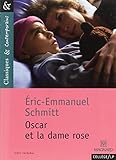
This is my review of Oscar et la Dame rose by Eric-Emmanuel Schmitt.

After an unsuccessful bone marrow transplant, ten-year-old Oscar puts the adults in his world to shame by the courage with which he faces the prospect of death. He is scornful of his distraught parents and sharp enough to perceive that his surgeon sees him primarily as an embarrassing and frustrating reminder of his own professional failure. The only “grown up” to offer Oscar some comfort is the eccentric hospital visitor “Mamie Rose”. Her suspect reminiscences of life as a successful wrestler, and the advice that Oscar should try writing letters to God, suggest that she may not be any more honest than the other adults, but combined with her idea of a game by which Oscar could imagine that each day represents a decade of the life (which he will not in reality experience), these ploys both entertain Oscar, and help him to grasp some vital points about living which it can take most of us years to understand, if at all.

Apart from Mamie Rose’s frankly tedious anecdotes, I found it implausible that Oscar would be so insightful about, for instance the “mid-life crisis”, and his romance with another patient, “Betty Blue”, is a bit mawkish at times. The most poignant moment for me occurs when, as a “very old man”, Oscar is struck by the beauty of nature, and realises that each day is to be appreciated as unique.

A philosopher by training, Schmitt uses quirky humour and an original approach to make just about tolerable a parable of how we could make more sense of life, and deal better with death. The focus on a young person’s death makes the situation all the more moving, but has relevance for us all.

Although I disliked this story at first, I was won over by the final pages, and was left with the sense that Schmitt has succeeded in provoking thoughts which stay in one’s mind. I believe this is studied in French schools and judging by reviews, it appeals to young people and is likely to spark discussion.

⭐⭐⭐⭐ 4 Stars

Still retains a surprising power to grip – in the original French! Beware of poor translations

This is my review of The Ladies’ Paradise (The Ladies’ Delight) – Unabridged by Émile Zola.

I gave this 5 stars in the original French, but found this English version useful only to check a few points, like the names of fabrics!

Since I associate Zola with grim, unrelenting tales of exploited coal miners, the theme of a Paris department store dedicated to delighting women seemed at first uncharacteristically tame and frothy. In fact, behind its plate glass and eye-catching displays, “Au Bonheur des Dames” proves to be as dominating and exploitative as any industrial factory, its shop assistants, clerks, packers and delivery men mere cogs in the machinery, as controlled as any industrial worker, on the mass production line of retailing.

Beneath his charm and apparent empathy with women and their love of fashion, inspired entrepreneur Octave Mouret is in fact a cynical manipulator: he is not only a casual seducer, but views his female customers as an inexhaustible captive market to be dazzled by his marketing ploys and all too readily induced to fritter away their husbands’ money on the material goods he displays with such alluring skill. His sponsor Baron Hartmann warns him that one day women will “get their revenge” but Mouret is knocked off course where he least expects it by the sweet, unsophisticated but stoical country girl Denise Baudu, who is quick to grasp that the department store is a part of inexorable progress, but steadfastly sticks to her personal principles.

In vivid if wordy descriptions, Zola describes how the magnificent store looms over the surrounding gloomy alleys, further cutting them out from the sun. These are the haunts of the resentful traditional shopkeepers who persist in their stubborn and ultimately fruitless struggle to survive, when they cannot realistically hope to compete with Mouret’s drastic discounts and huge variety of goods. The scale and brightness of his store, with the light pouring in through glazed roofs, and the Lowry-style bustle on the metal staircases and galleries, as far as the eye can see, creates the idea of a self-contained community, which Zola sometimes calls a “phalanstery” after the C19 ideas of Charles Fourier for a utopian community.

Yet, although the workers are housed and fed in a paternalistic way, the shop is far from utopian: staff are not allowed to have visitors in their rooms, women have to leave when they become pregnant, and in the summer months of slack demand, assistants are dismissed for the slightest imagined misdemeanour. Not surprisingly, they often resort to scams to swindle the store, and the smallest rumour or incident is exaggerated and spread on the gossip grapevine. Although the customers look down on the assistants who must be ladylike without being accepted as ladies, they often behave badly, not merely overspending on luxuries and abusing the “returns” policy, but even resorting to shop-lifting.

Just as the store seems very topical in these times of zero hours contracts, class divides and the ravages of competition, Zola’s characters are real in their flaws and complexity. There are also some moments of comedy amongst the exhausting materialism of the store contrasting with the suffering of the impoverished small shopkeepers.

The novel is best read in French, although the exhaustive lists of specialised fabrics and some of the dated procedures forced me to resort to English translations. These vary a good deal in quality, so it is advisable to check them out before purchase. Some come with interesting introductions, to be read afterwards to avoid spoilers. This kindle translation is far too literal – hence very stilted and wooden in places. Also, not easy to read in conjunction with French kindle version!!

⭐⭐⭐ 3 Stars

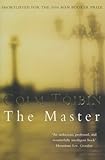
The Master by Colm Tóibín: “Playing with vital elements….masking and unmasking himself”

This is my review of The Master (Picador Classic) by Colm Toibin.

In his fictionalised biography of Henry James, Colm Tóibín slides us into the author’s thoughts with no background explanation. The five year period covered is 1895-99, when he was a celebrated author in his fifties, but with many lapses into past memories going back to childhood.

At first, I thought that a full appreciation of the novel would require a detailed knowledge of James’s style, plots and characters and that it would bewilder and bore those who know little or nothing about James. In fact, what turns out to be a subtle and perceptive book, may be enjoyed and admired simply as a portrayal of a sensitive loner who cannot help employing his acute sensitivity to observe others, conjuring stories out of small incidents, yet who goes to great pains to conceal his feelings, and who, despite a sense of loneliness, even loss, ruthlessly steers clear of commitment, even at the cost of destroying the lives of those he has used as source material. Somehow, he generally manages to avoid acknowledging this realisation, just as he represses the expression of his sexuality.

So it is that he uses his beautiful cousin Minnie Temple as a model for several stories, but is chided by his friends for failing to invite her to stay with him in Italy when she is sick and close to death. Did he simply fail to notice her appeal for such an invitation, or refuse to make it because it interfered with his work? Similarly, he enjoys a secret friendship with a female writer, breaking through the defences of her self-contained loneliness, without apparently realising until too late the depth of her need for his presence and love.

James is continually an indecisive mixture of self-delusion and self-knowledge. The book opens with his excitement over the possibility of becoming a playwright: “He foresaw an end to long, solitary days; the grim satisfaction that fiction gave him would be replaced by… voices and movement and immediacy that …up to now he had believed he would never experience”. Yet this alternates with the certainty of failure (as proves to be the case) which would force him to return “willingly and unwillingly, to this true medium”. In such complex and nuanced chains of thought, Tóibín captures a sense of James’s convoluted yet insightful, hypnotic prose, but without making the mistake of concocting wordy, interminable sentences in what would inevitably prove a parody of “the master”.

There are some lighter moments, as Henry James steers his way through a world of gossip. On a visit to Ireland, it is clear that the domineering socialite Lady Wolseley, believing him to be gay, assigns the handsome army corporal Hammond to act as his servant, “smiling strangely” over his apparent satisfaction with the arrangement. The whole issue of the author’s sexuality is treated ambiguously, as it no doubt was at the time.

One of the funniest moments is towards the end when, briefly reunited with his elder brother William, with whom there has always been a degree of sibling tension. William takes him to task for wasting his sharp eye and wide-ranging sympathy on the superficial, class-ridden English whom he can never understand. In an outrageous, misconceived yet telling outburst, he asserts, “I believe that the English can never be your true subject. And I believe that your style has suffered from the strain of constantly dramatizing social insipidity. I also think that something cold and thin-blooded and oddly priggish has come to the fore in your content…I find I have to read innumerable sentences you now write twice over to see what they could possibly mean. In this crowded and hurried reading age you will remain unread and neglected as long as you continue to indulge in this style and these subjects”.

Not always an easy read, this has many brilliant moments.

⭐⭐⭐⭐⭐ 5 Stars

Australian opal of a novel

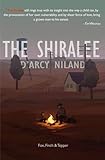
This is my review of The Shiralee by D’Arcy Niland.

Oppressed by the “captivity” of a job in Sydney, roaring in his ears “with its terrible pandemonious laughter”, Macauley returns to his life on the country roads of New South Wales, leaving his wife alone for long periods with their child. He is a stereotype of the macho Australian male, relishing a punch up or a drink with his mates, but he is also a good worker who has no difficulty finding work on sheep-shearing stations, building sites or sawmills. When he catches his wife in bed with another man, his first impulse is to snatch up his daughter, at least partly in revenge, and take her along on his travels, where she soon becomes a hindrance, a “shiralee” or burden far heavier to bear than his swag. The trouble is that her unshakeable trust in him , dogged affection despite his continual rebuffs and impressive resilience awake his conscience and emotional response to someone other than himself.

Macauley is portrayed as a flawed hero, virtually raping his girlfriend when still in his teens, irresponsibly putting at risk his daughter’s welfare, and neglecting his understandably resentful wife. Yet his basic decency is not in doubt, together with his need to be true to himself. As the old man called the “oracle of the north” assesses: “there’s a lot of good in you, but it’s buried deep and it’s twisted..like a wild animal that has to be coaxed out into the light and tamed…does not come willingly because it is frightened for itself. Don’t lead two lives or both will be unhappy: lead one and lead it well”.

Published in the mid-1950s, this novel has the authentic ring of the author’s own experiences of life as an itinerant worker in his youth. What could be a sentimental and schmaltzy tale is avoided by an often tense and unpredictable chain of events, leavened with wry humour, and the distinctive style which conveys a strong sense of place, often daring in its play with stream of consciousness, as when Macauley recalls his brief attempt to live in the city and unwise decision to marry. The book is worth reading for the raw, fearlessly passionate prose alone, which sometimes goes over the top, untrammelled by any editor.

“The sky was overcast, all in a yeasty motion of sombrous hues ever darkening the earth. The lightning jiggled, sharp and brilliant as a blind shooting up against daylight in a black room. The ground shook with the rumble of tumbling thunder. The wind whuddered across the waste, scattering the roly-poly, not unlike a lot of sheep making a stupid run for it…The rain came with a few big drops, a hesitant rehearsal; then they heard it roaring over the plain, and saw it coming, a wall of grey between sky and earth.”

Recently revived, this novel reminds me of Steinbeck, and deserves to be better known.

⭐⭐⭐⭐⭐ 5 Stars

Vengeance or wrath?

This is my review of The Revenant by Michael Punke.

I was impressed by the visceral and bleakly beautiful film “The Revenant”, the tale of a man’s survival against the odds in the American wilderness of the 1820s, having being abandoned by the two members of a fur-trapping team paid to care for him after he had been mauled by a grizzly bear. Curious to see how the somewhat ambiguous ending compared with that of the book on which the film is based, I discovered that the written medium gives scope for a much more detailed and complex, in some ways more realistic storyline, which does not need to be padded out with images of the dead Indian squaw who haunts the injured man Hugh Glass’s memory, nor with a murdered son to feed his revenge against the men who wronged him, nor any implausibly long battle with the bear, nor ploys like climbing inside the body of a dead animal, having removed the entrails, for cover. Instead, in addition to the predictable swashbuckling battles with Indians, wolves and the elements, there is also some strong character development, interwoven with details of the history of the period and descriptions of, how, for instance, men could construct “bullboats” out of buffalo hide, sewn together, stretched over frames of willow branches and caulked with grease to provide shallow-draft craft to punt down-river.

A number of characters really existed, including Glass who really survived a bear attack, Bridger who was one of those abandoning him but lived to become a revered pioneer, Ashley who was the ill-fated leader of the Rocky Mountain Fur Company to name only a few. Understandably mainly hostile to the European interlopers, the Indians, some alleged to be cannibals like the fierce Arikara tribe, were a continuous threat, sabotaging the trappers by stealing their horses when not firing arrows. The map of the famous explorer Clark, trained in cartography, “was the marvel of its day, surpassing in detail and accuracy anything produced before it” but when he at last got sight of a copy, Glass was most interested in details added recently which would help him to travel back to his team’s base at Fort Union, and he in turn was “peppered” with questions as to any information he could provide about lengths of rivers between forks and useful landmarks: in this haphazard, painstaking way, vital data was pieced together.

There are some striking descriptions of the landscape: the lone, twisted pine growing from a crack where a seed dropped by a sparrow lodged far above the pines, straight as arrows, used by the Indians to construct their teepees; “the aching presence…magnetic force” of the Rockies, “the snowy mountain peaks, virgin white against the frigid blue sky”

Just occasionally my interest flagged as Glass used his resilience and ingenuity to overcome yet another setback, only to be knocked back yet again by some piece of ill-luck, yet the novel works wells as both an adventure yarn and an insight into why and how the early pioneers risked their lives to develop the west of America.

⭐⭐⭐⭐ 4 Stars

“Art made tongue-tied by authority”

This is my review of The Noise of Time by Julian Barnes.

This short novel often reads like a biography but consists in fact of fictionalised reflections on the life of the famous Russian composer Shostakovich. The author’s cool, elegant style and rather contrived structure – three sections, like a musical triad, each covering a leap year at twelve year intervals marking some significant event in the composer’s life – tend to distance us somewhat from the main characters. Although Julian Barnes never lets his punctuation slip, the lack of any clear plot and the tendency for paragraphs to flit back and forth in topic and time create a kind of fragmented “stream of consciousness” effect which at first I found quite unengaging, even dull.

The essence of this book, which also turns out to be the best part of it, is the portrayal of what it is like to live in a society where artistic creativity and freedom of expression are censored, so that it is not enough to keep quiet, one has actively to follow the accepted line, but the goal posts keep moving so half the battle is working out what is expected.

In the first part, the innately neurotic but understandably terrified Shostakovich has inadvertently fallen foul of Stalin in 1936 by producing an opera which, as a sycophantic “Pravda” journalist asserts “had only succeeded outside the Soviet Union because it was ‘decadent and …tickled the perverted taste of the bourgeois with its quacks, grunts and growls… and its convulsive and spasmodic nature derived from jazz' ”. So, every night, standing fully dressed with his suitcase by the lift on the landing outside his apartment, the composer awaits the inevitable visit of the secret police.

1948 finds Shostakovich on a plane flying back from New York crushed by the humiliation of being forced to read an official speech extolling the Soviet music system as “superior to any other on the face of the earth” and condemning musicians who persisted in their "belief in the doctrine of art for art’s sake" with particular venom reserved for the "perverted" Stravinsky, who had claimed asylum in the United States. But what mortifies Shostakovich even more is the “suave offensiveness” of the Russian defector to the CIA who grills him without mercy, forcing him to confirm that he “personally subscribes” to every one of the bigoted assertions he has made. Julian Barnes employs the vivid image of a parrot banging its head on every step as it is dragged downstairs by a cat to show how even a famous composer cannot risk expressing his true opinions.

By 1960, Shostakovich is drowning his guilt in the vodka for which he has developed a head, to mask his guilt over having taken the final step of agreeing to join the Communist Party. It is ironical that, at a time when the worst of the terrors seem a thing of the past with the death of Stalin, the composer gives in to constant badgering thus laying himself open to the charge of being Krushchev’s stooge.

This novel is an acquired taste, perhaps including a liking for classical music and some knowledge of recent Russian history, but repays rereading and contains some interesting ideas. I assumed the “Noise of Time” was unmusical cacophony of any discordant age, but it is in fact culled from a book of the same name by the Russian poet. Osip Mandel'shtam.

⭐⭐⭐⭐ 4 Stars

Fighting monsters without becoming one

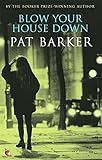
This is my review of Blow Your House Down (Virago Modern Classics) by Pat Barker.

Set in a rundown northern town, this short but dense, bleak yet gripping novel exposes the lives of a disparate group of working class prostitutes trying to contain their rising fear over the mounting evidence of a serial killer, unprotected by the police who seem to using them as bait to trap him. Understandably haunted by the murder of her female lover, one of the women decides to take control and avenge her death, but can she be sure she has found the right man? Each of Pat Barker’s novels seems to be triggered by specific real events, in this case the activities of the “Yorkshire Ripper”.

Her second novel, published in 1984 long before she hit the Booker jackpot, this is very different from her recent work, revealing the style of her early writing from which a more fragmented, stream of consciousness, perhaps more self-conscious and studied, sophisticated style has developed. Parts 1 and 2 in particular seem more straightforward than later work, with strong dialogue and clear narrative drive making the novel a page-turner. Without undue sentimentality, Pat Barker arouses our sympathy for the women who have often had a raw deal and support each other with earthy and stoical humour. You may of course feel that, along with the stereotyping, she tends to let them off too lightly as unfortunate victims in comparison with the men, all of whom appear to some degree weak, pathetic or abusive. Along with some disturbing graphic descriptions of violence, there is the unsettling image of the headless chickens on a conveyor belt, their feathers stained with blood as an analogy for the victimised prostitutes.

Although Pat Barker’s talent as a wordsmith is evident, her plot potentially powerful, I found the arguably original and daring change in point of view in Part 4 too abrupt and confusing, destroying the flow and tension built up previously. Feeling that I had been catapulted into another novel, I had to search back to see if any of what seemed like a new set of characters had appeared before. I think the author is trying to show that how “respectable” women who suffer attack are treated better than prostitutes but think that this thread needed to be woven in more skilfully from the outset rather than bolted on as an awkward coda.

This novel confirms my impression that Pat Barker is a distinctive and thoughtful writer, who does not flinch from the challenge of describing horrific events which neither she nor most of her readers have experienced, who switches perhaps too swiftly from well-observed social chat to the macabre, and whose talents lie in striking description and dialogue rather than constructing a plot.

⭐⭐⭐ 3 Stars

“Noonday” by Pat Barker – Living outside time

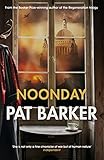
This is my review of Noonday by Pat Barker.

Noonday is the third part of a trilogy based on the triangular relationship between three artists, whose lives are defined by World War 1 in their youth, and World War 2 in late middle age. This is Pat Barker’s second trilogy about war, which obviously fascinates her in both its arbitrary physical violence and more complex psychological effects on both soldiers and civilians. The prickly Elinor Brooke, perhaps not as independent as she seems, the talented, rambunctious but inwardly insecure Kit Neville, and introverted, somewhat enigmatic and troubled Paul seem to have become real and familiar people for her, providing endless scope to explore their thoughts and motivations.

This is not a stand-alone book, in that I think it is essential to have read the second novel “Toby’s Room” (and ideally Life Class as well) to know the circumstances of the death of Elinor’s brother Toby at the front, and Kit’s part in it. I realised when reading “Toby’s Room” that plot has become unimportant to Pat Barker over the years. I sympathise with readers who found the early chapters of “Noonday” a struggle, since they often seemed like padding or fillers to reach the next incident or situation of interest to her. A few points caught my attention: the sense of menace combined with unreality created by the German bomber planes “circling like gnats” over a Home Counties garden; the long shadow cast by the death of the mythically heroic Toby, to the extent that his grief-stricken mother finds a reluctant substitute for him in her grandson Alex, who has the misfortune of looking very like him.

Otherwise, I felt quite unengaged in disjointed events which may be realistic but do not feed any narrative drive – the slow death of the mother with whom Elinor never shared any mutual love or understanding, Paul’s obsessive flashback’s to his own mother’s sickness and death, the daily grind of Paul and Elinor’s lives in London as respectively an air-raid warden and an ambulance driver. It’s all fairly bleak but preferable to the implausible appearance of a medium who is clearly a fraud, yet it would seem haunted by a ghost from the trenches. As Paul paced the dark London streets rather than take refuge in a shelter “he found it easy to believe they were leading him to a secret chamber, right at the heart of the blacked-out city, where a white, bloated figure sat enthroned, a grotesque Persephone, claiming to speak for millions of the mouthless dead.”

I fear that the ludicrous Bertha Mason (shades of Jane Eyre) caused me to skip in despair, until I found Chapter 23, which is where Pat Barker reaches the culminating stage of the trilogy, the unresolved tension of Kit Neville’s unrequited love for Elinor, his subconscious hatred of Paul as a rival – in love and art, a powder key which can be sparked by the device of Paul’s betrayal of Elinor in the odd, disrupted limbo of London in the blitz, where “living outside time”, the old rules do not apply. At last, in the final hundred or so pages, I found the chain of dramatic events, ironic twists, expression of real emotion at last and strong dialogue I had been missing.

⭐⭐⭐ 3 Stars

“Toby’s Room” by Pat Barker – Making sense of madness

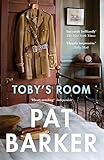
This is my review of Toby’s Room by Pat Barker.

Although Toby’s Room may be read as a “stand-alone” novel, it is part of a trilogy best read in order, starting with “Life Class” which is based on real-life young artists studying at the Slade under the fearsome Professor Tonks just before the outbreak of World War One.

Pat Barker’s books seem to be triggered by specific real people and actual events, in this case the death of Virginia Woolf’s brother Thoby, prompting her novel “Jacob’s Room” and also by the death of Edward Brittain, brother of Vera, who is believed to have committed suicide by way of putting himself in danger at the Front, rather than face the disgrace of court-martial and prison.

A central character is the prickly and unconventional art student Elinor Brooke, who is faced with the disturbing realisation that her deep bond with her brother Toby is too close. Before there is time to resolve this issue, she learns that he is missing, presumed dead in the war. Knowing that brilliant but boorish artist Kit Neville was serving in Toby’s company so is most likely to know the truth about what occurred, she enlists the aid of Paul Tarrant, another artist and former lover, to extract the information from the reluctant Kit, even though he is undergoing painful surgery to restore his damaged nose.

This is a cue for the author to explore another aspect of wartime social history, the involvement of Tonks in recording the hideous wounds caused by shells and the development of plastic surgery. I had no idea that injured soldiers undergoing nose surgery had to endure temporary tubes called “pedicles”, sometimes as many as three, making them resemble squids (a sick joke on Kit’s part?) nor that anaesthesia was so rudimentary that the tube carrying the gas often got in the surgeon’s way, with the danger of making the operating staff themselves woozy if it was removed without due care.

Barker’s vivid prose, punctuated with original metaphors often veers into poetry as she describes Zeppelins over Hampstead Heath and coastal cottages at the mercy of tides and shingle in a storm. There are some strong scenes with lively dialogues, mostly involving Kit who is one of the most flesh-and-blood, fully developed characters: Kit wearing a Rupert Brooke mask on an outing to the Café Royal with Paul; Kit remembering his fraught relationship with medical officer Toby forcing him to take ludicrous risks to retrieve not only wounded men but corpses from no man’s land; Kit finally describing Toby’s last days to Paul, but these powerful passages which prove Pat Barker’s talent are too few.

I wanted to admire this novel, but it was often too disjointed and lacking in focus to engage me. I could not understand why the author tells us in detail about Elinor’s dissection of a corpse (to learn more about anatomy for artistic reasons), but avoids describing Kit’s wound and how their first sight of it affected Paul and Elinor. Why does Pat Barker include extracts of Elinor’s very contrived diaries, casually name-dropping visits to Virginia Woolf and Lady Ottoline Morrell without ever explaining her connection with them? Why is Toby so underdeveloped as a character? If he and Elinor are so close, why do they have such limited communication? Why are the most dramatic moments so often reported third hand after the event?

It could be that the author is deliberately disjointed and unfocused, because that is how real life often is, and she wants us to interpret the story for ourselves, but I think the book is weakened by the lack of a well-constructed plot and three-dimensional characters.

⭐⭐⭐ 3 Stars

“The Girl on the Train” by Paula Hawkins – Formulaic, manipulative but good portrayal of alcoholic narrator and undeniable page turner

This is my review of The Girl on the Train by Paula Hawkins.

Rachel’s morning commuter train often stops at a red signal near Euston, enabling her to fantasise over an attractive couple who live in a house backing onto the railway line. Its layout is familiar to Rachel, since she recently lived a few doors away from it in the house still occupied by ex-husband Tom, now with his new wife Anna and baby daughter. Her grief over this is driving Rachel into the downward spiral of an erratic, embarrassing alcoholic but when exactly did she begin to drink too much and why?

This is the starting point of a twisty psychological thriller which relies heavily on the way vital details are revealed. The viewpoint switches between Rachel and the object of her fantasy, Megan, at times also including Anna, to make a somewhat clunky dramatic triangle, as each recalls recent events in a kind of mental diary. It is often interesting to see how these different characters see the same events. Rachel’s personality is the most fully developed: probably an unreliable narrator, perhaps guilty of some dreadful act committed in a drunken haze, arousing contempt or frustrated pity mixed with despair in those who have to deal with her, she also evokes sympathy in the reader with her flashes of wry humour and self-knowledge. In contrast, Megan and Anna seem to speak with the same voice, shallow and unstable cyphers, in fact all the characters apart from Rachel tend to be portrayed as two-dimensional stereotypes. None of them is very likeable, although that does not bother me.

This book is not particularly well-written, it has clearly been over-hyped, a conscious attempt to recreate the success of “Gone Girl”. It is easy to guess the key to the mystery, and final chapters leading up to the climax seem more rushed and formulaic than the intriguing slow build of the first half. Although the highly visual descriptions pave the way for a film of the book, I shall not feel driven to watch it.

Despite this, the novel is definitely a page turner with a plot which is imaginative in detail if somewhat hackneyed in its main thrust. The ending was better than the let down I had expected. It fascinates me how brilliant, insightful wordsmiths are often hopeless at plots, or underestimate their importance, whereas those with a gift for constructing an intrigue cannot prevent themselves from slipping into banal, clichéd prose. The recent novels “I saw a man” and “Disclaimer” seem to me to achieve a stronger combination of good writing and intriguing plot.

⭐⭐⭐ 3 Stars