Brooklyn [DVD] [2015] – Half-wishing things could have been different

This is my review of Brooklyn [DVD] [2015].

When Eilis is unable to obtain suitable full-time employment in the tight-knit, isolated Irish town of Enniscorthy, her elder sister Rose pulls strings with fixer, Irish American priest Father Flood to get her a visa and job in New York, with accommodation in a Brooklyn boarding house. Like millions of other Irish immigrants, she begins to make a life for herself after the initial appalling homesickness, but is likely to be cast into a kind of limbo, in which, when in Brooklyn, her past in Ireland seems unreal and dreamlike, and vice versa.

At first I was reluctant to see the film version of “Brooklyn” since I thought it was unlikely to capture the book’s main achievement which is to convey the shifting inner thoughts and emotions of the heroine Eilis. Yet author Colm Toibin seems happy with the film , and actress Saiorse Ronan is skilful in showing a bright yet unassuming girl who is a mix of naïve and shrewd, sensitive yet resilient, dutiful in her Catholic faith but spirited.

The film gives a vivid and convincing portrayal of life in conservative small town Ireland of the early 1950s, as opposed to the bustle of a New York street in the rush hour or Coney Island on a summer weekend.

Scriptwriter Nick Hornby keeps fairly faithfully to the original plot and dialogue, including the final ironic twist, and I can understand why a few scenes have been added, for instance at the end, to suit the visual medium of film. Yet, I felt that some minor scenes have been omitted unnecessarily, creating an overly abrupt plot development in the process. To give a a spoiler-free example, the film would have gained from more leisurely initial “scene-setting” to portray Rose as more striking and successful in her social and work life than she seems in the film, while we could have seen more of Eilis reluctantly accepting a part-time job with the ghastly Miss Kelly, reporting her days in humorous anecdotes over the tea table in an attempt to make them more bearable. Also, her initial humiliating encounter with “eligible young Irish bachelor” Jim Farrell before she leaves for Brooklyn is inexplicably left out altogether. Perhaps more could have been made of the stifling web of Enniscorthy gossip stretching its threads even into Mrs Kehoe’s Brooklyn boarding house.

Overall, the film is likely to please those who have never read the book, and have the power to move those who have, despite any reservations.

⭐⭐⭐⭐ 4 Stars

Intriguing psychological drama Korean-style

This is my review of A Girl At My Door [DVD].

Young female police officer Young-nam is sent to spend a year as “chief” in a rundown coastal town set in a beautiful bay, but reliant for employment on the fishing industry, improbably organised by the brutish Yong-ha, who appears too much of a buffoon to organise anything, and also happens to be her neighbour. When Young-nam finds his young “daughter” (she may in fact be his ex-lover’s child) Dohee being bullied by other schoolchildren and subjected to extreme violence by her grandmother and father, the police officer steps in to offer the girl protection and eventually shelter. This is clearly unwise, leading one to ask about the official procedures in Korea for handling such cases.

The plot develops into a pyscho-sexual drama filled with ambiguities. Why exactly has Young-nam been assigned to this lawless backwater? Is Yong-ha Dohee’s biological father? Dohee is clearly a victim, but to what extent has she been damaged and corrupted? What are Young-nam’s true motives in seeking to help her to such an extent?

The plot sometimes seemed implausible, for instance, over aspects of police practice. Strongly influenced by western drama, the film has a distinct Korean slant of it own, which at times slips into over-acted physical violence and shouting, an extreme bleakness and moments of cruelty, all of which could be summarised as a lack of subtlety. Yet, despite this, the two leading female parts are well-acted, there are some moving scenes, moments of humour and I was left with intriguing questions to mull over.

⭐⭐⭐ 3 Stars

When women rebel like men

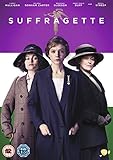
This is my review of Suffragette [DVD] [2015].

This film adopts a somewhat unusual take on the suffragette movement by focusing on Maud, a twenty-four year old Cockney who has suffered the unhealthy fumes and gross sexual harassment from the supervisor at a laundry where she has been employed since childhood, having been taken along to work as a baby when her mother worked there before her. Married to a fellow-worker with a young son to whom she is devoted, Maud initially wishes to keep out of trouble, but is drawn inadvertently into the campaign, and radicalised by the excessive police brutality she suffers and a growing realisation of the injustice and limitations of her life. This highlights the fact that the wealthy women who led the suffragette movement, often to some extent “playing” at it because they could opt out at any time, stood to lose less than their working-class supporters who risked destitution through being thrown out of their jobs and the isolation of being rejected by family and neighbours for their “subversive” beliefs.

Well-acted with some strong character development and a good script, I was particularly struck by the interesting evolving relationship between Maud and the cynical Irishman bent on infiltrating the suffragette movement, excellently played by Carey Mulligan and Brendan Gleeson respectively. Yet despite this, together with some moving moments and impressive recreations of 1912 street scenes with horse-drawn buses, I often felt myself to be viewing the drama in dark settings through a kind of fog , which may be intentional to imitate the graininess of old film footage of demonstrations. Also many shots seem to be with a camera held too close to the characters to see clearly what is going on – as in the case of Mrs. Pankhurst’s escape from arrest.

I would have preferred a good documentary of this fascinating theme, but since every generation needs to be reminded of how recently women gained the vote which many now do not bother to exercise, and how badly they were treated “as a matter of course”, this may for many be a more effective way of making the point.

⭐⭐⭐⭐ 4 Stars

The devil-and-all to pay

This is my review of 99 Homes [DVD].

During the recent US subprime prime mortgage crisis, young single father Dennis Nash suffers a double blow: he loses his employment as a construction worker, and is evicted from his family home. The film captures vividly how disbelief and anger turn to shock and pain – the outrage of having one’s home invaded without warning, the inability to think clearly when given only a few minutes to seize “essential” possessions before being ordered to “step to the kerb” in full view of neighbours.

Understandably yet regrettably, Dennis is sucked into working for the aptly named Carver, the diabolic wheeler-dealer who is exploiting the situation and who spotted his potential in the process of evicting him. This seems the only way Dennis can earn enough to regain his home for his young son and mother, gradually selling his soul in the process at what seems likely to prove great cost. Inevitably, making a good living by such dubious means begins to drive a wedge between him and former colleagues, ultimately even his own mother. At first, Dennis rejects Carver’s offer of a gun for protection against those driven to violence, but the fact that he changes his mind, much to Carver’s knowing amusement, is a sign of his steady sinking into corruption.

The relationship between Nash and Carver is quite subtly developed. The older man forms a liking for his protégé, taking him into his confidence, even doing him a favour by his warped standards. Nash’s initial hatred and contempt are eroded somewhat by the logic of Carver’s cynical powers of persuasion. What good has working hard done? America is the land of winners, not losers.

My only criticism in an otherwise powerful and gripping morality tale is that for a non-American (and perhaps for Americans too!) the details of the US legal system and various scams to exploit it are hard to follow, particularly when delivered in a side-of- the-mouth drawl which in the opening scenes made me long for sub-titles. So, my 4 star rating is a little shaky.

⭐⭐⭐⭐ 4 Stars

Hell hath no fury like a woman scorned

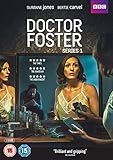
This is my review of Doctor Foster Series 1 [DVD] [2015].

Doctor Gemma Foster has a successful career as senior partner in a general practice, a handsome and seemingly loving husband Simon, appealing son and stylish house with friendly neighbours opposite. When she discovers a long blonde hair on her husband’s clothing, her suspicions seem somewhat easily aroused, and she reveals her concerns rather too readily for a confident, professional woman. Yet, as becomes clear, she is insecure beneath the surface, and prone to make enemies with her driven personality and an intensity which often leads her to “step over the mark”, manipulating others and using dubious means to achieve justifiable ends.

In this gripping, twisty and unpredictable tale one’s sympathies should be with Gemma as she tries to deal with a husband who will not admit to his infidelity and friends who continually prove duplicitous, but her increasingly extreme behaviour, although understandable, often seems to make things worse.

Some of the scenes in the surgery may not be very realistic, but can be accepted as “dramatic licence”. I thought the plot was in danger of losing its way and slipping into mere soap in the middle, but it all comes together in a dramatic final part, in particular a powerful dinner party scene.

This is an above-average drama, not merely owing to the excellent acting, well-developed characters and intriguing plot, but because it is thought-provoking over the sad and thorny issue of infidelity.

⭐⭐⭐⭐ 4 Stars

Reality and Fake

This is my review of Mia Madre DVD.

In the course of shooting a Ken Loach-type film on fraught industrial relations in a factory, Margherita tries to make time for hospital visits to her mother, separation from a lover who seems reluctant to accept that their relationship is over, and a daughter who needs to resit her school exams. Unlike her brother Giovanni, played by the director Nanni Moretti, Margherita finds it hard to face up to the fact that her mother is dying, and is by turns impatient, frustrated by her sense of being unable to be any use as a carer, or hides behind assurances to her mother that there is nothing amiss. Yet in his quiet way, Giovanni may see his mother’s death as the cue for a major change in the course of his life. Nanni Moretti must have been inspired to direct this film by the recent death of his own mother, although this may have made him “too close” to the event to portray it with a sufficient sense of perspective.

Some viewers will be moved by the situation, and be brought to reflect on how they will deal with the inevitable death of a parent, or have already done so. However, for me the film was a set of disjointed scenes which did not coalesce into a whole which “worked”. I was unconvinced by the surrealistic episodes which I assume occurred in Margherita’s imagination.

The comedy supplied by Margherita’s nightmare of an Italian-American leading man Barry Huggins, demanding, narcissistic and maddening in his inability to remember lines, is a welcome antidote to the protracted, realistic but depressing bedside scenes. Yet the mixture of poignant loss and farce often appear incongruous. Margherita Buy seems too emotional and capricious to have made it as a director, and as she slips into what seems like a nervous breakdown, it is half-painful, half-amusing to see her unnecessarily large retinue tip-toe in the wake of her tantrums like clueless sheep, but where is the producer or worried financial backer who in the real world would step in and send her off on indefinite leave?

One of the strongest scenes for me is where rejected lover Vittorio blasts Margherita with a hard-hitting analysis of all her shortcomings.

⭐⭐⭐⭐ 4 Stars

Smoke gets in your eyes

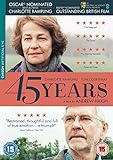
This is my review of 45 Years [DVD] [2015].

Kate Mercer, a self-controlled retired headmistress married to the older and frailer former engineering manager Geoff, combines walks with her dog through the misty Norfolk Broads countryside with preparations for the couple’s forty-fifth wedding anniversary party. A few days before the event, Geoff is understandably shaken to receive a formal letter in German notifying him of the discovery in an Alpine glacier of the perfectly preserved body of Katya, his girlfriend of half a century ago, who fell to her death during their trek through the Alps from Switzerland to Italy. Naturally, vivid memories return from the distant past, prompting him to exclaim aloud over the fact that Katya will be preserved exactly as she was, in contrast to how he has changed.

Kate’s equally strong if largely repressed emotions must surely be more than simple jealousy. Is she distressed by what she suspects or unearths about the true nature of Geoff’s relationship with Katya, or is it that he has misled her, if not exactly lied, and caused her to question how well she really knows him? Does the shock of the event expose long-denied disappointments in the marriage they are about to celebrate? The drama is strengthened by the fact that what is probably the key reason for Kate’s distress is revealed in such a subtle and unspoken way. The understated ambiguous ending also strikes the right note.

Charlotte Rampling and Tom Courtenay are excellent in the leading roles, the filming very naturalistic, creating a strong sense of place, with ordinary members of the public rather than extras in a busy Norwich street scene. Yet as the closing credits rolled I felt a slight sense of disappointment after the glowing critical praise. Perhaps the plot was a little too slight, the pace a little too slow to pad it out to 93 minutes. On reflection, I realised that in addition to the main plot so much about getting older is implied, such as on one hand the sudden crushing realisation of how life might have been different, or one might have made different choices, as opposed to the more positive recall of a past interest or talent which can be resumed, although probably not to the same standard. All this is over and above the

usual frustrations over one’s physical decline or the sense that “everything is going to pot” at one’s former workplace.

In the recent crop of “Marigold Hotel”- type dramas clearly designed to draw grey power audiences, this stands out in a class of its own, although I do not know what younger viewers will make of it.

⭐⭐⭐⭐⭐ 5 Stars

“Gemma Bovery” (2014) – Playing with fate

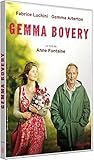
This is my review of Gemma Bovery (2014).

Although I do not know how close it is to Posy Simmonds’ satirical cartoon strip about English expatriates in rural France on which it is based, this French-British collaboration is an amusing and neatly plotted parody of Flaubert’s famous classic “Madame Bovary” which it is not essential to have read in advance.

Martin Joubert, played by the excellent Fabrice Lucchini, has returned to his picturesque, except in the English-type rain, home village in Normandy to produce mouth-watering bread in the boulangerie inherited from his father. He may have become disillusioned with publishing, but his literary passion for “Madame Bovary” arouses a fascination which will inevitably turn into infatuation, much to his wife’s irritation, when his new neighbour proves not only to be the classic heroine’s virtual namesake “Gemma Bovery”, but also to have a possibly dull husband Charles, and be fatally attractive and fairly soon rather bored. When Gemma, played convincingly by the suitably irresistible (and named) Gemma Arterton, duly starts an affair and buys arsenic-laced poison to get rid of the local fieldmice which invade her cottage, Charles becomes convinced that events are on course to imitate those of Flaubert’s art, and does his frantic, clumsy best to upset them, not always for entirely altruistic motives.

Having seen some quite critical reviews dismissing this as, for instance, “a watchable but sugary snack” of a film, I came to it with low expectations. In fact, I liked the mix of cultural differences and language between the English and French (with subtitles) characters, the frequent humour and amusing variations on Flaubert’s original plot. Ironically, it may even convey to a modern audience better than the novel how, even in secular C21 Europe, a woman may become the victim of her sexual appeal to men.

⭐⭐⭐⭐ 4 Stars

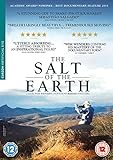
“The Salt of the Earth” DVD – The all-seeing eye

This is my review of The Salt of the Earth DVD.

Wim Wender’s documentary on the life and work of the Brazilian photographer Sebastião Salgado holds the audience speechless and spellbound by the artistry, beauty yet often bleak evidence of man’s inhumanity in his pictures. Starting with incredible shots, all the more striking for being black-and-white, of miners swarming like ants on ladders to scale the steep, irregular face of a goldmine, the film goes on to show the various stages of his career. The scale of the forested valley and hills round his family’s farm may have formed his love of landscapes, where he has sought out self-sufficient communities, from Amazonia to Siberia, and won their confidence, enabling him to show them living in close harmony with nature. Another of his collections of photojournalism produced with his wife, focuses on different aspects of employment round the world.

A sensitive man, made aware of injustice through the harshness of the authoritarian military regime which forced him and his wife into exile in their youth, he was inevitably drawn to cover the sufferings of those forced by brutal war to become refugees. Uncensored photos of African victims are particularly harrowing, so it easy to understand why he became depressed by man’s capacity for cruelty, and turned to the animal world, with amusing scenes of his dedication, as he and his son roll over stony ground to catch walruses unawares, rearing up to clash their tusks in the misty dawn. “Genesis”, a wide-ranging project “dedicated to showing the beauty of our planet, reversing the damage done to it, and preserving it for the future” includes some breath-taking aerial shots.

With an innate confidence, he has taught himself the craft of different types of photography, aided by his artist’s eye – he explains at one point to his son how a shot will not work owing to the lack of a suitable background or “frame”.

We see the personal cost of his work, with long periods away from his wife who was left with the care of a Downs Syndrome son, while he seemed like a stranger to his older boy in his early years. The restoration of Salgado’s family farm by the replanting of trees to replace the deforestation and erosion is also inspiring – presumably made possible at least partly by his book sales.

His portrayal of the dignity and pathos of displaced people arouses a deep sense of unease over the handling by the West of current migrations into Europe and by our materialism which aggravates the problem, to which there is admittedly no simple solution.

⭐⭐⭐⭐⭐ 5 Stars

The Gift – Cutting the Gordian knot

This is my review of The Gift [Blu-ray].

This well-acted psychological thriller, original in its unpredictable plot, manages to build a sense of menace through a threatening atmosphere rather than brutal violence. It is like a subtle version of a Hitchcock film.

In the opening scenes, Simon and Robyn appear to be a happily married, affluent couple in the process of moving into an up-market house in the Californian hills – attractive if you don’t mind the sense of exposure from surrounding trees pressing in on the expanses of floor-to-ceiling windows. A chance meeting with a former schoolmate Gordo, whom Simon does not at first recognise, is the dramatic trigger. As Gordon becomes increasingly intrusive with his uninvited appearances when Robyn is alone, and his over-generous yet unwanted gifts, Simon indulges in very realistic, jokey conversations with their new circle of friends over how to deal with “Weidro Gordo” whereas the more sensitive Robyn feels sympathy for him. Gradually, Simon is revealed as dominant and ruthlessly ambitious, Robyn appears vulnerable, possibly disturbed and dependent on her husband’s protection. How well does she know the man supposedly so close to her, and can she trust him? What is the truth? What makes some people winners and others losers? What exactly is “the gift” of the title?

Although as is often the case, aspects of the denouement are unclear or even implausible, the ending is very effective in leaving matters open to the viewer’s individual interpretation, and even in playing with one’s emotions to switch sympathy in inexpected directions.

A film to which I brought low expectations turned out to be gripping and thought-provoking. I was also interested to note that the excellent actor, Joel Edgerton, who plays Gordo was also writer, producer and projector for the project.

⭐⭐⭐⭐ 4 Stars